Clinicians › Wrist
Wrist ganglion excision
Surgeon-side topic for wrist ganglion excision. Backed by 123 articles from the corpus, retrieved via combined MeSH + title-text matching.
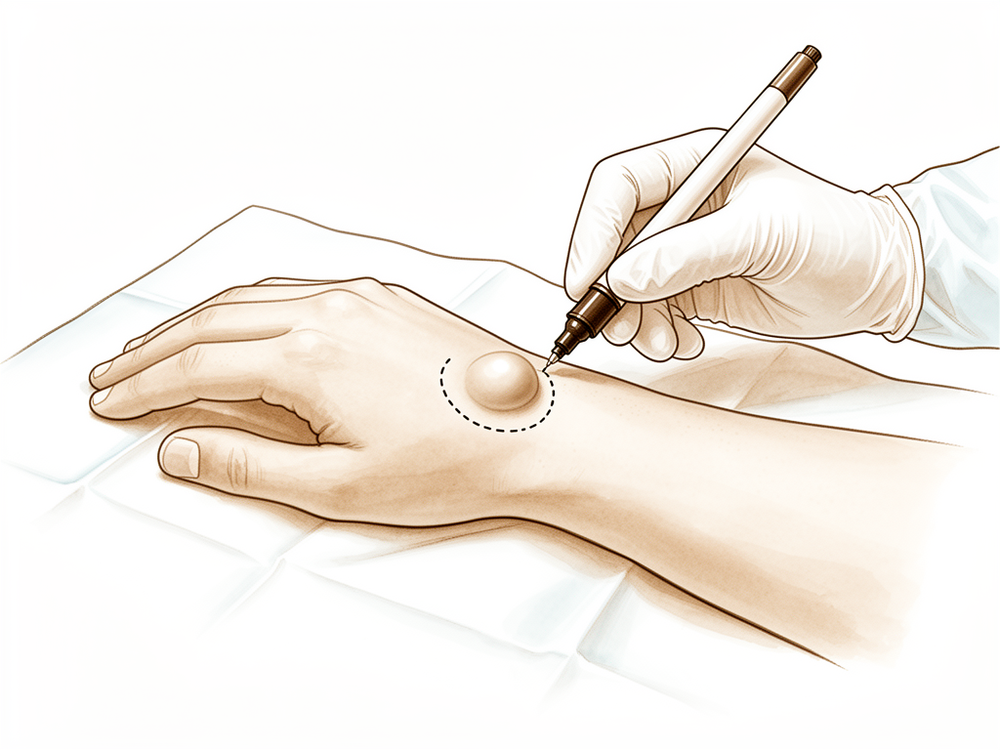
For patients: a plain-language version of this topic is available. See the patient guide.
Overview
Wrist ganglions are common soft-tissue lesions that frequently resolve spontaneously; approximately 40% decrease in size over the first six years following evaluation by a hand surgeon [15]. Pediatric hand ganglions exhibit a higher rate of resolution than those of the wrist [10], though no consensus exists regarding optimal management for pediatric wrist ganglia, with no single treatment modality demonstrating specific advantage or disadvantage [27]. Non-operative management via aspiration safely removes 85% of tumors when one to three treatments are administered [11], and performing at least one aspiration prior to surgery improves cost-effectiveness [21]. However, most wrist ganglions recur after aspiration [15], whereas open surgical excision offers a significantly lower chance of recurrence compared with aspiration [8].
Surgical intervention for wrist ganglions carries an approximate 10% recurrence rate [15] and leaves scars with some risk for adverse events [15]. Open excision of dorsal wrist ganglia results in a lower recurrence rate than arthroscopic excision [16], although arthroscopic resection is effective for well-selected volar ganglions arising from the radiocarpal joint [1] and offers low morbidity with near-normal wrist mobility and strength by three months [3]. Arthroscopy remains a viable alternative to open surgery, supported by four-year follow-up data [12], though it is a difficult procedure requiring adequate experience [24]. Routine midcarpal joint exploration during arthroscopic excision appears to reduce recurrence at one year without negatively impacting patient outcomes [9]. In pediatric populations, a retrospective review reports a low recurrence rate of 5.3% for wrist ganglion cysts [14].
Surgical excision of primary wrist ganglia significantly reduces patient symptoms with high patient satisfaction [22]. Specific considerations include counseling patients whose occupations require forceful wrist extension regarding the considerable risk of residual pain and functional limitations after open dorsal excision [2]. Complications of arthroscopic volar ganglionectomy are associated with anatomical location, specifically when the ganglion is distal to the bifurcation of the radial artery and penetrated up to the superficial fascia layer [20]. A dorsal capsular defect and synovial fistula to the fourth extensor compartment is a late complication after arthroscopic dorsal excision [13], prompting a recommendation to limit capsular debridement to 1 cm [13]. In patients with recalcitrant dorsal wrist pain in the scapholunate interval, occult dorsal wrist ganglions had a high prevalence of 11 of 14 [7]. Quality of care is not compromised by abandoning routine pathological examination of surgical specimens [4, 5], and hand surgeons remain divided regarding the need for post-operative wrist immobilization after dorsal excision [23].
Anatomy & Pathophysiology
Dorsal Wrist Ganglion Anatomy
Dorsal wrist ganglions represent the most common type of hand and wrist ganglion, accounting for 60% to 70% of all cases [37]. These lesions typically arise from within the scapholunate joint [25] and present as a main cyst located directly over the scapholunate ligament [37]. The cyst is connected to the underlying scapholunate joint via a small, mucin-filled duct that invariably pierces the transverse fibers of the scapholunate ligament [37]. While the main cyst usually sits over the ligament, dorsal ganglions can occur anywhere between the extensor tendons, linked to the scapholunate ligament through an elongated pedicle [37]. Failure to identify and excise this pedicle attachment to the scapholunate ligament increases the likelihood of recurrence [37]. Clinically, the dorsal ganglion typically appears between the extensor pollicis longus and extensor digitorum communis tendons [37]. Surgeons must be aware that anomalous muscles, including the extensor indicis proprius and the "extensor digitorum brevis manus," may be found in the area of the dorsal wrist ganglion and can complicate management [100].
Volar Wrist Ganglion Anatomy
Volar wrist ganglions account for 18% to 20% of hand and wrist ganglions [38], with other sources identifying them as the site of 13% to 30% of ganglion cysts about the hand and wrist [19]. The majority of these lesions occur directly over the distal edge of the radius or slightly more distally over the scaphoid tubercle [38]. Regarding origin, volar wrist ganglions typically arise from the radioscaphoid joint in 65% of cases, the scaphotrapezial joint in 34%, or the metacarpotrapezial joint in 1% [19]. Those arising from the radiocarpal joint occur under the volar wrist crease between the flexor carpi radialis and abductor pollicis longus tendons [38]. The main cyst of a volar ganglion may be intertwined with bifurcating branches of the radial artery [38]. Furthermore, the radial artery is frequently intimately attached to the wall of a volar ganglion and may be completely encircled by it [38]. Volar ganglions can be multiloculated, extending under the thenar muscles, along the flexor carpi radialis tendon, into the carpal canal, and under the first extensor compartment [38].
General Pathophysiology and Epidemiology
Approximately 40% of ganglion lesions decrease over the first 6 years after evaluation by a hand surgeon [15]. Most ganglions recur after aspiration [15], whereas surgical intervention for ganglions has about a 10% recurrence rate [15]. In the military population, volar wrist ganglions comprised 17% of all ganglions diagnosed, compared to 25% in the civilian population [19]. The incidence of volar wrist ganglions is 3.28 per 10,000 person-years in the civilian population [19]. In the military population, the incidence is 3.73 per 10,000 person-years for male personnel and 7.98 per 10,000 person-years for female personnel [19]. The adjusted incidence rate ratio for volar wrist ganglions in female versus male military personnel is 2.54 [19]. Intraneural ganglions of the hand and wrist are rare and remain poorly understood [99]. The ulnar nerve is the most commonly involved nerve in intraneural ganglions of the upper extremity [41]. Most patients with intraneural ganglions are aged 30 to 50 years [41]. The articular (synovial) theory is a scientifically proven explanation for the formation of intraneural ganglions, proposing a joint connection via an articular branch [41]. Intraneural ganglions can arise from joints such as the pisotriquetral joint and penetrate the ulnar nerve at Guyon's canal [99]. Compression neuropathy caused by extraneural ganglions is well described in the literature [99].
Classification
Anatomical Location and Origin
The volar wrist accounts for 13% to 30% of ganglion cysts about the hand and wrist [19]. These lesions are typically found between the flexor carpi radialis and abductor pollicis longus tendons [19]. The radioscaphoid joint is the origin in 65% of cases, the scaphotrapezial joint in 34% of cases, and the metacarpotrapezial joint in 1% of cases [19]. Wrist joint ganglions can present as painless masses in the center of the palm without signs or symptoms of median or ulnar nerve compression [17]. Dorsal wrist ganglions can present as anterior wrist ganglions [6].
Histological Subtypes
Cystic soft tissue tumours of the dorsal aspect of the wrist have two distinct histological subtypes [52]. Both histological tissue types can coexist at recurrence [52]. Recurrence rates are equal in both initial synovial and ganglion histological groups [52].
Pediatric Classification
Ganglions in pediatric populations most commonly affect the dorsal wrist [39]. This population demonstrates a female predilection [39].
Clinical Presentation
Wrist ganglions represent the most common soft tissue tumors of the hand and wrist [30]. The clinical presentation varies significantly by location, with dorsal and volar cysts exhibiting distinct anatomical origins and demographic associations.
Dorsal Wrist Ganglions
Dorsal carpal ganglia almost invariably possess a stalk originating at the scapholunate ligament [40]. Preoperative history, specifically pain with loading of the extended wrist, combined with physical examination, usually localizes the ganglion to the scapholunate area [40]. In patients presenting with recalcitrant dorsal wrist pain in the scapholunate interval, occult dorsal wrist ganglions were identified in 11 of 14 cases [7].
Recurrence following arthroscopic excision is statistically significantly associated with young age at the time of surgery (mean age 24±7.7 years) [18]. Female sex was also a significant predictor, present in 11 of 13 wrists with recurrence (85%) [18]. Additionally, involvement of the dominant hand was statistically significantly associated with recurrence, occurring in 12 of 13 wrists with recurrence (92%) [18]. While preoperative size appeared associated with recurrence, a 2.7 mm difference was not statistically significant [18]. Wrist arthroscopy itself is associated with a 1.24% incidence of ipsilateral wrist ganglion cyst formation, with female gender serving as a significant predictor [48].
Volar Wrist Ganglions
The volar wrist is the site of 13% to 30% of ganglion cysts about the hand and wrist [19]. The second most common ganglion of the hand and wrist is a volar wrist ganglion, accounting for 18% to 20% of cases [38]. The majority of volar ganglions occur either directly over the distal edge of the radius or slightly more distally over the scaphoid tubercle [38]. Volar wrist ganglions typically arise from the radioscaphoid joint (65%), scaphotrapezial joint (34%), or metacarpotrapezial joint (1%) [19].
Volar ganglions arising from the radiocarpal joint occur under the volar wrist crease between the flexor carpi radialis and abductor pollicis longus tendons [38]. The main cyst of a radiocarpal volar ganglion may be intertwined with bifurcating branches of the radial artery [38]. Although volar ganglions may appear small clinically, they can be surprisingly extensive at surgery [38]. Multiloculated volar cysts can extend under the thenar muscles, along the flexor carpi radialis tendon, into the carpal canal, and under the first extensor compartment adjacent to the dorsal branch of the radial artery [38]. A volar wrist ganglion can also present as trigger finger [29].
Epidemiological data indicate an incidence of volar wrist ganglions of 3.28 per 10,000 person-years in the civilian population [19]. In the military population, male personnel had an incidence of 3.73 per 10,000 person-years, while female personnel had an incidence of 7.98 per 10,000 person-years [19].
Pediatric Wrist Ganglions
In children aged <10 years, ganglions mainly occur on the volar wrist [28]. In this age group, 69% to 79% of volar wrist ganglions display spontaneous regression within a span of 12-18 months [28]. If a cyst in a child with a wrist ganglion ultimately resolved, it usually did so within 18 months [47]. The recurrence rate for pediatric wrist ganglion cysts is 5.3% [14].
Atypical Presentations and Associations
Intraneural ganglions of the hand and wrist most commonly involve the ulnar nerve [41]. Most patients with intraneural ganglions present with a painless mass [41], though some present with symptoms of nerve irritation or entrapment neuropathy [41].
In patients with painful wrist ganglions, arthroscopy identified 22 TFCC lesions (48%) and 2 intracarpal ligament lesions [30]. TFCC perforations were more commonly associated with radiopalmar ganglions with a positive ulnocarpal stress test result [30]. Furthermore, TFCC perforations were more commonly associated with recurrent radiopalmar ganglions [30].
Investigations
Plain radiography: Review of preoperative radiographs is prudent to exclude an interosseous component [37]. In a prospective study of wrist ganglions undergoing arthroscopic resection, plain radiographs were obtained as part of the standard preoperative assessment alongside clinical examinations, pain score evaluations, and disabilities in daily life evaluations [30].
MRI: MRI is useful in preoperative planning, though not absolutely required [40]. At a pediatric institution, the majority of wrist MRIs were ordered for wrist pain [54]. MRI has an expanding role in evaluating pathologic conditions of the elbow and wrist, requiring high-resolution images best obtained with surface coil technique and a high field system [75]. A static magnetic field strength of at least 1.5 T using a dedicated wrist coil is recommended for analyzing interosseous, intrinsic, and extrinsic ligament insertions [73]. The volar extrinsic, SL interosseous, dorsal intercarpal, and LT ligaments are best visualized using 1 mm slices (with no interslice gap) in the coronal plane [73]. The DRC and intercarpal ligaments are best viewed on both coronal and sagittal images [73]. Oblique axial views along the longitudinal axes of these ligaments allow further analysis, especially when an injury is suspected [73].
In a selected patient group with recalcitrant dorsal wrist pain in the area of the scapholunate interval, MRI diagnosis of occult dorsal wrist ganglion revealed a high prevalence of 11 of 14 [7]. A properly performed, high-resolution MRI aids in the evaluation of ligament injuries of the wrist [73]. In the wrist, a common indication for MRI is evaluation of the intrinsic carpal ligaments [75]. Evaluation of the scapholunate and lunotriquetral ligaments is more challenging, but with optimal technique and equipment, the integrity of these structures can be consistently assessed [75]. The addition of arthrographic contrast improves the visualization of these ligaments on MR images [75]. The extrinsic carpal ligaments can be identified with three-dimensional volumetric scanning and subsequent reconstruction [75]; however, at present, the MRI assessment of extrinsic carpal ligaments has less impact on treatment [75].
With proper technique, injuries to the triangular fibrocartilage complex (TFCC) can be demonstrated with MRI [75]. The TFCC is composed of signal-poor fibrocartilage, and perforations in the TFCC appear as linear defects or gaps filled with hyperintense fluid on coronal gradient-echo or T2-weighted pulse sequences [75]. MRI with contrast enhancement is most commonly used to determine whether soft-tissue lesions are solid or cystic [66]. Concomitant intrinsic lesions of the wrist were assessed with magnetic resonance imaging and re-evaluated by arthroscopy in a prospective study [30].
MRI is useful in detecting additional marrow abnormalities in osteonecrosis, as seen in the lunate in Kienböck disease or in the scaphoid after fracture [75]. Asymmetry of marrow signal in proximal and distal fragments of a fractured scaphoid is suggestive of proximal pole ischemia [75]. MRI provides earlier detection of synovitis and erosive bone changes associated with rheumatoid arthritis than do radiographs [75]. Tenosynovitis and tendon injuries in the wrist and hand can be assessed with MRI [75]. MRI currently has a limited role in the evaluation of carpal tunnel syndrome [75]; however, axial imaging with T2 weighting can clearly display masses within the confines of the carpal tunnel, as well as edema and swelling of the median nerve [75]. Real-time MRI has been used to investigate dynamic instabilities, although its routine use in clinical practice is yet to be further determined [73]. Concomitant cartilage-sensitive imaging is integrative to influence the assessment and surgical management, as cartilage integrity will influence clinical and surgical management [73].
Aspiration: Transillumination or aspiration confirms the diagnosis preoperatively [37].
Other Considerations: Careful preoperative palpation of the cyst with digital compression often reveals its extent and the direction of the pedicle [37]. Preoperative history, including pain with loading of the extended wrist, and physical examination usually will localize the ganglion to the scapholunate rather than another area, such as a carpe bossu [40]. The median nerve was found to be palpable in all cases in a study examining both wrists of 50 volunteers [34]. Arthroscopy is considered by many to be the diagnostic intervention of choice for determining the degree of injury to the wrist [73]. Arthroscopy can assess the condition of the cartilage (normal or degenerative), ability to reduce the carpus, and any other associated injuries [73]. The degree of intrinsic and extrinsic ligament injury can be identified from the arthroscopic evaluation [73]. The anatomical configuration of ulnar nerve compression by a synovial cyst should be investigated if clinical signs do not improve following surgical decompression of the ulnar nerve at the wrist [32]. In patients with the clinical diagnosis of wrist ganglion cyst, quality of care would not be compromised by abandoning the practice of routinely submitting surgical specimens for pathological examination after excision of the ganglion cyst [4, 5].
Treatment
Non-Operative
Aspiration has significantly reduced the need for surgery in patients referred with a ganglion [98]. Current best evidence suggests that about 40% of lesions decrease over the first 6 years after evaluation by a hand surgeon [15]. In children aged <10 years, ganglions mainly occur on the volar wrist and can be treated expectantly, with 69% to 79% displaying spontaneous regression within a span of 12-18 months [28]. Performing at least 1 aspiration before surgical excision improves the cost-effectiveness of dorsal wrist ganglions treatment [21].
Operative
Indications: Surgical intervention is indicated when non-operative management fails or is not preferred, as it offers a significantly lower chance of recurrence compared with aspiration [8]. However, surgery carries about a 10% recurrence rate, leaves scars, and has some risk for adverse events [15].
Surgical Approach / Technique: Open surgical excision leads to a lower recurrence rate than arthroscopic excision for dorsal wrist ganglia [16]. The main cyst and its pedicle are mobilized down to the underlying joint capsule, and the ganglion and its capsular attachments are tangentially excised off the scapholunate ligament [37]. Failure to identify the pedicle and excise its attachment to the scapholunate ligament increases the likelihood of recurrence [37]. For volar wrist ganglions, entering the flexor carpi radialis sheath and accessing the ganglion through the floor of the sheath allows for a relatively safe excision [26]. The incision for volar wrist ganglion excision must be planned to allow for extension into the carpal tunnel or base of the thenar muscles [38]. The radial artery is frequently intimately attached to the wall of a volar ganglion and may be completely encircled by it, requiring delicate dissection [38]. The Allen test should be performed routinely and ulnar artery occlusion excluded before volar wrist ganglion excision [38]. Capsular closure is unnecessary after volar wrist ganglion excision and only delays early mobilization [38]. Motion of the wrist should begin within the first 2 weeks after volar wrist ganglion surgery [38].
Arthroscopic ganglionectomy is a safe and reliable alternative to open resection [25]. Arthroscopic resection was an effective treatment method for well-selected volar wrist ganglion arising from the radiocarpal joint in long run [1]. Recurrent ganglion cysts originating from the midcarpal joint are not contraindications for arthroscopic resection [43]. The stalk of a dorsal carpal ganglion often is not identified through the arthroscope, but this fact does not preclude a high rate of successful outcome [40]. Capsular debridement should be limited to 1 cm when performing an arthroscopic dorsal wrist ganglionectomy to prevent late complications such as synovial fistula [13].
Adjuncts: Wide-awake local anesthesia no tourniquet technique in the excision of ganglions provides another option of anesthesia with painless experiences, and no pain rebound after surgery [88].
Other Considerations: The reported complication rate for arthroscopic resection of wrist ganglions is comparable with open resection at 2%, though this rate may be underestimated [31]. Recent reviews of the literature suggest the incidence of wrist arthroscopy complications is an underestimate, citing studies with complication rates up to 20% [31]. Operation-related complications after arthroscopic volar wrist ganglionectomy are associated with its anatomical location: distal to the bifurcation of the radial artery and concurrently penetrated up to the superficial fascia layer [20]. A synovial fistula is a rare complication of recurrent dorsal wrist ganglion excision, potentially caused by extensive capsular excision and steroid injection [33].
Young age at the time of surgery was statistically significantly associated with recurrence after arthroscopic excision (mean age 24±7.7 years with recurrence vs 35±14.3 years with no recurrence; P .002) [18]. Female sex was statistically significantly associated with recurrence after arthroscopic excision (11 of 13 wrists with recurrence [85%] vs 46 of 102 wrists with no recurrence [45%]; P .006) [18]. Dominant hand was statistically significantly associated with recurrence after arthroscopic excision (12 of 13 wrists with recurrence [92%] vs 59 of 102 wrists with no recurrence [58%]; P .016) [18]. This retrospective review reports a low recurrence rate of 5.3% for pediatric wrist ganglion cysts [14].
Complications
Recurrence
Surgical intervention for wrist ganglions carries a recurrence rate of approximately 10% [15]. Reported recurrence rates vary significantly by modality: aspiration ranges from 60% to 95% [67], open surgical excision ranges from 1% to 50% [67], and arthroscopic resection ranges from 8.5% to 30% [67]. At 12 months follow-up, arthroscopic dorsal ganglion excision demonstrates recurrence rates comparable to, but not superior to, open excision [59]. In a cohort of 115 wrists undergoing arthroscopic excision, 13 wrists (11%) experienced recurrence at final follow-up [18]. These recurrences appeared at a mean of 18±8.8 months postoperatively [18]. Young age, female sex, and dominant hand involvement were statistically significantly associated with recurrence after arthroscopic excision [18]. A retrospective review reported a low recurrence rate of 5.3% for pediatric wrist ganglion cysts [14]. Histological analysis demonstrated two distinct tissue types at primary surgery, with the coexistence of both types at recurrence; recurrence rates were equal in both initial synovial and ganglion histological groups [52].
Operative Complications
The reported complication rate for arthroscopic resection of wrist ganglions is comparable to open resection at 2% [31]. However, recent literature reviews suggest this 2% rate is an underestimate, citing studies with complication rates up to 20% [31]. Lacerations of multiple digital extensor tendons have been reported as a complication of arthroscopic dorsal ganglion resection [31]. A cadaveric study examining risk to extensor tendons in inexperienced arthroscopists revealed 2 injuries to the extensor digiti minimi out of 35 portals for three different case-types [31]. To prevent complications, capsular debridement should be limited to 1 cm during arthroscopic dorsal wrist ganglionectomy [13]. Operation-related complications after arthroscopic volar wrist ganglionectomy are associated with anatomical locations distal to the bifurcation of the radial artery and concurrent penetration up to the superficial fascia layer [20]. In a series of 41 patients undergoing arthroscopic resection of dorsal wrist ganglions, no major intraoperative or postoperative complications occurred, and no cases of scapholunate instability were noted [25]. Both trans-cystic and cystic-sparing portal techniques for arthroscopic excision are safe regarding complication rates [81]. Electrocoagulation should be avoided during arthroscopic resection of dorsal wrist ganglions due to the risk of cartilage and extensor tendon lesions [57].
Functional Outcomes and Pain
Overall postoperative motion improved compared with preoperative values in a series of 41 patients undergoing arthroscopic resection of dorsal wrist ganglions [25]. Average postoperative grip strength also improved significantly in this series [25]. At a follow-up examination 4 years after operation for a dorsal wrist ganglion presenting as an anterior wrist ganglion, motion and strength were equal to the contralateral wrist and hand [6]. At 1-year follow-up, all patients with painful wrist ganglions treated arthroscopically were meaningfully improved in terms of pain and disabilities in daily life [30].
Pathology and Diagnosis
Occult dorsal wrist ganglions had a high prevalence (11 of 14) in a selected patient group with recalcitrant dorsal wrist pain in the area of the scapholunate interval [7]. Arthroscopy identified 22 TFCC lesions (48%) and 2 intracarpal ligament lesions in patients with painful wrist ganglions [30]. TFCC perforations were more commonly associated with radiopalmar ganglions with a positive ulnocarpal stress test result and with recurrent radiopalmar ganglions [30]. Ganglion cysts have a high association with certain interosseous laxities [43]. Patients with wrist hyperlaxity have a predisposition to developing ganglions [104].
Recovery
Light activity (weeks): The provided evidence does not specify a typical week range for desk work, driving, or light activities of daily living.
Full activity (months): The provided evidence does not specify a month range for the return to manual work, sport, or full range of motion and strength.
Complete recovery / outcome plateau (months): The provided evidence does not specify a month range for the stabilization of pain, strength, and final functional outcomes.
Rehabilitation protocol: The provided evidence does not detail specific physiotherapy phasing, immobilisation duration, weight-bearing or range-of-motion progression, or sling and brace removal timing.
Functional milestones: The provided evidence does not report validated patient-reported outcome measure trajectories or specific outcome-measure benchmarks such as Constant, ASES, or WOMAC scores.
Other Considerations: Current best evidence suggests that surgical intervention for wrist ganglions has about a 10% recurrence rate [15]. Open excision of dorsal wrist ganglia leads to a lower recurrence rate than does arthroscopic excision [16]. In a study of arthroscopic excision, thirteen of the 115 wrists (11%) had recurrence at final follow-up, with recurrences appearing at a mean of 18±8.8 months postoperatively [18]. Young age at the time of surgery (mean age 24±7.7 years with recurrence vs 35±14.3 years with no recurrence; P .002) was statistically significantly associated with recurrence after arthroscopic excision [18]. Female sex (11 of 13 wrists with recurrence [85%] vs 46 of 102 wrists with no recurrence [45%]; P .006) was statistically significantly associated with recurrence after arthroscopic excision [18]. Dominant hand (12 of 13 wrists with recurrence [92%] vs 59 of 102 wrists with no recurrence [58%]; P .016) was statistically significantly associated with recurrence after arthroscopic excision [18]. At a follow-up examination 4 years after operation for a dorsal wrist ganglion presenting as an anterior wrist ganglion, the ganglion had not recurred, and motion and strength were equal to the contralateral wrist and hand [6]. Postoperatively, symptoms were relieved and after 3 months the patient had normal and full use of his hand and wrist following excision of a ganglion associated with ulnar neuropathy [42]. At 8-month follow-up, the patient remained pain free with no ganglion recurrence or functional limitations following excision of a dorsal wrist ganglion associated with extensor digitorum brevis manus [51]. Capsular debridement should be limited to 1 cm when performing an arthroscopic dorsal wrist ganglionectomy to prevent late complications such as dorsal capsular defect and synovial fistula [13]. In patients with the clinical diagnosis of wrist ganglion cyst, the quality of care would not be compromised by abandoning the practice of routinely submitting surgical specimens for pathological examination after excision [4, 5].
Key Evidence
- [L4] Arthroscopic resection was an effective treatment method for well-selected volar wrist ganglion arising from the radiocarpal joint in long run. [1] (10.1016/j.main.2006.07.028)
- [L4] Patients whose occupation or activities require forceful wrist extension should be counseled on the considerable risk of residual pain and functional limitations that may occur after open dorsal wrist ganglion excision. [2] (10.1016/j.jhsa.2015.05.030)
- [L4] Arthroscopic resection of dorsal wrist ganglia has low morbidity, with unnoticeable scars and wrist mobility and strength close to normal by three months. [3] (10.1016/j.main.2006.07.006)
- [L3] This study suggests that, in patients with the clinical diagnosis of wrist ganglion cyst, quality of care would not be compromised by abandoning the practice of routinely submitting surgical specimens for pathological examination after excision of the ganglion cyst. [4] (10.1016/j.jhsa.2010.03.021)
- [L4] In patients with the clinical diagnosis of wrist ganglion cyst, the quality of care would not be compromised by abandoning the practice of routine submission of surgical specimens for pathological examination after excision of the ganglion cyst. [5] (10.1016/s0363-5023(10)60107-4)
- [L5] At a follow-up examination 4 years after operation, the ganglion had not recurred, and motion and strength were equal to the contralateral wrist and hand. [6] (10.1016/0363-5023(94)90096-5)
- [L4] In our selected patient group (recalcitrant dorsal wrist pain in the area of the scapholunate interval), occult dorsal wrist ganglions had a high prevalence (11 of 14). [7] (10.1016/s0363-5023(05)80288-6)
- [L1] Open surgical excision offers significantly lower chance of recurrence compared with aspiration in the treatment of wrist ganglions. [8] (10.1016/j.jhsa.2014.12.014)
- [L3] Routine midcarpal joint exploration during arthroscopic excision of dorsal wrist ganglions appeared to reduce recurrence at 1 year without negatively impacting patient outcomes. [9] (10.1177/17531934251405730)
- [L4] Pediatric ganglions of the hand have a greater rate of resolution than ganglions of the wrist. [10] (10.1016/j.jhsa.2023.07.002)
- [L2] Aspiration treatment of ganglion cysts of the wrist and hand can safely remove 85% of these tumors if one, two or three separate treatments are administered. [11] (10.1016/s0363-5023(87)80221-6)
- [L4] The outcomes, recurrence, and complications rates after 4 years of follow-up presented in this study support the use of arthroscopy as a treatment for dorsal wrist ganglion. [12] (10.1177/1558944717743601)
- [L5] Thus, we recommend limiting capsular debridement to 1 cm when performing an arthroscopic dorsal wrist ganglionectomy. [13] (10.1142/s2424835518720244)
- [L4] This retrospective review reports a low recurrence rate of 5.3% for pediatric wrist ganglion cysts, indicating potential merit in the surgeon's operative and postoperative techniques. [14] (10.1177/1558944717751195)
- [L5] Current best evidence suggests that about 40% of lesions decrease over the first 6 years after evaluation by a hand surgeon, that most ganglions recur after aspiration, and that surgical intervention has about a 10% recurrence rate, leaves scars, and has some risk for adverse events. [15] (10.1016/j.jhsa.2010.11.048)
- [L3] This study suggests that open excision of dorsal wrist ganglia leads to a lower recurrence rate than does arthroscopic excision. [16] (10.1177/15589447211003184)
- [L4] We report 2 cases of ganglions arising from wrist joints that presented as painless masses in the center of the palm without signs or symptoms of median or ulnar nerve compression. [17] (10.1016/j.jhsa.2003.11.006)
- [L4] [18] (10.1016/j.arthro.2013.04.002)
- [L4] [19] (10.5435/jaaos-d-22-00105)
- [L3] The operation-related complications after arthroscopic volar wrist ganglionectomy are associated with its anatomical location: distal to the bifurcation of the radial artery and concurrently penetrated up to the superficial fascia layer. [20] (10.1186/s12891-025-08766-x)
- [L2] As patient preferences may preclude routinely performing 2 aspirations, performing at least 1 aspiration before surgical excision improves the cost-effectiveness of dorsal wrist ganglions treatment. [21] (10.1016/j.jhsa.2022.09.002)
- [L4] Surgical excision of primary wrist ganglia significantly reduces patient symptoms with low recurrence rates and high patient satisfaction. [22] (10.1177/1753193411434376)
- [L2] The systematic review and survey of Canadian hand surgeons reveal that hand surgeons are divided regarding the need to immobilize the wrist after dorsal wrist ganglion excision. [23] (10.1177/15589447211014631)
- [L4] Arthroscopic treatment of a dorsal wrist ganglion is a good alternative to open surgery, though it is a difficult procedure requiring adequate experience. [24] (10.1054/jhsb.1999.0290)
- [L4] [25] (10.1016/j.jhsa.2003.10.018)
- [L4] Entering the flexor carpi radialis sheath and accessing the ganglion through the floor of the sheath allows for a relatively safe excision of these benign hand tumors. [26] (10.1097/bth.0b013e31825ae1ba)
- [L4] There is no consensus within the literature regarding the best management of pediatric wrist ganglia, and no single treatment modality confers a particular advantage or disadvantage over another. [27] (10.1177/1558944720966716)
- [L4] In children aged <10 years, ganglions mainly occur on the volar wrist and can be treated expectantly, with 69% to 79% displaying spontaneous regression within a span of 12-18 months. [28] (10.1016/j.jhsa.2021.12.015)
- [L4] This is the first reported case of triggering pathology at the wrist to be treated with interventional radiological measures rather than open surgery and demonstrates the efficacy of the technique. [29] (10.1177/1753193412453699)
- [L4] [30] (10.1016/j.jhsa.2012.04.042)
- [Case_report] [31] (10.1016/j.jhsa.2013.07.005)
- [L5] This anatomical configuration should be investigated if clinical signs do not improve following surgical decompression of the ulnar nerve at the wrist. [32] (10.1016/s1297-3203(02)00123-3)
- [Case_report] A synovial fistula is a rare complication of recurrent dorsal wrist ganglion excision, potentially caused by extensive capsular excision and steroid injection. [33] (10.1016/j.jhsa.2012.02.015)
- [L4] We conducted a short study examining both wrists of 50 volunteers and found the median nerve to be palpable in all cases. [34] (10.1016/j.hansur.2020.11.001)
- [L2] Ganglions in pediatric populations, which most commonly affect the dorsal wrist, demonstrate a female predilection. [39] (10.1016/j.jhsa.2021.02.026)
- [L5] [40] (10.1016/j.jhsa.2004.06.002)
- [L4] [41] (10.1016/j.jhsa.2015.05.025)
- [L5] Postoperatively the patient's symptoms were relieved and after 3 months he had normal and full use of his hand and wrist. [42] (10.1016/s0266-7681(05)80199-8)
- [L4] Ganglion cysts also have a high association with certain interosseous laxities, and recurrent ganglion cysts originating from the midcarpal joint are not contraindications for arthroscopic resection. [43] (10.1016/j.jhsa.2008.11.025)
- [L4] In a child with a wrist ganglion, if the cyst ultimately resolved, it usually did so within 18 months. [47] (10.1016/j.jhsa.2019.10.032)
- [L3] Wrist arthroscopy is associated with a 1.24% incidence of ipsilateral wrist ganglion cyst formation, with female gender being a significant predictor of development. [48] (10.1177/1558944720939203)
- [L5] At 8-month follow-up, the patient remained pain free with no ganglion recurrence or functional limitations. [51] (10.1142/s0218810417200222)
- [L4] The study demonstrated two histologically distinct tissue types at primary surgery and the coexistence of both tissue types at recurrence, with equal recurrence rates in both initial synovial and ganglion groups. [52] (10.1177/17531934241251721)
- [L4] At our pediatric institution, the majority of wrist MRIs were ordered for wrist pain. [54] (10.1177/1558944717695752)
- [Paper] [57] (10.1016/j.hcl.2017.07.012)
- [L1] At 12 months follow-up, the rates of recurrence with arthroscopic dorsal ganglion excision are comparable with and not superior to those of open excision. [59] (10.1016/j.jhsa.2008.01.009)
- [L3] [67] (10.1177/1558944720921477)
- [L3] Both techniques are safe regarding the complication rates. [81] (10.1007/s00402-018-3036-4)
- [L2] Wide-awake local anesthesia no tourniquet technique in the excision of ganglions provides another option of anesthesia with painless experiences, and no pain rebound after surgery. [88] (10.1016/j.jhsg.2022.07.002)
- [L4] It has significantly reduced the need for surgery in patients referred with a ganglion. [98] (10.1016/0266-7681(86)90278-0)
- [Case_report] [99] (10.1016/j.jhsa.2010.08.033)
- [L5] [100] (10.1016/s0363-5023(79)80111-2)
- [L3] Patients with wrist hyperlaxity have a predisposition to developing ganglions, a finding corroborated by independent investigations using similar prospective cohort designs. [104] (10.1016/j.jhsa.2013.11.025)
See Also
References
[1] Résection des kystes synoviaux palmaires par arthroscopie. Chirurgie de la Main. 2006. DOI: 10.1016/j.main.2006.07.028
[2] Outcomes of Open Dorsal Wrist Ganglion Excision in Active-Duty Military Personnel. The Journal of Hand Surgery. 2015. DOI: 10.1016/j.jhsa.2015.05.030
[3] Traitement arthroscopique des kystes synoviaux dorsaux du poignet. Chirurgie de la Main. 2006. DOI: 10.1016/j.main.2006.07.006
[4] Necessity of Routine Pathological Examination After Surgical Excision of Wrist Ganglions. The Journal of Hand Surgery. 2010. DOI: 10.1016/j.jhsa.2010.03.021
[5] Necessity of Routine Pathological Examination following Surgical Excision of Wrist Ganglions. The Journal of Hand Surgery. 2010. DOI: 10.1016/s0363-5023(10)60107-4
[6] Dorsal wrist ganglion presenting as anterior wrist ganglion. The Journal of Hand Surgery. 1994. DOI: 10.1016/0363-5023(94)90096-5
[7] Evaluating dorsal wrist pain: MRI diagnosis of occult dorsal wrist ganglion. The Journal of Hand Surgery. 1995. DOI: 10.1016/s0363-5023(05)80288-6
[8] Wrist Ganglion Treatment: Systematic Review and Meta-Analysis. The Journal of Hand Surgery. 2015. DOI: 10.1016/j.jhsa.2014.12.014
[9] Arthroscopic resection of dorsal wrist ganglions with or without midcarpal exploration. Journal of Hand Surgery (European Volume). 2025. DOI: 10.1177/17531934251405730
[10] Natural History of Pediatric Hand and Wrist Ganglion Cysts: Longitudinal Follow-Up of a Prospective, Dual-Center Cohort. The Journal of Hand Surgery. 2023. DOI: 10.1016/j.jhsa.2023.07.002
[11] Management of ganglion cysts of the hand by simple aspiration. The Journal of Hand Surgery. 1987. DOI: 10.1016/s0363-5023(87)80221-6
[12] Arthroscopic Resection of Dorsal Wrist Ganglion: Results and Rate of Recurrence Over a Minimum Follow-up of 4 Years. HAND. 2017. DOI: 10.1177/1558944717743601
[13] Dorsal Capsular Defect and Synovial Fistula to the Fourth Extensor Compartment: A Late Complication after Arthroscopic Dorsal Wrist Ganglionectomy. The Journal of Hand Surgery (Asian-Pacific Volume). 2018. DOI: 10.1142/s2424835518720244
[14] Pediatric Ganglion Cysts: A Retrospective Review. HAND. 2018. DOI: 10.1177/1558944717751195
[15] Wrist Ganglions. The Journal of Hand Surgery. 2011. DOI: 10.1016/j.jhsa.2010.11.048
[16] Recurrence Rates of Dorsal Wrist Ganglion Cysts After Arthroscopic Versus Open Surgical Excision: A Retrospective Comparison. HAND. 2021. DOI: 10.1177/15589447211003184
[17] Wrist joint ganglion presenting as a painless mass in the palm: report of 2 cases. The Journal of Hand Surgery. 2004. DOI: 10.1016/j.jhsa.2003.11.006
[18] Arthroscopic Excision of Dorsal Wrist Ganglion: Factors Related to Recurrence and Postoperative Residual Pain. Arthroscopy. 2013. DOI: 10.1016/j.arthro.2013.04.002
[19] Ganglions in the Hand and Wrist: Advances in 2 Decades. Journal of the American Academy of Orthopaedic Surgeons. 2023. DOI: 10.5435/jaaos-d-22-00105
[20] Anatomical location of volar wrist ganglion in preoperative MRI is a risk factor for operation-related complications after arthroscopic ganglionectomy. BMC Musculoskeletal Disorders. 2025. DOI: 10.1186/s12891-025-08766-x
[21] Minimizing Costs for Dorsal Wrist Ganglion Treatment: A Cost-Minimization Analysis. The Journal of Hand Surgery. 2023. DOI: 10.1016/j.jhsa.2022.09.002
[22] Patient outcomes following wrist ganglion excision surgery. Journal of Hand Surgery (European Volume). 2012. DOI: 10.1177/1753193411434376
[23] Immobilization of the Wrist After Dorsal Wrist Ganglion Excision: A Systematic Review and Survey of Current Practice. HAND. 2021. DOI: 10.1177/15589447211014631
[24] Arthroscopic Resection of Dorsal Wrist Ganglia and Treatment of Recurrences. Journal of Hand Surgery. 2000. DOI: 10.1054/jhsb.1999.0290
[25] Arthroscopic resection in the management of dorsal wrist ganglions: results with a minimum 2-year follow-up period. The Journal of Hand Surgery. 2004. DOI: 10.1016/j.jhsa.2003.10.018
[26] Volar Wrist Ganglion Excision Through the Flexor Carpi Radialis Sheath. Techniques in Hand & Upper Extremity Surgery. 2012. DOI: 10.1097/bth.0b013e31825ae1ba
[27] Wrist Ganglion Cysts in Children: An Update and Review of the Literature. HAND. 2022. DOI: 10.1177/1558944720966716
[28] Pediatric Ganglions of the Hand and Wrist: A Review of Current Literature. The Journal of Hand Surgery. 2022. DOI: 10.1016/j.jhsa.2021.12.015
[29] Volar wrist ganglion presenting as trigger finger. Journal of Hand Surgery (European Volume). 2012. DOI: 10.1177/1753193412453699
[30] Ganglions of the Wrist and Associated Triangular Fibrocartilage Lesions: A Prospective Study in Arthroscopically-treated Patients. The Journal of Hand Surgery. 2012. DOI: 10.1016/j.jhsa.2012.04.042
[31] Extensor Tendon Lacerations From Arthroscopic Excision of Dorsal Wrist Ganglion: Case Report. The Journal of Hand Surgery. 2013. DOI: 10.1016/j.jhsa.2013.07.005
[32] Compression de la branche profonde du nerf ulnaire par un kyste synovial. À propos d'un cas. Chirurgie de la Main. 2002. DOI: 10.1016/s1297-3203(02)00123-3
[33] Synovial Fistula as a Complication of Recurrent Dorsal Wrist Ganglion Excision: Case Report. The Journal of Hand Surgery. 2012. DOI: 10.1016/j.jhsa.2012.02.015
[34] The median nerve roll – A simple way to locate the median nerve at the wrist. Hand Surgery and Rehabilitation. 2021. DOI: 10.1016/j.hansur.2020.11.001
[37] Green S Operative Hand Surgery. BOX 59.1 Ganglions of the Hand and Wrist > Operative Treatment > Dorsal Wrist Ganglion.
[38] Green S Operative Hand Surgery. BOX 59.1 Ganglions of the Hand and Wrist > Operative Treatment > Volar Wrist Ganglion.
[39] Clinical Presentation and Characteristics of Hand and Wrist Ganglion Cysts in Children. The Journal of Hand Surgery. 2021. DOI: 10.1016/j.jhsa.2021.02.026
[40] Arthroscopic ganglionectomy?. The Journal of Hand Surgery. 2004. DOI: 10.1016/j.jhsa.2004.06.002
[41] Intraneural Ganglions of the Hand and Wrist. The Journal of Hand Surgery. 2015. DOI: 10.1016/j.jhsa.2015.05.025
[42] Ulnar Neuropathy at the Wrist Associated with a Recurrent Branch through the Flexor Carpi Ulnaris Tendon. Journal of Hand Surgery. 1996. DOI: 10.1016/s0266-7681(05)80199-8
[43] Prospective Outcomes and Associations of Wrist Ganglion Cysts Resected Arthroscopically. The Journal of Hand Surgery. 2009. DOI: 10.1016/j.jhsa.2008.11.025
[47] Wrist Ganglia in Children: Nonsurgical Versus Surgical Treatment. The Journal of Hand Surgery. 2020. DOI: 10.1016/j.jhsa.2019.10.032
[48] Prevalence of Ganglion Cyst Formation After Wrist Arthroscopy: A Retrospective Longitudinal Analysis of 2420 Patients. HAND. 2020. DOI: 10.1177/1558944720939203
[51] Dorsal Wrist Ganglion Associated with Extensor Digitorum Brevis Manus: Case Report and Review of the Literature. The Journal of Hand Surgery (Asian-Pacific Volume). 2017. DOI: 10.1142/s0218810417200222
[52] Cystic soft tissue tumours of the dorsal aspect of the wrist have two distinct histological subtypes. Journal of Hand Surgery (European Volume). 2024. DOI: 10.1177/17531934241251721
[54] The Diagnostic Utility and Clinical Implications of Wrist MRI in the Pediatric Population. HAND. 2017. DOI: 10.1177/1558944717695752
[57] Arthroscopic Management of Dorsal and Volar Wrist Ganglion. Hand Clinics. 2017. DOI: 10.1016/j.hcl.2017.07.012
[59] Arthroscopic Versus Open Dorsal Ganglion Excision: A Prospective, Randomized Comparison of Rates of Recurrence and of Residual Pain. The Journal of Hand Surgery. 2008. DOI: 10.1016/j.jhsa.2008.01.009
[66] Orthopaedic Knowledge Update 13 Ebook Without Multimedia. Anatomy, Evaluation, Clinical Examination, and Imaging > Imaging: Advances in Imaging of the Hand and Upper Extremity > Magnetic Resonance Imaging.
[67] Factors Impacting Recurrence Rate After Open Ganglion Cyst Excision. HAND. 2020. DOI: 10.1177/1558944720921477
[73] Green S Operative Hand Surgery. Advanced Imaging.
[75] Campbell S Operative Orthopaedics 4 Volume Set. WRIST AND ELBOW.
[81] Arthroscopic excision of wrist ganglions: does trans-cystic or cystic-sparing portal technique affect clinical outcomes?. Archives of Orthopaedic and Trauma Surgery. 2018. DOI: 10.1007/s00402-018-3036-4
[88] Prospective Evaluation of Pain and Anxiety Levels Between Wide-Awake Local Anesthesia No Tourniquet and General Anesthesia With Tourniquet in Excision of Wrist Ganglions. Journal of Hand Surgery Global Online. 2022. DOI: 10.1016/j.jhsg.2022.07.002
[98] Aspiration of ganglia. The Journal of Hand Surgery: Journal of the British Society for Surgery of the Hand. 1986. DOI: 10.1016/0266-7681(86)90278-0
[99] An Ulnar Intraneural Ganglion Arising From the Pisotriquetral Joint: Case Report. The Journal of Hand Surgery. 2011. DOI: 10.1016/j.jhsa.2010.08.033
[100] The dorsal ganglion with anomalous muscles. The Journal of Hand Surgery. 1979. DOI: 10.1016/s0363-5023(79)80111-2
[104] Increased Prevalence of Ganglion Formation Among Patients With Wrist Hyperlaxity. The Journal of Hand Surgery. 2014. DOI: 10.1016/j.jhsa.2013.11.025