Clinicians › Shoulder
Internal Fixation
Internal fixation of proximal humerus, clavicle, and glenoid fractures — anatomical restoration, hardware selection, and management of osteoporotic bone.
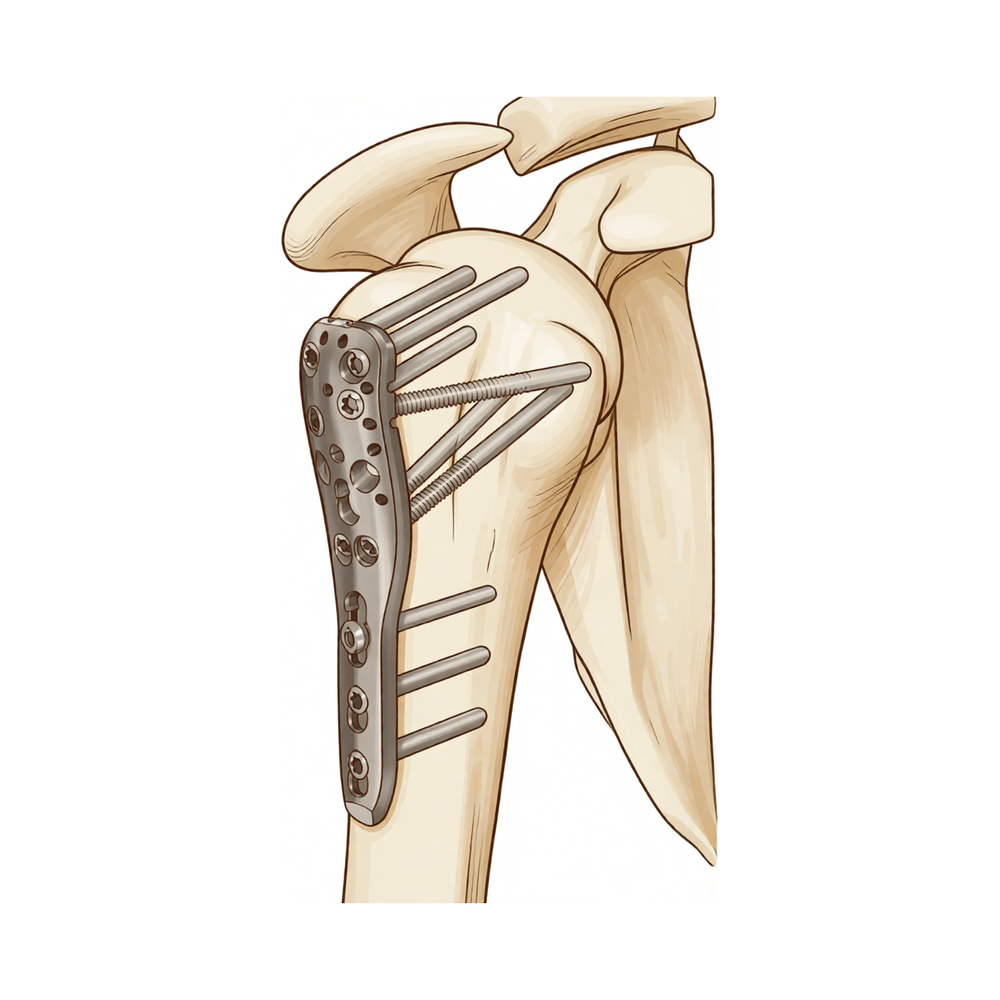
Overview
Internal fixation serves as a definitive treatment modality for a wide spectrum of orthopaedic injuries, including clavicle, humeral, forearm, distal radius, acetabular, and distal humerus fractures. In specific clinical circumstances, such as anterior ring component injuries of acetabular fractures where internal fixation is precluded, external fixation is not inferior to internal fixation [1]. For unstable proximal humeral injuries, external fixation offers better reduction and stable fixation while allowing early mobilisation and reducing complications associated with other modalities [2]. The locked internal fixator technique aims at simple and safe handling, optimizing biological conditions for soft and hard tissues, and being universally applicable [3]. Judicious application of primary internal fixation in injuries associated with severe soft-tissue damage or multiple fractures is of definite advantage to the patient [11], and internal fixation remains an advantageous method of treatment in the patient with multiple injuries [49].
Surgical outcomes are largely determined by technique, with open reduction internal fixation offering excellent results for proximal humerus fractures when performed in the appropriate patient utilizing proper techniques [12]. Acceptable results can be achieved for humeral shaft fractures, even difficult ones, provided correct principles of fixation are carefully followed [18, 20]. Plate fixation is reliable and safe when indications for operative treatment are met for humeral shaft fractures [18]. A novel technique for posterior internal fixation of acetabular fractures offers superior outcomes and fewer complications compared to similar internal fixation techniques [7]. However, the choice of internal fixation pattern for Letenneur type I Hoffa fracture depends on the surgeons and is not recommended for all cases [9]. Classifications for distal radius fractures help to identify unstable fractures and offer insight into the indications for external skeletal fixation [6].
Current evidence highlights areas requiring further refinement. Large-scale randomized studies are needed to assess indications and results for various internal fixation techniques for clavicle fractures [4]. There are no absolute indications for prophylactic fixation determined by evidence-based medicine for metastases to the humerus, and additional studies are needed to define surgical indications [16]. Prospective, high-quality studies are warranted to refine indications, optimize screw placement strategies, and clarify long-term functional outcomes for the use of blocking screws in retrograde intramedullary nailing for distal femur fractures [54]. While locking plate fixation has yet to prove clinical superiority in any anatomic site for which good-quality comparative analyses are available [24], and no compelling evidence exists to suggest one technique over another for proximal humerus fixation when comparing intramedullary nailing with other fixation strategies such as locking plate fixation [36], recent evidence suggests no long-term differences in outcomes between surgical and nonsurgical cohorts for many patient populations with proximal humeral fractures [200]. Intramedullary fixation represents an alternative treatment option for proximal humeral fractures with specific fixation and biologic advantages, including reported outcomes comparable with other techniques [215].
Anatomy & Pathophysiology
Proximal Humerus Bony Anatomy
The proximal humerus comprises four main parts: the humeral head, greater tuberosity (GT), lesser tuberosity (LT), and humeral shaft [65]. The articular head is spherical with a diameter of 37 to 57 mm [65] and an arc of approximately 160 degrees covered by articular cartilage [77]. The radius of curvature is approximately 25 mm, slightly larger in men than in women [77]. The most superior portion of the articular surface averages 8 mm above the greater tuberosity [65], with the superior margin normally positioned 8 to 10 mm superior to the top of the greater tuberosity [77]. Head height is approximately 5.6 cm above the superior border of the pectoralis major tendon [79].
Humeral version and inclination vary across measurements. Humeral version averages 29.8 degrees, with a range of 10 to 55 degrees [65]. Proximal humeral retroversion is highly variable, ranging from 0 to 55 degrees depending on the measurement method [77]. The humeral head is retroverted an average of 30 degrees relative to the transepicondylar axis [79] and averages 19° of retroversion [68]. The neck-shaft angle measures an average of 135 degrees [66], with the humeral head inclined approximately 130 degrees with respect to the humeral shaft [65]. One source reports an average neck-shaft angle of 45 degrees (±5 degrees), with a range of 30 to 50 degrees [77].
The anatomic neck is located at the junction of the articular surface and the tuberosities [65]. The surgical neck represents an indistinct metadiaphyseal junction below the tuberosities but above the humeral shaft [65]. The bicipital groove lies between the greater and lesser tuberosities, serving as a pathway for the long head of the biceps tendon [65]. The distal aspect of the bicipital groove is internally rotated with respect to the proximal portion [65]. The distance from the lateral base of the coracoid process to the lateral margin of the greater tuberosity is called the lateral humeral offset [77]. Humeral articular malposition of more than 4 mm leads to increased subacromial contact [77], and an offset of 8 mm in any direction significantly decreases passive range of motion [77].
Scapular and Glenoid Anatomy
The scapula is attached to the axial skeleton by the clavicle via the acromioclavicular (AC) and sternoclavicular (SC) joints [67]. It spans second through seventh ribs and serves as an attachment for 17 muscles [79]. The scapula is anteverted on the chest wall approximately 30 degrees relative to the body [79] and is separated from the chest wall by thin gliding fibro-fatty tissue, allowing smooth excursion [67]. The basic part of the scapula is the body, which is triangular when viewed anteroposteriorly with its base situated superiorly and its apex inferiorly [67]. The glenoid is connected with the flat body of the scapula by the scapular neck [67]. The hook-shaped coracoid process curves forwards from the superior surface of the scapular neck [67], while the scapular spine ends in a flattened bony process, the acromion, which curves forwards [67].
The highest concentration of bony mass in the scapula is found in the glenoid, the scapular neck (including the base of the coracoid process), and the lateral border of the scapular body [67]. Two bony pillars transmit compressive forces from the glenoid fossa: the lateral pillar and the spinal pillar [67]. The lateral pillar connects the inferior border of the glenoid with the inferior angle [67], whereas the spinal pillar arises from the central part of the glenoid and continues medially to become part of the base of the scapular spine [67]. The weakest bone in the scapula is located primarily in the central part of the biomechanical body, specifically in the infraspinous fossa [67]. The weakest area of the circumference of the biomechanical body is the spinomedial angle, which is the connection of the scapular spine and the medial border [67]. In most scapular body fractures, one of the main fracture lines passes through the spinomedial angle [67].
The glenoid is a convex structure of shallow depth shaped like an inverted pear [65] and is a shallow socket, approximately one third the size of the humeral head [66]. The subchondral bone of the glenoid is relatively flat, and the articular concavity is augmented by cartilage and a circumferential labrum [68]. The glenoid averages 5° of retroversion in relation to the axis of the scapular body [68] and is retroverted approximately 5 degrees relative to the scapular body [79]. The normal position of the glenoid surface in relation to the axis of the scapular body ranged from 2 degrees of anteversion to 7 degrees of retroversion [77]. The glenoid articular surface radius of curvature is 2 to 3 mm larger than that of the humeral head [77].
Vascular Supply and Nerve Anatomy
The proximal humerus receives its blood supply from the anterior and posterior humeral circumflex branches from the third division of the axillary artery [65]. The anterior humeral circumflex artery (AHCA) arises from the axillary artery at the inferior border of the subscapularis [65]. The AHCA provides vascular inflow to the humeral head by way of its terminal anterolateral branch known as the artery of Laing (also known as the arcuate artery) [65]. The ascending branch of the AHCA courses parallel to the lateral aspect of the long head biceps tendon and enters the humeral head at the interface of the bicipital groove and greater tuberosity [65]. The major blood supply to the humeral head is through the ascending branch of the anterior humeral circumflex artery, which penetrates the head at the bicipital groove and becomes the arcuate artery [66]. The terminal intraosseous portion of the artery enters at the proximal aspect of the intertubercular groove as the arcuate artery [68]. The anterolateral ascending branch of the anterior humeral circumflex artery provides the primary blood supply to the humeral head [68]. Quantitative assessment has shown that 64% of the humeral head blood supply arises from the posterior humeral circumflex artery [72].
The posterior humeral circumflex artery travels with the axillary nerve, enters the quadrilateral space posteriorly, and anastomoses with a branch of the anterior circumflex to supply the posterior cuff [65]. Injury to the arcuate artery may result in osteonecrosis of the humeral head [65], although additional extraosseous collateral branches can permit humeral head perfusion despite complete ligation of the arcuate artery [65]. Fractures of the anatomic neck have a poor prognosis because of complete disruption of the blood supply to the head [66]. Surgical neck fractures are common, and with these, the blood supply to the head is preserved [66].
The brachial plexus and axillary artery can be injured with anterior shoulder dislocations [66]. The radial nerve is commonly injured in humeral shaft fractures, particularly at the junction of the middle and distal third (Holstein-Lewis fracture) [66]. An axillary nerve injury from proximal humeral fracture or fracture-dislocation would result in paralysis of the deltoid muscle and anesthesia over the “badge” region at the lateral proximal arm [66]. The axillary nerve is a terminal branch coming off the posterior cord of the brachial plexus just proximal to the coracoid process [71]. It passes beneath the conjoined tendon anterior to the subscapularis 3 to 5 mm medial to the musculotendinous junction and then adjacent to the inferior capsule before entering the quadrilateral space posteriorly [71]. The axillary nerve circles the humeral neck just inferior to the glenohumeral joint as it courses posteriorly [72].
Within the quadrangular space, the axillary nerve splits into the anterior and posterior branches [71]. The anterior and middle deltoid muscle receives sole innervation from the anterior branch of the axillary nerve [71]. Posterior deltoid muscle innervation varies, with supply only from the anterior branch in 2.3% of cases, from the posterior branch in 8.5%, and from both branches in 89.1% [71]. The posterior branch of the axillary nerve branches to supply the teres minor muscle and then terminates as the superior lateral brachial cutaneous nerve [71]. In the anterolateral deltoid splitting approach, the axillary nerve crosses approximately 5 cm inferior to the anterolateral acromial corner [71]. In the posterior deltoid splitting approach, the axillary nerve is approximately 7 cm from the posterior acromial corner [71].
Muscular Attachments and Deforming Forces
The greater tuberosity serves as the attachment site for the supraspinatus, infraspinatus, and teres minor tendons of the rotator cuff [65]. The lesser tuberosity serves as the attachment site for the subscapularis tendon [65]. The subscapularis originates from the anterior scapula and inserts anteriorly onto the lesser tuberosity [72]. The greater tuberosity provides attachment superiorly and posteriorly for the supraspinatus, infraspinatus, and teres minor [72]. The rotator cuff consists of four muscles: the subscapularis, supraspinatus, infraspinatus, and teres minor muscles [66]. The teres major is not a rotator cuff muscle [66]. The rotator cuff is a sheet of conjoined tendons closely applied over the shoulder capsule and inserting mainly into the greater tuberosity of the humerus, with subscapularis inserted into the lesser tuberosity [73].
Displacement of fracture fragments in the proximal humerus is based on the deforming forces created by the tendinous insertions of the pectoralis major, subscapularis, supraspinatus, and infraspinatus [65]. The subscapularis inserts on the lesser tuberosity and causes medial displacement [65]. The supraspinatus and infraspinatus insert on the greater tuberosity and cause superior and posterior displacement [65]. The pectoralis major inserts on the humeral shaft and displaces it medially [65]. The deltoid and pectoralis major muscles, along with the rotator cuff, cause predictable displacement of fractures around the proximal humerus [66]. The deltoid forward flexes and abducts the shoulder and courses from the clavicle and acromion superiorly, coalescing into a common tendinous insertion onto the lateral upper third of the humeral shaft [72]. The pectoralis major powers adduction and internal rotation due to its tendinous insertion anteriorly onto the lateral wall of the bicipital groove [72].
The cuff muscles serve as depressors of the humeral head to allow the deltoid to efficiently abduct the humerus [66]. The infraspinatus and teres minor are external rotators, while the subscapularis is an internal rotator of the humerus [66]. The rotator cuff muscles have an important function in stabilizing the head of the humerus by pulling it firmly into the glenoid whenever the deltoid lifts the arm forwards or sideways [73].
Ligaments and Static Stabilizers
The acromion, the coracoacromial ligament, and the coracoid process form the coracoacromial arch, a rigid bony-ligamentous structure that imparts stability to the shoulder girdle [65]. The rotator cuff, subacromial bursa, and subdeltoid bursa pass underneath the coracoacromial arch [65]. The sternoclavicular (SC) joint is the only true diarthrodial articulation between the upper appendicular and axial skeletons [68]. The posterior SC joint capsule and ligaments are the primary stabilizers to anterior and posterior translation of the medial clavicle [68]. The acromioclavicular (AC) joint is a small diarthrodial joint with an interposed fibrocartilaginous disk [68]. The superior and posterior AC ligaments are the primary stabilizers to anterior and posterior (horizontal) translation of the clavicle [68]. The coracoclavicular ligaments (conoid: medial; trapezoid: lateral) are the primary stabilizers to superior (vertical) translation of the distal clavicle [68].
The glenoid labrum provides concavity and up to 50% of marginal glenoid socket depth [68]. The glenoid labrum increases the depth of the socket by 50% around the humeral head [78]. The glenoid articular surface and the labrum combine to create a socket that is approximately 9 mm deep in the superoinferior direction and 5 mm deep in the anteroposterior direction [78]. Adding the glenoid labrum increases the glenoid surface to 75% of the humeral head vertically and 57% horizontally [78].
The rotator interval is defined medially by the base of the coracoid, superiorly by the supraspinatus tendon, and inferiorly by the subscapularis tendon [68]. The rotator interval contains the coracohumeral (CH) ligament, the superior glenohumeral ligament (SGHL), and the intra-articular portion of the long head of the biceps tendon [68]. Laxity of the rotator interval results in inferior laxity (the sulcus sign), and contracture of the interval is seen with adhesive capsulitis [68]. The CH ligament restricts external rotation in adduction, and it is a static restraint to inferior and posterior translation in adduction and external rotation [68]. The coracohumeral ligament is a thick band of fibrous tissue extending from the coracoid process along the surface of the capsule to the tuberosities between the supraspinatus and subscapularis tendons [78]. It is deep to the tendinous insertion of the cuff and blends with the capsule and supraspinatus tendon to form part of the roof of the biceps sheath [78].
The SGHL is a primary static restraint against anterior translation with the arm at the side [68]. The superior glenohumeral ligament is the primary restraint to inferior humeral subluxation in 0 degrees of abduction and is the primary stabilizer to anterior and posterior stress in the same position [78]. It also restrains external rotation and inferior translation of adducted or slightly abducted arm [79]. With the CH ligament, the SGHL forms a pulley that provides restraint against medial subluxation of the long head of the biceps tendon [68].
The middle glenohumeral ligament (MGHL) is a primary static restraint against anterior translation with the arm in external rotation and 45° of abduction [68]. The middle glenohumeral ligament limits external rotation when the arm is in the lower and middle ranges of abduction but has little effect when the arm is in 90 degrees of abduction [78]. The anterior band of the inferior glenohumeral ligament (AB-IGHL) is a primary static restraint against anterior-inferior dislocation of the glenohumeral joint in 90° of abduction and external rotation (position of apprehension) [68]. The posterior band of the IGHL (PB-IGHL) is a primary static restraint against posterior-inferior translation in internal rotation and adduction [68]. The inferior glenohumeral ligament is composed of an anterior band that is quite thick, a posterior band that is less thick and distinct, and a thinner intervening axillary pouch, creating a hammock-type sling [78]. With external rotation, the hammock slides anteriorly and superiorly, the anterior band tightens, and the posterior band fans out [78]. With internal rotation, the opposite occurs to the inferior glenohumeral ligament hammock [78]. The anteroinferior glenohumeral ligament complex is the main stabilizer to anterior and posterior stresses when the shoulder is abducted 45 degrees or more [78].
Classification
Gustilo–Anderson: This system grades open fracture wounds and was applied to categorize injuries in studies comparing unreamed nailing and external fixation for open tibial fractures [53]. It was also used to classify injuries in a retrospective study of limited internal fixation for Gustilo IIIB and IIIC tibial shaft fractures [223].
AO/OTA: The AO classification categorizes fracture patterns and was used to define injuries in a study comparing unreamed nailing and external fixation for open tibial fractures [53]. For subtrochanteric femoral fractures, the AO system classifies injuries as type A, B, or C [243]. In a specific study of condylar plate fixation, Group 1 contained 13 comminuted type C fractures, while Group II included 11 type A and 8 type B fractures [243].
MTM: The MTM-classification for proximal humeral fractures covers a wide spectrum of fracture types but does not deliver reproducible results for precise topographic and morphological description [149].
HGLS: The HGLS classification is a reliable method for describing fractures of the proximal humerus compared with the Neer and AO systems [186].
Sanders: Fracture types in studies comparing minimally invasive reduction and percutaneous fixation versus open reduction and internal fixation for displaced intra-articular calcaneal fractures were defined based on CT scans according to Sanders’ classification system [249].
Young–Burgess: This classification categorized pelvic fractures as lateral compression (LC) type II, LC type III, anteroposterior compression (APC) type II, APC type III, vertical shear (VS) type, combined LC III + APC II, and LC III + VS in a study of intramedullary screw and plate combination technique [57].
Tile: The Tile classification categorized pelvic fractures as type B2, B3, and C2 in a study of intramedullary screw and plate combination technique [57].
Nakatani: The Nakatani classification of ramus fractures categorized fractures as type I (medial to the obturator foramen), type II (involving the middle third of the ramus), and type III (lateral to the obturator foramen) in a study of intramedullary screw and plate combination technique [57].
Robinson: Type IIB2 middle third clavicular fractures are classified according to the Robinson Classification [169].
Other Considerations: A simple classification of multifocal humeral fractures is suggested to assist surgeons in selecting the most suitable type of synthesis for surgical treatment [162]. A proposed classification for all pelvic fractures is entirely compatible with AO/ASIF recommendations on classification systems [167]. A new classification of impacted proximal humerus fractures based on morpho-volumetric evaluation of humeral head bone loss with a 3D model provides a useful synoptic framework for identifying complex fracture patterns [180]. Fractures around non-prosthetic implants are managed using a classification system to identify management strategies for common fracture types in the femur [209]. Clavicle fracture classification types A 2.1 were associated with specific implant types and complications such as pseudarthrosis in a study of plating fresh clavicular fractures [232].
Clinical Presentation
Assessment of Fracture Healing and Non-union
The determination of when a fracture has healed remains subjective and a dilemma for the orthopaedic surgeon [125]. No radiographic criteria for evaluation of fracture healing can be considered the gold standard [125]. Plain radiographs represent the standard of care in fracture diagnosis and follow-up due to being relatively low-cost and ubiquitous [124]. Clinical criteria for assessment of bone healing include the presence or absence of pain when bearing weight on the affected leg, pain on palpation, and no detectable motion with manipulation at the fracture site [125]. These clinical criteria are very subjective and not easily assessed clinically when fractures are fixed by an intramedullary nail [125].
In clinical trials, the most common criteria used to assess fracture healing are the absence of pain or tenderness during weight-bearing, used in 38 out of 77 studies (49.35%) [124]. The absence of pain or tenderness on palpation or physical examination is a clinical criterion for fracture healing used in 30 out of 77 studies (39%) [124]. The ability to bear weight is a clinical criterion for fracture healing used in 14 out of 77 studies (18.2%) [124]. Conversely, inability to weight-bearing is considered the most important clinical criterion for the diagnosis of delayed union and non-union [124]. Tenderness to palpation at the fracture site is a key clinical criterion for the diagnosis of delayed union and non-union [124]. Pain at the fracture site with weight-bearing is a key clinical criterion for the diagnosis of delayed union and non-union [124].
Clinical examination for suspected non-union should include assessment of tenderness at the fracture site, motion at the injury site, ability to bear weight without pain, presence of deformity, neurovascular status of the limb, limb-length discrepancy, and joint range of motion [124]. The inability to bear weight can cause changes in gait patterns, resulting in antalgic gait [125]. Assessment of gait patterns might be a practical way of monitoring fracture healing and can be used as a higher relevant primary outcome [125].
Diagnostic Challenges in Infected Non-union
The diagnosis of an infected non-union often requires a high index of suspicion from the clinician, especially when the fracture history is unknown or the infection is clinically silent [47]. Not all cases of infected non-union present with typical signs of inflammation, active or healed sinus tracts, clear history of wound healing problems, and/or systemic symptoms [47]. The gold standard method for diagnosing infected non-union is the isolation of pathogens on deep tissue cultures obtained from the non-union site [47]. Identification of the responsible flora and its sensitivity tests guides the nature, route, and duration of necessary antibiotic and/or antifungal therapy [47].
Patient-Reported Outcomes and Pain
Patients treated with external fixation reported greater pain interference at 6 months than patients treated with internal fixation for severe open tibial fractures [13].
Investigations
Plain radiography: Standardized plain films are almost always sufficient for shoulder care and can provide information not obtainable from CT scans [33]. The recommended series for proximal humerus fractures is the Neer trauma series, consisting of an AP view, a lateral view in the scapular plane, and a Velpeau modified axillary view [86]. This combination evaluates the shoulder joint in three separate perpendicular planes [86]. At least two views are required: an anteroposterior view in the plane of the glenoid and an axillary projection with the arm in abduction [83]. The AP view in the plane of the scapula shows the superoinferior position of the humeral head relative to the glenoid, osteophytes, joint space narrowing, and medial displacement of the humerus relative to the lateral acromial line [33]. The axillary view, taken with the arm in functional elevation, demonstrates glenoid bone amount, shape, version, and humeral head relationship to the glenoid fossa [33]. Known as the “truth view,” it reveals glenohumeral relationships in functional elevation, including joint space narrowing and posterior subluxation or “functional decentering” that are not evident with the arm at the side [33]. The degree of posterior subluxation can be measured by the position of the humeral head center relative to the scapular plane or glenoid face, or by the point of contact of the articular surfaces, which reflects net joint reaction force centering [33]. Malcentering leads to posterior instability, glenoid wear, and “rocking horse” loosening of prosthetic components [33]. Standard radiographs (AP/outlet), especially in internal rotation, may miss nearly half of screw cut-outs of the proximal humerus [258].
CT: CT is helpful for planning fracture surgery and shoulder joint replacement [83]. It is frequently used to evaluate shoulder fractures, assess bony lesions in recurrent instability, or preoperatively template for shoulder arthritis [97]. CT with three-dimensional reconstructions is the advanced imaging study of choice for determining the extent of glenoid bone loss in shoulder instability [99]. Three-dimensional sagittal CT scans allow optimal evaluation of displaced glenoid fractures [99]. On occasion, CT scanning is necessary for detailing bony anatomy in proximal humerus fractures [86]. Preoperative three-dimensional reconstructed CT images were used in the management of anterior pelvic ring fractures treated with intramedullary screw and plate combination [57]. CT scans have the disadvantage of being taken with the arm in the adducted position, unlike the axillary truth view [33]. Preoperative CT scans may improve surgical planning by identifying secondary fracture lines poorly visualized on radiographs for patellar fractures [259].
MRI: Magnetic resonance imaging (MRI) is useful to identify osteonecrosis of the humeral head or bone tumours [83]. It is the modality of choice for evaluating the rotator cuff, biceps, and subacromial/subdeltoid bursa [97]. T1-weighted MRI can reveal Hill-Sachs lesions and is often used with magnetic resonance (MR) arthrograms for detailed joint surface assessment [97]. T2-weighted MRI provides better visualization of full-thickness rotator cuff tears [97]. Traditional MRI utilizes high contrast and spatial resolution for soft tissue evaluation in anterior shoulder instability [91]. MR accuracy in identifying labral and rotator cuff tears ranges from 70% to 100% [91]. Multi-planar imaging allows detailed evaluation of the glenoid, labrum, joint capsule, and rotator cuff [91]. Evaluation of rotator cuff integrity may be difficult in the acute setting, where ultrasound, MRI, arthrogram, or arthroscopy may be valuable [86].
Arthrography: Arthrography involves injection of contrast agent in conjunction with MRI or CT to enhance imaging of the joint and identify pathology involving joint surfaces [97]. MR arthrography (MRA) refers to MRI of a joint injected with intra-articular contrast such as diluted gadolinium or saline [91]. By distending the joint capsule, MRA outlines cartilage, ligaments, and labrum with contrast, increasing sensitivity for detecting tears [91]. MRA is considered the benchmark for evaluating labral tears and is rarely indicated for rotator cuff pathology [97]. In the acute dislocation setting, joint effusion may outline structures similarly to MRA, making the arthrogram unnecessary [91]. MRA has proven utility by increasing both sensitivity and specificity in detecting capsulolabral–ligamentous complex injuries compared to traditional MRI [91]. A meta-analysis of 6 studies including 4,667 shoulders found greater diagnostic test accuracy for MRA over MRI in detecting glenoid labral lesions, with MRA sensitivity of 88% and specificity of 93% versus MRI sensitivity of 76% and specificity of 87% [91]. Abduction and external rotation (ABER) of the arm is an alternative position to increase sensitivity and specificity for detecting anteroinferior labroligamentous injury [91]. The sensitivity of MRA with the ABER position for detecting anteroinferior labral lesions was significantly higher than MRA in the neutral position and more effective in identifying Perthes lesions [91]. Full routine MRI or MRA examination had similar accuracy as the ABER sequence in evaluating the anteroinferior labral–ligamentous complex [91]. Limited range of motion or pain may prohibit patients from performing the ABER provocative maneuver [91]. MRAs can demonstrate a patulous capsule on coronal, sagittal, and axial imaging in patients with multidirectional instability [91]. They can also evaluate lesions of the rotator interval and other findings affecting surgical plans [91]. The presence of glenoid dysplasia, increased capsular cross-sectional area, and increased glenoid retroversion have been associated with increased posterior labral tears and symptomatic instability [91]. Glenoid retroversion was significantly increased in patients with symptomatic posterior labral tears, but there was no significant association between instability and increased humeral head subluxation [91]. When MRI or MR arthrography is contraindicated, such as in patients with a pacemaker or vascular clips, CT arthrography is indicated [97].
Ultrasonography: Ultrasonography is a simple and accurate test for identifying rotator cuff tears and calcific tendinitis [83]. It is a low-cost alternative to MRI and arthrography for evaluating skeletal and soft-tissue structures of the shoulder [97]. It provides immediate, real-time visualization of the rotator cuff, biceps tendon, and calcific deposits [97]. Ultrasonography can measure the subacromial space and detect atrophy of rotator cuff muscles [97]. Due to real-time imaging, it can evaluate impingement in various positions and motions [97]. It can be useful in guiding injections or barbotage, which involves aspirating calcific deposits in the rotator cuff [83]. The most commonly performed joint examination using ultrasonography is the shoulder examination, where accuracy depends on operator skill and awareness of pitfalls [80]. Dynamic ultrasonographic evaluation is important for zone II flexor tendon lacerations because the ability to move the tendon allows direct visualization of partial tears that may have normal physical examination findings [80]. Ultrasonography is highly operator dependent and is not as useful for evaluating labral tears or rotator cuff tears that are very small or larger than 3 cm [97].
Arthroscopy: Arthroscopy is useful for diagnosing and treating subacromial impingement, intra-articular lesions, detachment of the glenoid labrum, and rotator cuff tears [83].
Other Considerations: The diagnosis of multidirectional instability is a clinical one, and the need for expensive and/or invasive imaging should be weighed against the information gained [91]. Although radiographs ultimately provide the final check for screw length, practical points can save the surgeon from having to change to a shorter screw with a looser hold [260]. Postoperative x-ray films showed excellent reduction of the fracture and appropriate placement of the screw in arthroscopic internal fixation of coracoid fractures [236]. The use of both DHS and gamma-nail methods for intertrochanteric and subtrochanteric fractures resulted in satisfactory fixation according to postoperative X-rays [228]. Radiographs seem to indicate improved biological behaviour of the cortical bone in many cases when using PC-Fix plates [235]. Clinical and radiological union was apparent at 3 months with complete resolution of all symptoms for fibular nonunion treated with closed interlocking nailing [242]. Both patients with scapular spine fractures achieved radiological union around 3 months with significant pain reduction and functional improvement [263]. Radiographs demonstrate that both fractures are united in the operative treatment of bilateral clavicle non-union [59]. The technique of computer-assisted percutaneous internal fixation for transverse acetabular nonunion allowed for internal fixation and osseous healing with minimum exposure to radiation and resolution of symptoms [238]. Urgent open reduction should be employed with adequate imaging to plan the approach and potential fixation of the fracture for the Edinburgh variant of a talar body fracture [252].
Treatment
General Principles and Biomechanics
The focus of internal fixation is shifting from mechanics to biology, where the real determinant of outcome is the biology of the bone itself [14]. The AO philosophy evolved from a focus on rigid mechanical fixation to a biological approach emphasizing preservation of local blood supply and minimally invasive techniques, which has led to improved clinical outcomes and reduced complications such as nonunion and infection [93]. The mechanical environment created by the stabilization technique along with the local biology affects the type of tissue formed in a healing fracture [56]. In a high strain environment, granulation and fibrous tissue form between fracture fragments [56]. Intermediate-level strains produce cartilage and small strains result in bone formation [56]. Internal fixation is essential for fracture stability and preventing infection, despite the risk of bacterial colonization and biofilm formation on implants [38]. The implant device plays the major role in fixation stability, while reduction positions exert only a minor influence [119]. The Locking Compression Plate (LCP) is a new implant revolutionizing internal fixation that requires adapted surgical techniques and new thinking about commonly used concepts of interventional fixation to avoid failures and complications [90].
Minimally invasive surgical techniques minimize the soft-tissue disruption associated with open approaches to reduction and instrumentation [101]. Indirect reduction techniques are frequently required before instrumentation in minimally invasive fracture care [101]. Detailed knowledge of anatomy is critical for safe insertion of instrumentation in minimally invasive fracture care [101]. Traditional implants can be used successfully for many fracture types in minimally invasive settings [101]. Evolution in implant design has simplified minimally invasive surgical insertion [101].
Humeral Fractures
Nonsurgical management with functional bracing is the standard of care for most humeral shaft fractures, achieving union rates >90% [178]. When indications for operative treatment are met, plate fixation is reliable and safe for humeral shaft fractures [18]. Open reduction internal fixation can offer excellent outcomes when performed in the appropriate patient and utilizing proper techniques for proximal humerus fractures [12]. While closed treatment remains the method of choice for most fractures, acceptable results can be achieved with internal fixation, even for difficult fractures, provided the correct principles of fixation are carefully followed [20]. Operative management of humeral shaft fractures includes open reduction and internal fixation through a variety of exposures, intramedullary nail fixation, and external fixation [35].
Compared with other fixation strategies, such as locking plate fixation, no compelling evidence exists to suggest one technique over another for proximal humerus fractures [36]. No single fixation method is a panacea for proximal humeral fractures; choice of implant and method should be selected according to individual patient and fracture pattern characteristics based on clearly defined indications and contraindications [143]. Osteoporosis is no longer considered a contraindication to operative fixation of fractures and their sequelae in older-aged patients [138]. The screw-tension band technique for internal fixation of proximal humerus fractures may have particular advantages in elderly osteoporotic patients [84]. Interlocking nailing of humeral shaft fractures should be used with caution when managing acute non-pathological fractures as there is a high incidence of non-union [134]. Ender nailing of acute humeral fractures should be considered only for fractures that are recalcitrant to closed reduction and immobilization or fractures in the non-compliant patient [170]. Pain relief was achieved in all nine pathological humeral fractures treated with intramedullary interlocking nailing [196]. An algorithm of management of the humeral shaft non-unions following a rational approach is suggested [52]. Intramedullary nailing has a role in the management of established non-union [146]. Linking the lateral ends of fixation wires with an external fixator increased the stiffness and strength of the constructs for percutaneous fixation of proximal humeral fractures [142]. A full-percutaneous technique for three-part proximal humerus fractures involves a lazy beach chair position, percutaneous K-wire reduction of the greater tuberosity, and intramedullary nailing via a Neviaser portal approach [231].
Clavicle Fractures
Twenty mid-clavicular fractures treated with plate fixation resulted in bony union in every case and relief from pain within 12 hours [64]. Patients managed with titanium elastic nails (TENS) had significantly better clinical outcomes than both plate fixation and non-operatively managed groups for middle third clavicle fractures [158]. Clavicle fixation for delayed and non-union is a cost-effective intervention but outcomes are worse compared to patients that unite with non-operative management [171]. Radiographs demonstrate that both fractures are united in cases of successful operative treatment of bilateral clavicle non-union [59].
Pelvic and Acetabular Fractures
External fixation as definitive treatment is not inferior when internal fixation is precluded for the anterior ring component of APC injuries [1]. The most gratifying advantage of external fixation of the pelvis is the relief from pain that is obtained, which makes nursing easier and diminishes the number of hospital days required [217]. External fixation of the pelvic fracture afforded relief from pain and greatly facilitated nursing [216]. Although internal fixator devices are placed close to the bone and should therefore maintain greater stiffness, data did not support the hypothesis of superior stability for the anterior subcutaneous pelvic ring fixator [147]. Subcutaneous internal fixators for anterior pelvic ring disruptions combine advantages and avoid disadvantages of external fixation frames and ORIF devices [155]. Technically late correction of pelvic deformities is very difficult due to altered anatomy and the surgeon's concern regarding potential complications [222]. The most common plan for late correction of pelvic deformities is a 3-stage reconstruction to allow maximum deformity correction and security of fixation [222]. The iliofemoral approach is suitable for the reduction and fixation of isolated fractures of the anterior column or anterior wall of the acetabulum [224].
Lower Extremity Fractures
Treatment protocols for proximal tibial fractures aimed at addressing issues of accurate reduction, proximal fragment stabilization, and soft tissue protection have included closed treatment, external fixation, intramedullary nailing, and plating [89]. Percutaneous plating of low energy unstable tibial plateau fractures has the obvious advantages to the traditional open reduction and internal fixation and the non-operative management by plaster immobilisation [34]. Compression or dynamic hip screws are a good option for the treatment of stable intertrochanteric femoral fractures (AO/OTA 31A1 and many 31A2 fractures), particularly in patients with lower preinjury functional status [30]. The implant cost is less with screw-side plates (SSP) than with intramedullary nails for intertrochanteric femoral fractures [30]. The technique of placement of a screw-side plate (SSP) is familiar to most experienced orthopaedic surgeons, though those who completed training more recently may not be as familiar with the procedure [30]. Eccentric hexapod external fixator assisted closed reduction and intramedullary nail fixation for femoral shaft fractures involves positioning the patient supine with the unaffected limb in semi-lithotomy posture and using a 3 cm incision at the apex of the greater trochanter for wire entry [233].
Open reduction and internal fixation is recommended for patellar fractures with fragment separation of more than 3 mm or more than 2 mm of step-off [190]. The goals of operative treatment for patellar fractures are to obtain an accurate reduction and stable fixation that allows early range of motion [190]. The AO modified tension band is the most widely accepted form of fixation for patellar fractures [190]. Treatment of most patellar fractures can be scheduled electively, but open fractures must be treated emergently [190]. Fractures with associated superficial skin abrasions are often treated emergently so that bacterial colonization does not contaminate the operative field [190]. A longitudinal midline incision is preferred for patellar fracture fixation as it offers excellent exposure of the fracture site and allows proper positioning and tensioning of the hardware [190]. The midline incision is more utilitarian if subsequent procedures on the knee are necessary [190].
Upper Extremity (Forearm, Elbow, Shoulder)
Treatment of forearm fractures should follow basic principles of maintaining length, alignment, and immobilization; operation is often contra-indicated if the fracture can be held without it, as non-operative management may heal faster with fewer complications [182]. Invasive primary treatment for children's both-bone diaphyseal forearm fractures seemed to prevent re-displacement and the need for re-operation of severe fractures was less common than in the non-invasive treatment group [193]. There is insufficient data to recommend one strategy over the other for diaphyseal forearm fractures in adolescents, although open reduction and internal fixation may be preferred as patients approach skeletal maturity [37]. Fixation of radial fractures in adults is commonly accomplished with a 3.5-millimeter AO dynamic-compression plate, semitubular plate, or one-third tubular plate [225]. Fixation of ulnar fractures in adults is commonly accomplished with a 3.5-millimeter dynamic-compression plate, semitubular plate, or one-third tubular plate [225]. Interfragmentary compression was applied to the site of the fracture whenever possible in adult forearm fracture fixation [225]. Bone grafts from the iliac crest were indicated for major bone loss or comminution in adult forearm fracture fixation [225].
Total elbow arthroplasty (TEA) is a salvage procedure for failed internal fixation of elbow fractures, leading to significant improvements in pain and function [31]. Open reduction and internal fixation with cannulated screws provided good clinical and radiological results for larger anterior glenoid rim defects, but with a higher early complication rate [29]. A posterior operative approach was used for nine shoulders and an anterior approach for one shoulder in the treatment of displaced intra-articular fractures of the glenoid fossa [230]. The anterior approach for displaced intra-articular fractures of the glenoid fossa was exceptionally difficult and is not recommended [230]. The axillary nerve was identified and protected during the posterior approach for glenoid fossa fractures [230]. The suprascapular nerve was identified coursing through the spinoglenoid notch and on the undersurface of the infraspinatus muscle during glenoid fossa fracture repair [230]. Avoiding solid fixation with screws in the shoulder Latarjet procedure using all-suture anchor and button fixation may reduce potential causes for complications or revision surgery for implant-related discomfort or breakage [43]. A novel anatomical locking plate for scapular neck fracture provides improved stability and more reliable fixation compared to reconstruction plates [159]. Undisplaced fractures of the inferior angle of the scapula have a variable outcome when treated nonoperatively [172].
Pathological and Specialized Fixation
Internal fixation without grafting for fibrous dysplasia of the proximal femur has a good local control and satisfactory functional long-term outcome [10]. The use of methylmethacrylate allows secure fixation of extensive osseous lesions where standard techniques would fail, and bone destruction is no longer a contraindication to surgery [163]. Non-unions represent a particular challenge, and the difficulties surrounding their management are frequently underestimated [165]. The use of regional anaesthesia during operative repair of long bone fracture nonunion was associated with no significant difference in functional outcome scores or pain levels at all post-operative time points [227]. Continued non-operative treatment is an option for patients who present with an established non-union of displaced olecranon fractures [108]. The relief of pain following ankle arthrodesis in patients with rheumatoid arthritis often allows the patient to maintain the level of functional activity but should not be expected to improve it [241].
External Fixation and Hybrid Techniques
External fixation is a demanding technique which most of the times offers better reduction, achieves stable fixation and allows early mobilisation and reduces complications associated with other modalities of treatment for unstable proximal humeral injuries [2]. The advantages of the Portsmouth method of external fixation are its ease of application and that it allows compression to be applied across the fracture [96]. The technique of closed reduction and external fixation for proximal humeral fractures was developed to combine the advantages of traditional percutaneous pinning with improved fixation strength in osteoporotic bone through the use of long threaded pins and a dedicated external fixator [95]. The use of external fixation in closed fractures, for which conventional methods have proved successful, must be questioned [103]. Although the potential problems of pin track infections, delayed unions, and refractures can be reduced by careful attention to the basic principles, they do occur with external fixation [103]. The technique of external fixation is valuable in the treatment of fractures of long bones, but it should be reserved for patients in whom reduction and immobilization cannot be safely obtained by conventional techniques [103]. The general techniques for using external fixators are demanding, regardless of the specific fixator selected [103]. Attention to detail is essential if maximal advantage of the external fixator is to be gained and potentially serious complications are to be minimized [103]. Primary treatment such as irrigation, debridement, and reduction must be appropriately administered before fixator application [103].
Surgical treatment of mid-shaft clavicle fractures by minimally invasive internal fixation can be facilitated by intra-operative external fixation [55]. Spanning external fixators can be used for temporary stabilization while soft-tissue swelling decreases before definitive internal fixation [212]. The fixator can be left in place or adjusted to aid in fracture reduction during definitive internal fixation [212].
Complications
Infection and Biofilm
Internal fixation carries a risk of bacterial colonization and biofilm formation on implants [38]. Stable fixation of a contaminated open fracture reduces its susceptibility to infection compared to unstable fixation [320]. The postoperative infection rate for internal fixation in open fractures was 18.5% in a major African hospital, which falls within the range published by authors from Western hospitals [299]. The rate of infection in 64 open fractures of the tibia was about 17% [270]. The gold standard method for diagnosing infected non-union remains the isolation of pathogens on deep tissue cultures obtained from the non-union site [47]. Among all infected and removed orthopaedic implants, plates were associated with slightly lower remission rates following revision surgery, while the overall treatment success exceeded 90% [319]. A multicentre randomized control trial protocol aims to determine if a significant difference in infection rate exists between antibiotic-cement coated plates and external fixators for Gustilo-Anderson type III long bone fractures [294].
Implant Failure and Mechanical Complications
The percentage of major complications after percutaneous treatment of complex humeral head fractures is lower than after locking plates, despite similar functional and radiologic outcomes [17]. Primary external fixation with second-staged ORIF for comminuted distal humerus fractures demonstrated a higher complication rate compared with initial definitive internal fixation [19]. Open reduction and internal fixation of clavicular fractures after a delay of three months is associated with an increased risk of major operative complications and revision surgery [27]. The incidence of refracture following implant removal after bone union in midshaft clavicle fractures is underestimated, with severe comminuted fractures and unsatisfactory reduction during primary surgery identified as risk factors [302]. A distal fracture location was associated with a significantly higher incidence of hardware removal for middle- and distal-third clavicular fractures, with symptomatic hardware being the primary indication [315]. In a retrospective comparison of plate fixation and elastic stable intramedullary nailing for dislocated midshaft clavicle fractures, reported rates included 7.0% refracture, 11.6% major revision surgery, and 14.0% implant failure after plate fixation [277]. The AO unreamed nail was associated with a significant degree of implant failure with screw breakage in 21%, necessitating a high rate of secondary operative intervention [282]. In a study of 418 recent fractures of the tibial shaft treated with the dynamic compression plate, 1 patient sustained a refracture at the distal end of the plate ten months after plating [63].
Shoulder-Specific Complications
The overall complication rate for short-term complications of arthroscopic Bristow or Latarjet procedure with screw versus suture-button fixation was 26.9% within 1 year [127]. Graft-related complications were the most common in arthroscopic Bristow or Latarjet procedures, occurring at a rate of 11.7% of shoulders, including osteolysis (6.8%), nonunion/fibrous union (3.6%), and graft fracture (1.3%) [127]. Neurologic symptoms were the next most common complication in arthroscopic Bristow or Latarjet procedures at 10.7%, with the musculocutaneous and axillary nerves being the most commonly affected [127]. Screw fixation for the Latarjet procedure was associated with greater reoperations due to irritation or pain after surgery compared to suture-button fixation [303]. Despite lower rates of recurrent instability, reoperations were more common following screw fixation than button fixation in the Latarjet procedure [58]. Avoiding solid fixation with screws in the shoulder Latarjet procedure may reduce potential causes for complications or revision surgery related to implant discomfort or breakage [43]. An early postoperative complication rate of 25% and a 100% rate of secondary surgery due to removal of the coracoclavicular screw were reported for plate fixation with additional screw augmentation in displaced Neer Type IIB distal-third clavicle fractures [301]. The most frequent complication following reverse total shoulder arthroplasty for proximal humeral fractures is prosthetic instability/dislocation, followed by infection [318].
Humeral Shaft and Proximal Humerus Complications
Complications of open reduction and bone grafting of humeral shaft nonunions include failure to achieve union, radial nerve injury, and postoperative infection [264]. Open reduction and plating for humeral shaft nonunion results in continued nonunion in 0% to 20% of cases [264]. When adequate fixation and bone grafting are used for humeral shaft nonunion, continued nonunion rates are minimized to a range of 0% to 8% [264]. Radial nerve injuries are reported in up to 18% of acute humeral shaft fractures, most of which are neurapraxias that respond to conservative treatment [264]. In a systematic review of proximal humeral fracture fixation with the Polarus intramedullary nail, the complication rate was 28% [322]. The Halder nail fixation of humeral fractures has been associated with a very high complication rate, including a high non-union rate, despite careful patient selection [312]. In a study of 788 patients with displaced proximal humeral fractures treated with locked plating, the rate of loss of fixation and unplanned revisions due to implant-related complications was tracked over time [122]. In a prospective randomized trial of glenohumeral joint lavage during ORIF of proximal humeral fractures, primary screw perforation or plate malposition was not observed [118].
Clavicle and Elbow Complications
In a study of 36 patients treated with elastic stable intramedullary nailing (ESIN) for clavicular mid-shaft fractures, the majority of surgical complications were caused by medial nail protrusion, followed by non-union in 3 cases [121]. No cases of surgically managed infection or implant failure were noted in the ESIN group for clavicular mid-shaft fractures [121]. In a comparison of open plating and minimally invasive plate osteosynthesis (MIPO) for acute displaced clavicular shaft fractures, skin numbness was significantly more common in the open plating group (4 patients) than the MIPO group (0 patients) [132]. In a comparison of open plating and MIPO for clavicular shaft fractures, one case of plate breakage occurred at 4 weeks postoperatively in the MIPO group without definite trauma [132]. In a meta-analysis of superior versus anteroinferior plating for displaced midshaft clavicle fractures, there was no significant difference in plate-removal rates (OR = 1.16; 95% CI, 0.82–1.65) or infection rates (OR = 0.81; 95% CI, 0.32–2.06) [255]. Neurovascular injury was rarely reported in clavicle plating studies and did not differ significantly between superior and anteroinferior fixation groups (OR= 5.35; 95% CI, 0.25–116.31) [255]. In a study of 84 patients with displaced midshaft clavicular fractures, reoperation for adverse events was performed in 9 patients (10.7%) in the operatively treated group, including deep wound infection (2), early implant failure (5), late implant failure (1), and nonunion with refracture after implant removal (1) [123]. In the same study of clavicular fractures, 16.7% of operatively treated patients had implant removal performed or scheduled after 1 year [123]. In a study of 18 patients treated with superior locked plating for distal clavicle fractures, the study group had a high union rate (near 100% overall) and relatively few complications [109]. Patients with bridge plates for complex elbow instability often require a second surgery for removal and experience high rates of general complications [296].
Tibial and Acetabular Complications
The overall outcome proportion of nonunion in patients treated with poller screw augmentation in intramedullary nailing was 4% with confidence intervals of 0.03–0.07 [106]. The overall outcome proportion of malalignment in patients treated with poller screw augmentation was 5% with confidence intervals of 0.05–0.08 [106]. In a study of 31 patients with open tibial fractures treated with IM nailing, the soft tissue injuries were more severe in the nail group, while the fractures were more severe in the external fixation group [53]. In a study of 31 patients with open tibial fractures, delayed union was defined as lack of bridging callus at 5 months [53]. In a study of 31 patients with open tibial fractures, 'deep' infection was defined by the presence of a positive culture and the need for surgical debridement [53]. In a study of 31 patients with open tibial fractures, severe pin track infection was defined by the presence of drainage, reddening around the pins, a positive culture, treatment with antibiotics or the need for revision surgery [53]. In a study of 41 hips with acetabular fractures, neurological injury occurred during nine operations, including two sciatic-nerve palsies, one femoral-nerve palsy, and six peroneal-nerve palsies [265]. In a study of 41 hips with acetabular fractures, a wound infection was a complication of the operation in thirteen hips, with five having extra-articular infection and eight having intra-articular infection [265]. In a study of 41 hips with acetabular fractures, six of the eight hips that had an intra-articular infection had complete destruction of the joint space and a poor clinical result [265]. In a study of 41 hips with acetabular fractures, the clinical results for patients with nerve palsy were similar to those without palsy, with 76% excellent and good results in both groups [265].
Other Considerations
In a study of 19 patients with fibrous dysplasia of the proximal femur treated with internal fixation without grafting, good local control and satisfactory functional long-term outcome were observed [10]. In a study of 19 patients with fibrous dysplasia, internal fixation without grafting was associated with good local control [10]. In a study of 19 patients with fibrous dysplasia, internal fixation without grafting was associated with satisfactory functional long-term outcome [10]. In a study of 25 patients with proximal humeral fractures treated with the Polarus nail, no requirement for blood transfusion was reported [135]. In a study of 27 patients meeting inclusion criteria for Polarus nail fixation, 2 were lost to follow up and excluded from final analysis [135]. In a study of 204 patients with proximal humeral fractures, 40 were excluded due to loss to followup (27), death (3), hospitalization for other serious medical diseases (4), and refusal to participate (6) [120]. In a study of 788 patients with proximal humeral fractures, none had an open or a pathologic fracture [122]. In a study of 37 patients with subtrochanteric nonunion, 48 patients were excluded from the analysis due to infection (9), large bone defect (6), pathologic fracture (4), open fracture (10), plating at initial surgery (8), plating at revision surgery (4), and follow-up less than 1 year (7) [113]. In a study of 25 patients with proximal humeral fractures treated with the Polarus nail, the overall patients’ mean age was 61 years (range: 18–92) [135]. In a study of 25 patients with proximal humeral fractures treated with the Polarus nail, the mean operative time was 51 min (range: 42–79 min) [135]. In a study of 25 patients with proximal humeral fractures treated with the Polarus nail, closed reduction was successful in 18 cases, but miniopen reduction was required in 7 cases [135]. In a study of 25 patients with proximal humeral fractures treated with the Polarus nail, primary surgery was delayed at a median interval of 7 days (range: 0–23) [135]. In a study of 25 patients with proximal humeral fractures treated with the Polarus nail, three patients presented with other associated injuries [135]. In a study of 25 patients with proximal humeral fractures treated with the Polarus nail, fracture patterns included 16 2-part fractures, five 3-part and four 4-part proximal humeral fractures [135]. In a study of 25 patients with proximal humeral fractures treated with the Polarus nail, all fractures were closed [135]. In a study of 25 patients with proximal humeral fractures treated with the Polarus nail, mechanisms of injury included 18 simple falls, 5 pedestrian versus automobile impacts, and other causes in 2 cases [135]. In a study of 25 patients with proximal humeral fractures treated with the Polarus nail, 18 were women and 7 were men [135]. In a study of 25 patients with proximal humeral fractures treated with the Polarus nail, the mean age was 50 years (range: 16–81) for women and 66 years (range: 33–92) for men [135]. In a study of 25 patients with proximal humeral fractures treated with the Polarus nail, the study reports a 96% union rate [322]. In a study of 25 patients with proximal humeral fractures treated with the Polarus nail, the mean Constant score was 74.5 [322]. In a study of 25 patients with proximal humeral fractures treated with the Polarus nail, the complication rate was 28% [322]. In a study of 19 patients with fibrous dysplasia of the proximal femur, internal fixation without grafting has a good local control [10]. In a study of 19 patients with fibrous dysplasia of the proximal femur, internal fixation without grafting has a satisfactory functional long-term outcome [10]. In a study of 19 patients with fibrous dysplasia of the proximal femur, internal fixation without grafting was used [10]. In a study of 19 patients with fibrous dysplasia of the proximal femur, the study is retrospective [10]. In a study of 19 patients with fibrous dysplasia of the proximal femur, the study is a retrospective study [10]. In a study of 19 patients with fibrous dysplasia of the proximal femur, the study is a retrospective study of 19 patients [10]. In a study of 19 patients with fibrous dysplasia of the proximal femur, the study is a retrospective study of 19 patients managed by internal fixation without grafting [10]. In a study of 19 patients with fibrous dysplasia of the proximal femur, the study is a retrospective study of 19 patients managed by internal fixation without grafting: A Retrospective Study of 19 Patients [10]. In a study of 19 patients with fibrous dysplasia of the proximal femur, the study is a retrospective study of 19 patients managed by internal fixation without grafting: A Retrospective Study of 19 Patients (2018, JAAOS: Global Research and Reviews) [10]. In a study of 19 patients with fibrous dysplasia of the proximal femur, the study is a retrospective study of 19 patients managed by internal fixation without grafting: A Retrospective Study of 19 Patients (2018, JAAOS: Global Research and Reviews). DOI: 10.5435/jaaosglobal-d-18-00057 [10]. In a study of 19 patients with fibrous dysplasia of the proximal femur, the study is a retrospective study of 19 patients managed by internal fixation without grafting: A Retrospective Study of 19 Patients (2018, JAAOS: Global Research and Reviews). DOI: 10.
Recovery
Light activity (weeks): Early mobilization without external immobilization or internal fixation is recommended as the treatment of choice for isolated low-energy ulnar shaft fractures [116]. For aseptic tibial nonunion, intramedullary nailing allows early weight bearing even before solid union occurs, short hospitalisation time, and early return to work without external support [144]. In proximal humerus fractures, the external fixator system allows early but gentle postoperative mobilisation [141], while the Polarus nail fixation system enables early mobilisation and functional recovery [150]. Stable internal fixation of type C (AO) distal humeral fractures using bicolumnar plating provides early physiotherapeutic mobilization of the elbow joint in most cases [151]. Screw fixation for certain fractures of the phalanges and metacarpals allows early range-of-motion exercises and full recovery of motion [148]. Dorsal plating for intra-articular middle phalangeal base fractures with volar instability allows for early range of motion without complications [153]. Acute shortening for severely comminuted forearm fractures permits early mobilization, resulting in a reduced risk of malunion and cross-union and an improved functional outcome [154].
Full activity (months): Adolescents who underwent surgery for diaphyseal clavicle fracture non-union, impending non-union, or symptomatic mal-union demonstrated bony healing and returned to sports within 2-4 months [291]. Postoperative scapular dyskinesis after the modified Pectoralis Minor Repairing Latarjet procedure resolved in four out of five patients with a 6 months specific rehabilitation protocol [145]. The best functional outcomes for clavicle hook plate fixation of displaced lateral-third clavicle fractures occur with plate removal before 6 months postoperatively, provided the fracture has healed [284]. Whenever compression and rigid fixation were effectively achieved and maintained for delayed and non-union of humeral shaft fractures, primary bone union occurred within an average period of 8.5 weeks [304].
Rehabilitation protocol: A delay to primary fixation of clavicular fractures of up to three months following injury may be acceptable, beyond which there is an increased risk of major operative complications and revision surgery [27]. Retrograde internal intramedullary nailing for mid-shaft clavicle fracture may allow for shorter immobilization and earlier rehabilitation with a lower risk of fixation failure, though clinical studies are needed to confirm superiority [136]. Efforts at osteosynthesis for proximal humerus fractures should be directed to obtaining anatomic fracture fixation that resists fracture displacement, and a stable shoulder with healed tuberosities should be the primary goal in the immediate and early phase of recovery [244]. Good clinical results can be expected in patients with long bone fractures if the principles of damage control are applied and complications are prevented through proper reduction, firm fixation, early soft tissue reconstruction, and early rehabilitation [107].
Functional milestones: Internal fixation without grafting for fibrous dysplasia of the proximal femur provides good local control and satisfactory functional long-term outcome [10]. Both hook plate fixation and coracoclavicular reconstruction for acute unstable acromioclavicular dislocation yielded excellent functional outcomes [22]. Total elbow arthroplasty is a salvage procedure for failed internal fixation of elbow fractures, leading to significant improvements in pain and function [31]. Percutaneous plating for low energy unstable tibial plateau fractures has advantages over traditional open reduction and internal fixation and non-operative management by plaster immobilisation [34]. Anatomical locking plates for proximal humerus fractures provide favorable functional outcomes at a minimum of 10 years postoperatively [50]. Grosse Kempf reamed nailing of tibial fractures achieved an overall 99 per cent primary union rate [60]. Internal fixation and bone grafting of midshaft clavicle non-unions can be expected to yield good outcome at low risk [61]. Proximal humerus open reduction internal fixation augmented with calcium sulfate hydroxyapatite bio-composite has a low rate of loss of fracture fixation and high union rate with favorable patient reported outcome measures [62]. A refracture at the distal end of a plate ten months after plating of a tibial shaft fracture resulted in an excellent recovery following re-operation [63]. Reconstruction femoral nailing for complex proximal femoral fractures and metastatic deposits can give reliable fixation, allows early re-mobilization, and leads to good function [105]. Plate fixation provides a faster recovery period in comminuted midshaft clavicle fractures compared to elastic stable intramedullary nailing, although both methods return patients to pre-injury functional levels at one year [206]. Suture-button fixation for the arthroscopic Latarjet procedure requires no hardware removal, has a low instability recurrence rate, and allows excellent return to pre-injury activity level [221]. Fixation with Philos plates preserves achieved reduction in proximal humerus fractures, and a good functional outcome can be expected [234]. Dual plating for displaced midshaft clavicle fractures offsets higher initial hardware costs with greater health utility via lower rates of reoperation and improved patient quality of life [246]. Titanium elastic nail fixation for displaced mid-shaft clavicle fractures in adolescent athletes engaged in structure- or kinetic-dependent sports significantly accelerates return to sport, reduces season loss, and enhances early functional and psychological recovery, while achieving long-term functional outcomes equivalent to conservative treatment [276]. Extra-articular dorsal plate fixation of the Lisfranc joint in athletes demonstrates improvement in postoperative patient reports of function [283]. Early stable fixation to allow mobilisation offers the best chance of recovery of function in injuries of the distal humerus [285]. Use of a distal clavicle plate for fixation of the scapular fossa and neck demonstrates promising early results with solid union and functional recovery at 16 months [286]. Fracture fixation with the PHILOS showed good to excellent longer-term results in three fourths of patients with outcome partially still improving after the first postoperative year [287]. Surgical stabilization strategies for irreducible proximal tibiofibular joint dislocations demonstrated maintenance of reduction, restoration of joint stability, substantial functional improvement, and no persistent neurological deficits or recurrent instability at 12-month follow-up [288]. Patients with displaced transverse glenoid fractures treated with arthroscopically-assisted fixation regained excellent function at 1 year [292]. Good clinical results and functional outcomes can be achieved with well-indicated nonsurgical management and surgical stabilization options ranging from percutaneous fixation to spinopelvic stabilization for sacral injuries [293]. After open reduction and internal fixation of distal radius fractures, 90% of the patients had satisfactory results on the basis of the subjective criteria of minimal deformity, absence of pain, and good strength [300].
Other Considerations: Screw fixation for the Latarjet procedure is associated with more common reoperations for recurrent instability compared to cortical button fixation [58]. Clinical or functional recovery for triquetrum fractures usually occurs long before roentgenographic evidence of bony union is demonstrated [281]. The presence of a defect after arthroscopic rotator cuff repair using 2 rows of fixation did not appear to affect patient-reported function and return to preinjury activity but did affect measured strength [290].
Key Evidence
- [Paper] External fixation as definitive treatment is not inferior when internal fixation is precluded. [1] (10.1016/j.injury.2020.05.037)
- [L4] External fixation is a demanding technique which most of the times offers better reduction, achieves stable fixation and allows early mobilisation and reduces complications associated with other modalities of treatment. [2] (10.1016/s1058-2746(96)80137-6)
- [Paper] The locked internal fixator technique aims at simple and safe handling, optimizing biological conditions for soft and hard tissues, and being universally applicable. [3] (10.1016/s0020-1383(01)00120-6)
- [L4] Large-scale randomized studies are needed to assess indications and results for various internal fixation techniques. [4] (10.1016/j.otsr.2016.11.007)
- [L5] Internal fixation remains an effective option in select clinical circumstances, with successful healing and avoidance of complications largely determined by surgical technique. [5] (10.5435/jaaos-d-23-01256)
- [L5] These classifications help to identify unstable fractures and offer insight into the indications for external skeletal fixation. [6] (10.1016/0020-1383(95)90125-6)
- [L4] Compared to similar internal fixation techniques, it offers superior outcomes and fewer complications. [7] (10.1186/s13018-025-06049-8)
- [L5] However, the choice of internal fixation pattern depends on the surgeons and is not recommended for all cases. [9] (10.1016/j.injury.2017.03.044)
- [L4] Internal fixation without grafting has a good local control and satisfactory functional long-term outcome. [10] (10.5435/jaaosglobal-d-18-00057)
- [L4] It is felt that judicious application of primary internal fixation in injuries associated with severe soft-tissue damage or multiple fractures is of definite advantage to the patient. [11] (10.1016/0020-1383(74)90164-8)
- [L4] Open reduction internal fixation can offer excellent outcomes when performed in the appropriate patient and utilizing proper techniques. [12] (10.1007/s12178-012-9150-y)
- [L1] However, patients treated with external fixation reported greater pain interference at 6 months than patients treated with internal fixation. [13] (10.2106/jbjs.25.00964)
- [L5] The focus of internal fixation is shifting from mechanics to biology, where the real determinant of outcome is the biology of the bone itself. [14] (10.1016/s0020-1383(99)90001-3)
- [L5] There are no absolute indications for prophylactic fixation determined by evidence-based medicine, and additional studies are needed to define surgical indications. [16] (10.1097/01.blo.0000093052.96273.a7)
- [L3] The functional and radiologic outcomes obtained with percutaneous fixation or locking plates are similar; however, the percentage of major complications after percutaneous treatment is lower. [17] (10.1016/j.jse.2018.06.034)
- [L4] When indications for operative treatment are met, plate fixation is reliable and safe. [18] (10.2106/jbjs.rvw.n.00119)
- [L3] Primary external fixation with second-staged ORIF demonstrated a higher complication rate and significantly greater loss of extension compared with initial definitive internal fixation. [19] (10.1007/s00402-017-2792-x)
- [L4] While closed treatment remains the method of choice for most fractures, acceptable results can be achieved with internal fixation, even for difficult fractures, provided the correct principles of fixation are carefully followed. [20] (10.2106/00004623-198668030-00018)
- [L3] Both fixations yielded excellent functional outcomes. [22] (10.1186/s12891-021-03978-3)
- [L4] Locking plate fixation has yet to prove clinical superiority in any anatomic site for which good-quality comparative analyses are available. [24] (10.1016/j.otsr.2016.11.006)
- [L3] A delay to primary fixation of up to three months following injury may be acceptable, beyond which there is an increased risk of major operative complications and revision surgery. [27] (10.1302/0301-620x.101b11.bjj-2019-0451.r1)
- [L4] Open reduction and internal fixation with cannulated screws provided good clinical and radiological results for larger defects, but with a higher early complication rate. [29] (10.1007/s00167-004-0495-7)
- [Abstract] TEA is a salvage procedure for failed internal fixation, leading to significant improvements in pain and function. [31] (10.1016/j.jse.2007.02.051)
- [L4] This minimally invasive surgery has the obvious advantages to the traditional open reduction and internal fixation and the non-operative management by plaster immobilisation. [34] (10.1016/s0020-1383(00)00118-2)
- [L5] Operative management includes open reduction and internal fixation through a variety of exposures, intramedullary nail fixation, and external fixation. [35] (10.1016/j.jse.2017.10.028)
- [L5] Compared with other fixation strategies, such as locking plate fixation, no compelling evidence exists to suggest one technique over another. [36] (10.1016/j.jse.2015.11.016)
- [L3] There is insufficient data to recommend one strategy over the other, although open reduction and internal fixation may be preferred as patients approach skeletal maturity. [37] (10.1016/j.injury.2018.08.023)
- [L5] Internal fixation is essential for fracture stability and preventing infection, despite the risk of bacterial colonization and biofilm formation on implants. [38] (10.5435/00124635-200009000-00002)
- [L5] Avoiding solid fixation with screws may reduce potential causes for complications or revision surgery for implant-related discomfort or breakage. [43] (10.1016/j.eats.2025.103636)
- [L4] LCP external fixation is an unconventional alternative to traditional external fixation that may be of benefit in carefully selected cases of fractures and nonunions, though it is not without its own unique set of complications requiring close clinical and radiological follow-up. [45] (10.1186/1749-799x-5-19)
- [Paper] [47] (10.1016/j.injury.2015.08.009)
- [L4] Internal fixation of fractures is an advantageous method of treatment in the patient with multiple injuries. [49] (10.1016/0020-1383(83)90031-1)
- [L4] Anatomical locking plates provide favorable functional outcomes at a minimum of 10 years postoperatively. [50] (10.1016/j.jse.2025.06.012)
- [L4] An algorithm of management of the humeral shaft non-unions following a rational approach is suggested. [52] (10.1016/s0020-1383(07)80008-8)
- [L3] [53] (10.1016/s0020-1383(99)00143-6)
- [L4] Prospective, high-quality studies are warranted to refine indications, optimize screw placement strategies, and clarify long-term functional outcomes. [54] (10.1016/j.injury.2026.113442)
- [L4] [55] (10.1016/j.otsr.2019.01.022)
- [L4] [57] (10.1016/j.injury.2025.112842)
- [L3] However, despite lower rates of recurrent instability reoperations were more common following screw fixation. [58] (10.1016/j.jse.2020.01.023)
- [L5] Radiographs demonstrate that both fractures are united. [59] (10.1016/s0020-1383(00)00099-1)
- [L4] Overall there was a 99 per cent primary union rate. [60] (10.1016/0020-1383(95)90036-5)
- [L4] Good outcome, at low risk, can be expected from internal fixation and bone grafting of midshaft non-unions. [61] (10.1016/s0020-1383(01)00069-9)
- [L3] There is a low rate of loss of fracture fixation and high union rate with favorable patient reported outcome measures. [62] (10.1016/j.injury.2025.112683)
- [L4] [63] (10.1016/s0020-1383(75)80002-7)
- [L4] Twenty mid-clavicular fractures treated with plate fixation resulted in bony union in every case and relief from pain within 12 hours. [64] (10.1016/s0020-1383(77)80041-7)
- [L4] As a method of internal fixation, this technique may have particular advantages in elderly osteoporotic patients. [84] (10.1097/00005131-199402000-00006)
- [Paper] Treatment protocols aimed at addressing issues of accurate reduction, proximal fragment stabilization, and soft tissue protection have included closed treatment, external fixation, intramedullary nailing, and plating. [89] (10.1016/s0020-1383(03)00252-3)
- [L5] The Locking Compression Plate (LCP) is a new implant revolutionizing internal fixation that requires adapted surgical techniques and new thinking about commonly used concepts of interventional fixation to avoid failures and complications. [90] (10.1016/j.injury.2003.09.026)
- [L5] The AO philosophy evolved from a focus on rigid mechanical fixation to a biological approach emphasizing preservation of local blood supply and minimally invasive techniques, which has led to improved clinical outcomes and reduced complications such as nonunion and infection. [93] (10.2106/00004623-200306000-00029)
- [L5] The technique was developed to combine the advantages of traditional percutaneous pinning with improved fixation strength in osteoporotic bone through the use of long threaded pins and a dedicated external fixator. [95] (10.5435/jaaos-d-17-00721)
- [L4] The advantages of the Portsmouth method of external fixation are its ease of application and that it allows compression to be applied across the fracture. [96] (10.1016/s0020-1383(79)80116-3)
- [L4] The procedure is demanding but can give reliable fixation, allows early re-mobilization and leads to good function in some very difficult management problems. [105] (10.1016/0020-1383(94)90212-7)
- [L2] [106] (10.1302/2058-5241.5.190040)
- [Paper] Good clinical results can be expected in patients with long bone fractures if the principles of damage control are applied and complications are prevented through proper reduction, firm fixation, early soft tissue reconstruction, and early rehabilitation. [107] (10.1016/j.injury.2017.04.016)
- [L4] Continued non-operative treatment is an option for patients who present with an established non-union. [108] (10.1111/j.1758-5740.2012.00194.x)
- [L4] [109] (10.1007/s11999-011-2009-5)
- [L3] [113] (10.1186/s12891-021-04016-y)
- [L4] Early mobilization without external immobilization or internal fixation is recommended as the treatment of choice for these low-energy injuries. [116] (10.2106/00004623-198365030-00007)
- [L1] [118] (10.1016/j.jse.2020.04.026)
- [L3] [120] (10.1016/j.jse.2018.03.020)
- [L3] [121] (10.1016/j.injury.2015.11.025)
- [L4] [122] (10.1016/j.jse.2016.02.015)
- [L1] [123] (10.2106/jbjs.15.01394)
- [L5] [124] (10.1016/j.injury.2020.11.014)
- [Paper] [125] (10.1016/j.injury.2014.04.007)
- [L2] [127] (10.2106/jbjs.23.00390)
- [L3] [130] (10.1016/j.jse.2015.09.005)
- [L3] [132] (10.1016/j.injury.2015.05.038)
- [L4] The procedure should be used with caution when managing acute non-pathological fractures as there is a high incidence of non-union. [134] (10.1016/0020-1383(96)00056-3)
- [L4] [135] (10.1186/1749-799x-7-39)
- [L5] This suggests RTEN may allow for shorter immobilization and earlier rehabilitation with a lower risk of fixation failure, though clinical studies are needed to confirm superiority. [136] (10.1186/s12891-025-08426-0)
- [L4] We no longer consider osteoporosis a contraindication to operative fixation of fractures and their sequelae in older-aged patients. [138] (10.1097/00132589-200312000-00003)
- [L5] The external fixator system allows early but gentle postoperative mobilisation. [141] (10.1186/s12891-024-07977-y)
- [L5] Linking the lateral ends of fixation wires with an external fixator increased the stiffness and strength of the constructs. [142] (10.2106/jbjs.j.00815)
- [L4] No single fixation method is a panacea for proximal humeral fractures; choice of implant and method should be selected according to individual patient and fracture pattern characteristics based on clearly defined indications and contraindications. [143] (10.1016/j.injury.2010.10.016)
- [L4] The method allows early weight bearing even before solid union occurs, short hospitalisation time and early return to work without external support. [144] (10.1016/s0020-1383(00)00181-9)
- [L3] Four/5 resolved with 6 months of specific rehabilitation protocol. [145] (10.1016/j.jseint.2025.101510)
- [L4] Intramedullary nailing has a role in the management of established non-union. [146] (10.1016/0020-1383(94)90216-x)
- [L5] Although internal fixator devices are placed close to the bone and should therefore maintain greater stiffness, our data did not support the hypothesis of superior stability. [147] (10.2106/jbjs.18.01363)
- [L4] The technique allows early range-of-motion exercises and full recovery of motion, though traditional methods are preferred for most other fractures. [148] (10.2106/00004623-197658040-00010)
- [L4] Although the MTM-classification covers a wide spectrum of fracture types, the precise topographic and morphological description is not delivering reproducible results. [149] (10.1186/1471-2474-9-21)
- [L4] It enables early mobilisation and functional recovery. [150] (10.1016/s0020-1383(13)70039-1)
- [L4] In most cases a stable internal fixation could be achieved providing early physiotherapeutic mobilization of the elbow joint. [151] (10.1016/j.jse.2010.12.019)
- [L4] This fixation method allows for early range of motion without complications, with all fractures uniting and patients having minimal functional deficits. [153] (10.1177/1558944718777868)
- [L5] The technique allowed accurate reduction and rigid internal fixation permitting early mobilization which results in a reduced risk of malunion and cross-union and an improved functional outcome. [154] (10.1016/0020-1383(95)00036-9)
- [L5] These subcutaneous internal fixators combine advantages and avoid disadvantages of external fixation frames and ORIF devices. [155] (10.1016/s0020-1383(15)30008-5)
- [L4] Patients managed with TENS had significantly better clinical outcomes than both plate fixation and non-operatively managed groups. [158] (10.1007/s00590-013-1191-4)
- [L5] Compared to RP, it provides improved stability and more reliable fixation. [159] (10.1186/s13018-023-03743-3)
- [Paper] A simple classification of multifocal fractures is suggested to help the surgeon choose the most suitable type of synthesis for surgical treatment. [162] (10.1016/j.injury.2013.10.010)
- [L4] The use of methylmethacrylate allows secure fixation of extensive osseous lesions where standard techniques would fail, and bone destruction is no longer a contraindication to surgery. [163] (10.2106/00004623-197456010-00004)
- [L4] Non-unions represent a particular challenge, and the difficulties surrounding their management are frequently underestimated. [165] (10.1016/s0020-1383(07)80003-9)
- [Paper] La proposition présentée est une classification de l'ensemble des fractures du bassin, entièrement compatible avec les recommandations AO/ASIF sur les systèmes de classification. [167] (10.1016/s0020-1383(96)90113-8)
- [L3] Surgical treatment with locked plate fixation in type IIB2 clavicle fractures according to Robinson Classification can be the first treatment choice with better cosmetics, lower complication rate, and better outcomes. [169] (10.1177/2325967114s00265)
- [L3] However, only fractures that are recalcitrant to closed reduction and immobilization or fractures in the non-compliant patient should be considered for this form of operative treatment. [170] (10.2106/00004623-198769040-00013)
- [L3] Clavicle fixation for delayed and non-union is a cost-effective intervention but outcomes are worse compared to patients that unite with non-operative management. [171] (10.1177/1758573221990367)
- [L4] Undisplaced fractures have a variable outcome when treated nonoperatively. [172] (10.1016/j.jse.2015.11.007)
- [L5] Nonsurgical management with functional bracing is the standard of care for most humeral shaft fractures, achieving union rates >90%. [178] (10.5435/jaaos-20-07-423)
- [L5] The new classification provides a useful synoptic framework for identifying complex fracture patterns. [180] (10.1016/j.jse.2020.02.022)
- [L3] The HGLS classification is a reliable method of describing fractures of the proximal humerus compared with the Neer and AO systems. [186] (10.1016/j.jse.2012.09.018)
- [L5] [190] (10.5435/00124635-199711000-00004)
- [L3] Invasive primary treatment seemed to prevent re-displacement and the need for re-operation of severe fractures was less common in the invasive treatment group than in the non-invasive treatment group. [193] (10.1016/j.injury.2012.08.032)
- [L4] Pain relief was achieved in all nine pathological fractures. [196] (10.1016/0020-1383(94)90271-2)
- [L5] While surgical fixation and arthroplasty offer specific benefits for displaced fractures or younger patients, recent evidence suggests no long-term differences in outcomes between surgical and nonsurgical cohorts for many patient populations. [200] (10.5435/jaaos-d-24-01073)
- [L4] The main advantage of the new plate is apparent in elderly patients, since there were no failures of the internal fixation in this group and they attained an activity level sufficient for independent daily living. [203] (10.1080/00016470410004120)
- [L1] Both methods return patients to their pre-injury functional levels at one year, but plate fixation provides a faster recovery period in comminuted fractures compared to ESIN. [206] (10.1302/0301-620x.99b8.bjj-2016-1318.r1)
- [L4] [209] (10.1007/s00402-018-2905-1)
- [L5] [212] (10.5435/00124635-200603000-00009)
- [L4] Intramedullary fixation represents an alternative treatment option for proximal humeral fractures with specific fixation and biologic advantages, including reported outcomes comparable with other techniques. [215] (10.5435/jaaos-d-18-00360)
- [L4] External fixation of the pelvic fracture afforded relief from pain and greatly facilitated nursing. [216] (10.1016/s0020-1383(79)80080-7)
- [L4] The most gratifying advantage of external fixation of the pelvis is the relief from pain that is obtained, which makes nursing easier and diminishes the number of hospital days required. [217] (10.1016/s0020-1383(79)80081-9)
- [L4] There was no need for hardware removal after suture-button fixation, with a low instability recurrence rate and excellent return to pre-injury activity level. [221] (10.1016/j.arthro.2018.11.012)
- [L4] [222] (10.1016/s0020-1383(97)00111-3)
- [L3] [223] (10.1016/j.otsr.2025.104576)
- [L5] [224] (10.1302/2058-5241.5.190061)
- [L3] [225] (10.2106/00004623-199274070-00014)
- [L3] In this cohort, the use of regional anaesthesia during operative repair of long bone fracture nonunion was associated with no significant difference in functional outcome scores or pain levels at all post-operative time points. [227] (10.1016/j.injury.2019.01.013)
- [L4] The use of both methods resulted in satisfactory fixation according to the postoperative X-rays. [228] (10.1016/s0020-1383(11)70087-0)
- [L4] [230] (10.2106/00004623-199304000-00001)
- [L4] [231] (10.1016/j.xrrt.2025.05.016)
- [L4] [232] (10.1016/s0020-1383(05)80006-3)
- [L4] [233] (10.1186/s12891-026-10058-x)
- [L4] Fixation with Philos plates preserves achieved reduction, and a good functional outcome can be expected. [234] (10.1097/bot.0b013e3181920e5b)
- [Paper] The PC-Fix did not cause any unpredictable difficulties and, in many cases, the radiographs seem to indicate improved biological behaviour of the cortical bone. [235] (10.1016/0020-1383(95)96896-c)
- [L5] Postoperative x-ray films showed excellent reduction of the fracture and appropriate placement of the screw. [236] (10.1016/j.eats.2022.04.001)
- [L4] The technique allowed for internal fixation and osseous healing with minimum exposure to radiation and resolution of symptoms. [238] (10.2106/00004623-200002000-00008)
- [L3] The relief of pain often will allow the patient to maintain the level of functional activity but should not be expected to improve it. [241] (10.2106/00004623-199274060-00012)
- [L5] Clinical and radiological union was apparent at 3 months with complete resolution of all symptoms. [242] (10.1016/s0020-1383(98)00163-6)
- [L4] [243] (10.1016/s0020-1383(96)00123-4)
- [L3] Efforts at osteosynthesis should be directed to obtaining anatomic fracture fixation that resists fracture displacement, and a stable shoulder with healed tuberosities should be the primary goal in the immediate and early phase of recovery. [244] (10.1016/j.jse.2007.02.109)
- [L2] Despite its higher initial hardware costs, dual plating appears to offset its added costs with greater health utility via lower rates of reoperation and improved patient quality of life. [246] (10.2106/jbjs.23.00338)
- [L1] [249] (10.1302/2058-5241.3.170043)
- [Case_report] Urgent open reduction should be employed with adequate imaging to plan the approach and potential fixation of the fracture. [252] (10.1186/1749-799x-5-92)
- [L1] [255] (10.5397/cise.2025.01179)
- [Paper] Standard radiographs (ap/outlet), especially in internal rotation, may miss nearly half of screw cut outs. [258] (10.1016/j.injury.2014.05.025)
- [L5] Preoperative CT scans may improve surgical planning by identifying secondary fracture lines poorly visualized on radiographs. [259] (10.2106/jbjs.20.01478)
- [L5] Although radiographs ultimately provide the final check, these practical points save the surgeon from having to change to a shorter screw with a looser hold. [260] (10.1016/0020-1383(96)00024-1)
- [L5] Both patients achieved radiological union around 3 months with significant pain reduction and functional improvement. [263] (10.1016/j.jseint.2023.09.001)
- [L5] [264] (10.1097/00132589-200609000-00003)
- [L3] [265] (10.2106/00004623-199611000-00002)
- [L4] The rate of infection is about 17 per cent and the results obtained in major exposures treated by internal fixation are not gratifying. [270] (10.1016/s0020-1383(73)80096-8)
- [L3] For adolescent athletes engaged in structure- or kinetic-dependent sports with high clavicle functional demand, TEN fixation significantly accelerates return to sport, reduces season loss, and enhances early functional and psychological recovery, while achieving long-term functional outcomes equivalent to conservative treatment. [276] (10.1186/s13018-026-06708-4)
- [L3] Compared to other studies, the authors report higher rates of refracture (7.0%), major revision surgery (11.6%), and implant failure (14.0%) after plate fixation. [277] (10.1007/s00264-012-1615-5)
- [L4] Clinical or functional recovery usually occurs long before roentgenographic evidence of bony union is demonstrated. [281] (10.2106/00004623-195638020-00012)
- [L4] There was a significant degree of implant failure with screw breakage in 21 per cent, necessitating a high rate of secondary operative intervention. [282] (10.1016/0020-1383(95)00160-3)
- [L4] In athletes, extra-articular dorsal plate fixation of the Lisfranc joint demonstrates improvement in postoperative patient reports of function. [283] (10.1177/2325967119s00388)
- [L4] The best functional outcomes occur with plate removal before 6 months postoperatively, provided the fracture has healed. [284] (10.1016/j.jse.2011.07.020)
- [L4] Early stable fixation to allow mobilisation offers the best chance of recovery of function in injuries of the distal humerus. [285] (10.1016/s1058-2746(96)80345-4)
- [L4] This is the first report describing the use of a distal clavicle plate for fixation of the scapular fossa and neck, demonstrating promising early results with solid union and functional recovery at 16 months. [286] (10.1016/j.xrrt.2026.100741)
- [L2] Fracture fixation with the PHILOS showed good to excellent longer-term results in three fourths of patients with outcome partially still improving after the first postoperative year. [287] (10.1097/bot.0b013e3181f2b20e)
- [L5] At 12-month follow-up, both patients demonstrated maintenance of reduction, restoration of joint stability, substantial functional improvement, and no persistent neurological deficits or recurrent instability. [288] (10.1016/j.jisako.2026.101173)
- [L4] Presence of a defect after repair did not appear to affect patient-reported function and return to preinjury activity but did affect measured strength. [290] (10.1177/0363546506290187)
- [L4] Adolescents who underwent surgery for diaphyseal clavicle fracture non-union, impending non-union or symptomatic mal-union demonstrated bony healing and returned to sports within 2-4 months, with a comparable post-operative course and rate of subsequent hardware removal to patients treated with plate fixation for their primary clavicle fracture. [291] (10.1177/2325967115s00078)
- [L4] All patients in our series regained excellent function at 1 year after fixation of displaced transverse glenoid fractures. [292] (10.1111/j.1758-5740.2011.00163.x)
- [L4] Good clinical results and functional outcomes can be achieved with well-indicated nonsurgical management and surgical stabilization options ranging from percutaneous fixation to spinopelvic stabilization. [293] (10.5435/jaaos-d-25-00157)
- [L1] A significant difference in infection rate with use of antibiotic-cement coated plate compared to use of external fixator for open fractures will be a welcome intervention in developing countries. [294] (10.1016/j.injury.2024.111637)
- [L4] However, patients with bridge plates often require a second surgery for removal and experience high rates of general complications because of the complexity of their condition. [296] (10.1016/j.jse.2024.03.013)
- [L4] The postoperative infection rate was 18.5 per cent, which falls within the range published by authors from Western hospitals following internal fixation in open fractures. [299] (10.1016/s0020-1383(96)00107-6)
- [L4] After open reduction and internal fixation, 90% of the patients had satisfactory results on the basis of the subjective criteria of minimal deformity, absence of pain, and good strength. [300] (10.1016/0363-5023(92)90327-l)
- [L4] However, considering an early postoperative complication rate of 25% and a 100% rate of secondary surgery due to removal of the CC screw does not seem to justify this technique anymore. [301] (10.1186/s12891-017-1398-3)
- [L3] The incidence of refracture following implant removal after bone union is underestimated, and severe comminute fractures and unsatisfactory reduction during primary surgery are risk factors. [302] (10.1186/s12891-023-06391-0)
- [L3] Screw fixation was associated with a significantly lower rate of recurrences, but greater reoperations due to irritation or pain after surgery. [303] (10.1177/17585732241227206)
- [L4] Whenever compression and rigid fixation were effectively achieved and maintained, as in 14 cases, primary bone union occurred within an average period of 8.5 weeks. [304] (10.1016/s0020-1383(73)80253-0)
- [L4] Despite careful selection of patients, the complication rate, including the non-union rate has been very high. [312] (10.1016/s0020-1383(02)00112-2)
- [L4] A distal fracture location was associated with a significantly higher incidence of hardware removal, and an initial high-energy mechanism of injury was a significant risk factor, with symptomatic hardware being the primary indication. [315] (10.1016/j.jse.2020.06.034)
- [L4] The most frequent complication was prosthetic instability/dislocation, followed by infection. [318] (10.1016/j.xrrt.2024.08.007)
- [L3] Among all infected and removed orthopaedic implants, plates were associated with slightly lower remission rates, while the overall treatment success exceeded 90%. [319] (10.1007/s00264-013-2092-1)
- [Paper] Stable fixation of a contaminated open fracture reduces its susceptibility to infection compared to unstable fixation. [320] (10.1016/s0020-1383(96)90175-8)
- [L4] The study reports a 96% union rate and a mean Constant score of 74.5 with a 28% complication rate. [322] (10.1186/1749-799X-7-39)
See Also
- Fractures
- Rotator Cuff
- Clavicle Fracture
- Shoulder Arthritis
- Shoulder Instability
- Calcific Tendinitis
- Clavicle Fracture Fixation
- Latarjet Procedure
- Total shoulder arthroplasty
- Rotator Cuff Repair
References
[1] Similar patient reported outcomes at long-term follow-up after external fixation versus internal fixation of the anterior ring component of APC injuries. Injury. 2021. DOI: 10.1016/j.injury.2020.05.037
[2] Unstable proximal humeral injuries treated with transcutaneous stabilisation by external fixation. Journal of Shoulder and Elbow Surgery. 1996. DOI: 10.1016/s1058-2746(96)80137-6
[3] Evolution and rationale of locked internal fixator technology. Injury. 2001. DOI: 10.1016/s0020-1383(01)00120-6
[4] Clavicle fractures. Orthopaedics & Traumatology: Surgery & Research. 2017. DOI: 10.1016/j.otsr.2016.11.007
[5] External Fixation Before Planned Conversion to Internal Fixation in Orthopaedic Trauma: Controversies and Current Trends. Journal of the American Academy of Orthopaedic Surgeons. 2024. DOI: 10.5435/jaaos-d-23-01256
[6] Fracture of the distal radius: Classification of treatment and indications for external fixation. Injury. 1994. DOI: 10.1016/0020-1383(95)90125-6
[7] A novel technique for posterior internal fixation of acetabular fractures. Journal of Orthopaedic Surgery and Research. 2025. DOI: 10.1186/s13018-025-06049-8
[9] Plate fixation for Letenneur type I Hoffa fracture: a biomechanical study. Injury. 2017. DOI: 10.1016/j.injury.2017.03.044
[10] Management of Fibrous Dysplasia of Proximal Femur by Internal Fixation Without Grafting: A Retrospective Study of 19 Patients. JAAOS: Global Research and Reviews. 2018. DOI: 10.5435/jaaosglobal-d-18-00057
[11] An evaluation of the results of primary internal fixation in the treatment of open fractures. Injury. 1974. DOI: 10.1016/0020-1383(74)90164-8
[12] Open reduction internal fixation of proximal humerus fractures. Current Reviews in Musculoskeletal Medicine. 2013. DOI: 10.1007/s12178-012-9150-y
[13] Pain Outcomes Following Modern External Ring Fixation Compared with Internal Fixation for Severe Open Tibial Fractures. Journal of Bone and Joint Surgery. 2026. DOI: 10.2106/jbjs.25.00964
[14] Editorial: Trends in internal fixation potential, limits and requirements. Injury. 1999. DOI: 10.1016/s0020-1383(99)90001-3
[16] Evaluation and Treatment of Metastases to the Humerus. Clinical Orthopaedics and Related Research. 2003. DOI: 10.1097/01.blo.0000093052.96273.a7
[17] Complex humeral head fractures treated with blocked threaded wires: maintenance of the reduction and clinical results with two different fixation constructs. Journal of Shoulder and Elbow Surgery. 2019. DOI: 10.1016/j.jse.2018.06.034
[18] Treatment of Humeral Shaft Fractures. JBJS Reviews. 2015. DOI: 10.2106/jbjs.rvw.n.00119
[19] Management of comminuted fractures of the distal humerus: clinical outcome after primary external fixation versus immediate fixation with locking plates. Archives of Orthopaedic and Trauma Surgery. 2017. DOI: 10.1007/s00402-017-2792-x
[20] Open reduction and internal fixation of humeral shaft fractures. Results using AO plating techniques.. The Journal of Bone & Joint Surgery. 1986. DOI: 10.2106/00004623-198668030-00018
[22] Is coracoclavicular reconstruction necessary in hook plate fixation for acute unstable acromioclavicular dislocation?. BMC Musculoskeletal Disorders. 2021. DOI: 10.1186/s12891-021-03978-3
[24] Limits of internal fixation in long-bone fracture. Orthopaedics & Traumatology: Surgery & Research. 2017. DOI: 10.1016/j.otsr.2016.11.006
[27] Open reduction and internal fixation of clavicular fractures after a delay of three months is associated with an increased risk of complications and revision surgery. The Bone & Joint Journal. 2019. DOI: 10.1302/0301-620x.101b11.bjj-2019-0451.r1
[29] Open reconstruction of anterior glenoid rim fractures. Knee Surgery, Sports Traumatology, Arthroscopy. 2004. DOI: 10.1007/s00167-004-0495-7
[30] Open Reduction and Internal Fixation of Bicondylar Injuries. 2020.
[31] Failed Open Reduction And Internal Fixation For Elbow Fractures Converted To Total Elbow Arthroplasty. Journal of Shoulder and Elbow Surgery. 2007. DOI: 10.1016/j.jse.2007.02.051
[33] Rockwood And Matsen S The Shoulder. Arthroscopic Management of Prearthritic and Arthritic Conditions of the Shoulder and the Postarthroplasty Shoulder > Radiographic Evaluation.
[34] Percutaneous plating of the low energy unstable tibial plateau fractures: a new technique. Injury. 2001. DOI: 10.1016/s0020-1383(00)00118-2
[35] Humeral shaft fractures. Journal of Shoulder and Elbow Surgery. 2018. DOI: 10.1016/j.jse.2017.10.028
[36] Intramedullary nailing of the proximal humerus: evolution, technique, and results. Journal of Shoulder and Elbow Surgery. 2016. DOI: 10.1016/j.jse.2015.11.016
[37] A comparison of fixation methods in adolescent patients with diaphyseal forearm fractures. Injury. 2018. DOI: 10.1016/j.injury.2018.08.023
[38] Pathophysiology of Infections After Internal Fixation of Fractures. Journal of the American Academy of Orthopaedic Surgeons. 2000. DOI: 10.5435/00124635-200009000-00002
[43] Shoulder Latarjet Procedure Using All‐Suture Anchor and Button Fixation. Arthroscopy Techniques. 2025. DOI: 10.1016/j.eats.2025.103636
[45] LCP external fixation - External application of an internal fixator: two cases and a review of the literature. Journal of Orthopaedic Surgery and Research. 2010. DOI: 10.1186/1749-799x-5-19
[47] Surgical management of infected non-unions: An update. Injury. 2015. DOI: 10.1016/j.injury.2015.08.009
[49] Internal fixation in patients with multiple injuries. Injury. 1983. DOI: 10.1016/0020-1383(83)90031-1
[50] Proximal humerus fractures treated with Proximal Humerus Inter Locking system: minimum 10-year clinical and radiological outcomes. Journal of Shoulder and Elbow Surgery. 2026. DOI: 10.1016/j.jse.2025.06.012
[52] Humeral diaphyseal aseptic non-unions: An algorithm of management. Injury. 2007. DOI: 10.1016/s0020-1383(07)80008-8
[53] Open tibial fractures: faster union after unreamed nailing than external fixation. Injury. 1999. DOI: 10.1016/s0020-1383(99)00143-6
[54] The use of blocking “screws” in retrograde intramedullary nailing for distal femur fractures: A systematic review. Injury. 2026. DOI: 10.1016/j.injury.2026.113442
[55] Surgical treatment of mid-shaft clavicle fractures by minimally invasive internal fixation facilitated by intra-operative external fixation: A preliminary study. Orthopaedics & Traumatology: Surgery & Research. 2019. DOI: 10.1016/j.otsr.2019.01.022
[56] Principles and Biomechanics of Internal Fixation. 2019.
[57] Intramedullary screw and plate combination technique for stabilization of anterior pelvic ring: when and how? – A technical note and case series. Injury. 2025. DOI: 10.1016/j.injury.2025.112842
[58] Outcomes of the Latarjet Procedure for the Treatment of Chronic Anterior Shoulder Instability Using Two Different Types of Fixation: Cortical Buttons Versus Screws. Journal of Shoulder and Elbow Surgery. 2020. DOI: 10.1016/j.jse.2020.01.023
[59] Successful operative treatment of bilateral clavicle non-union. Injury. 2001. DOI: 10.1016/s0020-1383(00)00099-1
[60] Grosse Kempf reamed nailing of tibial fractures. Injury. 1995. DOI: 10.1016/0020-1383(95)90036-5
[61] Clavicular fracture non-union surgical outcome and complications. Injury. 2002. DOI: 10.1016/s0020-1383(01)00069-9
[62] Clinical, patient-reported, and radiographic outcomes of proximal humerus open reduction internal fixation augmented with calcium sulfate hydroxyapatite bio-composite (CERAMENT BONE VOID FILLER). Injury. 2025. DOI: 10.1016/j.injury.2025.112683
[63] Experience with the dynamic compression plate (DCP) in 418 recent fractures of the tibial shaft. Injury. 1975. DOI: 10.1016/s0020-1383(75)80002-7
[64] Plating of fractures of the middle third of the clavicle. Injury. 1977. DOI: 10.1016/s0020-1383(77)80041-7
[65] Rockwood And Matsen S The Shoulder. Shoulder and Elbow Specialty Clinic Workers’ Survey > ANATOMY.
[66] A Lange Medical Book Current Diagnosis Treatment In Orthopedics Fifth Edition. 2Musculoskeletal Trauma Surgery > SHOULDER AND ARM INJURIES.
[67] Rockwood And Green S Fractures In Adults. 29: Principles of Nonunion and Bone Defect Treatment > Applied Anatomy Related to Scapular Fractures.
[68] Aaos Comprehensive Orthopaedic Review 3. Anatomy of the Shoulder, Arm, and Elbow > I. Shoulder.
[71] Rockwood And Matsen S The Shoulder. Developmental Anatomy of the Shoulder and Anatomy of the Glenohumeral Joint > EDITOR COMMENTARY.
[72] Rockwood And Matsen S The Shoulder. Fractures, Dislocations, and Acquired Problems of the Shoulder in Children > FRACTURES OF THE PROXIMAL HUMERUS.
[73] Apley And Solomon S Concise System Of Orthopaedics And Trauma. DISORDERS OF THE ROTATOR CUFF.
[77] Campbell S Operative Orthopaedics 4 Volume Set. RECONSTRUCTIVE PROCEDURES OF THE SHOULDER AND ELBOW IN ADULTS > ANATOMY AND BIOMECHANICS.
[78] Campbell S Operative Orthopaedics 4 Volume Set. ANTERIOR CRUCIATE LIGAMENT RECONSTRUCTION WITH BONE-PATELLAR TENDON-BONE GRAFT > SHOULDER INJURIES > ANATOMY AND BIOMECHANICS.
[79] Miller S Review Of Orthopaedics. Genetics of musculoskeletal conditions and abnormalities are summarized in Table 1.27 > UPPER EXTREMITY > SHOULDER.
[80] Orthopaedic Knowledge Update Sports Medicine 6. Diagnostic Ultrasonography and Ultrasonography-Guided Procedures > Annotated References.
[83] Apley And Solomon S Concise System Of Orthopaedics And Trauma. INVESTIGATION.
[84] Internal Fixation of Proximal Humerus Fractures Using the Screw-Tension Band Technique. Journal of Orthopaedic Trauma. 1994. DOI: 10.1097/00005131-199402000-00006
[86] A Lange Medical Book Current Diagnosis Treatment In Orthopedics Fifth Edition. 2Musculoskeletal Trauma Surgery > FRACTURES AND DISLOCATIONS AROUND THE SHOULDER.
[89] Proximal tibial fractures: Current treatment, results, and problems. Injury. 2003. DOI: 10.1016/s0020-1383(03)00252-3
[90] Guidelines for the clinical application of the LCP. Injury. 2003. DOI: 10.1016/j.injury.2003.09.026
[91] Rockwood And Green S Fractures In Adults. 29: Principles of Nonunion and Bone Defect Treatment > Magnetic Resonance Imaging and Arthrography.
[93] AO PHILOSOPHY AND PRINCIPLES OF FRACTURE MANAGEMENT—ITS EVOLUTION AND EVALUATION☆. The Journal of Bone and Joint Surgery-American Volume. 2003. DOI: 10.2106/00004623-200306000-00029
[95] Closed Reduction and External Fixation of Proximal Humeral Fractures: Rationale and Surgical Technique. Journal of the American Academy of Orthopaedic Surgeons. 2017. DOI: 10.5435/jaaos-d-17-00721
[96] The portsmouth method of external fixation of complicated tibial fractures. Injury. 1979. DOI: 10.1016/s0020-1383(79)80116-3
[97] Orthopaedic Knowledge Update 13 Ebook Without Multimedia. Shoulder Anatomy and Biomechanics, Clinical Evaluation, Imaging > Clinical Evaluation > Imaging.
[99] Aaos Comprehensive Orthopaedic Review 3. Imaging of the Shoulder and Elbow > I. Shoulder.
[101] Orthopaedic Knowledge Update Trauma. Principles of Minimally Invasive Fracture Care > Summary.
[103] Campbell S Operative Orthopaedics 4 Volume Set. ARTHROSCOPIC REPAIR OF POSTERIOR HUMERAL AVULSION OF THE GLENOHUMERAL LIGAMENT > OCCASIONAL INDICATIONS.
[105] The results of reconstruction femoral nailing for complex proximal femoral fractures and metastatic deposits. Injury. 1994. DOI: 10.1016/0020-1383(94)90212-7
[106] Systematic review on the outcomes of poller screw augmentation in intramedullary nailing of long bone fracture. EFORT Open Reviews. 2020. DOI: 10.1302/2058-5241.5.190040
[107] Damage control and intramedullary nailing for long bone fractures in polytrauma patients. Injury. 2017. DOI: 10.1016/j.injury.2017.04.016
[108] Non-union of Non-operatively Treated Displaced Olecranon Fractures. Shoulder & Elbow. 2012. DOI: 10.1111/j.1758-5740.2012.00194.x
[109] Precontoured Superior Locked Plating of Distal Clavicle Fractures: A New Strategy. Clinical Orthopaedics & Related Research. 2011. DOI: 10.1007/s11999-011-2009-5
[113] Is open bone graft always necessary when treating aseptic subtrochanteric nonunion with a reamed intramedullary nail?. BMC Musculoskeletal Disorders. 2021. DOI: 10.1186/s12891-021-04016-y
[116] The isolated fracture of the ulnar shaft. Treatment without immobilization.. The Journal of Bone & Joint Surgery. 1983. DOI: 10.2106/00004623-198365030-00007
[118] Glenohumeral joint lavage does not affect clinical outcomes in open reduction and internal fixation of displaced intracapsular proximal humeral fractures: a prospective, randomized, double-blinded trial. Journal of Shoulder and Elbow Surgery. 2020. DOI: 10.1016/j.jse.2020.04.026
[119] Stable Fixation of Intertrochanteric Fractures: A BIOMECHANICAL EVALUATION.. The Journal of Bone and Joint Surgery. American Volume. 1974.
[120] Which additional augmented fixation procedure decreases surgical failure after proximal humeral fracture with medial comminution: fibular allograft or inferomedial screws?. Journal of Shoulder and Elbow Surgery. 2018. DOI: 10.1016/j.jse.2018.03.020
[121] Surgical complications following ESIN for clavicular mid-shaft fractures do not limit functional or patient-perceived outcome. Injury. 2016. DOI: 10.1016/j.injury.2015.11.025
[122] Complications of locked plating for proximal humeral fractures—are we getting any better?. Journal of Shoulder and Elbow Surgery. 2016. DOI: 10.1016/j.jse.2016.02.015
[123] Plate Fixation Compared with Nonoperative Treatment for Displaced Midshaft Clavicular Fractures. Journal of Bone and Joint Surgery. 2017. DOI: 10.2106/jbjs.15.01394
[124] Assessment of fracture healing in orthopaedic trauma. Injury. 2023. DOI: 10.1016/j.injury.2020.11.014
[125] Gait and function as tools for the assessment of fracture repair—The role of movement analysis for the assessment of fracture healing. Injury. 2014. DOI: 10.1016/j.injury.2014.04.007
[127] Short-Term Complications of Arthroscopic Bristow or Latarjet Procedure with Screw Versus Suture-Button Fixation. Journal of Bone and Joint Surgery. 2024. DOI: 10.2106/jbjs.23.00390
[130] Anteroinferior versus superior plating of clavicular fractures. Journal of Shoulder and Elbow Surgery. 2016. DOI: 10.1016/j.jse.2015.09.005
[132] Comparison between open plating versus minimally invasive plate osteosynthesis for acute displaced clavicular shaft fractures. Injury. 2015. DOI: 10.1016/j.injury.2015.05.038
[134] Interlocking nailing of humeral shaft fractures: the Oxford experience 1991 to 1994. Injury. 1996. DOI: 10.1016/0020-1383(96)00056-3
[135] “Internal fixation of proximal humeral fractures using the Polarus intramedullary nail: our institutional experience and review of the literature”. Journal of Orthopaedic Surgery and Research. 2012. DOI: 10.1186/1749-799x-7-39
[136] Finite element analysis of antegrade and retrograde internal intramedullary nailing for mid-shaft clavicle fracture. BMC Musculoskeletal Disorders. 2025. DOI: 10.1186/s12891-025-08426-0
[138] Internal Fixation of the Humerus with Locking Compression Plates. Techniques in Shoulder and Elbow Surgery. 2003. DOI: 10.1097/00132589-200312000-00003
[141] Does minimally invasive external fixation of proximal humerus fractures provide adequate stability? A biomechanical in vitro study. BMC Musculoskeletal Disorders. 2024. DOI: 10.1186/s12891-024-07977-y
[142] The Stability of Percutaneous Fixation of Proximal Humeral Fractures. Journal of Bone and Joint Surgery. 2010. DOI: 10.2106/jbjs.j.00815
[143] New trends in fixation of proximal humeral fractures: A review. Injury. 2011. DOI: 10.1016/j.injury.2010.10.016
[144] Intramedullary nailing in the treatment of aseptic tibial nonunion. Injury. 2001. DOI: 10.1016/s0020-1383(00)00181-9
[145] The “Pectoralis Minor Repairing Latarjet”: a modified technique to prevent postoperative scapular dyskinesis after Latarjet procedure. JSES International. 2026. DOI: 10.1016/j.jseint.2025.101510
[146] Established non-unions treated with intramedullary nails. Injury. 1994. DOI: 10.1016/0020-1383(94)90216-x
[147] The Anterior Subcutaneous Pelvic Ring Fixator. Journal of Bone and Joint Surgery. 2019. DOI: 10.2106/jbjs.18.01363
[148] Screw fixation for certain fractures of the phalanges and metacarpals. The Journal of Bone & Joint Surgery. 1976. DOI: 10.2106/00004623-197658040-00010
[149] Inter- and intraobserver reliability of the MTM-classification for proximal humeral fractures: A prospective study. BMC Musculoskeletal Disorders. 2008. DOI: 10.1186/1471-2474-9-21
[150] T2.1 Treatment of proximal humeral fractures with Polarus nail fixation system. Injury. 2013. DOI: 10.1016/s0020-1383(13)70039-1
[151] Outcome of type C (AO) distal humeral fractures: follow-up of 22 patients with bicolumnar plating osteosynthesis. Journal of Shoulder and Elbow Surgery. 2011. DOI: 10.1016/j.jse.2010.12.019
[153] Dorsal Plating for Intra-articular Middle Phalangeal Base Fractures With Volar Instability. HAND. 2018. DOI: 10.1177/1558944718777868
[154] Severely comminuted forearm fracture treated with acute shortening. Injury. 1995. DOI: 10.1016/0020-1383(95)00036-9
[155] Minimally-invasive fixation for anterior pelvic ring disruptions. Injury. 2015. DOI: 10.1016/s0020-1383(15)30008-5
[158] Titanium elastic nails, open reduction internal fixation and non-operative management for middle third clavicle fractures: a comparative study. European Journal of Orthopaedic Surgery & Traumatology. 2013. DOI: 10.1007/s00590-013-1191-4
[159] Finite element analysis of a novel anatomical locking plate for scapular neck fracture. Journal of Orthopaedic Surgery and Research. 2023. DOI: 10.1186/s13018-023-03743-3
[162] Multifocal humeral fractures. Injury. 2014. DOI: 10.1016/j.injury.2013.10.010
[163] The Adjunctive Use of Methylmethacrylate in Fixation of Pathological Fractures. The Journal of Bone & Joint Surgery. 1974. DOI: 10.2106/00004623-197456010-00004
[165] Prevalence of long-bone non-unions. Injury. 2007. DOI: 10.1016/s0020-1383(07)80003-9
[167] Pelvic ring injuries — part I Abstracts in French. Injury. 1996. DOI: 10.1016/s0020-1383(96)90113-8
[169] Comparison of Short Term Results of Type IIB2 Middle Third Clavicular Fractures Treated with Figure of Eight Bandage and Locked Plate Fixation. Orthopaedic Journal of Sports Medicine. 2014. DOI: 10.1177/2325967114s00265
[170] Ender nailing of acute fractures of the humerus. A study of closed fixation by intramedullary nails without reaming.. The Journal of Bone & Joint Surgery. 1987. DOI: 10.2106/00004623-198769040-00013
[171] Plate fixation of midshaft clavicle fractures for delayed union and non-union is a cost-effective intervention but functional deficits persist at long-term follow-up. Shoulder & Elbow. 2021. DOI: 10.1177/1758573221990367
[172] Inferior angle of scapula fractures: a review of literature and evidence-based treatment guidelines. Journal of Shoulder and Elbow Surgery. 2016. DOI: 10.1016/j.jse.2015.11.007
[178] Management of Humeral Shaft Fractures. Journal of the American Academy of Orthopaedic Surgeons. 2012. DOI: 10.5435/jaaos-20-07-423
[180] A new classification of impacted proximal humerus fractures based on the morpho-volumetric evaluation of humeral head bone loss with a 3D model. Journal of Shoulder and Elbow Surgery. 2020. DOI: 10.1016/j.jse.2020.02.022
[182] Fractures of the Forearm: Principles of Treatment.. The Journal of Bone and Joint Surgery. American Volume. 1962.
[186] A comprehensive classification of proximal humeral fractures: HGLS system. Journal of Shoulder and Elbow Surgery. 2013. DOI: 10.1016/j.jse.2012.09.018
[190] Patellar Fractures: Contemporary Approach to Treatment. Journal of the American Academy of Orthopaedic Surgeons. 1997. DOI: 10.5435/00124635-199711000-00004
[193] Complications and radiographic outcome of children's both-bone diaphyseal forearm fractures after invasive and non-invasive treatment. Injury. 2013. DOI: 10.1016/j.injury.2012.08.032
[196] Intramedullary interlocking nailing for humeral fractures: experiences with the Russell-Taylor humeral nail. Injury. 1994. DOI: 10.1016/0020-1383(94)90271-2
[200] Contemporary Management of Proximal Humeral Fractures. Journal of the American Academy of Orthopaedic Surgeons. 2025. DOI: 10.5435/jaaos-d-24-01073
[203] Internal fixation of proximal humeral fractures with a locking compression plateA retrospective evaluation of 72 patients followed for a minimum of 1 year. Acta Orthopaedica Scandinavica. 2004. DOI: 10.1080/00016470410004120
[206] Plate fixationversusintramedullary nailing of completely displaced midshaft fractures of the clavicle. The Bone & Joint Journal. 2017. DOI: 10.1302/0301-620x.99b8.bjj-2016-1318.r1
[209] Non-prosthetic peri-implant fractures: classification, management and outcomes. Archives of Orthopaedic and Trauma Surgery. 2018. DOI: 10.1007/s00402-018-2905-1
[212] The Use of Locking Plates in Fracture Care. Journal of the American Academy of Orthopaedic Surgeons. 2006. DOI: 10.5435/00124635-200603000-00009
[215] Intramedullary Fixation for Proximal Humeral Fractures. Journal of the American Academy of Orthopaedic Surgeons. 2020. DOI: 10.5435/jaaos-d-18-00360
[216] External fixation of double vertical pelvic fractures with a trapezoid compression frame. Injury. 1979. DOI: 10.1016/s0020-1383(79)80080-7
[217] Pelvic fractures. Injury. 1979. DOI: 10.1016/s0020-1383(79)80081-9
[221] Arthroscopic Latarjet: Suture-Button Fixation Is a Safe and Reliable Alternative to Screw Fixation. Arthroscopy: The Journal of Arthroscopic & Related Surgery. 2019. DOI: 10.1016/j.arthro.2018.11.012
[222] Surgical treatment of post-traumatic pelvic deformities. Injury. 1998. DOI: 10.1016/s0020-1383(97)00111-3
[223] Effect of limited internal fixation on final alignment in first-stage treatment of Gustilo IIIB and IIIC tibial shaft fractures: A retrospective study. Orthopaedics & Traumatology: Surgery & Research. 2026. DOI: 10.1016/j.otsr.2025.104576
[224] Anterior approaches to the acetabulum: which one to choose?. EFORT Open Reviews. 2020. DOI: 10.1302/2058-5241.5.190061
[225] The effect of malunion on functional outcome after plate fixation of fractures of both bones of the forearm in adults.. The Journal of Bone & Joint Surgery. 1992. DOI: 10.2106/00004623-199274070-00014
[227] The use of regional anaesthesia for surgical intervention has minimal effect on functional outcomes following fracture nonunion repair. Injury. 2019. DOI: 10.1016/j.injury.2019.01.013
[228] A70 Surgical treatment of intertrochanteric and subtrochanteric fractures by the use of DHS and gamma-nail. Injury. 2011. DOI: 10.1016/s0020-1383(11)70087-0
[230] Open reduction and internal fixation of displaced intra-articular fractures of the glenoid fossa.. The Journal of Bone & Joint Surgery. 1993. DOI: 10.2106/00004623-199304000-00001
[231] Three-part proximal humerus fracture: a full-percutaneous severely displaced greater tuberosity reduction and intramedullary nailing technique. JSES Reviews, Reports, and Techniques. 2025. DOI: 10.1016/j.xrrt.2025.05.016
[232] Plating of fresh clavicular fractures: results of 122 operations. Injury. 1992. DOI: 10.1016/s0020-1383(05)80006-3
[233] Eccentric Hexapod external fixator assisted closed reduction and intramedullary nail fixation for the treatment of femoral shaft fractures. BMC Musculoskeletal Disorders. 2026. DOI: 10.1186/s12891-026-10058-x
[234] Open Reduction and Internal Fixation of Proximal Humerus Fractures Using a Proximal Humeral Locked Plate: A Prospective Multicenter Analysis. Journal of Orthopaedic Trauma. 1920. DOI: 10.1097/bot.0b013e3181920e5b
[235] Radiological sequences of healing in internal plates and splints of different contact surface to bone. (DCP, LC-DCP and PC-Fix). Injury. 1995. DOI: 10.1016/0020-1383(95)96896-c
[236] Arthroscopic Internal Fixation of Coracoid Fractures: Surgical Technique Guide. Arthroscopy Techniques. 2022. DOI: 10.1016/j.eats.2022.04.001
[238] A Transverse Acetabular Nonunion Treated with Computer-Assisted Percutaneous Internal Fixation. The Journal of Bone and Joint Surgery-American Volume. 2000. DOI: 10.2106/00004623-200002000-00008
[241] Arthrodesis of the ankle in patients who have rheumatoid arthritis.. The Journal of Bone & Joint Surgery. 1992. DOI: 10.2106/00004623-199274060-00012
[242] Closed interlocking nailing for fibular nonunion. Injury. 1998. DOI: 10.1016/s0020-1383(98)00163-6
[243] Condylar plate fixation of subtrochanteric femoral fractures. Injury. 1996. DOI: 10.1016/s0020-1383(96)00123-4
[244] Early Complications Of Operatively Treated Proximal Humerus Fractures. Journal of Shoulder and Elbow Surgery. 2007. DOI: 10.1016/j.jse.2007.02.109
[246] Dual Versus Single Plate Fixation of Displaced Midshaft Clavicle Fractures. Journal of Bone and Joint Surgery. 2023. DOI: 10.2106/jbjs.23.00338
[249] Minimally invasive reduction and percutaneous fixation versus open reduction and internal fixation for displaced intra-articular calcaneal fractures. EFORT Open Reviews. 2018. DOI: 10.1302/2058-5241.3.170043
[252] The Edinburgh variant of a talar body fracture: a case report. Journal of Orthopaedic Surgery and Research. 2010. DOI: 10.1186/1749-799x-5-92
[255] Superior versus anteroinferior plating for displaced midshaft clavicle fractures: a systematic review and meta-analysis of union, function, and complications. Clinics in Shoulder and Elbow. 2026. DOI: 10.5397/cise.2025.01179
[258] How many radiographs are needed to detect angular stable head screw cut outs of the proximal humerus – A cadaver study. Injury. 2014. DOI: 10.1016/j.injury.2014.05.025
[259] Patellar Fractures. Journal of Bone and Joint Surgery. 2021. DOI: 10.2106/jbjs.20.01478
[260] How to avoid overlong screws. Injury. 1996. DOI: 10.1016/0020-1383(96)00024-1
[263] Scapular spine fracture, presentation of two cases and novel surgical treatment. JSES International. 2024. DOI: 10.1016/j.jseint.2023.09.001
[264] Open Reduction and Internal Fixation of Humeral Shaft Nonunions. Techniques in Shoulder and Elbow Surgery. 2006. DOI: 10.1097/00132589-200609000-00003
[265] Fractures of the Acetabulum. The Journal of Bone & Joint Surgery. 1996. DOI: 10.2106/00004623-199611000-00002
[270] Complications in 64 open fractures of the tibia. Injury. 1973. DOI: 10.1016/s0020-1383(73)80096-8
[276] Titanium elastic nail fixation versus conservative treatment for displaced mid-shaft clavicle fractures in adolescent athletes stratified according to sport function: a multicenter retrospective cohort study. Journal of Orthopaedic Surgery and Research. 2026. DOI: 10.1186/s13018-026-06708-4
[277] Complications after plate fixation and elastic stable intramedullary nailing of dislocated midshaft clavicle fractures: a retrospective comparison. International Orthopaedics. 2012. DOI: 10.1007/s00264-012-1615-5
[281] Fractures of the Triquetrum. The Journal of Bone & Joint Surgery. 1956. DOI: 10.2106/00004623-195638020-00012
[282] The AO unreamed nail: friend or foe. Injury. 1996. DOI: 10.1016/0020-1383(95)00160-3
[283] Functional Outcomes and Return To Sport With Extraarticular Plating Of Lisfranc Injuries In Athletes. Orthopaedic Journal of Sports Medicine. 2019. DOI: 10.1177/2325967119s00388
[284] Clavicle hook plate fixation for displaced lateral-third clavicle fractures (Neer type II): a functional outcome study. Journal of Shoulder and Elbow Surgery. 2012. DOI: 10.1016/j.jse.2011.07.020
[285] Primary reconstruction of in traarticular fractures of distal humerus by rigid internal fixation and early mobilisation. Journal of Shoulder and Elbow Surgery. 1996. DOI: 10.1016/s1058-2746(96)80345-4
[286] Scapular open reduction internal fixation using a distal clavicle plate: a surgical technique. JSES Reviews, Reports, and Techniques. 2026. DOI: 10.1016/j.xrrt.2026.100741
[287] Clinical Longer-Term Results After Internal Fixation of Proximal Humerus Fractures With a Locking Compression Plate (PHILOS). Journal of Orthopaedic Trauma. 2011. DOI: 10.1097/bot.0b013e3181f2b20e
[288] Two surgical stabilization strategies for irreducible proximal tibiofibular joint dislocations: case report. Journal of ISAKOS. 2026. DOI: 10.1016/j.jisako.2026.101173
[290] Outcome and Structural Integrity after Arthroscopic Rotator Cuff Repair Using 2 Rows of Fixation. The American Journal of Sports Medicine. 2006. DOI: 10.1177/0363546506290187
[291] Outcomes of Operatively Treated Non-unions and Symptomatic Mal-unions of Adolescent Diaphyseal Clavicle Fractures. Orthopaedic Journal of Sports Medicine. 2015. DOI: 10.1177/2325967115s00078
[292] Results and Functional Outcome of Arthroscopically-assisted Fixation of Glenoid Fractures: Three Cases. Shoulder & Elbow. 2012. DOI: 10.1111/j.1758-5740.2011.00163.x
[293] Injuries and Fractures of the Sacrum—A Comprehensive Review. Journal of the American Academy of Orthopaedic Surgeons. 2025. DOI: 10.5435/jaaos-d-25-00157
[294] Use of antibiotic-cement coated plate in the treatment of Gustilo-Anderson type III long bone fractures in low- and middle-income countries vs external fixation: A multicentre randomized control trial study protocol. Injury. 2024. DOI: 10.1016/j.injury.2024.111637
[296] Bridge plating is an effective adjunct treatment for complex elbow instability. Journal of Shoulder and Elbow Surgery. 2024. DOI: 10.1016/j.jse.2024.03.013
[299] Open fractures and internal fixation in a major African hospital. Injury. 1996. DOI: 10.1016/s0020-1383(96)00107-6
[300] Open reduction and internal fixation for distal radius fractures. The Journal of Hand Surgery. 1992. DOI: 10.1016/0363-5023(92)90327-l
[301] Displaced Neer Type IIB distal-third clavicle fractures—Long-term clinical outcome after plate fixation and additional screw augmentation for coracoclavicular instability. BMC Musculoskeletal Disorders. 2017. DOI: 10.1186/s12891-017-1398-3
[302] Refracture after plate removal of midshaft clavicle fractures after bone union—incidence, risk factors, management and outcomes. BMC Musculoskeletal Disorders. 2023. DOI: 10.1186/s12891-023-06391-0
[303] Screw fixation versus suture-button fixation for the Latarjet procedure—a systematic review and meta-analysis. Shoulder & Elbow. 2024. DOI: 10.1177/17585732241227206
[304] Compression plating without bone grafts for delayed and non-union of humeral shaft fractures. Injury. 1973. DOI: 10.1016/s0020-1383(73)80253-0
[312] Problems with Halder nail fixation of humeral fractures. Injury. 2003. DOI: 10.1016/s0020-1383(02)00112-2
[315] Risk factors for hardware removal following operative treatment of middle- and distal-third clavicular fractures. Journal of Shoulder and Elbow Surgery. 2021. DOI: 10.1016/j.jse.2020.06.034
[318] Complications following reverse total shoulder arthroplasty for proximal humeral fractures: a systematic review. JSES Reviews, Reports, and Techniques. 2025. DOI: 10.1016/j.xrrt.2024.08.007
[319] Remission rate of implant-related infections following revision surgery after fractures. International Orthopaedics. 2013. DOI: 10.1007/s00264-013-2092-1
[320] Implants and infection in fracture fixation — Basic research, animal experiments, clinical application discussion. Injury. 1996. DOI: 10.1016/s0020-1383(96)90175-8
[322] "Internal fixation of proximal humeral fractures using the Polarus intramedullary nail: our institutional experience and review of the literature".. Journal of orthopaedic surgery and research. 2012. DOI: 10.1186/1749-799X-7-39