Clinicians › Hand
PIP joint fusion
Surgeon-side topic for pip joint fusion. Backed by 432 articles from the corpus, retrieved via combined MeSH + title-text matching.
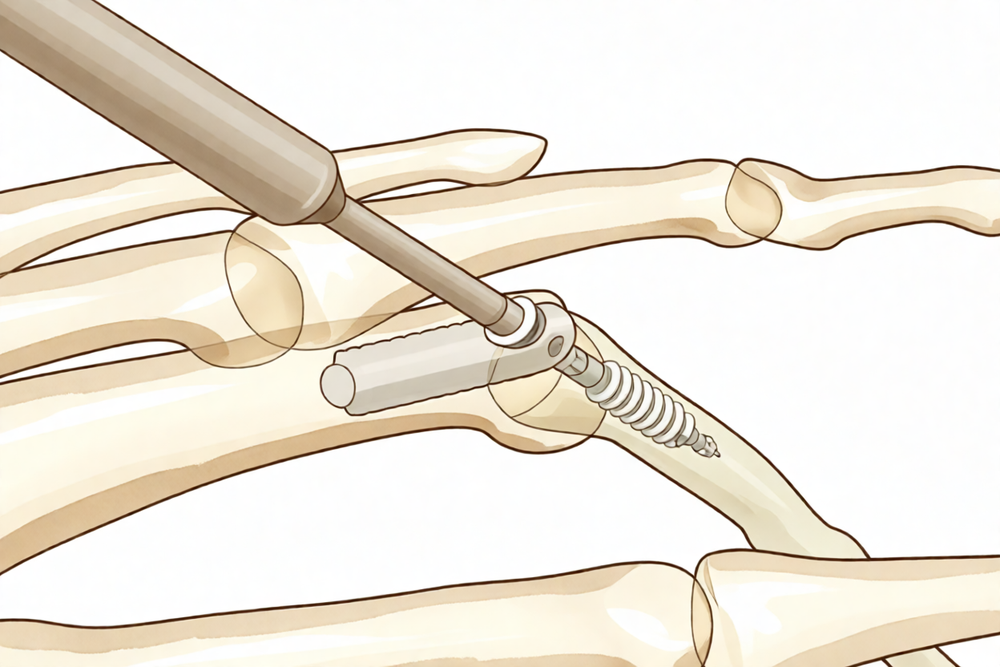
For patients: a plain-language version of this topic is available. See the patient guide.
Overview
Proximal interphalangeal (PIP) joint arthrodesis serves as a definitive salvage procedure for failed joint arthroplasty, offering a safe and viable minimally invasive option when other reconstructive efforts have exhausted [1, 2]. The procedure is indicated for patients with chronic flexion contractures, where the combination of surgical release and post-operative rehabilitation is essential to restore function [11]. While various arthrodesis techniques demonstrate similar fusion times, nonunion rates, and complication profiles, the overall risks of nonunion and reoperation remain low [6, 10]. Minimally invasive approaches have shown efficacy, with one study reporting an improvement in average preoperative total arc of motion from 42 to 56 degrees across 25 joints treated via the volar approach [4].
Arthrodesis also addresses specific traumatic and degenerative pathologies. Volar fixation using mini plates and screws is technically feasible for unstable dorsal fracture-dislocations, allowing early active range of motion and providing good objective and subjective outcomes, though noteworthy complications occurred in 39% of patients [14]. For posttraumatic arthritis, volar plate interposition arthroplasty may serve as a therapeutic alternative [7]. In cases of combined joint pathology, the combination of distal interphalangeal joint arthrodesis and PIP joint Swanson arthroplasty has resulted in favourable outcomes regarding simultaneous bony union and flexibility [22].
The decision to proceed with arthrodesis often follows the failure of primary arthroplasty, where reoperations are common due to extensor mechanism dysfunction [8]. Long-term data indicate that approximately 1 in 5 PIP joint arthroplasties with a pyrocarbon implant require revision surgery by 5 years, and approximately 1 in 3 undergo more than one operation [9]. While treatment of the long finger may be a relative contraindication to arthroplasty [29], various implant options including pyrocarbon hemiarthroplasty [34], the CapFlex-PIP implant [40], and silastic arthroplasty in the index finger [44] offer viable alternatives. Combining PIP arthroplasty with distal interphalangeal arthrodesis yields 1-year outcomes similar to PIP replacement alone [37], and preliminary results encourage this combination to increase range of motion [42]. The Self Locking Finger Joint Implant has demonstrated good pain relief and patient satisfaction while maintaining joint range of motion at a minimum of 2 years of follow-up [43].
Anatomy & Pathophysiology
Bony Anatomy & Kinematics
The hand skeleton comprises 27 bones, including 19 long bones, organized into five rays of metacarpals and phalanges [49]. The index finger metacarpal is the longest in the hand, while the proximal and middle phalanges of the middle and ring fingers are longer than those of the index finger [49]. The transverse axis of the palm is oblique, forming an acute angle of approximately 75 degrees with the longitudinal axis [49]. Flexion axes for the metacarpophalangeal and proximal interphalangeal (PIP) joints are arranged such that flexion causes fingers to converge toward the scaphoid [85]. The PIP joint is a simple hinge joint allowing motion only in the flexion-extension axis, with stability in full extension maintained by highly congruent bony architecture [96]. Local biomechanical forces cause peri-articular finger injury patterns to differ greatly between the three finger joints [88]. Geometrically, the third toe proximal phalanx distal articular surface more closely matches the finger proximal phalanx distal articular surface than the toe middle phalanx distal articular surface [103].
Soft Tissue Anatomy
Extrinsic extensors traverse six fibroosseous retinacular compartments at the wrist, with principal bony insertion on the dorsal proximal aspect of the middle phalanx [48]. Sagittal band fibers insert onto the volar proximal phalanx and lateral borders of the volar plate [48]. The flexor digitorum superficialis (FDS) inserts via radial and ulnar slips into the proximal metaphysis of the middle phalanx, primarily providing digital flexion at the PIP joint [81]. The flexor digitorum profundus (FDP) provides flexion at both the PIP and distal interphalangeal joints, with the A3 annular pulley located over the PIP joint [81]. Dorsal interossei lie on the radial side of the index and middle fingers and the ulnar side of the middle and ring fingers [74]. The deep head of each dorsal interosseous forms a lateral band at the metacarpophalangeal joint, with oblique fibers inserting onto lateral tubercles at the base of the middle phalanx to extend the PIP joint [74]. Volar interossei form the ulnar lateral band of the index finger and the radial lateral band of the ring and little fingers, but do not insert onto the proximal phalanx [74]. Dorsal hand skin is thin with loose connections to deeper planes, allowing free gliding during flexion [83]. PIP flexion utilizes a segment of loose skin immediately above the joint, providing a length gain of 0.7 to 0.9 cm [83]. The dorsal cutaneous unit covering interphalangeal articulations possesses considerable skin excess when digits are in extension [73].
Pathophysiology & Deformity Mechanics
PIP joint contracture pathogenesis is attributed to a cycle of edema, immobilization, and tissue adherence of capsuloligamentous structures [96]. These structures, including the dorsal capsule, volar plate, and collateral ligaments, are essentially isometric throughout the arc of motion [96]. Repetitive PIP flexion following central slip injury attenuates the triangular ligament and oblique interosseous fibers, causing frank palmar subluxation of the lateral bands [63]. In boutonnière deformity, these palmar subluxated lateral bands exaggerate PIP flexion deformity and produce DIP hyperextension [63]. Failure to correct a preoperative flexion contracture of 30 degrees or more at initial presentation is a poor prognostic sign for boutonnière reconstruction [57]. Scar tissue from extensor mechanism injuries decreases force transmission during available excursion as adhesions stretch and resist gliding [57]. The complex extensor mechanism anatomy makes understanding posttraumatic deformity pathomechanics challenging [140]. Posttraumatic boutonnière and swan neck deformities must not be confused with those associated with inflammatory arthritis, as treatment options often differ significantly [140]. Understanding human dexterity mechanics requires appreciating the kinetic chains and intricate interplay of muscles and ligaments comprising the hand [87]. The relative motion concept harnesses normal functional anatomic relationships of the EDC and FDP muscles to vary forces on finger joints [108].
Classification
Kellgren-Lawrence: PIP joint arthroplasty is indicated for patients with radiological signs of PIP joint osteoarthritis classified as Kellgren-Lawrence grade 2 or higher, provided pain persists despite nonsurgical treatment for at least 3 months [12]. Stiffness and deformity serve as additional indications for PIP joint surgery alongside pain [12].
Other Considerations: PIP joint arthroplasty is a good and reliable option for symptomatic PIP joint degenerative, post-traumatic, or inflammatory arthritis given the proper clinical setting [15]. However, patients with inflammatory arthritis are excluded from PIP joint arthroplasty consideration due to the autoimmune nature of the disease and the influence of multi-joint medication on work capability [12]. The TACTYS prosthesis should be proposed exceptionally if PIP joint arthritis causes invalidating functional pain [32]. For patients who work as laborers, fusion of the PIP joint is the procedure of choice when a stiff but painless and strong finger is preferred [41]. The recommended position for PIP joint arthrodesis is 40° to 55°, depending on the patient’s particular needs, the type of finger, and subject to the surgeon’s discretion [41]. PIP joint arthrodesis is indicated for the salvage of a failed PIP joint arthroplasty, where ultimate salvage may require arthrodesis or even amputation [1]. PIP joint arthrodesis is a safe and viable procedure when performed via a minimally invasive technique using a headless screw [2]. The combination of surgery with post-operative rehabilitation is essential in releasing chronic flexion contracture of the PIP joint [11]. Volar plate interposition arthroplasty may be a good therapeutic option for posttraumatic arthritis in PIP joints [7]. Pyrocarbon hemiarthroplasty appears to be a viable alternative to total joint arthroplasty in the treatment of PIP joint arthritis [34]. Various types of partial joint defects of the middle phalangeal base following a PIP fracture dislocation can be reconstructed using an osteochondral autograft from the hamate [70]. The superficialis sling (flexor digitorum superficialis tenodesis) for swan neck reconstruction may be performed with the PIP joint positioned in 20-30 degrees of flexion [3]. A simple staged procedure using a central slip facilitation device is a valid alternative in the management of severe Dupuytren's PIP joint contracture [24]. Extension-block pinning offers a simple and innovative method to treat a complex injury of the PIP joint, specifically unstable dorsal fracture-dislocations [165]. Fixation of unstable PIP joint dorsal fracture-dislocations via a volar approach is technically feasible with mini plates and screws, allowing early active range of motion [14].
Clinical Presentation
Indications and Preoperative Status
Surgical intervention for the proximal interphalangeal (PIP) joint is indicated when radiological signs of osteoarthritis, defined as Kellgren-Lawrence classification grade 2 or higher, coexist with pain that persists despite at least 3 months of nonsurgical treatment [12]. Stiffness and deformity constitute additional indications for surgery beyond pain alone [12]. PIP joint implant arthroplasty serves as a reliable option for symptomatic degenerative, post-traumatic, or inflammatory arthritis within the appropriate clinical setting [15]. Conversely, PIP joint arthrodesis is specifically reserved for manual workers [129].
Symptoms and Physical Findings
In patients with trigger finger, painful triggering is variably located in the palm or at the metacarpophalangeal (MCP) or PIP joint [99]. PIP joint pain in this population is predominantly aching and felt on both the palmar and dorsal aspects [99]. This pain worsens with PIP joint movement, particularly during active extension, and may radiate proximally [99]. Patients reporting PIP joint pain often present with long-standing trigger finger requiring surgery and a variable degree of fixed extension loss [99]. Dorsal PIP joint tenderness is associated with prolonged postoperative pain following A1 pulley release [39]. Consequently, patients with pre-existing PIP tenderness should be informed of the possibility of sustaining residual minor pain for up to 3 months after surgery [39]. When determining the timing of surgery for trigger finger patients, physicians should consider the duration of preoperative symptoms and any preoperative PIP joint flexion contracture [56].
Following PIP joint sprains, patients commonly experience a prolonged duration of swelling, stiffness, and dysfunction [137]. PIP joint stiffness remains an unsolved problem in hand surgery, with poor prognosis in complex cases even after complete arthrolysis and tenolysis [114]. Several factors contribute to resistant stiffness and poor outcomes. Intra-articular fractures can result in resistant stiffness due to capsule scarring or joint incongruity [57]. Proximal phalanx fractures from crush injuries can produce considerable scarring between the bone and the extensor mechanism [57]. Open injuries that produce exposed bone and skin loss often result in healing by secondary intention, causing scarring between the skin and the extensor mechanism [57]. Multiple injuries to the hand and previous operations impose an increased risk of excessive scar formation [57]. Scar tissue decreases force transmission during available excursion as adhesions stretch and resist gliding, reducing both motion and power [57]. A flexion contracture of 30 degrees or more at initial presentation and failure to correct the deformity before repair are poor prognostic signs for boutonnière reconstruction [57].
Functional Impairment
Index finger PIP joint fusion is associated with impairment in the kinematics of precision pinch [17]. The PIP joint arthrodesis angle affects DIP joint extension [33].
Investigations
Clinical Evaluation: A systematic method for approaching the physical examination of the hand is essential due to the high density of structures within a small anatomical space [47]. Accurate clinical evaluation of the injured or dysfunctional hand and wrist requires combining patient history with a careful physical examination to pinpoint or narrow the scope of possible pathologic processes [47].
Diagnostic Testing: Diagnostic tests, including imaging and serum laboratory studies, are useful in determining hand pathology but can be expensive, time-consuming, and often nonspecific [47].
Treatment
Non-Operative
The provided evidence base does not detail specific conservative management protocols such as weight loss, physical therapy, NSAIDs, or injections. However, passive manipulation is identified as an alternative to surgical release for select PIP joint extension contractures [106].
Operative
Indications: PIP joint arthroplasty is a reliable option for symptomatic degenerative, post-traumatic, or inflammatory arthritis in the appropriate clinical setting [15]. Surface replacement arthroplasty is specifically indicated for primary degenerative or post-traumatic arthritis in elderly, less-active patients to maintain motion and avoid arthrodesis [66]. Treatment of the long finger may constitute a relative contraindication to PIP joint arthroplasty [29]. Arthrodesis serves as the ultimate salvage procedure for a failed PIP joint arthroplasty, potentially requiring amputation if fusion is not feasible [1]. In Dupuytren's contracture, indications for arthrodesis should be stringent, as only 2.8% of patients operated upon for this condition required arthrodesis [159].
Surgical Approach / Technique: For PIP joint arthroplasty, the volar approach maintains the extensor tendon, theoretically allowing more aggressive postoperative mobilization to enhance range of motion, but requires collateral ligament release with risks of postoperative lateral instability, boutonniere deformity, adhesions of the flexor tendon, and PIP joint contracture [149]. The dorsal approach requires extensor tendon release and subsequent repair, carrying a greater risk of extensor tendon adhesion leading to PIP joint motion restriction, possible coronal plane instability, and swan-neck deformity [149]. There is no statistical difference in mean postoperative range of motion, incidence of complications, or revision surgery between volar and dorsal approaches [59]. A simplified lateral hinge approach provides adequate exposure without collateral ligament detachment, offers a low risk of complications, and allows early mobilization [152]. Insertion via a lateral approach affords early movement and few complications without leading to instability [119]. In a study of 25 PIP joints placed through the volar approach, the average preoperative total arc of motion improved from 42 to 56 degrees [4].
For arthrodesis, the Herbert screw is used whenever possible [19]. Minimally invasive arthrodesis using a headless screw is a safe and viable procedure [2]. The Lister tubercle can be used as a bone graft for interphalangeal joint salvage arthrodesis [141]. In the Littler technique for small-joint arthrodesis, the recommended PIP joint fusion angle is 30 to 40°, progressing from the index to the small finger [55]. In the tension band technique, bone is resected at a desired fusion angle of 30° to 40° for the index finger, 35° to 45° for the middle finger, 40° to 50° for the ring finger, and 45° to 55° for the small finger [142]. The general recommended position for PIP joint fusion is 40° to 55°, depending on patient needs, finger type, and surgeon discretion [41].
For non-arthrodesis/arthroplasty procedures, the superficialis sling (flexor digitorum superficialis tenodesis) for swan neck reconstruction may be performed through various approaches with the PIP joint positioned in 20-30 degrees of flexion [3]. In a modified sublimis tenodesis, all 5 patients achieved full PIP flexion by 6 weeks postoperatively, with average PIP range of motion at final follow-up of 1 to 96 degrees [5]. Fixation of unstable PIP joint dorsal fracture-dislocations via a volar approach using mini plates and screws is technically feasible, allowing early active range of motion and providing good objective and subjective outcomes, although noteworthy complications occurred in 39% of patients [14]. Hemi-hamate arthroplasty is a valuable option for subacute dorsal fracture-dislocations of the proximal interphalangeal joint [150]. External fixation is a simple and effective treatment modality for chronic traumatic PIP joint contractures with good predictable medium- to long-term results [38], and its use has been encouraging as a useful alternative [166]. A simple staged procedure using a central slip facilitation device is a valid alternative for severe Dupuytren's PIP joint contracture, demonstrating reliable, reproducible correction and acceptable patient outcomes [24]. Periosteum interposition after dorsolateral dislocation of the proximal interphalangeal joint resulted in full range of motion and no pain or laxity of the PIP joint two months after surgery [20]. Total finger joint arthroplasty with a costal osteochondral autograft involves a dorsal approach where the central slip is detached at its insertion and turned proximally for PIP joint exposure [151].
Implant Selection: Pyrocarbon PIP joint arthroplasty carries a risk of early complications necessitating revision surgeries [65]. Approximately 1 in 5 PIP joint arthroplasties with a pyrocarbon implant will require revision surgery by 5 years, and 1 in 3 will undergo more than 1 operation [9]. Reoperations following primary nonconstrained PIP joint arthroplasties are common, with extensor mechanism dysfunction being the most frequent cause [8]. The Self Locking Finger Joint (SLFJ) implant demonstrated good pain relief and overall patient satisfaction while maintaining joint range of motion at a minimum 2 years of follow-up [43]. Excellent functional results and patient satisfaction can be gained using silastic PIP joint arthroplasty in the index finger [44]. Silicone arthroplasty for osteoarthritis of the PIP remains a good option for pain relief [162]. Silicone implant arthroplasty of the PIP joint remains a common and generally successful surgery for the correction of painful stiffness due to underlying arthropathy, with pain relief and patient satisfaction being generally reliable [169]. Although most patients experienced significantly less pain after PIP joint arthroplasty for osteoarthritis, the pain reduction was considered clinically relevant in only 50% of patients [167]. The results of 238 PIP joint implant arthroplasties at 1- to 2-year follow-up evaluation were classified as group I (67%), group II (17%), and group III (16%) [16].
Alignment / Balancing Strategy: Available PIP joint arthrodesis techniques have similar fusion time, nonunion rate, and complication rate outcomes [6]. Risks of nonunion and reoperation after PIP joint arthrodeses are low [10].
Pain Management: Patients with pre-existing PIP tenderness should be informed about the possibility of sustaining residual minor pain for up to 3 months after A1 pulley release for trigger fingers [39].
Adjuncts: Minimizing postoperative complications after MCP and PIP joint arthroplasty is one avenue to decrease health care costs [50].
Setting of Care: The evidence does not specify outpatient versus inpatient settings for these procedures.
Revision: The combination of DIP arthrodesis and PIP Swanson arthroplasty resulted in a favourable outcome in terms of simultaneous bony union and flexibility [22]. Preliminary results encourage considering combining DIP arthrodesis with PIP joint arthroplasty to increase range of motion, despite study limitations of small sample size and short follow-up [42]. Combined DIP arthrodesis and PIP procedures present unique challenges regarding hardware conflict, where K-wires offer the easiest compatibility and headless screws must ideally not reach proximal to the midpoint of the middle phalanx [120].
Other Considerations: Although operative correction of swan-neck and boutonniere deformities in the rheumatoid hand frequently reduces pain and increases function, surgeons must remain reserved regarding long-term results [168].
Complications
PIP Joint Arthroplasty
Implant Failure and Loosening: Pyrocarbon implants demonstrate a 5-year revision rate of approximately 1 in 5, with about 1 in 3 patients undergoing more than one operation [9]. In a specific series, 28% of patients required a second procedure and 8% required revision arthroplasty [178]. Long-term follow-up of pyrocarbon implants over 10 years revealed that 10 joints in 10 patients required further operations, with complications including persisting pain, skin necrosis, infection, aseptic loosening, limited range of motion, and hyperextension with painful snapping [45]. Surface replacement arthroplasties carry higher risks, with published complication rates reaching up to 30% and reoperation or revision rates reported between 6% and 58% [146]. In a series of 43 primary PIP-SRA implants, 11 joints required revision [53]. Potential complications for surface replacement include implant failure, joint stiffness, and joint deformity owing to instability [156].
Instability and Deformity: Silicone PIP implants are associated with lateral instability and recurrence of deformity due to their non-constrained design [145]. Common complications across arthroplasty types include recurrent deformities or instability, stiffness, and severe pain [146]. In a series of 106 PIP joint arthroplasties in border digits, 20 joints (18%) required revision surgery, with the most common etiologies being pain and stiffness, followed by postoperative dislocation, infection, and implant fracture [144].
Infection: Infection is a recognized complication in both pyrocarbon and border digit arthroplasty series [45, 144].
Stiffness and Pain: Stiffness and severe pain are common complications [146]. In border digit arthroplasties, pain and stiffness were the leading causes for revision [144]. Pyrocarbon implants may present with persisting pain and limited range of motion [45].
Other Considerations: Revision PIP arthroplasty is associated with a high incidence of complications and a 70% 5-year survival rate [139]. Younger age leads to higher revision rates, particularly in the posttraumatic setting [68]. Pyrocarbon PIPJ arthroplasty carries a risk of early complications necessitating revision surgeries [65]. In a study of 238 PIP joint implant arthroplasties at 1- to 2-year follow-up, 35 joints (16%) were classified as group III results [16].
Surgical Approach: The volar approach to PIP surface replacement arthroplasty can result in minimal complications in active patients with osteoarthritis or posttraumatic arthritis [30]. In a study of 25 PIP joints placed through the volar approach, the average preoperative total arc of motion improved from 42 to 56 degrees [4]. A comparison of volar and dorsal approaches identified no statistical difference in the incidence of complications [59].
PIP Joint Arthrodesis
Nonunion and Reoperation: Risks of nonunion and reoperation after PIPJ arthrodeses are low [10]. Available techniques have similar nonunion rates and complication rates [6]. However, achieving solid fusion is not completely reliable or without complication [25]. In a series of 85 joints undergoing tenon arthrodesis, the overall success rate of fusion was 97.7%, with a 100% rate of fusion in the fingers' proximal interphalangeal joints and no complications other than two failures of fusion [97]. In a series of 122 PIP joint arthrodeses in rheumatoid arthritis, union was achieved primarily in 93.5 percent of cases with the use of Kirschner wire fixation alone [190].
Hardware-Related Complications: Complications associated with the Harrison–Nicolle intramedullary peg include infection and peg displacement [27]. In a review of 13 cases using this peg, fibrous union was observed in 7 joints and bony union in 6 joints [27].
Salvage and Outcomes: Patients undergoing PIP joint arthrodesis as a salvage for failed arthroplasty demonstrate fair to good subjective and functional outcomes [25]. Ultimate salvage for the failed PIP joint arthroplasty may require arthrodesis or even amputation [1]. In a series of 4 patients (5 joints) undergoing Steinmann pin arthrodesis for salvage of failed small joint arthroplasty, the reason for conversion was instability/subsidence in 3 joints and pain in 2 joints [52]. Minimally invasive PIP joint arthrodesis is a safe and viable procedure [2].
Other Considerations: Arthrodesis of the distal interphalangeal joint often leads to complications [54]. The authors use the Herbert screw whenever possible in PIP joint arthrodeses [19]. In a series of PIP joint arthrodeses, the extensor tendon is split longitudinally at the proximal interphalangeal level [55]. Bone is removed from the head of the proximal bone at an angle so that the arthrodesis site is coapted in 30 to 40 degrees of flexion [55].
Other PIP Joint Procedures and Injuries
Injury-Related Complications: Complications regularly arise after PIP joint injuries, yet they can often be prevented through early detection of injury and appropriate initial treatment protocols [18].
Graft and Reconstruction Complications: Potential complications of reverse hemi-hamate autograft for volar PIP joint fracture-dislocations include fixation failure, failure of the graft to incorporate into the middle phalanx, loss of the extensor mechanism, and persistent instability of the PIP joint [67]. If reverse hemi-hamate autograft surgery fails, a PIP arthrodesis will most likely need to be performed as a salvage procedure [67]. In a retrospective study of 10 fingers undergoing modified two-stage flexor tendon reconstruction, the most common complications were flexion contractures, with four PIP flexion contractures occurring [160]. Bowstringing caused by failed pulley reconstruction was observed in two PIP joints in a study of modified two-stage flexor tendon reconstruction [160].
Recovery
Rehabilitation protocol: A controlled motion rehabilitation program guides occupational therapy over a twelve-week postoperative timeline for PIP joint arthroplasty [111]. This protocol promotes watchful progression toward the timely achievement of optimal PIP joint motion while protecting the extensor tendon repair [111]. The hook plate technique allows patients to tolerate early range of motion exercises [113].
Functional milestones: Two months after surgery for dorsolateral dislocation of the PIP joint, a patient demonstrated a full range of motion and reported no pain or laxity of the PIPJ [20]. Following modified sublimis tenodesis, all 5 patients achieved full PIP flexion by 6 weeks postoperatively [5]. At final follow-up for this procedure, average PIP range of motion was 1 to 96 degrees [5]. For FDS tenodesis for PIP joint volar plate chronic avulsion, patients attained ROM comparable to the contralateral finger at last follow-up [175].
Other Considerations: The hook plate technique obtains satisfactory clinical outcomes in both the PIP and DIP joints [113]. Findings regarding nonunion and reoperation risks may guide clinicians and patients in the preoperative decision-making process [10]. These findings also help with targeted postoperative surveillance to mitigate these risks [10]. Long-term outcomes of arthrodesis for severe recurrent PIP joint contractures in Dupuytren’s disease show high patient satisfaction, fairly rapid return to function, and no requirement for revision surgery [148]. At last follow-up for FDS tenodesis for PIP joint volar plate chronic avulsion, 7 of the 13 reviewed patients presented an excellent functional recovery, and patients presented complete resolution of pain and stability [175].
Key Evidence
- [L5] Ultimate salvage for the failed PIP joint arthroplasty may require arthrodesis or even amputation. [1] (10.1016/j.hcl.2017.12.011)
- [L4] Minimally invasive PIP joint arthrodesis is a safe and viable procedure. [2] (10.1097/bth.0000000000000189)
- [L5] The procedure may be performed through various approaches with the PIP joint positioned in 20-30 degrees of flexion. [3] (10.1016/j.jhsa.2015.07.018)
- [L4] In a study of 25 PIP joints placed through the volar approach during a 5-year period with an average follow-up of 33 months, the average preoperative total arc of motion improved from 42 to 56 degrees. [4] (10.1097/bth.0b013e31818c0f71)
- [L4] At final follow-up, average PIP range of motion was 1 to 96 degrees, and all 5 patients achieved full PIP flexion by 6 weeks postoperatively. [5] (10.1097/bth.0000000000000114)
- [L4] The available PIPJ arthrodesis techniques have similar fusion time, nonunion rate, and complication rate outcomes. [6] (10.1177/1558944721998019)
- [L4] We suggest that volar plate interposition arthroplasty may be a good therapeutic option for posttraumatic arthritis in PIP joints or MCP joints. [7] (10.1016/j.jhsa.2007.10.020)
- [L4] Reoperations following primary nonconstrained PIP joint arthroplasties are common, with extensor mechanism dysfunction being the most frequent cause. [8] (10.1016/j.jhsa.2011.06.002)
- [L4] Approximately 1 in 5 PIP joint arthroplasties with a pyrocarbon implant will require revision surgery by 5 years, and 1 in 3 will undergo more than 1 operation. [9] (10.1016/j.jhsa.2018.06.020)
- [L3] Risks of nonunion and reoperation after PIPJ arthrodeses are low; however, these findings may guide clinicians and patients in the preoperative decision-making process and help with targeted postoperative surveillance to mitigate these risks. [10] (10.1177/1558944720939196)
- [L4] The combination of surgery with post-operative rehabilitation is essential in releasing chronic flexion contracture of the PIP joint. [11] (10.1016/s0266-7681(05)80099-3)
- [L3] [12] (10.1177/15589447221141485)
- [L4] Fixation of unstable PIP joint DFDs via a volar approach is technically feasible with mini plates and screws, allowing early active range of motion and providing good objective and subjective outcomes, although noteworthy complications occurred in 39% of patients. [14] (10.1016/j.jhsa.2011.08.030)
- [L4] PIPJ implant arthroplasty is a good and reliable option for symptomatic PIPJ degenerative, post-traumatic or inflammatory arthritis given the proper clinical setting. [15] (10.1177/17531934241265837)
- [L4] [16] (10.1016/s0363-5023(95)80178-2)
- [L1] This study reports impairment in the kinematics of precision pinch associated with index finger PIP joint fusion. [17] (10.1016/j.jhsa.2011.09.010)
- [L5] Complications regularly arise after PIP joint injuries, yet they can often be prevented through early detection of injury and appropriate initial treatment protocols. [18] (10.1016/j.hcl.2017.12.014)
- [L4] The authors now use the Herbert screw whenever possible in PIP joint arthrodeses. [19] (10.1016/0363-5023(94)90002-7)
- [L5] Two months after surgery, he demonstrated a full range of motion, and reported no pain or laxity of the PIPJ. [20] (10.1177/1753193420937563)
- [L4] The combination of DIP arthrodesis and PIP Swanson arthroplasty resulted in a favourable outcome in terms of simultaneous bony union and flexibility. [22] (10.1177/17531934231215790)
- [L4] The simple staged procedure is a valid alternative in the management of severe Dupuytren's PIPJ contracture, demonstrating reliable, reproducible correction of the deformity and acceptable patient outcomes. [24] (10.1177/1753193412439673)
- [L4] Although achieving solid fusion with arthrodesis is not completely reliable or without complication, patients' subjective and functional outcomes demonstrate fair to good results. [25] (10.1016/j.jhsa.2010.10.030)
- [L4] [27] (10.1016/0266-7681(94)90167-8)
- [L1] Treatment of the long finger may be a relative contraindication to PIPJ arthroplasty. [29] (10.1177/1558944718791186)
- [L4] The volar approach to PIP SRA can result in excellent range of motion, function, and pain relief with minimal complications in active patients with osteoarthritis or posttraumatic arthritis. [30] (10.1016/j.jhsa.2011.03.003)
- [L4] It should be proposed exceptionally if the PIP joint arthritis causes invalidating functional pain. [32] (10.1177/15589447211030962)
- [L5] The PIP joint arthrodesis angle affects DIP joint extension. [33] (10.1016/j.jhsa.2017.04.002)
- [L4] Pyrocarbon hemiarthroplasty appears to be a viable alternative to total joint arthroplasty in the treatment of PIP joint arthritis. [34] (10.1016/j.jhsa.2014.12.016)
- [L3] Combining proximal interphalangeal joint arthroplasty with distal interphalangeal arthrodesis leads to 1-year outcomes that are similar to those achieved by proximal interphalangeal joint replacement alone. [37] (10.1177/17531934231191255)
- [L4] External fixation is a simple and effective treatment modality for chronic traumatic PIP joint contractures with good predictable medium- to long-term results. [38] (10.1016/j.jhsa.2013.07.007)
- [L2] Patients with pre-existing PIP tenderness should be informed about the possibility of sustaining residual minor pain for up to 3 months after surgery. [39] (10.1186/s12891-023-06130-5)
- [L4] The CapFlex-PIP implant demonstrates favourable medium-term results in surface replacing arthroplasty of the proximal interphalangeal joint. [40] (10.1177/1753193420977244)
- [L4] [41] (10.1097/01.bth.0000134707.51560.cc)
- [L4] The authors state that their preliminary results encourage considering combining the two operations to increase range of motion following PIP joint arthroplasty, despite study limitations of small sample size and short follow-up. [42] (10.1177/1753193420954371)
- [L4] The minimum 2 years of follow-up evaluation of the SLFJ implant PIP joint arthroplasty demonstrated good pain relief and good overall patient satisfaction while maintaining joint range of motion. [43] (10.1177/1558944717726136)
- [L4] The series shows that excellent functional results and patient satisfaction can be gained using silastic PIP joint arthroplasty in the index finger. [44] (10.1177/1558944720921468)
- [L4] [45] (10.1177/1753193413479527)
- [L3] Minimizing postoperative complications after MCP and PIP joint arthroplasty is one avenue to decrease health care costs. [50] (10.1016/j.jhsa.2019.11.002)
- [L4] [52] (10.1016/j.jhsa.2011.05.027)
- [L4] [53] (10.1016/j.jhsa.2008.06.008)
- [L3] Arthrodesis of the distal interphalangeal joint often leads to complications. [54] (10.1177/17531934221111641)
- [L4] [55] (10.1016/s0363-5023(86)80011-9)
- [L4] Physicians should consider the duration of preoperative symptoms and preoperative flexion contracture of the PIP joint when deciding timing of surgery for trigger finger patients. [56] (10.1016/j.jhsa.2018.06.023)
- [L5] [57] (10.1016/0363-5023(92)90458-2)
- [L3] The study identified no statistical difference in mean postoperative ROM, incidence of complications, or revision surgery between volar and dorsal approaches for PIP arthroplasty. [59] (10.1177/1558944719861718)
- [L5] [63] (10.1016/s0266-7681(96)80142-2)
- [L3] Pyrocarbon PIPJ arthroplasty has a risk of early complications necessitating revision surgeries. [65] (10.1007/s00402-020-03592-3)
- [L4] Surface replacement arthroplasty of the PIPJ is indicated for primary degenerative or post-traumatic arthritis in elderly, less-active patients to maintain motion and avoid arthrodesis. [66] (10.1016/j.jhsa.2007.04.012)
- [L4] [67] (10.1016/j.jhsa.2023.01.009)
- [L3] Younger age leads higher revision rates after PIP arthroplasty, particularly in the posttraumatic setting. [68] (10.5435/jaaos-d-17-00109)
- [L4] Various types of partial joint defects of the middle phalangeal base following a PIP fracture dislocation can be reconstructed using an osteochondral autograft from the hamate. [70] (10.1016/j.jhsa.2021.11.007)
- [Paper] Understanding the mechanics of human dexterity requires an appreciation of the kinetic chains that comprise the hand and the intricate interplay of muscles and ligaments that control its movements. [87] (10.1053/jhsu.2002.28764)
- [L4] The patterns of peri-articular finger injuries differ greatly between the three finger joints, explained by the mechanism of falling and local biomechanical forces. [88] (10.1177/17531934251381203)
- [L5] [96] (10.1016/j.jhsa.2015.06.118)
- [L4] [97] (10.1016/s0363-5023(86)80201-5)
- [L4] [99] (10.1177/1753193418809771)
- [L4] The third toe proximal phalanx distal articular surface more closely matched the geometric characteristics of the finger proximal phalanx distal articular surface than did the toe middle phalanx distal articular surface. [103] (10.1016/j.jhsa.2011.01.047)
- [L4] Passive manipulation is an alternative to surgical release for select PIP joint extension contractures. [106] (10.1016/j.jhsa.2022.01.023)
- [L5] The relative motion concept harnesses normal functional anatomic relationships of the EDC and FDP muscles to vary forces on finger joints, allowing immediate controlled active motion while reducing undesirable tension. [108] (10.1016/j.jht.2022.12.006)
- [L5] This controlled motion rehabilitation program has been useful in our practice to help guide occupational therapy over a twelve-week postoperative timeline in a manner that is simple and promotes watchful progression to the timely achievement of optimal PIP joint motion while protecting the extensor tendon repair. [111] (10.1016/j.jht.2019.04.003)
- [L4] The hook plate technique, which minimizes interference with the finger extension mechanism, is an effective surgical procedure that allows patients to tolerate early range of motion exercises and obtain satisfactory clinical outcomes in both the PIP and DIP joints. [113] (10.1016/j.jhsa.2023.09.004)
- [L5] PIP joint stiffness remains an unsolved problem in hand surgery, with poor prognosis in complex cases even after complete arthrolysis and tenolysis. [114] (10.1177/17531934221143690)
- [L4] Insertion of a silicone implant arthroplasty for the PIP joint can easily be performed through a lateral approach, affording early movement and few complications without leading to instability. [119] (10.1016/j.jhsa.2007.04.011)
- [L5] Combined DIP arthrodesis and PIP procedures present unique challenges regarding hardware conflict; K-wires offer the easiest compatibility, while headless screws must ideally not reach proximal to the midpoint of the middle phalanx. [120] (10.1016/j.jhsa.2024.08.006)
- [L4] Arthrodesis of the PIP joint provides the best results regarding pain, strength, and patient satisfaction, and is reserved for manual workers. [129] (10.1016/j.hansur.2019.10.109)
- [L4] It is common for patients to experience a prolonged duration of swelling, stiffness, and dysfunction following PIP joint sprains. [137] (10.1016/j.jhsa.2023.01.025)
- [L3] Revision arthroplasty was associated with a 70% 5-year survival but with a high incidence of complications. [139] (10.1016/j.jhsa.2015.05.015)
- [L5] [140] (10.5435/jaaos-d-14-00272)
- [L4] [141] (10.1016/j.jhsa.2012.05.043)
- [L5] [142] (10.1016/j.jhsa.2007.04.014)
- [L4] [144] (10.1177/1753193420926127)
- [L4] [145] (10.1177/17531934231156073)
- [L1] [146] (10.1177/1753193418770606)
- [L4] The long-term outcomes show high patient satisfaction, fairly rapid return to function with no requirement for revision surgery. [148] (10.1177/1753193420960309)
- [L4] [149] (10.1177/1753193419891382)
- [L4] [150] (10.1016/j.jhsa.2016.02.007)
- [L4] [151] (10.1177/1753193418806195)
- [L4] [152] (10.1097/bth.0000000000000094)
- [L4] [156] (10.1177/1753193413511922)
- [L4] The indications for this procedure should be stringent, as only 2.8% of patients operated upon for Dupuytren's contracture required arthrodesis. [159] (10.1016/s0363-5023(87)80291-5)
- [L4] [160] (10.1016/j.jhsa.2023.01.011)
- [L4] Silicone arthroplasty for osteoarthritis of the PIP remains a good option for pain relief. [162] (10.1177/1558944718769427)
- [L4] EBP offers a simple and innovative method to treat a complex injury of the PIP joint. [165] (10.1177/15589447211066352)
- [L5] The use of external fixation for treating PIP contracture has been encouraging and can be a useful alternative. [166] (10.1016/j.jhsa.2013.03.014)
- [L4] Although most patients experienced significantly less pain after surgery, the pain reduction was considered clinically relevant in only 50% of patients. [167] (10.1016/j.jhsa.2022.03.026)
- [L5] Although operative correction frequently reduces pain and increases function, surgeons must remain reserved regarding long-term results. [168] (10.5435/00124635-199903000-00002)
- [L4] Silicone implant arthroplasty of the PIP joint remains a common and generally successful surgery for the correction of painful stiffness due to underlying arthropathy, with pain relief and patient satisfaction being generally reliable. [169] (10.1016/j.jhsa.2007.04.013)
- [L4] At last follow up, 7 of the 13 reviewed patients presented an excellent functional recovery, with complete resolution of pain and stability with attainment of ROM comparable to the contralateral finger. [175] (10.1142/s2424835519500267)
- [L4] Twenty-eight percent of patients required a second procedure and 8% required a revision arthroplasty. [178] (10.1016/j.jhsa.2006.10.017)
- [L4] Union was achieved primarily in 93.5 percent of cases with the use of Kirschner wire fixation alone. [190] (10.3109/17453676608989418)
See Also
- Dislocations
- Boutonnière Deformity
- Joint Surgery
- PIP Joint Arthritis
- Trigger Finger
- Extensor Tendon Repair
References
[1] Salvaging a Failed Proximal Interphalangeal Joint Implant. Hand Clinics. 2018. DOI: 10.1016/j.hcl.2017.12.011
[2] Minimally Invasive Proximal Interphalangeal Joint Arthrodesis Using Headless Screw: Surgical Technique. Techniques in Hand & Upper Extremity Surgery. 2018. DOI: 10.1097/bth.0000000000000189
[3] Superficialis Sling (Flexor Digitorum Superficialis Tenodesis) for Swan Neck Reconstruction. The Journal of Hand Surgery. 2015. DOI: 10.1016/j.jhsa.2015.07.018
[4] The Volar Approach to Proximal Interphalangeal Joint Arthroplasty. Techniques in Hand & Upper Extremity Surgery. 2009. DOI: 10.1097/bth.0b013e31818c0f71
[5] Modified Sublimis Tenodesis. Techniques in Hand & Upper Extremity Surgery. 2016. DOI: 10.1097/bth.0000000000000114
[6] Proximal Interphalangeal Joint Arthrodesis Techniques: A Systematic Review. HAND. 2021. DOI: 10.1177/1558944721998019
[7] Volar Plate Interposition Arthroplasty for Posttraumatic Arthritis of the Finger Joints. The Journal of Hand Surgery. 2008. DOI: 10.1016/j.jhsa.2007.10.020
[8] Reoperations Following Proximal Interphalangeal Joint Nonconstrained Arthroplasties. The Journal of Hand Surgery. 2011. DOI: 10.1016/j.jhsa.2011.06.002
[9] Medium-Term Outcomes With Pyrocarbon Proximal Interphalangeal Arthroplasty: A Study of 170 Consecutive Arthroplasties. The Journal of Hand Surgery. 2018. DOI: 10.1016/j.jhsa.2018.06.020
[10] Nonunion and Reoperation Following Proximal Interphalangeal Joint Arthrodesis and Associated Patient Factors. HAND. 2020. DOI: 10.1177/1558944720939196
[11] The Treatment of Chronic Flexion Contractures of the Proximal Interphalangeal Joint. Journal of Hand Surgery. 1995. DOI: 10.1016/s0266-7681(05)80099-3
[12] Type of Work and Preoperative Ability to Perform Work Affect Return to Usual Work Following Proximal Interphalangeal Joint Arthroplasty for Osteoarthritis. HAND. 2022. DOI: 10.1177/15589447221141485
[14] Volar Plating for Unstable Proximal Interphalangeal Joint Dorsal Fracture-Dislocations. The Journal of Hand Surgery. 2011. DOI: 10.1016/j.jhsa.2011.08.030
[15] Proximal interphalangeal joint arthroplasty: current trends and evidence-based practice. Journal of Hand Surgery (European Volume). 2024. DOI: 10.1177/17531934241265837
[16] Long-term results of proximal interphalangeal joint resection arthroplasties with a silicone implant. The Journal of Hand Surgery. 1995. DOI: 10.1016/s0363-5023(95)80178-2
[17] Influence of Index Finger Proximal Interphalangeal Joint Arthrodesis on Precision Pinch Kinematics. The Journal of Hand Surgery. 2011. DOI: 10.1016/j.jhsa.2011.09.010
[18] Complications of Proximal Interphalangeal Joint Injuries. Hand Clinics. 2018. DOI: 10.1016/j.hcl.2017.12.014
[19] Arthrodesis of the proximal interphalangeal joint of the finger: Comparison of the use of the Herbert screw with other fixation methods. The Journal of Hand Surgery. 1994. DOI: 10.1016/0363-5023(94)90002-7
[20] Periosteum interposition after dorsolateral dislocation of the proximal interphalangeal joint. Journal of Hand Surgery (European Volume). 2020. DOI: 10.1177/1753193420937563
[22] Simultaneous anterograde screw arthrodesis of distal interphalangeal joint and silastic proximal interphalangeal joint replacement for osteoarthritis. Journal of Hand Surgery (European Volume). 2023. DOI: 10.1177/17531934231215790
[24] Management of severe Dupuytren’s contracture of the proximal interphalangeal joint with use of a central slip facilitation device. Journal of Hand Surgery (European Volume). 2012. DOI: 10.1177/1753193412439673
[25] Arthrodesis as a Salvage for Failed Proximal Interphalangeal Joint Arthroplasty. The Journal of Hand Surgery. 2011. DOI: 10.1016/j.jhsa.2010.10.030
[27] Complications of the Use of the Harrison–Nicolle Intramedullary Peg in Digital Arthrodesis. Journal of Hand Surgery. 1994. DOI: 10.1016/0266-7681(94)90167-8
[29] Prosthetic Arthroplasty of Proximal Interphalangeal Joints for Treatment of Osteoarthritis and Posttraumatic Arthritis: Systematic Review and Meta-Analysis Comparing the Three Ulnar Digits With the Index Finger. HAND. 2018. DOI: 10.1177/1558944718791186
[30] Surface Replacement Arthroplasty of the Proximal Interphalangeal Joint Using a Volar Approach: Case Series. The Journal of Hand Surgery. 2011. DOI: 10.1016/j.jhsa.2011.03.003
[32] Arthroplasty of the Proximal Interphalangeal Joint With the TACTYS Prosthesis: Clinical and Radiographic Results With a Mean Follow-up of 5 Years. HAND. 2022. DOI: 10.1177/15589447211030962
[33] Biomechanics and Pinch Force of the Index Finger Under Simulated Proximal Interphalangeal Arthrodesis. The Journal of Hand Surgery. 2017. DOI: 10.1016/j.jhsa.2017.04.002
[34] Pyrolytic Carbon Hemiarthroplasty in the Management of Proximal Interphalangeal Joint Arthritis. The Journal of Hand Surgery. 2015. DOI: 10.1016/j.jhsa.2014.12.016
[37] Does distal interphalangeal joint arthrodesis affect proximal interphalangeal joint arthroplasty outcomes in the same finger?. Journal of Hand Surgery (European Volume). 2023. DOI: 10.1177/17531934231191255
[38] Distraction for Proximal Interphalangeal Joint Contractures: Long-Term Results. The Journal of Hand Surgery. 2013. DOI: 10.1016/j.jhsa.2013.07.007
[39] Dorsal proximal interphalangeal joint tenderness is associated with prolonged postoperative pain after A1 pulley release for trigger fingers. BMC Musculoskeletal Disorders. 2023. DOI: 10.1186/s12891-023-06130-5
[40] Surface replacing arthroplasty of the proximal interphalangeal joint using the CapFlex-PIP implant: a prospective study with 5-year outcomes. Journal of Hand Surgery (European Volume). 2020. DOI: 10.1177/1753193420977244
[41] Finger Joint Fusion With the Aid of an Aluminum Template. Techniques in Hand & Upper Extremity Surgery. 2004. DOI: 10.1097/01.bth.0000134707.51560.cc
[42] Concomitant arthrodesis of the distal interphalangeal joint with surface replacement arthroplasty of the proximal interphalangeal joint: a comparative study in 11 patients. Journal of Hand Surgery (European Volume). 2020. DOI: 10.1177/1753193420954371
[43] Outcomes of Surface Replacement Proximal Interphalangeal Joint Arthroplasty Using the Self Locking Finger Joint Implant: Minimum Two Years Follow-up. HAND. 2017. DOI: 10.1177/1558944717726136
[44] The Long-term Results of Proximal Interphalangeal Joint Arthroplasty of the Osteoarthritic Index Finger. HAND. 2020. DOI: 10.1177/1558944720921468
[45] Ten years’ experience with a pyrocarbon prosthesis replacing the proximal interphalangeal joint. A prospective clinical and radiographic follow-up. Journal of Hand Surgery (European Volume). 2013. DOI: 10.1177/1753193413479527
[47] Orthopaedic Knowledge Update 13 Ebook Without Multimedia. Anatomy, Evaluation, Clinical Examination, and Imaging > Evaluation and Clinical Examination: Current Concepts.
[48] A Lange Medical Book Current Diagnosis Treatment In Orthopedics Fifth Edition. 9Hand Surgery > Image DISORDERS OF THE MUSCULATURE OF THE HAND.
[49] Exam Of The Hand Wrist 2Ed. 1.1 SKELETON OF THE HAND > The osseous skeleton.
[50] National Prevalence of Complications and Cost of Small Joint Arthroplasty for Hand Osteoarthritis and Post-Traumatic Arthritis. The Journal of Hand Surgery. 2020. DOI: 10.1016/j.jhsa.2019.11.002
[52] Steinmann Pin Arthrodesis for Salvage of Failed Small Joint Arthroplasty. The Journal of Hand Surgery. 2011. DOI: 10.1016/j.jhsa.2011.05.027
[53] Surface Replacement Arthroplasty of the Proximal Interphalangeal Joint Using the PIP-SRA Implant: Results, Complications, and Revisions. The Journal of Hand Surgery. 2008. DOI: 10.1016/j.jhsa.2008.06.008
[54] Risk factors in distal interphalangeal joint arthrodesis in the hand: a retrospective study of 173 cases. Journal of Hand Surgery (European Volume). 2022. DOI: 10.1177/17531934221111641
[55] Small-joint arthrodesis in the hand. The Journal of Hand Surgery. 1986. DOI: 10.1016/s0363-5023(86)80011-9
[56] Factors Causing Prolonged Postoperative Symptoms Despite Absence of Complications After A1 Pulley Release for Trigger Finger. The Journal of Hand Surgery. 2019. DOI: 10.1016/j.jhsa.2018.06.023
[57] Biomechanical evaluation of chronic boutonnière reconstructions. The Journal of Hand Surgery. 1992. DOI: 10.1016/0363-5023(92)90458-2
[59] Comparison of Volar and Dorsal Approach for PIP Arthroplasty. HAND. 2019. DOI: 10.1177/1558944719861718
[63] Diagnosis of Closed Central Slip Injuries. Journal of Hand Surgery. 1996. DOI: 10.1016/s0266-7681(96)80142-2
[65] Outcome of proximal interphalangeal joint replacement with pyrocarbon implants: a long-term longitudinal follow-up study. Archives of Orthopaedic and Trauma Surgery. 2020. DOI: 10.1007/s00402-020-03592-3
[66] Surface Replacement Arthroplasty of the Proximal Interphalangeal Joint. The Journal of Hand Surgery. 2007. DOI: 10.1016/j.jhsa.2007.04.012
[67] Reverse Hemi-Hamate Autograft for Volar Proximal Interphalangeal Joint Fracture-Dislocations. The Journal of Hand Surgery. 2023. DOI: 10.1016/j.jhsa.2023.01.009
[68] Proximal Interphalangeal Joint Arthroplasty in Young Patients. Journal of the American Academy of Orthopaedic Surgeons. 2019. DOI: 10.5435/jaaos-d-17-00109
[70] Osteochondral Autograft From the Hamate for Treating Partial Defect of the Proximal Interphalangeal Joint. The Journal of Hand Surgery. 2023. DOI: 10.1016/j.jhsa.2021.11.007
[73] Exam Of The Hand Wrist 2Ed. Functional cutaneous units.
[74] Green S Operative Hand Surgery. Interosseous and Hypothenar Muscles.
[81] A Lange Medical Book Current Diagnosis Treatment In Orthopedics Fifth Edition. 9Hand Surgery > FLEXOR TENDON INJURY.
[83] Exam Of The Hand Wrist 2Ed. The dorsal skin.
[85] Exam Of The Hand Wrist 2Ed. The digital rays.
[87] Historical perspective of finger joint motion: The hand-me-downs of our predecessors—the Richard J. Smith Memorial Lecture. The Journal of Hand Surgery. 2002. DOI: 10.1053/jhsu.2002.28764
[88] Is there a difference in the types of injuries occurring around each finger joint after a fall?. Journal of Hand Surgery (European Volume). 2025. DOI: 10.1177/17531934251381203
[96] Hand Therapy Modalities for Proximal Interphalangeal Joint Stiffness. The Journal of Hand Surgery. 2015. DOI: 10.1016/j.jhsa.2015.06.118
[97] The tenon method of small joint arthrodesis in the hand. The Journal of Hand Surgery. 1986. DOI: 10.1016/s0363-5023(86)80201-5
[99] Clinical significance of proximal interphalangeal joint pain in patients with trigger fingers. Journal of Hand Surgery (European Volume). 2018. DOI: 10.1177/1753193418809771
[103] Structural Comparison of the Finger Proximal Interphalangeal Joint Surfaces and Those of the Third Toe: Suitability for Joint Reconstruction. The Journal of Hand Surgery. 2011. DOI: 10.1016/j.jhsa.2011.01.047
[106] Passive Manipulation for Proximal Interphalangeal Joint Extension Contractures. The Journal of Hand Surgery. 2023. DOI: 10.1016/j.jhsa.2022.01.023
[108] A commentary from the pioneers on the innovation of the relative motion concept: History, biologic considerations, and anatomic rationale. Journal of Hand Therapy. 2023. DOI: 10.1016/j.jht.2022.12.006
[111] A new controlled motion program for rehabilitation of the proximal interphalangeal joint arthroplasty. Journal of Hand Therapy. 2021. DOI: 10.1016/j.jht.2019.04.003
[113] The Results of Hook Plate Fixation for Palmar Fracture Dislocation of the Proximal Interphalangeal Joint. The Journal of Hand Surgery. 2025. DOI: 10.1016/j.jhsa.2023.09.004
[114] The stiff proximal interphalangeal joint – an unsolved problem?. Journal of Hand Surgery (European Volume). 2023. DOI: 10.1177/17531934221143690
[119] Lateral Approach to Proximal Interphalangeal Joint Implant Arthroplasty. The Journal of Hand Surgery. 2007. DOI: 10.1016/j.jhsa.2007.04.011
[120] Combined Distal Interphalangeal Joint Arthrodesis With Proximal Interphalangeal Joint Arthroplasty or Arthrodesis: Technical Considerations. The Journal of Hand Surgery. 2025. DOI: 10.1016/j.jhsa.2024.08.006
[129] Évaluation des traitements non conservateurs dans les destructions traumatiques d’articulations interphalangiennes proximales des doigts par arthrodèse, arthroplastie totale ou greffe arthroplastique d’hémi-hamatum. Hand Surgery and Rehabilitation. 2019. DOI: 10.1016/j.hansur.2019.10.109
[137] Swelling, Stiffness, and Dysfunction Following Proximal Interphalangeal Joint Sprains. The Journal of Hand Surgery. 2024. DOI: 10.1016/j.jhsa.2023.01.025
[139] Revision Proximal Interphalangeal Arthroplasty: An Outcome Analysis of 75 Consecutive Cases. The Journal of Hand Surgery. 2015. DOI: 10.1016/j.jhsa.2015.05.015
[140] Posttraumatic Boutonnière and Swan Neck Deformities. Journal of the American Academy of Orthopaedic Surgeons. 2015. DOI: 10.5435/jaaos-d-14-00272
[141] Interphalangeal Joint Salvage Arthrodesis Using the Lister Tubercle as Bone Graft. The Journal of Hand Surgery. 2012. DOI: 10.1016/j.jhsa.2012.05.043
[142] Proximal Interphalangeal Joint Arthrodesis Using the Tension Band Technique. The Journal of Hand Surgery. 2007. DOI: 10.1016/j.jhsa.2007.04.014
[144] Results of proximal interphalangeal arthroplasty: border digits versus middle digits. Journal of Hand Surgery (European Volume). 2020. DOI: 10.1177/1753193420926127
[145] Shifting the paradigm: ankylosis arthroplasty for the proximal interphalangeal joint with a novel collateral ligament reconstruction. Journal of Hand Surgery (European Volume). 2023. DOI: 10.1177/17531934231156073
[146] Complications, reoperations and revisions after proximal interphalangeal joint arthroplasty: a systematic review and meta-analysis. Journal of Hand Surgery (European Volume). 2018. DOI: 10.1177/1753193418770606
[148] Outcome of arthrodesis for severe recurrent proximal interphalangeal joint contractures in Dupuytren’s disease. Journal of Hand Surgery (European Volume). 2020. DOI: 10.1177/1753193420960309
[149] Comparison of outcomes of three surgical approaches for proximal interphalangeal joint arthroplasty using a surface-replacing implant. Journal of Hand Surgery (European Volume). 2019. DOI: 10.1177/1753193419891382
[150] A Modification to Simplify the Harvest of a Hemi-hamate Autograft. The Journal of Hand Surgery. 2016. DOI: 10.1016/j.jhsa.2016.02.007
[151] Total finger joint arthroplasty with a costal osteochondral autograft: up to 11 years of follow-up. Journal of Hand Surgery (European Volume). 2018. DOI: 10.1177/1753193418806195
[152] A Simplified Lateral Hinge Approach to the Proximal Interphalangeal Joint. Techniques in Hand & Upper Extremity Surgery. 2015. DOI: 10.1097/bth.0000000000000094
[156] Ten year follow-up of pyrocarbon implants for proximal interphalangeal joint replacement. Journal of Hand Surgery (European Volume). 2014. DOI: 10.1177/1753193413511922
[159] Salvage of severe recurrent Dupuytren's contracture of the ring and small fingers. The Journal of Hand Surgery. 1987. DOI: 10.1016/s0363-5023(87)80291-5
[160] Use of Silicone Tubes as Antiadhesion Devices in a Modified Two-Stage Flexor Tendon Reconstruction in Zone II: A Retrospective Study. The Journal of Hand Surgery. 2023. DOI: 10.1016/j.jhsa.2023.01.011
[162] Proximal Interphalangeal Joint Silicone Arthroplasty for Osteoarthritis: Midterm Outcomes. HAND. 2018. DOI: 10.1177/1558944718769427
[165] Extension-Block Pinning for Unstable Dorsal Proximal Interphalangeal Joint Fracture-Dislocations: A Simple, Percutaneous Technique With Reproducible Outcomes. HAND. 2022. DOI: 10.1177/15589447211066352
[166] Management of Posttraumatic Proximal Interphalangeal Joint Contracture. The Journal of Hand Surgery. 2013. DOI: 10.1016/j.jhsa.2013.03.014
[167] Patient-Reported Outcomes 1 Year After Proximal Interphalangeal Joint Arthroplasty for Osteoarthritis. The Journal of Hand Surgery. 2022. DOI: 10.1016/j.jhsa.2022.03.026
[168] Operative Correction of Swan-Neck and Boutonniere Deformities in the Rheumatoid Hand. Journal of the American Academy of Orthopaedic Surgeons. 1999. DOI: 10.5435/00124635-199903000-00002
[169] The Dorsal Approach to Silicone Implant Arthroplasty of the Proximal Interphalangeal Joint. The Journal of Hand Surgery. 2007. DOI: 10.1016/j.jhsa.2007.04.013
[175] A Flexor Digitorum Superficialis Tenodesis Technique for Surgical Treatment of Finger PIP Joint Volar Plate Chronic Avulsion. The Journal of Hand Surgery (Asian-Pacific Volume). 2019. DOI: 10.1142/s2424835519500267
[178] Pyrolytic Carbon Proximal Interphalangeal Joint Arthroplasty: Results With Minimum Two-Year Follow-Up Evaluation. The Journal of Hand Surgery. 2007. DOI: 10.1016/j.jhsa.2006.10.017
[190] Proximal Interphalangeal Joint Arthrodesis in Rheumatoid Arthritis:A Follow-Up Study of 122 Operations. Acta Orthopaedica Scandinavica. 1966. DOI: 10.3109/17453676608989418