Clinicians › Shoulder
Suprascapular neuropathy
For patients: a plain-language version of this topic is available. See the patient guide.
Overview
Suprascapular neuropathy is more common than historically believed [5]. The condition results from traction or compression of the nerve due to space-occupying lesions or repetitive overhead activities [5]. In young, active cohorts, the primary presenting complaint is either pain or weakness [1]. While the exact association and etiology of suprascapular neuropathy in patients with rotator cuff pathology remain unclear [2], the condition may be associated with massive rotator cuff tears [7]. It has also been described with complete neurogenic fatty replacement in patients with intact rotator cuff tendons, occurring in the absence of traction or compression mechanisms [10].
Preoperative suprascapular nerve injuries do not have a significant clinical impact and do not predispose to an acute postoperative lesion [15]. Although operative injury to the suprascapular nerve can occur during cuff mobilization [21, 28], inadequate cuff muscle function is more frequently responsible for poor functional outcomes seen after successful repairs of massive rotator cuff tears than operative nerve injury [21, 28].
Anatomy & Pathophysiology
Nerve Course and Entrapment Sites
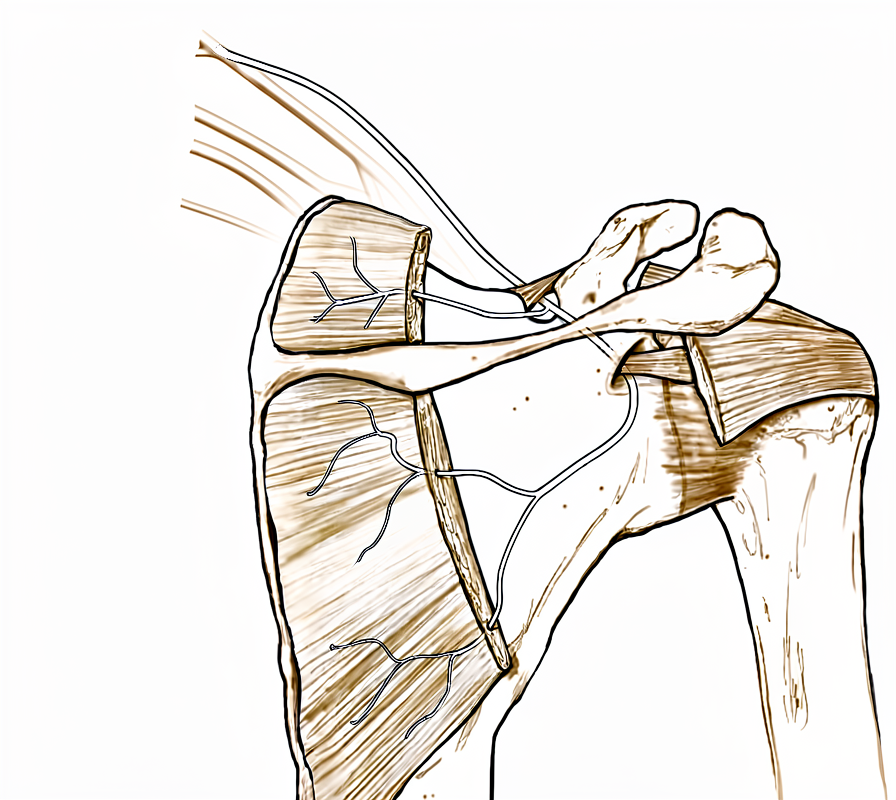
The suprascapular nerve originates from the upper trunk of the brachial plexus, coursing to its motor insertion on the supraspinatus and, more distally, the infraspinatus [18]. At the suprascapular notch, the superior transverse scapular ligament arises from the medial base of the coracoid; the suprascapular artery runs superior to this ligament, while the nerve runs deep to it [64]. Entrapment at the suprascapular notch results in denervation of both the supraspinatus and infraspinatus muscles [64]. Distally, the spinoglenoid ligament overlies the nerve at the spinoglenoid notch [64]. At this site, both the suprascapular artery and nerve pass inferior to the inferior transverse scapular ligament [75]. Entrapment, traction, or compression at the spinoglenoid notch causes denervation of the infraspinatus [64]. Biomechanically, the suprascapular nerve is furthest from the posterior edge of the glenoid when the shoulder is positioned at 90 degrees of external rotation [52].
Etiology and Mechanisms
Suprascapular neuropathy presents secondary to various etiologies, including entrapment or compression [18]. Nerve injury occurs via compression or traction mechanisms [18]. Cystic lesions arising from labral or capsular tears can compress the nerve along its scapular course [18]. Traction is theorized to arise from chronic overhead athletics or retracted rotator cuff tears [18]. In overhead athletes such as those playing baseball, tennis, and volleyball, the incidence of atraumatic nerve injuries about the shoulder is increased [34]. While the incidence of compressive neuropathy is high in this cohort, most patients do not exhibit clinically relevant functional deficiencies [18].
In volleyball players, extreme arm positioning places the infraspinatus component of the nerve under significant compression by the medial margin of the rotator cuff [124]. This compression leads to infraspinatus neuropathy and significant loss of shoulder function [124]. The positioning of the arm into full external rotation after abduction is largely influenced by the supraspinatus muscle, which draws the tendinous margin between the infraspinatus and supraspinatus [124]. The high incidence of clinical and neurologic deficit in elite volleyball players suggests that the anatomic relationship between the infraspinatus branch and the rotator cuff makes nerve compression inevitable in many individuals during extreme shoulder motion [124].
Extensive posterosuperior cuff tears may injure the nerve by pulling it due to muscle medial mobilization [127]. Reduction of a chronic cuff tear may pull on the nerve if it is hooked by adhesions under the superior transverse ligament [127]. The nerve has limited excursion under the superior transverse ligament, and its supraspinatus attachment is close to the suprascapular notch, meaning short muscle mobilization may affect nerve conduction [127]. Entrapment at the suprascapular notch can be caused by transverse scapular ligament anomalies, compression from adjacent ganglia, abnormal osseous morphology of the notch, direct trauma or traction injury, and trauma in sporting activities [127]. The superior transverse ligament may be ossified, and the suprascapular notch may narrow, creating entrapment [127]. A large hematoma of the scapula can also cause entrapment [47]. Independent suprascapular notch entrapment can coexist with a spinoglenoid notch cyst [55]. Suprascapular neuropathy is less common than it appears because the nerve is often involved in pain symptoms when repetitive traction or acute injury occurs by pulling the shoulder back while the head is bent and rotated in the opposite direction [127].
Pathophysiology and Clinical Presentation
Suprascapular neuropathy is a clinical entity that can lead to notable shoulder pain and functional limitation [18]. Selective compromise of the infraspinatus branch has been well reported in sporting activities, particularly volleyball and baseball [124]. This compromise is related to shoulder hyperabduction and eccentric contraction of the nerve [124]. The most predictive tests for diagnosing a GLEN lesion (superior glenoid labral cyst with suprascapular nerve entrapment) were a reduction of 33% or more of external rotation power compared with internal rotation power, or a reduction of 33% or more of external rotation power compared with supraspinatus power, as assessed by handheld dynamometry [107]. Shoulder sensory changes in suprascapular nerve entrapment syndrome can suggest an upper plexus/C5 root stretch injury but may be due to direct crushing of supraclavicular nerves or other mechanisms [132]. Mild deltoid and biceps muscle atrophy in the context of suprascapular nerve entrapment may be considered secondary to disuse [132].
Molecular Pathophysiology
Following suprascapular nerve denervation, the ubiquitin–proteasome pathway was a major contributor to the observed atrophy [130]. Following rotator cuff tendon transection, autophagy was a major contributor to muscle atrophy [130]. Protein synthesis is up-regulated in rotator cuff muscle atrophy following both suprascapular nerve denervation and tendon transection [130].
Classification
Etiology and Mechanism
Nerve injury in suprascapular neuropathy results from either compression or traction [18]. In a cohort of 87 cases, trauma and neuralgic amyotrophy were the most common causes [13]. Except for ganglion, the most frequent cause of entrapment is shoulder trauma, typically direct injury to the nerve or damage to the superior transverse scapular ligament and surrounding tissues [29]. Entrapment syndrome has also been associated with scapular and proximal humeral fractures, as well as shoulder dislocation [29]. In patients without direct trauma history, entrapment may arise from traction or compression because the nerve is relatively fixed at the scapular notch [29]. Repetitive bilateral shoulder stresses are thought to cause both rotator cuff tears and suprascapular nerve entrapment in patients with work-related strain from repetitive movements or heavy load carrying [29]. Forceful shoulder abduction may precipitate sudden onset of neuropathy in a loosely compressed nerve caused by a lipoma [14].
Clinical Presentation
Entrapment is frequently overlooked in the differential diagnosis of shoulder pain until profound weakness and denervation atrophy of the spinatus musculature become apparent [11]. This rare entity mainly affects patients under 40 years of age, with males more likely to suffer from ganglion compression [22].
Anatomical and Morphological Classification
Entrapment usually occurs at the suprascapular or spinoglenoid notch [33]. The inferior transverse scapular ligament may also play a role in entrapment neuropathy [58]. A new classification of suprascapular triad topography and quantitative analysis of the space available for the nerve path are important for understanding morphological conditions that promote entrapment, especially those with a type III arrangement [91]. The suprascapular nerve proceeds from the upper brachial plexus (C5 and C6 roots) [29]. It extends deep to the trapezius and omohyoid muscles, following the suprascapular artery to the suprascapular notch [29]. The nerve passes under the superior transverse scapular ligament into the supraspinatus fossa [29]. It then extends deep to the supraspinatus muscle, providing motor branches to the muscle and sensory innervation to the shoulder joints [29]. Finally, the nerve extends around the lateral border of the scapular spine, passes under the inferior transverse scapular ligament if present, enters the infraspinatus fossa, and innervates the infraspinatus muscle [29].
Diagnostic Classification
Diagnosis relies on a combination of detailed history, comprehensive physical examination, imaging, and electrodiagnostic studies [18]. Shoulder surgeons should consider electrophysiologic evaluation for patients with clinical or radiographic signs of neuropathy and be cognizant of parameters constituting an abnormal study [3]. Twenty-eight patients with entrapment were identified and treated based on confirmation by electromyographic and nerve conduction studies [4]. Chronic rotator cuff tendon tears and suprascapular neuropathy are both associated with fatty infiltration and muscle atrophy of the rotator cuff muscles, but the pattern of fatty infiltration is markedly different in the two situations [24]. Suprascapular neuropathy with complete neurogenic fatty replacement can occur in patients with intact rotator cuff tendons in the absence of traction or compression mechanisms [10].
Clinical Presentation
Suprascapular neuropathy presents with one of two distinct primary complaints: pain or weakness [1]. The condition is more common than historically believed and results from traction or compression of the nerve due to space-occupying lesions or repetitive overhead activities [5]. The predominant features of suprascapular nerve entrapment are posterolateral shoulder pain and dysfunction [51]. Long-standing entrapment leads to resultant atrophy of the supraspinatus and infraspinatus muscles [51]. However, infraspinatus atrophy is not always seen due to anatomical interindividual differences in the innervation of this muscle [51].
Compression at the spinoglenoid ligament: Patients often present with a chief complaint of a diffuse ache around the shoulder region [50]. Pain is most commonly localized to the region 4 cm medial to the posterolateral corner of acromion as well as the posterior aspect of the glenohumeral joint [50]. Symptoms may be accompanied by complaints of catching, locking, or clicking, likely the result of a concomitant labral tear [50]. This compression is often insidious at onset with less severe symptoms compared to compression at the suprascapular notch [50].
Diagnostic considerations: A ganglion should be considered whenever a patient with suprascapular nerve entrapment and isolated atrophy of the infraspinatus muscle is being evaluated [36]. Suprascapular neuropathy can cause complete neurogenic fatty replacement in patients with intact rotator cuff tendons in the absence of traction or compression mechanisms [10]. The great majority of patients with presumed isolated suprascapular nerve palsy had clinical, electrophysiological, and/or imaging evidence of a more diffuse pattern of neuromuscular involvement [25]. Shoulder surgeons should consider electrophysiologic evaluation of patients with clinical or radiographic signs of suprascapular neuropathy [3].
Investigations
Electrophysiology: Electrophysiologic evaluation is indicated for patients presenting with clinical or radiographic signs of suprascapular neuropathy [3]. Surgeons must be cognizant of the specific parameters that constitute an abnormal electrophysiologic study [3]. While isolated palsy is often presumed, the majority of these patients actually demonstrate clinical, electrophysiological, and/or imaging evidence of a more diffuse pattern of neuromuscular involvement [25].
MRI: High-resolution magnetic resonance imaging is recommended to evaluate complex cases of nerve entrapment [135]. MRI can identify specific pathologies, such as a ganglion cyst in the spinoglenoid notch causing entrapment of the suprascapular nerve and subsequent atrophy of the infraspinatus muscle [134]. Furthermore, suprascapular neuropathy may present with complete neurogenic fatty replacement in patients with intact rotator cuff tendons, even in the absence of traction or compression mechanisms [10].
Ultrasound: Shoulder muscle activity can be noninvasively evaluated using ultrasound shear wave elastography [46]. Ultrasound serves as a useful tool for discovering subjects that may undergo shoulder symptomatic pathologies in pre-symptomatic stages [133].
General Imaging Principles: The purpose of shoulder imaging is to help establish the diagnosis, determine the severity of the pathoanatomy, assist in surgical planning, and enable the surgeon to illustrate the condition of the shoulder to the patient [45]. Standardized plain films are almost always sufficient to garner the information needed for shoulder evaluation [45]. Unless a specific research protocol is in place, the temptation to “overimage” should be resisted, obtaining only the scans or reconstructions that are necessary for the care of the patient [45]. A complete history and physical, careful attention to auxiliary tests, and treatment of multiple diagnoses in the same shoulder avoids missed pathologic features and necessity for revision operations [23].
Treatment
Non-Operative
Initial management of isolated suprascapular neuropathy typically consists of physical therapy, nonsteroidal anti-inflammatory drugs, and activity modification [9]. In the absence of a well-defined lesion producing mechanical compression, non-operative treatment is the standard of care [8]. This conservative regimen includes a period of rest, anti-inflammatory medication, and a supervised physical therapy program focused on preserving range of motion and strengthening the shoulder girdle [50]. Specific therapeutic exercises target scapular stabilization and resistive strengthening of the trapezius, rhomboids, and serratus musculature [50]. Conservative management broadly encompasses activity modification, nonsteroidal anti-inflammatory drugs, physical therapy, and strengthening exercises [51]. In a retrospective review of 15 patients treated non-operatively with an average follow-up of more than 3 years, five patients achieved excellent results and seven achieved good results [32]. Surgical release is not routinely recommended unless patients with pain or deficits in strength fail appropriate nonsurgical treatment [18].
Operative
Indications: Open or arthroscopic operative intervention is warranted when there is extrinsic nerve compression or progressive pain and/or weakness [9]. The primary indications for arthroscopic decompression are a prolonged course of symptoms, most commonly a chronic ache in the posterolateral aspect of the shoulder, and a failed minimum 6-month course of nonoperative treatment [50]. When a space-occupying lesion is present or there is visible atrophy of the infraspinatus, the course of nonoperative treatment should be minimal (maximum 3 months) to avoid irreversible damage to the infraspinatus [50]. Surgery is indicated when nonoperative treatment modalities fail [51]. Compressive lesions attributable to suprascapular notch entrapment had the best improvement with surgical decompression in a study of 53 patients [51].
Surgical Approach / Technique: Arthroscopic SSN decompression for suprascapular neuropathy at the suprascapular and/or spinoglenoid notch in the absence of major concomitant glenohumeral pathology results in good functional outcomes with significant improvements from before to after surgery [6]. Arthroscopic nerve release for idiopathic suprascapular nerve entrapment resulted in consistent clinical improvements and electrophysiological recovery in all patients, with outcomes similar to those reported after open surgery [17]. Arthroscopic release of the suprascapular nerve can be performed safely and effectively, with all patients showing improvement in postoperative electromyographic findings and marked improvement in pain relief and function [123]. In a series of 23 patients treated with resection of the transverse scapular ligament by means of an open superior approach, 21 (91%) were pain-free immediately after surgery [32]. In the same series of 23 patients treated with open resection of the transverse scapular ligament, 17 patients remained pain-free, but 3 required reoperation 2 to 4 years after the initial procedure [32]. Overall, 20 of the 23 patients (87%) in the open series had long-term relief of pain and resolution of weakness [32]. In a series of 54 patients treated with resection of the suprascapular ligament, pain disappeared promptly after the procedure in 24 cases (44%) [32]. Arthroscopic release of the spinoglenoid ligament with resultant suprascapular nerve decompression may result in relief of pain and a return of normal shoulder function [54]. Arthroscopic release of the suprascapular nerve and transverse ligament is a safe and effective treatment for competitive swimmers with suprascapular neuropathy, allowing return to sport with resolution of pain and improvement in function [128]. A patient treated with endoscopic release of the transverse scapular ligament demonstrated a good outcome, with pain resolution, clinical improvement in supraspinatus and infraspinatus atrophy, and an increase in active external rotation range of motion to 80 degrees from 40 degrees at 6 months [38]. Arthroscopic suprascapular neurectomy introduces an additional effective option in the management of pain in patients with cuff tear arthropathy and other selected pathologies [59]. The authors believe that with practice and meticulous technique, arthroscopic decompression can be mastered and will become the preferred treatment method for suprascapular neuropathy [16].
Concomitant Rotator Cuff Pathology: Suprascapular neuropathy may be associated with massive rotator cuff tears, and partial rotator cuff repair may allow recovery of the nerve and improvement of function [7]. Decompression of the suprascapular nerve at the spinoglenoid notch did not lead to a better functional outcome compared to repair alone in patients with posterosuperior massive rotator cuff tears and suprascapular neuropathy [20]. Combined arthroscopic release of the superior transverse scapular ligament and rotator cuff repair in patients with large/massive RCTs and suprascapular neuropathy did not produce statistically significant improved outcomes compared with repair of the rotator cuff alone [26]. With a low association of neuropathy with massive RCT, there is no evidence to support the routine practice of suprascapular nerve release when RCT repair is performed [27]. No recommendations regarding suprascapular nerve release in conjunction with rotator cuff repair can be made at this time, and further research is necessary to better delineate the indications in the future [12]. Suprascapular nerve injury may be considered as an etiologic factor for the impaired healing after repair of a massive tear [43]. Operative injury to the suprascapular nerve during cuff mobilization can occur, but a host of other factors such as inadequate cuff muscle function may be responsible for poor functional outcomes seen following the repair of massive RCTs [28].
Postoperative Rehabilitation: In cases of isolated suprascapular nerve palsy at the spinoglenoid notch, patients are placed in a simple sling with immediate initiation of pendulum exercises and passive range of motion [114]. Patients are seen again at 1 week after surgery to assess strength and begin physical therapy, which consists of passive range-of-motion and isometric exercises [114]. If significant infraspinatus atrophy is present, electrical stimulation is used during postoperative rehabilitation [114]. Resistance and overhead exercises start at 4 to 8 weeks postoperatively in cases of isolated suprascapular nerve decompression at the spinoglenoid notch [114].
Surgical Safety and Anatomical Considerations: The suprascapular artery must be identified and protected along with the nerve during decompression to ensure safety [41].
Complications
Iatrogenic Injury During Rotator Cuff Repair: Operative injury to the suprascapular nerve can occur during cuff mobilization [21]. Inadequate cuff muscle function is more frequently responsible for poor functional outcomes after successful repairs of massive rotator cuff tears than operative nerve injury [21]. A host of other factors, such as inadequate cuff muscle function, may be responsible for poor functional outcomes following the repair of massive rotator cuff tears [28].
Surgical Complications and Technical Considerations: Screw out of vault penetration is correlated with suprascapular nerve injury after reverse total shoulder arthroplasty [15]. Preoperative suprascapular nerve injuries do not predispose to an acute postoperative lesion [15].
Neuromuscular Degeneration and Healing Impairment: Suprascapular neuropathy is associated with complete neurogenic fatty replacement in patients with intact rotator cuff tendons [10]. Chronic rotator cuff tendon tears and suprascapular neuropathy are both associated with fatty infiltration and muscle atrophy of the rotator cuff muscles [24]. The pattern of fatty infiltration is markedly different between chronic rotator cuff tendon tears and suprascapular neuropathy [24]. Suprascapular nerve injury may be considered an etiologic factor for impaired healing after repair of a massive tear [43].
Recovery
Non-Operative Management: Initial treatment of isolated suprascapular neuropathy is typically nonoperative, consisting of physical therapy, nonsteroidal anti-inflammatory drugs, and activity modification [9].
Operative Outcomes: Release of the spinoglenoid ligament with resultant suprascapular nerve decompression may result in relief of pain and a return of normal shoulder function [54]. In one case, the patient demonstrated a good outcome, with pain resolution, clinical improvement in supraspinatus and infraspinatus atrophy, and an increase in active external rotation range of motion to 80 degrees from 40 degrees at 6 months [38]. Full recovery of shoulder function was achieved following treatment for suprascapular nerve entrapment caused by a large hematoma of the scapula [47]. In another instance, the patient was free from pain at 12 months, but mild atrophy of the supraspinous and infraspinous muscles persisted [60]. Long-term functional outcomes appear encouraging, and the rehabilitation programme following decompression surgery of SNE has been successful in maintaining functional skill and protecting the shoulder joint from weakness muscles [129].
Outcomes in Concomitant Rotator Cuff Pathology: Suprascapular neuropathy may be associated with massive rotator cuff tears, and partial rotator cuff repair may allow recovery of the nerve and improvement of function [7]. In the presence of normal EMG findings, suprascapular nerve release added to arthroscopic RC repair is not associated with any clinical benefit, but with electromyographically documented, postoperative impairment of nerve function in 1 of 3 cases [56].
Key Evidence
- [L4] In this young, active cohort, suprascapular neuropathy presented with one of two distinct primary presenting complaints: pain or weakness. [1] (10.1177/2325967123s00003)
- [L3] The exact association and etiology of suprascapular neuropathy in patients with rotator cuff pathology remain unclear. [2] (10.1016/j.jse.2013.06.011)
- [L4] Shoulder surgeons should consider electrophysiologic evaluation of patients with clinical or radiographic signs of suprascapular neuropathy and be cognizant of the parameters that constitute an abnormal study. [3] (10.1016/j.jse.2010.10.039)
- [L4] Twenty-eight patients with suprascapular nerve entrapment confirmed by electromyographic and nerve conduction studies were identified and treated. [4] (10.1016/1058-2746(93)90062-l)
- [L5] Suprascapular neuropathy is more common than historically believed and can result from traction or compression of the nerve due to space-occupying lesions or repetitive overhead activities. [5] (10.3810/psm.2012.02.1953)
- [L4] Arthroscopic SSN decompression for suprascapular neuropathy at the suprascapular and/or spinoglenoid notch in the absence of major concomitant glenohumeral pathology results in good functional outcomes with significant improvements from before to after surgery. [6] (10.1016/j.arthro.2020.10.020)
- [L4] Suprascapular neuropathy may be associated with massive rotator cuff tears, and that partial rotator cuff repair may allow recovery of the nerve and improvement of function. [7] (10.1016/j.jse.2005.10.019)
- [L4] In the absence of a well-defined lesion producing mechanical compression of the suprascapular nerve, suprascapular neuropathy should be treated non-operatively. [8] (10.2106/00004623-199708000-00007)
- [L5] Initial treatment of isolated suprascapular neuropathy is typically nonoperative, consisting of physical therapy, nonsteroidal anti-inflammatory drugs, and activity modification; however, open or arthroscopic operative intervention is warranted when there is extrinsic nerve compression or progressive pain and/or weakness. [9] (10.2106/jbjs.i.01743)
- [L4] This is the first description of suprascapular neuropathy with complete neurogenic fatty replacement in patients with intact rotator cuff tendons in the absence of traction or compression mechanisms. [10] (10.1016/j.arthro.2014.01.010)
- [L4] Entrapment of the suprascapular nerve is frequently overlooked in the differential diagnosis of shoulder pain until profound weakness and denervation atrophy of the spinatus musculature are apparent. [11] (10.1016/s1058-2746(95)80144-8)
- [L4] No recommendations regarding suprascapular nerve release in conjunction with rotator cuff repair can be made at this time, and further research is necessary to better delineate the indications in the future. [12] (10.1016/j.jse.2011.11.033)
- [L4] Trauma and neuralgic amyotrophy were the most common causes of suprascapular neuropathy in this cohort. [13] (10.1002/mus.26630)
- [L5] The authors believe that forceful shoulder abduction may have caused the sudden onset of suprascapular neuropathy in the loosely compressed suprascapular nerve by the lipoma. [14] (10.1142/s2424835518720141)
- [L1] Preoperative suprascapular nerve injuries do not have a significant clinical impact and do not predispose to an acute postoperative lesion. [15] (10.1016/j.jse.2023.06.026)
- [L4] The authors believe that with practice and meticulous technique, this technique can be mastered and will become the preferred treatment method for suprascapular neuropathy. [16] (10.1097/00132589-200606000-00004)
- [L4] Arthroscopic nerve release for idiopathic suprascapular nerve entrapment resulted in consistent clinical improvements and electrophysiological recovery in all patients, with outcomes similar to those reported after open surgery. [17] (10.1016/j.otsr.2014.10.002)
- [L5] [18] (10.5435/jaaos-d-19-00526)
- [L3] Decompression of the suprascapular nerve at the spinoglenoid notch did not lead to a better functional outcome compared to repair alone in patients with posterosuperior massive rotator cuff tears and suprascapular neuropathy. [20] (10.1186/s12891-021-04075-1)
- [L4] It appears that operative injury to the suprascapular nerve during cuff mobilization can occur, but other factors such as inadequate cuff muscle function are more frequently responsible for the poor functional outcomes seen after successful repairs of massive rotator cuff tears. [21] (10.1016/s1058-2746(97)90014-8)
- [L1] Suprascapular nerve entrapment is a rare entity mainly occurring in patients under 40 years of age, with males more likely to suffer from ganglion compression. [22] (10.1007/s00264-002-0392-y)
- [L4] A complete history and physical, careful attention to auxiliary tests, and treatment of multiple diagnoses in the same shoulder avoids missed pathologic features and necessity for revision operations. [23] (10.1097/01.blo.0000063791.32430.59)
- [L4] Chronic rotator cuff tendon tears and suprascapular neuropathy are both associated with fatty infiltration and muscle atrophy of the rotator cuff muscles, but the pattern of fatty infiltration is markedly different in the two situations. [24] (10.1016/j.jse.2013.01.028)
- [L4] The great majority of patients with presumed isolated suprascapular nerve palsy had clinical, electrophysiological, and/or imaging evidence of a more diffuse pattern of neuromuscular involvement. [25] (10.1093/neuros/nyy050)
- [L1] Combined arthroscopic release of the superior transverse scapular ligament and rotator cuff repair in patients with large/massive RCTs and suprascapular neuropathy did not produce statistically significant improved outcomes compared with repair of the rotator cuff alone. [26] (10.1177/03635465211021834)
- [L3] With a low association of neuropathy with massive RCT, we find no evidence to support the routine practice of suprascapular nerve release when RCT repair is performed. [27] (10.1016/j.jse.2013.07.039)
- [L4] It appears that operative injury to the suprascapular nerve during cuff mobilization can occur, but a host of other factors such as inadequate cuff muscle function may be responsible for poor functional outcomes seen following the repair of massive RCTs. [28] (10.1016/s1058-2746(96)80374-0)
- [L5] [29] (10.1016/s1058-2746(00)90013-2)
- [L5] [32] (10.5435/00124635-199911000-00002)
- [L4] Entrapment of the suprascapular nerve usually occurs at the suprascapular or spinoglenoid notch. [33] (10.1016/j.jse.2011.05.022)
- [L5] [34] (10.1177/0363546504264582)
- [L5] A ganglion should be considered whenever a patient with suprascapular nerve entrapment and isolated atrophy of the infraspinatus muscle is being evaluated. [36] (10.1016/s1058-2746(96)80011-5)
- [L5] The patient demonstrated a good outcome, with pain resolution, clinical improvement in supraspinatus and infraspinatus atrophy, and an increase in active external rotation range of motion to 80 degrees from 40 degrees at 6 months. [38] (10.1097/bte.0000000000000183)
- [L4] The authors emphasize that the suprascapular artery must be identified and protected along with the nerve during decompression to ensure safety. [41] (10.1016/j.jse.2008.08.007)
- [L5] Suprascapular nerve injury may be considered as an etiologic factor for the impaired healing after repair of a massive tear. [43] (10.1016/j.jse.2019.12.028)
- [L4] Shoulder muscle activity can be noninvasively evaluated with ultrasound shear wave elastography. [46] (10.1097/01.blo.0000533628.06091.0a)
- [Case_report] Full recovery of shoulder function was achieved. [47] (10.1186/s12891-023-06723-0)
- [L4] [50] (10.1016/j.xrrt.2021.04.004)
- [L5] [51] (10.1007/s00167-014-3149-4)
- [L5] The suprascapular nerve is furthest away from the posterior edge of the glenoid with the shoulder at 90 of external rotation. [52] (10.1007/s00167-014-2900-1)
- [L4] Release of the spinoglenoid ligament with resultant suprascapular nerve decompression may result in relief of pain and a return of normal shoulder function. [54] (10.1177/03635465990270062101)
- [L5] [55] (10.1016/j.xrrt.2026.100879)
- [L2] In the presence of normal EMG findings, suprascapular nerve release added to arthroscopic RC repair is not associated with any clinical benefit, but with electromyographically documented, postoperative impairment of nerve function in 1 of 3 cases. [56] (10.1016/j.jse.2020.03.051)
- [L5] The inferior transverse scapular ligament may play a role in suprascapular entrapment neuropathy. [58] (10.1016/s1058-2746(98)90161-6)
- [L4] Arthroscopic suprascapular neurectomy introduces an additional effective option in the management of pain in patients with cuff tear arthropathy and other selected pathologies. [59] (10.1016/j.jse.2008.09.001)
- [L5] The patient was free from pain at 12 months, but mild atrophy of the supraspinous and infraspinous muscles persisted. [60] (10.1016/s0363-5023(82)80015-4)
- [L4] The new classification of the suprascapular triad topography and quantitative analysis of the space available for the path of the suprascapular nerve are important for a better understanding of the possible morphological conditions that may promote suprascapular nerve entrapment, especially those with a type III arrangement. [91] (10.1007/s00167-014-2937-1)
- [L4] The most predictive tests for the diagnosis of a GLEN lesion were a reduction of 33% or more of external rotation power compared with internal rotation power, or a reduction of 33% or more of external rotation power compared with supraspinatus power as assessed by handheld dynamometry. [107] (10.1097/01.bte.0000170070.67295.a4)
- [L4] [114] (10.1016/j.jse.2013.03.009)
- [L4] Arthroscopic release of the suprascapular nerve can be performed safely and effectively, with all patients showing improvement in postoperative electromyographic findings and marked improvement in pain relief and function. [123] (10.1016/j.arthro.2006.10.003)
- [L4] [124] (10.1016/s1058-2746(98)90205-1)
- [L4] [127] (10.1097/00132589-200603000-00001)
- [L4] Arthroscopic release of the suprascapular nerve and transverse ligament is a safe and effective treatment for competitive swimmers with suprascapular neuropathy, allowing return to sport with resolution of pain and improvement in function. [128] (10.1177/0363546513477383)
- [L4] The long-term functional outcomes appear encouraging and the rehabilitation programme following decompression surgery of SNE has been successful in maintaining functional skill and protecting the shoulder joint from weakness muscles. [129] (10.1007/s00402-006-0275-6)
- [Paper] [130] (10.1002/jor.22482)
- [L5] [132] (10.1097/00006123-200012000-00041)
- [L3] Ultrasound is an useful tool for discovering in pre-symptomatic stages the subjects that may undergo shoulder symptomatic pathologies. [133] (10.1186/1471-2474-11-278)
- [L5] MRI demonstrated a ganglion cyst in the spinoglenoid notch causing entrapment of the suprascapular nerve and atrophy of the infraspinatus muscle. [134] (10.1016/1058-2746(93)90009-6)
- [L5] They recommend high-resolution magnetic resonance imaging to evaluate complex cases of nerve entrapment. [135] (10.1007/s11552-014-9652-8)
See Also
- Rotator Cuff
- Fractures
- Suprascapular nerve decompression
- Rotator Cuff Repair
- Total shoulder arthroplasty
References
[1] Paper 03: Suprascapular Neuropathy: Two Distinct Presentations and Outcomes of Decompression. Orthopaedic Journal of Sports Medicine. 2023. DOI: 10.1177/2325967123s00003
[2] Association of suprascapular neuropathy with rotator cuff tendon tears and fatty degeneration. Journal of Shoulder and Elbow Surgery. 2014. DOI: 10.1016/j.jse.2013.06.011
[3] Suprascapular neuropathy in a shoulder referral practice. Journal of Shoulder and Elbow Surgery. 2011. DOI: 10.1016/j.jse.2010.10.039
[4] Suprascapular nerve entrapment: Diagnosis and results of treatment. Journal of Shoulder and Elbow Surgery. 1993. DOI: 10.1016/1058-2746(93)90062-l
[5] Suprascapular Neuropathy: Diagnosis and Management. The Physician and Sportsmedicine. 2012. DOI: 10.3810/psm.2012.02.1953
[6] Clinical Outcomes of Arthroscopic Suprascapular Nerve Decompression for Suprascapular Neuropathy. Arthroscopy. 2020. DOI: 10.1016/j.arthro.2020.10.020
[7] The association of suprascapular neuropathy with massive rotator cuff tears: A preliminary report. Journal of Shoulder and Elbow Surgery. 2006. DOI: 10.1016/j.jse.2005.10.019
[8] Suprascapular Neuropathy. Results of Non-Operative Treatment. The Journal of Bone & Joint Surgery*. 1997. DOI: 10.2106/00004623-199708000-00007
[9] Suprascapular Neuropathy. Journal of Bone and Joint Surgery. 2010. DOI: 10.2106/jbjs.i.01743
[10] Complete Fatty Infiltration of Intact Rotator Cuffs Caused by Suprascapular Neuropathy. Arthroscopy. 2014. DOI: 10.1016/j.arthro.2014.01.010
[11] Suprascapular nerve entrapment related to sport. Journal of Shoulder and Elbow Surgery. 1995. DOI: 10.1016/s1058-2746(95)80144-8
[12] Suprascapular neuropathy: what does the literature show?. Journal of Shoulder and Elbow Surgery. 2012. DOI: 10.1016/j.jse.2011.11.033
[13] Suprascapular neuropathy: A review of 87 cases. Muscle & Nerve. 2019. DOI: 10.1002/mus.26630
[14] A Large Size Lipoma at Spinoglenoid Notch Mimicked Traumatic Rotator Cuff Tear. The Journal of Hand Surgery (Asian-Pacific Volume). 2018. DOI: 10.1142/s2424835518720141
[15] Suprascapular nerve injury after reverse total shoulder arthroplasty: correlation with screw out of vault penetration and functional situation: prospective study. Journal of Shoulder and Elbow Surgery. 2023. DOI: 10.1016/j.jse.2023.06.026
[16] Suprascapular Nerve Entrapment. Techniques in Shoulder and Elbow Surgery. 2006. DOI: 10.1097/00132589-200606000-00004
[17] Peri-articular suprascapular neuropathy. Orthopaedics & Traumatology: Surgery & Research. 2014. DOI: 10.1016/j.otsr.2014.10.002
[18] The Evaluation and Management of Suprascapular Neuropathy. Journal of the American Academy of Orthopaedic Surgeons. 2020. DOI: 10.5435/jaaos-d-19-00526
[20] Comparison of clinical outcome of decompression of suprascapular nerve at spinoglenoid notch for patients with posterosuperior massive rotator cuff tears and suprascapular neuropathy. BMC Musculoskeletal Disorders. 2021. DOI: 10.1186/s12891-021-04075-1
[21] The low incidence of suprascapular nerve injury after primary repair of massive rotator cuff tears. Journal of Shoulder and Elbow Surgery. 1997. DOI: 10.1016/s1058-2746(97)90014-8
[22] Suprascapular nerve entrapment. A meta-analysis. International Orthopaedics. 2002. DOI: 10.1007/s00264-002-0392-y
[23] Suprascapular Nerve Entrapment Secondary to a Lipoma. Clinical Orthopaedics & Related Research. 2003. DOI: 10.1097/01.blo.0000063791.32430.59
[24] A comparative analysis of fatty infiltration and muscle atrophy in patients with chronic rotator cuff tears and suprascapular neuropathy. Journal of Shoulder and Elbow Surgery. 2013. DOI: 10.1016/j.jse.2013.01.028
[25] “Isolated” Suprascapular Neuropathy: Compression, Traction, or Inflammation?. Neurosurgery. 2018. DOI: 10.1093/neuros/nyy050
[26] Outcomes of Arthroscopic Nerve Release in Patients Treated for Large or Massive Rotator Cuff Tears and Associated Suprascapular Neuropathy: A Prospective, Randomized, Double-Blinded Clinical Trial. The American Journal of Sports Medicine. 2021. DOI: 10.1177/03635465211021834
[27] Neuropathy of the suprascapular nerve and massive rotator cuff tears: a prospective electromyographic study. Journal of Shoulder and Elbow Surgery. 2014. DOI: 10.1016/j.jse.2013.07.039
[28] Suprascapular nerve injury and cuff re-tear after primary repair of massive rotator cuff tears. Journal of Shoulder and Elbow Surgery. 1996. DOI: 10.1016/s1058-2746(96)80374-0
[29] Bilateral suprascapular nerve entrapment syndrome associated with rotator cuff tear. Journal of Shoulder and Elbow Surgery. 2000. DOI: 10.1016/s1058-2746(00)90013-2
[32] Suprascapular Neuropathy. Journal of the American Academy of Orthopaedic Surgeons. 1999. DOI: 10.5435/00124635-199911000-00002
[33] Varicose veins at the spinoglenoidal notch: an unusual cause of suprascapular nerve compression. Journal of Shoulder and Elbow Surgery. 2011. DOI: 10.1016/j.jse.2011.05.022
[34] Nerve Injury about the Shoulder in Athletes, Part 1. The American Journal of Sports Medicine. 2004. DOI: 10.1177/0363546504264582
[36] Suprascapular nerve entrapment at the spinoglenoid notch caused by a ganglion cyst. Journal of Shoulder and Elbow Surgery. 1996. DOI: 10.1016/s1058-2746(96)80011-5
[38] A Novel Technique for Endoscopic Release of the Transverse Scapular Ligament in the Setting of Suprascapular Neuropathy: Case Report and Technique. Techniques in Shoulder & Elbow Surgery. 2020. DOI: 10.1097/bte.0000000000000183
[41] Subligamentous suprascapular artery encountered during arthroscopic suprascapular nerve release: A report of three cases. Journal of Shoulder and Elbow Surgery. 2009. DOI: 10.1016/j.jse.2008.08.007
[43] Effect of suprascapular nerve injury on rotator cuff enthesis. Journal of Shoulder and Elbow Surgery. 2020. DOI: 10.1016/j.jse.2019.12.028
[45] Rockwood And Matsen S The Shoulder. Arthroscopic Management of Prearthritic and Arthritic Conditions of the Shoulder and the Postarthroplasty Shoulder > Radiographic Evaluation.
[46] Can Shoulder Muscle Activity Be Evaluated With Ultrasound Shear Wave Elastography?. Clinical Orthopaedics & Related Research. 2018. DOI: 10.1097/01.blo.0000533628.06091.0a
[47] Suprascapular nerve entrapment caused by a large hematoma of the scapula: a case report. BMC Musculoskeletal Disorders. 2023. DOI: 10.1186/s12891-023-06723-0
[50] Endoscopic/arthroscopic decompression of the suprascapular nerve at the spinoglenoid notch: indications and surgical technique. JSES Reviews, Reports, and Techniques. 2021. DOI: 10.1016/j.xrrt.2021.04.004
[51] Anatomic landmarks for arthroscopic suprascapular nerve decompression. Knee Surgery, Sports Traumatology, Arthroscopy. 2014. DOI: 10.1007/s00167-014-3149-4
[52] The safe zone for avoiding suprascapular nerve injury in bone block procedures for shoulder instability. A cadaveric study. Knee Surgery, Sports Traumatology, Arthroscopy. 2014. DOI: 10.1007/s00167-014-2900-1
[54] Suprascapular Nerve Entrapment at the Spinoglenoid Notch in a Professional Baseball Pitcher. The American Journal of Sports Medicine. 1999. DOI: 10.1177/03635465990270062101
[55] Hidden Culprit of Suprascapular Neuropathy: Independent Suprascapular Notch Entrapment Coexisting with Spinoglenoid Notch Cyst - A Case Report. JSES Reviews, Reports, and Techniques. 2026. DOI: 10.1016/j.xrrt.2026.100879
[56] Suprascapular nerve decompression in addition to rotator cuff repair: a prospective, randomized observational trial. Journal of Shoulder and Elbow Surgery. 2020. DOI: 10.1016/j.jse.2020.03.051
[58] 62 Does inferior transverse scapular ligament play a role in suprascapular nerve entrapment neuropathy? — An anatomical study. Journal of Shoulder and Elbow Surgery. 1998. DOI: 10.1016/s1058-2746(98)90161-6
[59] Arthroscopic suprascapular neurectomy for the management of severe shoulder pain. Journal of Shoulder and Elbow Surgery. 2009. DOI: 10.1016/j.jse.2008.09.001
[60] Suprascapular nerve entrapment—Case report. The Journal of Hand Surgery. 1982. DOI: 10.1016/s0363-5023(82)80015-4
[64] Aaos Comprehensive Orthopaedic Review 3. Anatomy of the Shoulder, Arm, and Elbow > I. Shoulder.
[75] Miller S Review Of Orthopaedics. Genetics of musculoskeletal conditions and abnormalities are summarized in Table 1.27 > UPPER EXTREMITY > SHOULDER.
[91] The variable morphology of suprascapular nerve and vessels at suprascapular notch: a proposal for classification and its potential clinical implications. Knee Surgery, Sports Traumatology, Arthroscopy. 2014. DOI: 10.1007/s00167-014-2937-1
[107] Clinical Diagnosis of a Superior Glenoid Labrum Cyst with Suprascapular Nerve Entrapment (GLEN Lesion). Techniques in Shoulder & Elbow Surgery. 2005. DOI: 10.1097/01.bte.0000170070.67295.a4
[114] Suprascapular nerve entrapment isolated to the spinoglenoid notch: surgical technique and results of open decompression. Journal of Shoulder and Elbow Surgery. 2013. DOI: 10.1016/j.jse.2013.03.009
[123] Arthroscopic Release of Suprascapular Nerve Entrapment at the Suprascapular Notch: Technique and Preliminary Results. Arthroscopy. 2007. DOI: 10.1016/j.arthro.2006.10.003
[124] Suprascapular nerve rotator cuff compression syndrome in volleyball players. Journal of Shoulder and Elbow Surgery. 1998. DOI: 10.1016/s1058-2746(98)90205-1
[127] Technique for Endoscopic Release of Suprascapular Nerve Entrapment at the Suprascapular Notch. Techniques in Shoulder and Elbow Surgery. 2006. DOI: 10.1097/00132589-200603000-00001
[128] Suprascapular Neuropathy as a Cause of Swimmer’s Shoulder. The American Journal of Sports Medicine. 2013. DOI: 10.1177/0363546513477383
[129] Rehabilitation and shoulder function after suprascapular nerve entrapment operation in a volleyball player. Archives of Orthopaedic and Trauma Surgery. 2006. DOI: 10.1007/s00402-006-0275-6
[130] Differential ubiquitin–proteasome and autophagy signaling following rotator cuff tears and suprascapular nerve injury. Journal of Orthopaedic Research. 2013. DOI: 10.1002/jor.22482
[132] Shoulder Numbness in a Patient with Suprascapular Nerve Entrapment Syndrome: Cutaneous Branch of the Suprascapular Nerve: Case Report. Neurosurgery. 2000. DOI: 10.1097/00006123-200012000-00041
[133] Sonographic evaluation of the shoulder in asymptomatic elderly subjects with diabetes. BMC Musculoskeletal Disorders. 2010. DOI: 10.1186/1471-2474-11-278
[134] Suprascapular nerve compression by a ganglion cyst: Diagnosis by magnetic resonance imaging. Journal of Shoulder and Elbow Surgery. 1993. DOI: 10.1016/1058-2746(93)90009-6
[135] Subclavius Posticus: An Anomalous Muscle in Association with Suprascapular Nerve Compression in an Athlete. HAND. 2014. DOI: 10.1007/s11552-014-9652-8