Clinicians › General-Health
Joint Hypermobility and Ehlers-Danlos Syndrome
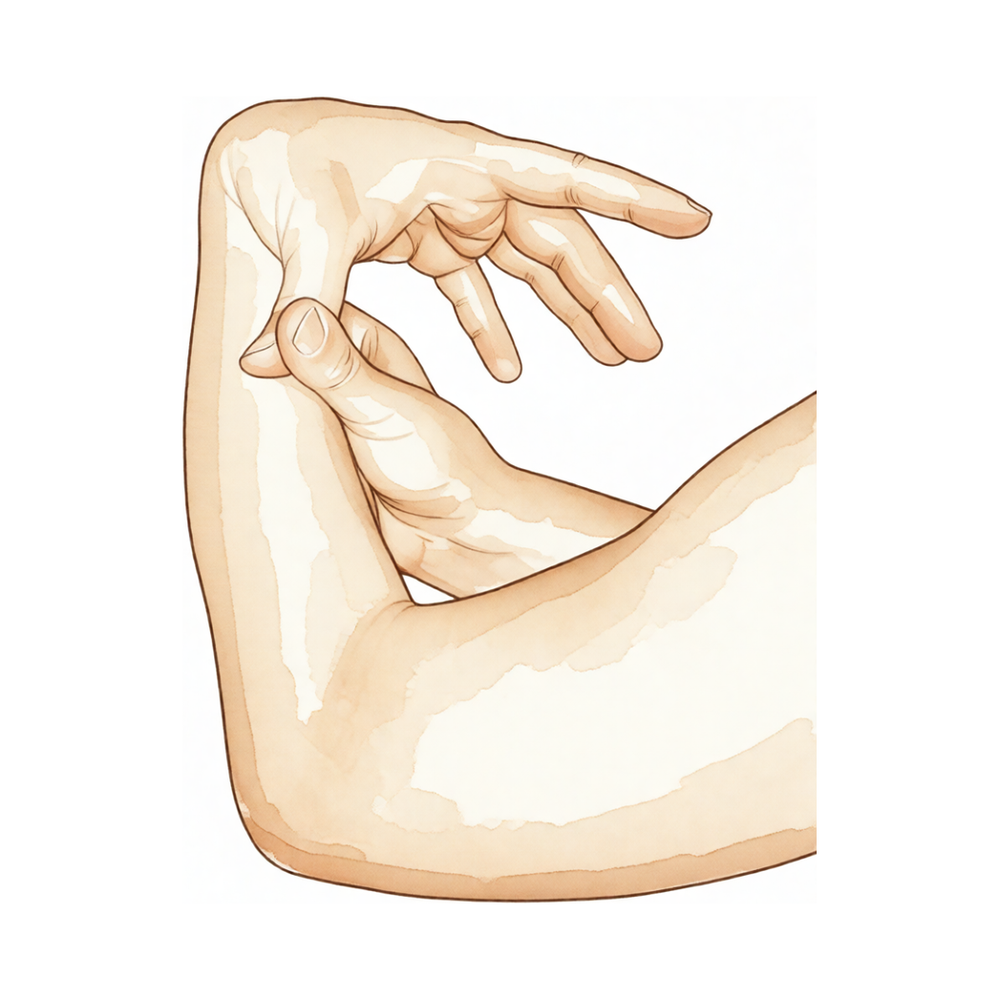
Joint hypermobility and EDS — instability and surgical implications (corpus-synthesised).
For patients: a plain-language version of this topic is available. See the patient guide.
Overview
Joint hypermobility is a multifactorial condition that may present as an asymptomatic finding or as a component of heritable connective tissue disorders, most notably Ehlers-Danlos syndrome [1]. The hypermobile type of Ehlers-Danlos syndrome (hEDS) is likely the most common hereditary disorder of connective tissue [6]. Despite its prevalence, the clinical significance of joint hypermobility remains under-appreciated, and its impact is largely ignored in rheumatology [9]. A number of heritable disorders of connective tissue are associated with joint hypermobility and should be considered when assessing patients, as they can have wider implications for the patient [4]. Every effort should be made to diagnose the underlying disorder responsible for joint hypermobility, which may only become apparent over time [2].
Accurate identification of Ehlers-Danlos syndrome is critical to initiate appropriate musculoskeletal treatment, optimize anesthetic and postoperative management, perform appropriate vascular screening, and help families address their concerns with other families and advocacy groups [5]. The natural history of hypermobility type Ehlers-Danlos syndrome (HT-EDS) is delineated into three phases: hypermobility, pain, and stiffness [13]. Addressing underlying hypermobility as well as the treatment of individual joints is important in the treatment of hypermobile Ehlers-Danlos syndrome [10]. Exploring the patient's articular features in her clinical context led to a diagnosis of joint hypermobility syndrome, a complex and often ignored condition [8].
Greater emphasis should be placed on a clinician's judgement to identify or exclude generalised joint hypermobility, according to its full definition [12]. Future research on the validity of the tests and criteria for joint hypermobility is urgently needed [11]. A simplified categorization of genetic syndromes featuring joint hypermobility has been proposed, introducing the concept of a spectrum of pathogenetically related manifestations [7]. The prevalence of joint hypermobility in dancers ranges from 2-44% depending on criteria, with higher rates in students than professionals [16]. Abnormalities in the hand and wrist joint that are directly related to joint hypermobility are discussed in four patients with Ehlers-Danlos syndrome [3].
Background & Causes
Orthopaedic surgeons must recognize the implications of joint mobility syndromes in the management and rehabilitation of several musculoskeletal injuries and orthopaedic disorders [15]. Joint laxity explains why certain individuals are more prone to sustain capsulo-ligamentous injuries than others [28]. In pediatric populations, the prevalence of hypermobility was three times higher in children with anxiety disorders, and only age was a predictor for the possibility to suffer from generalized joint hypermobility in these children [25]. Sensory processing functions are unlikely to contribute to the common complaints reported by hypermobile individuals [21].
Hand and Upper Extremity Manifestations Patients with Ehlers-Danlos syndrome demonstrated numerous clinical and radiographic abnormalities of their hands, including increased range of motion of all finger joints and weakness of pinch and grip [14]. The carpometacarpal joint of the thumb may be particularly susceptible to weakened ligamentous constraints in Ehlers-Danlos syndrome [20]. Dynamic swan neck deformity in a patient with Ehlers-Danlos syndrome resulted from primary ligamentous laxity due to the underlying disease, type I EDS [18].
Lower Extremity and Bone Pathology A higher degree of joint hypermobility was also correlated with more severe hip dysplasia [23]. The observation of acroosteolysis in a patient with Ehlers-Danlos Syndrome, in the absence of any associated factors or Raynaud's phenomenon, raises the possibility of a connection between the abnormality of collagen inherent in Ehlers-Danlos Syndrome and the mechanism of this obscure localised bone resorption [22].
Symptoms & Presentation
Patients with Ehlers-Danlos syndrome (EDS) frequently present with musculoskeletal complaints, primarily joint pain and instability [24]. A thorough history and physical examination are essential to identify the constellation of musculoskeletal conditions associated with generalized joint laxity [17]. In the context of joint hypermobility syndrome, associated symptoms may include arthralgias, fatigue, paresthesias, and visceral pain [8].
Hand and Wrist Pathology: Abnormalities in the hand and wrist joints directly related to joint hypermobility are characteristic of EDS [3]. These patients demonstrate increased range of motion of all finger joints [14]. Concurrently, weakness of pinch and grip is a documented finding [14]. Dynamic swan neck deformity in EDS results from primary ligamentous laxity inherent to the underlying disease [18]. Acroosteolysis has been observed in EDS patients in the absence of associated factors or Raynaud's phenomenon [22]. This observation suggests a potential connection between the collagen abnormality inherent in the syndrome and the mechanism of localised bone resorption [22].
Pediatric and Psychiatric Associations: The prevalence of hypermobility is three times higher in children with anxiety disorders [25]. In this specific pediatric population, only age serves as a predictor for the possibility of suffering from generalized joint hypermobility [25].
Occupational and Surgical Correlates: Prevalence rates of joint hypermobility in dancers range from 2-44% depending on the criteria used [16]. Higher rates of joint hypermobility are observed in dance students compared to professionals [16]. In patients undergoing periacetabular osteotomy, a higher degree of joint hypermobility correlates with more severe hip dysplasia [23].
Imaging Implications: Subtle findings on radiographs or MRI can significantly impact decision-making in patients with generalized joint laxity [17].
Management
Diagnosis and Assessment
Exploring a patient's articular features within their clinical context can lead to a diagnosis of joint hypermobility syndrome, a complex and often ignored condition [8]. Careful history and examination may reveal a constellation of musculoskeletal conditions associated with generalized joint laxity, while subtle findings on radiographs or MRI can impact decision-making [17]. Patients with EDS often seek treatment for musculoskeletal symptoms of joint pain and instability, making the hand or orthopedic surgeon the first to encounter and potentially diagnose this condition [24].
Clinical Implications and Natural History
EDS-HT is characterised by various severe musculoskeletal complaints and has a detrimental effect on the habitual level of physical activity and health-related quality of life, in both physical and psychosocial dimension [27].
Musculoskeletal Findings
Abnormalities in the hand and wrist joint that are directly related to joint hypermobility are present in patients with Ehlers-Danlos syndrome [3]. Patients with Ehlers-Danlos syndrome demonstrate numerous clinical and radiographic abnormalities of their hands, including increased range of motion of all finger joints and weakness of pinch and grip [14].
Treatment Principles
Addressing underlying hypermobility as well as the treatment of individual joints is important in the treatment of hypermobility syndrome [10]. Bilateral arthroscopic tendon interposition arthroplasty of the thumb carpometacarpal joint has been reported as a treatment for osteoarthritic thumb basal joints in patients with Ehlers-Danlos syndrome [26]. Given the heterogeneity of clinical outcomes in anterior cruciate ligament reconstruction, future studies should clarify whether greater residual laxity represents a clinically relevant disadvantage or whether it can be well tolerated without a meaningful impact on patient-reported and functional outcomes [19].
Key Considerations
Given the heterogeneity of clinical outcomes, future studies should clarify whether the greater residual laxity represents a clinically relevant disadvantage or whether it can be well tolerated without a meaningful impact on patient-reported and functional outcomes [19].
Key Evidence
- [L5] Joint hypermobility is a multifactorial condition that may be asymptomatic or part of a heritable disorder of connective tissue such as Ehlers-Danlos syndrome. [1] (10.1016/j.mcna.2019.08.002)
- [L4] Every effort should be made to diagnose the underlying disorder responsible for joint hypermobility which may only become apparent over time. [2] (10.1186/1546-0096-7-1)
- [L4] Abnormalities in the hand and wrist joint that are directly related to joint hypermobility are discussed in four patients with Ehlers-Danlos syndrome. [3] (10.1016/s0363-5023(85)80104-0)
- [L5] A number of heritable disorders of connective tissue are associated with joint hypermobility and should be considered when assessing patients with hypermobility, as they can have wider implications for the patient. [4] (10.1111/jpc.12731)
- [L5] It is important to accurately identify patients with Ehlers-Danlos syndrome to initiate appropriate musculoskeletal treatment, optimize anesthetic and postoperative management, perform appropriate vascular screening, and help families address their concerns with other families and advocacy groups. [5] (10.1177/1941738112452385)
- [L5] The hypermobile type of Ehlers-Danlos syndrome (hEDS) is likely the most common hereditary disorder of connective tissue. [6] (10.1002/ajmg.c.31538)
- [L5] The paper proposes a simplified categorization of genetic syndromes featuring joint hypermobility and introduces the concept of a spectrum of pathogenetically related manifestations. [7] (10.1002/ajmg.c.31539)
- [Case_report] Exploring the patient's articular features in her clinical context led to a diagnosis of joint hypermobility syndrome, a complex and often ignored condition. [8] (10.1186/s12891-016-0905-2)
- [L4] Joint hypermobility is a common disorder whose significance is under-appreciated and impact largely ignored in rheumatology. [9] (10.1016/j.berh.2003.08.001)
- [L5] Addressing underlying hypermobility as well as the treatment of individual joints is important in the treatment of HMS. [10] (10.1016/s0894-1130(02)70023-9)
- [L4] Future research on the validity of the tests and criteria for joint hypermobility is urgently needed. [11] (10.1093/rheumatology/kem290)
- [L4] Greater emphasis should be placed on a clinician's judgement to identify or exclude generalised joint hypermobility, according to its full definition. [12] (10.1007/s00296-021-04832-4)
- [L4] The study delineates the natural history of hypermobility type Ehlers-Danlos syndrome (HT-EDS) into three phases: hypermobility, pain, and stiffness. [13] (10.1002/ajmg.a.33231)
- [L4] Patients with Ehlers-Danlos syndrome demonstrated numerous clinical and radiographic abnormalities of their hands, including increased range of motion of all finger joints and weakness of pinch and grip. [14] (10.1016/0363-5023(89)90064-6)
- [L5] Orthopaedic surgeons must recognize the implications of joint mobility syndromes in the management and rehabilitation of several musculoskeletal injuries and orthopaedic disorders. [15] (10.5435/00124635-201108000-00002)
- [L4] The review examines the epidemiology of joint hypermobility in dancers, noting prevalence rates ranging from 2-44% depending on criteria, with higher rates in students than professionals. [16] (10.1055/s-0031-1273690)
- [L5] Careful history and examination may reveal a constellation of musculoskeletal conditions associated with generalized joint laxity, and subtle findings on radiographs or MRI can impact decision-making. [17] (10.2106/jbjs.18.00458)
- [L5] The deformity resulted from primary ligamentous laxity due to the underlying disease, type I EDS. [18] (10.1016/s0266-7681(97)80039-3)
- [L3] Given the heterogeneity of clinical outcomes, future studies should clarify whether the greater residual laxity represents a clinically relevant disadvantage or whether it can be well tolerated without a meaningful impact on patient-reported and functional outcomes. [19] (10.1002/ksa.70598)
- [L4] The carpometacarpal joint of the thumb may be particularly susceptible to weakened ligamentous constraints in Ehlers-Danlos syndrome. [20] (10.1016/s0363-5023(85)80203-3)
- [L4] These sensory processing functions are unlikely to contribute to the common complaints reported by hypermobile individuals. [21] (10.1186/s12891-025-08307-6)
- [L5] The observation of acroosteolysis in our patient, in the absence of any associated factors or Raynaud's phenomenon, raises the possibility of a connection between the abnormality of collagen inherent in Ehlers-Danlos Syndrome and the mechanism of this obscure localised bone resorption. [22] (10.1016/0266-7681(87)90197-5)
- [L3] A higher degree of joint hypermobility was also correlated with more severe hip dysplasia. [23] (10.2106/jbjs.23.01030)
- [L5] Patients with EDS often seek treatment for musculoskeletal symptoms of joint pain and instability, making the hand or orthopedic surgeon the first to encounter and potentially diagnose this condition. [24] (10.1016/j.jhsa.2014.08.008)
- [L3] The prevalence of hypermobility was three times higher in children with anxiety disorders and only age was a predictor for the possibility to suffer from generalized joint hypermobility in these children. [25] (10.1186/s12891-020-03377-0)
- [L5] The authors are encouraged by the results of this procedure as a treatment for osteoarthritic thumb basal joints in patients with Ehlers-Danlos syndrome. [26] (10.1016/j.jhsa.2005.01.003)
- [L4] EDS-HT is characterised by various severe musculoskeletal complaints and has a detrimental effect on the habitual level of PA and HRQoL, in both physical and psychosocial dimension. [27] (10.3109/09638280903514739)
- [L4] This may explain why the former are more prone to sustain capsulo-ligamentous injuries than the latter. [28] (10.1016/s0266-7681(05)80097-x)
References
[1] Symptomatic Joint Hypermobility. Medical Clinics of North America. 2019. DOI: 10.1016/j.mcna.2019.08.002
[2] The differential diagnosis of children with joint hypermobility: a review of the literature. Pediatric Rheumatology. 2009. DOI: 10.1186/1546-0096-7-1
[3] Hand and wrist joint problems in patients with Ehlers-Danlos syndrome. The Journal of Hand Surgery. 1985. DOI: 10.1016/s0363-5023(85)80104-0
[4]
[5] Ehlers-Danlos Syndrome in Orthopaedics. Sports Health: A Multidisciplinary Approach. 2012. DOI: 10.1177/1941738112452385
[6] Hypermobile Ehlers–Danlos syndrome (a.k.a. Ehlers–Danlos syndrome Type III and Ehlers–Danlos syndrome hypermobility type): Clinical description and natural history. American Journal of Medical Genetics Part C: Seminars in Medical Genetics. 2017. DOI: 10.1002/ajmg.c.31538
[7] A framework for the classification of joint hypermobility and related conditions. American Journal of Medical Genetics Part C: Seminars in Medical Genetics. 2017. DOI: 10.1002/ajmg.c.31539
[8] Arthralgias, fatigue, paresthesias and visceral pain: can joint hypermobility solve the puzzle? A case report. BMC Musculoskeletal Disorders. 2016. DOI: 10.1186/s12891-016-0905-2
[9] Joint hypermobility. Best Practice & Research Clinical Rheumatology. 2003. DOI: 10.1016/j.berh.2003.08.001
[10] Examination and treatment of a patient with hypermobility syndrome. Journal of Hand Therapy. 2002. DOI: 10.1016/s0894-1130(02)70023-9
[11] Inter-examiner reproducibility of tests and criteria for generalized joint hypermobility and benign joint hypermobility syndrome. Rheumatology. 2007. DOI: 10.1093/rheumatology/kem290
[12] The Beighton Score as a measure of generalised joint hypermobility. Rheumatology International. 2021. DOI: 10.1007/s00296-021-04832-4
[13] Natural history and manifestations of the hypermobility type Ehlers–Danlos syndrome: A pilot study on 21 patients. American Journal of Medical Genetics Part A. 2010. DOI: 10.1002/ajmg.a.33231
[14] Trapeziometacarpal abnormalities in Ehlers-Danlos syndrome. The Journal of Hand Surgery. 1989. DOI: 10.1016/0363-5023(89)90064-6
[15] Impact of Joint Laxity and Hypermobility on the Musculoskeletal System. American Academy of Orthopaedic Surgeon. 2011. DOI: 10.5435/00124635-201108000-00002
[16] Hypermobility and Dance: A Review. International Journal of Sports Medicine. 2011. DOI: 10.1055/s-0031-1273690
[17] Generalized Joint Laxity in Orthopaedic Patients. Journal of Bone and Joint Surgery. 2019. DOI: 10.2106/jbjs.18.00458
[18] Dynamic Swan Neck Deformity in a Patient with Ehlers-Danlos Syndrome. Journal of Hand Surgery. 1997. DOI: 10.1016/s0266-7681(97)80039-3
[19] The role of generalised joint Laxity in anterior cruciate ligament reconstruction: A systematic review and meta‐analysis. Knee Surgery, Sports Traumatology, Arthroscopy. 2026. DOI: 10.1002/ksa.70598
[20] Painful subluxation of the carpometacarpal joint of the thumb in Ehlers-Danlos syndrome. The Journal of Hand Surgery. 1985. DOI: 10.1016/s0363-5023(85)80203-3
[21] No significant links between somatognosia, stereognosia, and hypermobility: sensory processing unlikely to drive common complaints in hypermobile population. BMC Musculoskeletal Disorders. 2025. DOI: 10.1186/s12891-025-08307-6
[22] Skeletal changes in the hand in the Ehlers-Danlos Syndrome. The Journal of Hand Surgery: Journal of the British Society for Surgery of the Hand. 1987. DOI: 10.1016/0266-7681(87)90197-5
[23] Generalized Joint Hypermobility Is Associated with Type-A Hip Dysplasia in Patients Undergoing Periacetabular Osteotomy. Journal of Bone and Joint Surgery. 2024. DOI: 10.2106/jbjs.23.01030
[24] Ehlers-Danlos Syndrome. The Journal of Hand Surgery. 2014. DOI: 10.1016/j.jhsa.2014.08.008
[25] Prevalence of generalized joint hypermobility in children with anxiety disorders. BMC Musculoskeletal Disorders. 2020. DOI: 10.1186/s12891-020-03377-0
[26] Bilateral Arthroscopic Tendon Interposition Arthroplasty of the Thumb Carpometacarpal Joint in a Patient With Ehlers-Danlos Syndrome: A Case Report. The Journal of Hand Surgery. 2005. DOI: 10.1016/j.jhsa.2005.01.003
[27] Musculoskeletal complaints, physical activity and health-related quality of life among patients with the Ehlers–Danlos syndrome hypermobility type. Disability and Rehabilitation. 2010. DOI: 10.3109/09638280903514739
[28] Influence of Joint Laxity on Scaphoid Kinematics. Journal of Hand Surgery. 1995. DOI: 10.1016/s0266-7681(05)80097-x