Clinicians › Hand
Bones and Joints
Hand & wrist bone/joint pathology: fractures, congenital anomalies, and degenerative conditions—diagnostic & surgical approaches.
Overview
Surgical management of osteoarthritis in the hand and wrist is tailored to the specific joint involved, patient demands, and complication risks [1]. Appropriate selection between arthroplasty and arthrodesis requires careful consideration of individual patient needs [9], with the functional range of motion serving as a critical metric for directing surgical indications, rehabilitation, and outcome assessment [32]. Indications for small joint arthroscopy remain poorly understood due to limited literature and inadequate hands-on training [3]. While degenerative osteoarthritis of the long fingers is rare and often necessitates surgical intervention for joint pain, this indication should not rely solely on radiographic imaging [49].
Procedure selection is guided by intraoperative assessment of articular surfaces rather than preoperative radiographs when comparing proximal row carpectomy versus scaphoid excision and intercarpal arthrodesis [4]. Satisfactory results in metacarpophalangeal and interphalangeal joint arthrodesis depend on proper patient selection, meticulous technique, and fusion in a position appropriate for the patient’s activities [50]. Specific indications include the one-bone forearm procedure for irreparable instability and bone loss where rotation cannot be restored [150], and metallic hinged prostheses for rheumatoid finger joints with gross destruction, dislocation, or persistent deformity [151]. Tenolysis is unsuccessful when performed with poor indications, incomplete tendon release, or in association with complex procedures precluding early active motion [167].
Headline outcomes indicate that one-year postoperative results are similar for tendon arthroplasty and total joint replacement in trapeziometacarpal osteoarthritis [11], though comparative efficacy and long-term complications require further investigation [11]. Total trapeziometacarpal arthroplasty offers long-term pain-free mobility and stability after proximal row carpectomy [14]. However, hand arthroplasty generally provides good pain relief but carries high rates of deformity recurrence and complications depending on implant type and joint [28]. Arthrodesis for scaphotrapezio-trapezoid arthritis presents mixed outcomes with risks of nonunion and adjacent joint arthritis [44], while scaphoid silicone arthroplasty has limited indications due to residual pain and spacer subluxation [46]. Contraindications to vascularized bone grafting for scaphoid nonunion include periscaphoid degenerative changes in the articular surfaces [30].
Anatomy & Pathophysiology
Osseous Skeleton & Architecture
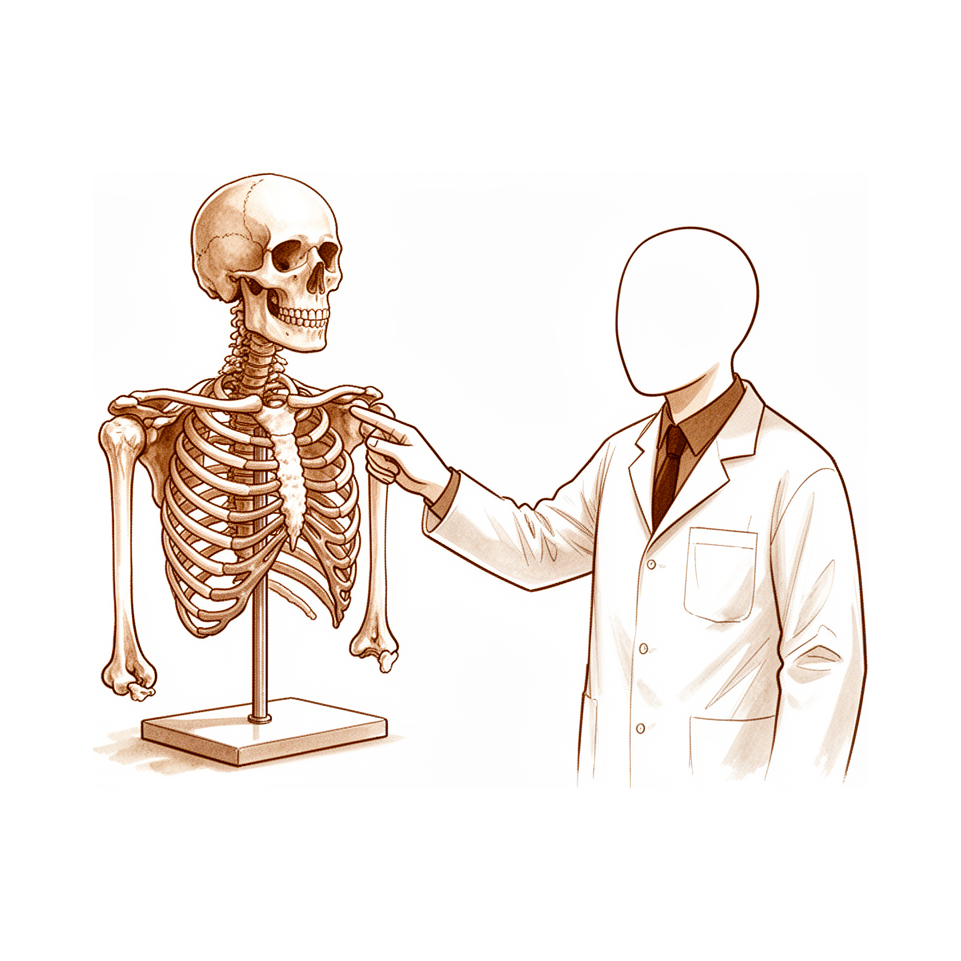
The skeleton of the hand and wrist comprises 27 bones, 19 of which are long bones [19]. The hand skeleton is organized into five rays, each forming a polyarticulated chain of metacarpals and phalanges [19]. The base of each metacarpal articulates with the distal carpal row, while the carpus connects to the forearm via its proximal row [19]. The radioulnocarpal articulation possesses two axes of movement, supplemented by a third axis of pronation and supination from the forearm, granting the wrist three total axes that permit the hand to assume any spatial configuration [19].
The radial ray is the shortest, consisting of a metacarpal and two phalanges, and continues the external carpal column formed by the scaphoid and trapezium [19]. The trapezium is angled anteriorly relative to the carpal plane, creating an approximately 45-degree angle between the first and second metacarpals in the sagittal plane [19]. The thumb metacarpal is the shortest, whereas the index metacarpal is the longest [19]. The proximal and middle phalanges of the long and ring fingers exceed those of the index finger in length [19]. The hand exhibits longitudinal and transverse concavities, forming a cup shape with palmar concavity when the thumb opposes the index finger [19]. The transverse palmar axis, corresponding to the metacarpophalangeal articulations, is oblique to the longitudinal axis, forming an acute angle of approximately 75 degrees [19]. Epiphyseal plates are located at the proximal ends of the phalanges and the first metacarpal, and at the distal ends of the remaining metacarpals [19]. The hand contains 19 bones, 17 articulations, and 19 muscles situated entirely within the hand [62]. The vertebrate skeleton consists of 206 bones of varying shapes and sizes [63].
Musculature & Tendon Anatomy
Extrinsic muscles originate outside the hand and insert on the hand or carpus, while intrinsic muscles have both origin and insertion within the hand [17]. Extrinsic extensors traverse six fibroosseous retinacular compartments at the wrist [17]. The first compartment contains the abductor pollicis longus, which inserts at the base of the thumb metacarpal to radially abduct the thumb, and the extensor pollicis brevis, which inserts on the dorsum of the proximal phalanx to extend the thumb metacarpophalangeal joint [17]. The second compartment houses the extensor carpi radialis longus, inserting on the index metacarpal to dorsiflex and radially deviate the wrist, and the extensor carpi radialis brevis, inserting on the base of the middle metacarpal to provide balanced wrist dorsiflexion [17]. The third compartment contains the extensor pollicis longus, which turns radialward around Lister tubercle and inserts on the distal phalanx to extend the thumb interphalangeal joint; its oblique course provides a substantial adduction component [17]. The fourth compartment contains the extensor indicis proprius, lying deep to the extensor digitorum communis tendons, while the fifth compartment contains the extensor digiti quinti [17]. The sixth compartment contains the extensor carpi ulnaris, which inserts at the base of the little finger metacarpal to provide wrist extension and ulnar deviation [17].
The principal bony insertion of extrinsic digital extensors is the dorsal proximal aspect of the middle phalanx [17]. Metacarpophalangeal joint extension is achieved via extrinsic force transmitted through sagittal bands, while distal interphalangeal joint extension relies on conjoined lateral bands composed of tendinous slips from extrinsic and intrinsic tendons [17]. The extensor digitorum communis tendons of the middle, ring, and little fingers are tethered by juncturae tendinum over the dorsum of the hand proximal to the metacarpophalangeal joints [17]. Sagittal band fibers insert onto the volar proximal phalanx and lateral borders of the volar plate, forming a sling that transmits proximal extrinsic tension to the proximal phalanx without direct tendinous insertion [17]. Rupture or attenuation of these fibers allows the extrinsic extensor tendon to sublux ulnarly, causing ulnar deviation of the finger [17].
The flexor digitorum profundus inserts on the proximal volar aspect of the distal phalanx and flexes the distal interphalangeal, proximal interphalangeal, and metacarpophalangeal joints [17]. The flexor digitorum superficialis acts as a flexor of the proximal interphalangeal and metacarpophalangeal joints [17]. There are seven interosseous muscles: four dorsal abductors and three volar adductors [65]. The middle finger possesses two dorsal interossei and no volar interossei due to the central axis of the hand [65]. Each dorsal interosseous muscle, except the third, has two heads; the superficial head abducts and weakly flexes the proximal phalanx, while the deep head flexes and weakly abducts the proximal phalanx while extending the middle and distal phalanges [65]. Volar interossei have a single head and do not insert onto the proximal phalanx [65]. The flexor digiti quinti brevis is structurally similar to the deep head of the dorsal interossei, forming the ulnar lateral band of the little finger [65]. The opponens digiti quinti arises from the pisohamate ligament and hook of the hamate, inserting onto the ulnar side of the fifth metacarpal diaphysis [65].
The flexor digitorum profundus originates from the proximal ulna and interosseous membrane, with its tendon occupying the floor of the carpal tunnel alongside the flexor pollicis longus [80]. The tenosynovial sheath of the flexor pollicis longus is continuous with the radial bursa, and the sheath to the little finger is continuous with the ulnar digital bursa [80]. In some patients, these bursae communicate, permitting a horseshoe abscess to spread between the thumb and little finger [80]. Lumbricals originate from the radial side of the index, middle, ring, and little fingers in the palm [80]. The flexor digitorum profundus of the index and middle fingers is innervated by the anterior interosseous branch of the median nerve, while the profundus of the ring and little fingers is innervated by the ulnar nerve [80]. The flexor digitorum superficialis has a radial head from the proximal radius and a humeral ulnar head from the medial humeral epicondyle and coronoid process [80]. Its tendon bifurcates around the flexor digitorum profundus at the A2 pulley, with slips reuniting distally at the Camper chiasm, where approximately half of the fibers stay ipsilateral and half cross contralaterally [80]. The flexor digitorum superficialis inserts via radial and ulnar slips into the proximal metaphysis of the middle phalanx and is entirely innervated by the median nerve [80]. Its primary function is digital flexion at the proximal interphalangeal joint [80]. The flexor pollicis longus originates from a radial head on the proximal radius and interosseous membrane, and an accessory head on the coronoid process and medial epicondyle, inserting into the proximal base of the thumb distal phalanx [80]. It is innervated by the anterior interosseous branch of the median nerve and flexes both the interphalangeal and metacarpophalangeal joints of the thumb [80].
The fibroosseous tunnel, or digital flexor sheath, extends distally to the proximal aspect of the distal phalanx [80]. The A2 and A4 pulleys are most essential for maintaining the mechanical advantage of flexor tendons [80]. The tenosynovium lining the tunnel supplies nutrition and lubrication to poorly vascularized flexor tendons [80]. Within the sheath, tendon vascularity is supplied via the vincula system, comprising the vinculum longus and brevis [80].
Joint Mechanics & Kinematics
The wrist’s three axes of movement allow the hand to be positioned in any spatial configuration for grasping [19]. The metacarpophalangeal joint possesses five kinematic degrees of freedom from a mechanical perspective [100]. A wrist joint is biomechanically unstable when it cannot bear loads or exhibit normal kinematics throughout its arc of motion [92]. Hand articulations form functional groups arranged in kinetic chains, where the position of each articulation depends on the equilibrium of forces subject to the position of the immediately proximal articulation [82]. Single articular movements around fixed perpendicular axes do not exist in the hand; almost all movements occur around oblique and variable axes, resulting in combined movements that optimize phalangeal orientation during prehension [82].
The metacarpal arch is adaptable due to the mobility of peripheral metacarpals, with the index metacarpal being the most firmly fixed [72]. The ring metacarpal has approximately 10 degrees of mobility in flexion and extension, while the fifth metacarpal has a range of approximately 20 degrees [72]. The second to fifth metacarpals are bound by the deep transverse intermetacarpal ligament, also known as the interglenoid ligament [72]. Longitudinal arches consist of a fixed carpometacarpal portion and a mobile digital portion, with the metacarpophalangeal articulations serving as keystones; their thick anterior glenoid capsules (volar plates) prevent hyperextension [72]. Stability of the metacarpophalangeal joints is essential for supporting both the longitudinal and transverse metacarpal arches [72]. The thumb ray is the most divergent longitudinal arch, while the index ray has a degree of independence at the phalangeal level owing to its muscle arrangement [72].
Wrist biomechanics are significantly altered following trapeziectomy, with limited radiocarpal interposition most closely resembling intact biomechanics in cadaveric models [109]. Distal radius fractures interfere with wrist biomechanical integrity, limiting range of motion and affecting hand muscle strength [134]. Resection of the distal scaphoid diminishes proximal row flexion-extension motion during deviations at the expense of increased radioulnar translational motion [153]. Incongruous radiocarpal joints are well tolerated due to wrist biomechanics, particularly the midcarpal joint’s role in the dart-throwing motion [203]. Normal thumb function does not require a trapezium [187]. Mean forearm shortening of 3 or 4 cm results in near-complete loss of flexor digitorum profundus simulated muscle force and tip-to-palm force in wrist-neutral and wrist-extension positions, respectively [186]. The anatomical mechanics for lumbrical motor function are similar across all fingers [139]. Finger forces are more hampered when gripping objects with smaller circumferences than large ones [141]. Loss of thumb sensation has the greatest impact on hand dexterity [207]. In passive thumb motions, only tendons of the superficial division show excursion, regardless of wrist joint position [180].
Soft Tissue & Vascular Anatomy
The hand functions as both an information-gathering and execution organ [62]. The dorsal aspect is convex and aesthetically important, while the palmar aspect is concave and functional [62]. Digits converge in closing (flexion and adduction) and diverge in opening (extension and abduction) [62]. When fingers are extended and separated, their tips lie on the circumference of a circle centered on the head of the third metacarpal [62]. Dorsal skin is thin, with an epidermis lined by a horny layer only 0.02 mm thick, and possesses a normal pilosebaceous system unlike the palm [83]. Finger flexion produces significant dorsal skin lengthening, averaging 3 cm in the middle finger from extension to full flexion, with metacarpophalangeal joint flexion alone requiring an average lengthening of 1.25 cm [83]. Dorsal and palmar skin areas are independent due to adhesions anchoring their common boundary to the underlying plane [83].
The superficial palmar fascia lies in a coronal plane beneath the palmar subcutaneous tissue [86]. The palmaris longus tendon, when present, terminates in continuity with the proximal corner of the superficial palmar fascia [86]. Four central fascial bands extend distally from this proximal corner toward each finger, with no central band for the thumb [86]. Digital neurovascular structures are surrounded by a diffuse network of thin transverse oblique fibers; fibers dorsal to the bundle are called Cleland ligament, and those palmar to the bundle are called Grayson ligament [86].
The "princeps pollicis" artery, the terminal branch of the radial artery, crosses the first intermetacarpal space and runs along the ulnar side of the first metacarpal [73]. It divides into two terminal rami, the collateral palmar arteries of the thumb, at the level of the cutaneous flexion crease of the metacarpophalangeal joint [73]. An arcade deep in the flexor tendon joins these two palmar arteries at the level of the distal metaphysis of the first phalanx [73]. Only 15% of anatomical dissections of the palmar arteries of the thumb fall into the classical "typical" category [73]. The dorsal arteries of the thumb originate from the palmar arteries (princeps, commissural, or anastomoses of the superficial arcade) at the level of the first metacarpal [7].
Classification
General Principles and System Reliability
An ideal classification system for congenital hand differences should incorporate etiology, diagnosis, treatment, and prognosis while remaining detailed enough to differentiate among various differences without becoming cumbersome [217]. Such systems must be widely accepted to facilitate standardized communication [217]. The adapted AO classification for hand fractures demonstrated good inter-observer agreement for bone identification and substantial agreement for bone segment coding, though agreement for fracture type was moderate [114]. Conversely, the radiological classification of carpometacarpal joint osteoarthritis does not describe all stages accurately enough to permit reliable and consistent communication between clinicians [8]. The new Buttazzoni classification system for distal radial fractures is simple, covers all radial fracture types, and has acceptable reliability comparable to commonly used systems [142]. Various classification systems for upper limb orthoses have been developed with different aims [200].
Osteoarthritis and Degenerative Joint Disease
Eaton and Glickel: This radiographic staging system guides surgical management of basal joint arthritis and is widely used and accepted in the study of CMC arthritis [246]. Stage I is characterized by mild subluxation and no joint space narrowing [246]. Stage II shows evidence of arthritis limited to the trapeziometacarpal joint with osteophytes <2 mm in diameter [246]. Stage III is described as sclerosis of the subchondral bone and/or osteophytes >2 mm [246]. Stage IV involves both the trapeziometacarpal joint and the scaphotrapezial joint [246]. In a cohort of 200 trapeziometacarpal joint cases, 98 were graded III (49%), 97 were graded II (48.5%), and 5 were graded IV (2.5%) according to the Dell radiological classification [243]. An anatomically based radiological classification for thumb basal joint arthritis aims to differentiate between different forms of the disease to allow prospective study assessment [91].
Lichtman: The most widely used classification for Kienböck’s disease is the four-stage system described by Lichtman et al. (1977) [55]. It is based on plain radiographs and describes osseous morphological characteristics of the lunate and carpal bones [55]. Some authors consider early stages of Kienböck’s disease to be Lichtman Stages I, II, and IIIa [55]. The most recent treatment algorithm refers to early stages as those with an "intact lunate," defined as a structurally undamaged lunate with no cartilage changes at the midcarpal and radiocarpal joints [55]. Patients with an "intact lunate" are classified as Lichtman Stages 0, I, and II [55].
Bain and Begg: This arthroscopic four-stage classification for Kienböck’s disease is based on cartilage status [55]. Patients with an "intact lunate" in the most recent algorithm are classified as Bain and Begg Stage 0 [55].
Schmitt: This three-stage classification for Kienböck’s disease is based on signal intensity in different zones of the lunate on gadolinium-enhanced MRI [55]. It assesses bone marrow viability and is considered a vascular, perfusion, or viability classification [55]. Patients with an "intact lunate" are classified as Schmitt Stage I [55]. A combination of osseous, vascular, and cartilage classifications has been suggested to create an algorithm for the assessment and treatment of Kienböck’s disease [55].
Herbert and Lanzetta: This classification for Preiser's disease is based on the progression of the disease as seen with plain radiographs [248]. It consists of four stages, starting at stage 1 with normal radiographs but a positive bone scan and ending at stage 4 with total collapse of the scaphoid and periscaphoid arthritis [248]. In a study of eight patients with Preiser's disease, two patients with stage 4 disease fared "Satisfactory" and "Good," whereas one patient with stage 2/3 disease had only a "Fair" result [248]. Three classification systems have been devised for grading scaphoids afflicted with Preiser's disease [248].
Fractures and Trauma
Coronoid Process Radiographic Classification: The proposed radiographic classification for coronoid process fractures of the ulna had prognostic value [163]. 91% of Type-I coronoid process fractures achieved satisfactory results, whereas 20% of Type-III coronoid process fractures achieved satisfactory results according to this classification [163].
Hamatometacarpal Fracture-Dislocation: The novel classification system for hamatometacarpal fracture-dislocation can be used to establish guidelines for appropriate treatment [34].
Distal Radius Fractures: Classifications for distal radius fractures help to identify unstable fractures and offer insight into the indications for external skeletal fixation [205].
Schernberg: In an experimental study of proximal scaphoid fractures, all fractures obtained were in zone II or III according to the Schernberg classification [183].
Unified Classification System: This system is advocated to guide management of periprosthetic fractures around Motec implants [219].
Congenital Anomalies and Developmental Variations
ObergeManskeeTonkin: The paper recommends the adoption of this classification system to replace the Swanson classification [155]. This recommendation is cited due to increased knowledge of molecular etiology and the need for a system that describes the limb axis and specific anomalies [155].
Ulnar Ray Deficiency: A subclassification into four types for ulnar ray deficiency was established based on clinical findings [138]. Type I is defined as hypoplasia or partial defect [138]. Type II is defined as total defect [138]. Type III is defined as defect with humeroradial synostosis [138]. Type IV is defined as defect with congenital amputation at the wrist [138].
Synpolydactyly: A new, reliable radiographic classification system for synpolydactyly allows improved communication between clinicians and serves as a foundation for future investigations [119].
Oligodactyly with Thumb: A proposed classification system for oligodactyly with thumb is based on locations of missing digits and associated thumb deformities [198].
Radial Polydactyly: A modified classification for radial polydactyly is a practical and utilitarian scheme for nomenclature that may assist comparison of treatment outcomes and individual cases [216].
Metacarpal Synostosis: A classification system for metacarpal synostosis of the ring and little fingers is based on the fourth-fifth intermetacarpal angle (IMA) and the presence of severe shortening of the fifth ray [267]. Type A is characterized by a narrow IMA type where the IMA is less than normal [267]. Type B is characterized by a wide IMA type where the degree of IMA is larger than normal [267]. Type C is characterized by a reverse IMA type, or convergent type, where the IMA is a negative value [267]. Each type of metacarpal synostosis includes 2 subtypes based on the presence of severe shortening of the fifth ray [267]. The intermetacarpal angle (IMA) is considered a critical clinical indicator of deformity progression and functional limitation in metacarpal synostosis [267]. It is not appropriate to set a constant normative value of IMA as a reference to direct corrective repair for all patients [267].
Thumb Polydactyly: Three groups of thumb polydactyly were apparent based on contrast arthrography: those with no joint alteration, those with joint involvement and separate articular impressions, and those with abnormal duplex joints [213].
Soft Tissue, Ligaments, and Tendons
Palmer: This classification has been historically used to classify tears of the triangular fibrocartilage complex [296]. Palmer class-1 tears are traumatic [296]. Palmer class-2 tears are degenerative [296]. Palmer classification tears are further categorized by their anatomic location and the degree of chondromalacia or arthritic change [296].
Long Extensor Tendon to the Thumb: The authors propose a classification system to organize variations of the long extensor tendon to the thumb to help avoid confusion during surgeries involving repair or transfer of these tendons [201].
Türker: The authors propose an additional category (Type 3) to the Türker classification system to encompass rare findings of two radial-sided accessory extensor tendons in the same individual [175].
Median Nerve: One cannot rely entirely on the existing anatomical classifications of the median nerve in the carpal tunnel [222].
Tumors and Neoplasms
Enneking: The Enneking staging system classifies primary bone tumours according to whether they are high or low grade, whether there are metastases present or not, and whether the tumour has grown out of its original compartment or remains confined to a compartment [178]. A compartment is defined as an enclosed tissue space, such as a bone, a joint space or a muscle group confined by its fascial envelope [178]. Enneking Stage 1A is defined as a low-grade, intracompartmental tumour [178]. Enneking Stage 1B is defined as a low-grade, extracompartmental tumour [178]. Enneking Stage 2A is defined as a high-grade, intracompartmental tumour [178]. Enneking Stage 2B is defined as a high-grade, extracompartmental tumour [178]. Enneking Stage 3 is defined as any of the above with metastases [178].
TNM: The TNM staging system for primary sarcomas of bone takes into consideration the histological subtype, size, continuity, grade, and local and distant spread of the tumour [178]. In the TNM staging system for bone tumours, size is dichotomized to small (<8 cm) or large (>8 cm) [178]. TNM Stage 1A is defined as low-grade, small, no metastases [178]. TNM Stage 1B is defined as low-grade, large, no metastases [178]. TNM Stage 2A is defined as intermediate- or high-grade, small, no metastases [178]. TNM Stage 2B is defined as intermediate-grade, large, no metastases [178]. TNM Stage 3 is defined as high-grade, large, no metastases [178]. TNM Stage 4 is defined as any with metastases [178]. Cases of pathologic fractures in benign neoplasms of the fingers were staged according to both the Modified Lodwick-Madewell and Enneking classification systems [294].
Rheumatoid Arthritis
Wrightington Wrist: The Wrightington wrist classification was devised by Stanley et al to plan a surgical approach based on radiographic changes [5]. In a review of 50 rheumatoid wrists, radiolunate involvement was greater than radioscaphoid involvement, and intercarpal involvement was the least [5]. The recommended treatment for the rheumatoid wrist based on the Wrightington wrist classification was early synovectomy and radiolunate fusion [5].
Larsen Scores: Based on Larsen scores, the most severely involved MCP joints in rheumatoid arthritis were the index, followed by the middle, small, and ring [5]. The ring finger MCP joint was the least affected in rheumatoid arthritis and in some cases it was spared [5]. The same pattern of MCP joint involvement in rheumatoid arthritis was observed in early and late phases of the study with a statistically significant difference [5]. Chronic synovitis in certain areas of synovial infolding caused characteristic erosions in the metacarpal heads of the index and middle fingers (72%) [5]. Chronic synovitis in certain areas of synovial infolding caused characteristic erosions in the ulnar styloid (46%) [5]. Chronic synovitis in certain areas of synovial infolding caused characteristic erosions in the radial aspect of the scaphoid (36%) [5].
Clinical Presentation
General Evaluation Principles
Clinical evaluation of the injured or dysfunctional hand and wrist is a daunting task because painless and full hand function requires seamless integration of joints, muscles, and nerves [6]. Patients often have difficulty accurately describing their symptoms and may incorrectly attribute pathology to a perceived deficit, whether real or imagined [6]. A careful physical examination is essential to direct care and future testing if indicated, as diagnostic tests such as imaging and serum laboratory studies can be expensive, time consuming, and often nonspecific [6]. A systematic method to approaching the physical examination is essential due to the number of structures in a small space [6]. Evaluation of upper limb joint function may be performed without the use of instruments and using only clinical means to diagnose in most cases [108]. Accurate diagnosis and management of hand and carpal fractures and dislocations are predicated on a thorough physical examination and appropriate imaging to limit joint stiffness while preserving mobility and function [96]. When elbow pain is accompanied by musculoskeletal or systemic red flags, clinicians should perform a structured assessment and refer promptly [69].
Thumb Carpometacarpal (CMC) Joint Arthritis
The typical presentation of CMC arthritis is a female between 50–70 years of age complaining of insidious radial thumb pain that originally worsened with use, decreased ability to perform activities of daily living, decreased strength, and decreased dexterity [42]. Opposition requiring activities, such as writing, opening jars, or carrying heavy objects between the thumb and fingers, are instigators of pain in CMC arthritis [42]. There is an increasing weakness of pinch in CMC arthritis, progressing to stiffness and cramping with increasing stage [42]. In advanced stages of CMC arthritis, pain may exist at rest [42]. A younger group of patients (20s–30s) may present with pain in the thenar eminence or cramping in the first web space resulting from joint laxity and synovitis of the trapeziometacarpal joint [42]. Pain in younger patients with trapeziometacarpal joint laxity and synovitis may radiate up the radial aspect of the forearm with activities such as writing [42]. Regardless of age, pain in CMC arthritis is often mitigated by rest and analgesics [42].
Physical examination for CMC arthritis often reveals a dorsoradial prominence of the thumb metacarpal base secondary to subluxation due to ligamentous laxity and the pull of the adductor pollicis longus muscle [42]. Tenderness to palpation at the trapeziometacarpal joint is a finding in CMC arthritis [42]. Tenderness to palpation at the scaphotrapezial joint is a finding in advanced stages of CMC arthritis [42]. Crepitus may often be felt during physical examination for CMC arthritis [42]. The grind test of the trapeziometacarpal joint will often produce pain in CMC arthritis [42]. Pain with distraction of the trapeziometacarpal joint can help differentiate synovitis in CMC arthritis [42]. The diagnosis of thumb carpometacarpal joint arthritis is heavily dependent on physical examination [132]. The grind test relies on degenerated articular surfaces and attenuated ligamentous support to produce pain [132]. A recent study concluded that adduction and extension manoeuvres are more accurate than the grind test for diagnosing CMC arthritis [132]. Choa et al. demonstrated a ‘traction-shift’ test as a superior method of diagnosing CMC arthritis compared with the grind test [132]. There is a lack of accuracy and a relatively high incidence of false negative results for the grind test in CMC arthritis from a therapist’s standpoint [132]. The reduction manoeuvre was more sensitive and specific than the grind or shift tests for diagnosing CMC arthritis [132]. Unrecognized joint incongruity in early-stage trapeziometacarpal arthritis is likely to lead to progression of joint degeneration [124]. Recognition of joint incongruity in early-stage trapeziometacarpal arthritis can lead to measures that may prevent or delay progression of joint degeneration [124].
Distal Radioulnar Joint (DRUJ) and Ulnar-Sided Wrist Pain
Disorders of the distal radioulnar joint are a common source of ulnar-sided wrist pain [98]. Increased understanding of anatomy and pathology has facilitated accurate diagnosis and successful treatment in most cases of distal radioulnar joint disorders [98]. Initial management of symptomatic DRUJ arthritis is nonsurgical, with surgery reserved for patients with refractory pain [27]. A diagnostic test is required for dynamic ulnar impingement because the condition is so frequently missed and to assist in the differential diagnosis of distal forearm pain [99].
Specific Joint and Soft Tissue Pathologies
Boxer's knuckle refers to an injury or tear of the MCP joint capsule [21]. Boxer's knuckle injuries are most commonly attritional because of repetitive trauma and progressive capsular attenuation [21]. Forceful hyperflexion of the MCP joint leads to tensioning of the capsule and extensor hood over the narrow dorsal ridge of the metacarpal head, making it vulnerable to injury from a direct blow [21]. Athletes competing in boxing, martial arts, or other combat sports are at particular risk for Boxer's knuckle injuries [21]. Athletes often delay presentation for Boxer's knuckle until it has begun to affect their performance, such as after recurrent injuries and worsening symptoms [21]. Chronic Boxer's knuckle injuries may exhibit thickening of the extensor mechanism on examination due to scar tissue formation [21]. A subtle but detectable defect in the dorsal joint capsule is often palpable radial, ulnar, or deep to the extensor tendon and is the hallmark examination finding for Boxer's knuckle [21].
Adhesions between the lumbrical and interosseous muscles form distal to the deep transverse metacarpal ligament in lumbrical-interosseous ("saddle") syndrome [21]. Proximal pull of adhesions during intrinsic muscle contraction leads to impingement against the deep transverse metacarpal ligament, presenting clinically as the inability to achieve an intrinsic plus position in lumbrical-interosseous syndrome [21]. Definitive diagnosis and appropriate management are required for any locking of the MCP joint to prevent fixed flexion contracture and permanent disability [106]. The development of a trigger wrist is atypical, with multiple causes for its development [103]. Metacarpal head osteochondroma should be included in the differential diagnosis of a 'trigger finger' [117]. Advanced imaging is critical for identifying bony prominences causing locking when common etiologies are absent in cases of suspected trigger finger [117].
It is important to recognize carpometacarpal disruption since misdiagnosis and delay in diagnosis is common [24]. Prompt and adequate management can prevent joint stiffness and loss of function [22]. Late diagnosis leads to deformity, pain and great dissatisfaction, and both the ulnar and median nerves can be compromised [121]. Although the range of movement may be limited with loss of grip, a painless wrist can be achieved through prompt recognition and early management of scaphoid fracture dislocation [118]. In patients with musculoskeletal syndromes who present with wrist pain, it is important to carefully examine both wrists and evaluate the radiographic studies to determine if carpal anomalies may be contributing to their wrist pain [94]. Clinicians should be careful ascribing symptoms to anatomical variations on radiographs in patients with nonspecific wrist pain [18]. Associated medical and musculoskeletal conditions are common in patients with ulnar longitudinal deficiency, of which cardiac and lower extremity abnormalities are most frequently observed [110].
Systemic and Degenerative Conditions
Joint pain is exceedingly common in patients with scleroderma, with some studies reporting arthralgias in up to 66% to 97% of patients [144]. Arthralgias can be the presenting symptom of scleroderma, with up to 20% of patients complaining of joint pain before scleroderma diagnosis [144]. Synovitis and arthritis on clinical examination can present in up to 46% of patients with scleroderma [144]. Subclinical synovitis can be detected in a much higher proportion of scleroderma patients on imaging studies than on clinical examination [144]. The most common radiographic presentation in scleroderma is joint space narrowing with or without bony changes [144].
Osteoid osteoma should be considered in the differential diagnosis for painful bony tumors in the hand, particularly in pediatric and adult patients, as it can present with atypical features and locations making work-up and diagnosis challenging [88]. Prompt diagnosis and surgical excision of osteoid osteoma may prevent irreversible articular damage [93]. The diagnosis of bizarre parosteal osteochondromatous proliferation (Nora lesion) in pediatric cases can be challenging due to presenting symptoms and radiographic findings [85]. A succinct set of standardized clinical criteria is necessary to guide the differential diagnosis of joint chondrolysis [7]. The radiological classification does not describe all stages of carpometacarpal joint osteoarthritis accurately enough to permit reliable and consistent communication between clinicians [8].
Imaging and Diagnostic Limitations
Radiographs of the CMC joint in the standard AP, lateral, and oblique view can help confirm suspicion of the diagnosis of CMC arthritis [42]. While in-person physical examination remains necessary, objective radiographic data may aid in preliminary diagnosis and treatment recommendations for Blauth Type III thumb hypoplasia [20]. Diagnosis of congenital absence of flexor pollicis longus tendon can be confirmed using physical examination, direct radiography, and magnetic resonance imaging [25]. ChatGPT 4.0 technology is not currently able to consistently and reliably provide accurate diagnoses when prompted with radiologic studies of common orthopedic upper extremity pathologies [111].
In conjunction with the history and physical examination, plain radiography is the principal diagnostic modality for fractures of the metacarpal bases [147]. Lateral radiographs should be closely investigated for dorsal displacement and subluxation or dislocation of the metacarpal bases from the carpal row [147]. Standard radiographic studies for metacarpal base fractures can prove inconclusive or negative because the overlying trapezium, trapezoid, or hamate may obscure the fracture pattern [147]. Computed tomography may aid in the recognition of a previously unidentified rotational deformity in metacarpal base fractures, which could affect treatment decisions [147]. A novel classification system for hamatometacarpal fracture-dislocation based on CT scan can be used to establish guidelines for appropriate treatment [34]. The literature demonstrated positive outcomes for pediatric volar plate avulsion fractures of the proximal interphalangeal joint presenting with less than 30% joint involvement that were managed nonsurgically [31]. A long-term follow-up of patients with symptomatic Bennett fracture malunion treated with intra-articular osteotomy is needed to evaluate the joint for radiographic and clinical osteoarthritis [2].
Investigations
Clinical Examination: A systematic physical examination is essential for the hand and wrist due to the high density of structures in a small space, as diagnostic tests are often expensive, time-consuming, and nonspecific [6]. Patients frequently struggle to accurately describe symptoms or may incorrectly attribute pathology to a perceived deficit [6]. In-person examination remains necessary for the diagnosis of Blauth Type III thumb hypoplasia [20] and can confirm the congenital absence of the flexor pollicis longus tendon [25].
Plain radiography: Plain radiography provides the most basic and useful information for diagnostic imaging [193]. Standard radiographs demonstrate a sensitivity of 53% to 90% for hook of hamate fractures [258]. The radiological classification of trapeziometacarpal joint osteoarthritis does not accurately describe all stages, limiting reliable communication between clinicians [8]. Objective radiographic data may aid preliminary diagnosis and treatment recommendations for Blauth Type III thumb hypoplasia [20]. Delayed diagnosis of carpometacarpal fracture-dislocations complicates closed reduction and is associated with less favorable radiographic outcomes [56]. When a pseudoepiphysis is seen on radiographs of a healthy asymptomatic child, the patient and family should be reassured [271]. Radiographs and ultrasound constitute the mandatory imaging work-up for hand tumors [265]. Radiographic progression may occur regardless of treatment, but clinical improvements are generally maintained when procedures are appropriately selected based on disease stage [57]. Long-term follow-up is needed to evaluate the joint for radiographic and clinical osteoarthritis after intra-articular osteotomy for Bennett fracture malunion [2]. Radiological findings support good bone tolerance with signs of progressive integration for spherical pyrocarbon HAPY metacarpophalangeal interposition arthroplasty, despite moderate erosion and bone remodeling in some cases [232]. Early radiographic results of triquetral autograft for restoration of the lunate fossa of the distal radius are promising [251]. At 18 months follow-up, clinical and radiological results for palmar perilunate fracture-dislocation were stable [16]. There were no osteolytic changes in the distal area of elongated bones on radiographs in a twenty-year experience of bone-lengthening method in hand reconstruction [59]. Only 2 patients did not show a complete fusion at CT scan evaluation for four-corner fusion using a specialized circular locking plate [285]. The series reports clinical and radiological advantages of percutaneous locked synthesis for hamato-metacarpal fracture-luxation [284]. Clinical and radiological results obtained for the management of closed trapezo-metacarpal dislocations are very encouraging [276]. This procedure helps to treat pain significantly despite mixed radiographic results for large collapses of the thumb column after trapeziectomy [264]. Prospective follow-up of over 200 patients has shown that radiographic measures turned out great for vascularized bone flaps for carpal reconstruction [13]. The functional and radiologic results were good for three-dimensional dynamic external fixation combined with bone grafting for Kienbock's disease [212].
Computed Tomography (CT): CT offers 94% specificity and 97% accuracy for hook of hamate fractures [258]. Advanced imaging, including standard CT, is helpful to confirm the diagnosis of thumb metacarpal-trapezoid impingement [239]. All imaging modalities, including CT, demonstrated excellent inter-rater agreement with no significant difference in bias from the true variance when compared to each other for ulnar variance [223]. The use of photon-counting detector computed tomography (PCD-CT) is likely to revolutionize many fields of medical imaging, with improvements in image resolution and versatility especially benefiting musculoskeletal imaging [283].
Magnetic Resonance Imaging (MRI): MRI provides the most information about soft tissues [193]. MRI alters the treatment of hand, wrist, and elbow conditions in less than 1 in 5 patients [233]. MRI is not 100% specific for diagnosing an occult scaphoid fracture, with a specificity of 96% in healthy volunteers [261]. Vascularized bone graft is recommended when osteonecrosis of the proximal pole is evident on MRI for scaphoid nonunion [241]. Further study with longer follow-up and repeat MRI scans is necessary to be confident that caution about scaphoid bone bruise is unnecessary [238]. MRI should be requested for hand tumors any time there are atypical findings such as bone extension of a soft tissue lesion, osteolysis, or size greater than 3 cm [265]. MRI determination of posterior interosseous nerve position is reliable and consistent with prior cadaveric study [281]. Magnetic resonance imaging demonstrated preservation of capitate morphology and reduced signal abnormalities in a case of capitate osteonecrosis in a patient with thalassemia [256]. The patient remained pain- and symptom-free at 14 months with full range of motion and no recurrence on MRI for a juxta-articular myxoma of the thumb [262]. Diagnosis of congenital absence of flexor pollicis longus tendon can be confirmed using magnetic resonance imaging [25]. MR assessment of Dupuytren's disease is hindered by the resolution of current equipment, orientation issues due to multiplanar deformities of the fingers, and lack of intraoperative availability [116]. MRI is probably most useful in identifying additional pathology such as flexor tendon bowstringing in Dupuytren's disease [116]. MRI may be helpful in providing a quantitative noninvasive measure of cellularity of affected areas, which is an index of biologic activity, but this potential staging tool has not been investigated yet on a large scale [116].
Ultrasound and Doppler: An 8-MHz Doppler tone assessment may be used to identify superficially displaced neurovascular bundles when Dupuytren cords lie beneath soft fleshy prominences, but false-negatives are possible [116]. Doppler imaging is a promising improvement for identifying structures in Dupuytren's disease, but higher resolution imaging technology is needed [116].
Arthroscopy: The authors recommend intraoperative assessment of articular surfaces rather than preoperative radiographs for selecting the surgical procedure for proximal row carpectomy versus scaphoid excision and intercarpal arthrodesis [4].
Other Considerations: This review provides an overview of current diagnostic imaging technologies and their clinical application for common conditions of the hand, wrist, and forearm, while also considering evolving and future imaging technologies [268].
Treatment
Non-Operative Management
Conservative management serves as the first-line treatment for a broad spectrum of upper extremity pathologies, including thumb carpometacarpal (CMC) joint arthritis, tenosynovitis, and distal radioulnar joint arthritis [27, 215, 230, 236]. For thumb CMC arthritis, nonoperative care must be initiated as soon as pain begins to spare the joint using standardized methods, with many patients remaining asymptomatic or minimally symptomatic without proceeding to surgery [215, 236]. Conservative options for CMC arthritis include exercises, multimodal therapy, and rigid splinting, with hand-exercise programs specifically improving short-term grip strength [260]. Static progressive orthoses offer positive outcomes for upper extremity joint stiffness or contracture, increasing active range of motion, grip strength, and patient satisfaction [289].
For nondisplaced fractures of the first metacarpal base, treatment involves a short arm thumb spica cast leaving the interphalangeal joint free for approximately four weeks [15]. Following cast removal, patients transition to a removable orthoplast thumb spica splint and begin gentle active range of motion [15]. Frequent radiographic monitoring, at least once weekly, is required during cast treatment because fracture displacement can easily occur within the cast [15]. Conservative management is also effective for isolated spiral fractures of the fourth metacarpal, yielding favorable short-term outcomes and rapid return to function [227]. In pediatric patients with habitual dislocation of the thumb metacarpophalangeal joint, management should be conservative, resisting surgical tightening and encouraging the child to unlearn the habit [162].
Other indications for nonoperative care include extensor indicis proprius syndrome, where conservative treatment is the initial approach before surgical decompression if measures fail [229]. For elbow stiffness due to heterotopic ossification lasting less than six months, conservative treatment is indicated, utilizing physical therapy and manipulation under anesthesia to restore range of motion [247]. Short-term distal interphalangeal joint splinting is a safe and inexpensive modality that reduces pain and improves joint extension [179]. Conservative management is acceptable for isolated distal third ulna shaft fractures in appropriately selected patients [234] and for elderly, low-demand patients with minimal symptoms and posttraumatic ulnar translocation of the carpus [245]. Nonsurgical management with activity modification and splinting has resolved symptoms and imaging findings in adolescent avascular necrosis of the distal radius [254]. For vascular anomalies of the hand and wrist, initial conservative therapy is dictated by classification, with interventional options or surgery reserved for persistent pain, swelling, or functional impairment [231].
Operative Management
Indications: Surgical intervention for articular fractures is indicated when displacement exceeds 1 mm in Bennett's or Rolando's fractures, requiring reduction and appropriate fixation [15]. However, operative fixation may be mitigated by excessive comminution preventing adequate fixation of small fragments, or by the patient's overall health, age, and manual requirements [15]. For distal radius fractures, operative treatment improves outcomes for non-geriatric patients with specific fracture patterns but does not improve long-term outcomes for geriatric patients compared to non-operative treatment [266]. Surgery for trapeziometacarpal osteoarthritis is indicated for troublesome painful osteoarthritis that restricts thumb and hand function and has not been adequately managed with non-operative treatments [269]. It is sensible to delay surgery for at least 3–6 months after the onset of intolerable pain to determine if the restrictive pain is due to a temporary flare-up [269].
Surgical Approach / Technique: The decision not to operate based on radiographs alone, without a meticulous clinical examination, is considered bad clinical practice for hand fractures [263]. Spiral fractures of the phalangeal shaft carry a high risk of rotational deformity and often require closed or open reduction and internal fixation despite benign radiographic appearance [263]. For phalangeal shaft fractures, robust fixation with plates and screws provides more stability and allows immediate mobilization, though it carries risks of increased trauma, periosteum stripping, tendon division, and tendon adhesions [263]. Fixation with two K-wires is more stable than a single K-wire, allowing limited active finger motion to begin after initial healing within the first two weeks [263]. In thumb ulnar collateral ligament repair using suture anchors and suture tape augmentation, postoperative management involves non-weight-bearing in a thumb spica splint and sling, with follow-up at 10 to 14 days for wound evaluation and suture removal [273]. Physical therapy begins at two weeks after transition to a removable spica splint [273].
Implant Selection: For intra-articular fractures of the upper extremity, absorbable suture fixation of osteochondral fragments has achieved bone union and joint congruity restoration without major complications [166]. While diaphyseal fractures are rare indications for external fixation, it appears advantageous in joint injuries [170]. For gap non-unions of the upper extremity, the modified Nicoll-graft method is cited as a treatment of choice [250]. Vascularized bone grafting based on the ulnar artery is advocated for complex recalcitrant scaphoid non-unions where conventional grafts may fail due to poor vascularity [249]. In avascular necrosis, the choice between vascularized bone, nonvascularized bone graft, or no graft does not significantly impact healing [240].
Alignment / Balancing Strategy: Abduction—opposition wedge osteotomy of the base of the first metacarpal improved clinical symptoms and increased arc in all but two joints with advanced arthritis on preoperative X-rays [10]. For bone lengthening in the pediatric upper extremity, success is commonly defined by radiographic lengthening, joint motion, and patient satisfaction rather than validated outcome measures, though the procedure is associated with a high complication rate [12]. The outcome of intervention for Madelung's deformity allows patients to retain functional range of motion with improved stability [165].
Pain Management: Surgical management of articular cartilage injuries focuses on removing inflammatory mediators and restoring the osteochondral unit [79]. Surgical options include arthroscopic débridement, bone marrow stimulation, osteochondral autograft transfer, osteochondral allograft transplantation, autologous chondrocyte implantation, and emerging techniques [79]. Retrograde drilling is a safe option to stimulate healing of subchondral bone in capitellar osteochondritis dissecans without disrupting articular cartilage [122].
Adjuncts: Arthroscopic evaluation and treatment of basilar joint arthritis have shown satisfactory rates of acceptable outcomes in recent small series [104]. Future studies will likely ensure the place of trapeziometacarpal arthroscopy in the treatment armamentarium for trapeziometacarpal osteoarthritis [130]. A systematic review provided evidence of the efficacy of various surgical interventions for trapeziometacarpal osteoarthritis, with some showing moderate-to-large superior effects compared to others [136].
Revision: Complications of total trapeziectomy can result from the surgical approach, technical failure, and ligament insufficiency [292]. Radial neuropathies are frequent complications, presenting as a small hypoesthetic area at the first phalanx dorsum or neuropathic pain requiring desensitization and rehabilitation [292]. FCR tenosynovitis is a side-effect of ligament reconstructions or suspensioplasties using this tendon for fixation [292]. Low and Hales reported a 60% rate of surgical revision for total trapeziectomy [292]. Trapezial collapse is a major complication inducing painful impingement between the first metacarpal and the trapezoid or distal scaphoid [292]. When function is impaired by trapezial collapse, surgical revision aims to restore a stable thumb base and a stronger interposition [292]. Stability restoration with ligament reconstruction must use remaining available tendons and transfers but does not always solve ligament insufficiency or constitutional softness of collagen tissue [292]. Ligament reconstruction is always combined with a proper interposition to restore height and interface between the bones [292].
Other Considerations: Surgical options for osteoarthritis of the hand and wrist, such as fusion or arthroplasty, are selected based on the specific joint involved, patient demands, and risk of complications [1]. Appropriate use of arthroplasty and arthrodesis in rheumatoid and osteoarthritic hands requires careful consideration of the patient's needs [9]. While pain relief from arthroplasty is generally good, high rates of deformity recurrence and complications exist depending on the implant type and joint involved [28]. Arthrodesis has been the primary procedure for scaphotrapezio-trapezoid arthritis, though outcomes are mixed with risks of nonunion and adjacent joint arthritis [44]. Satisfactory results with arthrodesis of the metacarpophalangeal and interphalangeal joints depend on proper patient selection, meticulous technique, and fusion in an appropriate position [50]. The pyrocarbon implant arthroplasty appears effective for pain and functionality in ulnar carpo-metacarpal joint osteoarthritis post-traumatique [140]. The prognosis for fractures and dislocation of the base of the thumb metacarpal depends on the quality of restoration of trapeziometacarpal joint mobility [159]. First carpometacarpal joint suspension arthroplasty with palmaris longus tendon graft adds an option for complicated cases of thumb base arthritis, though indications are limited [39]. Despite 70 years of research, the best management for trapeziometacarpal arthritis remains debated, with a constant proportion of patients remaining unhappy or symptomatic post-surgery [228]. Surgery is presently the mainstay of treatment for severely symptomatic osteoarthritis of the trapeziometacarpal joint [269]. It is often assumed that pain will persist indefinitely once surgery is considered, but this may not always be the case [269]. One study reported that 68% of patients referred for consideration of surgery for trapeziometacarpal osteoarthritis did not undergo surgery during the following two years [269].
The prognosis for fracture-dislocation of the radiocarpal joint is guarded, with good results in early-treated patients but potential for late post-traumatic arthritis [43]. If treatment of greater arc wrist injuries is delayed beyond 45 days, the result of satisfactory range of motion is reduced [47]. Fixation of condylar fractures of the proximal and middle phalanges is possible up to eight weeks after injury, though earlier treatment yields better range of motion outcomes [172]. Union was achieved in a relatively short period with a nonvascularised bone graft for congenital bilateral pseudarthrosis of the index metacarpal bones [60]. Management principles for hypertrophic non-union of a pathological forearm fracture secondary to multiple myeloma involve stabilisation of the entire bone and early mobilisation [226]. While spontaneous healing of a proximal pole scaphoid non-union is unusual, it may occur in isolated cases, though non-treatment is not advocated [252]. Surgical treatment targets treating joint imbalance to prevent fixed deformity in wrist and finger deformity [176]. Modified Viegas capsuloplasty represents a safe and effective joint-preserving surgical option for chronic scapholunate Geissler 3C lesions in appropriately selected patients [29]. Functional range of motion is important for directing indications for surgery and rehabilitation, and assessing outcome of treatment for finger joints [32]. Surgical options are necessary if nonoperative management fails to restore elbow function and range of motion after six months for heterotopic ossification [247]. Surgical excision of ectopic bone and contracture release are the most common surgical options in elbow heterotopic ossification management [247]. Many authors suggest that delayed surgical excision, 12 to 24 months from injury to operation, is optimal [247]. Waiting for ectopic bone to mature before excision reduces the incidence of recurrence [247]. However, this delay usually leads to further impairment of elbow function due to increased pain intensity, muscular atrophy, and secondary contractures [247]. Many authors have studied early heterotopic ossification excision, suggesting this approach is more beneficial for patients with ectopic bone formation on the elbow [247]. These findings align with a systematic review by Almangour et al. determining whether the timing of surgery affects the recurrence rate in patients with neurological heterotopic ossification [247]. Prompt and adequate management can prevent joint stiffness and loss of function for tendon grafts in the hand [22]. Long-term follow-up of patients treated with intra-articular osteotomy for symptomatic Bennett fracture malunion is needed to evaluate the joint for radiographic and clinical osteoarthritis [2]. Patients with established scaphoid non-union should be advised that osteoarthritis will most likely develop [52]. The prognosis for fracture-dislocation of the radiocarpal joint is guarded, with good results in early-treated patients but potential for late post-traumatic arthritis [43]. Treatment of the arthritic wrist is fascinating and challenging, requiring a diversity of treatment options due to the complex integrated system of joints, rather than a single effective treatment [115].
Complications
Fracture and Nonunion Complications
Infected nonunion: Defined as the persistence of infection at the fracture site and surrounding tissue with failure of bone healing for 8 months [145]. Risk factors include exposed bone devoid of vascularized periosteal coverage for more than six weeks, purulent discharge, positive microbiological culture from the wound, and histological evidence of necrotic bone containing empty lacunae [145]. Treatment and long-term outcomes are commonly complicated by soft-tissue problems, including multiple sinuses, osteomyelitis, osteopenia, complex deformities with limb-length discrepancy, and adjacent joint stiffness [145]. Motor and sensory dysfunction of the limb, chronic pain, and biopsychosocial factors associated with infected nonunion may lead to considerable physical, social, financial, and mental impact on the life of affected patients [145].
Scaphoid nonunion: Few of the forty-seven scaphoid non-unions were undisplaced, stable, or free of arthritis after ten years [54]. Complications occurred in 32 cases before union, with 27 requiring reoperation [301].
Metacarpal fracture displacement: Fracture displacement can easily occur inside a cast for nondisplaced fractures of the base of the first metacarpal [15].
Joint Degeneration and Arthritis
Bennett fracture malunion: Long-term follow-up of patients treated with intra-articular osteotomy for symptomatic Bennett fracture malunion is needed to evaluate the joint for radiographic and clinical osteoarthritis [2].
Carpometacarpal dislocations: The outcome of simultaneous dislocations of the five carpometacarpal joints remains uncertain, with hand and wrist functions maintained but often reduced grip strength [45]. Although the follow-up period is too short to comment on the development of osteoarthritic changes for carpometacarpal dislocation of the thumb associated with fracture of the trapezium, the excellent result in terms of joint stability would encourage the authors to adopt such a reconstruction in future cases [51].
Trapezium fracture: Although long term osteoarthritic changes cannot be predicted for isolated fracture of the trapezium, the early review showed an excellent functional result [41].
Scapholunate ligament injuries: The natural history of scapholunate ligament injuries is poorly understood, and it is unknown which injuries lead to wrist arthritis [220]. Further study is needed to examine the long-term clinical consequences of changes and the potential for accelerated cartilage degeneration [185].
Trapeziometacarpal joint arthroplasty: The rapid adoption of trapeziometacarpal joint arthroplasty risks turning a common feature of ageing into an expanding surgical market before long-term performance is measured against natural history [291].
Surgical and Implant Complications
Pediatric bone lengthening: Bone lengthening in the pediatric upper extremity is associated with a high complication rate [12]. Success in bone lengthening is commonly defined by radiographic lengthening, joint motion, and patient satisfaction rather than validated outcome measures [12].
Thumb base osteoarthritis revision: At a mean 73.3 months’ follow-up for revision of trapeziectomy failures in thumb base osteoarthritis, 5 patients had to undergo additional surgery [48]. Strength was more severely impaired than joint motion in revision of trapeziectomy failures, resulting in disappointing functional results [48].
Distal radioulnar joint arthroplasty: Distal radioulnar joint arthroplasty improved functional outcomes in both the implant groups, but reoperations were frequent [189].
Proximal interphalangeal joint arthroplasty: The survival of the MatOrtho proximal interphalangeal joint arthroplasty was 85% at a minimum of 2-years follow-up [53].
Thumb duplication: Of 43 cases of duplication of the thumb treated, 49% were noted to have secondary deformities, with angulation at the IP and/or MP joints being the most commonly observed problems [298].
Septic arthritis of small joints: Patients requiring arthrodesis or amputation for septic arthritis of small joints of the hand tended to be men in their sixties with comorbidities, an idiopathic cause, and delayed presentation [286].
Deformity and Soft Tissue Complications
Madelung deformity: In cases of severe and symptomatic Madelung deformity, attritional rupture of finger extensor tendons has been reported as a rare complication of nonsurgical management [225]. Attritional rupture of finger extensor tendons in Madelung deformity is caused by repeated mechanical irritation of the digital extensor tendons over the dorsal prominence of the subluxated ulnar head [225]. The ulnar-sided digital extensor tendons are most commonly involved in attritional rupture associated with Madelung deformity [225]. Progressive arthrosis and instability of the DRUJ, radiocarpal arthrosis, or ulnocarpal abutment may eventually occur as Madelung deformity progresses [225].
Metastatic disease: A painful forearm soft tissue mass was ultimately discovered in a patient with flexion deformity of the thumb interphalangeal joint; biopsy of the flexor pollicis longus tendon showed metastatic adenocarcinoma [235]. Metastatic tumors to the bones of the hand are very rare, with a reported incidence of slightly more than 0.1% of all metastases [235]. Metastases to the soft tissues of the hand are even rarer than to the bones, with only 16 of 156 cases in a 1983 review being to soft tissues [235].
Recovery
Fracture and Dislocation Management: Nondisplaced fractures of the base of the first metacarpal are treated in a short arm thumb spica cast for approximately 4 weeks, leaving the interphalangeal joint free [15]. Following this 4-week casting period, a removable orthoplast thumb spica splint is worn and gentle active range of motion is begun [15]. Patients treated with a cast for these fractures require frequent X-rays, at least once a week, because fracture displacement can occur inside the cast [15]. If articular displacement exceeds 1 mm in first metacarpal base fractures, reduction and appropriate fixation should be undertaken when possible [15]. The average time taken for union with external fixation for open proximal ulnar fractures was 9 weeks [306].
Arthritis and Joint Reconstruction: Bone union for V-shaped osteotomy thumb basal joint arthrodesis was confirmed radiographically after a mean of 6 weeks [61]. Improvement of clinical symptoms and increased arc were obtained in all but two joints treated with abduction-opposition wedge osteotomy for thumb basal joint arthritis, where preoperative X-rays revealed advanced stage arthritis [10]. While radiographic progression may occur regardless of treatment, clinical improvements are generally maintained when procedures are appropriately selected based on disease stage [57]. The author recommends volar capsulodesis to preserve motion for metacarpophalangeal hyperextension deformity associated with trapezial-metacarpal arthritis, though long-term outcomes remain unknown [214]. Although there are limitations in the total degree of movement for the SHARC procedure, the motion which persists is functional, pain relief has been substantial, and long-term outcomes suggest minimal deterioration [211].
Bone Grafting and Reconstruction: The articular surface of the scaphoid remodels over time in skeletally mature subjects, with normal architecture completely restored by 3 years in bone-grafted scaphoid nonunions [308]. The metacarpals fused, with good motion and grip strengths at the 6-month follow-up visit for reconstruction of a base of fifth metacarpal tumor using the Dubert procedure [202].
Nerve and Tendon Recovery: At 6-month follow-up, the patient with extensor pollicis longus tendon translocation had complete resolution of symptoms and stable tendon tracking [309].
Other Considerations: Long-term follow-up of intra-articular osteotomy for symptomatic Bennett fracture malunion is needed to evaluate the joint for radiographic and clinical osteoarthritis [2]. Prospective follow-up of over 200 patients treated with vascularized bone flaps for carpal reconstruction showed that both radiographic measures and patient-reported outcomes turned out great [13]. Long-term follow-up studies for radial osteotomy in Kienböck disease have shown more than 10 years lasting satisfactory pain relief, as well as an increase in wrist range of motion and grip strength [38]. While long-term research is still required, current studies indicate that the use of a pyrolytic carbon implant for scaphoid non-unions can significantly impact treatment with the goal of improving long-term functional outcomes [35]. Maintenance of joint range of motion in composite metacarpophalangeal joint reconstruction appears durable and can approach 60° active range of motion after 5 years of follow-up [37]. At a mean 73.3 months’ follow-up for revision of trapeziectomy failures, 5 patients had to undergo additional surgery, and strength was more severely impaired than joint motion, resulting in disappointing functional outcomes [48]. Although the follow-up period for carpometacarpal dislocation of the thumb associated with trapezium fracture is too short to comment on osteoarthritic changes, the excellent result in terms of joint stability encourages adoption of such reconstruction [51]. Several recently published reviews of long-term outcomes suggest good patient satisfaction and functional results with carpometacarpal arthrodesis [224]. After an average follow-up of 4 years for revision arthroplasty of the wrist, 15 patients were available for clinical and radiological follow-up examination [304]. Four years after treatment of symptomatic trapezial dysplasia with metacarpal instability, pain complaints disappeared completely and there was no further progression of degenerative osteoarthritis at 5 years of follow-up [307]. There were no osteolytic changes in the distal area of the elongated bones on radiographs in bone-lengthening hand reconstruction [59]. A four year follow-up for an open fracture of the ulna with bone loss treated by bone transport showed good overall function reflecting the durability of the reconstruction [169]. Long-term follow-up for targeted muscle reinnervation using the anterior interosseous nerve for symptomatic wrist level neuromas shows reduction of reported pain and improvement of function [33]. At 18 months follow-up, clinical and radiological results for palmar perilunate fracture-dislocations were stable [16]. Long-term follow-up of volar metacarpophalangeal joint dislocations found no pain and full range of motion of the MCP joint [23]. Although long-term osteoarthritic changes cannot be predicted for isolated trapezium fractures, early review showed an excellent functional result [41]. No recurrence of radiocarpal translation was observed at long-term follow-up for traumatic radiocarpal translocation [221]. The patient with triangular bone dislocation was free of pain with essentially normal range of motion at thirty-four months follow-up [310].
Key Evidence
- [L5] Surgical options such as fusion or arthroplasty are selected based on the specific joint involved, patient demands, and the risk of complications. [1] (10.1016/j.jht.2022.01.001)
- [L4] A long-term follow-up of these patients is needed to evaluate the joint for radiographic and clinical osteoarthritis. [2] (10.1097/bth.0000000000000236)
- [L5] Indications for small joint arthroscopy in the hand remain poorly understood due to a paucity of papers and inadequate hands-on training. [3] (10.1016/j.main.2006.07.026)
- [L4] The authors recommend intraoperative assessment of articular surfaces rather than preoperative radiographs for selecting the surgical procedure. [4] (10.1016/j.jhsa.2014.03.032)
- [L4] [5] (10.1053/jhsu.2003.50070)
- [L4] A succinct set of standardized clinical criteria is necessary to guide the differential diagnosis of joint chondrolysis. [7] (10.1016/j.arthro.2011.03.025)
- [L3] The radiological classification does not describe all stages of carpometacarpal joint osteoarthritis accurately enough to permit reliable and consistent communication between clinicians. [8] (10.1016/j.jhsa.2014.09.007)
- [L5] Appropriate use of arthroplasty and arthrodesis for affected joints requires careful consideration of the patient's needs. [9] (10.1016/j.hcl.2010.09.003)
- [L4] Improvement of clinical symptoms and increased arc were obtained in all but two joints for which preoperative X-rays had revealed an advanced stage of arthritis. [10] (10.1097/00130911-199806000-00004)
- [L5] Given that 1-year postoperative outcomes are similar for both tendon arthroplasty and total joint replacement and given the complexity of thumb arthritis and the diversity of patients’ needs, it is crucial to delve into the comparative efficacy, long-term outcomes and potential complications associated with each surgical approach. [11] (10.1177/17531934231206267)
- [L5] The procedure is associated with a high complication rate, and success is commonly defined by radiographic lengthening, joint motion, and patient satisfaction rather than validated outcome measures. [12] (10.2106/jbjs.16.00007)
- [Paper] Prospective follow-up of over 200 patients has shown that both radiographic measures and patient-reported outcomes turned out great. [13] (10.1016/j.jhsa.2026.05.018)
- [L5] Total trapeziometacarpal joint arthroplasty can be a reasonable option for this indication giving long-term pain free mobility and stability. [14] (10.1016/j.main.2011.08.002)
- [Paper] [15] (10.1097/00130911-199803000-00005)
- [L5] At 18 months follow-up, the clinical and radiological results were stable. [16] (10.1016/s0266-7681(98)80193-9)
- [L3] Clinicians should be careful ascribing symptoms to anatomical variations on radiographs in patients with nonspecific wrist pain. [18] (10.1016/j.jhsa.2017.02.002)
- [L3] While in-person physical examination remains necessary, objective radiographic data may aid in preliminary diagnosis and treatment recommendations. [20] (10.1016/j.jhsa.2024.04.005)
- [L5] [21] (10.5435/jaaos-d-21-01031)
- [L4] Prompt and adequate management can prevent joint stiffness and loss of function. [22] (10.1177/1753193420936612)
- [L5] Long term follow-up found no pain and full range of motion of the MCP joint. [23] (10.1016/j.hansur.2018.05.001)
- [L5] It is important to recognize such carpometacarpal disruption since misdiagnosis and delay in diagnosis is common. [24] (10.1016/j.jhsb.2006.04.024)
- [Case_report] Diagnosis can be confirmed using physical examination, direct radiography, and magnetic resonance imaging. [25] (10.1007/s11552-007-9045-3)
- [L5] Initial management of symptomatic DRUJ arthritis is nonsurgical, with surgery reserved for patients with refractory pain. [27] (10.5435/00124635-201210000-00002)
- [L4] The review describes various arthroplasty possibilities, indications, and surgical techniques for hand joints, noting that while pain relief is generally good, there are high rates of deformity recurrence and complications depending on the implant type and joint involved. [28] (10.1177/17531934211017703)
- [L4] It represents a safe and effective joint-preserving surgical option in appropriately selected patients. [29] (10.1177/17531934261454878)
- [L5] Contraindications to this procedure include the presence of periscaphoid degenerative changes in the articular surfaces. [30] (10.1097/00130911-199906000-00006)
- [L4] The literature demonstrated positive outcomes for fractures presenting with less than 30% joint involvement that were managed nonsurgically. [31] (10.1177/15589447241231308)
- [L4] The functional range of motion is important for directing indications for surgery and rehabilitation, and assessing outcome of treatment. [32] (10.1177/1753193414533754)
- [L5] Long-term follow-up shows reduction of reported pain and improvement of function. [33] (10.1177/15589447251339506)
- [Paper] The novel classification system for hamatometacarpal fracture-dislocation can be used to establish guidelines for appropriate treatment. [34] (10.1016/j.injury.2012.02.019)
- [L4] While long-term research is still required, current studies indicate that the use of this implant can significantly impact on the way scaphoid non-unions are treated, with the goal of improving long term functional outcomes for the person. [35] (10.1016/j.jht.2010.09.015)
- [L4] Maintenance of joint range of motion appears to be durable and can even approach 60° active range of motion after 5 years of follow-up. [37] (10.1016/s0363-5023(85)80229-x)
- [L5] Long-term follow-up studies have shown more than 10 years lasting satisfactory pain relief, as well as an increase in wrist range of motion and grip strength. [38] (10.1097/bth.0b013e31820baa36)
- [L5] Although indications for this technique are limited, we believe it adds an additional option for complicated cases of thumb base arthritis. [39] (10.1097/bth.0000000000000045)
- [L5] Although long term osteoarthritic changes cannot be predicted the early review showed an excellent functional result. [41] (10.1016/s0020-1383(97)00169-1)
- [L5] [42] (10.1007/s11552-007-9068-9)
- [L4] Prognosis is guarded, with good results in early-treated patients but potential for late post-traumatic arthritis. [43] (10.2106/00004623-197759020-00011)
- [L4] Arthrodesis has been the primary procedure described, though outcomes are mixed with risks of nonunion and adjacent joint arthritis. [44] (10.1016/j.hcl.2008.03.002)
- [L5] The outcome of these injuries remains uncertain, with hand and wrist functions maintained but often reduced grip strength. [45] (10.1016/s0020-1383(02)00098-0)
- [L4] The indications for the procedure should be limited, as residual pain and spacer subluxation often lead to secondary reconstructive and salvage procedures. [46] (10.2106/00004623-198567030-00012)
- [L4] If treatment is delayed beyond 45 days the result of satisfactory range of motion is reduced. [47] (10.1016/s0020-1383(12)70078-5)
- [L4] At a mean 73.3 months’ follow-up, 5 patients had to undergo additional surgery, and strength was more severely impaired than joint motion, resulting in disappointing functional results. [48] (10.1016/j.hansur.2021.03.014)
- [L5] Degenerative osteoarthritis of the long fingers is rare and surgical management is often necessary if there is joint pain, however this indication should not only be based on radiographic imaging. [49] (10.1016/j.main.2013.03.006)
- [L5] Satisfactory results can be achieved with proper patient selection, meticulous technique, and joint fusion in an appropriate position for the patient's activities and expectations. [50] (10.5435/jaaos-d-15-00033)
- [L5] Although the follow-up period is too short to comment on the development of osteoarthritic changes, the excellent result in terms of joint stability would encourage the authors to adopt such a reconstruction in future cases. [51] (10.1016/0266-7681(93)90109-s)
- [L4] Patients with established scaphoid non-union should be advised that osteoarthritis will most likely develop. [52] (10.2106/00004623-198567030-00013)
- [L4] The survival of the MatOrtho proximal interphalangeal joint arthroplasty was 85% at a minimum of 2-years follow-up. [53] (10.1177/1753193415614251)
- [L4] Few of the forty-seven non-unions were undisplaced, stable, or free of arthritis after ten years. [54] (10.2106/00004623-198466040-00003)
- [L5] [55] (10.1177/17531934221146851)
- [L4] Delayed diagnosis makes closed reduction difficult and was associated with less favorable radiographic outcome. [56] (10.1177/1558944719852743)
- [L4] There were no osteolytic changes in the distal area of the elongated bones on radiographs. [59] (10.1016/0363-5023(89)90116-0)
- [L4] Union was achieved in a relatively short period of time with a nonvascularised bone graft. [60] (10.1177/1753193408090120)
- [L4] The authors reviewed results in 65 patients (66 thumbs) and found that bone union was confirmed radiographically after a mean of 6 weeks. [61] (10.1097/bth.0b013e3181d148cb)
- [L4] When elbow pain is accompanied by musculoskeletal or systemic red flags, clinicians should perform a structured assessment and refer promptly. [69] (10.1016/j.jht.2026.02.009)
- [L4] The diagnosis in pediatric cases can be challenging due to presenting symptoms and radiographic findings. [85] (10.1016/j.jhsa.2020.05.002)
- [L4] Osteoid osteoma should be considered in the differential diagnosis for painful bony tumors in the hand, particularly in pediatric and adult patients, as it can present with atypical features and locations making work-up and diagnosis challenging. [88] (10.1016/j.jhsa.2019.01.019)
- [L5] The anatomically based radiological classification that is proposed here aims to differentiate between the different forms of thumb basal joint arthritis so as to allow a prospective study to assess the results. [91] (10.1016/j.hansur.2020.04.013)
- [L5] A wrist joint should be considered biomechanically unstable when it is not able to bear loads and does not exhibit normal kinematics throughout its arc of motion. [92] (10.1053/jhsu.1999.0866)
- [Case_report] Prompt diagnosis and surgical excision may prevent irreversible articular damage. [93] (10.1007/s11552-008-9159-2)
- [Case_report] In patients with musculoskeletal syndromes who present with wrist pain, it is important to carefully examine both wrists and evaluate the radiographic studies to determine if carpal anomalies may be contributing to their wrist pain. [94] (10.1007/s11552-010-9304-6)
- [L5] Disorders of the distal radioulnar joint are a common source of ulnar-sided wrist pain, but increased understanding of anatomy and pathology has facilitated accurate diagnosis and successful treatment in most cases. [98] (10.5435/00124635-199503000-00005)
- [L4] A diagnostic test is required because the condition is so frequently missed and also to assist in the differential diagnosis of distal forearm pain in this particular clinical context. [99] (10.1016/s0266-7681(97)80264-1)
- [L5] From a mechanical perspective, the metacarpophalangeal joint represents a joint with 5 kinematic degrees of freedom. [100] (10.1016/j.jhsa.2008.10.004)
- [L5] The development of a trigger wrist is atypical, with multiple causes for its development. [103] (10.1177/15589447241284303)
- [L4] Recent small series have suggested a satisfactory rate of acceptable outcomes for arthroscopic evaluation and treatment of basilar joint arthritis. [104] (10.1016/j.hcl.2011.05.005)
- [Case_report] Definitive diagnosis and appropriate management are required for any locking of the MCP joint to prevent fixed flexion contracture and permanent disability. [106] (10.1007/s11552-012-9446-9)
- [L5] This article provides evidence that evaluation of upper limb joint function may be performed without the use of instruments and using only clinical means to diagnose in most cases. [108] (10.1016/s0749-0712(03)00029-5)
- [L5] Wrist biomechanics were significantly altered following trapeziectomy, and of the reconstructions tested, LRTI most closely resembled the intact biomechanics in this cadaveric model. [109] (10.1016/j.jhsa.2019.10.003)
- [L3] Associated medical and musculoskeletal conditions are common in patients with ULD, of which cardiac and lower extremity abnormalities are most frequently observed. [110] (10.1016/j.jhsa.2022.05.021)
- [Paper] ChatGPT 4.0 technology is not currently able to consistently and reliably provide accurate diagnoses when prompted with radiologic studies of common orthopedic upper extremity pathologies. [111] (10.1177/15589447241298982)
- [L4] The adapted AO classification for hand fractures demonstrated good inter-observer agreement for bone identification, substantial agreement for bone segment coding, and moderate agreement for fracture type. [114] (10.1177/1753193409355256)
- [Paper] Treatment of the arthritic wrist is fascinating and challenging, requiring a diversity of treatment options due to the complex integrated system of joints, rather than a single effective treatment. [115] (10.1016/j.hcl.2005.08.013)
- [L4] This case supports the inclusion of metacarpal head osteochondroma in the differential diagnosis of a 'trigger finger.' Advanced imaging is critical for identifying bony prominences causing locking when common etiologies are absent. [117] (10.1016/j.jhsg.2023.03.010)
- [L5] Although the range of movement may be limited, with loss of grip, a painless wrist can be achieved through prompt recognition and early management. [118] (10.1016/s0020-1383(97)00020-x)
- [L2] The authors present a new, reliable radiographic classification system for synpolydactyly that will allow improved communication between clinicians and serve as a foundation for future investigations. [119] (10.1177/1753193415598281)
- [L5] The author states that late diagnosis leads to deformity, pain and great dissatisfaction, and that both the ulnar and median nerves can be compromised. [121] (10.1016/s0020-1383(98)00219-8)
- [L4] This technique is a safe and reasonable treatment option to stimulate healing of the subchondral bone without disruption of the articular cartilage. [122] (10.1016/j.arthro.2011.03.054)
- [L5] Unrecognized joint incongruity in early-stage trapeziometacarpal arthritis is likely to lead to progression of joint degeneration, and recognition of this incongruity can lead to measures that may prevent or delay this progression. [124] (10.1177/17531934221137780)
- [L5] Future studies assessing clinical long-term results will likely ensure its place in the treatment armamentarium for trapeziometacarpal osteoarthritis. [130] (10.1016/j.hcl.2006.02.006)
- [L3] [132] (10.1177/1753193419845290)
- [L3] These results supported the initial hypothesis that a fracture of the distal radius interferes with the biomechanical integrity of the wrist, limiting range of motion and affecting hand muscle strength. [134] (10.1177/1758998315574352)
- [L1] This systematic review provided evidence of the efficacy of various surgical interventions for trapeziometacarpal osteoarthritis, with some interventions showing moderate-to-large superior effects compared with others. [136] (10.1016/j.jhsg.2021.02.003)
- [L4] A subclassification into four types was established based on clinical findings: type I (hypoplasia or partial defect), type II (total defect), type III (defect with humeroradial synostosis), and type IV (defect with congenital amputation at the wrist). [138] (10.1016/s0363-5023(84)80007-6)
- [L4] Our study suggests that the anatomical mechanics for the motor function of the lumbrical muscles are similar in all fingers. [139] (10.1177/15589447241235340)
- [L4] The arthroplasty appears to be an effective intervention in terms of pain and functionality. [140] (10.1016/j.hansur.2018.10.044)
- [L4] Finger forces are more hampered while gripping objects with smaller circumferences than large ones. [141] (10.1177/17531934211061220)
- [L4] The new Buttazzoni classification system is simple, covers all radial fracture types, and has acceptable reliability comparable to commonly used systems. [142] (10.1007/s11552-009-9163-1)
- [L4] The goal of surgical fixation is a stable reduced joint that will tolerate immediate postoperative range of motion. [143] (10.2106/jbjs.rvw.m.00049)
- [L5] [144] (10.1177/15589447211017211)
- [L4] [147] (10.1016/j.jhsa.2007.11.019)
- [L4] Metallic hinged prostheses have been used to restore function in rheumatoid finger joints, with indications including gross joint destruction, dislocation, and persistent deformity. [151] (10.2106/00004623-196143050-00011)
- [L4] The kinematic consequences of resecting the distal scaphoid are different: the flexion-extension motion of the proximal row during deviations is diminished at the expense of increased radioulnar translational motion. [153] (10.1097/00130911-199909000-00004)
- [L5] The paper recommends the adoption of the ObergeManskeeTonkin classification system to replace the Swanson classification, citing increased knowledge of molecular etiology and the need for a system that describes the limb axis and specific anomalies. [155] (10.1016/j.jhsa.2014.12.001)
- [L4] The prognosis depends on the quality of the restoration of the mobility of the trapeziometacarpal joint. [159] (10.1177/1753193414554357)
- [L4] Management should be conservative, resisting surgical attempts to tighten the joint, and encouraging children to unlearn the habit. [162] (10.1177/1753193416687915)
- [L4] The proposed radiographic classification had prognostic value, with 91% of Type-I fractures achieving satisfactory results compared to 20% of Type-III fractures. [163] (10.2106/00004623-198971090-00011)
- [L5] The outcome of this intervention allowed the patient to retain functional range of motion with improved stability. [165] (10.1016/s0894-1130(02)80007-2)
- [L4] In this clinical series, all patients achieved bone union and joint congruity restoration without major complications. [166] (10.1016/j.jhsg.2026.101134)
- [L4] It is unsuccessful when done in the face of poor indications, when the tendon is not freed completely, or when performed in association with complex orthopaedic procedures which do not permit early postoperative active motion. [167] (10.2106/00004623-196749040-00009)
- [L5] A four year follow-up is provided and the patient has good overall function reflecting the durability of the reconstruction. [169] (10.1016/s0020-1383(99)00098-4)
- [Paper] While diaphyseal fractures are rare indications, external fixation in joint injuries seems to be advantageous. [170] (10.1016/s0020-1383(99)00255-7)
- [L4] Fixation is possible up to 8 weeks after injury, though earlier treatment yields better range of motion outcomes. [172] (10.1177/1753193413508514)
- [L4] We consider the total DRUJ arthroplasty an excellent treatment option in selected patients with severely DRUJ damage. [174] (10.1177/1558944716660555il)
- [L4] The authors propose an additional category (Type 3) to the Türker classification system to encompass rare findings of two radial-sided accessory extensor tendons in the same individual, which were not previously represented in existing classifications. [175] (10.1016/j.jhsg.2023.10.005)
- [L5] Additionally, surgical treatment targets treating joint imbalance to prevent fixed deformity. [176] (10.1016/s0749-0712(03)00076-3)
- [L2] Short-term DIP joint splinting is a safe, simple, inexpensive treatment modality which reduces DIP joint pain and improves joint extension. [179] (10.1016/j.jht.2013.08.004)
- [L5] In passive motions of the thumb, only the tendons of the superficial division show an excursion, regardless of the position of the wrist joint. [180] (10.1016/0266-7681(91)90017-i)
- [Paper] All obtained fractures were in zone II or III according to the Schernberg classification. [183] (10.1016/s1297-3203(00)73535-9)
- [L5] Mean forearm shortening of 3 or 4 cm resulted in near-complete loss of FDP simulated muscle force and tip-to-palm force in wrist-neutral and wrist-extension positions, respectively. [186] (10.1016/j.jhsa.2024.09.005)
- [L4] The normal function of the thumb does NOT need a trapezium! [187] (10.1142/s2424835518710030)
- [L4] Distal radioulnar joint arthroplasty improved functional outcomes in both the implant groups, but reoperations were frequent. [189] (10.1016/j.jhsa.2022.02.014)
- [L4] In select patients, this percutaneous DIP joint arthrodesis is advantageous in comparison with open fusion techniques. [191] (10.1007/s11552-010-9265-9)
- [L5] Plain radiography provides the most basic and useful information, while MRI provides the most information about soft tissues. [193] (10.1197/j.jht.2007.02.002)
- [Paper] MCP arthroplasty is the procedure of choice at the CMC joint, while arthrodesis is the usual option at the IP level, with the goal of maintaining mobility in as many joints as possible. [195] (10.1016/j.hcl.2010.10.001)
- [L5] The authors state that their preference for dual screw fixation of nonunions without grafting is a logical extension of established techniques with demonstrated safety and efficacy. [197] (10.1177/17531934241282517)
- [L4] We suggest a classification system of oligodactyly with thumb based on locations of missing digits and associated thumb deformities. [198] (10.1142/s2424835516400087)
- [L4] There are different classification systems which were developed with various aims. [200] (10.1016/j.jht.2023.05.008)
- [L4] The authors propose a classification system to organize variations of the long extensor tendon to the thumb, aiming to help avoid confusion during surgeries involving repair or transfer of these tendons. [201] (10.1007/s11552-010-9273-9)
- [L5] The metacarpals fused, with good motion and grip strengths at the 6-month follow-up visit. [202] (10.1177/15589447261469602)
- [Commentary] The author argues that incongruous radiocarpal joints are well tolerated due to wrist biomechanics, particularly the role of the midcarpal joint in the dart-throwing motion, and questions the necessity of aggressive treatment for stepoffs larger than 1 mm. [203] (10.1016/j.jhsa.2013.04.038)
- [L5] These classifications help to identify unstable fractures and offer insight into the indications for external skeletal fixation. [205] (10.1016/0020-1383(95)90125-6)
- [L4] Loss of thumb sensation has the greatest impact on hand dexterity. [207] (10.1177/1753193420936598)
- [L4] Although there are limitations in the total degree of movement, the motion which persists is functional, pain relief has been substantial and the long term outcomes and follow-up suggest minimal deterioration. [211] (10.1016/j.jhsa.2014.06.065)
- [L5] The functional and radiologic results were good. [212] (10.1097/00130911-200006000-00008)
- [L4] Three groups were apparent, those with no joint alteration, those with joint involvement and separate articular impressions, and those with abnormal duplex joints. [213] (10.1016/0266-7681(92)90084-f)
- [L5] The author recommends volar capsulodesis to preserve motion, though long-term outcomes remain unknown. [214] (10.1016/j.jhsa.2011.05.006)
- [L3] Conservative treatment must be implemented first, aiming to spare the joint by using standardized methods, and must be initiated as soon as pain starts. [215] (10.1016/j.otsr.2023.103772)
- [L2] We propose a modified classification that is a practical and utilitarian scheme for nomenclature of radial polydactyly and that may assist comparison of treatment outcomes and individual cases. [216] (10.1016/j.jhsa.2007.12.012)
- [L5] An ideal classification system for congenital hand differences should incorporate etiology, diagnosis, treatment, and prognosis, be detailed enough to differentiate among various differences but not too cumbersome to be useful, and be widely accepted to facilitate standardized communication. [217] (10.1016/j.hcl.2009.02.002)
- [L3] We advocate the use of the Unified Classification System to guide management of periprosthetic fractures around Motec implants. [219] (10.1177/17531934261419383)
- [L5] The natural history of scapholunate ligament injuries is poorly understood, and it is unknown which injuries lead to wrist arthritis. [220] (10.1007/s11552-013-9499-4)
- [L4] No recurrence of radiocarpal translation was observed at long term follow-up. [221] (10.1016/j.jhsg.2024.01.001)
- [L4] One cannot rely entirely on the existing anatomical classifications of the MN in the carpal tunnel. [222] (10.1016/j.injury.2020.03.024)
- [L5] All imaging modalities (radiograph, CT, and MRI) demonstrated excellent inter-rater agreement with no significant difference in bias from the true variance when compared to each other. [223] (10.1016/s0363-5023(11)60022-1)
- [L5] Several recently published reviews of long-term outcomes suggest good patient satisfaction and functional results with carpometacarpal arthrodesis. [224] (10.1097/00130911-200603000-00008)
- [L5] [225] (10.5435/00124635-201306000-00007)
- [Case_report] Management principles remain the same with stabilisation of the entire bone and early mobilisation being appropriate. [226] (10.1186/1749-799x-5-26)
- [Paper] Conservative management remains an effective treatment strategy, yielding favorable short-term outcomes and rapid return to function. [227] (10.1177/15589447251378682)
- [L5] The author notes that despite 70 years of research and numerous treatment options, the best management for trapeziometacarpal arthritis remains debated, with a constant proportion of patients remaining unhappy or symptomatic post-surgery. [228] (10.1177/17531934221122987)
- [L4] Conservative treatment is the initial approach, but surgical decompression is indicated if these measures fail. [229] (10.2106/00004623-196951080-00016)
- [L4] Nonoperative options are commonly used as first-line treatment for tenosynovitis of the hand and wrist, but questions remain regarding when to advance to operative intervention. [230] (10.2106/jbjs.rvw.o.00061)
- [L5] Management is dictated by classification, with initial conservative therapy followed by interventional options or surgery for persistent pain, swelling, or functional impairment. [231] (10.5435/jaaos-22-06-352)
- [L4] Radiological findings support good bone tolerance with signs of progressive integration, despite moderate erosion and bone remodeling in some cases. [232] (10.1016/j.jhsg.2025.100804)
- [L2] MRI alters the treatment of hand, wrist, and elbow conditions in less than 1 in 5 patients. [233] (10.1177/1558944719861725)
- [L3] Both nonoperative and operative management are acceptable treatment options in appropriately selected patients. [234] (10.1007/s00402-026-06509-8)
- [L5] [235] (10.1016/0363-5023(89)90202-5)
- [Letter] Thumb CMC joint arthritis is an expected part of aging, and many patients may become asymptomatic or minimally symptomatic; therefore, nonoperative care including therapy should be offered as first-line treatment as patients may find relief and never proceed with surgery. [236] (10.1016/j.jht.2023.03.002)
- [L3] However, further study with longer follow-up and repeat MRI scans is necessary to be confident that caution about these injuries is unnecessary. [238] (10.1016/j.jhsb.2006.03.082)
- [L4] Advanced imaging (bone scintigraphy and single-photon emission CT and standard CT) are helpful to confirm the diagnosis. [239] (10.1016/j.jhsa.2021.02.017)
- [L5] Vascularized bone graft is recommended when osteonecrosis of the proximal pole is evident on MRI. [241] (10.5435/00124635-199407000-00001)
- [L3] [243] (10.1177/1558944719855690)
- [Case_report] Conservative management resulted in a satisfactory short-term outcome for this elderly, low-demand patient with minimal symptoms. [245] (10.1016/j.jhsg.2021.10.002)
- [L5] [246] (10.5435/jaaos-d-21-00981)
- [L4] [247] (10.3390/life13122358)
- [Paper] [248] (10.1016/j.hcl.2006.07.005)
- [L4] This technique is advocated for complex recalcitrant non-unions where conventional grafts may fail due to poor vascularity. [249] (10.2106/00004623-199072010-00015)
- [L4] The authors state this method is their treatment of choice for gap non-unions of the upper extremity. [250] (10.2106/00004623-198163020-00007)
- [Case_report] The early radiographic results of this reconstruction are promising. [251] (10.1007/s11552-011-9361-5)
- [L4] The authors note that while this outcome is unusual, it may occur in isolated cases, though they do not advocate for non-treatment of such fractures. [252] (10.1007/s11552-011-9328-6)
- [L4] The patient was managed nonsurgically with activity modification and splinting, resulting in resolution of symptoms and imaging findings. [254] (10.1016/j.jhsg.2022.12.009)
- [L5] Although clinical improvement was limited at 15 months, magnetic resonance imaging demonstrated preservation of capitate morphology and reduced signal abnormalities. [256] (10.1016/j.jhsg.2026.101093)
- [L5] Standard radiographs provide between 53% and 90% sensitivity, while CT offers 94% specificity and 97% accuracy. [258] (10.1016/j.jhsa.2013.06.004)
- [Paper] [260] (10.2106/jbjs.25.01568)
- [Paper] MRI is not 100% specific for diagnosing an occult scaphoid fracture, with a specificity of 96% in healthy volunteers. [261] (10.1016/s0363-5023(10)60085-8)
- [L4] The patient remained pain- and symptom-free at 14 months with full range of motion and no recurrence on MRI. [262] (10.1016/j.jhsg.2020.04.002)
- [L5] [263] (10.1177/1753193420928820)
- [L4] This procedure helps to treat pain significantly despite mixed radiographic results. [264] (10.1016/j.hansur.2018.10.065)
- [L5] The mandatory imaging work-up consists of radiographs and ultrasound, while MRI should be requested any time there are atypical findings such as bone extension of a soft tissue lesion, osteolysis, or size greater than 3 cm. [265] (10.1016/j.otsr.2021.103153)
- [L4] [267] (10.1016/j.jhsa.2013.10.012)
- [L5] This review provides an overview of current diagnostic imaging technologies and their clinical application for common conditions of the hand, wrist, and forearm, while also considering evolving and future imaging technologies. [268] (10.1197/j.jht.2007.03.002)
- [L5] [269] (10.1177/1753193420970343)
- [Paper] Conservative treatment of a painful TMC joint is the best possible option, except if the origin is posttraumatic. [270] (10.1016/j.hansur.2020.08.014)
- [L4] Where a pseudoepiphysis is seen on the radiographs of a healthy asymptomatic child, the patient and their family should simply be reassured. [271] (10.1177/1753193411436295)
- [L5] [273] (10.1016/j.eats.2025.103957)
- [L4] Clinical and radiological results obtained are very encouraging. [276] (10.1016/j.hansur.2019.10.073)
- [L4] MRI determination of PIN position is reliable and consistent with prior cadaveric study. [281] (10.1016/j.arthro.2020.12.118)
- [L5] The use of PCD-CT is likely to revolutionize many fields of medical imaging, but the improvement in image resolution and versatility would especially benefit musculoskeletal imaging. [283] (10.1177/17531934221132692)
- [L4] The series reports clinical and radiological advantages of this technique. [284] (10.1016/j.main.2012.10.118)
- [L4] Only 2 patients did not show a complete fusion at the CT scan evaluation. [285] (10.1016/j.hansur.2016.10.107)
- [L3] Patients requiring arthrodesis or amputation tended to be men in their sixties with comorbidities, an idiopathic cause, and delayed presentation. [286] (10.1016/s0363-5023(10)60129-3)
- [L1] [289] (10.1007/s11552-011-9380-2)
- [L5] The rapid adoption of trapeziometacarpal joint (TMJ) arthroplasty should be met with caution, as it risks turning a common feature of ageing into an expanding surgical market before long-term performance is measured against natural history. [291] (10.1177/17531934261467231)
- [Paper] [292] (10.1016/j.hansur.2020.05.015)
- [L3] [294] (10.1177/1558944719855443)
- [L5] [296] (10.2106/jbjs.rvw.n.00053)
- [L4] Of 43 cases treated, 49% were noted to have secondary deformities, with angulation at the IP and/or MP joints being the most commonly observed problems. [298] (10.1016/0266-7681(94)90089-2)
- [L2] Complications occurred in 32 cases before union, with 27 requiring reoperation. [301] (10.1016/s0020-1383(01)00128-0)
- [L4] After an average follow-up of 4 years, 15 patients were available for clinical and radiological follow-up examination. [304] (10.1177/1558944716660555f)
- [L3] The average time taken for union with the fixator was 9 weeks. [306] (10.1016/s0020-1383(98)00235-6)
- [L5] Four years after the procedure, pain complaints disappeared completely and there was no further progression of degenerative osteoarthritis at 5 years of follow-up. [307] (10.1016/j.main.2013.09.005)
- [L4] The articular surface of the scaphoid remodels over time in skeletally mature subjects, with normal architecture completely restored by 3 years. [308] (10.1007/s11552-010-9264-x)
- [L5] At 6-month follow-up, the patient had complete resolution of symptoms and stable tendon tracking. [309] (10.1016/j.jhsg.2026.101060)
- [L4] The patient was free of pain with essentially normal range of motion at thirty-four months follow-up. [310] (10.2106/00004623-198163060-00021)
See Also
- Arthroscopy
- Trapeziectomy
- Dislocations
- Trigger Finger
- Tumors
- Dupuytren's Disease
References
[1] Surgical management of osteoarthritis of the hand and wrist. Journal of Hand Therapy. 2022. DOI: 10.1016/j.jht.2022.01.001
[2] Intra-Articular Osteotomy for Symptomatic Bennett Fracture Malunion. Techniques in Hand & Upper Extremity Surgery. 2019. DOI: 10.1097/bth.0000000000000236
[3] Arthroscopie des articulations trapézométacarpienne et métacarpophalangienne : installation, voie d'abord et exploration. Chirurgie de la Main. 2006. DOI: 10.1016/j.main.2006.07.026
[4] Proximal Row Carpectomy Versus Scaphoid Excision and Intercarpal Arthrodesis: Intraoperative Assessment and Procedure Selection. The Journal of Hand Surgery. 2014. DOI: 10.1016/j.jhsa.2014.03.032
[5] Longitudinal radiographic analysis of rheumatoid arthritis in the hand and wrist. The Journal of Hand Surgery. 2003. DOI: 10.1053/jhsu.2003.50070
[6] Orthopaedic Knowledge Update 13 Ebook Without Multimedia. Anatomy, Evaluation, Clinical Examination, and Imaging > Evaluation and Clinical Examination: Current Concepts.
[7] Joint Pain, Severe Cartilage Destruction, and Chondrolysis: Guidelines for Improving Diagnostic Differentiation and Clinical Management (SS‐22). Arthroscopy. 2011. DOI: 10.1016/j.arthro.2011.03.025
[8] Inter- and Intrarater Reliability of Osteoarthritis Classification at the Trapeziometacarpal Joint. The Journal of Hand Surgery. 2015. DOI: 10.1016/j.jhsa.2014.09.007
[9] Current Concepts in the Surgical Management of Rheumatoid and Osteoarthritic Hands and Wrists. Hand Clinics. 2011. DOI: 10.1016/j.hcl.2010.09.003
[10] Abduction—Opposition Wedge Osteotomy of the Base of the First Metacarpal for Thumb Basal Joint Arthritis. Techniques in Hand & Upper Extremity Surgery. 1998. DOI: 10.1097/00130911-199806000-00004
[11] Re: Herren DB, Marks M, Neumeister S, Schindele S. Short-term recovery after implant versus resection arthroplasty in trapeziometacarpal joint osteoarthritis. J Hand Surg Eur. 2023. Journal of Hand Surgery (European Volume). 2023. DOI: 10.1177/17531934231206267
[12] Bone Lengthening in the Pediatric Upper Extremity. Journal of Bone and Joint Surgery. 2016. DOI: 10.2106/jbjs.16.00007
[13] Innovator’s Corner: Vascularized Bone Flaps for Carpal Reconstruction—Challenging Dogma. The Journal of Hand Surgery. 2026. DOI: 10.1016/j.jhsa.2026.05.018
[14] Trapeziometacarpal joint osteoarthritis after proximal row carpectomy: Treatment with a total joint arthroplasty. Chirurgie de la Main. 2011. DOI: 10.1016/j.main.2011.08.002
[15] Treatment of Bennettʼs and Roland0ʼs Fractures. Techniques in Hand & Upper Extremity Surgery. 1998. DOI: 10.1097/00130911-199803000-00005
[16] Palmar Perilunate Fracture-Dislocation of the Carpus. Journal of Hand Surgery. 1998. DOI: 10.1016/s0266-7681(98)80193-9
[17] A Lange Medical Book Current Diagnosis Treatment In Orthopedics Fifth Edition. 9Hand Surgery > Image DISORDERS OF THE MUSCULATURE OF THE HAND.
[18] Carpal Coalitions on Radiographs: Prevalence and Association With Ordering Indication. The Journal of Hand Surgery. 2017. DOI: 10.1016/j.jhsa.2017.02.002
[19] Exam Of The Hand Wrist 2Ed. 1.1 SKELETON OF THE HAND > The osseous skeleton.
[20] Radiographic Features of the Metacarpal in Blauth Type III Thumb Hypoplasia. The Journal of Hand Surgery. 2025. DOI: 10.1016/j.jhsa.2024.04.005
[21] Finger Metacarpophalangeal Joint Injuries in Athletes: Evaluation, Diagnosis, Treatment, and Return to Play. Journal of the American Academy of Orthopaedic Surgeons. 2023. DOI: 10.5435/jaaos-d-21-01031
[22] Anatomy of the toe extensor tendons and its suitability for tendon grafts in the hand: a cadaveric study. Journal of Hand Surgery (European Volume). 2020. DOI: 10.1177/1753193420936612
[23] Volar metacarpophalangeal joint dislocation: A case report. Hand Surgery and Rehabilitation. 2018. DOI: 10.1016/j.hansur.2018.05.001
[24] An Unusual Fracture of the Hamate. Journal of Hand Surgery. 2006. DOI: 10.1016/j.jhsb.2006.04.024
[25] Congenital Absence of Flexor Pollicis Longus Tendon without Associated Anomalies of Thumb Hypoplasia: A Case Report and Review of the Literature. HAND. 2007. DOI: 10.1007/s11552-007-9045-3
[27] Arthritis of the Distal Radioulnar Joint: From Darrach to Total Joint Arthroplasty. Journal of the American Academy of Orthopaedic Surgeons. 2012. DOI: 10.5435/00124635-201210000-00002
[28] Arthroplasty in the hand: what works and what doesn’t?. Journal of Hand Surgery (European Volume). 2021. DOI: 10.1177/17531934211017703
[29] Use of modified Viegas capsuloplasty for chronic scapholunate Geissler 3C lesions: long-term follow-up on 338 patients. Journal of Hand Surgery (European Volume). 2026. DOI: 10.1177/17531934261454878
[30] Vascularized Bone Grafting for Scaphoid Nonunion. Techniques in Hand & Upper Extremity Surgery. 1999. DOI: 10.1097/00130911-199906000-00006
[31] Management of Pediatric Volar Plate Avulsion Fractures of the Proximal Interphalangeal Joint: A Systematic Review. HAND. 2024. DOI: 10.1177/15589447241231308
[32] The functional range of motion of the finger joints. Journal of Hand Surgery (European Volume). 2014. DOI: 10.1177/1753193414533754
[33] Targeted Muscle Reinnervation Using the Anterior Interosseous Nerve for Symptomatic Wrist Level Neuromas. HAND. 2025. DOI: 10.1177/15589447251339506
[34] A novel hamatometacarpal fracture–dislocation classification system based on CT scan. Injury. 2012. DOI: 10.1016/j.injury.2012.02.019
[35] Replacement of the Proximal Pole of the Scaphoid With a Pyrolytic Carbon Implant: A Case Study of Successful Rehabilitation. Journal of Hand Therapy. 2010. DOI: 10.1016/j.jht.2010.09.015
[37] Composite metacarpophalangeal joint reconstruction in great toe-to-hand free tissue transfers. The Journal of Hand Surgery. 1985. DOI: 10.1016/s0363-5023(85)80229-x
[38] Radial Osteotomy for Kienböck Disease. Techniques in Hand & Upper Extremity Surgery. 2011. DOI: 10.1097/bth.0b013e31820baa36
[39] A New Technique of First Carpometacarpal Joint Suspension Arthroplasty With Palmaris Longus Tendon Graft. Techniques in Hand & Upper Extremity Surgery. 2014. DOI: 10.1097/bth.0000000000000045
[41] Isolated fracture of the trapezium: an easily missed injury. Injury. 1997. DOI: 10.1016/s0020-1383(97)00169-1
[42] CMC Arthroplasty of the Thumb: A Review. HAND. 2007. DOI: 10.1007/s11552-007-9068-9
[43] Fracture-dislocation of the radiocarpal joint. The Journal of Bone & Joint Surgery. 1977. DOI: 10.2106/00004623-197759020-00011
[44] Treatment of Scaphotrapezio-Trapezoid Arthritis. Hand Clinics. 2008. DOI: 10.1016/j.hcl.2008.03.002
[45] Simultaneous dislocations of the five carpometacarpal joints. Injury. 2002. DOI: 10.1016/s0020-1383(02)00098-0
[46] Complications of scaphoid silicone arthroplasty.. The Journal of Bone & Joint Surgery. 1985. DOI: 10.2106/00004623-198567030-00012
[47] L-S1.2a Operative treatment of the greater arc wrist injuries. Injury. 2012. DOI: 10.1016/s0020-1383(12)70078-5
[48] Revision of trapeziectomy failures in thumb base osteoarthritis: retrospective analysis of ten cases and review of the literature. Hand Surgery and Rehabilitation. 2021. DOI: 10.1016/j.hansur.2021.03.014
[49] Surgical treatment of degenerative osteoarthritis of the fingers. Chirurgie de la Main. 2013. DOI: 10.1016/j.main.2013.03.006
[50] Arthrodesis of the Metacarpophalangeal and Interphalangeal Joints of the Hand. Journal of the American Academy of Orthopaedic Surgeons. 2016. DOI: 10.5435/jaaos-d-15-00033
[51] Carpometacarpal Dislocation of the Thumb Associated with Fracture of the Trapezium. Journal of Hand Surgery. 1993. DOI: 10.1016/0266-7681(93)90109-s
[52] The natural history of scaphoid non-union. A review of fifty-five cases.. The Journal of Bone & Joint Surgery. 1985. DOI: 10.2106/00004623-198567030-00013
[53] MatOrtho proximal interphalangeal joint arthroplasty: minimum 2-year follow-up. Journal of Hand Surgery (European Volume). 2016. DOI: 10.1177/1753193415614251
[54] The natural history of scaphoid non-union.. The Journal of Bone & Joint Surgery. 1984. DOI: 10.2106/00004623-198466040-00003
[55] Kienböck’s disease: preventing disease progression in early-stage disease. Journal of Hand Surgery (European Volume). 2023. DOI: 10.1177/17531934221146851
[56] Carpometacarpal Fracture-Dislocations: A Retrospective Review of Injury Characteristics and Radiographic Outcomes. HAND. 2019. DOI: 10.1177/1558944719852743
[57] 10.1177-15589447251391379. n.d..
[59] The bone-lengthening method in hand reconstruction: Twenty years' experience. The Journal of Hand Surgery. 1989. DOI: 10.1016/0363-5023(89)90116-0
[60] Congenital Bilateral Pseudarthrosis of the Index Metacarpal Bones. Journal of Hand Surgery (European Volume). 2008. DOI: 10.1177/1753193408090120
[61] A New Concept For Thumb Basal Joint Arthrodesis: The V-shaped Osteotomy. Techniques in Hand & Upper Extremity Surgery. 2010. DOI: 10.1097/bth.0b013e3181d148cb
[62] Exam Of The Hand Wrist 2Ed. INTRODUCTION.
[63] Orthopaedic Knowledge Update. Skeletal Dysplasias > Introduction.
[65] Green S Operative Hand Surgery. Interosseous and Hypothenar Muscles.
[69] The importance of identifying red flags in patients with elbow pain: A systematic review. Journal of Hand Therapy. 2026. DOI: 10.1016/j.jht.2026.02.009
[72] Exam Of The Hand Wrist 2Ed. The arches of the hand > The metacarpal arch.
[73] Exam Of The Hand Wrist 2Ed. Techniques of investigation of the arterial supply by J P Melki > Vascularization of the thumb > Palmar aspect.
[79] Orthopaedic Knowledge Update Sports Medicine 6. Articular Cartilage of the Knee > Introduction.
[80] A Lange Medical Book Current Diagnosis Treatment In Orthopedics Fifth Edition. 9Hand Surgery > FLEXOR TENDON INJURY.
[82] Exam Of The Hand Wrist 2Ed. 1.3 MOVEMENTS OF THE HAND AND WRIST > Gliding mechanisms.
[83] Exam Of The Hand Wrist 2Ed. The dorsal skin.
[85] Bizarre Parosteal Osteochondromatous Proliferation (Nora Lesion) in Pediatric Phalanges. The Journal of Hand Surgery. 2021. DOI: 10.1016/j.jhsa.2020.05.002
[86] Green S Operative Hand Surgery. PERTINENT ANATOMY.
[88] Osteoid Osteoma in the Thumb of an Adolescent Patient. The Journal of Hand Surgery. 2019. DOI: 10.1016/j.jhsa.2019.01.019
[91] Anatomically based radiological classification of thumb basal joint arthritis. Hand Surgery and Rehabilitation. 2021. DOI: 10.1016/j.hansur.2020.04.013
[92] Position Statement: Definition of Carpal Instability. The Journal of Hand Surgery. 1999. DOI: 10.1053/jhsu.1999.0866
[93] Osteoid Osteoma of the Scaphoid Presenting with Radiocarpal Arthritis: A Case Report. HAND. 2009. DOI: 10.1007/s11552-008-9159-2
[94] Bilateral Scaphotrapezium Coalition with Bilateral Scaphoid Nonunion in a Patient with Klippel–Feil Syndrome: A Case Report. HAND. 2010. DOI: 10.1007/s11552-010-9304-6
[96] Chapter 29 Hand/Carpal Fractures and Dislocations. 2021.
[98] The Distal Radioulnar Joint:Problems and Solutions. Journal of the American Academy of Orthopaedic Surgeons. 1995. DOI: 10.5435/00124635-199503000-00005
[99] The Radiological Demonstration of Dynamic Ulnar Impingement. Journal of Hand Surgery. 1997. DOI: 10.1016/s0266-7681(97)80264-1
[100] Quantified Contours of Curvature in Female Index, Middle, Ring, and Small Metacarpophalangeal Joints. The Journal of Hand Surgery. 2009. DOI: 10.1016/j.jhsa.2008.10.004
[103] Rupture of the Fibro-Osseous Septum of the Second Extensor Compartment as the Cause of True Dorsal Trigger Wrist: Case Report. HAND. 2024. DOI: 10.1177/15589447241284303
[104] Bone-Preserving Arthroscopic Options For Treatment of Thumb Basilar Joint Arthritis. Hand Clinics. 2011. DOI: 10.1016/j.hcl.2011.05.005
[106] Locking of the Index Finger Metacarpophalangeal Joint Due to a Chronic Osteochondral Fracture Fragment of the Metacarpal Head: A Case Report. HAND. 2012. DOI: 10.1007/s11552-012-9446-9
[108] The clinical evaluation of the upper limb joints' function: back to Hippocrates. Hand Clinics. 2003. DOI: 10.1016/s0749-0712(03)00029-5
[109] The Effect of Surgical Treatments for Trapeziometacarpal Osteoarthritis on Wrist Biomechanics: A Cadaver Study. The Journal of Hand Surgery. 2020. DOI: 10.1016/j.jhsa.2019.10.003
[110] An Analysis of Associated Conditions and the Relationship Between the Severity of Hand Manifestations With That of the Forearm in Ulnar Longitudinal Deficiency. The Journal of Hand Surgery. 2024. DOI: 10.1016/j.jhsa.2022.05.021
[111] Is Artificial Intelligence the Future of Radiology? Accuracy of ChatGPT in Radiologic Diagnosis of Upper Extremity Bony Pathology. HAND. 2024. DOI: 10.1177/15589447241298982
[114] Reliability of a Classification of Fractures of the Hand Based On the AO Comprehensive Classification System. Journal of Hand Surgery (European Volume). 2010. DOI: 10.1177/1753193409355256
[115] Wrist Arthritis. Hand Clinics. 2005. DOI: 10.1016/j.hcl.2005.08.013
[116] Dupuytren S Disease And Related Hyperproliferative Disorders. 54. The Future of Dupuytren’s Research and Treatment > 54.4 Mechanical Measurements and Procedures > 54.4.4 Imaging.
[117] Metacarpal Neck Osteochondroma: An Atypical Cause of “Trigger Finger”. Journal of Hand Surgery Global Online. 2023. DOI: 10.1016/j.jhsg.2023.03.010
[118] Fracture dislocation of the scaphoid. Injury. 1997. DOI: 10.1016/s0020-1383(97)00020-x
[119] Synpolydactyly of the hand: a radiographic classification. Journal of Hand Surgery (European Volume). 2015. DOI: 10.1177/1753193415598281
[121] Correspondence. Injury. 1999. DOI: 10.1016/s0020-1383(98)00219-8
[122] Retrograde Drilling for the treatment of Capitellar Osteochondritis Dissecans (SS‐50). Arthroscopy. 2011. DOI: 10.1016/j.arthro.2011.03.054
[124] Trapeziometarpal joint arthritis in the young patient. Journal of Hand Surgery (European Volume). 2023. DOI: 10.1177/17531934221137780
[130] Trapeziometacarpal Arthroscopy: A Classification and Treatment Algorithm. Hand Clinics. 2006. DOI: 10.1016/j.hcl.2006.02.006
[132] Correction of Z-deformity of the thumb after trapeziectomy by modified Zancolli Lasso procedure. Journal of Hand Surgery (European Volume). 2019. DOI: 10.1177/1753193419845290
[134] Pathomechanics of the wrist following fractures of the distal radius. Hand Therapy. 2015. DOI: 10.1177/1758998315574352
[136] Efficacy of Surgical Interventions for Trapeziometacarpal (Thumb Base) Osteoarthritis: A Systematic Review. Journal of Hand Surgery Global Online. 2021. DOI: 10.1016/j.jhsg.2021.02.003
[138] Ulnar ray deficiency: Its various manifestations. The Journal of Hand Surgery. 1984. DOI: 10.1016/s0363-5023(84)80007-6
[139] Anatomy of the Lumbrical Muscles: Implications for Mechanical Advantage. HAND. 2024. DOI: 10.1177/15589447241235340
[140] L’implant en Pyrocarbone (Pyrocardan®) dans le traitement de l’arthrose carpo-métacarpienne ulnaire post-traumatique. Hand Surgery and Rehabilitation. 2018. DOI: 10.1016/j.hansur.2018.10.044
[141] Influence of the flexor digitorum superficialis tendon transfer on grip strength. Journal of Hand Surgery (European Volume). 2021. DOI: 10.1177/17531934211061220
[142] The Buttazzoni Classification of Distal Radial Fractures in Adults: Interobserver and Intraobserver Reliability. HAND. 2009. DOI: 10.1007/s11552-009-9163-1
[143] Treatment of Monteggia and Transolecranon Fracture-Dislocations of the Elbow. JBJS Reviews. 2014. DOI: 10.2106/jbjs.rvw.m.00049
[144] Considerations for Hand Surgery in Patients With Scleroderma. HAND. 2021. DOI: 10.1177/15589447211017211
[145] Orthopaedic Basic Science Fifth Edition Print Ebook. Venous Thromboembolic Disease and Fat Embolism Syndrome > Infected Nonunion and Fracture-Related Infection.
[147] Management of Intra-Articular Metacarpal Base Fractures of the Second Through Fifth Metacarpals. The Journal of Hand Surgery. 2008. DOI: 10.1016/j.jhsa.2007.11.019
[150] THE ONE-BONE FOREARM: A Reconstructive Procedure.. The Journal of Bone and Joint Surgery. American Volume. 1955.
[151] Restoration of Rheumatoid Finger-Joint Function. The Journal of Bone & Joint Surgery. 1961. DOI: 10.2106/00004623-196143050-00011
[153] Distal Scaphoid Excision in Scaphoid-Trapezium-Trapezoid Arthritis. Techniques in Hand & Upper Extremity Surgery. 1999. DOI: 10.1097/00130911-199909000-00004
[155] Classification of Congenital Anomalies of the Hand and Upper Limb. The Journal of Hand Surgery. 2015. DOI: 10.1016/j.jhsa.2014.12.001
[159] Fractures and dislocation of the base of the thumb metacarpal. Journal of Hand Surgery (European Volume). 2014. DOI: 10.1177/1753193414554357
[162] Habitual dislocation of the thumb metacarpophalangeal joint in children. Journal of Hand Surgery (European Volume). 2017. DOI: 10.1177/1753193416687915
[163] Fractures of the coronoid process of the ulna.. The Journal of Bone & Joint Surgery. 1989. DOI: 10.2106/00004623-198971090-00011
[165] Case report and review of the literature: Madelung's deformity. Journal of Hand Therapy. 2002. DOI: 10.1016/s0894-1130(02)80007-2
[166] Absorbable Suture Fixation of Osteochondral Fragments in Intra-articular Fractures of the Upper Extremity: A Surgical Technique. Journal of Hand Surgery Global Online. 2027. DOI: 10.1016/j.jhsg.2026.101134
[167] Tenolysis in the Hand and Wrist. The Journal of Bone & Joint Surgery. 1967. DOI: 10.2106/00004623-196749040-00009
[169] An open fracture of the ulna with bone loss, treated by bone transport. Injury. 1999. DOI: 10.1016/s0020-1383(99)00098-4
[170] Unknown Title. Injury. 2000. DOI: 10.1016/s0020-1383(99)00255-7
[172] Condylar fractures of the proximal and middle phalanges. Journal of Hand Surgery (European Volume). 2013. DOI: 10.1177/1753193413508514
[174] Total Distal Radioulnar Joint Arthroplasty. HAND. 2016. DOI: 10.1177/1558944716660555il
[175] Accessory Extensor Pollicis Longus Tendon Classification Modification. Journal of Hand Surgery Global Online. 2024. DOI: 10.1016/j.jhsg.2023.10.005
[176] Surgical management of wrist and finger deformity. Hand Clinics. 2003. DOI: 10.1016/s0749-0712(03)00076-3
[178] Apley And Solomon S Concise System Of Orthopaedics And Trauma. STAGING.
[179] Splinting of the Distal Interphalangeal Joint Reduces Pain and Improves Extension at the Joint; Results Front the Splint-OA Study. Journal of Hand Therapy. 2014. DOI: 10.1016/j.jht.2013.08.004
[180] The Function of the Abductor Pollicis Longus Muscle as a Joint Stabiliser. Journal of Hand Surgery. 1991. DOI: 10.1016/0266-7681(91)90017-i
[183] 38 Pathomécanique des fractures polaires proximales du scaphoïde carpien (étude expérimentale). Chirurgie de la Main. 2000. DOI: 10.1016/s1297-3203(00)73535-9
[185] 10.1177-15589447251395094. n.d..
[186] The Effect of Forearm Shortening on Finger Flexion: A Biomechanical Study. The Journal of Hand Surgery. 2025. DOI: 10.1016/j.jhsa.2024.09.005
[187] Pollicisation: The Myth about Creating a Pseudo-Trapezium. The Journal of Hand Surgery (Asian-Pacific Volume). 2018. DOI: 10.1142/s2424835518710030
[189] Twenty-Year Experience With Primary Distal Radioulnar Joint Arthroplasty From a Single Institution. The Journal of Hand Surgery. 2023. DOI: 10.1016/j.jhsa.2022.02.014
[191] Treatment of Symptomatic Distal Interphalangeal Joint Arthritis with Percutaneous Arthrodesis: A Novel Technique in Select Patients. HAND. 2010. DOI: 10.1007/s11552-010-9265-9
[193] Reprint of Diagnostic Imaging of the Shoulder. Journal of Hand Therapy. 2007. DOI: 10.1197/j.jht.2007.02.002
[195] Rheumatoid Thumb. Hand Clinics. 2011. DOI: 10.1016/j.hcl.2010.10.001
[197] Gray RRL, Halpern AL, King SR, Anderson JE. Scaphoid fracture and nonunion: new directions. J Hand Surg Eur. 2023, 48(2_suppl): 4S–10S. doi:10.1177/17531934231165419. Journal of Hand Surgery (European Volume). 2024. DOI: 10.1177/17531934241282517
[198] Oligodactyly with Thumb. The Journal of Hand Surgery (Asian-Pacific Volume). 2016. DOI: 10.1142/s2424835516400087
[200] Do current upper limb orthotic classification systems help clinicians choose and design effective orthoses? A scoping review with expert interviews. Journal of Hand Therapy. 2024. DOI: 10.1016/j.jht.2023.05.008
[201] A Classification System for Anomalies of the Extensor Pollicis Longus. HAND. 2010. DOI: 10.1007/s11552-010-9273-9
[202] Reconstruction of a Base of Fifth Metacarpal Tumor Using the Dubert Procedure: A Case Report. HAND. 2026. DOI: 10.1177/15589447261469602
[203] Commentary on “Articular Cartilage Thickness at the Distal Radius: A Cadaveric Study”. The Journal of Hand Surgery. 2013. DOI: 10.1016/j.jhsa.2013.04.038
[205] Fracture of the distal radius: Classification of treatment and indications for external fixation. Injury. 1994. DOI: 10.1016/0020-1383(95)90125-6
[207] The effect of digital sensory loss on hand dexterity. Journal of Hand Surgery (European Volume). 2020. DOI: 10.1177/1753193420936598
[211] Long-Term Outcomes of Scaphoid Hemi-Resection and Arthrodesis of the Radiocarpal Joint (the SHARC Procedure) for Isolated Radiocarpal Arthritis. The Journal of Hand Surgery. 2014. DOI: 10.1016/j.jhsa.2014.06.065
[212] Three-dimensional Dynamic External Fixation Combined with Bone Grafting for Kienbockʼs Disease. Techniques in Hand & Upper Extremity Surgery. 2000. DOI: 10.1097/00130911-200006000-00008
[213] Contrast Arthrography in Thumb Polydactyly with Variable Morphological Patterns. Journal of Hand Surgery. 1992. DOI: 10.1016/0266-7681(92)90084-f
[214] Metacarpophalangeal Hyperextension Deformity Associated With Trapezial-Metacarpal Arthritis. The Journal of Hand Surgery. 2011. DOI: 10.1016/j.jhsa.2011.05.006
[215] Thumb basal joint arthritis in 2023. Orthopaedics & Traumatology: Surgery & Research. 2024. DOI: 10.1016/j.otsr.2023.103772
[216] A Classification System of Radial Polydactyly: Inclusion of Triphalangeal Thumb and Triplication. The Journal of Hand Surgery. 2008. DOI: 10.1016/j.jhsa.2007.12.012
[217] Congenital Hand Differences: Embryology and Classification. Hand Clinics. 2009. DOI: 10.1016/j.hcl.2009.02.002
[219] The Unified Classification System applied to the management of periprosthetic fractures after Motec ® total wrist arthroplasty. Journal of Hand Surgery (European Volume). 2026. DOI: 10.1177/17531934261419383
[220] Scapholunate Ligament Injuries: A Review of Current Concepts. HAND. 2013. DOI: 10.1007/s11552-013-9499-4
[221] Successful Diagnosis and Treatment of Traumatic Radiocarpal Translocation. Journal of Hand Surgery Global Online. 2024. DOI: 10.1016/j.jhsg.2024.01.001
[222] High Division of the Median Nerve with Unusually High Origin of the 3rd Space Common Digital Nerve. Injury. 2020. DOI: 10.1016/j.injury.2020.03.024
[223] Ulnar Variance: Correlation of Radiographs, CT, and MRI with Anatomic Dissection. The Journal of Hand Surgery. 2011. DOI: 10.1016/s0363-5023(11)60022-1
[224] Thumb Arthrodesis. Techniques in Hand & Upper Extremity Surgery. 2006. DOI: 10.1097/00130911-200603000-00008
[225] Madelung Deformity. Journal of the American Academy of Orthopaedic Surgeons. 2013. DOI: 10.5435/00124635-201306000-00007
[226] Hypertrophic non-union of a pathological forearm fracture secondary to multiple myeloma: a case report. Journal of Orthopaedic Surgery and Research. 2010. DOI: 10.1186/1749-799x-5-26
[227] Isolated Spiral Fracture of the Right Fourth Metacarpal: “Power Drill Kickback Fracture”—A Distinct Fracture Pattern Caused by a Specific Mechanism of Injury. HAND. 2025. DOI: 10.1177/15589447251378682
[228] Trapeziometacarpal arthritis: 70 years after Gervis. Journal of Hand Surgery (European Volume). 2022. DOI: 10.1177/17531934221122987
[229] The Extensor Indicis Proprius Syndrome. The Journal of Bone & Joint Surgery. 1969. DOI: 10.2106/00004623-196951080-00016
[230] Tenosynovitis of the Hand and Wrist. JBJS Reviews. 2016. DOI: 10.2106/jbjs.rvw.o.00061
[231] Vascular Anomalies of the Hand and Wrist. Journal of the American Academy of Orthopaedic Surgeons. 2014. DOI: 10.5435/jaaos-22-06-352
[232] Functional Outcomes of Spherical Pyrocarbon HAPY Metacarpophalangeal Interposition Arthroplasty for Long Fingers: A Retrospective Study of 16 Cases. Journal of Hand Surgery Global Online. 2025. DOI: 10.1016/j.jhsg.2025.100804
[233] MRI Utility in Hand Surgery. HAND. 2019. DOI: 10.1177/1558944719861725
[234] Complications following operative versus nonoperatively managed isolated distal third ulna shaft fractures: a retrospective single-institution cohort study. Archives of Orthopaedic and Trauma Surgery. 2026. DOI: 10.1007/s00402-026-06509-8
[235] Flexion contracture of the thumb: A malignant etiology. The Journal of Hand Surgery. 1989. DOI: 10.1016/0363-5023(89)90202-5
[236] Letter to editor: The biomechanics of osteoarthritis in the hand: Implications and prospects for hand therapy. Journal of Hand Therapy. 2024. DOI: 10.1016/j.jht.2023.03.002
[238] 7.3 Scaphoid bone bruise – probably not the precursor of asymptomatic non-union of the scaphoid. The Journal of Hand Surgery: Journal of the British Society for Surgery of the Hand. 2006. DOI: 10.1016/j.jhsb.2006.03.082
[239] Thumb Metacarpal-Trapezoid Impingement as an Etiology of Pain After Trapeziectomy and Basal Joint Soft Tissue Arthroplasty: A Case Series. The Journal of Hand Surgery. 2021. DOI: 10.1016/j.jhsa.2021.02.017
[240] 10.1177-15589447251414126. n.d..
[241] Scaphoid Nonunion. Journal of the American Academy of Orthopaedic Surgeons. 1994. DOI: 10.5435/00124635-199407000-00001
[243] Outcomes of Double-Mobility Prosthesis in Trapeziometacarpal Joint Arthritis With a Minimal 3 Years of Follow-Up: An Advantage for Implant Stability. HAND. 2019. DOI: 10.1177/1558944719855690
[245] Posttraumatic Ulnar Translocation of the Carpus: A Case Report and Brief Review of the Literature. Journal of Hand Surgery Global Online. 2022. DOI: 10.1016/j.jhsg.2021.10.002
[246] Management of Thumb Metacarpophalangeal Hyperextension in the Setting of Thumb Basal Joint Arthritis. Journal of the American Academy of Orthopaedic Surgeons. 2022. DOI: 10.5435/jaaos-d-21-00981
[247] Heterotopic Ossification around the Elbow Revisited. Life. 2023. DOI: 10.3390/life13122358
[248] Idiopathic Avascular Necrosis of the Scaphoid: Preiser's Disease. Hand Clinics. 2006. DOI: 10.1016/j.hcl.2006.07.005
[249] Recalcitrant non-union of the scaphoid treated with a vascularized bone graft based on the ulnar artery.. The Journal of Bone & Joint Surgery. 1990. DOI: 10.2106/00004623-199072010-00015
[250] Modified Nicoll-graft treatment of gap non-unions in the upper extremity.. The Journal of Bone & Joint Surgery. 1981. DOI: 10.2106/00004623-198163020-00007
[251] Triquetral Autograft for Restoration of the Lunate Fossa of the Distal Radius: A Case Report. HAND. 2011. DOI: 10.1007/s11552-011-9361-5
[252] An Unusual Case of Spontaneous Healing of a Proximal Pole Scaphoid Non-Union. HAND. 2011. DOI: 10.1007/s11552-011-9328-6
[254] Avascular Necrosis of an Adolescent Distal Radius: A Literature Review. Journal of Hand Surgery Global Online. 2023. DOI: 10.1016/j.jhsg.2022.12.009
[256] A Case of Capitate Osteonecrosis in a Patient With Thalassemia. Journal of Hand Surgery Global Online. 2026. DOI: 10.1016/j.jhsg.2026.101093
[258] Hook of Hamate Fractures. The Journal of Hand Surgery. 2013. DOI: 10.1016/j.jhsa.2013.06.004
[260] What’s New in Hand and Wrist Surgery. Journal of Bone and Joint Surgery. 2026. DOI: 10.2106/jbjs.25.01568
[261] False Positive MRI's for Scaphoid Fracture in Healthy Volunteers. The Journal of Hand Surgery. 2010. DOI: 10.1016/s0363-5023(10)60085-8
[262] A Juxta-Articular Myxoma of the Thumb. Journal of Hand Surgery Global Online. 2020. DOI: 10.1016/j.jhsg.2020.04.002
[263] Current methods, outcomes and challenges for the treatment of hand fractures. Journal of Hand Surgery (European Volume). 2020. DOI: 10.1177/1753193420928820
[264] Traitement des grands collapsus de la colonne du pouce après trapézectomie à un recul minimum de 2 ans. Hand Surgery and Rehabilitation. 2018. DOI: 10.1016/j.hansur.2018.10.065
[265] Diagnosis and treatment of hand tumors. Orthopaedics & Traumatology: Surgery & Research. 2022. DOI: 10.1016/j.otsr.2021.103153
[266] AAOS CPG: Management of Distal Radius Fractures. 2024.
[267] Isolated Ring–Little Finger Metacarpal Synostosis: A New Classification System and Treatment Strategy. The Journal of Hand Surgery. 2014. DOI: 10.1016/j.jhsa.2013.10.012
[268] Modern Imaging of the Hand, Wrist, and Forearm. Journal of Hand Therapy. 2007. DOI: 10.1197/j.jht.2007.03.002
[269] Trapeziometacarpal joint arthritis: a personal approach to its treatment. Journal of Hand Surgery (European Volume). 2020. DOI: 10.1177/1753193420970343
[270] Osteotomies around the thumb base in CMC 1 arthritis. Hand Surgery and Rehabilitation. 2021. DOI: 10.1016/j.hansur.2020.08.014
[271] The prevalence of pseudoepiphyses in the metacarpals of the growing hand. Journal of Hand Surgery (European Volume). 2012. DOI: 10.1177/1753193411436295
[273] Thumb Ulnar Collateral Ligament Repair Using Suture Anchors and Suture Tape Augmentation. Arthroscopy Techniques. 2025. DOI: 10.1016/j.eats.2025.103957
[276] Prise en charge des luxations trapézo-métacarpiennes fermées : à propos de 14 cas. Hand Surgery and Rehabilitation. 2019. DOI: 10.1016/j.hansur.2019.10.073
[281] Implications of Posterior Interosseus Nerve Distance from the Radial Tuberosity: A Radiologic Study. Arthroscopy: The Journal of Arthroscopic & Related Surgery. 2021. DOI: 10.1016/j.arthro.2020.12.118
[283] Photon-counting detector computed tomography (PCD-CT) – an emerging technology in hand and wrist imaging. Journal of Hand Surgery (European Volume). 2022. DOI: 10.1177/17531934221132692
[284] Fracture-luxation hamato-métacarpienne : synthèse percutanée verrouillée par méta-HUS. Chirurgie de la Main. 2012. DOI: 10.1016/j.main.2012.10.118
[285] Four-corner fusion using a specialized circular locking plate. Hand Surgery and Rehabilitation. 2016. DOI: 10.1016/j.hansur.2016.10.107
[286] Outcomes of Septic Arthritis of Small Joints of the Hand. The Journal of Hand Surgery. 2010. DOI: 10.1016/s0363-5023(10)60129-3
[289] Static Progressive Orthoses for the Upper Extremity: A Comprehensive Literature Review. HAND. 2011. DOI: 10.1007/s11552-011-9380-2
[291] Trapeziometacarpal joint arthroplasty: enthusiasm, resilience and responsibility. Journal of Hand Surgery (European Volume). 2026. DOI: 10.1177/17531934261467231
[292] Total trapeziectomy. Hand Surgery and Rehabilitation. 2021. DOI: 10.1016/j.hansur.2020.05.015
[294] Pathologic Fractures in Benign Neoplasms of the Fingers. HAND. 2019. DOI: 10.1177/1558944719855443
[296] Triangular Fibrocartilage Complex. JBJS Reviews. 2015. DOI: 10.2106/jbjs.rvw.n.00053
[298] Duplication of the Thumb. Journal of Hand Surgery. 1994. DOI: 10.1016/0266-7681(94)90089-2
[301] Abstracts for 32/1002. Injury. 2001. DOI: 10.1016/s0020-1383(01)00128-0
[304] Revision Arthroplasty of the Wrist. HAND. 2016. DOI: 10.1177/1558944716660555f
[306] External fixation for open proximal ulnar fractures. Injury. 1999. DOI: 10.1016/s0020-1383(98)00235-6
[307] Treatment of a symptomatic trapezial dysplasia with metacarpal instability following thumb metacarpal lengthening with an addition-subtraction osteotomy. Chirurgie de la Main. 2013. DOI: 10.1016/j.main.2013.09.005
[308] A Qualitative Evaluation of Scaphoid Remodeling in Bone-Grafted Scaphoid Nonunions. HAND. 2010. DOI: 10.1007/s11552-010-9264-x
[309] Extensor Pollicis Longus Tendon Translocation with a History of Thumb Polydactyly Surgery. Journal of Hand Surgery Global Online. 2026. DOI: 10.1016/j.jhsg.2026.101060
[310] Dislocation of the triangular bone. Report of a case.. The Journal of Bone & Joint Surgery. 1981. DOI: 10.2106/00004623-198163060-00021