Clinicians › Shoulder
Os Acromiale
Patient-facing topic on os acromiale — failed fusion of an acromial ossification centre that may cause shoulder pain and contribute to subacromial impingement.
For patients: a plain-language version of this topic is available. See the patient guide.
Overview
Os acromiale is a co-condition frequently identified in patients with rotator cuff tears [6]. While the majority of cases are asymptomatic and require no treatment [1], a symptomatic and unstable os acromiale is relatively rare among patients presenting with shoulder pain [2]. Diagnosis should be based on imaging features rather than limited by age [5]. Clinicians must always suspect an os acromiale in cases of failed rotator cuff surgery or ongoing shoulder pain after failed treatment [4].
Management of a symptomatic os acromiale is initially nonsurgical [3]. If nonoperative measures fail, surgical management may predictably lead to improved outcomes [7], resulting in decreased symptoms and better clinical results [12]. Osteosynthesis to achieve bony union is a safe, effective, and reliable technique for large and unstable symptomatic cases [37], with united os acromiale demonstrating significantly better functional outcomes as measured by the Constant score (P = .0169) [10]. However, surgical treatment of symptomatic meso-os acromiale with concomitant rotator cuff pathology yielded poorer outcomes than previously reported, with only 53% achieving satisfactory results overall [30].
Specific clinical contexts require distinct considerations. Care should be taken not to perform acromioplasty in the presence of a painful os acromiale [22]. Ipsilateral os acromiale may be a relative contraindication to the clavicle hook plate [25]. In professional tennis players, surgical treatment is usually not indicated [21]. Regarding reverse total shoulder arthroplasty, postoperative local tenderness at the os acromiale can be expected in 1 out of 4 patients but resolves spontaneously over time in the majority of patients [8]. The presence of os acromiale does not appear to have a negative impact on clinical outcomes after surgery, and rTSA remains a safe and effective treatment option [13]. Shoulders with os acromiale had a similar overall complication rate compared with matched controls (14% vs. 12%; P = 0.658) [15].
Anatomy & Pathophysiology
Bony Anatomy and Development
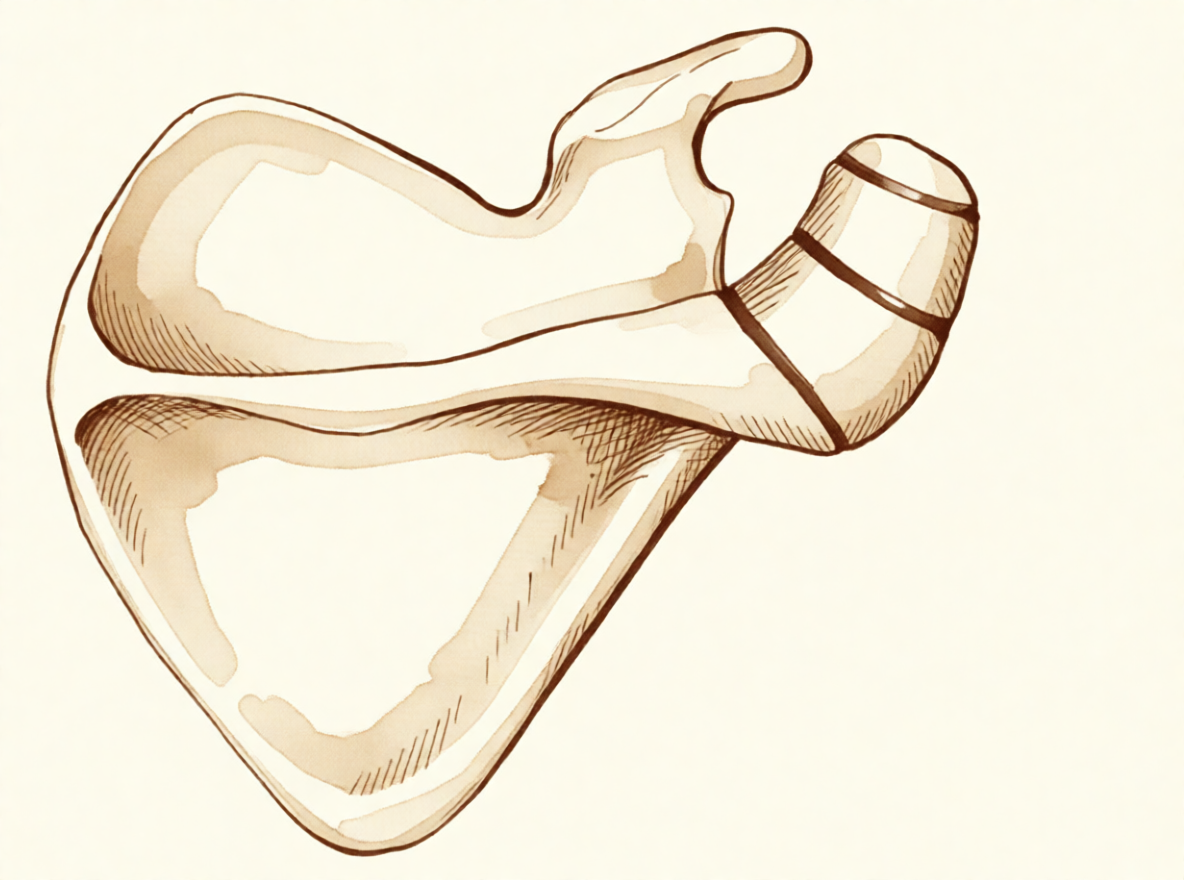
The acromion develops from three distinct ossification centers: the metacromion at the base, the mesoacromion in the middle, and the preacromion at the tip [46]. These centers typically appear around age 15 years and usually fuse by age 25 years [28]. Os acromiale is defined as incomplete fusion of these secondary ossification centers, most commonly between the mesoacromion and metacromion [57]. The unfused segment is most frequently the meso-acromion [41]. Anatomically, the acromion, coracoacromial ligament, and coracoid process form the coracoacromial arch, a rigid bony-ligamentous structure that imparts stability to the shoulder girdle [43]. The rotator cuff, subacromial bursa, and subdeltoid bursa pass underneath this arch [43]. The lateral acromion serves as the insertion site for the deltoid muscle [26].
Prevalence and Demographics
Approximately 8% of scapulae exhibit an os acromiale [28]. In a Korean outpatient shoulder clinic population, the prevalence was 7 per 1,000 patients [26]. Bilateral os acromiale was identified in 15.4% of cases within this same cohort [26]. Racial disparities exist, with Black individuals consistently demonstrating a higher prevalence (13.2%-18.2%) compared to White individuals (5.8%-9.5%) [26]. Among patients undergoing reverse shoulder arthroplasty for cuff tear arthropathy, the frequency of os acromiale was 22% [84].
Pathophysiology and Mechanisms
A symptomatic, unstable os acromiale is relatively rare [2]. Generally, there is no relation between the presence of os acromiale and shoulder pain, regardless of diagnosis [11], and the rate of rotator cuff tears in patients with os acromiale is comparable to those without [26]. However, a rotator cuff tear may be associated with os acromiale, likely due to impingement from abnormal motion at the fibrous union site [17], supporting findings that os acromiale is associated with rotator cuff injuries [14]. When symptoms are driven by the os acromiale, two principal mechanisms are responsible: motion at the non-union site, or an impingement-type syndrome resulting from flexion of the os fragment during deltoid contraction and arm elevation [41]. Dynamic impingement on the rotator cuff occurs as deltoid contraction during active elevation causes flexion of the mobile anterior acromial fragment [24]. Pain directly at the synchondrosis site from degenerative changes is analogous to an arthritic acromioclavicular joint [24]. Previously stable non-unions can become unstable following blunt trauma to the region [41], making it possible to convert a stable os acromiale into an unstable one after a traumatic event [24]. Extrinsic impingement occurs when the space available for the rotator cuff is diminished, with pathologic os acromiale serving as an example [70]. The greater the distance of the acromioclavicular joint from the anterior edge of the acromion, the higher the likelihood of an os acromiale [28].
Clinical Presentation and Diagnosis
Patients with symptomatic os acromiale typically present with anterolateral shoulder pain, accentuated by overhead activity and positional night pain [24]. Superior shoulder pain may also be reported [24]. Patients typically have no history of trauma, although a history should be queried if an os acromiale is noted [24]. On physical examination, the synchondrosis may be tender to palpation [24]. A painful arc of motion is often present [24], and rotator cuff impingement signs are often positive [24]. An unstable os acromiale should always be included in the differential diagnosis for any patient being evaluated for rotator cuff-related symptoms [24]. A very high index of suspicion for unstable os acromiale is warranted in younger patients who present with an atraumatic full-thickness or high-grade bursal-sided rotator cuff tear [24]. Most diagnoses are made incidentally on axillary view radiographs of the shoulder [41], as the axillary lateral radiograph demonstrates the presence of an os acromiale [71].
Classification
Prevalence: The overall frequency of os acromiale in a sample of 1594 skeletons was 8.34% [20]. Os acromiale is present in 8% of subjects [28]. In a Korean patient population visiting the shoulder outpatient clinic, os acromiale was observed in 7 per 1,000 patients [26].
Bilateral Presentation: Bilateral os acromiale was found in 15.4% of cases in a Korean patient population [26].
Subtype Rarity: Meta–os acromiale is the rarest subtype of os acromiale [38].
Acromioclavicular Joint Location: In a cohort of 33 subjects with os acromiale, 18.1% had the acromioclavicular joint lying on the acromion tip and 81.1% had it located distally [28]. In a control group of 211 volunteers, 52.1% had the articular facet of the acromioclavicular joint on the acromion tip and 45.4% had the facet tip located distally [28].
Clinical Presentation
Prevalence and Diagnostic Context
Os acromiale is a relatively common anatomical variant, with an incidence of 1.4% identified in a review of 1800 shoulder girdles [32]. In that same cohort, the lesion was bilateral in 62% of patients [32]. A study of Korean patients visiting a shoulder clinic found bilateral os acromiale in 15.4% of cases [26]. Because os acromiale is often asymptomatic and an incidental finding, determining its contribution to a patient’s symptoms can be challenging [24]. Awareness of the os acromiale in the young athlete, combined with appropriate clinical examination and image studies, is crucial to confirm the diagnosis [35].
History and Risk Factors
Patients typically present with no history of trauma, although converting a stable os acromiale into an unstable os after a traumatic event is possible [24]. If an os acromiale is noted, the patient should be specifically queried about any history of trauma [24]. There should be a very high index of suspicion in younger patients who present with an atraumatic full-thickness or high-grade bursal-sided rotator cuff tear [24]. An os acromiale should be included in the differential diagnosis of the swimming athlete who presents with shoulder pain, particularly in the setting of a failed response to physical therapy, activity modification, or steroid injection [23].
Symptoms and Physical Examination
Patients typically present with typical rotator cuff impingement symptoms, such as anterolateral shoulder pain, accentuated by overhead activity and positional night pain [24]. On physical examination, the synchondrosis may be tender to palpation [24]. A painful arc of motion is often present [24]. Rotator cuff impingement signs are often positive [24]. Weakness of abduction or external rotation may also be present [24].
Pathophysiology and Associations
Dynamic impingement on the rotator cuff by the unstable os acromiale is a believed source of pain; deltoid contraction during active elevation causes flexion of the mobile anterior acromial fragment [24]. Pain directly at the synchondrosis site from degenerative changes, analogous to an arthritic acromioclavicular joint, is another believed source of pain [24]. The synchondrosis of an os acromiale can be injured following trauma, though rarely [39]. The rate of rotator cuff tears for patients with os acromiale was comparable with that of patients without os acromiale, indicating that there is no definitive connection between os acromiale and rotator cuff pathology [26].
Postoperative Considerations
Postoperative local tenderness at the os acromiale can be expected in 1 out of 4 patients after reverse total shoulder arthroplasty but resolves spontaneously over time in the majority of patients [8]. Inferior tilting is observed in approximately one-third of the shoulders after reverse total shoulder arthroplasty and does not seem to change the overall outcome of the procedure [19]. The presence of os acromiale does not appear to have a negative impact on the clinical outcomes after surgery and reverse total shoulder arthroplasty remains a safe and effective treatment option [13].
Investigations
Plain radiography: Standardized plain films are almost always sufficient to garner the information needed for shoulder evaluation [34]. The axillary view is helpful in evaluation of glenoid morphology and provides good visualization of the coracoid process, acromion, and distal clavicle [68]. The scapular Y view provides visualization of the coracoacromial arch and can reveal coracoacromial spurs [68]. This view can also show acromial shape [68]. The synchondrosis of an os acromiale can be injured following trauma, emphasizing the need for appropriate radiographic investigation including axillary views [39]. The greater the distance of the AC joint from the anterior edge of the acromion, the higher the likelihood of an os acromiale [28].
MRI: MRI is the modality of choice for evaluating the rotator cuff, biceps, and subacromial/subdeltoid bursa [67]. T2-weighted MRI provides better visualization of full thickness rotator cuff tears [67]. MRI is useful to identify rotator cuff tears, although accuracy is enhanced by combining the scan with arthrography [60].
Ultrasonography: Ultrasonography is a simple and accurate test for identifying rotator cuff tears and calcific tendinitis [60]. It serves as a low-cost alternative to MRI and arthrography for evaluating both skeletal and soft-tissue structures of the shoulder [67]. Ultrasonography can provide immediate, real-time visualization of the rotator cuff, biceps tendon, and calcific deposits [67]. It can be used to measure the subacromial space and detect atrophy of rotator cuff muscles [67]. Ultrasonography is highly operator dependent and is not as useful for evaluating labral tears or rotator cuff tears that are very small or larger than 3 cm [67].
CT: CT imaging is frequently used to evaluate fractures of the shoulder, to assess for bony lesions in recurrent instability cases, or for preoperative templating for shoulder arthritis [67]. CT with three-dimensional reconstructions is the advanced imaging study of choice for determining the extent of glenoid bone loss in the setting of shoulder instability [68].
Treatment
Non-Operative Management
The provided evidence does not detail specific conservative protocols such as weight loss, physical therapy, NSAIDs, or injections. However, failed non-operative management is implicitly recognized as a prerequisite for surgical intervention in the context of symptomatic os acromiale.
Operative Management
Indications: Surgery is indicated for symptomatic os acromiale, particularly when the fragment is large and unstable. Osteosynthesis to achieve bony union is a safe, effective, and reliable technique for these cases [37].
Surgical Approach / Technique: Arthroscopic internal fixation is a predictable and consistent treatment for symptomatic os acromiale [9]. This approach offers improved visualization of the undersurface of the acromion, allowing excellent reduction, the possibility of treating concomitant shoulder pathologies, and avoidance of the increased morbidity associated with open approaches [27]. The technique requires no special instrumentation and may be performed reproducibly by surgeons familiar with arthroscopic techniques of the shoulder [29].
Implant Selection: Special consideration must be given to the type of tension-band construct used to achieve adequate compression and fixation for meta–os acromiale [38]. While osteosynthesis is established as a reliable method, high-level studies are still needed to compare outcomes between different fixation techniques [37].
Reverse Total Shoulder Arthroplasty (rTSA) Considerations
Preoperative acromial lesions are not a contraindication to reverse shoulder arthroplasty [72]. Inferior tilting is observed in approximately one-third of the shoulders after RTSA and does not seem to change the overall outcome of the procedure [19].
Complications
Rotator Cuff Pathology
An unstable os acromiale must always be included in the differential diagnosis for any patient being evaluated for rotator cuff-related symptoms [24].
Pain and Impingement
The exact mechanism by which an unstable os acromiale causes pain has not been definitively defined [24]. Patients with symptomatic os acromiale may also complain of superior shoulder pain [24]. Rotator cuff impingement signs are often positive in these patients, although concomitant rotator cuff pathology may also be a source of the patient's pain [24]. The synchondrosis may be tender to palpation in patients with symptomatic os acromiale [24].
Reverse Total Shoulder Arthroplasty (rTSA)
Postoperative local tenderness at the os acromiale can be expected in 1 out of 4 patients after rTSA, but it resolves spontaneously over time in the majority of patients [8]. Shoulders with os acromiale had a similar overall complication rate compared with matched controls (14% vs. 12%; P = 0.658) after rTSA [15].
Recovery
Light activity (weeks): The provided evidence does not specify a typical week range for the resumption of desk work, driving, or light activities of daily living.
Full activity (months): The provided evidence does not specify a month range for the return to manual work, sport, or full range of motion and strength.
Complete recovery / outcome plateau (months): The provided evidence does not specify a month range for the stabilization of pain, strength, or final functional outcomes.
Rehabilitation protocol: Management of symptomatic os acromiale is initially nonsurgical [3]. The technique described for symptomatic os acromiale in athletes is a predictable and consistent treatment [9].
Functional milestones: After 3 to 6 years of follow-up, all 6 shoulders undergoing osteosynthesis of an unstable mesoacromion were rated as excellent according to criteria similar to that of the American Shoulder and Elbow Surgeons [40]. At a two to five year followup, all five cases of unstable mesoacromion fusion had fused [89].
Other Considerations: An os acromiale should be suspected in cases of failed rotator cuff surgery or ongoing shoulder pain after failed treatment [4]. Os acromiale is associated with rotator cuff injuries [14]. Shoulders with os acromiale had a similar overall complication rate compared with matched controls (14% vs. 12%; P = 0.658) after reverse total shoulder arthroplasty [15]. Liberson identified an incidence of os acromiale of 1.4% in 1800 shoulder girdles, with the lesion being bilateral in 62% of patients [32].
Key Evidence
- [L4] The majority of os acromiale is asymptomatic and requires no treatment. [1] (10.2147/orr.s141480)
- [L4] While the radiographic appearance of an os acromiale is not uncommon in patients presenting with shoulder pain, a symptomatic, unstable os acromiale is relatively rare. [2] (10.1097/00132589-200412000-00006)
- [L5] For the symptomatic os acromiale, management is initially nonsurgical. [3] (10.5435/00124635-200601000-00004)
- [L4] An os acromiale should always be suspected in cases of failed rotator cuff surgery or ongoing shoulder pain after failed treatment. [4] (10.1097/00132589-200609000-00006)
- [L4] The diagnosis of os acromiale should be based on imaging features and not limited by age. [5] (10.1007/s00256-015-2098-4)
- [L4] Os acromiale is a co-condition in patients with rotator cuff tear. [6] (10.1080/00016470510030643)
- [L4] Surgical management of symptomatic os acromiale that has failed nonoperative measures may predictably lead to improved outcomes. [7] (10.4103/0973-6042.80461)
- [L3] Postoperative local tenderness at the os acromiale can be expected in 1 out of 4 patients but resolves spontaneously over time in the majority of patients. [8] (10.1177/2325967120965131)
- [L4] This technique is a predictable and consistent treatment for symptomatic os acromiale in this population. [9] (10.1016/j.jse.2005.09.019)
- [L4] Patients with a united os acromiale had a significantly better functional outcome as measured by the Constant score (P = .0169). [10] (10.1016/s1058-2746(98)90008-8)
- [L3] There was no relation between the presence of os acromiale and shoulder pain, regardless of diagnosis. [11] (10.1177/23259671221078806)
- [L4] Operative management of a symptomatic os acromiale that has failed initial nonoperative treatment leads to decreased symptoms and improvement in clinical outcomes. [12] (10.1016/j.jse.2019.05.047)
- [L4] The presence of os acromiale does not appear to have a negative impact on the clinical outcomes after surgery and rTSA remains a safe and effective treatment option. [13] (10.1016/j.xrrt.2025.01.002)
- [L3] The study supports previous findings that os acromiale is associated with rotator cuff injuries. [14] (10.1016/j.jseint.2025.05.015)
- [L3] Shoulders with os acromiale had a similar overall complication rate compared with matched controls (14% vs. 12%; P = 0.658). [15] (10.5435/jaaos-d-25-00614)
- [L4] A tear of the rotator cuff may often be associated with os acromiale, likely due to impingement from abnormal motion at the fibrous union site. [17] (10.2106/00004623-198466080-00029)
- [L4] Inferior tilting is observed in approximately one-third of the shoulders after RTSA and does not seem to change the overall outcome of the procedure. [19] (10.1016/j.jse.2017.02.012)
- [L4] The overall frequency of os acromiale in the sample of 1594 skeletons was 8.34%. [20] (10.1002/oa.877)
- [L4] Surgical treatment is usually not indicated for os acromiale in the professional tennis player. [21] (10.1177/2325967118773723)
- [L4] Care should be taken not to perform acromioplasty in the presence of painful os acromiale. [22] (10.1016/j.otsr.2012.10.020)
- [L5] An os acromiale should be included in the differential diagnosis of the swimming athlete who presents with shoulder pain, particularly in the setting of a failed response to physical therapy, activity modification, or steroid injection. [23] (10.1177/1941738108326705)
- [L5] [24] (10.5435/jaaos-d-17-00011)
- [L4] Ipsilateral os acromiale may be a relative contraindication to the clavicle hook plate. [25] (10.1186/s12891-021-04841-1)
- [L4] [26] (10.4055/cios.2013.5.3.202)
- [L5] The advantages of this technique are improved visualization of the undersurface of the acromion, allowing excellent reduction, the possibility of treating concomitant shoulder pathologies, and to avoid increased morbidity of the open approach. [27] (10.1097/bte.0000000000000191)
- [L4] [28] (10.1067/mse.2003.128136)
- [L4] The surgical technique requires no special instrumentation and may be performed reproducibly by those familiar with arthroscopic techniques of the shoulder. [29] (10.1067/mse.2002.122227)
- [L4] Surgical treatment of symptomatic meso-os acromiale with concomitant rotator cuff pathology yielded poorer outcomes than previously reported, with only 53% achieving satisfactory results overall. [30] (10.1016/j.jse.2005.08.024)
- [L4] Awareness of the os acromiale in the young athlete, appropriate clinical examination, and image studies are crucial to confirm diagnosis. [35] (10.1016/j.jseint.2020.02.008)
- [Paper] Osteosynthesis to achieve bony union is a safe, effective, and reliable technique for the treatment of large and unstable symptomatic os acromiale, though high-level studies are still needed to compare outcomes between different techniques. [37] (10.1016/j.eats.2017.03.025)
- [L4] Meta–os acromiale is the rarest subtype of os acromiale, and special consideration must be given to the type of tension-band construct used to achieve adequate compression and fixation. [38] (10.1177/03635465211028238)
- [L4] This case highlights that the synchondrosis of an os acromiale can be injured following trauma, though rarely, and emphasizes the need for appropriate radiographic investigation including axillary views and a flexible surgical approach. [39] (10.1016/j.jse.2008.02.012)
- [L4] After 3 to 6 years of follow-up, all 6 shoulders were rated as excellent according to criteria similar to that of the American Shoulder and Elbow Surgeons. [40] (10.1016/s1058-2746(99)90004-6)
- [L4] [41] (10.1302/2058-5241.4.180100)
- [L3] Preoperative acromial lesions are not a contraindication to reverse shoulder arthroplasty. [72] (10.1016/j.jse.2008.12.002)
- [L3] [84] (10.1016/j.otsr.2018.11.017)
- [L4] At a two to five year followup all had fused. [89] (10.1016/s1058-2746(95)80192-8)
See Also
- Rotator Cuff
- Total shoulder arthroplasty
- Reverse Shoulder Arthroplasty
- Shoulder Arthroplasty
- Calcific Tendinitis
- Fractures
- Shoulder Arthritis
- Shoulder Instability
- Internal Fixation
References
[1] Optimal management of symptomatic os acromiale: current perspectives. Orthopedic Research and Reviews. 2018. DOI: 10.2147/orr.s141480
[2] Treatment of the Symptomatic Os Acromiale. Techniques in Shoulder and Elbow Surgery. 2004. DOI: 10.1097/00132589-200412000-00006
[3] Symptomatic Os Acromiale. Journal of the American Academy of Orthopaedic Surgeons. 2006. DOI: 10.5435/00124635-200601000-00004
[4] Management of Os Acromiale. Techniques in Shoulder and Elbow Surgery. 2006. DOI: 10.1097/00132589-200609000-00006
[5] Differentiating os acromiale from normally developing acromial ossification centers using magnetic resonance imaging. Skeletal Radiology. 2015. DOI: 10.1007/s00256-015-2098-4
[6] Rotator cuff tears associated with os acromiale. Acta Orthopaedica. 2005. DOI: 10.1080/00016470510030643
[7] Systematic review of the surgical treatment for symptomatic os acromiale. International Journal of Shoulder Surgery. 2011. DOI: 10.4103/0973-6042.80461
[8] Os Acromiale in Reverse Total Shoulder Arthroplasty: A Cohort Study. Orthopaedic Journal of Sports Medicine. 2020. DOI: 10.1177/2325967120965131
[9] Painful os acromiale (or unfused acromial apophysis) in athletes. Journal of Shoulder and Elbow Surgery. 2006. DOI: 10.1016/j.jse.2005.09.019
[10] Transacromial approach to obtain fusion of unstable os acromiale. Journal of Shoulder and Elbow Surgery. 1998. DOI: 10.1016/s1058-2746(98)90008-8
[11] Prevalence of Os Acromiale in Thai Patients With Shoulder Problems: A Magnetic Resonance Imaging Study. Orthopaedic Journal of Sports Medicine. 2022. DOI: 10.1177/23259671221078806
[12] Os acromiale: systematic review of surgical outcomes. Journal of Shoulder and Elbow Surgery. 2020. DOI: 10.1016/j.jse.2019.05.047
[13] Clinical implications of reverse total shoulder arthroplasty with an os acromiale: a systematic review. JSES Reviews, Reports, and Techniques. 2025. DOI: 10.1016/j.xrrt.2025.01.002
[14] Prevalence and factors associated with os acromiale: a multicenter study. JSES International. 2025. DOI: 10.1016/j.jseint.2025.05.015
[15] The Influence of Os Acromiale on Patient Outcomes After Reverse Total Shoulder Arthroplasty: A Matched Cohort Study. Journal of the American Academy of Orthopaedic Surgeons. 2026. DOI: 10.5435/jaaos-d-25-00614
[17] Rotator cuff tears associated with os acromiale.. The Journal of Bone & Joint Surgery. 1984. DOI: 10.2106/00004623-198466080-00029
[19] Reverse shoulder arthroplasty in patients with os acromiale. Journal of Shoulder and Elbow Surgery. 2017. DOI: 10.1016/j.jse.2017.02.012
[20] The frequency of os acromiale in the Robert J. Terry Collection. International Journal of Osteoarchaeology. 2006. DOI: 10.1002/oa.877
[21] Os Acromiale in Professional Tennis Players. Orthopaedic Journal of Sports Medicine. 2018. DOI: 10.1177/2325967118773723
[22] Os acromiale, a cause of shoulder pain, not to be overlooked. Orthopaedics & Traumatology: Surgery & Research. 2013. DOI: 10.1016/j.otsr.2012.10.020
[23] Os Acromiale as a Cause for Shoulder Pain in a Competitive Swimmer: A Case Report. Sports Health: A Multidisciplinary Approach. 2009. DOI: 10.1177/1941738108326705
[24] Symptomatic, Unstable Os Acromiale. Journal of the American Academy of Orthopaedic Surgeons. 2018. DOI: 10.5435/jaaos-d-17-00011
[25] Os acromiale may be a contraindication of the clavicle hook plate: case reports and literature review. BMC Musculoskeletal Disorders. 2021. DOI: 10.1186/s12891-021-04841-1
[26] The Prevalence of Os Acromiale in Korean Patients Visiting Shoulder Clinic. Clinics in Orthopedic Surgery. 2013. DOI: 10.4055/cios.2013.5.3.202
[27] Arthroscopic Internal Fixation of Symptomatic Os Acromiale. Techniques in Shoulder & Elbow Surgery. 2020. DOI: 10.1097/bte.0000000000000191
[28] Relationship between os acromiale and acromioclavicular joint anatomic position. Journal of Shoulder and Elbow Surgery. 2003. DOI: 10.1067/mse.2003.128136
[29] Surgical management of the symptomatic os acromiale. Journal of Shoulder and Elbow Surgery. 2002. DOI: 10.1067/mse.2002.122227
[30] Surgical treatment of os acromiale with and without associated rotator cuff tears. Journal of Shoulder and Elbow Surgery. 2006. DOI: 10.1016/j.jse.2005.08.024
[32] Types of os acromiale according to Liberson. 2006.
[34] Rockwood And Matsen S The Shoulder. Arthroscopic Management of Prearthritic and Arthritic Conditions of the Shoulder and the Postarthroplasty Shoulder > Radiographic Evaluation.
[35] The unstable os acromiale: a cause of pain in the young athlete. JSES International. 2020. DOI: 10.1016/j.jseint.2020.02.008
[37] Operative Treatment of Symptomatic Meso‐Type Os Acromiale. Arthroscopy Techniques. 2017. DOI: 10.1016/j.eats.2017.03.025
[38] Rare Symptomatic Meta–Os Acromiale in an Athlete. The American Journal of Sports Medicine. 2021. DOI: 10.1177/03635465211028238
[39] Fracture of an os acromiale with associated rupture of the coracoclavicular ligaments. Journal of Shoulder and Elbow Surgery. 2008. DOI: 10.1016/j.jse.2008.02.012
[40] Successful osteosynthesis of an unstable mesoacromion in 6 shoulders: A new technique. Journal of Shoulder and Elbow Surgery. 1999. DOI: 10.1016/s1058-2746(99)90004-6
[41] Os acromiale: a review of its incidence, pathophysiology, and clinical management. EFORT Open Reviews. 2019. DOI: 10.1302/2058-5241.4.180100
[43] Rockwood And Matsen S The Shoulder. Shoulder and Elbow Specialty Clinic Workers’ Survey > ANATOMY.
[46] Aaos Comprehensive Orthopaedic Review 3. Anatomy of the Shoulder, Arm, and Elbow > I. Shoulder.
[57] Miller S Review Of Orthopaedics. Genetics of musculoskeletal conditions and abnormalities are summarized in Table 1.27 > UPPER EXTREMITY > SHOULDER.
[60] Apley And Solomon S Concise System Of Orthopaedics And Trauma. INVESTIGATION.
[67] Orthopaedic Knowledge Update 13 Ebook Without Multimedia. Shoulder Anatomy and Biomechanics, Clinical Evaluation, Imaging > Clinical Evaluation > Imaging.
[68] Aaos Comprehensive Orthopaedic Review 3. Imaging of the Shoulder and Elbow > I. Shoulder.
[70] Campbell S Operative Orthopaedics 4 Volume Set. ANTERIOR CRUCIATE LIGAMENT RECONSTRUCTION WITH BONE-PATELLAR TENDON-BONE GRAFT > Developmental Stages of Impingement Syndrome.
[71] Campbell S Operative Orthopaedics 4 Volume Set. ARTHROSCOPIC REPAIR OF POSTERIOR HUMERAL AVULSION OF THE GLENOHUMERAL LIGAMENT > SUBACROMIAL IMPINGEMENT SYNDROME.
[72] Acromial insufficiency in reverse shoulder arthroplasties. Journal of Shoulder and Elbow Surgery. 2009. DOI: 10.1016/j.jse.2008.12.002
[84] Do we need to stabilize and treat the os acromiale when performing reverse shoulder arthroplasty?. Orthopaedics & Traumatology: Surgery & Research. 2019. DOI: 10.1016/j.otsr.2018.11.017
[89] Successful fusion of the unstable mesoacromion: Technique and report of five cases. Journal of Shoulder and Elbow Surgery. 1995. DOI: 10.1016/s1058-2746(95)80192-8