Clinicians › Hand
Pyrocarbon interposition arthroplasty
For patients: a plain-language version of this topic is available. See the patient guide.
Overview
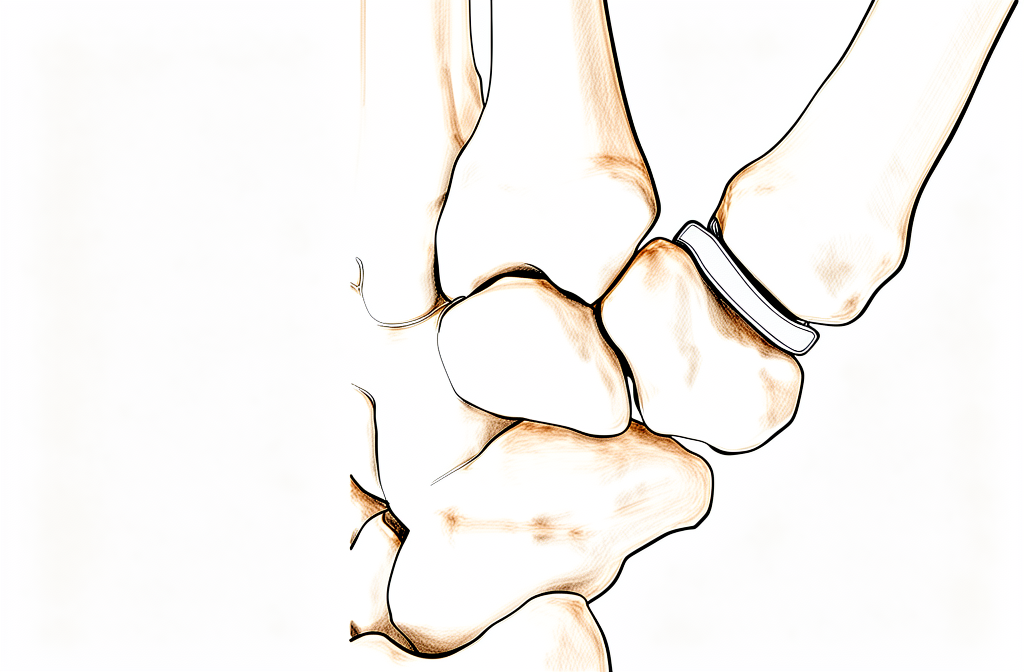
Pyrocarbon interposition arthroplasty serves as a reliable alternative to trapeziectomy, total arthroplasty, or fusion for trapeziometacarpal joint arthritis, particularly in young, active patients [6]. The procedure is indicated for patients with early disease unresponsive to conservative measures, where trapeziectomy may be considered too destructive and hemi or total arthroplasty overzealous [20]. Clinical data confirm good 5-year results [4] and high patient satisfaction with maintained thumb height and a 91% implant survival rate at medium-term follow-up [7]. Long-term studies report pain relief and good implant longevity at a minimum 8-year follow-up [8], with one study including more than 150 thumbs demonstrating efficacy for CMC1 osteoarthritis grade 2 to 3 [24]. However, the Pyrocardan implant is not superior to other arthroplasty methods and carries a high complication rate [10], while trapeziectomy produces better functional results and overall satisfaction than pyrocarbon arthroplasty [43].
For the proximal interphalangeal joint, pyrocarbon arthroplasty provides sustained pain relief and maintained range of motion over the medium term, with functional results comparable to silicone implants [12]. Pyrocarbon hemiarthroplasty appears to be a viable alternative to total joint arthroplasty [17] and demonstrates acceptable long-term implant survival with maintained improvements in pain scores and patient-reported outcomes [33]. Despite these benefits, the procedure carries a high complication rate, poor outcomes, and variable patient satisfaction [25]. Approximately 1 in 5 PIP joint arthroplasties will require revision surgery by 5 years, and approximately 1 in 3 will undergo more than one operation by that time [11]. Radiographic concerns regarding migration were observed in 63% of pyrocarbon PIPJ implants [12]. Combining PIPJ arthroplasty with distal interphalangeal arthrodesis leads to 1-year outcomes similar to those achieved by PIPJ replacement alone [44].
In the metacarpophalangeal joint, pyrolytic carbon arthroplasty for osteoarthritis demonstrates a 7% revision rate at 5 years [15], with a notably lower complication rate than seen in PIPJ pyrolytic carbon arthroplasty [9]. For posttraumatic panarthritis of the wrist, interposition arthroplasty with pyrocarbon seems to give encouraging results as an alternative therapy [1]. The placement of a pyrocarbonate implant does not prevent the subsequent performance of an arthrodesis or arthroplasty, particularly by a Swanson-type implant [3].
Anatomy & Pathophysiology
Bony Anatomy & Joint Structure
The hand skeleton comprises 27 bones, 19 of which are long bones [48]. These bones are organized into five rays, each forming a polyarticulated chain of metacarpals and phalanges [48]. The base of each metacarpal articulates with the distal carpal row [48]. The first ray, or radial ray, is the shortest, consisting of a single metacarpal and two phalanges [48]. The trapezium is angled anteriorly relative to the carpal plane, creating an approximately 45-degree angle between the first and second metacarpals in the sagittal plane [48]. The articular surfaces of the trapezium and the first metacarpal base exhibit a saddle shape in opposing planes [48]. The thumb metacarpal is the shortest, while the index metacarpal is the longest [48]. The proximal and middle phalanges of the long and ring fingers are longer than those of the index finger [48]. Epiphyseal plates are located at the proximal ends of the phalanges and first metacarpal, but at the distal ends of the other metacarpals [48]. The thumb ray continues the external carpal column formed by the scaphoid and trapezium [48]. Relative autonomy of the thumb ray is provided by scapholunate mobility [48]. The thumb metacarpal is independent and articulates with the trapezium [76]. The index metacarpal is the most firmly fixed [76]. The ring metacarpal possesses approximately 10 degrees of flexion-extension mobility [76]. The fifth metacarpal has a flexion-extension range of approximately 20 degrees [76]. The second through fifth metacarpals are bound by the deep transverse intermetacarpal ligament, also known as the interglenoid ligament [76]. This ligament connects the anterior glenoid ligaments of the metacarpophalangeal joints, known as volar plates [76]. The metacarpophalangeal joints serve as keystones for the longitudinal arches of the hand [76]. Volar plates prevent hyperextension at these joints [76]. Stability of the metacarpophalangeal joints is essential for supporting both the longitudinal and transverse metacarpal arches [76].
Soft Tissue Anatomy
Extrinsic extensors traverse six fibroosseous retinacular compartments at the wrist [47]. The first compartment contains the abductor pollicis longus and extensor pollicis brevis [47]. The abductor pollicis longus inserts at the thumb metacarpal base and radially abducts the thumb [47]. The extensor pollicis brevis inserts on the dorsum of the proximal phalanx and actively extends the thumb metacarpophalangeal joint [47]. The second compartment contains the extensor carpi radialis longus and brevis [47]. The third compartment contains the extensor pollicis longus, which turns radially around Lister tubercle [47]. The extensor pollicis longus inserts on the distal phalanx to provide forceful extension of the thumb interphalangeal joint [47]. Its oblique course provides a substantial adduction component [47]. The fourth compartment contains the extensor indicis proprius, lying deep to the extensor digitorum communis tendons [47]. The fifth compartment contains the extensor digiti quinti [47]. The principal bony insertion of extrinsic digital extensors is the dorsal proximal aspect of the middle phalanx [47]. Metacarpophalangeal joint extension is achieved via extrinsic force transmitted through sagittal bands [47]. Distal interphalangeal joint extension occurs through conjoined lateral bands composed of tendinous slips from extrinsic and intrinsic tendons [47]. Extensor digitorum communis tendons for the middle, ring, and little fingers are tethered by juncturae tendinum over the dorsal hand proximal to the metacarpophalangeal joints [47]. Digital extensor tendons are stabilized over the metacarpophalangeal joint midline by attachment to sagittal band fibers [47]. These fibers insert onto the volar proximal phalanx and lateral borders of the volar plate [47]. Sagittal bands form a sling transmitting proximal extrinsic tension to the proximal phalanx, permitting metacarpophalangeal extension without direct tendinous insertion [47]. Rupture or attenuation of sagittal band fibers allows extrinsic extensor tendon subluxation to the ulnar side of the metacarpal head, causing ulnar deviation [47]. Extrinsic finger flexors include the flexor digitorum profundus and superficialis [47]. The flexor digitorum profundus inserts on the proximal volar aspect of the distal phalanx, flexing the distal interphalangeal, proximal interphalangeal, and metacarpophalangeal joints [47]. The flexor digitorum superficialis flexes the proximal interphalangeal and metacarpophalangeal joints [47].
Seven interosseous muscles exist: four dorsal and three volar [73]. Dorsal interossei are abductors, while volar interossei are adductors [73]. The middle finger has two dorsal interossei and no volar interossei because the hand’s central axis lies within it [73]. Each dorsal interosseous muscle, except the third, has two heads: superficial and deep [73]. The superficial head arises from contiguous metacarpal shafts and inserts onto the lateral tubercle of the proximal phalanx base [73]. It abducts and weakly flexes the proximal phalanx [73]. The deep head forms a lateral tendon, or lateral band, at the metacarpophalangeal joint level [73]. It flexes and weakly abducts the proximal phalanx while extending the middle and distal phalanges [73]. Transverse fibers arch dorsally from each lateral band to join over the finger dorsum, flexing the proximal phalanx [73]. Oblique fibers, or spiral fibers, sweep over the distal third of the proximal phalanx to insert onto the middle phalanx base lateral tubercles, extending the middle phalanx [73]. Lateral bands join extensor tendon lateral slips to form conjoined lateral bands [73]. These bands unite at the distal third of the middle phalanx to form the terminal tendon, which inserts at the distal phalanx base to extend it [73]. The flexor digiti quinti brevis is structurally and functionally similar to the deep head of dorsal interossei, forming the ulnar lateral band of the little finger [73]. The three volar interossei arise from adjacent surfaces of contiguous metacarpal shafts [73]. Each volar interosseous has one head and none insert onto the proximal phalanx [73]. They form the ulnar lateral band of the index finger and radial lateral bands of the ring and little fingers [73]. The abductor digiti quinti and flexor digiti quinti brevis are similar to the superficial and deep heads of dorsal interossei, respectively, arising from the fifth metacarpal [73]. The abductor digiti quinti inserts onto the ulnar lateral tubercle of the little finger proximal phalanx base [73]. The flexor digiti quinti forms the ulnar lateral band [73]. The opponens digiti quinti arises from the pisohamate ligament and hamate hook, inserting onto the ulnar side of the fifth metacarpal diaphysis to flex and supinate it [73].
The superficial palmar fascia lies in a coronal plane beneath palmar subcutaneous tissue [83]. The palmaris longus tendon, when present, terminates in continuity with the proximal corner of this fascia [83]. Four central fascial bands extend distally toward the fingers, with no central band for the thumb [83]. At the distal palmar crease, these bands are bridged transversely by the superficial transverse palmar ligament [83]. Superficial central band fibers remain superficial and merge with vertical retinacular fibers at the dermis undersurface in the distal palm [83]. Intermediate fibers split transversely to form the spiral band, which tracks around the neurovascular bundle [83]. Deep fibers continue dorsally to merge with sagittal interosseous fascia fibers, piercing the transverse deep intermetacarpal ligament to merge with extensor mechanism sagittal band fibers [83]. Digital neurovascular structures are surrounded by a diffuse network of thin transverse oblique fibers [83]. Fibers dorsal to the neurovascular bundle are called Cleland ligament, while those palmar are called Grayson ligament [83]. A subdermal fascial layer borders web spaces from the radial thumb sesamoid to the ulnar side of the small finger’s proximal flexion crease [83]. These border fibers form the distal first web space ligament between thumb and index, continuous with the natatory ligament spanning remaining web spaces [83].
Dorsal skin is thin, lined by a 0.02 mm horny layer [82]. Its dermis is thinner and less resistant, with loose connections to deeper planes allowing free gliding [82]. Finger flexion significantly lengthens dorsal skin, increasing by an average of 3 cm in the middle finger from extension to full flexion [82]. Metacarpophalangeal joint flexion alone requires an average 1.25 cm skin lengthening [82]. Proximal interphalangeal joint flexion may utilize loose skin above the joint, providing a 0.7 to 0.9 cm length gain [82]. Dorsal and palmar skin areas are independent due to adhesions anchoring their common boundary to the underlying plane [82]. In the proximal first phalanx, fixation occurs in a straight line along the commissural crest as small fan-shaped fibrils [82]. More distally, opposite the middle and distal phalanges, the adhesion band is tightly packed and lies posterior to the palmar collateral neurovascular bundle on the lateral side [82]. This band corresponds to the digital fascia reinforcement known as the digital band and the attachment point of osteocutaneous ligaments [82].
Palmar artery variations are schematized by dividing the thumb into three segments defined by metacarpophalangeal and interphalangeal flexion creases [77]. The princeps pollicis artery, a terminal radial branch, crosses the first intermetacarpal space and runs along the ulnar side of the first metacarpal [77]. It emerges onto subcutaneous palmar tissue at the metacarpophalangeal flexion crease level [77]. Here it divides into two terminal rami, the collateral palmar arteries of the thumb, which run symmetrically along the digital tunnel with equal caliber [77]. An arcade deep in the flexor tendon joins these arteries at the distal metaphysis of the first phalanx [77]. Only 15% of dissections show the classical "typical" category of palmar thumb arteries [77]. In the second segment, the ulnar collateral artery is the main artery and is more often easier to dissect than the radial collateral artery [77]. A subtendinous anastomosis at the first phalanx neck acts as a moderator between the two arteries [77]. In the pulp segment, the two arteries are similar in size, run through thick fatty subcutaneous padding, cross over, and convert into digital nerve ends at the median axis [77]. Dorsal thumb arteries originate from palmar arteries (princeps, commissural, or superficial arcade anastomoses) at the first metacarpal level [77]. After running laterally along the metacarpophalangeal joint, these dorsal arteries continue obliquely from volar to dorsal, heading distally on the side of the two distal phalanges [77]. An anastomosis originating from palmar arteries is found at the first phalanx neck level [77]. The ulnar dorso-collateral artery generally stems from the princeps pollicis onto the medial border of the first metacarpal neck, heading distally on the lateral finger surface [77].
Kinematics & Biomechanics
The wrist possesses three axes of movement, permitting the hand to assume any spatial configuration [48]. Convergence of palmar digits toward the scaphoid tubercle results from the flexion orientation of their distal segments [48]. This convergence occurs essentially at the metacarpophalangeal and proximal interphalangeal articulations [48]. The palm’s transverse axis is oblique, more distal at the index metacarpophalangeal joint and more proximal at the fifth metacarpophalangeal joint [48]. This transverse axis forms an acute angle of approximately 75 degrees with the longitudinal axis [48]. The hand presents longitudinal and transverse concavity, forming a cup shape with palmar concavity when the thumb is placed next to the index finger [48]. When the thumb spreads to grasp an object, the cup becomes a gutter whose major oblique axis follows the thumb crease [48]. The metacarpal arch exhibits great adaptability due to peripheral metacarpal mobility [76]. Peripheral metacarpals form the sides of the cup or palmar gutter and can deepen concavity as they approach each other [76]. The heads of the second and third metacarpals are fixed [76]. Ulnar metacarpal mobility allows 10 degrees of "flexion" for the fourth metacarpal and 20 degrees for the fifth, accompanied by slight lateral rotation around the hand’s longitudinal axis [76]. Flexion axes are arranged such that flexion of all metacarpophalangeal and proximal interphalangeal joints causes fingers to converge toward the scaphoid [84].
Most hand structures glide relative to neighboring structures [81]. Dorsal integument must be supple, elastic, and malleable, sliding distally to allow metacarpophalangeal joint flexion [81]. Interphalangeal flexion is accomplished by specific skin fold arrangements on the dorsum of each articulation [81]. The gliding mechanism depends on the anatomic area’s nature and the direction and amplitude of tendon movement [81]. In unrestricted areas, tendons are surrounded by paratenon, which consists of layered areolar connective tissue [81]. In narrow, crowded areas, gliding is assured by the synovial sheath, allowing considerable movement amplitude [81].
Classification
Implant Design: CMC arthroplasty implants are classified into four design types: total joint replacement, hemiarthroplasty, interposition arthroplasty, and miscellaneous designs [53].
Dell Classification: The Dell classification is used to define stage 3 or 4 carpometacarpal joint osteoarthritis for surgical indication in pyrocarbon interposition arthroplasty [135, 143].
Eaton's Classification: Eaton's classification is used to grade arthritis on preoperative radiographs for trapeziometacarpal arthroplasty [134].
Stern Classification: The Stern classification is used to assess prosthetic position and migration in pyrocarbon proximal interphalangeal joint arthroplasty [23].
Other Considerations: The radiological classification for carpometacarpal joint osteoarthritis does not describe all stages accurately enough to permit reliable and consistent communication between clinicians [65].
Clinical Presentation
Thumb carpometacarpal (CMC) arthritis is a potentially debilitating condition that causes pain and weakness during the essential movements of the first metacarpal-trapezial joint, specifically opposition, key pinch (prehension), and circumduction [115]. Pain is typically localized to the base of the thumb but may radiate proximally to the radial forearm [115]. In early stages, synovitis and effusion may present with thenar tenderness and first webspace cramping [115].
As the arthritis progresses, patients note associated subjective instability and objective deformity, characterized by the shoulder sign or the radial prominence of the dorsally subluxed first metacarpal [115]. Classic findings of thumb CMC arthritis include crepitus [115].
Investigations
Plain radiography: Radiographic assessment of pyrocarbon PIP joint implants utilizes the Stern classification to monitor implant position and bone interface. Approximately half of implants are Stern grade 0 at 1 year [23]. By 5 years, approximately two-thirds of pyrocarbon PIP joint prostheses have changed position to Stern grade 1 [23]. At the same 5-year interval, approximately 20% of pyrocarbon PIP joint prostheses are in Stern grade 2, reaching the cortex, with none in Stern grade 3 [23]. A surrounding osseous condensation developed in about three-fourths of pyrocarbon PIP joint prostheses during the first 5 years [23].
Proximal prosthetic components for pyrocarbon PIP joint arthroplasty subsided up to 7% of the length of the phalanx [23]. Four pyrocarbon PIP joint prostheses subsided more than 1 mm, with specific measurements of 1.0, 1.2, 1.4, and 2.0 mm [23]. Radiographic findings for pyrocarbon PIP joint arthroplasty include migration in 63% of implants [12]. Clinical outcomes and radiographic signs of loosening suggest that surrounding bone does not form a stable interface with pyrolytic carbon implants [49].
Bone scan: Bone scan uptake after trapeziometacarpal joint arthroplasty progressively decreases over time, with normalization of tracer uptake expected between 14 and 25.5 months after surgery [148]. Radiolucent zones around the components of dual mobility trapeziometacarpal prostheses are not systematic predictors of future loosening [147].
Treatment
Non-Operative
Surgery is indicated when pain relief is not achieved after at least 6 months of conservative treatment for thumb basal joint arthritis [149].
Operative
Indications: Pyrocarbon interposition arthroplasty serves as a reliable alternative to trapeziectomy, total arthroplasty, or fusion of the trapeziometacarpal (TMC) joint, particularly for young, active patients [6]. The Pyrocardan implant may be contraindicated in patients with symptomatic scaphotrapeziotrapezoid (STT) osteoarthritis who intend to continue high-load activities, particularly those involving wrist extension under load, such as tennis [133].
Surgical Approach / Technique: For PyroCarbon implant hemiarthroplasty of the TMC joint, focusing on strong dorsal capsular reconstruction and postoperative immobilization of the thumb in extension at the new carpometacarpal joint are key elements to a successful outcome [27]. In PIP joint arthroplasty, proper biomechanics of a joint must be restored to achieve full, functional range of motion [36]. The insertion and success of the Ascension PyroCarbon prosthesis is strongly dependent on bone morphology [57].
Implant Selection: Pyrocarbon interposition arthroplasty with the PyroDisk implant confirmed good 5-year clinical results for trapeziometacarpal osteoarthritis [4, 5]. Pyrocarbon disc interposition arthroplasty is a reliable and feasible treatment for carpometacarpal thumb joint arthritis at medium-term follow-up, associated with high patient satisfaction, maintained thumb height, and a 91% implant survival rate [7]. Pyrocarbon interpositional arthroplasty provided pain relief and high patient satisfaction with good implant longevity in a minimum 8-year follow-up study [8]. However, the PyroDisk implant for treating advanced trapeziometacarpal arthritis did not demonstrate superiority over published outcome data of trapeziectomy with or without ligament reconstruction and tendon interposition [42]. The Pyrocardan implant is not superior to other arthroplasty methods and has a high complication rate according to early outcomes data [10].
Other Considerations: The Pyrocardan implant appears as a simple alternative to the Dubert procedure for ulnar carpo-metacarpal osteoarthritis, particularly in cases involving the 4th ray [21]. For PIP joints, pyrocarbonate implants do not prevent the subsequent performance of an arthrodesis or arthroplasty, particularly by a Swanson-type implant [3]. Pyrocarbon PIPJ replacement provided sustained pain relief and maintained range of motion over the medium term, with satisfactory functional results comparable to silicone implants, despite radiographic concerns regarding migration in 63% of implants [12]. Although most patients experienced significantly less pain after PIP joint arthroplasty for osteoarthritis, the pain reduction was considered clinically relevant in only 50% of patients [146]. In contrast, the high rate of complications seen in proximal interphalangeal joint pyrolytic carbon arthroplasty has not been seen for pyrolytic carbon MCP arthroplasty [9]. Pyrocarbon MP joint arthroplasty in primary osteoarthritic patients is well tolerated, with good patient satisfaction and pain relief, preservation and some improvement of movement and improved functional scores [29]. Short-term results of pisotriquetral arthroplasty using the Pyrocarbon implant are encouraging and suggest that this new surgical solution appears to be a valid alternative to pisiformectomy or pisotriquetral arthrodesis [28]. Resection of 2.5 mm with a pyrocarbon implant for scaphotrapeziotrapezoid osteoarthritis is associated with better function and higher pinch and grip strength compared to other techniques in reported series [54].
Revision: Approximately 1 in 5 PIP joint arthroplasties with a pyrocarbon implant will require revision surgery by 5 years, and 1 in 3 will undergo more than 1 operation [11]. Twenty-eight percent of patients required a second procedure and 8% required a revision arthroplasty in a minimum two-year follow-up evaluation [35]. The removal of a pyrocarbon carpometacarpal implant using subsequent trapeziectomy successfully relieves pain in patients in whom pyrocarbon arthroplasty has failed [14]. The most common option for revision of trapeziectomy failures is to perform a new ligament procedure, with or without tendon or pyrocarbon interposition, which provided the only good result in a specific retrospective series [40]. Secondary arthrodesis or amputation of the affected digit remain ultimate salvage options for complications following failed PIP implant arthroplasty [18].
Complications
PIP Joint Arthroplasty
Aseptic loosening and subsidence: Pyrocarbon PIP joint arthroplasty is associated with a high complication rate, poor outcomes, and variable patient satisfaction [25]. Radiographic migration was observed in 63% of pyrocarbon PIPJ implants [12]. At 5 years, approximately two-thirds of pyrocarbon PIPJ prosthetic components had changed position (Stern grade 1) [23], while approximately 20% were in Stern grade 2, reaching the cortex [23]. No pyrocarbon PIPJ prosthetic components breached the cortex (Stern grade 3) at 5 years [23]. Proximal prosthetic components subsided up to 7% of the length of the phalanx [23], with four prostheses subsiding more than 1 mm, specifically measuring 1.0, 1.2, 1.4, and 2.0 mm [23]. The rate of subsidence in surface replacement PIPJ arthroplasty remains unacceptably high despite improvements [68].
Reoperation and revision: Pyrocarbon PIPJ arthroplasty carries a risk of early complications that necessitate revision surgeries [2]. Approximately 1 in 3 PIP joint arthroplasties with a pyrocarbon implant will undergo more than one operation [11]. Twenty-eight percent of patients undergoing pyrolytic carbon PIPJ arthroplasty required a second procedure [35], and 8% required a revision arthroplasty [35]. Thirteen percent of joints treated with pyrocarbon PIPJ implants required a secondary surgical procedure [61]. Revision surgery for PIP joint surface replacement was performed in 26% of joints, primarily due to pain associated with loosening [124]. Published complication rates for surface replacement PIP joint arthroplasties range up to 30% [50], with reoperation/revision rates ranging from 6% to 58% [50].
Other Considerations: A surrounding osseous condensation developed in about three-fourths of pyrocarbon PIPJ prostheses during the first 5 years [23]. The most common complications of PIP joint arthroplasty include implant-related events (e.g. loosening, fracture), synovitis, bony changes at the implant-bone interface, recurrent deformities or instability, stiffness, and severe pain leading to reoperation [50]. Osteoporosis is associated with an increased risk for pyrocarbon implant revision and all-cause reoperation in rheumatoid arthritis patients [95].
Trapeziometacarpal Joint Arthroplasty
Infection (PJI): The deep infection rate for trapeziometacarpal prostheses is fairly low [153].
Aseptic loosening and subsidence: The Pyrocardan implant for trapeziometacarpal osteoarthritis has a high complication rate [10]. The failure rate represented by the revision rate for trapeziometacarpal prostheses is high [153]. Potential complications of trapeziometacarpal arthroplasty include postoperative subsidence with weakness and recurrence of pain [130].
Periprosthetic fracture: Index metacarpal fracture has been reported after suture button suspensionplasty for trapeziometacarpal arthritis [130].
Other Considerations: Potential complications of trapeziometacarpal arthroplasty also include infection, sensory nerve irritation, radial artery injury, and injury to the FCR tendon during bone removal [130]. Removal of a pyrocarbon carpometacarpal implant using subsequent trapeziectomy successfully relieves pain in patients in whom pyrocarbon arthroplasty has failed [14].
General Complications and Management
Salvage procedure complications: Complications after salvage procedures for failed PIP implant arthroplasty are frequent [18]. Extensor tendon adhesions limiting flexion are a common complication after salvage procedures for failed PIP implants [18]. Flexion contracture with extensor tendon disruption is a common complication after salvage procedures for failed PIP implants [18]. Secondary arthrodesis or amputation of the affected digit are ultimate salvage options for complications following failed PIP implant arthroplasty [18].
Recovery
Light activity (weeks): Patients return to work after a median of 8 weeks following PIP arthroplasty [104]. For trapeziometacarpal joint osteoarthritis treated with a dual-mobility prosthesis, convalescence is quick, with a median return to work of 51 days in patients aged 40 to 67 years [128]. Both soft tissue arthroplasty and implant arthroplasty for CMC1 osteoarthritis are associated with substantial sick leave time, indicating a significant impact on the return-to-work timeline [136].
Functional milestones: Pyrocarbon PIPJ replacement provides sustained pain relief and maintains range of motion over the medium term, yielding satisfactory functional results comparable to silicone implants [12]. Pyrocarbon interpositional arthroplasty delivers pain relief and high patient satisfaction with good implant longevity [8]. Long-term implant survival for pyrocarbon hemiarthroplasty of the PIPJ is acceptable, with significant improvements in pain scores and patient-reported outcomes maintained over time [33]. For STT osteoarthritis, the Pyrocardan1 resurfacing implant demonstrates good functional and radiographic outcomes with an absence of surgical complications, validating it as a treatment option [30]. When current implantation and rehabilitation techniques are followed, predictable pain relief and satisfactory function can be anticipated [120].
Other Considerations: Complication rates vary by procedure and implant type. Twenty-eight percent of patients required a second procedure, and 8% required a revision arthroplasty [35]. In another cohort, 13% of joints required a secondary surgical procedure [61]. The rate of subsidence has improved but remains unacceptably high [68]. Complications after trapeziectomy and suspension arthroplasty can occur despite proper preoperative evaluation, meticulous surgical technique, and vigilant postoperative rehabilitation [127]. Radiographic monitoring is essential; pyrocarbon PIPJ replacement was associated with radiographic concerns regarding migration in 63% of implants [12]. At 5 years, the prosthetic position had changed in about two-thirds of cases (Stern grade 1) for both proximal and distal components [23]. Approximately 20% of implants reached Stern grade 2, contacting the cortex, but none breached the cortex (Stern grade 3) [23]. A surrounding osseous condensation developed in about three-fourths of prostheses during the 5-year period [23]. Proximal prosthetic components subsided up to 7% of the length of the phalanx, with four prostheses subsiding more than 1 mm (1.0, 1.2, 1.4, and 2.0 mm) [23]. The placement of this pyrocarbonate implant does not prevent the subsequent performance of an arthrodesis or arthroplasty, particularly by a Swanson-type implant [3].
Key Evidence
- [L4] The interposition arthroplasty with pyrocarbon seems to give encouraging results as an alternative therapy. [1] (10.1016/j.main.2012.07.011)
- [L3] Pyrocarbon PIPJ arthroplasty has a risk of early complications necessitating revision surgeries. [2] (10.1007/s00402-020-03592-3)
- [L4] The placement of this pyrocarbonate implant does not prevent the subsequent performance of an arthrodesis or arthroplasty, particularly by a Swanson-type implant. [3] (10.1016/j.main.2011.10.084)
- [L4] Our study confirms the good 5-year clinical results of interposition arthroplasty with PyroDisk. [4] (10.1177/1558944716660555m)
- [L4] Our study confirms the good 5-year clinical results of interposition arthroplasty with PyroDisk. [5] (10.1177/1558944716660555n)
- [L4] Pyrocardan 1 interposition implant arthroplasty is a reliable alternative to trapeziectomy, total arthroplasty or fusion of the TMC joint especially for young, active patients. [6] (10.1016/j.hansur.2020.09.003)
- [L4] Pyrocarbon disc interposition arthroplasty is a reliable and feasible treatment for carpometacarpal thumb joint arthritis at medium-term follow-up, associated with high patient satisfaction, maintained thumb height, and a 91% implant survival rate. [7] (10.1016/j.jhsa.2020.07.025)
- [L4] Pyrocarbon interpositional arthroplasty provided pain relief and high patient satisfaction with good implant longevity. [8] (10.1177/1753193420906805)
- [L5] This high rate of complications seen in proximal interphalangeal joint pyrolytic carbon arthroplasty has not been seen for pyrolytic carbon MCP arthroplasty. [9] (10.1016/j.jhsa.2012.11.025)
- [L4] The study concludes that the Pyrocardan implant is not superior to other arthroplasty methods and has a high complication rate. [10] (10.1016/j.hansur.2016.09.004)
- [L4] Approximately 1 in 5 PIP joint arthroplasties with a pyrocarbon implant will require revision surgery by 5 years, and 1 in 3 will undergo more than 1 operation. [11] (10.1016/j.jhsa.2018.06.020)
- [L4] Pyrocarbon PIPJ replacement provided sustained pain relief and maintained range of motion over the medium term, with satisfactory functional results comparable to silicone implants, despite radiographic concerns regarding migration in 63% of implants. [12] (10.1177/1753193412437630)
- [L3] Pyrocardan interposition arthroplasty appears to be a safe, effective treatment for trapeziometacarpal arthritis. [13] (10.1055/s-0040-1714685)
- [L3] The removal of a pyrocarbon carpometacarpal implant using subsequent trapeziectomy successfully relieves pain in patients in whom pyrocarbon arthroplasty has failed. [14] (10.1016/j.jhsa.2022.01.004)
- [L4] Metacarpophalangeal arthroplasty using a pyrocarbon implant for osteoarthritis demonstrates a 7% revision rate at 5 years after surgery. [15] (10.1016/j.jhsa.2022.08.013)
- [L4] Pyrocarbon hemiarthroplasty appears to be a viable alternative to total joint arthroplasty in the treatment of PIP joint arthritis. [17] (10.1016/j.jhsa.2014.12.016)
- [L5] [18] (10.1016/j.hcl.2017.12.011)
- [L4] PyroDisk interposition has merit in patients with early disease unresponsive to conservative measures, in whom trapeziectomy may be considered too destructive and hemi or total arthroplasty overzealous. [20] (10.1177/1753193420981552)
- [L4] The Pyrocardan implant appears as a simple alternative to the Dubert procedure for ulnar carpo-metacarpal osteoarthritis, particularly in cases involving the 4th ray. [21] (10.1016/j.hansur.2018.10.044)
- [L4] [23] (10.1177/1753193413479527)
- [L4] This is the first study with long-term follow-up after pyrocarbon disc interposition for the treatment of CMC1 osteoarthritis grade 2 to 3 in more than 150 thumbs. [24] (10.1016/j.jhsa.2018.06.086)
- [L4] Arthroplasty of the proximal interphalangeal joint with a pyrolytic carbon implant has a high complication rate, poor outcomes, and variable patient satisfaction. [25] (10.2106/jbjs.j.00832)
- [L4] Focusing on strong dorsal capsular reconstruction and postoperative immobilization of the thumb in extension at the new carpometacarpal joint are key elements to a successful outcome. [27] (10.1097/bth.0b013e318271aab7)
- [L4] The short-term results of pisotriquetral arthroplasty using the Pyrocarbon implant are encouraging and suggest that this new surgical solution appears to be a valid alternative to pisiformectomy or pisotriquetral arthrodesis. [28] (10.1055/s-0037-1612635)
- [L4] This study supports previous findings that pyrocarbon MP joint arthroplasty in primary osteoarthritic patients is well tolerated, with good patient satisfaction and pain relief, preservation and some improvement of movement and improved functional scores. [29] (10.1177/1753193413511946)
- [L3] The good functional and radiographic outcomes, and the absence of surgical complications are evidence that the Pyrocardan1 resurfacing implant is a valid option for treating STT osteoarthritis. [30] (10.1016/j.hansur.2017.01.003)
- [L4] Pyrocarbon hemiarthroplasty of the PIPJ has an acceptable long-term implant survival, and the significant improvement in pain scores and patient-reported outcomes is maintained over time. [33] (10.1016/j.jhsa.2023.11.007)
- [L5] Pyrolytic carbon prostheses for the proximal interphalangeal joint appear to give the best results, but they are of recent use and revision rates vary in the literature. [34] (10.1016/j.main.2013.11.003)
- [L4] Twenty-eight percent of patients required a second procedure and 8% required a revision arthroplasty. [35] (10.1016/j.jhsa.2006.10.017)
- [L5] Proper biomechanics of a joint must be restored to achieve full, functional range of motion. [36] (10.1016/j.hcl.2017.12.008)
- [L4] The most common option seems to be to perform a new ligament procedure, with or without tendon or pyrocarbon interposition, and was the one that provided the only good result in the present series. [40] (10.1016/j.hansur.2021.03.014)
- [L4] The PyroDisk implant for treating advanced trapeziometacarpal arthritis did not demonstrate superiority over published outcome data of trapeziectomy with or without ligament reconstruction and tendon interposition. [42] (10.1016/j.jhsa.2014.07.011)
- [L3] Trapeziectomy produces better functional results and overall satisfaction than pyrocarbon arthroplasty. [43] (10.1177/1753193411433176)
- [L3] Combining proximal interphalangeal joint arthroplasty with distal interphalangeal arthrodesis leads to 1-year outcomes that are similar to those achieved by proximal interphalangeal joint replacement alone. [44] (10.1177/17531934231191255)
- [L5] The clinical outcomes and radiographic signs of loosening suggest that the surrounding bone does not form a stable interface with pyrolytic carbon implants. [49] (10.2106/jbjs.k.00527)
- [L1] [50] (10.1177/1753193418770606)
- [L4] This systematic review classifies CMC arthroplasty implants into four design types: total joint replacement, hemiarthroplasty, interposition arthroplasty, and miscellaneous designs, providing an overview of strategies, design changes, and biomechanical characteristics of currently available implants for treating osteoarthritis of the thumb. [53] (10.1016/j.jhsa.2019.11.015)
- [Paper] [54] (10.1016/j.hansur.2020.12.007)
- [L4] Insertion and success of the Ascension PyroCarbon prosthesis is strongly dependent on bone morphology. [57] (10.1177/1753193413517805)
- [L4] A total of 13% of the joints required a secondary surgical procedure. [61] (10.1016/j.jhsa.2009.08.010)
- [L3] The radiological classification does not describe all stages of carpometacarpal joint osteoarthritis accurately enough to permit reliable and consistent communication between clinicians. [65] (10.1016/j.jhsa.2014.09.007)
- [L4] The rate of subsidence improved but remains unacceptably high. [68] (10.1177/1558944718760035)
- [L4] Osteoporosis is associated with increased risk for pyrocarbon implant revision and all-cause reoperation in RA patients, though the precise effect size is unknown. [95] (10.1016/j.jhsa.2025.11.011)
- [L3] Patients returned to work after a median of 8 weeks following PIP arthroplasty. [104] (10.1177/15589447221141485)
- [L5] [115] (10.1016/j.hcl.2010.05.006)
- [L4] If current techniques for implantation and rehabilitation are followed, predictable pain relief and satisfactory function can be anticipated. [120] (10.1177/17531934241265837)
- [L4] [124] (10.1016/j.jhsa.2008.06.008)
- [L4] Complications after trapeziectomy and suspension arthroplasty can occur despite proper preoperative evaluation, meticulous surgical technique, and vigilant postoperative rehabilitation. [127] (10.1016/j.jhsa.2013.07.018)
- [L3] Treatment of trapeziometacarpal joint osteoarthritis with a dual-mobility prosthesis offered a quick convalescence and return to work (median 51 days) in patients ranging between 40 and 67 years of age. [128] (10.1177/17531934251345350)
- [L4] [130] (10.1016/j.jhsa.2014.09.012)
- [Case_report] The Pyrocardan implant may be contraindicated in patients with symptomatic STT OA who intend to continue high-load activities, particularly those involving wrist extension under load, such as tennis. [133] (10.1016/j.jhsg.2026.100964)
- [L4] [134] (10.1016/j.jhsa.2008.10.017)
- [L3] [135] (10.1016/j.hansur.2016.05.002)
- [L2] Soft tissue arthroplasty and implant arthroplasty for patients with CMC1 osteoarthritis are both associated with substantial sick leave time, indicating the impact of surgery on return to work. [136] (10.1016/j.jhsa.2017.11.019)
- [L2] [143] (10.1177/1558944716660555d)
- [L4] Although most patients experienced significantly less pain after surgery, the pain reduction was considered clinically relevant in only 50% of patients. [146] (10.1016/j.jhsa.2022.03.026)
- [L4] Radiolucent zones around the components of the prostheses are not systematic predictors of future loosening. [147] (10.1177/17531934211024500)
- [L4] Bone scan uptake after trapeziometacarpal joint arthroplasty progressively decreases over time, with normalization of tracer uptake expected between 14 and 25.5 months after surgery. [148] (10.1177/17531934251345359)
- [L3] Surgery is indicated when pain relief is not achieved after at least 6 months of conservative treatment. [149] (10.1016/j.otsr.2023.103772)
- [L4] The failure rate represented by the revision rate is high and the deep infection rate is fairly low. [153] (10.1016/j.hansur.2020.08.005)
See Also
References
[1] Novel approach for posttraumatic panarthritis of the wrist using a pyrocarbon interposition arthroplasty (Amandys®): Preliminary series of 11 patients. Chirurgie de la Main. 2012. DOI: 10.1016/j.main.2012.07.011
[2] Outcome of proximal interphalangeal joint replacement with pyrocarbon implants: a long-term longitudinal follow-up study. Archives of Orthopaedic and Trauma Surgery. 2020. DOI: 10.1007/s00402-020-03592-3
[3] Arthroplastie par implant Minima®première génération dans l’arthrose des articulations interphalangiennes distale et proximale des doigts longs : à propos de 28 poses. Chirurgie de la Main. 2011. DOI: 10.1016/j.main.2011.10.084
[4] PyroDisk Interposition Implant for Trapeziometacarpal Osteoarthritis. HAND. 2016. DOI: 10.1177/1558944716660555m
[5] Pyrocarbon Interposition Arthroplasty of the Trapeziometacarpal Joint With the PyroDisk. HAND. 2016. DOI: 10.1177/1558944716660555n
[6] Pyrocardan® implant arthroplasty for trapeziometacarpal osteoarthritis with a minimum follow-up of 5 years. Hand Surgery and Rehabilitation. 2020. DOI: 10.1016/j.hansur.2020.09.003
[7] Medium to Long-Term Follow-Up After Pyrocarbon Disc Interposition Arthroplasty for Treatment of CMC Thumb Joint Arthritis. The Journal of Hand Surgery. 2021. DOI: 10.1016/j.jhsa.2020.07.025
[8] Partial trapeziectomy and pyrocarbon interpositional arthroplasty for trapeziometacarpal osteoarthritis: minimum 8-year follow-up. Journal of Hand Surgery (European Volume). 2020. DOI: 10.1177/1753193420906805
[9] Clinical and Radiographic Outcomes of Metacarpophalangeal Joint Pyrolytic Carbon Arthroplasty for Osteoarthritis. The Journal of Hand Surgery. 2013. DOI: 10.1016/j.jhsa.2012.11.025
[10] Early outcomes of Pyrocardan® implants for trapeziometacarpal osteoarthritis. Hand Surgery and Rehabilitation. 2016. DOI: 10.1016/j.hansur.2016.09.004
[11] Medium-Term Outcomes With Pyrocarbon Proximal Interphalangeal Arthroplasty: A Study of 170 Consecutive Arthroplasties. The Journal of Hand Surgery. 2018. DOI: 10.1016/j.jhsa.2018.06.020
[12] Medium-term outcomes of pyrocarbon arthroplasty of the proximal interphalangeal joint. Journal of Hand Surgery (European Volume). 2012. DOI: 10.1177/1753193412437630
[13] Pyrocardan Trapeziometacarpal Joint Arthroplasty—Medium-Term Outcomes. Journal of Wrist Surgery. 2020. DOI: 10.1055/s-0040-1714685
[14] Outcomes of Secondary Trapeziectomy Following Carpometacarpal Pyrocarbon Prosthetic Arthroplasty. The Journal of Hand Surgery. 2022. DOI: 10.1016/j.jhsa.2022.01.004
[15] Metacarpophalangeal Joint Pyrocarbon Arthroplasty for Osteoarthritis: An Analysis of 44 Arthroplasties. The Journal of Hand Surgery. 2024. DOI: 10.1016/j.jhsa.2022.08.013
[17] Pyrolytic Carbon Hemiarthroplasty in the Management of Proximal Interphalangeal Joint Arthritis. The Journal of Hand Surgery. 2015. DOI: 10.1016/j.jhsa.2014.12.016
[18] Salvaging a Failed Proximal Interphalangeal Joint Implant. Hand Clinics. 2018. DOI: 10.1016/j.hcl.2017.12.011
[20] Re: Smeraglia F, et al. Partial trapeziectomy and pyrocarbon interpositional arthroplasty for trapeziometacarpal osteoarthritis: minimum 8-year follow-up. J Hand Surg Eur. 2020, 45: 472–6. Journal of Hand Surgery (European Volume). 2021. DOI: 10.1177/1753193420981552
[21] L’implant en Pyrocarbone (Pyrocardan®) dans le traitement de l’arthrose carpo-métacarpienne ulnaire post-traumatique. Hand Surgery and Rehabilitation. 2018. DOI: 10.1016/j.hansur.2018.10.044
[23] Ten years’ experience with a pyrocarbon prosthesis replacing the proximal interphalangeal joint. A prospective clinical and radiographic follow-up. Journal of Hand Surgery (European Volume). 2013. DOI: 10.1177/1753193413479527
[24] Long-Term Follow-Up After Pyrocarbon Disc Interposition for Thumb CMC Osteoarthritis. The Journal of Hand Surgery. 2018. DOI: 10.1016/j.jhsa.2018.06.086
[25] Pyrolytic Carbon Resurfacing Arthroplasty for Osteoarthritis of the Proximal Interphalangeal Joint of the Finger. Journal of Bone and Joint Surgery. 2011. DOI: 10.2106/jbjs.j.00832
[27] PyroCarbon Implant Hemiarthroplasty for Trapeziometacarpal Arthritis. Techniques in Hand & Upper Extremity Surgery. 2013. DOI: 10.1097/bth.0b013e318271aab7
[28] Treatment of Pisotriquetral Arthritis by Pyrocarbon Interposition Arthroplasty. Journal of Wrist Surgery. 2017. DOI: 10.1055/s-0037-1612635
[29] Pyrocarbon metacarpophalangeal joint replacement in primary osteoarthritis. Journal of Hand Surgery (European Volume). 2013. DOI: 10.1177/1753193413511946
[30] Treatment of scaphotrapeziotrapezoid osteoarthritis with the Pyrocardan® implant: Results with a minimum follow-up of 2 years. Hand Surgery and Rehabilitation. 2017. DOI: 10.1016/j.hansur.2017.01.003
[33] Pyrolytic Carbon Hemiarthroplasty for Proximal Interphalangeal Joint Arthritis, Long-Term Follow-Up. The Journal of Hand Surgery. 2024. DOI: 10.1016/j.jhsa.2023.11.007
[34] Fracture d’une prothèse en pyrocarbone de l’articulation interphalangienne proximale : cas clinique. Chirurgie de la Main. 2014. DOI: 10.1016/j.main.2013.11.003
[35] Pyrolytic Carbon Proximal Interphalangeal Joint Arthroplasty: Results With Minimum Two-Year Follow-Up Evaluation. The Journal of Hand Surgery. 2007. DOI: 10.1016/j.jhsa.2006.10.017
[36] Advances in Proximal Interphalangeal Joint Arthroplasty. Hand Clinics. 2018. DOI: 10.1016/j.hcl.2017.12.008
[40] Revision of trapeziectomy failures in thumb base osteoarthritis: retrospective analysis of ten cases and review of the literature. Hand Surgery and Rehabilitation. 2021. DOI: 10.1016/j.hansur.2021.03.014
[42] Pyrocarbon Interposition (PyroDisk) Implant for Trapeziometacarpal Osteoarthritis: Minimum 5-Year Follow-Up. The Journal of Hand Surgery. 2014. DOI: 10.1016/j.jhsa.2014.07.011
[43] Thumb carpometacarpal osteoarthritis: trapeziectomy versus pyrocarbon interposition implant (Pi2) arthroplasty. Journal of Hand Surgery (European Volume). 2012. DOI: 10.1177/1753193411433176
[44] Does distal interphalangeal joint arthrodesis affect proximal interphalangeal joint arthroplasty outcomes in the same finger?. Journal of Hand Surgery (European Volume). 2023. DOI: 10.1177/17531934231191255
[47] A Lange Medical Book Current Diagnosis Treatment In Orthopedics Fifth Edition. 9Hand Surgery > Image DISORDERS OF THE MUSCULATURE OF THE HAND.
[48] Exam Of The Hand Wrist 2Ed. 1.1 SKELETON OF THE HAND > The osseous skeleton.
[49] Questions about Implant-Bone Interface with Pyrolytic Carbon. Journal of Bone and Joint Surgery. 2011. DOI: 10.2106/jbjs.k.00527
[50] Complications, reoperations and revisions after proximal interphalangeal joint arthroplasty: a systematic review and meta-analysis. Journal of Hand Surgery (European Volume). 2018. DOI: 10.1177/1753193418770606
[53] Trends in Trapeziometacarpal Implant Design: A Systematic Survey Based on Patents and Administrative Databases. The Journal of Hand Surgery. 2020. DOI: 10.1016/j.jhsa.2019.11.015
[54] Scaphotrapeziotrapezoid osteoarthritis: From the joint to the patient. Hand Surgery and Rehabilitation. 2021. DOI: 10.1016/j.hansur.2020.12.007
[57] Morphology of the proximal and middle phalanx of fingers with regard to the Ascension PyroCarbon PIP total joint. Journal of Hand Surgery (European Volume). 2014. DOI: 10.1177/1753193413517805
[61] Outcomes of Proximal Interphalangeal Joint Pyrocarbon Implants. The Journal of Hand Surgery. 2010. DOI: 10.1016/j.jhsa.2009.08.010
[65] Inter- and Intrarater Reliability of Osteoarthritis Classification at the Trapeziometacarpal Joint. The Journal of Hand Surgery. 2015. DOI: 10.1016/j.jhsa.2014.09.007
[68] Surface Replacement Proximal Interphalangeal Joint Arthroplasty: A Case Series. HAND. 2018. DOI: 10.1177/1558944718760035
[73] Green S Operative Hand Surgery. Interosseous and Hypothenar Muscles.
[76] Exam Of The Hand Wrist 2Ed. The arches of the hand > The metacarpal arch.
[77] Exam Of The Hand Wrist 2Ed. Techniques of investigation of the arterial supply by J P Melki > Vascularization of the thumb > Palmar aspect.
[81] Exam Of The Hand Wrist 2Ed. 1.3 MOVEMENTS OF THE HAND AND WRIST > Gliding mechanisms.
[82] Exam Of The Hand Wrist 2Ed. The dorsal skin.
[83] Green S Operative Hand Surgery. PERTINENT ANATOMY.
[84] Exam Of The Hand Wrist 2Ed. The digital rays.
[95] The Effect of Osteoporosis on Survival of Silicone and Pyrocarbon Metacarpophalangeal Implants in Rheumatoid Arthritis. The Journal of Hand Surgery. 2026. DOI: 10.1016/j.jhsa.2025.11.011
[104] Type of Work and Preoperative Ability to Perform Work Affect Return to Usual Work Following Proximal Interphalangeal Joint Arthroplasty for Osteoarthritis. HAND. 2022. DOI: 10.1177/15589447221141485
[115] Interposition Arthroplasty Options for Carpometacarpal Arthritis of the Thumb. Hand Clinics. 2010. DOI: 10.1016/j.hcl.2010.05.006
[120] Proximal interphalangeal joint arthroplasty: current trends and evidence-based practice. Journal of Hand Surgery (European Volume). 2024. DOI: 10.1177/17531934241265837
[124] Surface Replacement Arthroplasty of the Proximal Interphalangeal Joint Using the PIP-SRA Implant: Results, Complications, and Revisions. The Journal of Hand Surgery. 2008. DOI: 10.1016/j.jhsa.2008.06.008
[127] Complications of Trapeziectomy With or Without Suspension Arthroplasty. The Journal of Hand Surgery. 2014. DOI: 10.1016/j.jhsa.2013.07.018
[128] Time to return to work after dual-mobility trapeziometacarpal prosthesis. A retrospective study of 179 patients. Journal of Hand Surgery (European Volume). 2025. DOI: 10.1177/17531934251345350
[130] Double Tightrope for Basilar Thumb Arthritis. The Journal of Hand Surgery. 2014. DOI: 10.1016/j.jhsa.2014.09.012
[133] Game, Set… Revision! A Case Report of a Tennis Player Who Smashed His Scaphotrapeziotrapezoid-Joint Pyrocardan Implant Twice. Journal of Hand Surgery Global Online. 2026. DOI: 10.1016/j.jhsg.2026.100964
[134] Early Outcome of Spherical Ceramic Trapezial-Metacarpal Arthroplasty. The Journal of Hand Surgery. 2009. DOI: 10.1016/j.jhsa.2008.10.017
[135] A ten-year prospective outcome study of Pi2 pyrocarbon spacer arthroplasty in carpometacarpal joint osteoarthritis. Hand Surgery and Rehabilitation. 2016. DOI: 10.1016/j.hansur.2016.05.002
[136] Sick Leave After Surgery for Thumb Carpometacarpal Osteoarthritis: A Population-Based Study. The Journal of Hand Surgery. 2018. DOI: 10.1016/j.jhsa.2017.11.019
[143] A 10-Year Prospective Outcome Study of Pi2 Pyrocarbon Arthroplasty for the Treatment of Thumb Metacarpal Joint Osteoarthritis. HAND. 2016. DOI: 10.1177/1558944716660555d
[146] Patient-Reported Outcomes 1 Year After Proximal Interphalangeal Joint Arthroplasty for Osteoarthritis. The Journal of Hand Surgery. 2022. DOI: 10.1016/j.jhsa.2022.03.026
[147] Dual mobility trapeziometacarpal prosthesis: a prospective study of 107 cases with a follow-up of more than 3 years. Journal of Hand Surgery (European Volume). 2021. DOI: 10.1177/17531934211024500
[148] Bone scintigraphy in trapeziometacarpal joint replacement. Journal of Hand Surgery (European Volume). 2025. DOI: 10.1177/17531934251345359
[149] Thumb basal joint arthritis in 2023. Orthopaedics & Traumatology: Surgery & Research. 2024. DOI: 10.1016/j.otsr.2023.103772
[153] Trapeziometacarpal prosthesis: an updated systematic review. Hand Surgery and Rehabilitation. 2020. DOI: 10.1016/j.hansur.2020.08.005