Clinicians › General-Health
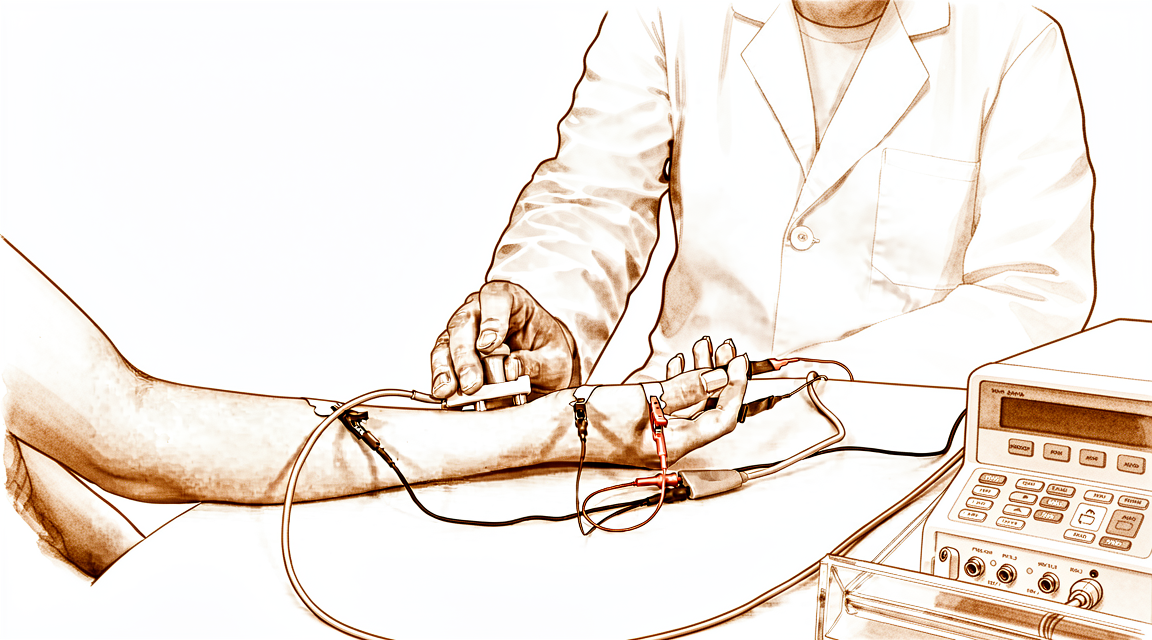
Nerve Tests and Conduction Studies
What nerve conduction studies and EMG are, why they are done for carpal tunnel and other nerve problems, what to expect, and how accurate they are.
For patients: a plain-language version of this topic is available. See the patient guide.
Overview
Nerve conduction studies (NCS) serve as the primary measure of impaired nerve function and are the best available indicator of overall disease severity, possessing some prognostic value for surgical outcome [1]. Two electrical methods of assessing nerve function have been developed and proved useful in clinical practice [2]. In the context of carpal tunnel syndrome, NCS are considered an indispensable part of the pre-operative evaluation [3]. The value of preoperative NCS lies in obtaining the correct diagnosis and determining the severity of the median nerve disease, not in predicting postoperative outcome [7]. While electrodiagnostic criteria used in some referenced studies were inadequate and not the most sensitive available, potentially leading to the erroneous conclusion that electrodiagnostic studies offer no additional diagnostic power [8], the value of electrodiagnostic testing is not negated by findings regarding its prognostic limitations [9].
Provocative nerve conduction testing is a useful and simple addition to the overall evaluation of patients with carpal tunnel syndrome, particularly those with otherwise normal findings on traditional electrodiagnostic studies [4]. Nerve conduction studies were more sensitive than sensibility testing in confirming the diagnosis of carpal tunnel syndrome, but the combination of the two studies is more sensitive than either test alone [13]. Distal sensory latency measurement is a superior diagnostic test for carpal tunnel syndrome, with 3.3 ms as the optimal upper limit of normal, giving a sensitivity of 74% and a specificity of 87% [47]. Highly sensitive tests are required to assess or exclude the diagnosis in one quarter of cases of carpal tunnel syndrome [11]. When signs and symptoms suggest mild-to-moderate median neuropathy and surgery is being considered, patients and clinicians might consider additional testing, such as electrodiagnostic studies or ultrasound, to increase the probability of actual median neuropathy that can benefit from surgery [15].
The selection of an appropriate electrical screening test for peripheral nerve injury depends on the prevalence and seriousness of the target disease and the relative consequences of over- and underdiagnosis [5]. Clinical, electrodiagnostic, and physical examination criteria need better definition to avoid inaccurate diagnoses and unnecessary surgeries [10]. Given specific clinical criteria for establishing the diagnosis of carpal tunnel syndrome, electrodiagnostic testing does not appear to correlate with improved final symptomatic outcome after carpal tunnel release [19]. However, the majority of neurosurgeons and orthopaedic surgeons seldom operate without electrodiagnostic confirmation in line with the Dutch consensus guideline on carpal tunnel syndrome [31]. In the context of cubital tunnel syndrome, surgical intervention is advocated for patients with symptoms only, even when electrodiagnostic studies are normal [20].
How It Works
Nerve conduction studies function as a measure of impaired nerve function and serve as the best available indicator of overall disease severity, rather than a test that determines the diagnosis [1]. These studies possess some prognostic value for surgical outcome [1]. Electrodiagnostic testing is a reasonable component of clinical evaluation, and its value is not negated by findings regarding its limitations [9][12]. In carpal tunnel syndrome, nerve conduction studies are more sensitive than sensibility testing alone for confirming the diagnosis [13]. The combination of nerve conduction studies and sensibility testing is more sensitive than either test alone for confirming the diagnosis of carpal tunnel syndrome [13]. Pre-operative antidromic sensory conduction velocity findings have high diagnostic value in carpal tunnel syndrome [28]. The relative slowing of the antidromic sensory conduction velocity of the median nerve to the ring finger is determined easily and efficiently and imposes minimal strain on the patient [37].
Diagnostic Modalities: Ultrasound is a valid alternative confirmatory test compared with electrodiagnostic studies in detecting ulnar neuropathy at the elbow [14]. Percutaneous recordings from peripheral nerves provide a precise assessment of neural activity via intrafascicular axonal recordings, allowing for the appraisal of nerve integrity and the need for surgical intervention [35]. Semmes-Weinstein monofilaments are a controlled, objective, reproducible force stimulus available for use in clinical testing of peripheral nerve function within the limits of their tip geometry [21].
Prognostic and Functional Indicators: Compound muscle action potential amplitude was predictive of functional outcomes after in situ decompression of the ulnar nerve, while other conventional electrodiagnostic parameters were not [22]. Strength recovers gradually as the median nerve heals but never returns to normal, indicating that this test can be extrapolated to the reinnervation of the abductor pollicies brevis [24]. Chitosan phonophoresis demonstrated significant improvements in nerve conduction, pain reduction, and enhancement of hand function for mild to moderate cubital tunnel syndrome [18].
Physiological and Reporting Considerations: Electrodiagnostic reports should specifically indicate abnormalities of latency and conduction and present a clear description of the probable pathophysiologic processes rather than just compiling slight abnormalities [29]. In primates, there is no significant difference in the conduction velocity of peripheral nerves repaired in adults and those repaired in early life [23]. When in situ nerve strain reached 8.1 ± 0.5%, the compound muscle action potential was not evoked in the brachial plexus [36]. Electrodiagnostic studies revealed an acute median nerve lesion at the wrist with motor and/or sensory conduction blocks in 20/30 women with pregnancy-related carpal tunnel syndrome [27].
What the Evidence Shows
Diagnostic Role and Sensitivity
Provocative nerve conduction testing serves as a useful adjunct in evaluating carpal tunnel syndrome (CTS), particularly when traditional electrodiagnostic studies yield normal findings [4]. The neurometer test alone demonstrates 69% sensitivity and 100% specificity, with sensitivity increasing to 84% when combined with quantitative sensibility testing [43]. A significant discordance exists between the estimated prevalence of mild-to-moderate CTS based on clinical signs and symptoms (73%) and findings from electrodiagnostic studies and ultrasound (51%) [30]. When clinical presentation suggests mild-to-moderate median neuropathy and surgery is under consideration, patients and clinicians should consider additional testing, such as electrodiagnostic studies (EDS) or ultrasound, to increase the probability of confirming actual median neuropathy that may benefit from surgical intervention [15].
Prognostic Value and Outcomes
Specific electrodiagnostic parameters offer predictive value for postoperative outcomes. Compound muscle action potential amplitude, but not other conventional electrodiagnostic parameters, predicts functional outcomes after in situ decompression of the ulnar nerve [22]. In carpal tunnel syndrome, distal motor latency is a simple test with predictive value for both postoperative neurophysiological and clinical outcomes [40]. For cubital tunnel syndrome, upper arm motor nerve conduction velocity may serve as a useful predictor of poor surgical outcome [44].
Critiques of diagnostic utility highlight methodological limitations. The electrodiagnostic criteria used in certain referenced studies were inadequate and not the most sensitive available, potentially leading to the erroneous conclusion that electrodiagnostic studies offer no additional diagnostic power in CTS [8]. To avoid inaccurate diagnoses and unnecessary surgeries, clinical, electrodiagnostic, and physical examination criteria require better definition [10].
Specific Clinical Applications and Findings
The absence of any real difference in nerve conduction time between the working group with symptoms and the group with diagnosed CTS indicates a high probability that many participants with symptoms would have had abnormal findings on standard electrodiagnostic tests [6]. In the paraplegic hand, the incidence of abnormal conduction times was not reliably correlated with either age or duration of paralysis [26]. Pre-operative antidromic sensory conduction velocity findings confirm high diagnostic value in carpal tunnel syndrome [28].
Regarding treatment effects and recovery, changes in electrophysiological findings occurring spontaneously in CTS and after treatment by injection are not statistically significant at two years [39]. All patients demonstrated good clinical and electrophysiological recovery at 6 months following single-stage opponensplasty added at the time of release for severe carpal tunnel syndrome [42]. A good response to carpal tunnel injection is an excellent diagnostic and prognostic sign for surgical treatment [45].
Methodology and Reporting Standards
Two electrical methods of assessing nerve function have been developed and have proved useful in clinical practice [2]. Within the limits of their tip geometry, Semmes-Weinstein monofilaments provide a controlled, objective, and reproducible force stimulus for clinical testing of peripheral nerve function [21]. Although essential differences exist between Semmes-Weinstein monofilament mappings and sensory nerve conduction parameters, using them together presents a clearer picture of the patient's sensory status than either test used alone [34].
Variability persists regarding the thoroughness of electrodiagnostic studies and the quality of information in reports [25]. EDX reports should specifically indicate abnormalities of latency and conduction and present a clear description of the probable pathophysiologic processes rather than just compiling slight abnormalities [29]. The author continues to use electrodiagnostic studies as part of a clinical evaluation process and considers this a reasonable way to practice medicine [12]. This does not negate the value of electrodiagnostic testing [9].
Practical Considerations
Diagnostic Role and Interpretation
The primary value of preoperative nerve conduction studies lies in obtaining the correct diagnosis and determining the severity of median nerve disease, rather than predicting postoperative outcome [7]. When signs and symptoms suggest mild-to-moderate median neuropathy and surgery is being considered, additional testing such as electrodiagnostic studies or ultrasound may increase the probability of actual median neuropathy that can benefit from surgery [15]. Clinicians must ensure that electrodiagnostic criteria are adequate and represent the most sensitive available options; inadequate criteria can lead to the erroneous conclusion that electrodiagnostic studies offer no additional diagnostic power in carpal tunnel syndrome [8].
Alternative and Adjunctive Testing
No specific evidence regarding alternative or adjunctive testing modalities is provided in this section’s evidence base.
Clinical Practice and Guidelines
Practice patterns vary significantly across regions. In the Netherlands, the majority of neurosurgeons and orthopaedic surgeons seldom operate without electrodiagnostic confirmation, in line with the Dutch consensus guideline [31]. Conversely, there is a significant discrepancy between the practice recommended by the Danish Society of Neurophysiology of performing neurophysiological investigations in all cases of suspected carpal tunnel syndrome and what is actually done in most surgical departments [38].
Prognostic Value and Outcomes
Nerve conduction studies have some prognostic value for surgical outcome in carpal tunnel syndrome [1]. The absence of any real difference in nerve conduction time between the working group with symptoms and the group with diagnosed carpal tunnel syndrome indicates a high probability that many of the participants with symptoms would have had abnormal findings on standard electrodiagnostic tests [6].
Other Clinical Considerations
Findings regarding suprascapular nerve dysfunction highlight the importance of perioperative nerve preservation strategies and postoperative neurological assessments [32]. Surgeons need to carefully evaluate suprascapular nerve integrity in cases of rotator cuff tear, as electromyography does not show adequate effectiveness in diagnosis in rat models [41]. Only studies with randomization, blinding, and sham injection or sham surgery can address subjective symptoms and satisfaction reliably and accurately [33].
Key Evidence
- [L5] Nerve conduction studies should be understood not as a test that determines the diagnosis but as a measure of impaired nerve function, serving as the best available indicator of overall disease severity with some prognostic value for surgical outcome. [1] (10.1177/17531934231191685)
- [L3] Two electrical methods of assessing nerve function have been developed and have proved useful in clinical practice. [2] (10.1016/0266-7681(86)90252-4)
- [L3] We consider nerve conduction studies to be an indispensable part of the pre-operative evaluation. [3] (10.1016/0266-7681(94)90244-5)
- [L2] Provocative nerve conduction testing is a useful and simple addition to the overall evaluation of patients with CTS, particularly those with otherwise normal findings on traditional electrodiagnostic studies. [4] (10.1016/s0363-5023(97)80045-7)
- [L3] The selection of an appropriate electrical screening test for peripheral nerve injury, such as entrapment neuropathy, depends on the prevalence and seriousness of the target disease and the relative consequences of over- and underdiagnosis. [5] (10.1016/s0363-5023(96)80165-1)
- [L3] The absence of any real difference in nerve conduction time between the working group with symptoms and the group with diagnosed CTS indicates a high probability that many of the participants with symptoms would have had abnormal findings on standard electrodiagnostic tests. [6] (10.1016/0363-5023(92)90116-7)
- [L5] The value of preoperative nerve conduction studies lies in obtaining the correct diagnosis and determining the severity of the median nerve disease, not in predicting postoperative outcome. [7] (10.1016/s0363-5023(96)80384-4)
- [L5] The authors argue that the electrodiagnostic criteria used in the referenced study were inadequate and not the most sensitive available, potentially leading to the erroneous conclusion that electrodiagnostic studies offer no additional diagnostic power in CTS. [8] (10.1067/jhsu.2000.jjhsu00025a1le01)
- [L5] This does not negate the value of electrodiagnostic testing. [9] (10.1016/s0363-5023(96)80222-x)
- [L5] The author proposes that the clinical, electrodiagnostic, and physical examination criteria need better definition to avoid inaccurate diagnoses and unnecessary surgeries. [10] (10.1016/s0363-5023(05)80209-6)
- [L3] Highly sensitive tests are required to assess or exclude the diagnosis in one quarter of cases of carpal tunnel syndrome. [11] (10.1016/0266-7681(94)90245-3)
- [L5] The author continues to use electrodiagnostic studies as part of a clinical evaluation process and considers this a reasonable way to practice medicine. [12] (10.1016/s0363-5023(96)80380-7)
- [L4] The results indicate that nerve conduction studies were more sensitive than sensibility testing in confirming the diagnosis of carpal tunnel syndrome, but the combination of the two studies is more sensitive than either test alone. [13] (10.1016/s0363-5023(82)80176-7)
- [L4] Ultrasound is a valid alternative confirmatory test compared with electrodiagnostic studies in detecting ulnar neuropathy at the elbow. [14] (10.1016/j.jhsa.2023.08.014)
- [L3] When signs and symptoms suggest mild-to-moderate median neuropathy and surgery is being considered, patients and clinicians might consider additional testing, such as EDS or US, to increase the probability of actual median neuropathy that can benefit from surgery. [15] (10.1097/corr.0000000000002751)
- [L5] The paper presents a concept of physical evaluation of the peripheral nervous system based on the premise that neural tissues are pain-sensitive and relatively mobile. [16] (10.1016/s0894-1130(97)80066-x)
- [L3] The authors conclude that the ATT is a sensitive tool for the diagnosis and evaluation of compressive peripheral neuropathy and may allow objective documentation in a higher percent of patients than do more traditional testing methods. [17] (10.1016/0363-5023(92)90453-v)
- [L1] This approach demonstrated significant improvements in nerve conduction, pain reduction, and enhancement of hand function. [18] (10.1016/j.jht.2024.02.006)
- [L3] Given specific clinical criteria for establishing the diagnosis of carpal tunnel syndrome, electrodiagnostic testing does not appear to correlate with improved final symptomatic outcome after carpal tunnel release. [19] (10.1016/s0363-5023(96)80164-x)
- [L2] We advocate surgical intervention for patients with symptoms only, even when electrodiagnostic studies are normal. [20] (10.1053/jhsu.2001.26327)
- [Paper] Within the limits of their tip geometry, the filaments are a controlled, objective, reproducible force stimulus available for use in clinical testing of peripheral nerve function. [21] (10.1016/s0363-5023(87)80189-2)
- [L2] Compound muscle action potential amplitude, but not other conventional electrodiagnostic parameters, was predictive of functional outcomes after in situ decompression of the ulnar nerve. [22] (10.1016/j.jhsa.2022.10.008)
- [L3] The study demonstrates that in primates there is no significant difference in the conduction velocity of peripheral nerves repaired in adults and those repaired in early life. [23] (10.1016/s0363-5023(83)80199-3)
- [L5] This strength recovers gradually as the median nerve heals, but never returns to normal, indicating that this test can be extrapolated to the reinnervation of the abductor pollicies brevis. [24] (10.1016/s0266-7681(03)00022-6)
- [L4] There is variability with respect to the thoroughness of electrodiagnostic studies and in the quality of information in the reports. [25] (10.1016/s0363-5023(98)80089-0)
- [L4] The incidence of abnormal conduction times was not reliably correlated with either age or duration of paralysis. [26] (10.1016/s0363-5023(88)80132-1)
- [L4] Electrodiagnostic studies revealed an acute median nerve lesion at the wrist with motor and/or sensory conduction blocks in 20/30 women. [27] (10.1016/s0266-7681(98)80232-5)
- [L4] The study confirms the high diagnostic value of the pre-operative antidromic sensory conduction velocity findings. [28] (10.1016/0266-7681(88)90161-1)
- [L5] EDX reports should specifically indicate abnormalities of latency and conduction and present a clear description of the probable pathophysiologic processes rather than just compiling slight abnormalities. [29] (10.1016/s0363-5023(96)80298-x)
- [L5] There is a severe discordance between the estimated prevalence of mild-to-moderate carpal tunnel syndrome based on clinical signs and symptoms (73%) versus electrodiagnostic studies and ultrasound (51%), calling into question whether clinicians can confidently diagnose patients with mild-to-moderate CTS. [30] (10.1097/corr.0000000000002822)
- [L4] The majority of neurosurgeons and orthopaedic surgeons seldom operate without electrodiagnostic confirmation in line with the Dutch consensus guideline on this subject. [31] (10.1016/j.jhse.2007.09.007)
- [L3] These findings highlight the importance of perioperative nerve preservation strategies and postoperative neurological assessments. [32] (10.1016/j.jse.2025.07.001)
- [L4] Although there are essential differences in these two tests, when used together they present a clearer picture of the patient's sensory status than either test used alone. [34] (10.1016/s0894-1130(87)80010-8)
- [L4] This technique provides a precise assessment of neural activity via intrafascicular axonal recordings from human peripheral nerves, allowing for the appraisal of nerve integrity and the need for surgical intervention. [35] (10.1016/s0363-5023(78)80067-7)
- [Paper] The results showed that when the in situ nerve strain reached 8.1 ± 0.5%, the compound muscle action potential was not evoked. [36] (10.1016/s0736-0266(02)00080-3)
- [L3] The relative slowing of the antidromic sensory conduction velocity of the median nerve to the ring finger is determined easily and efficiently and imposes minimal strain on the patient. [37] (10.1016/j.jhsa.2004.04.026)
- [L4] There is a significant discrepancy between the practice recommended by the Danish Society of Neurophysiology of performing neurophysiological investigations (NI) in all cases of suspected CTS and what is actually done in most surgical departments. [38] (10.1016/s0266-7681(97)80443-3)
- [L3] The changes in electrophysiological findings occurring spontaneously in carpal tunnel syndrome and after treatment by injection are not statistically significant at two years. [39] (10.1016/0266-7681(92)90191-4)
- [L3] DML is a simple test with a predictive value of the postoperative neurophysiological and clinical outcome of carpal tunnel syndrome. [40] (10.1016/s0266-7681(97)80355-5)
- [L5] This underscores the need for surgeons to carefully evaluate suprascapular nerve integrity in such cases. [41] (10.1186/s12891-025-09195-6)
- [L3] All patients had good clinical and electrophysiological recovery at 6 months. [42] (10.1177/1558944716660555fx)
- [L3] The sensitivity of the neurometer test alone was 69% and specificity was 100%, increasing to 84% sensitivity when combined with quantitative sensibility testing. [43] (10.1016/0363-5023(92)90117-8)
- [L3] Upper arm motor nerve conduction velocity (MNCV) might be a useful predictor of poor surgical outcome. [44] (10.1177/17585732241293360)
- [L4] Results suggest that carpal tunnel injection is also a reasonably accurate diagnostic test, as a good response to injection is an excellent diagnostic and prognostic sign for surgical treatment. [45] (10.1016/s0363-5023(84)80065-9)
- [L3] Receiver operating characteristic curves showed distal sensory latency measurement to be a superior diagnostic test, with 3.3 ms as optimal upper limit of normal, giving a sensitivity of 74% and a specificity of 87%. [47] (10.1016/s0363-5023(96)80020-7)
References
[1] Use of nerve conduction studies in carpal tunnel syndrome. Journal of Hand Surgery (European Volume). 2023. DOI: 10.1177/17531934231191685
[2] Sensory threshold and conductance testing in nerve injuries. The Journal of Hand Surgery: Journal of the British Society for Surgery of the Hand. 1986. DOI: 10.1016/0266-7681(86)90252-4
[3] Correlation of Clinical Signs with Nerve Conduction Tests in the Diagnosis of Carpal Tunnel Syndrome. Journal of Hand Surgery. 1994. DOI: 10.1016/0266-7681(94)90244-5
[4] Provocative motor nerve conduction testing in presumptive carpal tunnel syndrome unconfirmed by traditional electrodiagnostic testing. The Journal of Hand Surgery. 1997. DOI: 10.1016/s0363-5023(97)80045-7
[5] A comparison of traditional electrodiagnostic studies, electroneurometry, and vibrometry in the diagnosis of carpal tunnel syndrome. The Journal of Hand Surgery. 1996. DOI: 10.1016/s0363-5023(96)80165-1
[6] Use of motor nerve conduction testing and vibration sensitivity testing as screening tools for carpal tunnel syndrome in industry. The Journal of Hand Surgery. 1992. DOI: 10.1016/0363-5023(92)90116-7
[7] Electrical studies as a prognostic factor in the surgical treatment of carpal tunnel syndrome. The Journal of Hand Surgery. 1996. DOI: 10.1016/s0363-5023(96)80384-4
[8] Diagnostic testing in carpal tunnel syndrome. The Journal of Hand Surgery. 2000. DOI: 10.1067/jhsu.2000.jjhsu00025a1le01
[9] Electrical studies as a prognostic factor in carpal tunnel syndrome. The Journal of Hand Surgery. 1996. DOI: 10.1016/s0363-5023(96)80222-x
[10] Electrodiagnostic testing and carpal tunnel release outcome. The Journal of Hand Surgery. 1997. DOI: 10.1016/s0363-5023(05)80209-6
[11] Sensitivity of the Various Tests for the Diagnosis of Carpal Tunnel Syndrome. Journal of Hand Surgery. 1994. DOI: 10.1016/0266-7681(94)90245-3
[12] Electrical studies as a prognostic factor in the surgical treatment of carpal tunnel syndrome. The Journal of Hand Surgery. 1996. DOI: 10.1016/s0363-5023(96)80380-7
[13] Nerve conduction studies and sensibility testing in carpal tunnel syndrome. The Journal of Hand Surgery. 1982. DOI: 10.1016/s0363-5023(82)80176-7
[14] Diagnosis of Ulnar Neuropathy at the Elbow Using Ultrasound — A Comparison to Electrophysiologic Studies. The Journal of Hand Surgery. 2023. DOI: 10.1016/j.jhsa.2023.08.014
[15] Diagnosis of Mild-to-moderate Idiopathic Median Neuropathy at the Carpal Tunnel Based on Signs and Symptoms is Discordant From Diagnosis Based on Electrodiagnostic Studies and Ultrasound. Clinical Orthopaedics & Related Research. 2023. DOI: 10.1097/corr.0000000000002751
[16] Physical evaluation of the peripheral nervous system in disorders of pain and dysfunction. Journal of Hand Therapy. 1997. DOI: 10.1016/s0894-1130(97)80066-x
[17] Evaluation of nerve compression with the Automated Tactile Tester. The Journal of Hand Surgery. 1992. DOI: 10.1016/0363-5023(92)90453-v
[18] Effectiveness of chitosan phonophoresis on ulnar nerve conduction velocity, pain relief, and functional outcomes for mild to moderate cubital tunnel syndrome: A double-blind randomized controlled trial. Journal of Hand Therapy. 2024. DOI: 10.1016/j.jht.2024.02.006
[19] Electrodiagnostic testing and carpal tunnel release outcome. The Journal of Hand Surgery. 1996. DOI: 10.1016/s0363-5023(96)80164-x
[20] The rationale for and efficacy of surgical intervention for electrodiagnostic-negative cubital tunnel syndrome. The Journal of Hand Surgery. 2001. DOI: 10.1053/jhsu.2001.26327
[21] The repeatability of testing with Semmes-Weinstein monofilaments. The Journal of Hand Surgery. 1987. DOI: 10.1016/s0363-5023(87)80189-2
[22] Electrodiagnostic Predictors of Outcomes After In Situ Decompression of the Ulnar Nerve. The Journal of Hand Surgery. 2023. DOI: 10.1016/j.jhsa.2022.10.008
[23] Nerve conduction velocity, microscopic, and electron microscopy studies comparing repaired adult and baby monkey median nerves. The Journal of Hand Surgery. 1983. DOI: 10.1016/s0363-5023(83)80199-3
[24] Re. Clinical value of electrodiagnostic testing following repair of peripheral nerve lesions: a prospective study. Th. H.J. Van de Kar, J.B. Jaquet, J. Meulstee, C.B.H. Molenaar, R.J. Schimsheimer, S.E.R. Hovius. Journal of Hand Surgery 2002: 27B(4): 345–349.. Journal of Hand Surgery. 2003. DOI: 10.1016/s0266-7681(03)00022-6
[25] Electrodiagnostic reports of median neuropathy at the wrist. The Journal of Hand Surgery. 1998. DOI: 10.1016/s0363-5023(98)80089-0
[26] The paraplegic hand: Electrodiagnostic studies and clinical findings. The Journal of Hand Surgery. 1988. DOI: 10.1016/s0363-5023(88)80132-1
[27] Pregnancy-Related Carpal Tunnel Syndrome. Journal of Hand Surgery. 1998. DOI: 10.1016/s0266-7681(98)80232-5
[28] Assessment of sensory nerve conduction in carpal tunnel syndrome before, during and after operation. The Journal of Hand Surgery: Journal of the British Society for Surgery of the Hand. 1988. DOI: 10.1016/0266-7681(88)90161-1
[29] Electrodiagnostic testing in hand surgery. The Journal of Hand Surgery. 1996. DOI: 10.1016/s0363-5023(96)80298-x
[30] CORR Insights®: Diagnosis of Mild-to-moderate Idiopathic Median Neuropathy at the Carpal Tunnel Based on Signs and Symptoms is Discordant From Diagnosis Based on Electrodiagnostic Studies and Ultrasound. Clinical Orthopaedics & Related Research. 2023. DOI: 10.1097/corr.0000000000002822
[31] Current Practice in the Use of Nerve Conduction Studies in Carpal Tunnel Syndrome by Surgeons in the Netherlands. Journal of Hand Surgery (European Volume). 2007. DOI: 10.1016/j.jhse.2007.09.007
[32] Radiological and electrodiagnostic insights into suprascapular nerve dysfunction: a key predictor of poor functional outcomes in shoulder hemiarthroplasty. Journal of Shoulder and Elbow Surgery. 2026. DOI: 10.1016/j.jse.2025.07.001
[33] Probability_and_Pathophysiology_S0363502312002821. 2002.
[34] Correlating Semmes-Weinstein monofilament mappings with sensory nerve conduction parameters in Hansen's disease patients: An update. Journal of Hand Therapy. 1987. DOI: 10.1016/s0894-1130(87)80010-8
[35] Percutaneous recordings from peripheral nerves (preliminary communication). The Journal of Hand Surgery. 1978. DOI: 10.1016/s0363-5023(78)80067-7
[36] In situ strain and stress of nerve conduction blocking in the brachial plexus. Journal of Orthopaedic Research. 2002. DOI: 10.1016/s0736-0266(02)00080-3
[37] Relative slowing of the median antidromic sensory nerve conduction velocity to the ring finger in screening for carpal tunnel syndrome. The Journal of Hand Surgery. 2004. DOI: 10.1016/j.jhsa.2004.04.026
[38] Operative Treatment of Carpal Tunnel Syndrome in Denmark. Journal of Hand Surgery. 1997. DOI: 10.1016/s0266-7681(97)80443-3
[39] Nerve Conduction Studies after Treatment for Carpal Tunnel Syndrome. Journal of Hand Surgery. 1992. DOI: 10.1016/0266-7681(92)90191-4
[40] Carpal Tunnel Syndrome: Neurophysiological Results of Surgery Based on Preoperative Electrodiagnostic Testing. Journal of Hand Surgery. 1997. DOI: 10.1016/s0266-7681(97)80355-5
[41] Electromyography does not show adequate effectiveness in diagnosis of suprascapular nerve lesions caused by rotator cuff tear in rat model. BMC Musculoskeletal Disorders. 2025. DOI: 10.1186/s12891-025-09195-6
[42] Should Single-Stage Opponensplasty Be Added at the Time of Release for Severe Carpal Tunnel Syndrome?. HAND. 2016. DOI: 10.1177/1558944716660555fx
[43] The utility of portable nerve conduction testing for patients with carpal tunnel syndrome: A prospective clinical study. The Journal of Hand Surgery. 1992. DOI: 10.1016/0363-5023(92)90117-8
[44] Clinical significance of upper arm motor nerve conduction velocity in cubital tunnel syndrome. Shoulder & Elbow. 2024. DOI: 10.1177/17585732241293360
[45] Diagnostic and therapeutic value of carpal tunnel injection. The Journal of Hand Surgery. 1984. DOI: 10.1016/s0363-5023(84)80065-9
[47] Evaluation of portable nerve conduction testing in the diagnosis of carpal tunnel syndrome. The Journal of Hand Surgery. 1996. DOI: 10.1016/s0363-5023(96)80020-7