Patients › Rehabilitation
کلائی کے گینگلیئن کو نکالنا (Wrist Ganglion Excision)
کلائی کی پشت یا سامنے کے گینگلیئن سسٹ کو نکالنے کے بعد ابتدائی حرکت پر مبنی صحت یابی کا منصوبہ، جس میں کلائی کو کم سے کم عرصے کے لیے ساکن رکھا جاتا ہے اور پھر جلد ہر سمت میں حرکت دی جاتی ہے، تاکہ اس اکڑاؤ سے بچا جا سکے جو اس آپریشن کے بعد سب سے عام مسئلہ ہے۔

یہ پروٹوکول Mater Private Hospital Rockhampton میں ڈاکٹر کیرن ہِرپرا کے ہاتھوں کلائی کے گینگلیئن (wrist ganglion)، یعنی کلائی کے جوڑ سے نکلنے والی سیال سے بھری تھیلی (سسٹ)، کو سرجری سے نکالنے (excision) کے بعد آپ کی صحت یابی میں رہنمائی کرتا ہے۔ اس کا آغاز آپ کے گھریلو ورزشی پروگرام سے ہوتا ہے، جس کے بعد وہ منظم کلینیکل پروٹوکول آتا ہے جو آپ کے ہینڈ تھراپسٹ (ہاتھ کی بحالی کے ماہر) کے لیے لکھا گیا ہے؛ یہ صفحہ یا اس کی پی ڈی ایف تھراپی کی اپنی پہلی ملاقات پر ساتھ لے کر جائیں تاکہ آپ کی بحالی کا علاج مربوط رہے۔ آپ کا تھراپسٹ آپ کی صحت یابی کی پیش رفت کے مطابق منصوبے میں تبدیلی کر سکتا ہے۔
اگر آپریشن کے بعد آپ کو اپنے زخم کے بارے میں کوئی تشویش ہو تو کلینک سے رابطہ کریں۔ اکثر یہ مددگار ہوتا ہے کہ زخم کی تصویر کھینچ کر جائزے کے لیے ای میل کر دیں۔
کیا توقع رکھیں
کلائی کا گینگلیئن غبارے جیسی، سیال سے بھری ایک تھیلی (سسٹ) ہے جو ایک پتلی ڈنڈی (stalk) کے ذریعے کلائی کے جوڑ کی اندرونی جھلی سے جڑی ہوتی ہے۔ زیادہ تر کلائی کی پشت پر ظاہر ہوتے ہیں (ڈورسل گینگلیئن (dorsal ganglion))؛ کچھ سامنے کی طرف، انگوٹھے والی سمت میں ظاہر ہوتے ہیں (وولر گینگلیئن (volar ganglion))۔ آپریشن میں ڈاکٹر ہِرپرا سسٹ کو اس کی ڈنڈی سمیت، کلائی کے جوڑ کی جھلی (capsule) تک نکال دیتے ہیں، یعنی گانٹھ کے ساتھ اس کی جڑ بھی نکالی جاتی ہے، کیونکہ ڈنڈی کو پیچھے چھوڑ دینا ہی گینگلیئن کے دوبارہ نکل آنے کی سب سے بڑی وجہ ہے۔ یہ آپریشن کھلے طریقے سے (ایک چھوٹے چیرے کے ذریعے) یا دوربین کے ذریعے (keyhole، arthroscopic) اوزاروں سے کیا جا سکتا ہے۔
چونکہ کسی چیز کی مرمت یا دوبارہ تعمیر نہیں کی گئی (صرف ایک سسٹ نکالا گیا ہے)، اس لیے کوئی جڑتا ہوا ٹینڈن (tendon)، یعنی وہ مضبوط ڈوری جو پٹھے کو ہڈی سے جوڑتی ہے، یا لیگامنٹ (ligament)، یعنی وہ مضبوط بندھن جو ایک ہڈی کو دوسری ہڈی سے جوڑتا ہے، نہیں ہوتا جس کی ہفتوں تک حفاظت کرنی پڑے۔ اس لیے صحت یابی ابتدائی حرکت کا منصوبہ ہے، اور اس کا پورا مقصد کلائی کو جلدی حرکت میں لانا ہے:
- اس آپریشن کے بعد سب سے عام مسئلہ اکڑاؤ ہے، جو سسٹ کے دوبارہ نکل آنے سے کہیں زیادہ عام ہے۔ گینگلیئن نکالنے کے بعد جس کلائی کو بہت زیادہ دیر تک آرام دیا جائے اس کی حرکت کم ہو سکتی ہے۔
- اس لیے ساکن رکھنے کا عرصہ کم سے کم رکھا جاتا ہے: ایک نرم پٹی، کبھی کبھی صرف آرام کے لیے کلائی کا ہلکا اسپلنٹ بھی، صرف چند دنوں سے ایک دو ہفتوں تک۔ اس کے بعد آپ کلائی کو جلد، ہر سمت میں حرکت دیتے ہیں۔
آپ کی انگلیاں، جن کا آپریشن نہیں ہوا، پہلے دن سے پوری طرح حرکت کرتی رہتی ہیں۔ جیسے جیسے زخم ٹھیک ہوتا ہے کلائی کی حرکت کھولی جاتی ہے، پھر گرفت اور بوجھ بتدریج واپس لائے جاتے ہیں۔ زیادہ تر لوگ تقریباً چار سے چھ ہفتوں تک معمول کی سرگرمیوں پر واپس آ جاتے ہیں۔
احتیاطیں اور پابندیاں
- پہلے دن سے اپنی انگلیوں، انگوٹھے اور کہنی کو پوری طرح حرکت دیتے رہیں؛ صرف کلائی کو آہستہ آہستہ حرکت میں لانے کی ضرورت ہے۔
- نرم پٹی یا آرام کا اسپلنٹ صرف اتنی دیر پہنیں جتنی ہدایت دی گئی ہو (عموماً چند دنوں سے ایک یا دو ہفتوں تک)۔ یہ آرام کے لیے ہے، کلائی کو لمبے عرصے تک ساکن رکھنے کے لیے نہیں؛ یہاں مقصد ابتدائی حرکت ہے، آرام نہیں۔
- جب تک آپ کو یہ نہ بتایا جائے کہ زخم بند ہو گیا ہے، نہ زخم کو پانی میں بھگوئیں اور نہ پٹی کو گیلا ہونے دیں؛ اسے صاف اور خشک رکھیں۔
- پہلے چند ہفتوں تک سختی سے گرفت کرنے، وزن اٹھانے اور کلائی کے ذریعے وزن ڈالنے سے پرہیز کریں، اور انہیں ایک دم نہیں بلکہ بتدریج دوبارہ شروع کریں۔
- اگر آپ کا وولر (کلائی کے سامنے والا) گینگلیئن تھا تو سسٹ ریڈیل شریان (radial artery، وہ نبض جو آپ کلائی کے سامنے محسوس کر سکتے ہیں) کے قریب ہو سکتا ہے؛ اگر آپ ہاتھ میں غیر معمولی سوجن، ٹھنڈا پن یا رنگ میں تبدیلی محسوس کریں تو فوراً کلینک کو بتائیں۔
- جب تک آپ اسٹیئرنگ کو آرام سے قابو میں نہ رکھ سکیں اور ہر قسم کے اسپلنٹ سے باہر نہ آ جائیں، جس کی تصدیق آپ کے معائنے پر ہو، گاڑی نہ چلائیں۔
زخم، سوجن اور زخم کے نشان کی دیکھ بھال کے لیے پریکٹس کی زخم کی دیکھ بھال سے متعلق رہنمائی دیکھیں۔
آپ کی ورزشیں
Kieran Hirpara 4.0
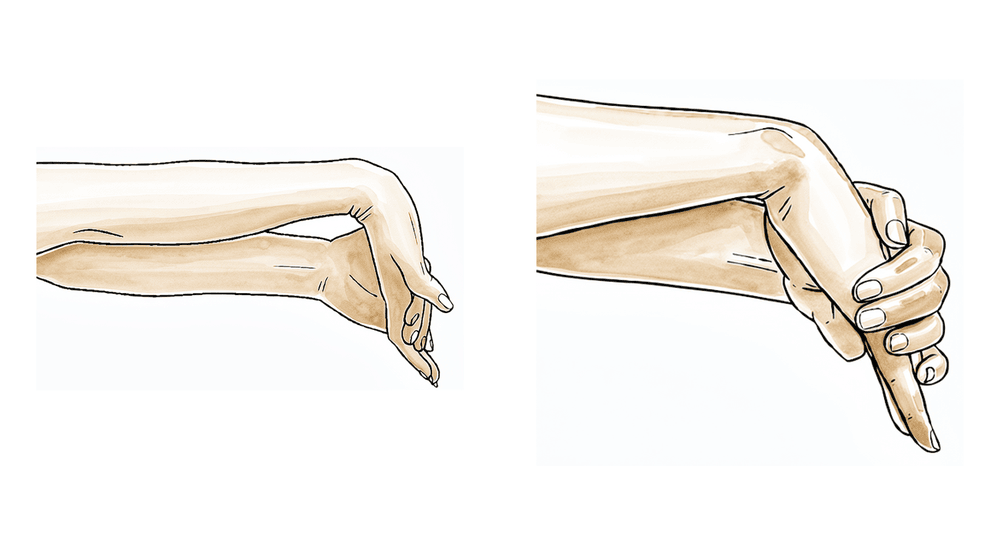
کلائی کی حرکت (ہر سمت میں)
اپنی کلائی کو آہستہ سے ہر سمت میں حرکت دیں — اسے پیچھے (اوپر) موڑیں، آگے (نیچے) موڑیں، اور ایک طرف سے دوسری طرف جھکائیں — ہر سمت میں جتنا آرام سے ہو سکے اتنا حرکت دیں۔ یہ سب سے اہم ابتدائی ورزش ہے، کیونکہ اس آپریشن کے بعد کلائی اکڑنے کا رجحان رکھتی ہے، اور اسے جلد حرکت دینا اسے لچکدار رکھتا ہے۔ اسے آہستہ آہستہ اور آرام کی حد میں رہ کر کریں؛ اس میں تیز درد نہیں ہونا چاہیے۔
ہر سمت میں 10 بار، دن میں 4 سے 5 بار، پہلے چند دنوں سے
Kieran Hirpara 4.0
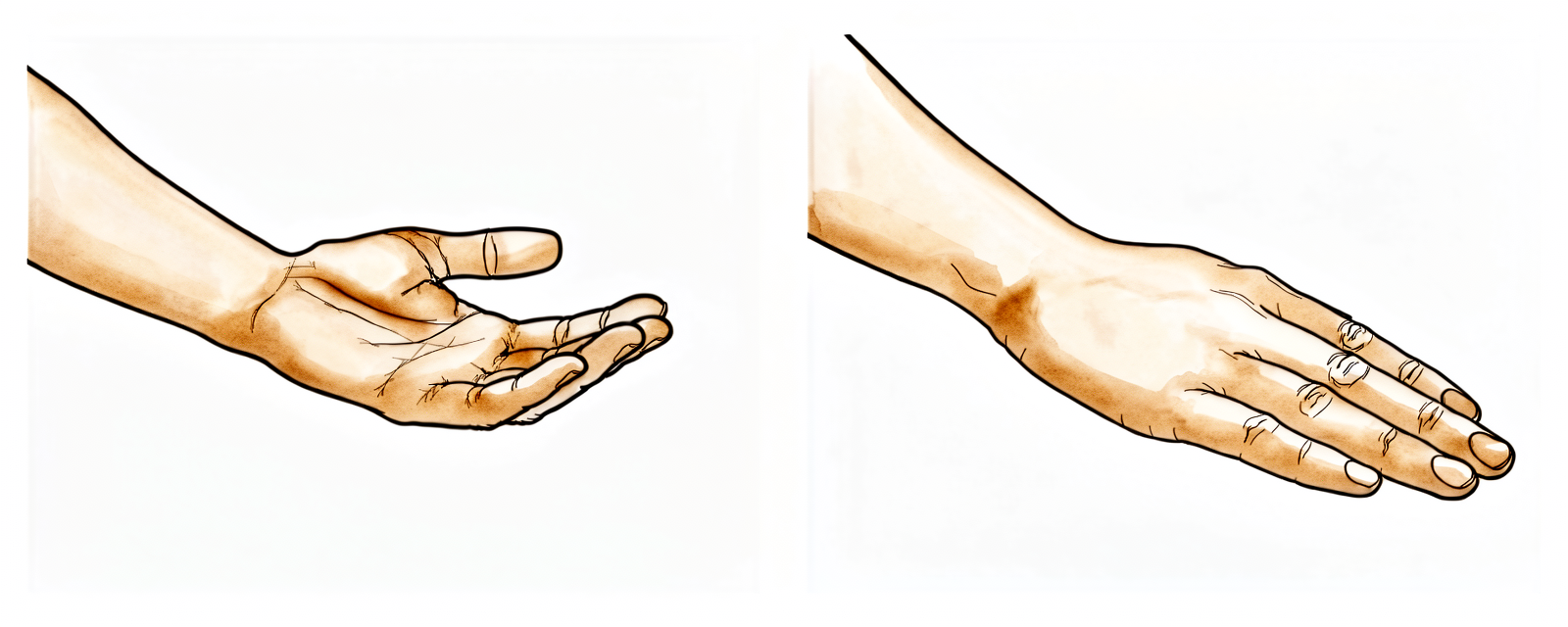
بازو کے نچلے حصے کی گردش (ہتھیلی اوپر / ہتھیلی نیچے)
اپنی کہنی کو پہلو سے لگائیں اور اسے زاویۂ قائمہ (سیدھے زاویے) پر موڑیں۔ ہتھیلی کو آہستہ سے اوپر چھت کی طرف گھمائیں، پھر نیچے فرش کی طرف۔ کہنی کو ساکن رکھیں تاکہ حرکت بازو کے نچلے حصے سے ہو۔ اس سے زخم کے ٹھیک ہونے کے دوران بازو کا نچلا حصہ اور کلائی آزادی سے گھومتے رہتے ہیں۔
ہر سمت میں 10 بار، دن میں 3 سے 4 بار
Kieran Hirpara 4.0
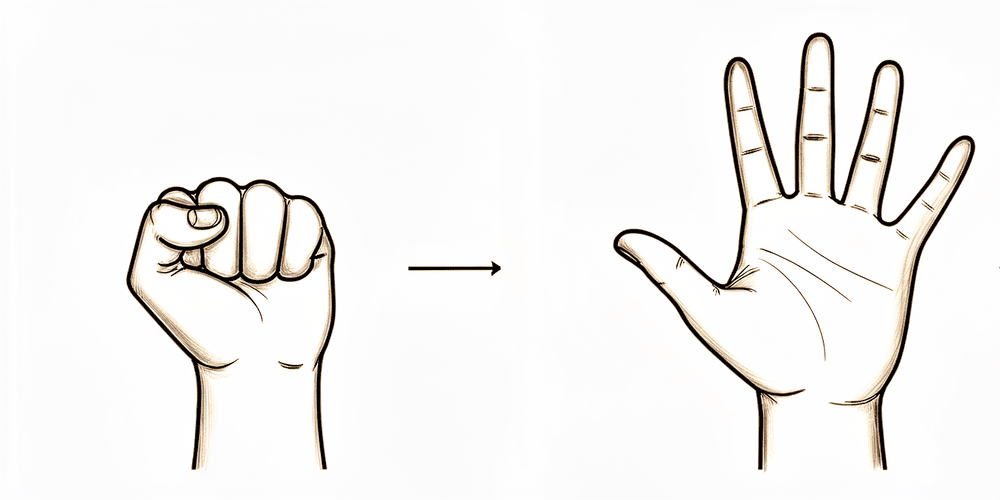
انگلیوں کی حرکت
آہستہ سے پوری مٹھی بنائیں تاکہ انگلیوں کے سرے ہتھیلی میں مڑ جائیں، پھر ہاتھ کھولیں اور انگلیوں کو پوری طرح سیدھا کریں۔ انگلیوں کا آپریشن نہیں ہوا، اس لیے انہیں پہلے دن سے پوری طرح حرکت دیتے رہیں — اس سے ہاتھ اکڑتا نہیں اور سوجن نکلنے میں مدد ملتی ہے۔
10 بار، دن میں کئی بار، پہلے دن سے

Kieran Hirpara 4.0
زخم کے نشان کی مالش
جب زخم پوری طرح بھر جائے اور پٹیاں اتر جائیں (عموماً تقریباً دو ہفتے پر)، تو انگلی کے سرے سے تھوڑا سا سادہ موئسچرائزر نشان پر چند منٹ تک چھوٹے، مضبوط دائروں میں ملیں۔ اس سے نشان نرم اور حرکت کے قابل رہتا ہے اور نیچے کی بافتوں سے نہیں چپکتا، ورنہ یہ کلائی کی حرکت کو روک سکتا ہے۔ یہ مالش ایسے زخم پر شروع نہ کریں جو ابھی بھرا نہ ہو یا جس سے رطوبت نکل رہی ہو۔
چند منٹ، دن میں دو بار، زخم پوری طرح بھر جانے کے بعد

Kieran Hirpara 4.0
گرفت مضبوط کرنا
یہ بعد کے مرحلے کی ورزش ہے، جو عموماً تقریباً تین سے چار ہفتے سے شروع ہوتی ہے جب زخم ٹھیک ہو چکا ہو اور حرکت آرام دہ ہو۔ ایک نرم گیند یا تھراپی پُٹی کو ہتھیلی میں دبائیں، چند سیکنڈ پکڑے رکھیں، پھر ڈھیلا چھوڑ دیں۔ اسے آہستہ آہستہ بڑھائیں۔ اس سے گرفت کی وہ طاقت واپس آتی ہے جو آپریشن کے بعد اکثر چند ہفتوں کے لیے کم ہو جاتی ہے۔
10 سے 15 بار دبانا، دن میں 2 سے 3 بار، تقریباً 3 سے 4 ہفتے سے
یہ آپ کے ہینڈ آؤٹ میں دی گئی ورزشیں ہیں۔ انہیں ڈاکٹر ہِرپرا اور آپ کے ہینڈ تھراپسٹ کی رہنمائی کے مطابق شروع کریں۔ ابتدائی ورزشیں (ہر سمت میں کلائی کی حرکت، بازو کے نچلے حصے کی گردش اور انگلیوں کی حرکت) اس صحت یابی کی بنیاد ہیں اور پہلے چند دنوں کے اندر شروع ہوتی ہیں، کیونکہ کلائی کو جلد حرکت دینا ہی اس اکڑاؤ کو روکتا ہے جو ورنہ اس آپریشن کے بعد ہو جاتا ہے۔ نشان کی مالش زخم پوری طرح بھر جانے کے بعد شروع ہوتی ہے، اور گرفت مضبوط کرنے کی ورزشیں آرام کے مطابق تھوڑا بعد میں شامل کی جاتی ہیں۔ ان میں سے کسی ورزش میں تیز درد نہیں ہونا چاہیے؛ جس میں ہو اسے ہلکا کر دیں۔
آپ کا کلینیکل پروٹوکول
اس صفحے کا باقی حصہ کلائی کے گینگلیئن کو نکالنے کے بعد بحالی کا مرحلہ وار کلینیکل پروٹوکول ہے۔ یہ حصہ آپ کے ہینڈ تھراپسٹ کو دیا جانا ہے، اور ہر مرحلہ سادہ زبان میں اس وضاحت سے شروع ہوتا ہے کہ اس دوران کیا ہو رہا ہے۔ یہ نکالنے کا آپریشن ہے، مرمت نہیں: کوئی ایسی ساخت نہیں جس کی حفاظت کرنی ہو، اس لیے بنیادی اصول یہ ہے: کم سے کم ساکن رکھنا، اس کے بعد نکالنے کے بعد ہونے والے اکڑاؤ کو روکنے کے لیے ہر سمت میں کلائی کی ابتدائی فعال حرکت، کیونکہ اکڑاؤ اس آپریشن کے بعد سب سے عام پیچیدگی ہے۔
علاج سے پہلے مریض کی آپریشن رپورٹ اور سابقہ طبی تاریخ دیکھیں، اور علاج کرنے والے سرجن سے ان باتوں پر رابطہ رکھیں: جگہ (پشت کی طرف یا سامنے کی طرف (dorsal vs volar))، سرجری کا طریقہ (کھلا یا دوربین کے ذریعے (open vs arthroscopic))، پشت/سامنے کی جوڑ کی جھلی کی سلامتی، اور ساتھ میں کوئی اور دریافت۔ ڈاکٹر ہِرپرا سسٹ کو اس کی ڈنڈی سمیت جوڑ کی جھلی تک نکالتے ہیں۔ وولر گینگلیئن میں ریڈیل شریان کی قربت کو ذہن میں رکھیں۔ حرکت کی کوئی محفوظ حد نہیں اور کوئی ساخت نہیں جس سے بوجھ ہٹانا ہو؛ واحد جان بوجھ کر رکھی گئی پابندی یہ ہے کہ نرم بافتوں کے ٹھیک ہونے تک تھوڑے عرصے کے لیے سخت گرفت/بوجھ سے پرہیز کیا جائے۔
مرحلہ I — کم سے کم ساکن رکھنا اور ابتدائی حرکت (دن 0 سے تقریباً 14)
پہلا مرحلہ زخم کی حفاظت کرتا ہے اور ساتھ ہی کلائی کو جلد حرکت میں لاتا ہے۔ ساکن رکھنے کا عرصہ جان بوجھ کر مختصر رکھا جاتا ہے (ایک نرم پٹی، اور اگر ضرورت ہو تو صرف آرام کے لیے کلائی کا ہلکا اسپلنٹ)، اور کلائی پہلے چند دنوں کے اندر ہر سمت میں فعال حرکت شروع کر دیتی ہے۔ منظم جائزے (systematic review) کے شواہد یہ ہیں کہ دو ہفتے یا اس سے کم کا محدود ساکن رکھنا، یا بالکل ساکن نہ رکھنا، نتیجے میں کوئی خاص فرق نہیں ڈالتا، جبکہ لمبا آرام اکڑاؤ کا خطرہ پیدا کرتا ہے۔
آپ کے ہینڈ تھراپسٹ کے لیے:
آگاہی اور احتیاطیں - نرم پٹی، اور صرف آرام کے لیے اختیاری طور پر کلائی کا ہلکا اسپلنٹ؛ اسے ہفتوں میں نہیں بلکہ دنوں میں چھڑائیں - لمبے عرصے تک سخت طریقے سے ساکن نہ رکھیں: اسپلنٹ کا استعمال زیادہ سے زیادہ 2 ہفتے تک محدود رکھیں (عموماً چند دن) - زخم بند ہونے تک اسے صاف اور خشک رکھیں؛ پہلے دن سے انگلیوں، انگوٹھے اور کہنی کی مکمل حرکت کی حد (ROM) - وولر کیسوں میں: ریڈیل شریان کا دھیان رکھیں؛ خون کی نالیوں سے متعلق کسی تشویش کی فوراً اطلاع دیں
علاج کا طریقہ - زخم: ہدایت کے مطابق سرجیکل پٹیاں؛ انفیکشن پر نظر رکھیں - سوجن (oedema): اونچا رکھنا، ہاتھ سے ہلکی پمپنگ کی ورزش، ضرورت کے مطابق برف - ورزشیں: آرام کی حد کے اندر ہر سمت میں کلائی کی فعال حرکت کی حد (flexion/extension، radial/ulnar deviation)، جو پہلے چند دنوں میں شروع کی جائے؛ بازو کے نچلے حصے کی فعال/غیر فعال گردش (pronation–supination)؛ انگلیوں اور انگوٹھے کی مکمل فعال حرکت کی حد؛ کندھے کی ہلکی حرکت کی حد
اگلے مرحلے میں جانے کی شرائط - زخم بھر رہا ہو؛ سوجن کم ہو رہی ہو؛ کلائی کی حرکت کی حد بہتر اور آرام دہ ہو رہی ہو؛ اسپلنٹ (اگر استعمال ہوا) تقریباً 2 ہفتے تک چھوڑ دیا گیا ہو
مرحلہ II — مکمل حرکت کی بحالی اور نشان کی دیکھ بھال (ہفتہ تقریباً 2 سے 4)
تقریباً دو ہفتے سے پٹیاں اتر چکی ہوتی ہیں اور زخم بھر چکا ہوتا ہے۔ توجہ اس پر ہوتی ہے کہ اکڑاؤ کو جمنے کا موقع ملنے سے پہلے کلائی کی مکمل، دونوں طرف برابر حرکت دوبارہ حاصل کی جائے، اور نشان پر کام شروع کیا جائے تاکہ نشان حرکت کے قابل رہے اور کلائی کو باندھ کر نہ رکھے۔
آپ کے ہینڈ تھراپسٹ کے لیے:
جائزے - کلائی کی فعال اور غیر فعال حرکت کی حد (دوسری طرف سے موازنہ کریں)؛ بازو کے نچلے حصے کی گردش؛ سوجن؛ زخم/نشان کا معائنہ
آگاہی اور احتیاطیں - ہر سمت میں کلائی کی مکمل حرکت کی حد کی طرف بڑھیں؛ ابتدائی کمی کو فعال اور ہلکے غیر فعال کام سے فوراً دور کریں - زخم پوری طرح بھر جانے کے بعد نشان کی دیکھ بھال شروع کریں (مالش، سلیکون/موئسچرائزر، ضرورت کے مطابق حساسیت کم کرنا (desensitisation)) - ہاتھ کے ہلکے روزمرہ استعمال کی ترغیب دیں؛ سخت گرفت اور بوجھ کو مؤخر رکھیں
علاج کا طریقہ - ورزشیں: کلائی کی مکمل فعال اور ہلکی غیر فعال حرکت کی حد کی طرف بڑھیں؛ بازو کے نچلے حصے کی گردش جاری رکھیں؛ نشان کی مالش اور حساسیت کم کرنے کا کام شروع کریں؛ اس مرحلے کے آخر میں آرام کے مطابق ہلکی پُٹی (putty)/گرفت کی ورزش شامل کریں
اگلے مرحلے میں جانے کی شرائط - کلائی کی مکمل یا تقریباً مکمل، بغیر درد کی حرکت کی حد؛ بھرا ہوا، حرکت کے قابل نشان؛ درجہ بہ درجہ بوجھ کے لیے تیار
مرحلہ III — مضبوطی اور سرگرمیوں میں واپسی (ہفتہ تقریباً 4 سے 6 اور اس کے بعد)
حرکت بحال ہونے کے بعد گرفت اور بوجھ بتدریج واپس لائے جاتے ہیں۔ زیادہ تر مریضوں کی معمول کی سرگرمیاں تقریباً چار سے چھ ہفتوں تک واپس آ جاتی ہیں؛ جسمانی مشقت والے بھاری کام شرائط پر مبنی پیش رفت کے مطابق بعد میں آتے ہیں۔
آپ کے ہینڈ تھراپسٹ کے لیے:
جائزے - گرفت اور چٹکی کی گرفت کی طاقت کا دوسری طرف سے موازنہ؛ کلائی کی حرکت کی حد؛ درجہ بہ درجہ بوجھ پر ردعمل؛ مناسب ہو تو روزمرہ اور کام سے متعلق ٹیسٹ
آگاہی اور احتیاطیں - آرام کے مطابق گرفت اور کلائی کی مضبوطی بڑھائیں (پُٹی، گیند، درجہ بہ درجہ مزاحمت) - وزن اٹھانا اور کلائی کے ذریعے وزن ڈالنا بتدریج دوبارہ شروع کریں؛ مکمل واپسی کا فیصلہ علامات کی بنیاد پر ہو، کیلنڈر کی بنیاد پر نہیں
علاج کا طریقہ - ورزشیں: گرفت/چٹکی کی گرفت اور کلائی کی بتدریج بڑھتی مضبوطی؛ درجہ بہ درجہ بوجھ اور کسی خاص کام کے مطابق مشقیں؛ حرکت اور نشان کا جو کام باقی ہو اسے جاری رکھیں - جب حرکت کی حد مکمل ہو، طاقت دونوں طرف تقریباً برابر ہو اور کام کرنے کی صلاحیت واپس آ جائے تو علاج ختم کرنے پر غور کریں - اگر کلائی اکڑی ہوئی حالت میں ایک جگہ رک جائے، یا دوبارہ سوجن نمودار ہو، تو مریض کو علاج کرنے والے ڈاکٹر کے پاس واپس بھیجنے پر غور کریں
مکمل سرگرمیوں میں واپسی کی شرائط - کلائی کی مکمل، بغیر درد کی حرکت کی حد؛ دونوں طرف تقریباً برابر گرفت؛ روزمرہ اور کام سے متعلق بوجھ کے ساتھ آرام
کام اور سرگرمیوں میں واپسی
ہاتھ کے ہلکے روزمرہ استعمال (کھانا کھانا، لکھنا، اپنی ہلکی دیکھ بھال) کی شروع سے ہی، آرام کی حد میں، ترغیب دی جاتی ہے، اور آپ کی انگلیوں کو پہلے دن سے پوری طرح کام کرنا چاہیے۔ دفتری اور ہلکے کام اکثر چند دنوں سے تقریباً ایک ہفتے کے اندر ممکن ہوتے ہیں، خاص طور پر اگر آپ کا زیادہ استعمال ہونے والا ہاتھ آزاد ہو؛ جن کاموں میں سخت گرفت، وزن اٹھانا یا کلائی کو بار بار زور سے حرکت دینا شامل ہو ان میں زیادہ وقت لگتا ہے اور انہیں پہلے چند ہفتوں میں دوبارہ بڑھایا جاتا ہے۔ شائع شدہ تحقیقات کے مطابق گینگلیئن نکالنے کے بعد کام سے صرف تھوڑی چھٹی لینی پڑتی ہے (تقریباً دو ہفتے کے لگ بھگ)، اگرچہ یہ اس پر منحصر ہے کہ کس ہاتھ کا آپریشن ہوا اور آپ کے کام کی ضروریات کیا ہیں۔
چونکہ آپ کے لیے ضروری ہے کہ آپ اسٹیئرنگ کو آرام سے قابو میں رکھ سکیں اور ہر قسم کے اسپلنٹ سے باہر ہوں، اس لیے بالکل ابتدائی دنوں میں آنے جانے کے لیے مدد کا انتظام رکھیں؛ جب آپ آرام سے اور محفوظ طریقے سے گاڑی چلا سکیں، جس کی تصدیق آپ کے معائنے پر ہو، تب گاڑی چلانا دوبارہ شروع ہوتا ہے۔ زیادہ تر لوگ تقریباً چار سے چھ ہفتوں تک معمول کی سرگرمیوں پر واپس آ جاتے ہیں، اور جسمانی مشقت والا بھاری کام اور کھیل حرکت اور گرفت واپس آنے کے ساتھ بتدریج دوبارہ شروع کیے جاتے ہیں، جس کا فیصلہ صرف کیلنڈر سے نہیں بلکہ کلائی کی حالت دیکھ کر کیا جاتا ہے۔
اپنے پروٹوکول کے بعد
یہ پروٹوکول پریکٹس کے عمومی صحت یابی کے مشوروں کے ساتھ مل کر کام کرتا ہے: آپریشن کے بعد درد پر قابو، زخم کی دیکھ بھال اور زخم کے نشان کی دیکھ بھال دیکھیں۔ اوپر دیا گیا مرحلہ وار منصوبہ کلائی کے گینگلیئن کو نکالنے کے بعد شائع شدہ رہنمائی کی عکاسی کرتا ہے، جس میں ترجیح اکڑاؤ کو روکنے کے لیے ابتدائی حرکت ہے؛ آپ کی آگے کی صحت یابی میں ڈاکٹر ہِرپرا اور آپ کا ہینڈ تھراپسٹ آپ کی کلائی کی پیش رفت کے مطابق انفرادی طور پر رہنمائی کرتے ہیں۔
Evidence & references
This is the clinical evidence summary written for health professionals. It is technical, and it lists the research this page was built from. You do not need to read it to understand your treatment or to make a decision about it.
Wrist Ganglion Excision — Procedure Outcomes & Post-operative Rehabilitation (Dorsal / Volar, Open or Arthroscopic)
Topic scope: post-operative rehabilitation after surgical excision of a wrist ganglion — removal of the cyst together with its capsular stalk down to the wrist joint, performed open or arthroscopically, for a dorsal (scapholunate-origin) or volar (radiocarpal/scaphotrapezial) ganglion. This is an excision, not a reconstruction: nothing is repaired or tightened, so the rehab is an early-motion pathway built around minimal immobilisation, prompt wrist movement in all planes, and scar care — not months of protected healing.
Defining principle of the rehab here: ganglion excision removes a cyst and its stalk; it does not create a construct that needs protecting. The most frequent adverse outcome is therefore not failure of any repair but wrist stiffness / loss of motion, which prolonged immobilisation makes worse. So the deliberate stance is minimal immobilisation (soft dressing ± brief comfort splint, ≤2 weeks) followed by early active wrist motion in every plane, with the only restraint a short window of heavy-grip/load avoidance while the soft tissues settle. The principal branch points are (1) dorsal vs volar (volar ganglia sit adjacent to the radial artery and carry a higher neurovascular-complication profile) and (2) open vs arthroscopic access (similar recurrence; arthroscopic may have a gentler early course). Importantly, the recurrence and outcome literature is far better developed than the rehabilitation literature, which is largely expert-consensus and low-level.
A. PROCEDURE OUTCOMES (open vs arthroscopic; dorsal vs volar)
Ganglion excision is a reliable, low-morbidity operation. The principal outcome debate is over recurrence and over access (open vs arthroscopic), not over whether excision works.
- Excision markedly out-performs aspiration for durable cure. Pooled across treatments, mean recurrence is roughly 6% arthroscopic, ~20–21% open, ~59% aspiration; surgical excision confers a large reduction in recurrence versus aspiration. Reported open-excision recurrence is wide (0–31%), the lowest classic series (Angelides & Wallace) reporting <1% with meticulous stalk excision [Zoller 2023 JAAOS review; Gant 2011 review]. Moderate (reviews of heterogeneous series).
- Removing the stalk down to the capsule is the key technical determinant of recurrence. Leaving the capsular stalk behind is the main reason a ganglion recurs; stalk resection is repeatedly advocated as the critical step [Gant 2011; Rizzo 2004]. Mechanistic / consensus.
- Open and arthroscopic excision give similar recurrence. A retrospective comparison and a systematic review found no significant difference once low-quality/high-bias studies are excluded (pooled ~8% arthroscopic vs ~10% open); a prospective randomised dorsal-ganglion trial (Kang) reported 11% vs 9%. Arthroscopic access may offer a cosmetic/early-recovery edge but is not proven superior for recurrence [Konigsberg 2023 HAND; Crawford 2018 SR; Gant 2011 citing Kang]. Moderate (SR + retrospective + one RCT).
- Wrist stiffness is the most common complication after carpal ganglion excision, ahead of recurrence; other risks are infection, scar problems, neurovascular injury and (rarely) injury to the scapholunate ligament [Gant 2011]. Moderate (review).
- Volar ganglia carry a distinct neurovascular risk. They are adherent to / immediately adjacent to the radial artery; radial-artery injury during volar excision is described as "quite common," and an MRI-based study identifies anatomical position as a risk factor for operation-related complications after arthroscopic volar ganglionectomy [Rocchi 2008; Oh 2025 BMC; operative-technique texts]. Moderate (cohort + anatomical).
B. REHABILITATION / THERAPY EVIDENCE
The central rehab questions are (1) should the wrist be immobilised afterwards, and (2) does a particular therapy regimen change the outcome. The best available evidence — a systematic review of post-excision immobilisation — answers that brief or no immobilisation is appropriate, with early motion the means of preventing the dominant complication (stiffness). There is no high-level trial evidence for any specific exercise protocol; rehab content is consensus.
- Limited or no immobilisation does not worsen outcome — and protects against stiffness. A systematic review and surgeon survey of dorsal ganglion excision found practice split roughly evenly between rigid splinting and soft dressings; immobilisation durations ranged from 48 hours to 2 weeks (open) and 5 days to 3 weeks (arthroscopic). The explicit conclusion: "limited immobilization of 2 weeks or less or no immobilization after surgery does not meaningfully affect patient outcome." Prolonged rigid immobilisation is the avoidable driver of stiffness (one 2-week bulky-dressing series reported 11.5% with ≥20° ROM loss, versus normal ROM in 100% of a short-immobilisation series) [Wong 2023 HAND SR]. Moderate (systematic review of low-level studies).
- Early active wrist motion in all planes is the core of the programme. Because there is no repair to protect and stiffness is the commonest problem, the consensus is to move the wrist early through flexion/extension and radial/ulnar deviation, with full finger and forearm motion from day one. The adhesion/stiffness-prevention rationale is mechanistic and consensus rather than trial-proven. Weak–moderate (mechanism strong, outcome data absent).
- Recovery is usually quick and time off work short. Series report on the order of ~2 weeks off work after open wrist ganglion excision (longer for volar than dorsal, and longer than aspiration), with most patients back to ordinary activity by ~4–6 weeks [Suen 2013 citing Dias 2007]. Moderate (cohort).
- Recurrent ganglia are re-excisable with good function, and physical therapy is routinely recommended in re-excision series — underlining that therapy here is supportive (motion + scar), not a construct-protecting protocol [re-excision outcome series]. Low (small series).
Recovery trajectory (expected, evidence-anchored)
| Phase | Window | Restraint | Hand use / therapy focus | Strength / load | Notes |
|---|---|---|---|---|---|
| I — Minimal immobilisation & early motion | Days 0–~14 | Soft dressing ± comfort splint only (≤2 wk) | Full finger/thumb/elbow ROM from day 1; active wrist ROM in all planes within the first few days; forearm rotation; elevation for oedema | Light functional use only | Brief or no immobilisation does not worsen outcome; prolonged rest → stiffness |
| II — Restore full motion & scar care | Week ~2–4 | None routine (splint weaned) | Drive to full wrist ROM; scar massage once wound healed; desensitisation | Light grip/putty toward end | Stiffness is the complication to pre-empt; address early ROM loss promptly |
| III — Strengthening & return | Week ~4–6+ | Restrictions lifted | Progress grip/pinch + wrist strengthening; task-specific loading | Graded grip and load to symmetry | Most back to ordinary activity ~4–6 wk; manual/volar cases a little longer |
(Phase windows mirror the precautions in the patient protocol; they are typical guides, not trial-derived deadlines.)
C. KEY CONTROVERSIES / EVIDENCE QUALITY
- To splint or not. Practice is genuinely split, but the systematic-review evidence is that limited (≤2 weeks) or no immobilisation does not change outcome — and that prolonged rigid immobilisation is the avoidable cause of stiffness. This page's brief-immobilisation, early-motion default reflects that finding. Moderate (SR of low-level data).
- Open vs arthroscopic. Similar recurrence once bias is accounted for; arthroscopic may give a cosmetic/early-recovery edge. Choice is largely surgeon/patient preference. Moderate.
- What drives recurrence. Incomplete stalk excision, not rehab, is the main recurrence determinant; no mobilisation regimen has been shown to affect recurrence. Consensus / mechanistic.
- Stiffness is the real enemy, not the cyst coming back. Wrist stiffness is the commonest complication; framing recovery around early motion (rather than protective rest) is the evidence-aligned stance. Moderate.
- Volar ganglia are different. Radial-artery proximity raises the neurovascular-complication profile of volar excision; this is an operative/anatomical caution rather than a rehab variable, but it shapes early monitoring. Moderate.
- Rehab evidence is thin. Recurrence and procedure outcomes are well studied; the specific exercise programme is expert-consensus with no controlled trials. The defensible position is a simple early-motion + scar home programme with selective hand therapy. Weak / consensus.
D. EVIDENCE STRENGTH FLAGS (summary)
- STRONG (RCT / SR): none specific to rehab. (Procedure-side: superiority of excision over aspiration for recurrence is robust across reviews.)
- MODERATE: systematic-review evidence that ≤2-week or no immobilisation does not worsen outcome (Wong 2023); similar recurrence open vs arthroscopic (Crawford SR, Konigsberg, Kang RCT); stiffness as the commonest complication; volar radial-artery risk; short time off work.
- WEAK / CONSENSUS: the specific early-motion, all-plane wrist ROM + scar therapy programme (mechanistically rationalised — stiffness prevention — with no controlled outcome trials); exact phase timings (typical, not trial-derived).
CITATIONS
RAG corpus (180,000+ Orthopaedic articles)
- Gant J, Ruff M, Janz BA. Wrist ganglions. J Hand Surg Am. 2011;36(3):510–512. DOI: 10.1016/j.jhsa.2010.11.048
- Zoller SD, Benner NR, Iannuzzi NP. Ganglions in the Hand and Wrist: Advances in 2 Decades. J Am Acad Orthop Surg. 2023;31(2). DOI: 10.5435/JAAOS-D-22-00105
- Rizzo M, Berger RA, Steinmann SP, et al. Arthroscopic resection in the management of dorsal wrist ganglions: results with a minimum 2-year follow-up period. J Hand Surg Am. 2004;29(1):59–62. DOI: 10.1016/j.jhsa.2003.10.018
- Konigsberg MW, Tedesco LJ, Mueller JD, et al. Recurrence Rates of Dorsal Wrist Ganglion Cysts After Arthroscopic Versus Open Surgical Excision: A Retrospective Comparison. Hand (N Y). 2023;18(1). DOI: 10.1177/15589447211003184
- Crawford C, Keswani A, Lovy AJ, et al. Arthroscopic versus open excision of dorsal ganglion cysts: a systematic review. J Hand Surg Eur Vol. 2018;43(6). DOI: 10.1177/1753193417734428
- Mathoulin C, Gras M. Arthroscopic Management of Dorsal and Volar Wrist Ganglion. Hand Clin. 2017;33(4). DOI: 10.1016/j.hcl.2017.07.012
- Oh W, Kim H, Kim D, et al. Anatomical location of volar wrist ganglion in preoperative MRI is a risk factor for operation-related complications after arthroscopic ganglionectomy. BMC Musculoskelet Disord. 2025;26(1). DOI: 10.1186/s12891-025-08766-x
- Gray J, Zuhlke T, Eizember S, et al. Dry Arthroscopic Excision of Dorsal Wrist Ganglion. Arthrosc Tech. 2017;6(2). DOI: 10.1016/j.eats.2016.09.018
Wrist ganglion excision & post-operative care literature (URLs)
- Wong CR, Karpinski M, Hatchell AC, et al. Immobilization of the Wrist After Dorsal Wrist Ganglion Excision: A Systematic Review and Survey of Current Practice. Hand (N Y). 2023;18(2):254–263. DOI: 10.1177/15589447211014631. https://pmc.ncbi.nlm.nih.gov/articles/PMC10035098/
- Suen M, Fung B, Lung CP. Treatment of Ganglion Cysts. ISRN Orthop. 2013;2013:940615. DOI: 10.1155/2013/940615. https://pmc.ncbi.nlm.nih.gov/articles/PMC4045351/
- Rocchi L, Canal A, Fanfani F, et al. Articular ganglia of the volar aspect of the wrist: arthroscopic resection compared with open excision — a prospective randomised study. Scand J Plast Reconstr Surg Hand Surg. 2008;42(5):253–259. DOI: 10.1080/02844310802210897. https://pubmed.ncbi.nlm.nih.gov/18791910/
- Ganglions — Treatment & Management (recurrence by treatment modality; surgical technique). Medscape Reference. https://emedicine.medscape.com/article/1243525-treatment