Patients › Rehabilitation
ڈیوپٹرین کا آپریشن (Dupuytren's Release)
Rehabilitation after Dupuytren's fasciectomy — the extension splint regime and exercise program, with hand-therapist follow-up.
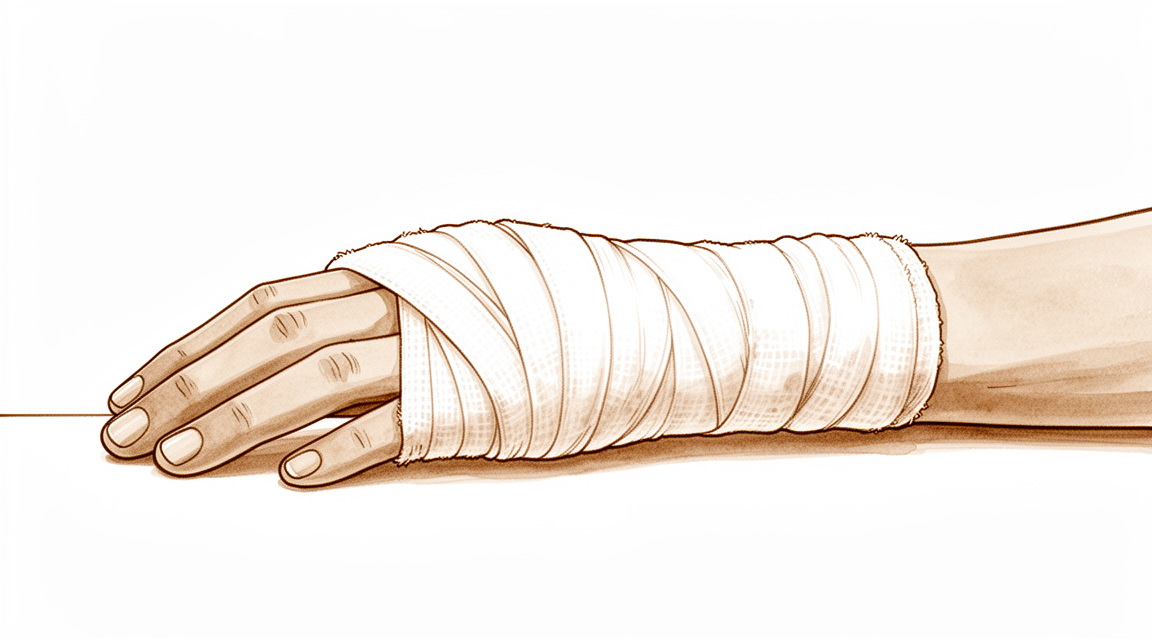
یہ پروٹوکول Mater Private Hospital Rockhampton میں ڈاکٹر کیرن ہِرپرا کے ہاتھوں ڈیوپٹرین کے کنٹریکچر (Dupuytren's contracture، یعنی انگلیوں کا ہتھیلی کی طرف کھنچ کر مڑ جانا) کو سرجری کے ذریعے کھولنے (فیشیکٹومی، fasciectomy) کے بعد آپ کی صحت یابی میں رہنمائی کرتا ہے۔ اچھے نتیجے کے دو ستون ہیں: اسپلنٹ، جو آزاد کی گئی انگلیوں کو ٹھیک ہونے تک سیدھا رکھتا ہے، اور ورزشوں کا پروگرام، جو انہیں حرکت میں رکھتا ہے۔ یہ صفحہ یا اس کی پی ڈی ایف اپنے ہینڈ تھراپسٹ (ہاتھ کی بحالی کے ماہر) کے پاس لے کر جائیں تاکہ آپ کی بحالی کا علاج مربوط رہے۔
اگر سرجری کے بعد آپ کو اپنے زخم کے بارے میں کوئی تشویش ہو تو کلینک سے رابطہ کریں۔ اکثر یہ مددگار ہوتا ہے کہ زخم کی تصویر لے کر جائزے کے لیے ای میل کر دیں۔
کیا توقع رکھیں¶
ڈیوپٹرین کی بیماری کی سرجری میں ٹشو کی وہ بیمار ڈوریاں نکال دی جاتی ہیں جو آپ کی انگلیوں کو ہتھیلی کی طرف کھینچ رہی تھیں، اور یوں انگلیوں کو سیدھا کرنے کی صلاحیت بحال ہو جاتی ہے۔ یہ بیماری خود ڈیوپٹرین کی بیماری والے صفحے پر سمجھائی گئی ہے؛ اس کا کوئی مستقل علاج نہیں ہے، اور سرجری کا مقصد بیمار ٹشو کو کاٹ کر نکالنا اور انگلی کو دوبارہ سیدھا ہونے کے قابل بنانا ہے۔
عام طور پر سرجری کے 2 سے 3 دن بعد آپ کو ہینڈ تھراپسٹ کے پاس بھیجا جائے گا۔ تھراپسٹ آپ کے لیے آپ کے ناپ کا پلاسٹک کا اسپلنٹ بنائیں گے جو آپریشن والی انگلیوں کو سیدھی حالت (extended) میں رکھتا ہے، اور آپ کو نیچے دیا گیا ہلکی ورزشوں کا پروگرام شروع کروائیں گے۔ اسپلنٹ اور ورزشیں مل کر کام کرتے ہیں: اسپلنٹ اس سیدھے پن کی حفاظت کرتا ہے جو سرجری سے حاصل ہوا، اور ورزشیں انگلیوں کو مڑتا رکھتی ہیں تاکہ وہ اکڑ نہ جائیں۔
ٹانکے نکلنے تک زخم کو صاف اور خشک رکھیں۔ ٹانکے نکل جانے کے بعد آپ جلد کو گیلا کر سکتے ہیں، لیکن مزید ایک ہفتے تک ہاتھ کو پانی میں نہ بھگوئیں اور نہ ڈبوئیں۔ پریکٹس کا زخم کی دیکھ بھال والا صفحہ زخم کی پٹی، انفیکشن کی علامات اور زخم کے نشان کی دیکھ بھال کو تفصیل سے بیان کرتا ہے۔ ڈیوپٹرین کی سرجری کے بعد زخم کے نشان کی مالش اہم ہے، اور زخم بھر جانے کے بعد آپ کا تھراپسٹ اس میں آپ کی رہنمائی کرے گا۔
اپنے زخم کے نشان کی دیکھ بھال¶
ڈیوپٹرین کی سرجری کے بعد پہلے چند ہفتوں میں ہتھیلی کا زخم کا نشان اکثر سخت، ابھرا ہوا اور چھونے پر دردناک ہوتا ہے، پھر اگلے مہینوں میں آہستہ آہستہ نرم ہو کر ہلکا پڑ جاتا ہے۔ زخم کے نشان کی مالش آسٹریلیا میں ہینڈ تھراپی کی دیکھ بھال کا ایک معمول کا حصہ ہے: تسلیم شدہ ہینڈ تھراپسٹوں کے ایک قومی سروے میں تقریباً سب ہی ہاتھ کی سرجری کے بعد اسے استعمال کرتے تھے (عام طور پر ٹانکے نکلنے کے آس پاس، جب زخم پوری طرح بھر چکا ہو، شروع کر کے)، تاکہ زخم کا نشان نرم ہو، جلد نیچے کے ٹشوز پر بہتر طریقے سے پھسل سکے، اور نشان کی حساسیت کم ہو، اور عام طور پر اسے اکیلے استعمال کرنے کے بجائے سلیکون جیل یا شیٹ کے ساتھ ملا کر استعمال کیا جاتا تھا [6]۔ زخم کے نشان کی مالش کے پیچھے تحقیقی شواہد ابھی بن رہے ہیں، لیکن وہ نشان سے متعلق تکلیف کم کرنے اور حرکت بہتر بنانے کے لیے اس کے استعمال کی تائید کرتے ہیں [6]۔ آپ کا تھراپسٹ آپ کو اس کا طریقہ دکھائے گا اور سلیکون کی کوئی چیز بھی شامل کر سکتا ہے، جو اکثر رات کو اسپلنٹ کے ساتھ پہنی جاتی ہے۔
صحت یابی، کام اور طویل مدت¶
ابتدائی ہفتوں میں سوجن اور اکڑاؤ معمول کی بات ہے اور ہاتھ کے استعمال کے ساتھ کم ہو جاتے ہیں؛ آرام، حرکت اور گرفت عموماً کئی مہینوں تک بہتر ہوتی رہتی ہیں۔ ان ابتدائی ہفتوں میں ہاتھ کو اونچا رکھنا اور آہستگی سے حرکت دیتے رہنا سوجن کم کرنے میں مدد دیتا ہے اور انگلیوں کے چھوٹے جوڑوں کو اکڑنے سے بچاتا ہے۔ سرجری میں حاصل ہونے والا سیدھا پن عام طور پر اس عرصے میں اچھی طرح برقرار رہتا ہے۔ ڈیوپٹرین کے آپریشن کے بعد بحالی پر ایک رینڈمائزڈ ٹرائل (randomised trial) میں، ہینڈ تھراپی کے پہلے تین مہینوں میں آپریشن والی زیادہ تر انگلیوں کا سیدھا پن برقرار رہا یا بہتر ہوا [2]۔
کام سے چھٹی کا انحصار اس بات پر ہے کہ آپ اپنے ہاتھوں سے کیا کام کرتے ہیں۔ ڈیوپٹرین کی بیماری کے علاج کروانے والے 2,500 سے زیادہ لوگوں پر ایک تحقیق میں، کھلی فیشیکٹومی (open fasciectomy) کے بعد کام پر واپسی کا درمیانی وقت (median) تقریباً دو ہفتے تھا، اور ہر دس میں سے تقریباً نو لوگ ایک سال کے اندر کام پر واپس آ چکے تھے؛ جسمانی مشقت والے کاموں میں زیادہ وقت لگا [4]۔ ڈاکٹر ہِرپرا معائنے پر آپ کے خاص کام کے لیے وقت کے بارے میں بات کریں گے؛ زیادہ جسمانی مشقت والا کام عام طور پر اس وقت تک انتظار کرتا ہے جب تک زخم اچھی طرح بھر نہ جائے اور گرفت آرام دہ نہ ہو جائے۔
چونکہ ڈیوپٹرین عمر بھر رہنے والی بیماری ہے، اس لیے سالوں کے دوران کچھ کھنچاؤ واپس آ سکتا ہے، اور مختلف تحقیقات میں بیماری کے دوبارہ ہونے کی بتائی گئی شرح بہت مختلف ہے، اس پر منحصر کہ دوبارہ ہونے کی تعریف کیسے کی گئی۔ طویل مدتی صورت حال عموماً اطمینان بخش ہے: جدید متفقہ تعریف استعمال کرتے ہوئے تقریباً چار سال تک 142 فیشیکٹومی آپریشنوں کی پیروی میں، کنٹریکچر کا حقیقی طور پر دوبارہ ہونا تقریباً 3 سے 4 فیصد ہاتھوں میں ہوا، اگرچہ تقریباً ایک تہائی میں کچھ باقی ماندہ خم رہ گیا، جو عام طور پر معمولی تھا اور سرجری میں درست کیے گئے کنٹریکچر سے کہیں کم تھا [5]۔ اسپلنٹ، زخم کے نشان کی دیکھ بھال اور ورزشوں کا پروگرام سب آپ کے نتیجے کی حفاظت کے لیے ہیں؛ اگر کسی بھی وقت کوئی انگلی دوبارہ کھنچنے لگے تو کلینک کو بتائیں۔
آپ کا اسپلنٹ¶
- تقریباً پہلا ہفتہ: اسپلنٹ دن رات پہنیں، اور اسے صرف اپنی ورزشوں کے لیے اتاریں (اور اجازت ملنے کے بعد نہانے دھونے کے لیے)۔
- پہلے ہفتے کے بعد: زیادہ تر لوگ اسپلنٹ صرف رات کو پہننے لگتے ہیں، اور دن کے دوران ہلکے کاموں کے لیے ہاتھ استعمال کرنا شروع کر سکتے ہیں۔
- رات کو اسپلنٹ پہننا تقریباً 3 ماہ تک جاری رہتا ہے (اور بعض صورتوں میں 6 ماہ تک) تاکہ جب تک ٹشوز پختہ ہوں، انگلیاں واپس ہتھیلی کی طرف نہ کھسکیں۔
- آپ کا ہینڈ تھراپسٹ اور ڈاکٹر ہِرپرا آپ کو اسپلنٹ پہننے کے نظام الاوقات اور سرگرمیوں کے بارے میں خاص طور پر مشورہ دیں گے۔ اوپر دیے گئے اوقات عام طریقہ ہیں، کوئی طے شدہ اصول نہیں۔
جب تک آپ کا ہاتھ اسپلنٹ میں ہے، آپ ہرگز گاڑی نہ چلائیں۔ جب آپ اسپلنٹ صرف رات کو پہننے لگیں تو دن کے وقت گاڑی چلانا دوبارہ شروع کیا جا سکتا ہے، جتنا آرام اور اسٹیئرنگ پر محفوظ گرفت اجازت دے۔
آپ کے فزیوتھراپسٹ / ہینڈ تھراپسٹ کے لیے:
علاج
- آپریشن کے 2 سے 3 دن بعد تھرمو پلاسٹک کا سیدھا رکھنے والا اسپلنٹ (thermoplastic extension splint) بنانے کے لیے ریفرل (referral)
- اسپلنٹ کا نظام: تقریباً پہلے ہفتے دن اور رات (ورزشوں کے لیے اتار کر)، پھر صرف رات کو، ساتھ دن میں ہلکا روزمرہ استعمال؛ رات کو اسپلنٹ تقریباً 3 ماہ تک جاری رکھا جائے (ضرورت ہو تو 6 ماہ تک)، سرجن/تھراپسٹ کے جائزے کے مطابق
- گھر پر ورزشوں کا پروگرام نیچے دیے گئے کارڈز کے مطابق: انگلیوں کو خود سیدھا کرنا، سہارا دے کر آخری جوڑ (DIP) کو موڑنا، قلم کے گرد آخری اور درمیانی جوڑ (DIP/PIP) کو موڑنا، پوری مٹھی بنانا (composite flexion)، کلائی کی ٹینوڈیسس ورزش (wrist tenodesis)
- زخم کی دیکھ بھال پریکٹس کی زخم کی دیکھ بھال کی ہدایات کے مطابق؛ زخم بھرنے کے بعد زخم کے نشان کی دیکھ بھال
- ورزشوں کی تعداد اور روزانہ کتنی بار کرنی ہیں، یہ علاج کرنے والا تھراپسٹ طے کرے
احتیاطیں
- ٹانکے نکلنے تک زخم کو صاف اور خشک رکھیں؛ اس کے بعد مزید ایک ہفتے تک نہ پانی میں بھگوئیں اور نہ ڈبوئیں
- سرجری میں حاصل کیے گئے سیدھے پن کو برقرار رکھنے کے لیے اسپلنٹ کی پابندی بنیادی اہمیت رکھتی ہے
- جب تک ہاتھ اسپلنٹ میں ہے، گاڑی نہ چلائیں
یہ آپ کے ہینڈ آؤٹ کی ورزشیں ہیں، جو آپ کے ہینڈ تھراپسٹ کے ساتھ شروع کی جاتی ہیں اور گھر پر جاری رکھی جاتی ہیں۔
آپ کی ورزشیں¶

Kieran Hirpara 4.0
انگلیوں کو خود سیدھا کرنا (active extension)
کلائی سیدھی رکھ کر اپنی انگلیوں کو جتنا ہو سکے سیدھا کریں اور پھیلائیں۔ آپ اپنے دوسرے ہاتھ سے آہستگی سے مدد لے سکتے ہیں۔ ڈھیلا چھوڑیں اور دہرائیں۔
آپ کے ہینڈ تھراپسٹ کی ہدایت کے مطابق

Kieran Hirpara 4.0
انگلی کے آخری جوڑ کو خود موڑنا (active DIP flexion)
اپنے دوسرے ہاتھ سے انگلی کو آخری (DIP) جوڑ کی لکیر کے بالکل نیچے سہارا دیں۔ آخری جوڑ کو مضبوطی سے موڑیں، پھر ڈھیلا چھوڑ دیں۔
آپ کے ہینڈ تھراپسٹ کی ہدایت کے مطابق

Kieran Hirpara 4.0
انگلی کے آخری اور درمیانی جوڑ کو خود موڑنا (active DIP/PIP flexion)
انگلیوں کی جڑ کے آر پار ایک قلم رکھیں۔ اپنی انگلیوں کو قلم کے گرد اس طرح لپیٹیں کہ انگلی کے دونوں جوڑ (درمیانی اور آخری جوڑ) مڑ جائیں، پھر ڈھیلا چھوڑ دیں۔
آپ کے ہینڈ تھراپسٹ کی ہدایت کے مطابق

Kieran Hirpara 4.0
پوری مٹھی بنانا (composite flexion)
آہستگی سے ڈھیلی مٹھی بنائیں، پھر ڈھیلا چھوڑیں اور انگلیوں کو سیدھا ہونے دیں۔
آپ کے ہینڈ تھراپسٹ کی ہدایت کے مطابق

Kieran Hirpara 4.0
کلائی کی ٹینوڈیسس ورزش (wrist tenodesis)
کہنی کو ٹکا کر اور انگلیوں کو ڈھیلا چھوڑ کر، اپنی کلائی کو آگے کی طرف اور پھر پیچھے کی طرف موڑیں، اور انگلیوں کو قدرتی طور پر ساتھ حرکت کرنے دیں۔
آپ کے ہینڈ تھراپسٹ کی ہدایت کے مطابق
نیچے دی گئی ورزشیں صرف ڈاکٹر ہِرپرا اور اپنے ہینڈ تھراپسٹ کی رہنمائی کے مطابق شروع کریں، اور جو بھی حرکت کی حد اور پابندیاں آپ کو بتائی گئی ہیں ان کے اندر رہیں۔ اس آپریشن کا سارا مقصد انگلیوں کو سیدھا کرنا ہے، اس لیے انگلیوں کو خود سیدھا کرنا (active extension) سب سے اہم ورزش ہے — اگر آپ انہیں چھوڑ دیں تو انگلیاں واپس مڑی ہوئی حالت کی طرف کھنچ جائیں گی، اور جتنی حرکت آپ برقرار رکھیں گے اتنی ہی آپ استعمال کر سکیں گے۔ موڑنے والی ورزشیں (آخری جوڑ، آخری اور درمیانی جوڑ، اور پوری مٹھی) بھی اہم ہیں، کیونکہ جو انگلی صرف سیدھی ہو سکے وہ اس انگلی سے زیادہ کارآمد نہیں جو صرف مڑ سکے۔ کلائی کی ٹینوڈیسس ورزش ان دونوں کو جوڑتی ہے۔ رات کا اسپلنٹ ہدایت کے مطابق پہنیں۔ جس چیز سے تیز درد ہو اسے روک دیں، اور اگر کسی انگلی کا سیدھا پن کم ہونے لگے تو اپنے تھراپسٹ کو بتائیں۔
اپنے پروٹوکول کے بعد¶
یہ پروٹوکول Ruby Doolan، تسلیم شدہ ہینڈ تھراپسٹ (Accredited Hand Therapist)، Extend Rehabilitation، کے اشتراک سے لکھا گیا تھا۔ یہ پریکٹس کے عمومی صحت یابی کے مشوروں کے ساتھ مل کر کام کرتا ہے: آپریشن کے بعد درد پر قابو پانا، زخم کی دیکھ بھال اور ہینڈ تھراپی کی بنیادی باتیں دیکھیں۔ خود آپریشن کے لیے ڈیوپٹرین کی فیشیکٹومی دیکھیں۔
اوپر دی گئی صحت یابی کی توقعات، کام پر واپسی کے اعداد و شمار اور زخم کے نشان کی دیکھ بھال کی رہنمائی ڈیوپٹرین کی سرجری کے بعد بحالی پر شائع شدہ ٹرائلز، جائزوں اور سرویز سے لی گئی ہیں، جن میں فیشیکٹومی کے بعد اسپلنٹ اور ہینڈ تھراپی پر رینڈمائزڈ ٹرائلز اور ایک منظم جائزہ (systematic review) شامل ہیں [1–3]۔ اسپلنٹ کا نظام اور ورزشوں کا پروگرام پریکٹس کا اپنا ہے، جس پر ڈاکٹر ہِرپرا اور آپ کے ہینڈ تھراپسٹ نے اتفاق کیا ہے، اور آپ کے اسپلنٹ پہننے کا نظام الاوقات آپ کے معائنوں پر آپ کے لیے الگ سے طے کیا جاتا ہے۔
حوالہ جات¶
[1] Jerosch-Herold C, Shepstone L, Chojnowski AJ, Larson D, Barrett E, Vaughan SP. Night-time splinting after fasciectomy or dermo-fasciectomy for Dupuytren's contracture: a pragmatic, multi-centre, randomised controlled trial. BMC Musculoskeletal Disorders. 2011;12:136. https://pmc.ncbi.nlm.nih.gov/articles/PMC3146906/ [2] Collis J, Collocott S, Hing W, Kelly E. The effect of night extension orthoses following surgical release of Dupuytren contracture: a single-center, randomized, controlled trial. Journal of Hand Surgery (American). 2013;38(7):1285–1294.e2. https://doi.org/10.1016/j.jhsa.2013.04.012 [3] Karam M, Kahlar N, Abul A, Rahman S, Pinder R. Comparison of hand therapy with or without splinting postfasciectomy for Dupuytren's contracture: systematic review and meta-analysis. Journal of Hand and Microsurgery. 2022;14(4):308–314. https://pmc.ncbi.nlm.nih.gov/articles/PMC10042625/ [4] Blake SN, Poelstra R, Andrinopoulou ER, et al. Return to work and associated costs after treatment for Dupuytren's disease. Plastic and Reconstructive Surgery. 2021;148(3):580–590. https://pubmed.ncbi.nlm.nih.gov/34292887/ [5] Radhamony NG, Nair RR, Sreenivasan S, et al. Residual deformity versus recurrence following Dupuytren's palmar fasciectomy — a long-term follow-up of 142 cases. Annals of Medicine and Surgery. 2022;73:103224. https://pmc.ncbi.nlm.nih.gov/articles/PMC8767281/ [6] Scott HC, Robinson LS, Brown T. Scar massage as an intervention for post-surgical scars: a practice survey of Australian hand therapists. Hand Therapy. 2024;29(1):21–29. https://pmc.ncbi.nlm.nih.gov/articles/PMC10901164/
Evidence & references
This is the clinical evidence summary written for health professionals. It is technical, and it lists the research this page was built from. You do not need to read it to understand your treatment or to make a decision about it.
Dupuytren Contracture — Surgical Release & Post-operative Hand-Therapy Rehabilitation (Open Fasciectomy)¶
Topic scope: post-operative rehabilitation after open excision of diseased palmar/digital fascia for Dupuytren contracture — limited/regional fasciectomy, extending to dermofasciectomy (fascia plus overlying involved skin, replaced with a graft) for aggressive or recurrent disease. The procedure-selection literature (fasciectomy vs needle aponeurotomy vs collagenase) is summarised only as far as it frames recurrence expectations and rehabilitation; the rehab focus is the post-fasciectomy pathway — early active and passive finger extension and flexion, oedema control, scar management, and night extension splinting.
Defining principle of this rehab: fasciectomy removes diseased tissue and restores extension that the disease had taken away — it does not cure the diathesis, and the corrected finger sits in a tissue bed that wants to contract back. So the rehab is a "regain-and-hold" pathway: early motion to keep the freed joints supple and prevent the new flexor-tendon and skin-glide planes from binding down, oedema and scar control so the soft tissues mature without tethering, and a night extension orthosis to defend the surgical correction during healing. The defining clinical question is not whether a construct needs protection (there is no construct), but how aggressively to splint — and here the evidence has shifted decisively toward selective, not routine, splinting.
A. PROCEDURE OUTCOMES & RECURRENCE (context for the rehab)¶
Open partial (limited) fasciectomy is the long-standing reference operation for Dupuytren contracture and gives the most durable correction of the three mainstream options:
- Correction is reliable and recurrence is the dominant long-term limitation. Across modern series the operation restores extension well, but Dupuytren is a lifelong diathesis and some tightening returns over years. Reported recurrence rates vary enormously because studies define recurrence differently (any palpable disease vs a threshold extension loss vs need for re-intervention). Using the modern consensus definition, true recurrence of contracture is low at medium-term follow-up, though a substantial minority retain mild residual curvature well short of the pre-operative deformity [corpus: jhsa.2012.06.032; literature: Radhamony 2022].
- Fasciectomy vs minimally invasive options. Compared with needle aponeurotomy/fasciotomy and collagenase Clostridium histolyticum, open fasciectomy has a longer recovery and higher minor complication rate but lower recurrence — the recurring trade-off in this disease. Needle and collagenase are quicker with faster return to function but recur sooner [corpus: jhsa.2021.05.022; jhsa.2011.08.004; 1753193418786947]. This trade-off is why fasciectomy is typically chosen for denser, multi-ray or PIP-predominant contractures — the same cases whose rehab is hardest and whose splinting is most likely to be justified.
- Repeat limited fasciectomy for recurrence is safe and effective, supporting fasciectomy as a durable, repeatable mainstay rather than a one-shot procedure [corpus: bjj-2020-1393.r2].
Why this matters for rehab: recovery counselling and splint expectations must be framed against a disease that cannot be cured, only corrected — the rehab protects a correction, it does not prevent the diathesis.
B. THE SPLINTING CONTROVERSY (the central rehab question)¶
Historically, every patient was issued a static night extension orthosis after fasciectomy on the assumption it preserved the correction. The best available evidence does not support routine splinting — it supports selective splinting for patients who lose extension.
- Jerosch-Herold 2011 (pragmatic multi-centre RCT, n = 154). Hand therapy alone vs hand therapy + night splinting after fasciectomy/dermofasciectomy. No between-group difference in self-reported function (DASH), finger range of motion, or satisfaction. Authors concluded routine night splinting for all patients is not recommended, reserving it for cases where extension deficits recur [literature: Jerosch-Herold 2011, BMC Musculoskelet Disord].
- Collis 2013 (single-centre RCT, n = 56). Night extension orthosis + hand therapy vs hand therapy alone after surgical release. No significant difference in total active extension or any secondary outcome at 3 months. Same conclusion: provide an orthosis selectively, when extension loss occurs, not universally [corpus: jhsa.2013.04.012; literature: Collis 2013].
- Karam 2022 (systematic review + meta-analysis, 4 RCTs, n = 295). Pooling the splint-vs-no-splint trials found no significant difference in total active flexion/extension, DASH, pain, grip or satisfaction. The collective signal is consistent and now moderately strong: adding a splint to good hand therapy does not improve the average outcome [corpus: 1055/s-0041-1725221; literature: Karam 2022].
- Earlier/smaller work (e.g., post-fasciectomy splinting pilot studies) pointed the same way — splinting is low-yield as a blanket policy [corpus: 1753193412437631].
Practical reading for this protocol. The practice's pattern — splint day-and-night for ~1 week, then night-only with a low threshold to continue (or reinstate) splinting if a finger starts to drift back into flexion — is a reasonable, evidence-aligned middle path: it defends the correction during the highest-risk early healing window and during sleep, while honouring the trial finding that indefinite routine splinting adds little. The trials measured average outcomes; they do not say splinting is useless for the individual who is losing extension, which is exactly the subgroup the authors carved out. This is a defensible selective-splinting stance, not a contradiction of the protocol.
C. HAND-THERAPY & EXERCISE EVIDENCE¶
- Early supervised hand therapy is the backbone of recovery and is where the demonstrable benefit lies (the splint trials all compared against a hand-therapy baseline, not against nothing). Active and passive extension and flexion, oedema control and scar management are standard from the first post-operative therapy visit, typically 2–3 days after surgery.
- Most operated fingers hold or improve their extension over the first three months of hand therapy — the window in which the protocol concentrates splinting and exercise [corpus: jhsa.2013.04.012, control arm; literature: Collis 2013].
- Scar management. Scar massage is near-universal in hand-therapy practice after Dupuytren surgery to soften the palmar scar, improve skin glide and settle sensitivity, generally combined with silicone gel/sheeting and begun around suture removal once the wound is healed. The supporting evidence is developing rather than definitive but favours reduced scar-related discomfort and improved movement [literature: Scott 2024, Australian hand-therapist survey].
- Return to work. In a large cohort, median return after open fasciectomy was ~2 weeks with ~90% back at work within the year; physically demanding jobs took longer [literature: Blake 2021].
- Pre-operative hand therapy has a thinner evidence base and is not a substitute for the post-operative programme [corpus: 17589983241227162].
Phased rehabilitation timeline (matching the synthesis phases)¶
| Phase | Window | Splint | Movement / use | Scar & oedema | Notes |
|---|---|---|---|---|---|
| I — Protect & mobilise | ~Days 2–7 | Custom thermoplastic extension orthosis day & night, off for exercises | Gentle active extension + active DIP/PIP and composite flexion from the first therapy visit; wrist tenodesis | Oedema control (elevation, gentle movement); wound kept clean & dry | Therapy referral 2–3 days post-op; splint defends the surgical correction during the highest-risk window |
| II — Restore motion | ~Week 1 → 6–8 | Transition to night-only; light functional day use of the hand | Progress active + passive extension and flexion; restore full composite fist and full extension | Scar massage + silicone once wound healed (around suture removal) | Most extension is held or regained through this window; daytime driving resumes once out of the splint and grip is safe |
| III — Strengthen & return | ~Week 6–8 → 3 months | Night-only continues ~3 months (up to ~6 months selectively if extension is being lost) | Grip and functional strengthening; return to heavier manual work as wound is soundly healed and grip comfortable | Ongoing scar maturation over months | Splinting beyond this window is selective, driven by extension loss — not routine (see §B) |
The phase structure and timings are protocol/consensus, agreed between the surgeon and hand therapist; the trials inform the splinting policy within them, not the exact week boundaries.
D. COMPLICATIONS (rehab-relevant)¶
- Flare reaction / early CRPS-spectrum. A proportion of patients develop a post-operative inflammatory "flare" — disproportionate swelling, stiffness, redness and pain — which can progress to complex regional pain syndrome (CRPS type 1). Early recognition, oedema control, gentle continued motion and analgesia matter; CRPS is one of the more feared rehab-derailing complications after hand surgery [corpus: jht.2024.09.002 (Dupuytren CRPS-1 case); hcl.2009.11.001 (CRPS after hand surgery)].
- Digital nerve / vessel injury. The neurovascular bundles are displaced by Dupuytren cords, especially in recurrent disease and at the PIP; injury is a recognised operative risk. New sensory change post-operatively warrants surgeon review [corpus: hansur.2017.07.002 — complications systematic review; 17531934231206317 — surgical complications/adverse events].
- Wound healing, haematoma, infection, stiffness. Open fasciectomy has a higher minor-complication rate than the minimally invasive options; meticulous wound care and early motion mitigate stiffness and tethering [corpus: hansur.2017.07.002].
- Incomplete correction / residual PIP deficit. PIP contractures correct less completely than MCP; residual deficit may persist and is the usual trigger for selective ongoing splinting.
E. KEY CONTROVERSIES / EVIDENCE QUALITY¶
- Routine vs selective splinting — the headline controversy, now reasonably settled toward selective: three RCTs and a meta-analysis show no average benefit from adding a static night orthosis to good hand therapy, with all authors carving out the extension-loss subgroup. The practice's "night-only, low threshold to continue if drifting" approach is consistent with this. Moderate (multiple RCTs + SR/MA).
- Recurrence is definition-dependent — headline recurrence figures are not comparable across studies; the consensus definition gives lower, more credible rates. Counsel against the cure expectation. Moderate.
- Procedure choice frames rehab — fasciectomy trades a longer recovery and more minor complications for lower recurrence than needle/collagenase. The fasciectomy cohort is, by selection, the harder-rehab cohort. Moderate.
- The phase timings are consensus — drawn from surgeon/therapist protocols, not a rehab RCT. The splinting policy within them is trial-informed; the week boundaries are typical, not trial-derived. Weak/consensus.
F. EVIDENCE STRENGTH FLAGS (summary)¶
- MODERATE (multiple RCTs + SR/MA): routine night splinting adds no average benefit over hand therapy alone after fasciectomy — splint selectively for extension loss (Jerosch-Herold 2011; Collis 2013; Karam 2022 meta-analysis of 4 RCTs / 295 patients).
- MODERATE (cohorts / comparative): fasciectomy gives durable correction with lower recurrence but longer recovery and more minor complications than needle aponeurotomy/collagenase; repeat fasciectomy is safe and effective; CRPS and digital-nerve injury are recognised rehab-relevant complications.
- WEAK / CONSENSUS: the post-operative phase structure and timings themselves (surgeon + hand-therapist protocol; no defining rehab RCT). Scar-massage benefit is supportive but the evidence base is still developing.
CITATIONS¶
RAG corpus (180,000+ Orthopaedic articles)¶
- Correction of contracture and recurrence rates of Dupuytren contracture following fasciectomy. J Hand Surg Am. 2012. DOI: 10.1016/j.jhsa.2012.06.032
- Repeat limited fasciectomy is a safe and effective treatment for recurrence of Dupuytren's contracture. Bone Joint J. 2021. DOI: 10.1302/0301-620X.103B5.BJJ-2020-1393.R2
- Limited fasciectomy versus collagenase Clostridium histolyticum for Dupuytren contracture. J Hand Surg Am. 2021. DOI: 10.1016/j.jhsa.2021.05.022
- The efficacy and safety of fasciectomy and fasciotomy for Dupuytren's contracture. J Hand Surg Eur. 2011. DOI: 10.1177/1753193410397971
- Cost-effectiveness of open partial fasciectomy, needle aponeurotomy, and collagenase injection for Dupuytren contracture. J Hand Surg Am. 2011. DOI: 10.1016/j.jhsa.2011.08.004
- Three-year recurrence of Dupuytren's contracture after needle fasciotomy and collagenase injection. J Hand Surg Eur. 2018. DOI: 10.1177/1753193418786947
- The effect of night extension orthoses following surgical release of Dupuytren contracture: a single-centre RCT. J Hand Surg Am. 2013. DOI: 10.1016/j.jhsa.2013.04.012
- Comparison of hand therapy with or without splinting postfasciectomy for Dupuytren's contracture: systematic review and meta-analysis. J Hand Microsurg. 2022. DOI: 10.1055/s-0041-1725221
- Does use of a night extension orthosis improve outcomes in patients with Dupuytren contracture? J Hand Surg Glob Online. 2021. DOI: 10.1016/j.jhsg.2021.05.001
- A pilot study assessing the effectiveness of postoperative splinting after limited fasciectomy. J Hand Surg Eur. 2012. DOI: 10.1177/1753193412437631
- Pre-operative hand therapy management of Dupuytren's disease: a systematic review. Hand Ther. 2024. DOI: 10.1177/17589983241227162
- Current concepts in the management of Dupuytren disease of the hand. J Am Acad Orthop Surg. 2020. DOI: 10.5435/JAAOS-D-20-00190
- Complications after treating Dupuytren's disease: a systematic literature review. Hand Surg Rehabil. 2017. DOI: 10.1016/j.hansur.2017.07.002
- Surgical complications: errors and adverse events (hand surgery). J Hand Surg Eur. 2023. DOI: 10.1177/17531934231206317
- The case of a woman with bilateral Dupuytren's contractures who developed CRPS-1. J Hand Ther. 2024. DOI: 10.1016/j.jht.2024.09.002
- Complex regional pain syndrome after hand surgery. Hand Clin. 2009. DOI: 10.1016/j.hcl.2009.11.001
Splinting & hand-therapy literature (URLs)¶
- Jerosch-Herold C, Shepstone L, Chojnowski AJ, et al. Night-time splinting after fasciectomy or dermo-fasciectomy for Dupuytren's contracture: a pragmatic, multi-centre, randomised controlled trial. BMC Musculoskelet Disord. 2011;12:136. https://pmc.ncbi.nlm.nih.gov/articles/PMC3146906/
- Collis J, Collocott S, Hing W, Kelly E. The effect of night extension orthoses following surgical release of Dupuytren contracture: a single-centre, randomised, controlled trial. J Hand Surg Am. 2013. https://pubmed.ncbi.nlm.nih.gov/23790420/
- Karam M, Kahlar N, Abul A, et al. Comparison of hand therapy with or without splinting postfasciectomy for Dupuytren's contracture: systematic review and meta-analysis. J Hand Microsurg. 2022. https://pmc.ncbi.nlm.nih.gov/articles/PMC10042625/
- Blake SN, Poelstra R, Andrinopoulou ER, et al. Return to work and associated costs after treatment for Dupuytren's disease. Plast Reconstr Surg. 2021. https://pubmed.ncbi.nlm.nih.gov/34292887/
- Radhamony NG, Nair RR, Sreenivasan S, et al. Residual deformity versus recurrence following Dupuytren's palmar fasciectomy — long-term follow-up of 142 cases. Ann Med Surg. 2022. https://pmc.ncbi.nlm.nih.gov/articles/PMC8767281/
- Scott HC, Robinson LS, Brown T. Scar massage as an intervention for post-surgical scars: a practice survey of Australian hand therapists. Hand Ther. 2024. https://pmc.ncbi.nlm.nih.gov/articles/PMC10901164/
Society guidance & published rehab protocols¶
- The British Society for Surgery of the Hand (BSSH) — Dupuytren's disease patient and professional guidance. https://www.bssh.ac.uk/patients/conditions/25/dupuytrens_disease
- BSSH — Assessing the outcome of surgery for Dupuytren's disease of the hand. https://www.bssh.ac.uk/assessing_the_outcome_of_surgery_for_dupuytrens_disease_of_the_hand.aspx