Patients › Rehabilitation
ڈی آئی پی جوڑ کا فیوژن
ناخن کے سب سے قریب انگلی کے سرے کے چھوٹے جوڑ کے فیوژن (arthrodesis، جوڑ کو مستقل طور پر جوڑ کر ایک کر دینا) کے بعد حفاظتی صحت یابی کا منصوبہ، جس میں انگلی کے سرے کو اسپلنٹ میں رکھا جاتا ہے جبکہ باقی ہر جوڑ حرکت کرتا رہتا ہے اور سوجن پر قابو رکھا جاتا ہے، پھر ہڈی جڑ جانے کے بعد چٹکی اور گرفت کو بتدریج دوبارہ مضبوط کیا جاتا ہے۔

یہ پروٹوکول ڈی آئی پی جوڑ کے فیوژن (DIP joint fusion) یعنی آرتھروڈیسس (arthrodesis) کے بعد آپ کی صحت یابی میں رہنمائی کرتا ہے، جس میں آپ کی انگلی کے بالکل سرے پر، ناخن کے سب سے قریب والے چھوٹے جوڑ کو مستقل طور پر جوڑ کر ایک کر دیا جاتا ہے، اور یہ صحت یابی ڈاکٹر کیرن ہِرپرا کے ساتھ Mater Private Hospital Rockhampton میں ہوتی ہے۔ یہ صفحہ گھر پر کی جانے والی ورزشوں کے پروگرام سے شروع ہوتا ہے، جس کے بعد وہ باقاعدہ طبی پروٹوکول ہے جو آپ کے ہینڈ تھراپسٹ (ہاتھ کی بحالی کے ماہر) کے لیے لکھا گیا ہے: تھراپی کی اپنی پہلی ملاقات پر یہ صفحہ یا اس کی پی ڈی ایف ساتھ لائیں تاکہ آپ کی بحالی میں سب ایک ساتھ رہیں۔ آپ کا تھراپسٹ آپ کی صحت یابی کی پیش رفت کے مطابق منصوبے میں تبدیلی کر سکتا ہے۔
اگر آپریشن کے بعد آپ کو اپنے زخم کے بارے میں کوئی تشویش ہو تو کلینک سے رابطہ کریں۔ اکثر یہ مددگار ہوتا ہے کہ زخم کی تصویر لے کر جائزے کے لیے ای میل کر دیں۔
کیا توقع رکھیں
ڈی آئی پی جوڑ کا فیوژن اس وقت کیا جاتا ہے جب ناخن کے سب سے قریب والا چھوٹا جوڑ گھس چکا ہو اور اس میں درد ہو، عموماً آرتھرائٹس (جوڑ کی خرابی اور سوزش) کی وجہ سے (ہڈی کی وہ گانٹھیں جنہیں ہیبرڈن نوڈز، Heberden's nodes، کہا جاتا ہے)، یا کسی تکلیف دہ میوکس سسٹ (mucous cyst، سیال سے بھری تھیلی) کو اس کے نیچے موجود ہڈی کے ابھرے ہوئے کانٹے (bone spur) سمیت نکالنے کے لیے۔ درد والے، خراب جوڑ کو حرکت میں رکھنے کی کوشش کرنے کے بجائے، آپریشن اسے ہلکی سی مڑی ہوئی، کارآمد حالت میں (زیادہ سے زیادہ تقریباً 35 ڈگری تک) ٹھوس طور پر جوڑ دیتا ہے۔ منصوبے کے مطابق یہ جوڑ پھر کبھی حرکت نہیں کرتا، اور اس کے بدلے درد ختم ہو جاتا ہے اور انگلی کا سرا مستحکم اور چٹکی بھرنے کے لیے مضبوط ہو جاتا ہے۔ ہڈیوں کو تھامنے کے لیے عموماً ایک چھوٹا ہڈی کے اندر چھپا ہوا بغیر سر کا پیچ (buried headless screw) استعمال ہوتا ہے جو ہمیشہ اندر ہی رہتا ہے (اسے نکالنے کی ضرورت نہیں)، یا کبھی کبھی ایک کے وائر (K-wire، ہڈی میں لگائی جانے والی باریک تار) جو تقریباً چھ ہفتے پر نکال دی جاتی ہے۔ اگر میوکس سسٹ نکالا گیا ہو تو اس جگہ کے بھرنے کے دوران آپ کو جلد یا ناخن کے کنارے کی جلد (nail fold) کی دیکھ بھال بھی کرنی ہوگی۔
آپ کی پوری بحالی ایک سادہ اصول پر مبنی ہے: ہڈی جڑنے تک فیوژن کی حفاظت کریں، لیکن باقی ہر چیز کو حرکت میں رکھیں۔ ہڈی عموماً تقریباً چھ سے آٹھ ہفتوں میں جڑی ہوئی محسوس ہوتی ہے، اور ایکسرے میں یہ تقریباً دس ہفتوں تک نظر آنے لگتا ہے۔ تب تک:
- جوڑے گئے انگلی کے سرے کو اسپلنٹ میں رکھ کر محفوظ کیا جاتا ہے تاکہ بھرتی ہوئی ہڈی کو کوئی نقصان نہ پہنچے۔
- باقی ہر جوڑ حرکت کرتا رہتا ہے: انگلی کا درمیانی جوڑ، انگلی کی جڑ کا جوڑ (knuckle)، انگوٹھا، کلائی، اور آپ کی باقی تمام انگلیاں، تاکہ ہاتھ اکڑ نہ جائے۔
- سوجن پر قابو رکھا جاتا ہے اور زخم کے نشان کی دیکھ بھال کی جاتی ہے تاکہ انگلی آرام دہ اور لچکدار رہے۔
- ہڈی جڑ جانے کے بعد چٹکی اور گرفت کو ایک دم کے بجائے بتدریج دوبارہ مضبوط کیا جاتا ہے۔
احتیاطیں اور پابندیاں
- انگلی کے سرے کا اسپلنٹ ہدایت کے مطابق پہنیں۔ شروع میں یہ ہر وقت پہنا جاتا ہے؛ بعد میں صرف کام کاج کے دوران۔ یہ جوڑے گئے جوڑ کو ساکن رکھتا ہے لیکن انگلی کے درمیانی جوڑ (PIP) کو حرکت کے لیے آزاد چھوڑ دیتا ہے۔
- آپریشن والی انگلی سے ہرگز نہ زور سے گرفت کریں، نہ زور سے چٹکی بھریں اور نہ بھاری وزن اٹھائیں، جب تک فیوژن جڑ نہ جائے اور آپ کو اجازت نہ مل جائے؛ پہلے چھ ہفتوں میں وزن تقریباً 1 کلوگرام (≈2 پاؤنڈ) تک رکھیں۔
- شروع سے ہی باقی ہر جوڑ کو حرکت میں رکھیں: انگلی کا درمیانی جوڑ اور جڑ کا جوڑ، انگوٹھا، کلائی، اور آپ کی باقی تمام انگلیاں۔
- سوجن کم کرنے کے لیے پہلے 10 سے 14 دن پٹی کو خشک اور ہاتھ کو اونچا رکھیں، اور اگر میوکس سسٹ نکالا گیا ہو تو ناخن کے کنارے یا سسٹ والی جگہ کی دیکھ بھال کی ہدایات پر عمل کریں۔
- اگر آپ کے کے وائر لگی ہو تو اس کے نکالے جانے تک، جو تقریباً چھ ہفتے پر ہوتا ہے، اس کی حفاظت کریں اور اس جگہ کو صاف رکھیں؛ ہڈی کے اندر چھپے پیچ کو نکالنے کی ضرورت نہیں ہوتی۔
- جب تک آپ بھاری اسپلنٹ سے باہر نہ آ جائیں اور اسٹیئرنگ کو محفوظ طریقے سے پکڑ اور قابو نہ کر سکیں، گاڑی ہرگز نہ چلائیں؛ یہ عموماً تقریباً چھ ہفتے پر ہوتا ہے، اور اس کا فیصلہ آپ کا سرجن کرتا ہے۔
زخم، سوجن اور زخم کے نشان کی دیکھ بھال کے لیے کلینک کی زخم کی دیکھ بھال سے متعلق رہنمائی دیکھیں۔
آپ کی ورزشیں
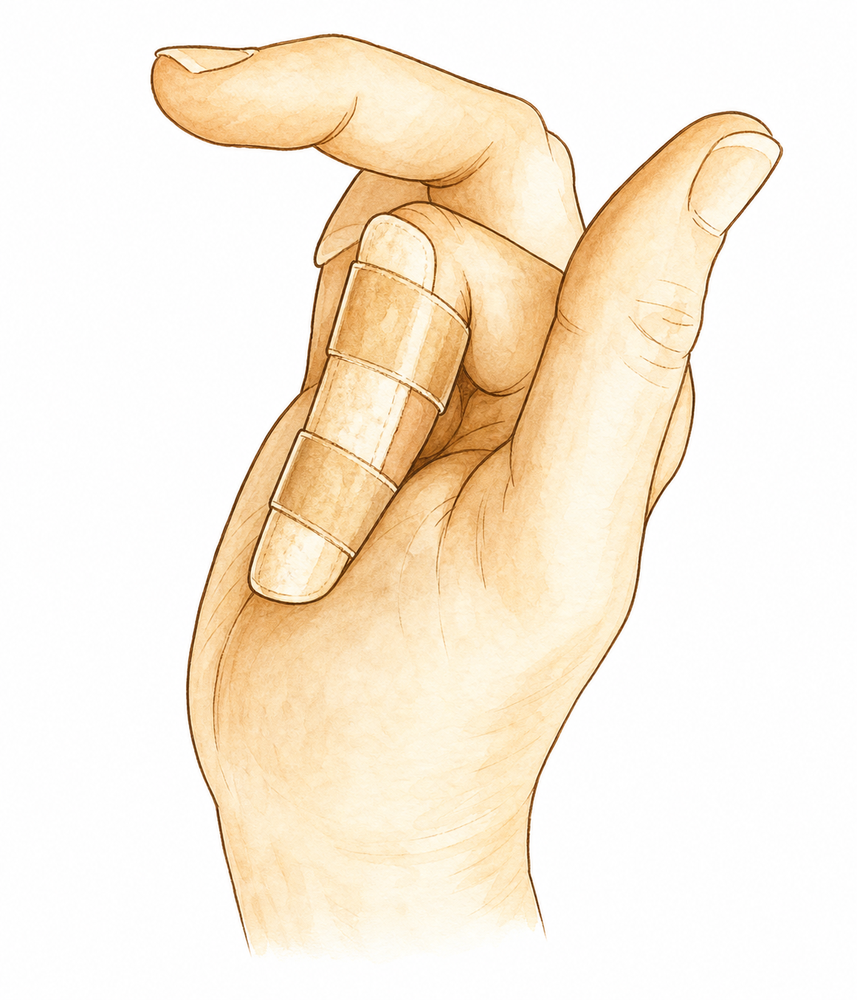
Kieran Hirpara 4.0
انگلی کے درمیانی جوڑ (PIP) اور جڑ کے جوڑ (MCP) کی حرکت (فیوژن کے دونوں طرف کے جوڑ)
ڈی آئی پی اسپلنٹ پہنے ہوئے (یہ صرف انگلی کے سرے کے جوڑ کو ساکن رکھتا ہے)، انگلی کے درمیانی جوڑ اور اس کی جڑ پر بڑے جوڑ (knuckle) کو موڑیں اور سیدھا کریں، ہلکی مٹھی بنائیں اور پھر پوری طرح کھول دیں۔ جوڑا گیا سرا حرکت کرنے کے لیے نہیں ہے، لیکن اس کے دونوں طرف کے جوڑوں کا ڈھیلا رہنا ضروری ہے تاکہ انگلی اکڑ نہ جائے۔ ہمواری سے اور آرام کی حد میں حرکت کریں۔
10 بار، دن میں 3 سے 4 بار
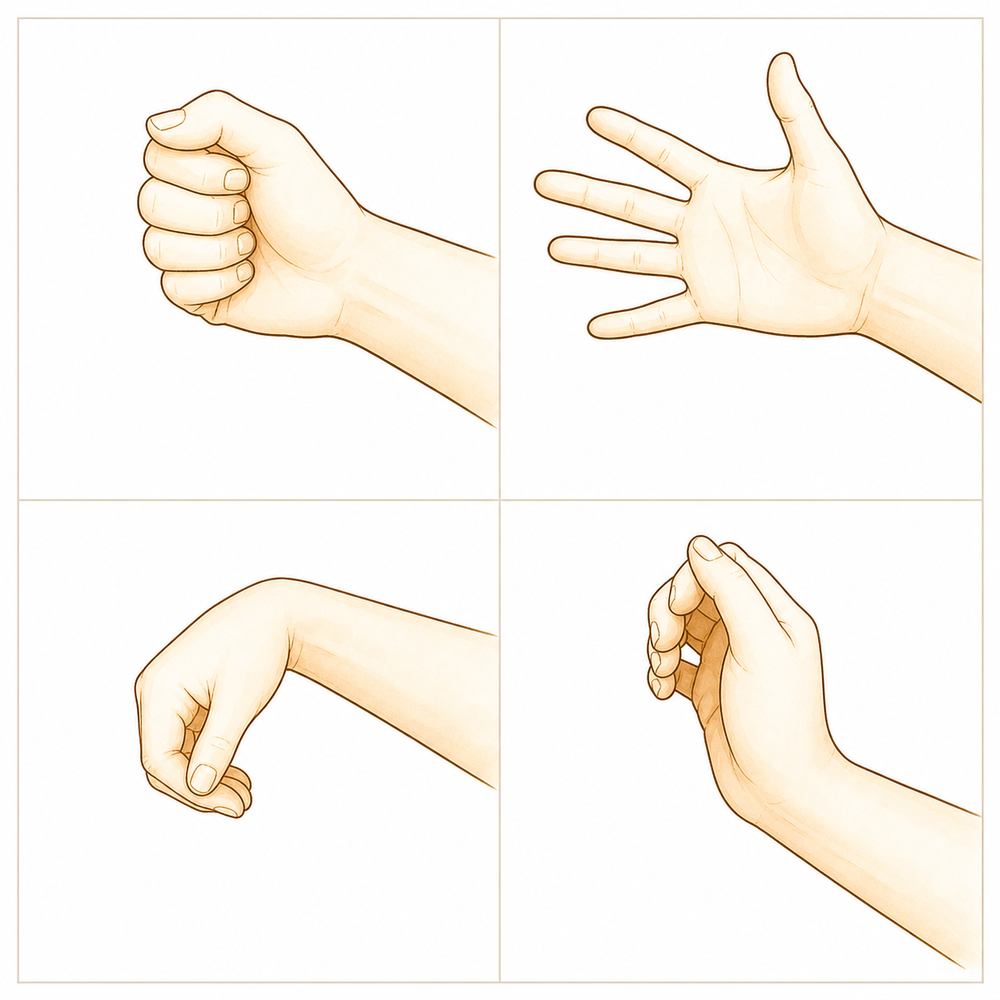
Kieran Hirpara 4.0
اپنی باقی تمام انگلیوں، انگوٹھے اور کلائی کو حرکت دیں
پہلے دن سے ہی ہر اس حصے کو آزادی سے حرکت میں رکھیں جس کا آپریشن نہیں ہوا: پوری مٹھی بنائیں اور پوری طرح کھولیں، اپنے انگوٹھے سے باری باری ہر انگلی کے سرے کو چھوئیں، اور اپنی کلائی کو آہستگی سے اوپر نیچے موڑیں۔ صرف جوڑے گئے انگلی کے سرے پر پابندی ہے — باقی ہاتھ کو جتنا آرام اجازت دے اتنا معمول کے مطابق کام کرنا چاہیے تاکہ وہ اکڑ یا کمزور نہ ہو جائے۔
ہر ایک 10 بار، دن میں کئی بار

Kieran Hirpara 4.0
ٹینڈن گلائیڈز (ہک، مٹھی، سیدھا ہاتھ)
اپنی انگلیوں کو تین شکلوں میں لائیں — ہک (سرے اور درمیانی جوڑ موڑیں، جڑ کے جوڑ سیدھے رکھیں)، پوری مٹھی، پھر چپٹا سیدھا ہاتھ — اور ہر شکل میں تھوڑی دیر رکیں۔ اس سے ٹینڈن (tendon)، یعنی وہ مضبوط ڈوریاں جو پٹھے کو ہڈی سے جوڑتی ہیں، بھرتی ہوئی جگہ میں ہمواری سے پھسلتے رہتے ہیں تاکہ وہ چپک نہ جائیں۔ پوری ورزش کے دوران اسپلنٹ والے انگلی کے سرے کو آرام دہ رکھیں؛ یہ گلائیڈ باقی انگلی کے لیے ہے۔
ہر شکل 5 سے 10 بار، دن میں 3 بار

Kieran Hirpara 4.0
سوجن پر قابو (اونچا رکھنا اور دباؤ)
پہلے ایک دو ہفتوں میں جتنا ہو سکے اپنے ہاتھ کو دل کی سطح سے اوپر رکھیں — تکیے یا گدی پر ٹکا کر۔ جب زخم اجازت دے تو انگلی پر ہلکی دباؤ والی آستین یا خود چپکنے والی پٹی (کوبان، Coban) سوجن کم کرنے میں مدد دیتی ہے۔ کم سوجن کا مطلب ہے ہاتھ کو زیادہ آسانی اور آزادی سے حرکت دینا۔
دن بھر اکثر ہاتھ اونچا رکھیں؛ دباؤ والی پٹی ویسے ہی جیسے آپ کے ہینڈ تھراپسٹ نے لگائی ہو

Kieran Hirpara 4.0
زخم کے نشان کی مالش
جب زخم پوری طرح بھر جائے اور آپ کا ہینڈ تھراپسٹ اجازت دے دے، تو زخم کے نشان پر تھوڑا سا سادہ موئسچرائزر لگا کر ایک یا دو منٹ چھوٹے دائروں میں دبا کر ملیں۔ اگر میوکس سسٹ (mucous cyst، سیال سے بھری تھیلی) نکالا گیا تھا تو آپ کا تھراپسٹ ناخن کے کنارے کی جلد اور آس پاس کی جلد کی دیکھ بھال میں بھی رہنمائی کرے گا۔ اس سے زخم کا نشان نرم اور کم حساس رہتا ہے۔
1 سے 2 منٹ، دن میں 2 سے 3 بار، زخم بھر جانے کے بعد

Kieran Hirpara 4.0
گرفت اور چٹکی کی طاقت بڑھانا (ہڈی جڑنے کے بعد)
یہ بعد میں کی جانے والی ورزش ہے — صرف اس وقت جب ایکسرے پر فیوژن جڑا ہوا نظر آئے اور آپ کا ہینڈ تھراپسٹ اسے شروع کرائے (عموماً تقریباً 6 سے 8 ہفتے سے)۔ تھراپی پُٹی (putty) کو آہستگی سے دبانا اور انگوٹھے اور انگلی کے سرے کے درمیان ہلکی چٹکی بھرنا شروع کریں، پھر اگلے ہفتوں میں آہستہ آہستہ زور بڑھائیں۔ اجازت ملنے سے پہلے نہ پوری طاقت سے گرفت کریں اور نہ زور سے چٹکی بھریں — انگلی کے سرے پر بہت جلد وزن ڈالنا بھرتی ہوئی ہڈی کو نقصان پہنچا سکتا ہے۔
آپ کے ہینڈ تھراپسٹ کی رہنمائی کے مطابق، بتدریج بڑھاتے ہوئے (تقریباً 6 سے 8 ہفتے سے)
یہ آپ کو دیے گئے ورزشوں کے پرچے کی ورزشیں ہیں۔ انہیں صرف ڈاکٹر ہِرپرا اور اپنے ہینڈ تھراپسٹ کی رہنمائی کے مطابق شروع کریں، اور آپ کو دی گئی ہر حد کے اندر رہیں۔ ابتدائی ورزشیں جوڑے گئے انگلی کے سرے کو چھیڑے بغیر باقی ہاتھ کو آزادی سے حرکت میں رکھتی ہیں: فیوژن کے دونوں طرف کے جوڑوں کی حرکت، آپ کی باقی تمام انگلیاں، انگوٹھا اور کلائی، ٹینڈن گلائیڈز (یعنی ٹینڈنوں کو پھسلانے والی ورزشیں؛ ٹینڈن (tendon) وہ مضبوط ڈوری ہے جو پٹھے کو ہڈی سے جوڑتی ہے)، اور سوجن پر قابو۔ گرفت اور چٹکی کی طاقت بڑھانے کی ورزش بعد کے مرحلے کی ہے اور اسے تب تک شروع نہیں کرنا چاہیے جب تک ایکسرے پر فیوژن جڑا ہوا نظر نہ آئے اور آپ کو خاص طور پر اجازت نہ مل جائے۔ جو بھی ورزش انگلی کے سرے پر تیز درد پیدا کرے، اسے روک دیں۔
آپ کا طبی پروٹوکول
اس صفحے کا باقی حصہ ڈی آئی پی جوڑ (distal interphalangeal joint) کے آرتھروڈیسس کے بعد بحالی کا مرحلہ وار طبی پروٹوکول ہے۔ یہ حصہ آپ کے ہینڈ تھراپسٹ کو دیا جانا ہے، اور ہر مرحلہ عام فہم زبان میں اس وضاحت سے شروع ہوتا ہے کہ کیا ہو رہا ہے۔ اصول یہ ہے کہ ہڈی کے جڑنے (bony union) تک آرتھروڈیسس کی جگہ کی حفاظت کی جائے اور باقی ہر جوڑ کی پوری حرکت برقرار رکھی جائے: ڈی آئی پی جوڑ کو ایسے اسپلنٹ میں ساکن رکھا جاتا ہے جو انگلی کی درمیانی اور آخری پور (P2–P3) پر ہوتا ہے اور پی آئی پی (PIP) جوڑ کو آزاد چھوڑتا ہے، سوجن (oedema) اور زخم کے نشان کی دیکھ بھال کی جاتی ہے، اور چٹکی/گرفت پر وزن صرف ہڈی جڑنے کے بعد بتدریج دوبارہ ڈالا جاتا ہے۔
علاج سے پہلے مریض کی آپریشن رپورٹ اور پچھلی طبی تاریخ دیکھیں، اور علاج کرنے والے سرجن سے ان باتوں کے بارے میں رابطہ کریں: ہڈیوں کو تھامنے کا طریقہ (ہڈی کے اندر چھپا ہوا بغیر سر کا کمپریشن پیچ، headless compression screw، جسے نکالا نہیں جاتا؛ یا کے وائر، جو تقریباً 6 ہفتے پر نکالی جاتی ہے)، فیوژن کی حالت (ہلکا سا مڑا ہوا، تقریباً 35 ڈگری تک)، اور آیا جلد/ناخن کے کنارے کی جلد سمیت میوکس سسٹ نکالا گیا۔ طبی طور پر ہڈی کا جڑنا (clinical union) عموماً تقریباً 6 سے 8 ہفتے پر اور ایکسرے پر جڑنا (radiographic union) تقریباً 10 ہفتے پر متوقع ہوتا ہے؛ نیچے دیا گیا بحالی کا نظام الاوقات ماہرین کے کم درجے کے اتفاق رائے (low-level expert consensus) پر مبنی ہے، اور اسپلنٹ چھڑانے اور وزن ڈالنے سے پہلے سرجن کی صوابدید اور ایکسرے پر ہڈی جڑنے کی تصدیق سے مشروط ہے۔
مرحلہ 1 — حفاظت اور سکون (ہفتہ 0 سے 2)
پہلے دو ہفتے تازہ جوڑے گئے فیوژن کی حفاظت کرتے ہیں اور سوجن اور زخم کو پرسکون کرتے ہیں، جبکہ ہر اس جوڑ کو حرکت میں رکھا جاتا ہے جس کا آپریشن نہیں ہوا تاکہ کچھ بھی اکڑ نہ جائے۔
آپ کے ہینڈ تھراپسٹ کے لیے:
تعلیم اور احتیاطیں - موٹی سرجیکل پٹی/اسپلنٹ کے ساتھ پہلے 10 سے 14 دن اونچا رکھنا؛ پٹی خشک رکھیں - آرتھروڈیسس کی جگہ کی حفاظت کریں؛ آپریشن والے انگلی کے سرے پر کوئی وزن نہیں - اگر کے وائر لگی ہو تو پن والی جگہ کی حفاظت کریں؛ جہاں لاگو ہو، ناخن کے کنارے/سسٹ نکالنے والے زخم کا جائزہ لیں
علاج کا طریقہ - زخم: ہدایت کے مطابق سرجیکل پٹیاں؛ انفیکشن پر نظر رکھیں - سوجن: اونچا رکھنا، ہاتھ کو ہلکے سے کھولنا اور بند کرنا (hand pumping)، مناسب ہو تو برف - ورزشیں: ان تمام جوڑوں کی ایکٹو حرکت کی حد (AROM) جن کا آپریشن نہیں ہوا: آپریشن والی انگلی کے پی آئی پی اور ایم سی پی (PIP اور MCP) جوڑ، انگوٹھا، کلائی، اور باقی تمام انگلیاں؛ آرام کی اجازت کے مطابق ٹینڈن گلائیڈز شروع کریں
اگلے مرحلے میں جانے کی شرائط - زخم ٹھیک ہو رہا ہو؛ سوجن قابو میں ہو؛ تقریباً دو ہفتے پر ناپ سے بنے، اتارے جا سکنے والے ڈی آئی پی روکنے والے اسپلنٹ (custom removable DIP-blocking splint) میں منتقل ہونے کے لیے تیار
مرحلہ 2 — ڈی آئی پی روکنے والا اسپلنٹ اور سرگرمی (ہفتہ 2 سے 6)
تقریباً دو ہفتے سے موٹی پٹی کی جگہ ناپ سے بنا، اتارا جا سکنے والا ڈی آئی پی روکنے والا اسپلنٹ (Stax یا mallet قسم کا اسپلنٹ جو P2–P3 پر ہوتا ہے) لگا دیا جاتا ہے، جو صرف انگلی کے سرے کے جوڑ کو ساکن رکھتا ہے اور پی آئی پی جوڑ کو آزاد چھوڑ دیتا ہے۔ یہ اس پورے مرحلے میں ہر وقت پہنا جاتا ہے۔ باقی ہر جگہ پوری ایکٹو حرکت کی حوصلہ افزائی کی جاتی ہے، سوجن اور زخم کے نشان کی دیکھ بھال کی جاتی ہے، اور انگلی کے سرے پر وزن نہیں ڈالا جاتا۔
آپ کے ہینڈ تھراپسٹ کے لیے:
تعلیم اور احتیاطیں - ناپ سے بنا، اتارا جا سکنے والا ڈی آئی پی روکنے والا اسپلنٹ (P2–P3، پی آئی پی آزاد) اس پورے مرحلے میں ہر وقت پہنا جائے - نہ زور کی گرفت، نہ زور کی چٹکی؛ کام کے دوران وزن کی حد تقریباً 2 پاؤنڈ (≈1 کلوگرام)
علاج کا طریقہ - ورزشیں: پی آئی پی، ایم سی پی، انگوٹھے اور کلائی کی ایکٹو حرکت کے ساتھ باقی تمام انگلیوں کی حرکت؛ ٹینڈن گلائیڈز (ہک، پوری مٹھی، سیدھا ہاتھ) - سوجن: اونچا رکھنا جاری رکھیں اور برداشت کے مطابق دباؤ (compression) شامل کریں (کوبان یعنی Coban، یا ہلکی آستین) - زخم کا نشان: زخم پوری طرح بھر جانے کے بعد زخم کے نشان کی مالش شروع کریں؛ جہاں میوکس سسٹ نکالا گیا ہو وہاں ناخن کے کنارے کی دیکھ بھال
اگلے مرحلے میں جانے کی شرائط - پی آئی پی/ایم سی پی حرکت برقرار؛ سوجن قابو میں؛ زخم بھرا ہوا؛ تقریباً چھ ہفتے پر طبی طور پر ہڈی جڑنے کے آثار (اسپلنٹ چھڑانے کی طرف صرف ایکسرے پر ہڈی جڑنے کی تصدیق کے بعد بڑھیں)
مرحلہ 3 — اسپلنٹ چھڑانا اور ہلکی طاقت بڑھانے کی ورزشیں شروع کرنا (ہفتہ 6 سے 8)
جب فیوژن ایکسرے پر جڑا ہوا ہو (طبی طور پر تقریباً 6 سے 8 ہفتے)، تو اسپلنٹ آہستہ آہستہ چھڑایا جاتا ہے (صرف کام کاج یا حفاظت کے لیے پہنا جاتا ہے)، اور اگر کے وائر استعمال کی گئی ہو تو اسے تقریباً چھ ہفتے پر نکال دیا جاتا ہے۔ چٹکی اور گرفت کی ہلکی طاقت بڑھانے کی ورزشیں شروع ہوتی ہیں۔
آپ کے ہینڈ تھراپسٹ کے لیے:
تعلیم اور احتیاطیں - ہڈی جڑنے کی تصدیق کے بعد ڈی آئی پی اسپلنٹ چھڑائیں: ضرورت کے مطابق حفاظت کے لیے یا صرف کام کاج کے دوران پہننا جاری رکھیں؛ کے وائر تقریباً 6 ہفتے پر نکالی جاتی ہے - وزن بتدریج بڑھائیں؛ تقریباً 8 ہفتے سے کام کے دوران وزن کی حد تقریباً 5 پاؤنڈ (≈2 کلوگرام)
علاج کا طریقہ - ورزشیں: ہلکی گرفت اور چٹکی کی طاقت بڑھانے کی ورزشیں شروع کریں: تھراپی پُٹی (putty)، ہلکی چٹکی اور گرفت؛ باقی تمام جوڑوں کی پوری حرکت جاری رکھیں؛ زخم کے نشان کی دیکھ بھال جاری رکھیں - باقی رہ جانے والی سوجن یا پی آئی پی/ایم سی پی اکڑاؤ کا دوبارہ جائزہ لیں اور ضرورت کے مطابق علاج کریں
اگلے مرحلے میں جانے کی شرائط - ایکسرے پر ہڈی جڑنے کی تصدیق؛ انگلی کا سرا آرام دہ؛ فیوژن کی جگہ پر درد کے بغیر ہلکا وزن برداشت کرنا
مرحلہ 4 — بتدریج طاقت بڑھانا اور علاج کا اختتام (ہفتہ 8 سے 12)
فیوژن کے ٹھوس ہو جانے کے بعد طاقت بڑھانے کی ورزشوں کو ہاتھ کے معمول کے کام کی طرف بڑھایا جاتا ہے، اور تقریباً بارہ ہفتوں تک پابندیاں ختم کر دی جاتی ہیں۔
آپ کے ہینڈ تھراپسٹ کے لیے:
تعلیم اور احتیاطیں - گرفت اور چٹکی کی بتدریج بڑھتی ہوئی طاقت کی ورزشیں؛ تقریباً 10 ہفتے پر کام کے دوران وزن کی حد تقریباً 10 پاؤنڈ (≈4.5 کلوگرام) - تقریباً 12 ہفتے سے کوئی پابندی نہیں، بشرطیکہ سرجن کا معائنہ اس کی تصدیق کرے
علاج کا طریقہ - ورزشیں: مزاحمت کے ساتھ درجہ بدرجہ گرفت اور چٹکی (پُٹی، پھر گرپر یعنی grippers، پھر مخصوص کاموں کے مطابق وزن)؛ ہاتھ کا پورا روزمرہ استعمال بحال کریں - جب انگلی کا سرا مستحکم اور بغیر درد ہو اور ہاتھ کا کام اور طاقت تقریباً معمول پر ہوں تو علاج ختم (discharge) کرنے پر غور کریں - اگر فیوژن پر درد ہو، ہڈی جڑنے کے بارے میں تشویش ہو، یا کام کا نتیجہ اچھا نہ ہو تو علاج کرنے والے سرجن کے پاس واپس بھیجیں
علاج ختم کرنے کی شرائط - جڑا ہوا، بغیر درد کا فیوژن؛ جوڑے نہ گئے تمام جوڑوں کی پوری حرکت؛ چٹکی اور گرفت کا کام بحال
کام اور سرگرمیوں پر واپسی
شروع سے ہی آرام کی حد میں اپنی باقی انگلیوں اور باقی ہاتھ کے ہلکے روزمرہ استعمال کی حوصلہ افزائی کی جاتی ہے؛ صرف جوڑا گیا انگلی کا سرا روکا جاتا ہے۔ گاڑی چلانا عموماً تقریباً چھ ہفتے پر دوبارہ شروع ہوتا ہے، جب آپ بھاری اسپلنٹ سے باہر آ جائیں اور اسٹیئرنگ کو محفوظ طریقے سے پکڑ اور قابو کر سکیں؛ اس کا فیصلہ ڈاکٹر ہِرپرا آپ کے معائنے پر کرتے ہیں، اس لیے ابتدائی ہفتوں میں آنے جانے کے لیے مدد کا انتظام کر لیں۔ ہلکی چٹکی اور ہلکی گرفت عموماً تقریباً چھ ہفتے پر شروع ہوتی ہیں اور تقریباً آٹھ ہفتے سے، جب ہڈی جڑ چکی ہو، بڑھائی جاتی ہیں۔ ہاتھ کا پورا، بھاری یا کھیل کود والا استعمال عموماً تقریباً بارہ ہفتوں تک ممکن ہو جاتا ہے۔ یہ اوقات ماہرین کے اتفاق رائے پر مبنی رہنما اصول ہیں، طے شدہ آخری تاریخیں نہیں: آپ کے سرجن کا فیصلہ اور آپ کا ایکسرے (جو ہڈی جڑنے کی تصدیق کرتا ہے) سب سے پہلے آتے ہیں۔
آپ کے پروٹوکول کے بعد
یہ پروٹوکول کلینک کے صحت یابی سے متعلق عمومی مشوروں کے ساتھ مل کر کام کرتا ہے؛ یہ بھی دیکھیں: آپریشن کے بعد درد پر قابو پانا، زخم کی دیکھ بھال اور زخم کے نشان کی دیکھ بھال۔ اوپر دیا گیا مرحلہ وار منصوبہ ڈی آئی پی جوڑ کے آرتھروڈیسس کے بعد بحالی سے متعلق شائع شدہ رہنمائی کی عکاسی کرتا ہے، اور آپ کی آگے کی صحت یابی میں ڈاکٹر ہِرپرا اور آپ کا ہینڈ تھراپسٹ اس بات کے مطابق انفرادی طور پر رہنمائی کرتے ہیں کہ آپ کی انگلی کیسے ٹھیک ہو رہی ہے۔
Evidence & references
This is the clinical evidence summary written for health professionals. It is technical, and it lists the research this page was built from. You do not need to read it to understand your treatment or to make a decision about it.
DIP Joint Fusion — Procedure Outcomes & Post-operative Rehabilitation (Distal Interphalangeal Arthrodesis)
Topic scope: post-operative rehabilitation after arthrodesis (fusion) of the distal interphalangeal (DIP) joint — most often for end-stage osteoarthritis (Heberden's nodes), or to excise a mucous cyst together with its underlying osteophyte. This is a fusion, not a reconstruction: the joint is deliberately and permanently abolished and set in a slightly flexed, functional position, so the rehabilitation is a protect-to-union pathway built around oedema control, scar/nail-fold management, and preservation of motion at every adjacent joint, followed by progressive reloading — not restoration of DIP motion.
Defining principle of the rehab here: a DIP arthrodesis is meant to stop moving. The single therapeutic goal is to deliver a solid, pain-free, well-aligned bony union while keeping the rest of the hand fully mobile. The fingertip is immobilised in a P2–P3 (Stax/mallet-type) orthosis that blocks the DIP but leaves the PIP free; the deliberate restraints are protection of the fixation and avoidance of pinch/grip loading until union. The principal branch points are the fixation method (buried headless compression screw — no removal — versus K-wire, removed at ~6 weeks) and whether a mucous cyst with skin/nail-fold excision was performed, which adds soft-tissue/scar care. Union, not the calendar, gates splint weaning and loading.
A. PROCEDURE OUTCOMES (fusion union, position, fixation)
DIP arthrodesis is a reliable pain-relieving operation; the principal technical debates are over fixation method and fusion position, not whether to fuse a painful, end-stage joint.
- High union rates with headless compression screw fixation. A series of 64 joints fused with a Herbert-type headless compression screw reported reliable bony union with a low complication profile, supporting the buried-screw construct that requires no later removal [Hand 2010, DOI: 10.1007/s11552-010-9295-3]. Moderate (observational case series).
- Radiographic union averages around ten weeks. A review of DIP arthrodesis techniques reports a mean time to radiographic fusion of approximately 10 weeks, with reported union rates such as ~85% in the Brutus cohort, underlining that clinical comfort precedes full radiographic consolidation [J Hand Surg Am 2013, DOI: 10.1016/j.jhsa.2013.06.010]. Moderate (review of case series).
- Fusion position is a consensus, not a controversy. Technique descriptions place the DIP in slight flexion in a functional position for pinch; dorsal-plate and screw techniques are described with attention to setting and holding this position during fixation [J Hand Surg Am 2018, DOI: 10.1016/j.jhsa.2018.03.049]. Mechanistic / consensus.
- Screw fit depends on bony dimensions. Anatomical sizing work shows the headless screw must be matched to the medullary dimensions of the distal phalanx, informing implant selection and reducing fixation-related complications [Hand 2014, DOI: 10.1007/s11552-014-9679-x]. Mechanistic.
- Fixation choice carries differing complication patterns. Comparative data on K-wire versus headless (Herbert) screw fixation describe differences in infection and hardware-related events, relevant to the protective pin care needed when a K-wire is used and removed at ~6 weeks [J Hand Surg Am 2013, DOI: 10.1016/j.jhsa.2013.01.017]. Moderate (comparative series).
- Acute arthrodesis is an established option in trauma. Primary IP-joint arthrodesis for acute injury is a recognised technique, supporting fusion as a durable solution beyond degenerative disease [J Hand Surg / Thieme 2017, DOI: 10.1055/s-0037-1608691]. Moderate (case series).
B. REHABILITATION / THERAPY EVIDENCE
There are no randomised trials of rehabilitation after DIP arthrodesis. The rehab pathway is built from surgical-outcome timing data (union ~6–8 weeks clinical, ~10 weeks radiographic) plus published hand-therapy protocols and standard hand-therapy practice. The therapeutic logic is to immobilise only the fused joint, keep every other joint moving, control swelling and scar, and reload pinch/grip only after union.
- Immobilise the DIP, free the PIP. Published finger-fusion therapy protocols use a custom removable DIP-blocking (Stax/mallet-type) orthosis spanning P2–P3 that holds the fingertip joint while leaving the PIP free for active motion — continual early wear, weaning to activity-only after X-ray union [TCO; Hand Wisconsin; Alaska Ortho; Melbourne Arm Clinic protocols, URLs below]. Weak (consensus / published protocols).
- Preserve motion at all uninvolved joints from day one. Active motion of the PIP, MCP, thumb, wrist and all other digits, plus tendon glides, is standard hand-therapy practice to prevent stiffness while the DIP consolidates [published protocols, URLs below]. Consensus / standard practice.
- Oedema and scar control are routine adjuncts. Elevation and compression for swelling, and scar massage once healed (with nail-fold care after mucous-cyst excision), follow standard hand-therapy practice rather than trial evidence. Consensus / standard practice.
- Loading is gated by union, not by date. Protocols withhold power grasp/pinch until the fusion is radiographically united, then progress strengthening gradually — reflecting the ~10-week mean radiographic union from the outcome literature [J Hand Surg Am 2013, DOI: 10.1016/j.jhsa.2013.06.010]. Weak–moderate (timing anchored to outcome series; rehab schedule consensus).
Recovery trajectory (expected, evidence-anchored)
| Phase | Window | Restraint | Hand use / therapy focus | Strength / load | Notes |
|---|---|---|---|---|---|
| 1 — Protect & settle | Week 0–2 | Bulky dressing/splint; DIP unloaded | Elevation; AROM of all uninvolved joints (PIP, MCP, thumb, wrist, other digits); begin tendon glides | None to the fingertip | Keep dressing dry; review pin/cyst-excision wound |
| 2 — DIP-blocking splint with activity | Week 2–6 | Custom P2–P3 DIP-block, PIP free, worn continually | Active PIP/MCP/thumb/wrist + all-other-digit motion; tendon glides; oedema (Coban/sleeve); scar massage once healed | No power grasp/pinch; ~2 lb (≈1 kg) limit | Clinical union emerging ~6 wk |
| 3 — Wean splint & gentle strengthening | Week 6–8 | Splint weaned once united on X-ray; K-wire out ~6 wk | Begin gentle grip/pinch (putty, light pinch/grip); continue full motion elsewhere; continue scar care | ~5 lb (≈2 kg) from 8 wk | Buried screw needs no removal |
| 4 — Progressive strengthening & discharge | Week 8–12 | Restrictions lifting | Progressive grip/pinch strengthening; restore full hand use | ~10 lb (≈4.5 kg) at 10 wk; no restriction ~12 wk | Discharge when fusion solid + pain-free |
(Phase windows mirror the precautions and recovery-curve structure in the patient protocol; clinical union ~6–8 weeks and radiographic union ~10 weeks are anchored to the outcome series, while the exact phase timings are low-level expert consensus, not trial-derived deadlines, and are subject to surgeon discretion and X-ray confirmation of union.)
C. KEY CONTROVERSIES / EVIDENCE QUALITY
- Fixation method. Buried headless compression screw (no removal) versus K-wire (removed ~6 weeks) — both achieve union; the comparative literature describes differing infection and hardware-event profiles, and the choice drives whether pin-site protection is needed in rehab [DOI: 10.1007/s11552-010-9295-3; DOI: 10.1016/j.jhsa.2013.01.017]. Moderate.
- Fusion position. Slight flexion (up to ~35°) in a functional pinch position is a settled consensus across technique descriptions, not a live controversy [DOI: 10.1016/j.jhsa.2018.03.049]. Consensus.
- Union timing. Clinical comfort (~6–8 weeks) precedes radiographic union (~10 weeks mean), so splint weaning and loading should follow the X-ray rather than the calendar [DOI: 10.1016/j.jhsa.2013.06.010]. Moderate.
- Rehabilitation schedule. No RCTs exist for DIP-fusion rehab; phase timings are derived from published therapy protocols and standard hand-therapy practice anchored to surgical union data. Low-level expert consensus.
- Mucous-cyst cases. Excision of a mucous cyst with its osteophyte adds skin/nail-fold and scar care to the standard fusion rehab; this is a soft-tissue management addition rather than a change to the bony-union pathway. Consensus / standard practice.
D. EVIDENCE STRENGTH FLAGS (summary)
- MODERATE (observational case series / reviews): reliable bony union with headless compression screw fixation; mean radiographic union ~10 weeks (~85% union, Brutus); differing complication profiles by fixation method; acute IP arthrodesis as an established trauma option.
- CONSENSUS / MECHANISTIC: slight-flexion functional fusion position; screw sizing to phalangeal dimensions; immobilise-the-DIP / free-the-PIP splinting principle.
- WEAK / LOW-LEVEL CONSENSUS: the specific phased rehabilitation schedule (no RCTs; derived from published therapy protocols + standard hand-therapy practice, anchored to union timing); exact phase timings and load limits (typical guides, not trial-derived); oedema/scar adjuncts (standard practice).
CITATIONS
RAG corpus (180,000+ Orthopaedic articles)
- Distal interphalangeal joint arthrodesis using a dorsal plate: technique and fusion position. J Hand Surg Am. 2018. DOI: 10.1016/j.jhsa.2018.03.049
- Distal interphalangeal joint arthrodesis with the Herbert headless compression screw: union and complications in 64 joints. Hand (N Y). 2010. DOI: 10.1007/s11552-010-9295-3
- Distal interphalangeal joint arthrodesis: review of techniques and outcomes (mean ~10-week radiographic fusion; Brutus ~85% union). J Hand Surg Am. 2013. DOI: 10.1016/j.jhsa.2013.06.010
- K-wire versus Herbert screw fixation for distal interphalangeal joint arthrodesis: infection and hardware events. J Hand Surg Am. 2013. DOI: 10.1016/j.jhsa.2013.01.017
- Anatomical sizing of headless compression screws for distal phalangeal fixation. Hand (N Y). 2014. DOI: 10.1007/s11552-014-9679-x
- Acute interphalangeal joint arthrodesis in trauma. J Hand Surg / Thieme. 2017. DOI: 10.1055/s-0037-1608691
DIP-fusion rehabilitation literature (URLs)
- Twin Cities Orthopedics — Distal Interphalangeal (DIP) Joint Fusion post-op protocol. https://www.tcomn.com/wp-content/uploads/2016/06/Distal-Interphalangeal-DIP-Joint-Fusion.pdf
- Hand Wisconsin — Finger-joint fusion therapy protocol. https://handwisconsin.com/wp-content/uploads/2016/09/fusion-finger-joint-therapy-protocol.pdf
- Alaska Orthopaedics — Arthrodesis (DIP / PIP or MCP) joint fusion protocol. https://www.akortho.com/wp-content/uploads/Arthrodesis-DIP-PIP-or-MCP-Joint-Fusion.pdf
- Melbourne Arm Clinic — PIP / DIP arthrodesis rehabilitation protocol. https://melbournearmclinic.com.au/orthopaedic-rehabilitation/shoulder-rehabilitation/pip-dip-arthrodesis-protocol/