Patients › Rehabilitation
اگلی جانب بینکارٹ مرمت (Anterior Bankart Repair)
Rehabilitation protocol after arthroscopic anterior Bankart (labral) repair for anterior shoulder instability — apprehension-position precautions and staged return to sport.

یہ پروٹوکول دوربین کے ذریعے کندھے کی اگلی جانب بینکارٹ مرمت (arthroscopic anterior Bankart repair) کے بعد آپ کی صحت یابی میں رہنمائی کرتا ہے، جو ڈاکٹر کیرن ہِرپرا Mater Private Hospital Rockhampton میں کرتے ہیں۔ اس میں ہر مرحلے کی آسان زبان میں وضاحت کے ساتھ ایک منظم پروگرام دیا گیا ہے جو آپ اپنے فزیوتھراپسٹ کو دکھا سکتے ہیں؛ اپنی پہلی ملاقات پر یہ صفحہ یا اس کی پی ڈی ایف ساتھ لائیں تاکہ آپ کی بحالی میں سب ایک ساتھ رہیں۔ آپ کا فزیوتھراپسٹ آپ کی صحت یابی کی رفتار کے مطابق اس منصوبے میں تبدیلی کر سکتا ہے۔
اگر آپریشن کے بعد آپ کو اپنے زخم کے بارے میں کوئی تشویش ہو تو کلینک سے رابطہ کریں۔ اکثر یہ مددگار ہوتا ہے کہ زخم کی تصویر لے کر جائزے کے لیے ای میل کر دیں۔
کیا توقع رکھیں
جب کندھا آگے کی طرف اپنی جگہ سے نکل جائے (dislocation) یا جزوی طور پر نکل جائے، تو بینکارٹ مرمت میں ساکٹ (کندھے کے جوڑ کا پیالہ) کے کنارے کے کارٹلیج کا پھٹا ہوا حلقہ (لیبرم، labrum) اور کھنچی ہوئی جوڑ کی جھلی (capsule) واپس ساکٹ کے اگلے حصے پر جوڑی جاتی ہیں۔ یہ مرمت نرم بافت (soft tissue) کی ہے، اور بھرتے ہوئے ٹینڈن (tendon)، یعنی وہ مضبوط ڈوری جو پٹھے کو ہڈی سے جوڑتی ہے، کی طرح اسے ہڈی پر مضبوطی سے دوبارہ جڑنے کے لیے وقت چاہیے: قابل بھروسہ حد تک مضبوط ہونے سے پہلے تقریباً بارہ ہفتے۔ یہ پورا پروگرام اسی بھرنے کے عمل کی حفاظت کے گرد بنایا گیا ہے۔
سب سے اہم اصول یہ ہے کہ بازو کے باہر کی طرف گھومنے کی حد کو محدود کر کے شروع میں کندھے کے اگلے حصے کی حفاظت کریں۔ بازو کو باہر کی طرف گھمانا (خاص طور پر جب بازو پہلو کی طرف اٹھا ہو) اگلے حصے کی مرمت کو براہ راست کھینچتا ہے۔ اس لیے شروع میں باہر کی طرف گھماؤ کم رکھا جاتا ہے اور صرف احتیاط سے مرحلہ وار بڑھایا جاتا ہے، اور تقریباً بارہ ہفتوں تک پورا ہوتا ہے۔
صحت یابی جلد بازی کے بجائے مراحل میں ہوتی ہے۔ پہلے حرکت واپس آتی ہے، پھر طاقت، پھر کھیل اور بھاری کام کے تقاضے۔ لیبرم کی نرم بافت والی مرمت ہڈی والے لاٹارجے آپریشن (Latarjet) کی نسبت آہستہ بھرتی ہے، اس لیے یہاں وقت کا خاکہ جان بوجھ کر صبر والا رکھا گیا ہے: زیادہ تر لوگ ایسے کھیلوں میں جن میں کھلاڑی آپس میں ٹکراتے ہیں (contact sport) یا سر سے اوپر والے کھیلوں میں چار سے چھ ماہ پر واپس آتے ہیں، جب وہ اہداف پورے کر لیں، کسی طے شدہ تاریخ پر نہیں۔
آپریشن
آپ کی بینکارٹ مرمت دوربین کے ذریعے آپریشن (keyhole) سے کی جاتی ہے۔ چھوٹے چیروں کے ذریعے، کندھے کے اگلے حصے پر پھٹا ہوا لیبرم اور جوڑ کی جھلی چھوٹے اینکرز (anchors، ہڈی میں لگائے جانے والے چھوٹے پرزے جو ٹانکوں کے دھاگے کو تھامتے ہیں) اور ٹانکوں کے ذریعے ساکٹ کے کنارے پر دوبارہ جوڑے جاتے ہیں، جس سے وہ حفاظتی کنارہ اور تناؤ بحال ہوتا ہے جو گیند کو ساکٹ کے بیچ میں رکھتے ہیں۔ بحالی کا کام یہ ہے کہ بھرنے کے دوران اس دوبارہ جوڑ کی حفاظت کی جائے، پھر بتدریج کندھے میں پوری حرکت، طاقت اور اعتماد دوبارہ بنایا جائے۔
اپنی سلنگ پہننا
آپ ایک سادہ کندھے کی سلنگ (sling)، یعنی گلے سے لٹکی وہ پٹی جو بازو کو سہارا دیتی ہے، پہنیں گے، کوئی خاص بریس نہیں۔ ڈاکٹر ہِرپرا ایک سادہ سلنگ استعمال کرتے ہیں جس میں بازو نیوٹرل گردش میں رہتا ہے (بازو کا نچلا حصہ پیٹ کے آر پار ٹکا ہوا)؛ بازو کو جسم سے دور رکھنے والے تکیے (abduction pillow)، ویج یا خاص قسم کے بریس (gunslinger brace) کی ضرورت نہیں۔ آپ کی حفاظت سلنگ اور بازو کو خطرے والی حالت سے دور رکھنے سے ہوتی ہے، بریس کی شکل سے نہیں۔
- دن کے وقت سہارے کے لیے سلنگ 6 ہفتے پہنیں، خاص طور پر جب آپ گھر سے باہر ہوں یا دوسرے لوگوں کے آس پاس ہوں۔
- آپ سلنگ پہن کر نہیں سوتے۔ یہ صرف دن کے سہارے کے لیے ہے؛ اسے اتار کر سوئیں، اور بازو کو آرام سے تکیے پر سہارا دے کر رکھیں۔ سوتے وقت اپنے بازو کو اپنے سامنے اور جسم کی طرف سمیٹ کر رکھیں: اسے پہلو کی طرف باہر گرنے اور باہر کی طرف گھومنے نہ دیں (وہ حالت جو نیچے بیان کی گئی ہے)۔
- اسے نہانے اور اپنی ورزشوں کے لیے اتاریں (جب آپ کو طریقہ دکھا دیا جائے)۔ جب بھی سلنگ اتری ہو، بازو کو ڈھیلا، اپنے سامنے اور اپنے پہلو کے ساتھ رکھیں۔
- اگر کندھا سوجا ہوا یا دکھتا ہو تو برف استعمال کریں، خاص طور پر ورزش کے بعد۔
سلنگ استعمال کرتے وقت اپنے جسم کے انداز پر نظر رکھیں: کان، کندھے اور کولہے ایک سیدھ میں رکھیں اور جھک کر بیٹھنے سے بچیں۔
اہم احتیاطیں — یہ ہرگز نہ کریں
- اپنے بازو کو "ہاتھ اوپر" یا گیند پھینکنے والی حالت (بازو پہلو کی طرف اٹھا ہوا اور باہر کی طرف گھوما ہوا، جیسے ہاتھ ہلا رہے ہوں یا گیند پھینکنے والے ہوں) میں ہرگز نہ لائیں۔ یہی وہ حالت ہے جس میں کندھا اپنی جگہ سے نکلتا ہے، اور یہ اگلے حصے کی مرمت کو براہ راست کھینچتی ہے۔ کچھ لوگ ایک آسان اصول استعمال کرتے ہیں: "اپنی کہنیاں ہمیشہ وہاں رکھیں جہاں آپ انہیں دیکھ سکیں": بازو اپنے سامنے رکھیں۔
- ابتدائی ہفتوں میں بازو کو خود سے نیچے دی گئی حدوں سے زیادہ باہر کی طرف ہرگز نہ گھمائیں۔ باہر کی طرف گھماؤ مرحلہ وار بڑھایا جاتا ہے: پہلے ہفتوں میں صرف تھوڑا سا (تقریباً 20°، سیدھا سامنے والی حالت سے کافی پہلے)، اور تقریباً 12 ہفتوں تک بڑھ کر پورا۔
- تقریباً 6 ہفتوں تک کندھے کو اس کی اپنی طاقت سے ہرگز حرکت نہ دیں: اس سے پہلے یہ کام اپنے صحیح بازو یا چھڑی سے کروائیں۔
- شروع میں کمر کے پیچھے ہاتھ ہرگز نہ لے جائیں، بریزیئر (bra) کا ہک بند نہ کریں، اور پچھلی جیب میں ہاتھ نہ ڈالیں۔
- 6 ہفتے تک آپریشن والے بازو سے ہرگز نہ کچھ اٹھائیں، نہ دھکیلیں، نہ کھینچیں اور نہ اس پر وزن ڈالیں۔
- پروگرام کے آخری حصے تک پُش اپ، بینچ پریس، چوڑی گرفت والی یا چیسٹ فلائی (chest-fly) وزن کی ورزشیں، ملٹری پریس (سر کے اوپر وزن دھکیلنا)، یا گردن کے پیچھے پُل ڈاؤن ہرگز نہ کریں؛ یہ سب کندھے کے اگلے حصے پر بوجھ ڈالتی یا اسے کھینچتی ہیں۔
- اس حالت میں زور یا اسٹریچ ہرگز نہ کریں جس میں لگے کہ کندھا پھسل سکتا ہے؛ درد یا خدشے کا احساس (apprehension) رکنے کا اشارہ ہے۔
- جب تک سلنگ ضروری ہے (6 ہفتے)، گاڑی ہرگز نہ چلائیں۔
پہلا مرحلہ: حفاظت (ہفتے 0 سے 6)
Kieran Hirpara 4.0
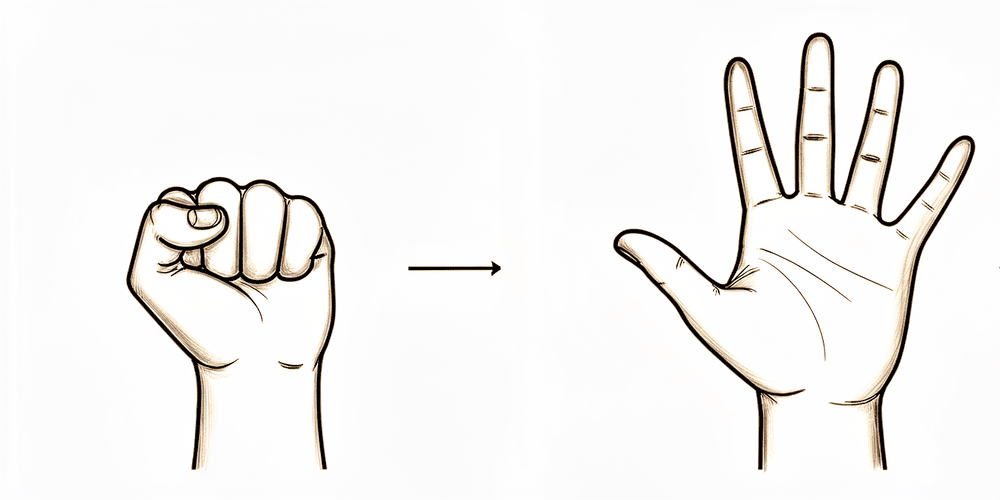
ہاتھ کھولنا اور بند کرنا
ہاتھ کی کس کر مٹھی بنائیں، پھر اسے پوری طرح کھول دیں۔ اس سے آپ کا ہاتھ حرکت کرتا رہتا ہے اور اکڑاؤ اور سوجن سے بچنے میں مدد ملتی ہے۔
ہر گھنٹے میں 10 بار
Kieran Hirpara 4.0
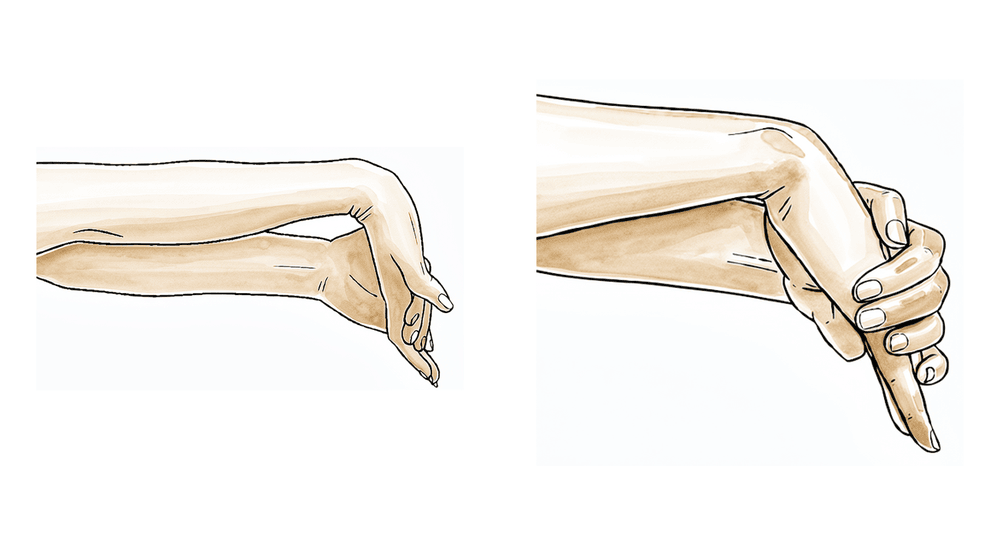
کلائی موڑنا
کلائی کو آہستگی سے آگے، پھر پیچھے، جتنا آرام سے ہو سکے موڑیں۔
ہر گھنٹے میں 10 سے 15 بار
Kieran Hirpara 4.0
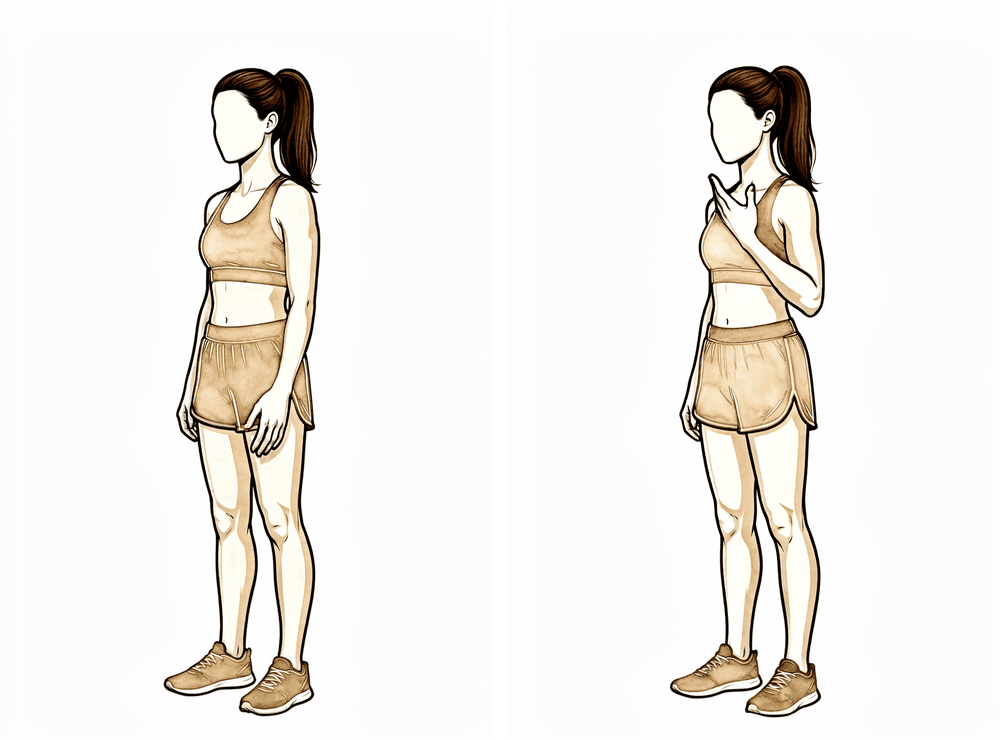
کہنی موڑنا
ہتھیلی اوپر کی طرف رکھ کر کہنی کو آہستگی سے جتنا ہو سکے موڑیں، پھر بازو کو دوبارہ سیدھا کریں۔ بازو کے اوپری حصے کو اپنے پہلو سے لگائے رکھیں۔ ایسا کرتے ہوئے بازو کو باہر کی طرف ہرگز نہ گھومنے دیں۔
10 سے 15 بار، دن میں 2 سے 3 مرتبہ
Kieran Hirpara 4.0
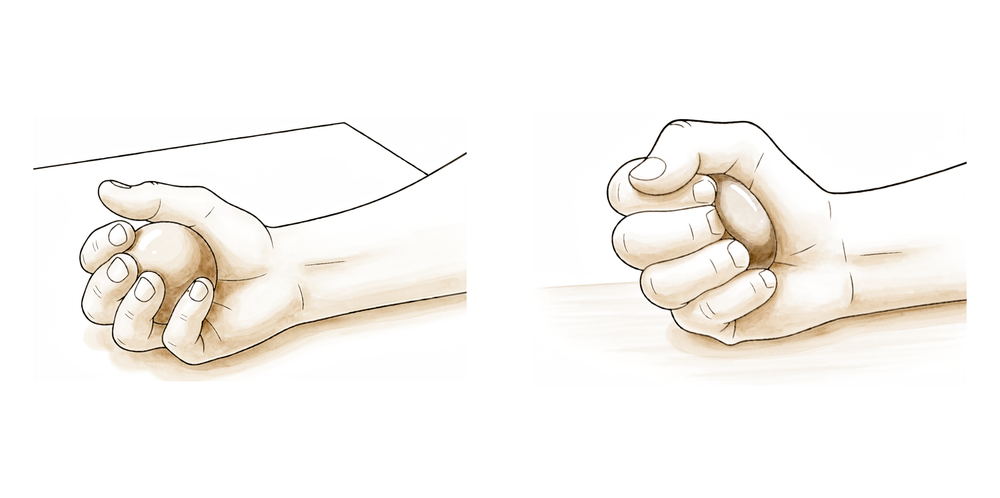
گیند دبانا
نرم گیند یا لپیٹے ہوئے موزے کو ہاتھ میں آہستگی سے دبائیں، پھر چھوڑ دیں۔ اس سے کندھے کے آرام کے دوران ہاتھ اور بازو کا نچلا حصہ فعال رہتے ہیں۔
10 سے 15 بار، دن میں چند مرتبہ
Kieran Hirpara 4.0
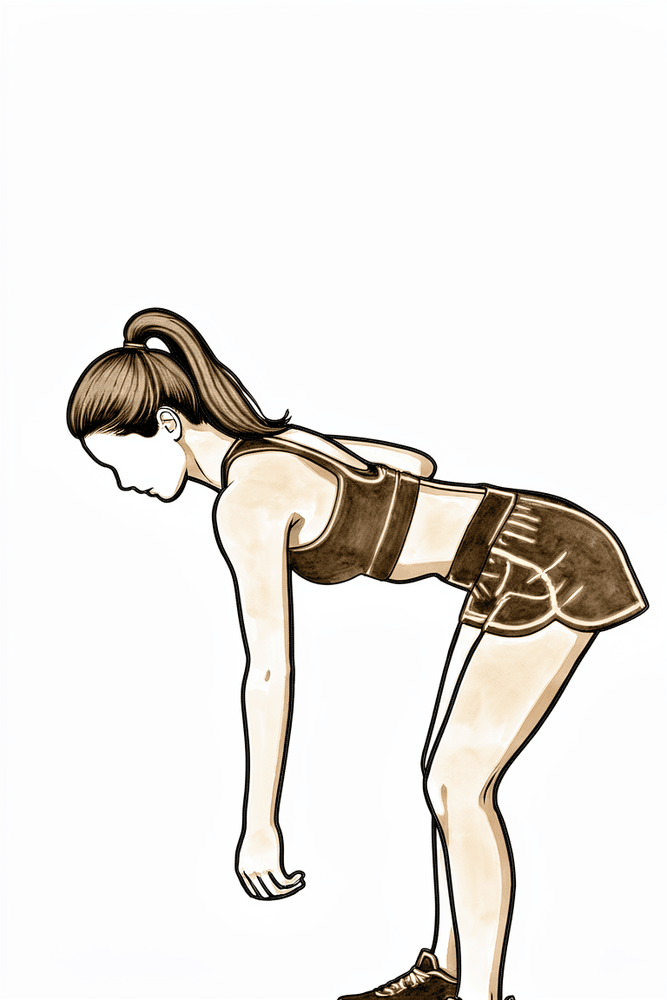
پنڈولم کی طرح جھلانا
آگے جھکیں اور آپریشن والے بازو کو پوری طرح ڈھیلا کر کے نیچے لٹکنے دیں۔ جسم کو ہلا کر چھوٹے دائرے بنائیں — پہلے گھڑی کی سوئی کی سمت میں، پھر دوسری طرف — کندھے کے پٹھوں کے استعمال سے ہرگز نہیں۔ دائرہ چھوٹا رکھیں (تقریباً 20 سینٹی میٹر سے کم) اور بازو کو سیدھا نیچے لٹکا رہنے دیں — اسے پہلو کی طرف باہر جھولنے اور باہر کی طرف گھومنے نہ دیں۔ آپ کا آپریشن والا بازو پورا وقت ڈھیلا رہتا ہے۔
ہر سمت میں 10 بار، دن میں 2 سے 3 مرتبہ
Kieran Hirpara 4.0
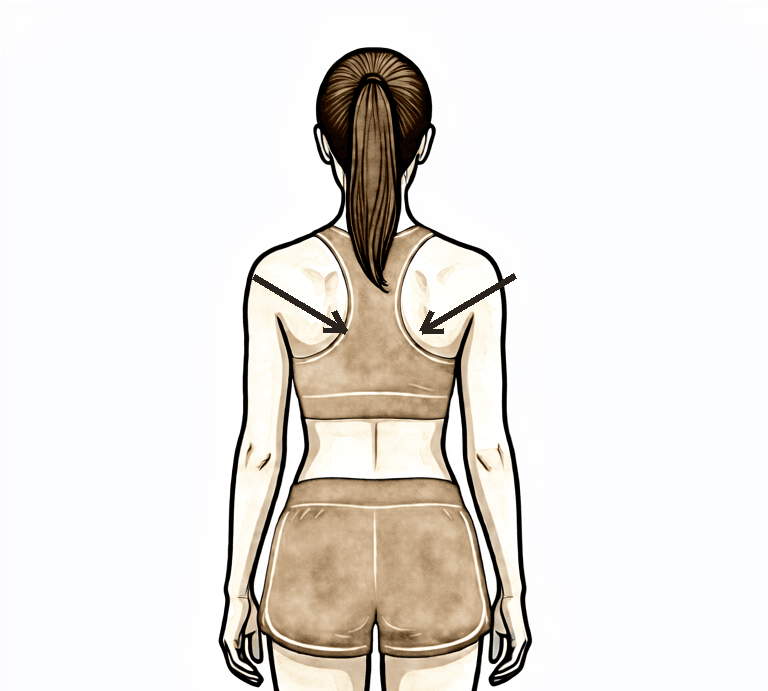
کندھے کی پچھلی ہڈیوں کو جمانا
کندھے کی پچھلی چپٹی ہڈیوں کو آہستگی سے نیچے اور ایک دوسرے کی طرف دبائیں، روکے رکھیں، پھر ڈھیلا چھوڑ دیں۔ یہ پٹھوں کو ہلکا سا فعال کرنے کی مشق ہے — آپ کا بازو حرکت نہیں کرتا اور کندھا ڈھیلا رہتا ہے۔
5 سیکنڈ روکیں، 5 بار، دن میں 2 سے 3 مرتبہ
Kieran Hirpara 4.0
مدد کے ساتھ بازو کو باہر کی طرف نیوٹرل تک گھمانا
تقریباً ہفتہ 2 سے، اور صرف اس صورت میں جب آپ کا فزیوتھراپسٹ ہدایت دے۔ کہنی کو پہلو سے لگا کر اور 90° تک موڑ کر، اور ہاتھ کو پیٹ کے آر پار ٹکا کر، اپنے صحیح ہاتھ سے بازو کے نچلے حصے کو آہستگی سے باہر کی طرف لے جائیں — لیکن صرف تھوڑا سا (تقریباً چوتھائی چکر، لگ بھگ 20°) اور ان ابتدائی ہفتوں میں سیدھا سامنے والی (نیوٹرل) حالت سے آگے ہرگز نہیں۔ سختی سے اس حد کے اندر رہیں جو آپ کا فزیوتھراپسٹ مقرر کرے اور کبھی زور نہ لگائیں۔ یہی وہ حرکت ہے جو مرمت پر زور ڈالتی ہے، اس لیے اسے جان بوجھ کر چھوٹا رکھا جاتا ہے۔
جیسا آپ کا فزیوتھراپسٹ بتائے، مقررہ حد کے اندر
پہلے چھ ہفتے صرف ایک چیز کے بارے میں ہیں: کندھے کے اگلے حصے کی مرمت کی حفاظت، جبکہ وہ ہڈی پر بھرنا شروع کرتی ہے۔ آپ دن کے سہارے کے لیے سادہ سلنگ میں رہتے ہیں، اسے اتار کر سوتے ہیں (بازو سامنے رکھ کر، کبھی باہر اور گھوما ہوا نہیں)، برف سے سوجن پر قابو رکھتے ہیں، اور ہلکی مشقیں کرتے ہیں جو مرمت پر بوجھ ڈالے یا اسے کھینچے بغیر آپ کے ہاتھ، کلائی اور کہنی کو حرکت میں رکھتی ہیں۔ ابھی کندھے کی اپنی طاقت سے کوئی ایکٹو حرکت نہیں؛ آپ کا صحیح بازو یا چھڑی آپ کے لیے کام کرتی ہے، اور آپ پوری طرح ڈھیلے رہتے ہیں۔
- سلنگ: دن کے سہارے کے لیے نیوٹرل گردش میں سادہ سلنگ؛ سلنگ اتار کر سوئیں لیکن بازو سامنے اور جسم کی طرف سمیٹ کر رکھیں؛ ورزشوں اور صفائی کے لیے اتاریں۔
- جن حرکتوں کی اجازت ہے: صرف مدد والی اور پیسو حرکت (کندھے کی اپنی طاقت سے کچھ نہیں)۔ تقریباً ہفتہ 2 سے، مدد کے ساتھ بازو کو آہستگی سے آگے تقریباً 90° (آدھی اونچائی) کی طرف اٹھانا، اور مدد کے ساتھ باہر کی طرف گھماؤ صرف تھوڑا سا (تقریباً 20°، سیدھا سامنے والی حالت تک نہیں پہنچنا)۔ پورا وقت بازو کو جسم کے سامنے رکھیں؛ کبھی پہلو کی طرف باہر اور باہر کی طرف گھوما ہوا نہیں۔
- ورزشیں: پنڈولم کی طرح جھلانا؛ ہاتھ، کلائی اور کہنی کی ہلکی حرکت؛ گیند دبانا؛ کندھے کی پچھلی ہڈیوں کو جمانا؛ تقریباً ہفتہ 3 سے، جیسا آپ کا فزیوتھراپسٹ ہدایت دے، پٹھوں کو جمانے والی ہلکی اور بغیر درد کی مشقیں (بازو کو دیوار یا اپنے دوسرے ہاتھ پر بہت ہلکا دبا کر روکے رکھنا، بازو کو گھمائے بغیر، ابھی اندر یا باہر کی طرف گھمانا نہیں)؛ اور تقریباً ہفتہ 2 سے، اگر آپ کا فزیوتھراپسٹ ہدایت دے، سختی سے مقررہ حد کے اندر مدد کے ساتھ باہر کی طرف تھوڑی سی گردش۔
اگلے مرحلے کے لیے تیار، جب: آپ کا درد کم ہو رہا ہو اور عام درد کش دوا سے قابو میں ہو (تقریباً 10 میں سے 3 یا اس سے کم)؛ آپ نے سلنگ کے ساتھ حفاظت کے چھ ہفتے مکمل کر لیے ہوں؛ آپ کا زخم کسی مسئلے کی علامت کے بغیر بھر گیا ہو؛ آپ مدد والی ہلکی حرکتیں ان کی حدود کے اندر اس احساس کے بغیر برداشت کر سکیں کہ کندھا پھسل سکتا ہے؛ اور اس بات کی کوئی علامت نہ ہو کہ مرمت پر ضرورت سے زیادہ زور پڑا ہے۔
دوسرا مرحلہ: حرکت اور گردش کی بحالی (ہفتے 6 سے 12)
Kieran Hirpara 4.0
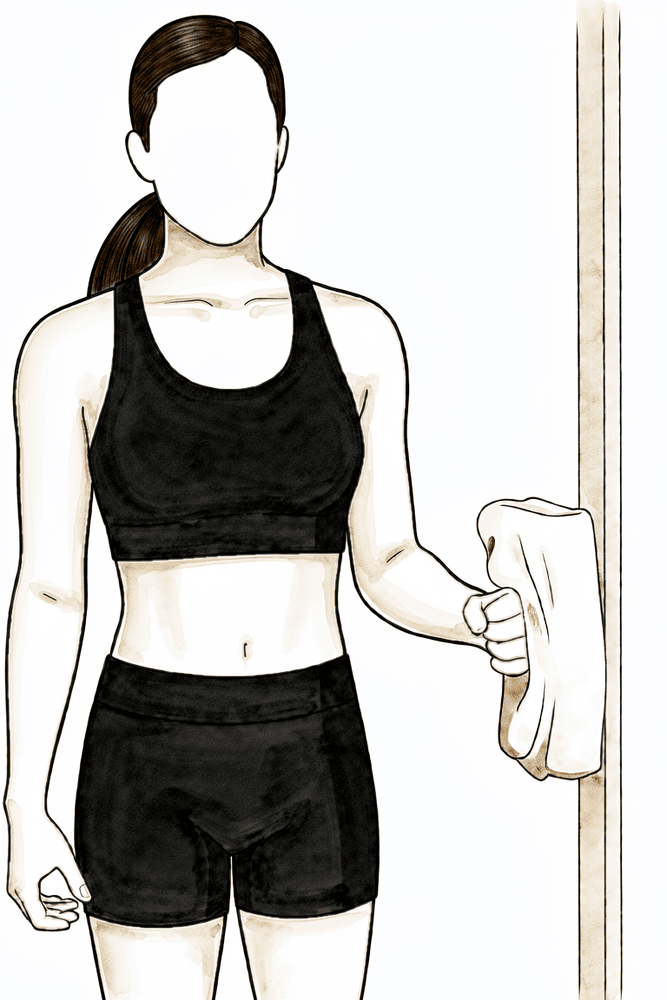
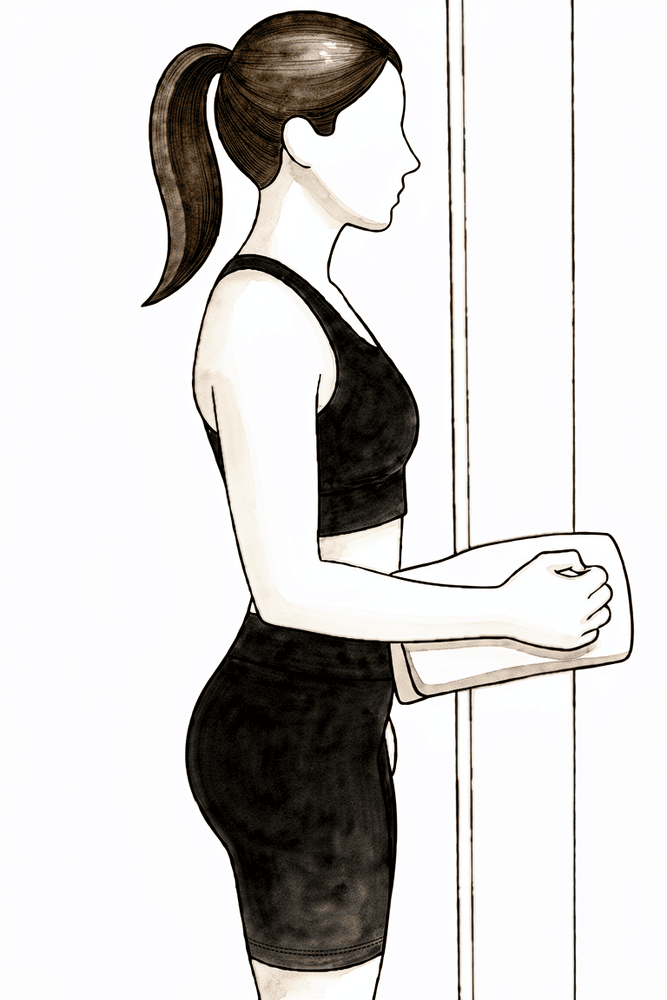
بغیر حرکت کے باہر کی طرف دباؤ (isometric external rotation)
تقریباً ہفتہ 6 سے 8 کے لگ بھگ شروع کریں، جب آپ کا فزیوتھراپسٹ متفق ہو۔ کہنی کو پہلو سے لگا کر اور 90° تک موڑ کر کھڑے ہوں، ہاتھ کی پشت دیوار یا دروازے کی چوکھٹ کے قریب ہو۔ بازو کو حرکت دیے بغیر ہاتھ کی پشت کو آہستگی سے سطح پر باہر کی طرف دبائیں — ہلکا زور، اپنی طاقت کا تقریباً چوتھائی، اور کوئی درد نہ ہو۔ روکے رکھیں، پھر ڈھیلا چھوڑ دیں۔ اسے آہستہ آہستہ بڑھائیں، کیونکہ باہر کی طرف گھماؤ وہ سمت ہے جس کے لیے مرمت سب سے زیادہ حساس ہے۔
تقریباً 5 سیکنڈ روکیں، ہلکا (تقریباً 25 فیصد زور)، جیسا آپ کا فزیوتھراپسٹ بتائے
Kieran Hirpara 4.0
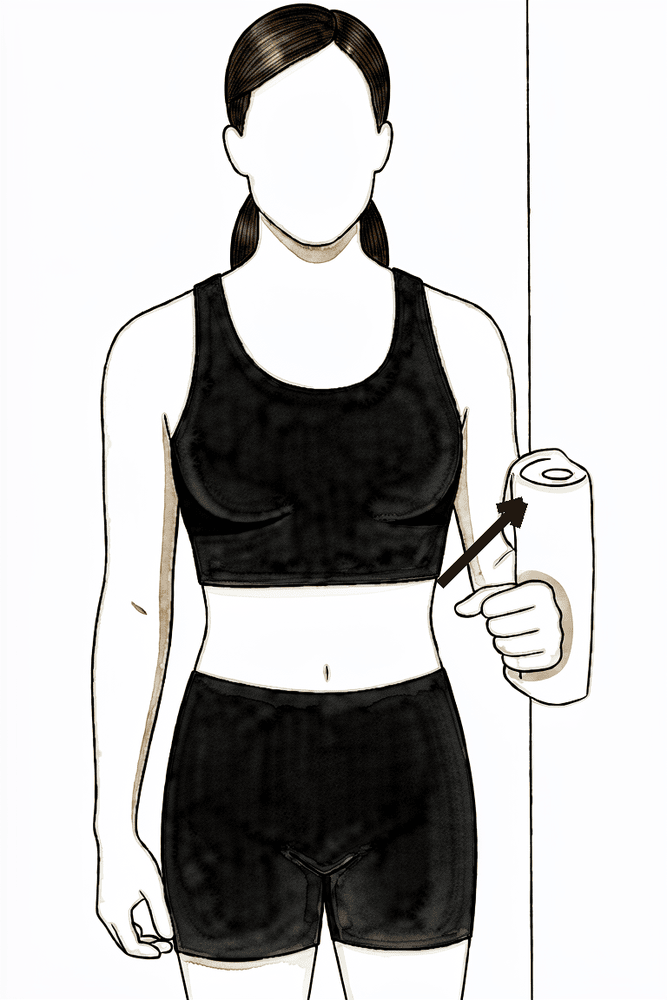
بغیر حرکت کے اندر کی طرف دباؤ (isometric internal rotation)
تقریباً ہفتہ 6 سے 8 کے لگ بھگ شروع کریں، جب آپ کا فزیوتھراپسٹ متفق ہو۔ کہنی کو پہلو سے لگا کر کھڑے ہوں، ہتھیلی دیوار سے لگی ہو۔ بازو کو حرکت دیے بغیر ہتھیلی کو آہستگی سے اندر کی طرف دبائیں — تقریباً چوتھائی زور، اور کوئی درد نہ ہو۔ روکے رکھیں، پھر ڈھیلا چھوڑ دیں۔
تقریباً 5 سیکنڈ روکیں، ہلکا (تقریباً 25 فیصد زور)، جیسا آپ کا فزیوتھراپسٹ بتائے
Kieran Hirpara 4.0
بغیر حرکت کے بازو کو پہلو کی طرف دبانا
تقریباً ہفتہ 6 سے 8 کے لگ بھگ شروع کریں، جب آپ کا فزیوتھراپسٹ متفق ہو۔ دیوار کی طرف پہلو کر کے کھڑے ہوں، بازو کے اوپری حصے کا بیرونی رخ دیوار کے قریب ہو اور کہنی پہلو سے لگی ہو۔ بازو کو حرکت دیے بغیر اسے آہستگی سے دیوار پر باہر کی طرف دبائیں — تقریباً چوتھائی زور، کوئی درد نہیں۔ روکے رکھیں، پھر ڈھیلا چھوڑ دیں۔
تقریباً 5 سیکنڈ روکیں، ہلکا (تقریباً 25 فیصد زور)، جیسا آپ کا فزیوتھراپسٹ بتائے
Kieran Hirpara 4.0
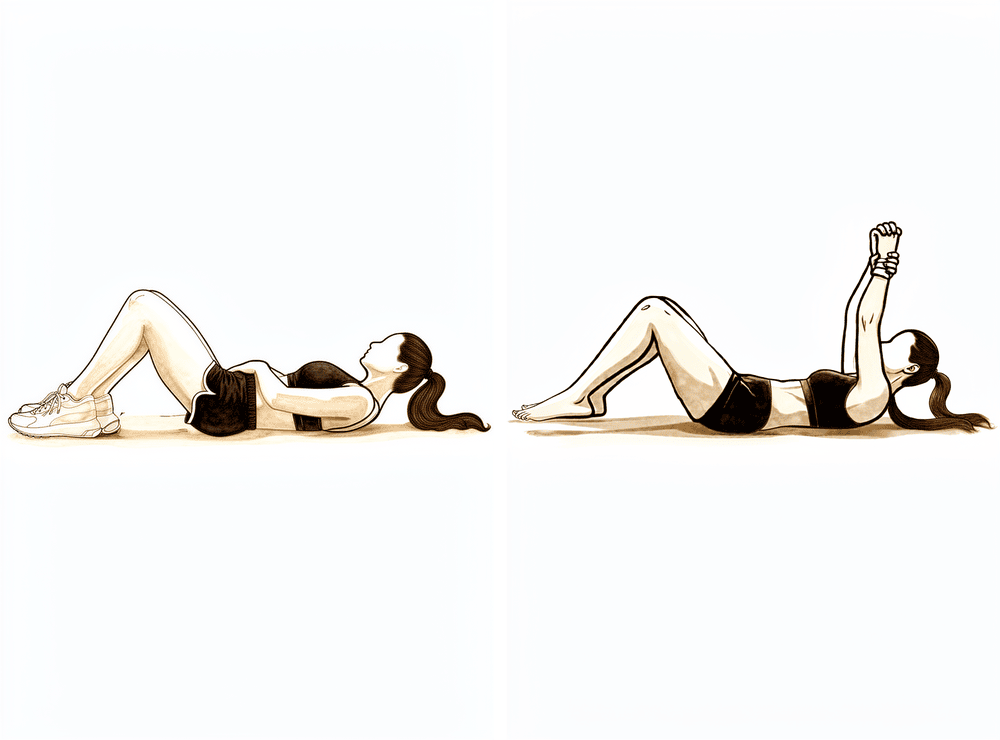
لیٹ کر مدد کے ساتھ بازو آگے اٹھانا
کمر کے بل لیٹ کر دونوں ہاتھوں میں ایک چھڑی پکڑیں اور صحیح بازو کی مدد سے آپریشن والے بازو کو آگے اور اوپر اٹھائیں — آپریشن والا کندھا ڈھیلا رہتا ہے۔ روانی سے حرکت کریں، کبھی زور نہ لگائیں، اور قابو کے ساتھ نیچے لائیں۔ اونچائی کو بتدریج اس حد کے اندر بڑھائیں جو آپ کا فزیوتھراپسٹ مقرر کرے۔
10 بار، دن میں 2 سے 3 مرتبہ
Kieran Hirpara 4.0
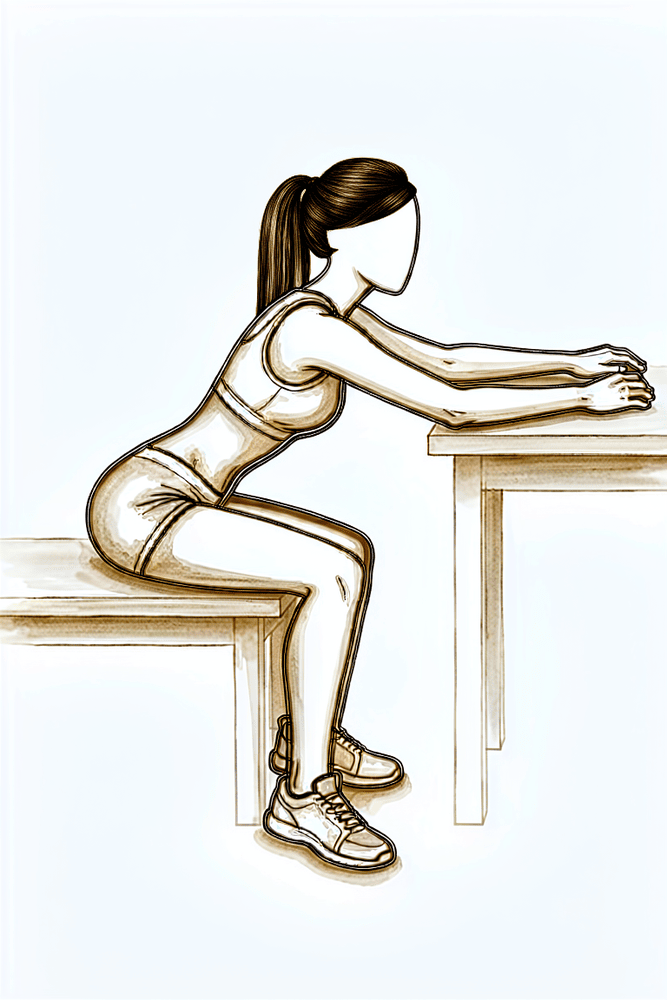
بیٹھ کر میز پر ہاتھ پھسلانا
میز کے پاس بیٹھیں اور آپریشن والا ہاتھ ایک تولیے پر رکھیں۔ ہاتھ کو سطح پر آگے پھسلائیں تاکہ بازو آگے اور اوپر کی طرف بڑھے، وزن میز پر رہنے دیں، پھر واپس پھسلائیں۔ بازو کو اپنے سامنے رکھیں — اسے پہلو کی طرف باہر نہ پھسلائیں اور باہر کی طرف گھومنے نہ دیں۔
10 بار، دن میں 2 سے 3 مرتبہ
Kieran Hirpara 4.0
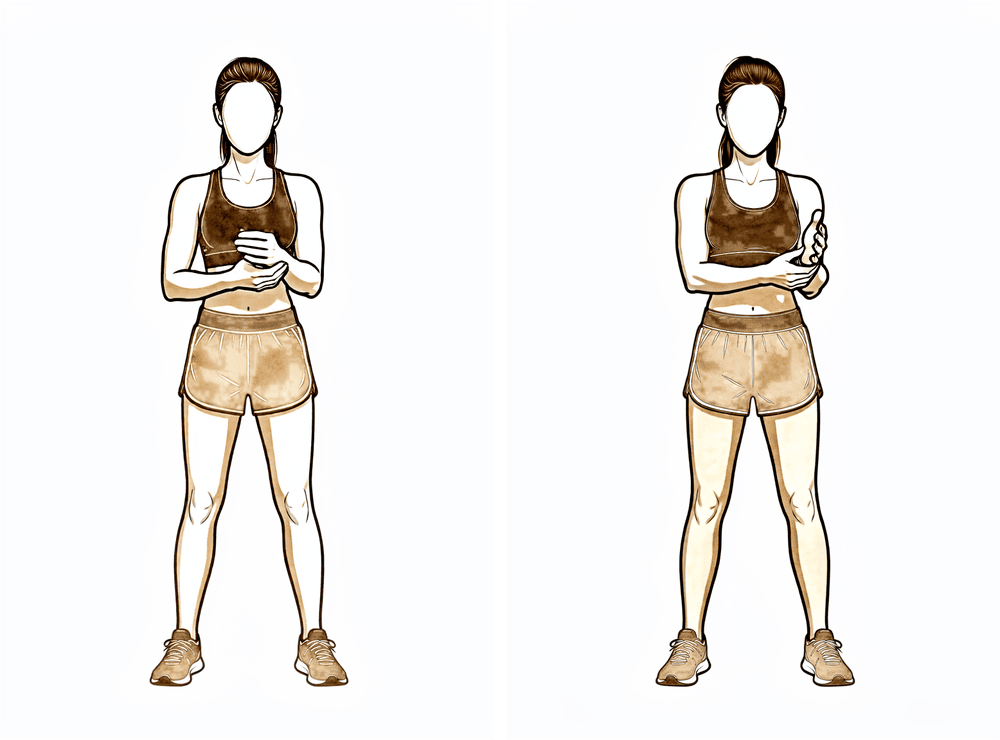
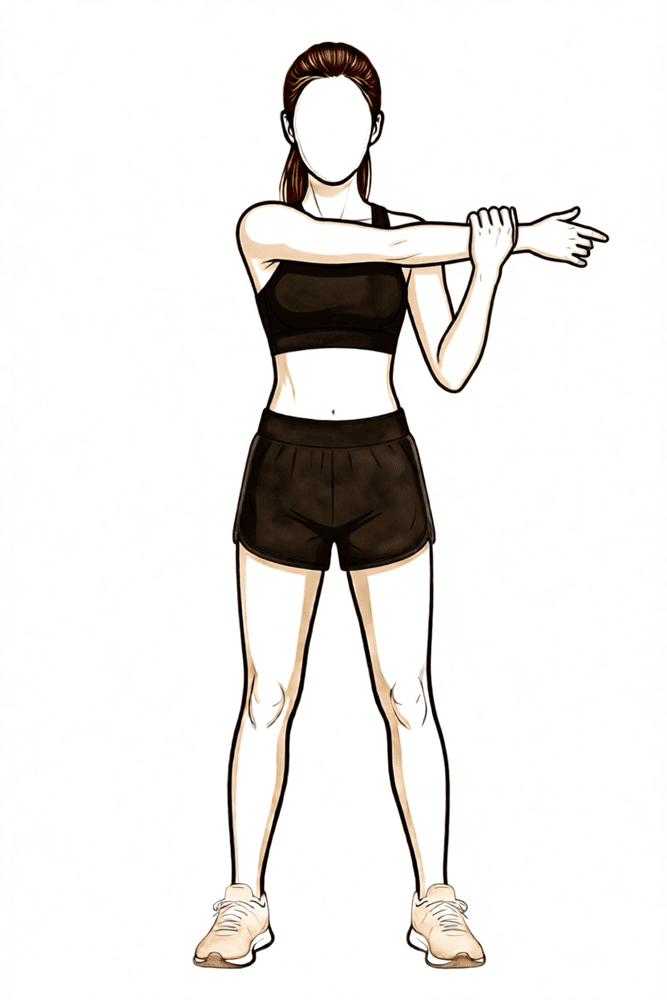
جسم کے آر پار اسٹریچ
تقریباً ہفتہ 6 سے 8 کے لگ بھگ، اگر آپ کا فزیوتھراپسٹ ہدایت دے۔ اپنے صحیح ہاتھ سے آپریشن والے بازو کو آہستگی سے سینے کے آر پار کھینچیں یہاں تک کہ کندھے کے پچھلے حصے میں آرام دہ کھنچاؤ محسوس ہو۔ اسے ہلکا رکھیں — زور نہ لگائیں۔ یہ کندھے کے پچھلے حصے کو کھینچتا ہے اور اگلی جانب کی مرمت پر زور نہیں ڈالتا۔
10 سے 20 سیکنڈ روکیں، چند بار، جیسا آپ کا فزیوتھراپسٹ بتائے
اب سلنگ اتر چکی ہے اور توجہ حرکت کی بحالی پر ہے، طاقت پر نہیں۔ آپ مدد والی حرکت سے بازو کو اپنی طاقت سے حرکت دینے کی طرف بڑھتے ہیں، اور اہم بات یہ ہے کہ باہر کی طرف گھماؤ بتدریج بڑھایا جاتا ہے: اس مرحلے کے شروع میں تقریباً 30 سے 45° سے، اور تقریباً بارہ ہفتوں تک پورا ہونے کی طرف۔ یہ قدم بہ قدم کیا جاتا ہے، کبھی زور سے نہیں، کیونکہ اگلے حصے کی مرمت ابھی پختہ ہو رہی ہے۔ حرکت بہتر ہونے کے ساتھ پٹھوں کو ہلکا فعال کرنے والی (آئسومیٹرک، isometric) مشقیں شامل کی جاتی ہیں۔
- سلنگ: اتری ہوئی۔
- جن حرکتوں کی اجازت ہے: مدد والی حرکت، جو بڑھ کر اپنی طاقت سے حرکت بن جاتی ہے۔ بازو کو آگے اٹھانا بڑھ کر پورا سر کے اوپر تک جاتا ہے۔ باہر کی طرف گھماؤ مرحلہ وار بڑھایا جاتا ہے: اس مرحلے کے شروع میں لگ بھگ 30 سے 45°، پھر تقریباً ہفتہ 12 تک پورا ہونے کی طرف۔ کمر کے پیچھے ہاتھ لے جانا اس مرحلے کے آخر میں آہستگی سے دوبارہ شروع کیا جاتا ہے۔
- ورزشیں: لیٹ کر مدد کے ساتھ بازو آگے اٹھانا؛ بیٹھ کر میز پر ہاتھ پھسلانا؛ ہلکی آئسومیٹرک (دبا کر روکنا) مشقیں، یعنی بیرونی گردش، اندرونی گردش اور بازو کو پہلو کی طرف دبانا؛ کندھے کے پچھلے حصے کے لیے جسم کے آر پار اسٹریچ۔
اگلے مرحلے کے لیے تیار، جب: آپ بازو کو اپنی طاقت سے اچھے کنٹرول کے ساتھ تقریباً پوری اونچائی تک آگے اٹھا سکیں (کندھے اچکائے یا کندھے کی پچھلی ہڈی کو اوپر کھینچے بغیر)؛ آپ کا باہر کی طرف گھماؤ پورا یا تقریباً پورا ہو گیا ہو اور آرام دہ ہو؛ ہلکی آئسومیٹرک مشقیں بعد میں درد بھڑکے بغیر برداشت ہوں؛ اور روزمرہ کی حرکتوں میں آپ کو یہ احساس نہ ہو کہ کندھا پھسل سکتا ہے۔
تیسرا مرحلہ: طاقت بڑھانا (ہفتے 12 سے 16)
Kieran Hirpara 4.0
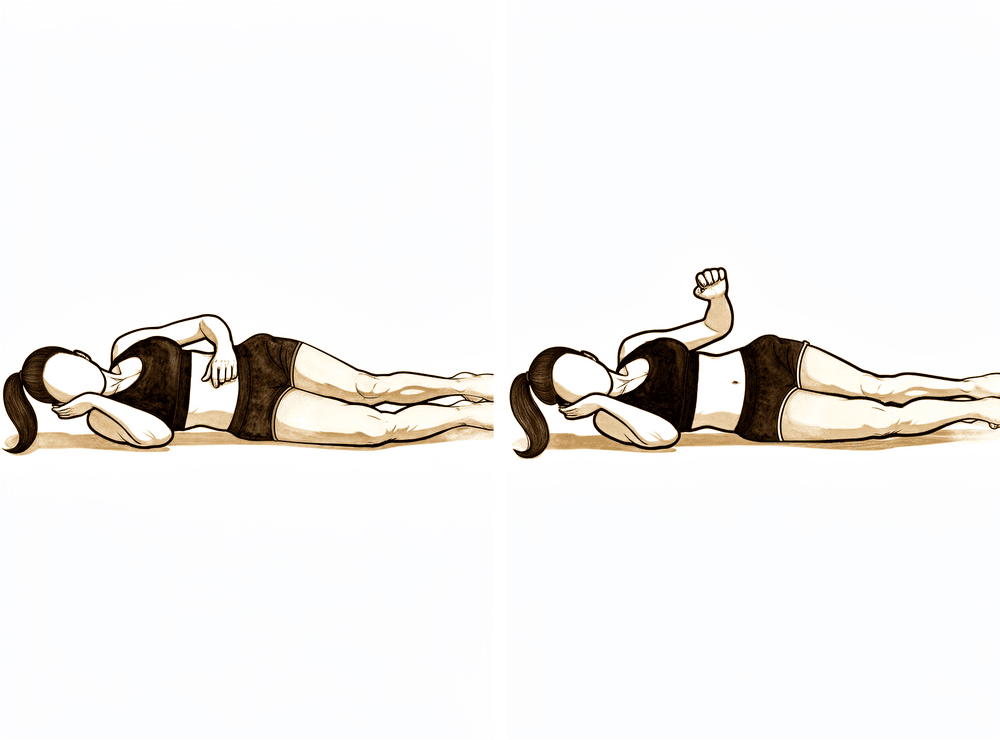
پہلو کے بل لیٹ کر بازو کو باہر کی طرف گھمانا
تقریباً ہفتہ 12 سے۔ اپنے صحیح پہلو کے بل لیٹیں، آپریشن والی کہنی پہلو میں کمر کے پاس لگی ہو اور 90° تک مڑی ہو۔ آپریشن والے بازو کے نچلے حصے کو اوپر چھت کی طرف گھمائیں، پھر قابو کے ساتھ نیچے لائیں۔ بغیر وزن کے شروع کریں، اور اس حد کے اندر رہیں جو آپ کا فزیوتھراپسٹ مقرر کرے۔ باہر کی طرف گھمانے کی طاقت سب سے آخر میں دوبارہ بنائی جاتی ہے، کیونکہ یہی وہ سمت ہے جس سے مرمت کو سب سے زیادہ بچایا جاتا ہے۔
جیسا آپ کا فزیوتھراپسٹ بتائے
Kieran Hirpara 4.0
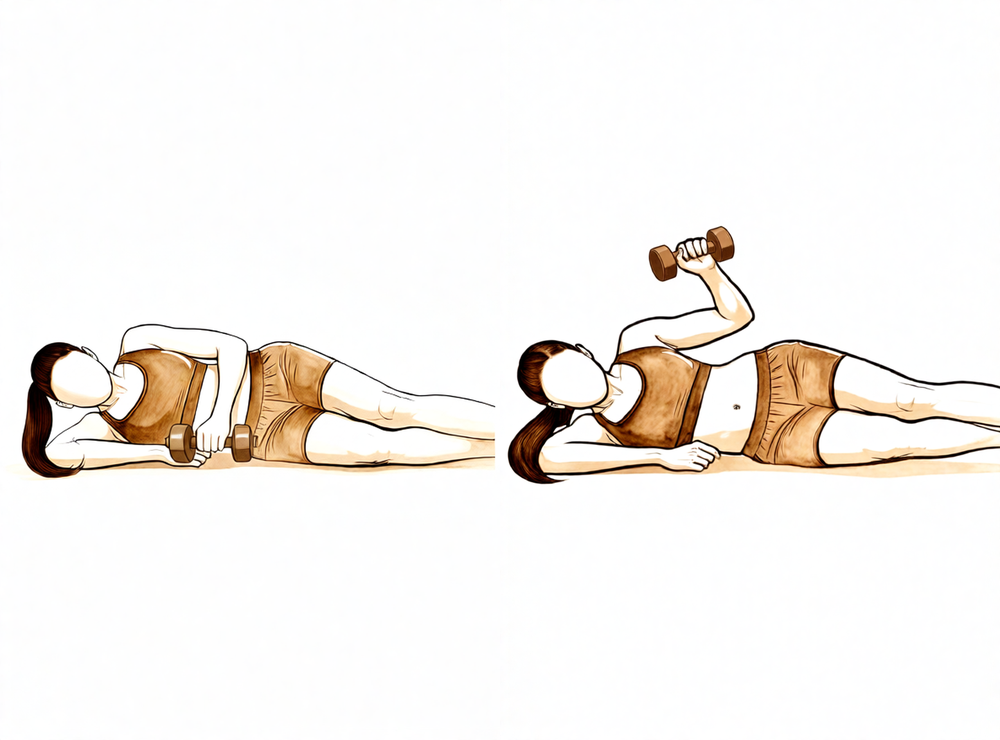
پہلو کے بل لیٹ کر ہلکے وزن کے ساتھ بازو کو باہر کی طرف گھمانا
پہلو کے بل لیٹ کر باہر کی طرف گھمانے کی وہی ورزش، اب ہلکے وزن کے ساتھ، بوجھ کو بتدریج بڑھاتے ہوئے۔ کہنی کو پہلو میں کمر کے پاس لگائے رکھیں۔ اگر کندھے میں درد ہو تو رک جائیں۔
جیسا آپ کا فزیوتھراپسٹ بتائے
Kieran Hirpara 4.0
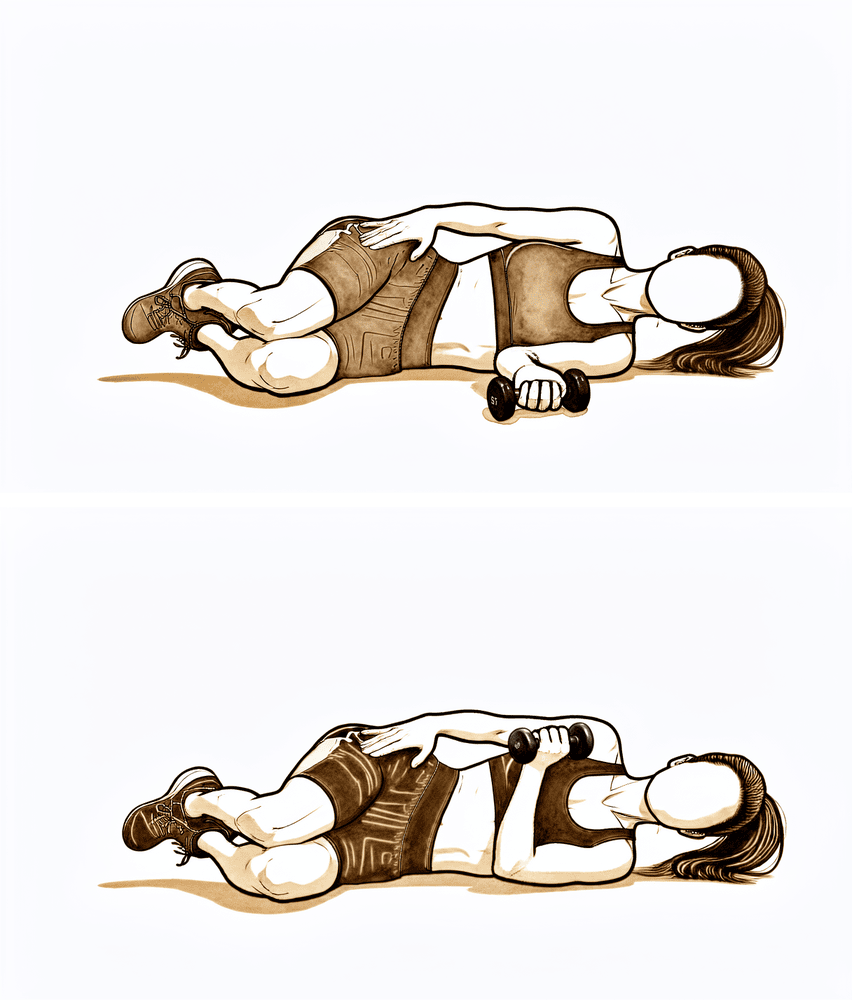
پہلو کے بل لیٹ کر ہلکے وزن کے ساتھ بازو کو اندر کی طرف گھمانا
تقریباً ہفتہ 12 سے۔ آپریشن والے پہلو کے بل لیٹیں، کہنی پہلو میں کمر کے پاس لگی ہو اور 90° تک مڑی ہو، اور ہاتھ میں ہلکا وزن ہو۔ بازو کے نچلے حصے کو اوپر پیٹ کی طرف اٹھائیں، پھر قابو کے ساتھ نیچے لائیں۔
جیسا آپ کا فزیوتھراپسٹ بتائے
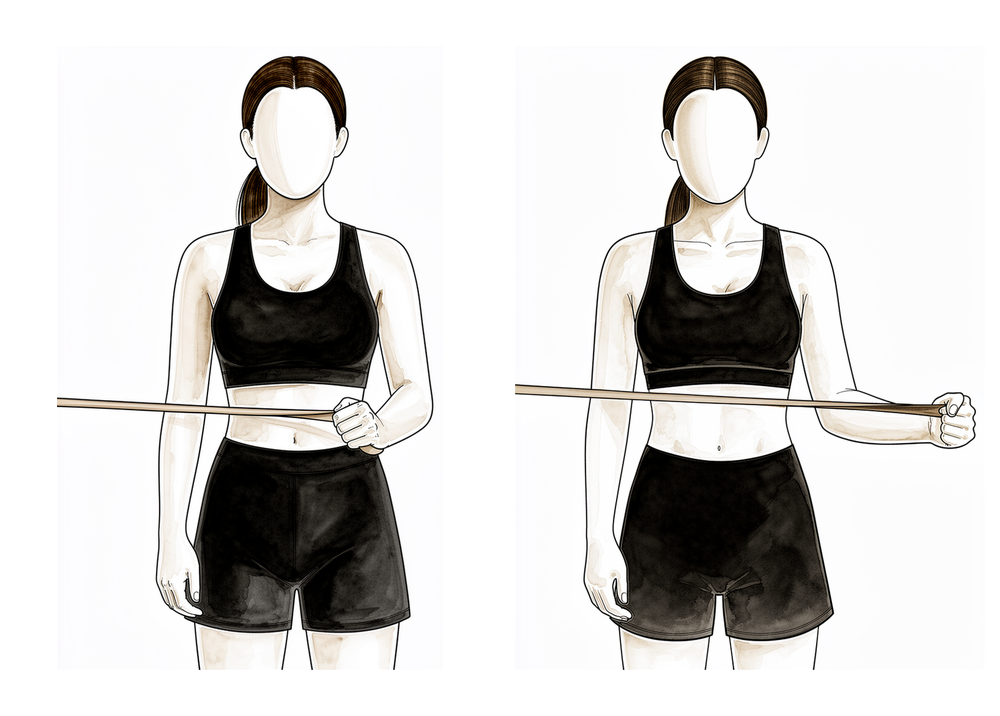
Kieran Hirpara 4.0
بینڈ کے ساتھ بازو کو باہر کی طرف گھمانا
تقریباً ہفتہ 12 سے، جب پوری گردش آرام سے ہونے لگے۔ کہنی کو پہلو سے لگا کر اور 90° تک موڑ کر رکھیں۔ بازو کے نچلے حصے کو ہلکے بینڈ کے خلاف باہر کی طرف گھمائیں، پھر قابو کے ساتھ واپس لائیں۔ بھاری مزاحمت کے بجائے ہلکا بینڈ اور زیادہ بار دہرائی استعمال کریں۔
جیسا آپ کا فزیوتھراپسٹ بتائے
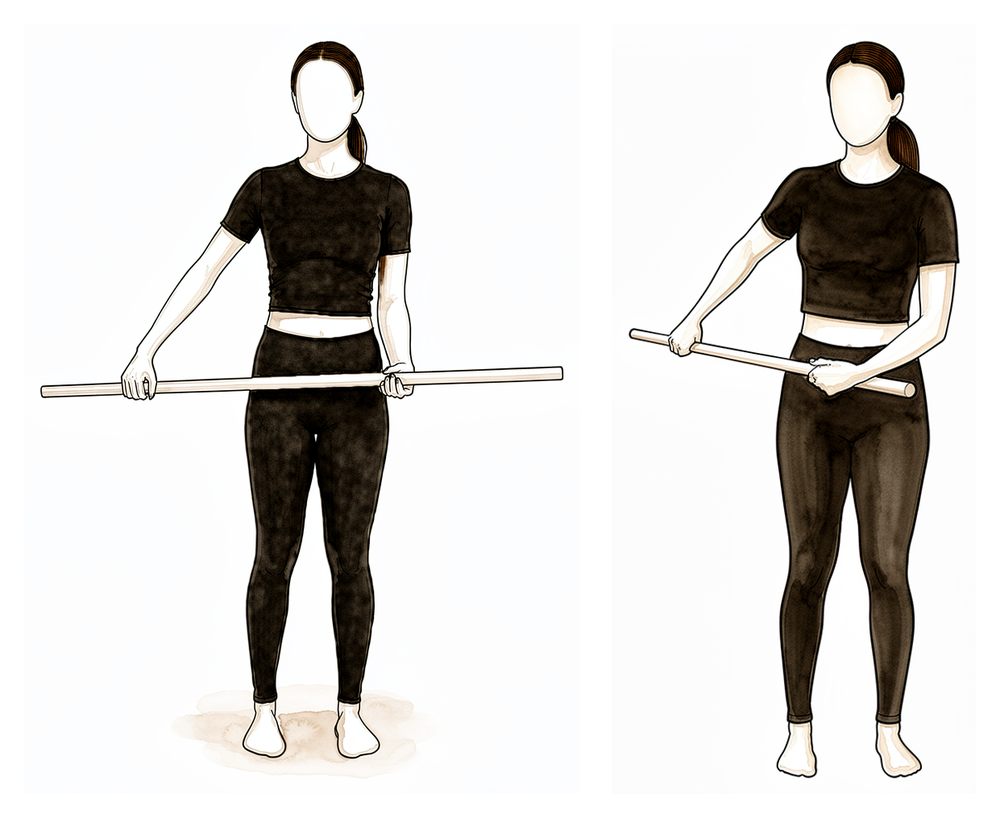
Kieran Hirpara 4.0
چھڑی کے ساتھ بازو کو اندر کی طرف گھمانا
تقریباً ہفتہ 12 سے۔ کمر کے پیچھے ایک چھڑی پکڑیں اور صحیح ہاتھ سے آپریشن والے ہاتھ کو آہستگی سے کمر پر اوپر کھینچیں، پھر قابو کے ساتھ نیچے لائیں۔ اسے آرام دہ اور اپنے فزیوتھراپسٹ کی مقرر کردہ حدود کے اندر رکھیں۔
جیسا آپ کا فزیوتھراپسٹ بتائے
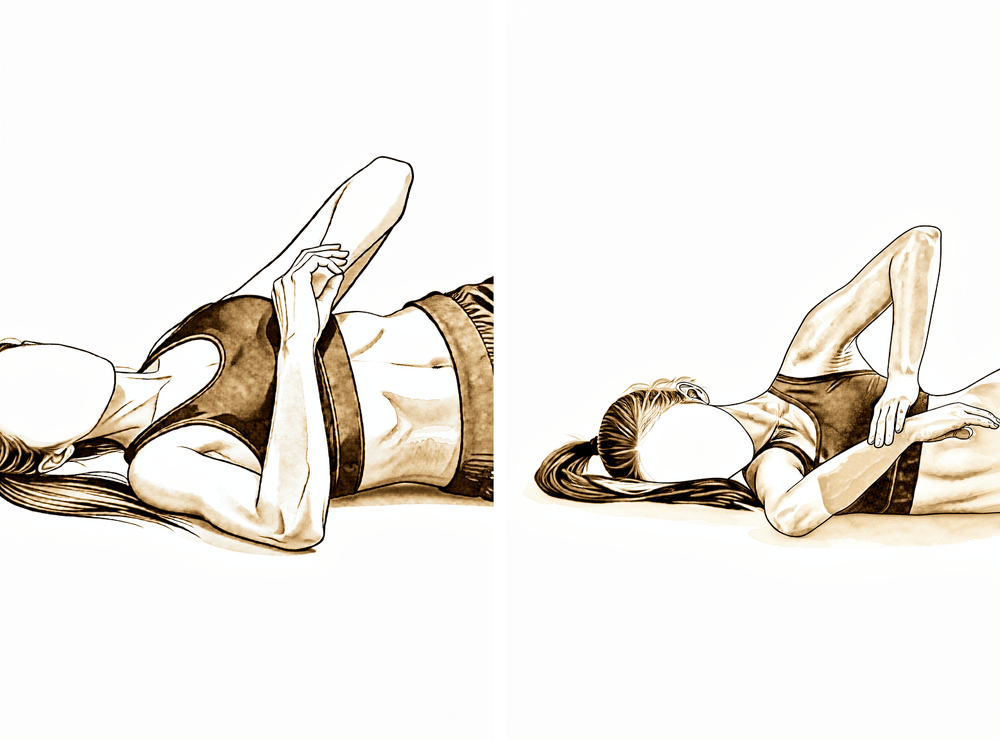
Kieran Hirpara 4.0
سلیپر اسٹریچ (sleeper stretch)
تقریباً ہفتہ 12 سے، اگر آپ کا فزیوتھراپسٹ ہدایت دے۔ آپریشن والے پہلو کے بل لیٹیں، بازو آگے ہو اور کہنی مڑی ہو۔ اوپر والے ہاتھ سے بازو کے نچلے حصے کو آہستگی سے بستر کی طرف نیچے دبائیں یہاں تک کہ کندھے کے پچھلے حصے میں آرام دہ کھنچاؤ محسوس ہو۔ صرف ہلکا — زور نہ لگائیں۔
10 سے 20 سیکنڈ روکیں، چند بار، جیسا آپ کا فزیوتھراپسٹ بتائے
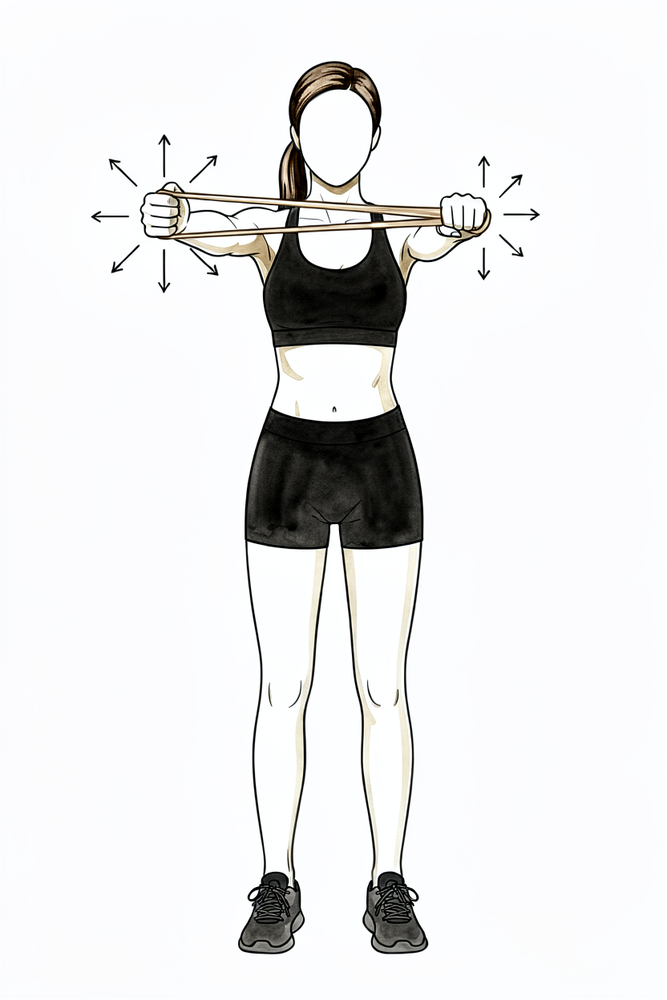
Kieran Hirpara 4.0
ردھمک اسٹیبلائزیشن (rhythmic stabilisation)
بازو کو اپنے سامنے تقریباً کندھے کی اونچائی پر سہارا دے کر رکھیں، اور آپ کا فزیوتھراپسٹ (یا آپ کا صحیح ہاتھ) مختلف سمتوں سے چھوٹے، ہلکے دھکے دے جبکہ آپ بازو کو ساکن اور مستحکم رکھیں — اسے حرکت نہ کرنے دیں۔ اس سے کندھے کو مستحکم رکھنے والے پٹھوں کو ردعمل دینے کی تربیت ملتی ہے۔ ساری کوشش ہلکی رکھیں۔
جیسا آپ کا فزیوتھراپسٹ بتائے
بارہ ہفتوں تک مرمت اتنی مضبوط ہو جاتی ہے کہ باقاعدہ طاقت بڑھانے کی ورزشیں شروع کی جا سکیں، اور توجہ حرکت واپس حاصل کرنے سے ہٹ کر طاقت، برداشت اور کنٹرول کی دوبارہ تعمیر پر آ جاتی ہے۔ ہلکے بینڈ اور ہلکے وزن کے ساتھ مزاحمت والی ورزشیں اب شروع ہوتی ہیں: زیادہ بار دہرائی، کم بوجھ۔ روٹیٹر کف (rotator cuff)، یعنی ٹینڈنوں کا وہ گروپ جو کندھے کو تھامتا اور گھماتا ہے، کے وہ پٹھے جو کندھے کو اپنی جگہ رکھتے ہیں، ہر سمت میں مضبوط کیے جاتے ہیں، اور باہر کی طرف گھماؤ احتیاط سے بڑھایا جاتا ہے کیونکہ یہی وہ سمت ہے جس کے لیے مرمت سب سے زیادہ حساس ہے۔ حرکتیں ہمیشہ قابو میں اور بغیر درد کے رکھیں۔
- سلنگ: کوئی نہیں؛ پوری حرکت متوقع ہے۔
- ورزشیں: پہلو کے بل لیٹ کر باہر کی طرف گھمانا (بڑھ کر ہلکے وزن کے ساتھ)؛ پہلو کے بل لیٹ کر ہلکے وزن کے ساتھ اندر کی طرف گھمانا؛ کہنی پہلو سے لگا کر ہلکے بینڈ کے ساتھ باہر کی طرف گھمانا؛ چھڑی کے ساتھ اندر کی طرف گھمانا؛ کندھے کے پچھلے حصے کے لیے سلیپر اسٹریچ۔ آپ کا فزیوتھراپسٹ کندھے کے کنٹرول کی دوبارہ تربیت کے لیے ردھمک اسٹیبلائزیشن (rhythmic stabilisation) بھی شامل کر سکتا ہے (بازو کو ساکن رکھنے کی ہلکی مشقیں جن میں وہ آپ کے بازو پر ہلکا دباؤ ڈالتے ہیں اور آپ مزاحمت کرتے ہیں)۔ یہ ہاتھوں سے کیا جانے والا کام ہے جس کی کوئی تصویر نہیں۔
اگلے مرحلے کے لیے تیار، جب: آپ کے پاس اپنی طاقت سے پوری، بغیر درد کی حرکت ہو اور کندھے کی پچھلی ہڈی کا کنٹرول یکساں ہو؛ طاقت کے سیشنوں کے بعد کوئی درد یا سوجن نہ ہو؛ گھمانے کی طاقت مسلسل بڑھ کر دوسری طرف کے برابر ہونے کی طرف جا رہی ہو؛ اور روزمرہ کے وزن والے کاموں میں کوئی خدشہ یا جوڑ کا ڈھیلا پن (instability) نہ ہو۔
چوتھا مرحلہ: کھیل اور کام پر واپسی (4 سے 6 ماہ)
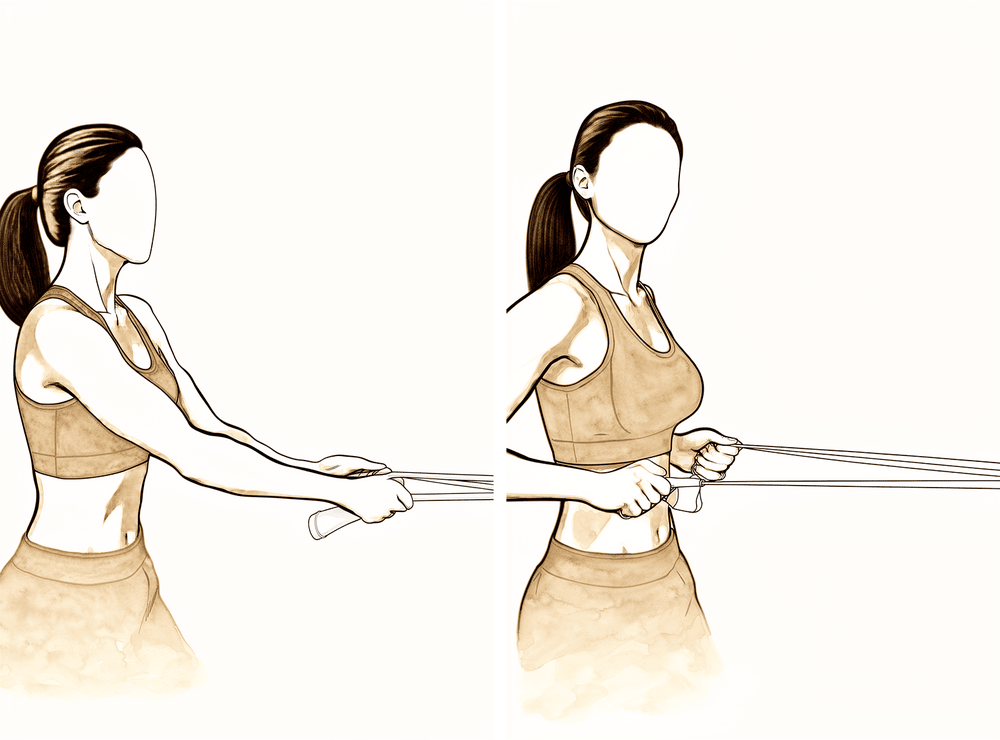
Kieran Hirpara 4.0
مزاحمتی بینڈ سے رو (row)
بینڈ کو اپنے سامنے باندھ کر اس کے ہینڈل اپنی طرف کھینچیں، کہنیوں کو پیچھے لائیں اور کندھے کی پچھلی ہڈیوں کو ایک دوسرے کی طرف دبائیں، پھر قابو کے ساتھ واپس جائیں۔ کہنیوں کو اپنے پہلوؤں کے قریب اور اپنے سامنے رکھیں — انہیں جسم کی لائن سے پیچھے نہ جانے دیں۔ ہلکا بینڈ، زیادہ بار دہرائی۔
جیسا آپ کا فزیوتھراپسٹ بتائے
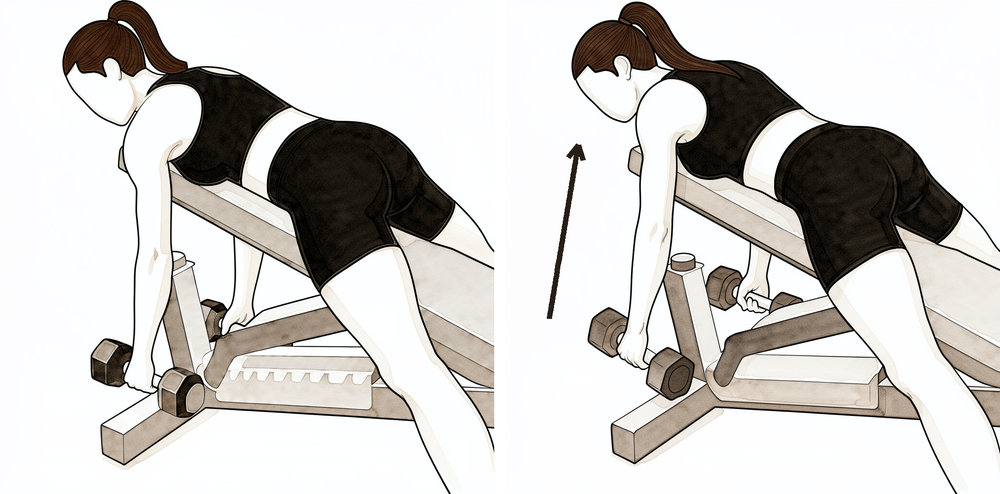
Kieran Hirpara 4.0
وزن کے ساتھ کندھے کی پچھلی ہڈیوں کو کھینچنا
ہلکے وزن یا بینڈ کے خلاف کندھے کی پچھلی ہڈیوں کو پیچھے اور نیچے کھینچیں، تھوڑی دیر روکیں، پھر قابو کے ساتھ چھوڑیں۔ اس سے وہ پٹھے مضبوط ہوتے ہیں جو کندھے کی پچھلی ہڈی کو مستحکم رکھتے ہیں اور مرمت شدہ کندھے کو سہارا دیتے ہیں۔
جیسا آپ کا فزیوتھراپسٹ بتائے
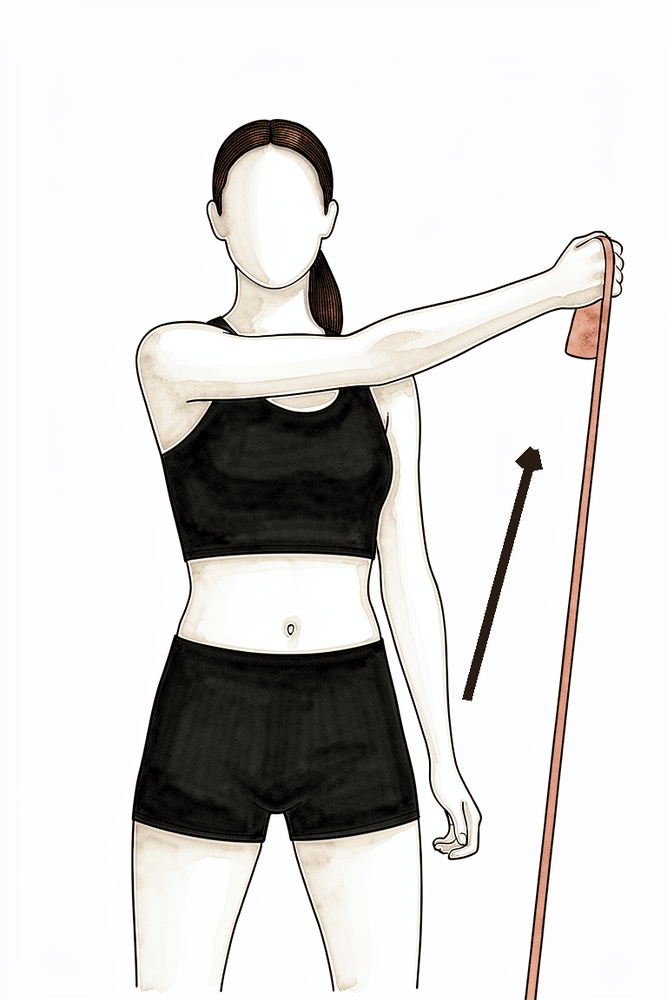
Kieran Hirpara 4.0
بینڈ کے ساتھ ترچھی حرکت (نیچے اور آر پار ہاتھ بڑھانا)
تقریباً ہفتہ 12 سے، جب آپ کی حرکت پوری اور آرام دہ ہو جائے۔ ہلکے بینڈ کے ساتھ بازو کو ایک ہموار ترچھی لکیر میں حرکت دیں — اوپر اور باہر سے، نیچے اور آر پار مخالف کولہے کی طرف، پھر واپس۔ اس سے کندھے کی ان قدرتی ترچھی حرکتوں میں تربیت ہوتی ہے جو روزمرہ کاموں اور کھیل میں استعمال ہوتی ہیں۔ اسے قابو میں اور بغیر درد کے رکھیں۔
جیسا آپ کا فزیوتھراپسٹ بتائے
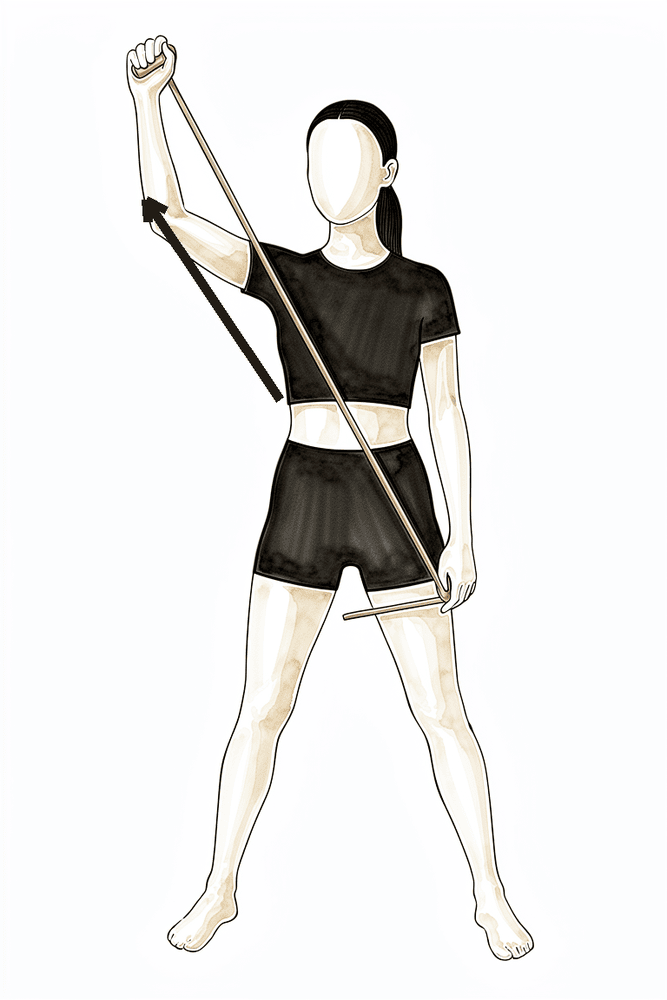
Kieran Hirpara 4.0
بینڈ کے ساتھ ترچھی حرکت (اوپر اور آر پار ہاتھ بڑھانا)
اس مرحلے کے آخری حصے سے، جب باہر کی طرف گھماؤ پورا اور آرام دہ ہو جائے۔ ہلکے بینڈ کے ساتھ بازو کو ایک ہموار ترچھی لکیر میں حرکت دیں — نیچے اور جسم کے آر پار سے، اوپر اور باہر سر کے اوپر تک، پھر واپس۔ چونکہ یہ حرکت بازو کو اٹھی ہوئی اور باہر کی طرف گھومی ہوئی حالت میں لے جاتی ہے، اس لیے اسے صرف تب شروع کریں جب آپ کا فزیوتھراپسٹ متفق ہو کہ آپ تیار ہیں۔ اسے قابو میں اور بغیر درد کے رکھیں۔
جیسا آپ کا فزیوتھراپسٹ بتائے
یہ مرحلہ ایک مضبوط اور قابو میں کندھے سے کھیل اور بھاری کام کے تقاضوں کی طرف واپسی کا پل ہے۔ آپ جو حرکت حاصل کر چکے ہیں اسے برقرار رکھتے ہیں اور اسے اعتماد سے استعمال کرنے کے لیے طاقت، قوت (power) اور برداشت بناتے ہیں۔ واپسی اچانک نہیں، مرحلہ وار ہوتی ہے؛ سر سے اوپر والے اور ٹکراؤ والے کھیلوں کے لیے، وقفے وقفے سے بڑھایا جانے والا پروگرام (interval programme) جو مقدار اور شدت کو قدم بہ قدم بڑھاتا ہے، واپسی کا سب سے محفوظ راستہ ہے۔
- سلنگ: کوئی نہیں۔
- ورزشیں: روٹیٹر کف اور کندھے کی پچھلی ہڈی کی بتدریج طاقت بڑھانا (مزاحمتی بینڈ سے رو، کندھے کی پچھلی ہڈیوں کو کھینچنا)؛ بینڈ کے ساتھ ترچھی حرکتیں جو قدرتی ہاتھ بڑھانے کی لکیروں میں کندھے کی تربیت کرتی ہیں، اور سر کے اوپر اور گھومی ہوئی حالت والی حرکت صرف تب شامل کی جاتی ہے جب باہر کی طرف گھماؤ پورا اور آرام دہ ہو؛ پھر مناسب ہو تو کھیل اور کام کے مطابق تیاری اور قابو میں تیز رفتار مشقیں۔
واپسی کے لیے تیار، جب: آپ کی طاقت دوسری طرف کی کم از کم 85 فیصد ہو اور باہر اور اندر کی طرف گھمانے کی طاقت میں اچھا توازن ہو؛ آپ کے پاس پوری، بغیر درد کی حرکت ہو اور بوجھ کے ساتھ جوڑ کے ڈھیلے پن کا کوئی احساس نہ ہو؛ اور آپ اپنے کھیل یا کام کے مخصوص ٹیسٹ پاس کر لیں۔ ٹکراؤ والے یا سر سے اوپر والے کھیلوں میں واپسی عموماً تقریباً 4 سے 6 ماہ پر ہوتی ہے، ان شرائط کو پورا کرنے اور ڈاکٹر ہِرپرا اور آپ کے فزیوتھراپسٹ کی اجازت کی بنیاد پر، صرف کیلنڈر کی بنیاد پر نہیں۔
کھیل اور کام پر واپسی
کھیل اور کام پر واپسی شرائط کی بنیاد پر ہوتی ہے: بغیر درد کے، پوری حرکت، متوازن طاقت، اور یہ احساس نہ ہو کہ کندھا پھسل سکتا ہے، اور ڈاکٹر ہِرپرا اور آپ کے فزیوتھراپسٹ دونوں کی منظوری کے ساتھ، صرف کیلنڈر کے فیصلے پر نہیں۔
- ہلکا، بیٹھ کر کیا جانے والا کام: چند ہفتوں کے اندر، بازو کو محفوظ رکھتے ہوئے۔
- طاقت بڑھانا: تقریباً 12 ہفتوں سے ہلکی مزاحمت۔
- گیند پھینکنا اور سر سے اوپر والے کھیل: 4 ماہ سے پہلے نہیں، اور صرف مرحلہ وار تیاری کے بعد۔
- ٹکراؤ والے کھیل (contact and collision sport): عموماً 4 سے 6 ماہ، شرائط کی بنیاد پر۔
نرم بافت والی بینکارٹ مرمت ہڈی والے لاٹارجے آپریشن کی نسبت آہستہ بھرتی ہے، اس لیے واپسی عموماً تھوڑی دیر سے ہوتی ہے؛ یہاں صبر مرمت کی حفاظت کرتا ہے اور کندھے کے دوبارہ اپنی جگہ سے نکلنے کا امکان کم کرتا ہے۔
آپ کے پروٹوکول کے بعد
یہ پروٹوکول کلینک کی عمومی صحت یابی کی ہدایات کے ساتھ کام کرتا ہے؛ دیکھیں آپریشن کے بعد درد پر قابو پانا اور زخم کی دیکھ بھال۔
Evidence & references
This is the clinical evidence summary written for health professionals. It is technical, and it lists the research this page was built from. You do not need to read it to understand your treatment or to make a decision about it.
Anterior Stabilisation — Arthroscopic Bankart Repair: Rehabilitation Evidence
Topic: Arthroscopic capsulolabral (Bankart) repair for anterior glenohumeral instability. Compiled: 2026-06-16. Sources: local RAG Orthopaedic corpus (154k articles) + published fellowship/PT "standard of care" protocols. Core early precaution: protect the anterior repair -> limit external rotation (ER) (and combined abduction+ER) in the early weeks, because anterior-inferior capsulolabral healing is stressed by ER. This is the mirror image of the posterior protocol.
Consensus phased timeline
The two published academic protocols below are highly concordant. ER limits are given as degrees in the scapular plane / at the side and at 90 deg abduction.
| Phase | Week window | Sling/brace | ROM allowed & restrictions | AROM / strengthening | RTS |
|---|---|---|---|---|---|
| I - Immediate post-surgical / protection | 0-3 wk | Sling at ALL times (neutral rotation, ~30-45 deg abduction per MGH); remove only for shower + elbow/wrist ROM; sleep in sling 6 wk | No shoulder AROM. PROM begins wk 2: flexion <90 deg, ER in scapular plane <20 deg. Avoid abduction+ER (anterior capsule stress); no reaching behind back | Scapular setting, ball squeezes; submaximal isometrics start wk 3 (avoid ER/IR initially) | None |
| II - Protection / PROM | 4-5 wk | Continue sling | PROM progressed: flexion to ~140 deg, ER to 30-45 deg (at side / scapular plane / and at 90 deg abd per MGH), full IR, full abduction in scapular plane | AAROM; submaximal RC isometrics (ER, IR, flexion, abd, ext); periscapular strengthening | None |
| III - Intermediate / AROM | 6-8 wk | Wean / discontinue sling | ER to 50-65 deg scapular plane, ER to ~75 deg at 90 deg abd, flexion to ~160 deg. Begin AROM (gravity-minimised -> resisted). Begin posterior-capsule stretches (cross-arm, sleeper) | Begin isotonic RC + rhythmic stabilisation (closed->open chain). NO push-ups/pec flys (anterior stress) | None |
| IV - Strengthening / transitional | 8-12 (-16) wk | None | Progress ER (BWH: 65 deg at 20 deg abd, 75 deg at 90 deg abd wk 8-10; then all planes to tolerance). Full PROM/AROM by ~12 wk | Progressive RC + periscapular strengthening, PNF diagonals, light resistance until wk 12. Avoid contact sport | None |
| V - Return to activity / strengthening | 12-16 wk | None | Full ROM | Heavier strengthening, Thrower's 10, closed-chain push-up progression. Light golf/tennis (no serve until 4 mo) | Begin sport-specific / interval programs |
| VI - Unrestricted RTS | 4-6 months | None | Full | Throwing/overhead not before 4 months. Plyometrics, interval throwing | Full RTS on criteria + MD clearance |
Active ROM start: ~week 6. Strengthening start: isometrics wk 3; isotonic RC wk 6-8. RTS: sport-specific ~12-16 wk; throwing/overhead >=4 months; full/contact 4-6 months, criterion-based.
RTS criteria (criterion-based, both protocols)
Surgeon clearance; pain-free without instability/apprehension; adequate ROM for task; strength >=85% of uninvolved arm (handheld dynamometry / isokinetic); ER/IR ratio >64%; symmetric scapular mechanics; functional/endurance tests >85% (MGH battery).
Weight-lifting precautions (anterior-specific)
Avoid wide-grip bench press, military press, lat pulls behind the head; "always see your elbows" (avoid the abduction+ER position that re-stresses the anterior repair).
Key controversies & evidence flags
- Immobilisation position - ER vs IR (first-time DISLOCATION, mostly non-operative, but informs surgical positioning debate).
- Basic-science rationale (Itoi): a randomised cadaveric/MRI program showed the anterior labrum is better reduced (less separation/displacement) in external rotation, and that abduction further improves Bankart-lesion reduction (Abd-60ER > Add-ER/Add-IR). Itoi's RCT reported ER immobilisation x3 wk cut recurrence ~46%.
- Meta-analyses split: Hurley et al (JISAKOS 2021) meta-analysis - ER immobilisation reduced recurrence and improved RTP, with higher compliance. Whelan et al (AJSM 2015, meta-analysis of RCTs), Liu et al (Injury 2014) and Vavken et al (JSES 2014) - no significant benefit of ER over IR. Net: genuinely controversial; best-evidence (multiple RCT meta-analyses) does NOT consistently support ER bracing. Most post-Bankart-repair protocols (BWH/MGH above) use a standard neutral-rotation sling, not an ER brace.
-
Evidence strength: STRONG but conflicting (multiple RCTs + >=4 meta-analyses, opposite conclusions).
-
Accelerated vs conservative post-Bankart rehab. An RCT (NCT03347019, "Accelerated Rehabilitation After Arthroscopic Bankart Repair") exists; broader literature (Kim & Saper systematic review, Arthroscopy SM&R 2020; DeFroda et al, Sports Health 2018) finds wide protocol variability and a lack of high-level evidence to define the optimal pace, especially in adolescents/young adults. Evidence: WEAK / consensus-only.
-
Return-to-sport timing & criteria. International consensus (Hurley/Matache, Arthroscopy 2021/2022, Parts I & III) supports criteria-based rather than purely time-based RTS; Ryan (Arthroscopy 2025 editorial) and Kim et al (AJSM 2022 systematic review/meta-analysis) note RTS criteria reduce recurrence but remain hard to validate. Contact/collision athletes: Dickens et al (AJSM 2017, prospective multicentre) - surgical stabilisation gives ~90% successful RTS and far lower recurrence than non-op in contact athletes. Evidence: consensus + good prospective cohort; criteria-based RTS = moderate.
-
Bankart vs Latarjet for the same patient (context). Delgado et al (OJSM 2025, matched-pair long-term) and Beletsky et al (Sports Health 2020, protocol comparison) - Latarjet patients return to sport substantially faster (~19.6 wk vs ~32.4 wk for Bankart, p<0.001 in Beletsky) because bony fixation heals faster than soft-tissue labral repair (which needs ~12 wk). Relevant when choosing procedure in contact athletes / bone loss.
CITATIONS
Published rehabilitation protocols (URLs)
- Brigham & Women's Hospital, Dept. of Rehabilitation Services - Arthroscopic Anterior Stabilization (with or without a Bankart Repair) Protocol (rev. 2016): https://www.brighamandwomens.org/assets/bwh/patients-and-families/rehabilitation-services/pdfs/shoulder-arthroscopic-anterior-stabilization-protocol.pdf
- Massachusetts General Brigham Sports Medicine - Rehabilitation Protocol for Anterior Bankart Repair (rev. 10/2021): https://www.massgeneral.org/assets/MGH/pdf/orthopaedics/sports-medicine/physical-therapy/rehabilitation-protocol-for-anterior-bankart.pdf
- BWH - Open Anterior Stabilization (with or without a Bankart) Protocol: https://www.brighamandwomens.org/assets/bwh/patients-and-families/rehabilitation-services/pdfs/shoulder-open-shoulder-anterior-stabilization-protocol.pdf
Local RAG corpus (article / journal / year)
- Marcaccio SE, Kaarre J, Steuer F, et al. Anterior Glenohumeral Instability. Journal of Bone and Joint Surgery. 2024. (3-phase framework; RTS 4-6 mo; criteria-based testing.) [consensus/review]
- Hurley ET, Matache BA, Wong I, et al. Anterior Shoulder Instability Part I - Diagnosis, Nonoperative Management, and Bankart Repair - An International Consensus Statement. Arthroscopy. 2021;38(2). [consensus]
- Matache BA, Hurley ET, Wong I, et al. Anterior Shoulder Instability Part III - Revision Surgery, Rehabilitation and Return to Play, and Clinical Follow-up - An International Consensus Statement. Arthroscopy. 2021;38(2). [consensus]
- Whelan DB, Kletke SN, Schemitsch G, Chahal J. Immobilization in External Rotation Versus Internal Rotation After Primary Anterior Shoulder Dislocation: A Meta-analysis of Randomized Controlled Trials. The American Journal of Sports Medicine. 2015. [STRONG - meta-analysis of RCTs; no ER benefit]
- Hurley ET, Fried JW, Alaia MJ, et al. Immobilisation in external rotation after first-time traumatic anterior shoulder instability reduces recurrent instability: a meta-analysis. Journal of ISAKOS. 2021;6(1). [STRONG - meta-analysis; favours ER]
- Itoi E, Kitamura T, Hitachi S, et al. Arm Abduction Provides a Better Reduction of the Bankart Lesion During Immobilization in External Rotation After an Initial Shoulder Dislocation. The American Journal of Sports Medicine. 2015. [basic science / imaging]
- Liu A, Xue X, Chen Y, et al. The external rotation immobilisation does not reduce recurrence rates or improve quality of life after primary anterior shoulder dislocation: A systematic review and meta-analysis. Injury. 2014. [STRONG - meta-analysis; no ER benefit]
- Vavken P, Sadoghi P, Quidde J, et al. Immobilization in internal or external rotation does not change recurrence rates after traumatic anterior shoulder dislocation. Journal of Shoulder and Elbow Surgery. 2014;23(1). [STRONG - meta-analysis]
- Kim K, Saper MG. Postoperative Management Following Arthroscopic Bankart Repair in Adolescents and Young Adults: A Systematic Review. Arthroscopy, Sports Medicine, and Rehabilitation. 2020;2(6). [systematic review - notes protocol variability / weak evidence]
- Kim M, Haratian A, Fathi A, et al. Can We Identify Why Athletes Fail to Return to Sports After Arthroscopic Bankart Repair? A Systematic Review and Meta-analysis. The American Journal of Sports Medicine. 2022. [systematic review/meta-analysis]
- Ryan PM. Editorial Commentary: Criteria on the Basis of Return to Sport Evaluation After Arthroscopic Bankart Repair. Arthroscopy. 2025;41(8). [expert editorial]
- Dickens JF, Rue J, Cameron KL, et al. Successful Return to Sport After Arthroscopic Shoulder Stabilization Versus Nonoperative Management in Contact Athletes With Anterior Shoulder Instability: A Prospective Multicenter Study. The American Journal of Sports Medicine. 2017;45(11). [prospective cohort - contact athletes]
- Beletsky A, Cancienne JM, Manderle BJ, et al. A Comparison of Physical Therapy Protocols Between Open Latarjet Coracoid Transfer and Arthroscopic Bankart Repair. Sports Health. 2020. [protocol comparison - Bankart RTS ~32 wk vs Latarjet ~20 wk]
- Bartl C, Schumann K, Paul J, et al. Arthroscopic Capsulolabral Revision Repair for Recurrent Anterior Shoulder Instability. The American Journal of Sports Medicine. 2011;39(3). (ER restricted to 0 deg for 6 wk; flexion/abd limited to 90 deg for 6 wk - example surgical protocol.)
Overall evidence grade for the phased protocol itself: CONSENSUS / institutional standard-of-care (Level V) - no single RCT defines the canonical timeline; the immobilisation-position question is the only part addressed by RCT-level meta-analysis (and is unresolved).