Patients › Rehabilitation
بائسیپس کے نچلے ٹینڈن کی مرمت
بائسیپس کے پھٹے ہوئے نچلے ٹینڈن (distal biceps tendon) کی آپریشن کے ذریعے مرمت کے بعد حفاظت کے ساتھ ابتدائی حرکت والا صحت یابی کا منصوبہ، جس میں پہلے دن سے آرام دہ حرکت کی اجازت ہوتی ہے، جبکہ مرمت کو مزاحمت کے ساتھ وزن اٹھانے سے اس وقت تک بچایا جاتا ہے جب تک طاقت مرحلہ وار دوبارہ نہ بن جائے۔

یہ پروٹوکول بائسیپس (biceps) کے پھٹے ہوئے نچلے ٹینڈن (distal biceps tendon)، یعنی اس مضبوط ڈوری جو پٹھے کو ہڈی سے جوڑتی ہے، کی آپریشن کے ذریعے مرمت کے بعد آپ کی صحت یابی میں رہنمائی کرتا ہے، اور یہ صحت یابی ڈاکٹر کیرن ہِرپرا کے ساتھ Mater Private Hospital Rockhampton میں ہوتی ہے۔ یہ صفحہ گھر پر کی جانے والی ورزشوں کے پروگرام سے شروع ہوتا ہے، جس کے بعد وہ باقاعدہ طبی پروٹوکول ہے جو آپ کے فزیوتھراپسٹ یا ہینڈ تھراپسٹ (ہاتھ کی بحالی کے ماہر) کے لیے لکھا گیا ہے۔ تھراپی کی اپنی پہلی ملاقات پر یہ صفحہ یا اس کی پی ڈی ایف ساتھ لائیں تاکہ آپ کی بحالی میں سب ایک ساتھ رہیں۔ آپ کا تھراپسٹ آپ کی صحت یابی کی پیش رفت کے مطابق منصوبے میں تبدیلی کر سکتا ہے۔
اگر آپریشن کے بعد آپ کو اپنے زخم کے بارے میں کوئی تشویش ہو تو کلینک سے رابطہ کریں۔ اکثر یہ مددگار ہوتا ہے کہ زخم کی تصویر لے کر جائزے کے لیے ای میل کر دیں۔
کیا توقع رکھیں
بائسیپس کا نچلا ٹینڈن وہ ڈوری ہے جو آپ کے بائسیپس پٹھے کو کہنی کے سامنے سے ذرا نیچے ریڈیس (radius)، یعنی بازو کے نچلے حصے کی انگوٹھے والی طرف کی ہڈی، سے جوڑتی ہے۔ جب یہ پھٹ جاتا ہے تو اسے ریڈیس پر ہڈی میں اس کی اصل جگہ پر دوبارہ جوڑا جاتا ہے۔ ڈاکٹر ہِرپرا اس کی مرمت ایک کارٹیکل بٹن (cortical button) کے ذریعے کرتے ہیں، جو ایک چھوٹا، مضبوط جوڑنے والا پرزہ ہے جو ٹینڈن کو ہڈی کے ساتھ مضبوطی سے تھامے رکھتا ہے جب تک وہ دوبارہ ہڈی سے جڑ نہ جائے۔
چونکہ یہ ایک مضبوط مرمت ہے، اس لیے صحت یابی سختی سے حرکت روکنے کے بجائے ابتدائی آرام دہ حرکت پر مبنی ہے۔ آپ تقریباً 6 ہفتے ایک سادہ سلنگ (sling)، یعنی گلے سے لٹکی وہ پٹی جو بازو کو سہارا دیتی ہے، پہنیں گے (قبضے والا کہنی کا بریس نہیں)، اور آپ کو پہلے دن سے ہی کہنی کو اس کی پوری آرام دہ حد تک حرکت دینے کی ترغیب دی جاتی ہے، جس میں اسے سیدھا کرنا بھی شامل ہے۔ ابتدائی حرکت کہنی کو اکڑنے سے بچاتی ہے، جو اس آپریشن کے بعد بڑے مسائل میں سے ایک ہے۔
مرمت کی مضبوطی جان بوجھ کر اسی ابتدائی حرکت کی اجازت دینے پر صرف کی جاتی ہے۔ یہ جلد وزن اٹھانے کی اجازت نہیں ہے۔ ٹینڈن کو اب بھی قدرتی طور پر ہڈی کے ساتھ دوبارہ جڑنا ہوتا ہے، اور یہی جڑنا آپ کو ٹینڈن کے دوبارہ پھٹنے (re-rupture) سے بچاتا ہے۔ اسی وجہ سے بازو پر وزن ڈالنا (وزن اٹھانا، زور سے گرفت کرنا اور مزاحمت والی طاقت کی ورزشیں) تقریباً 4 ماہ تک روک کر رکھا جاتا ہے، پھر ہلکے انداز میں شروع کر کے بتدریج بڑھایا جاتا ہے۔ سلنگ بنیادی طور پر آرام کے لیے اور یہ یاد دلانے کے لیے ہے کہ بازو کو زور کے کاموں میں استعمال نہ کریں؛ ورزشوں اور نہانے دھونے کے لیے اسے اتار دیا جاتا ہے۔
زخم، سوجن اور زخم کے نشان کی دیکھ بھال کے لیے کلینک کی زخم کی دیکھ بھال سے متعلق رہنمائی دیکھیں۔
احتیاطیں اور پابندیاں
کیا کریں
- پہلے دن سے ہی اپنی کہنی، بازو کے نچلے حصے (forearm)، کلائی اور ہاتھ کو ان کی پوری آرام دہ حد تک حرکت دیں: موڑنا، سیدھا کرنا اور بازو کے نچلے حصے کو گھمانا۔
- ورزشوں اور صفائی ستھرائی کے لیے سلنگ اتار دیں؛ باقی وقت تقریباً 6 ہفتے تک اسے آرام اور حفاظت کے لیے پہنیں۔
- آرام کی حد میں بازو کو روزمرہ کے بہت ہلکے کاموں (کھانا کھانا، ہلکی ذاتی دیکھ بھال) کے لیے استعمال کریں۔
کیا نہ کریں
- جب تک تقریباً 4 ماہ پر آپ کو اجازت نہ مل جائے، آپریشن والے بازو سے نہ کچھ اٹھائیں، نہ کچھ اٹھا کر لے جائیں، نہ زور سے گرفت کریں اور نہ مزاحمت والی طاقت کی کوئی ورزش کریں۔ یہ سب سے اہم احتیاط ہے۔
- کسی وزن کے خلاف کہنی کو اچانک، جھٹکے سے زبردستی سیدھا نہ کریں، اور زبردستی یا جھٹکے والی حرکتوں سے پرہیز کریں۔
- ابتدائی دنوں میں اپنے کندھے کو کھینچ کر حد سے زیادہ پیچھے (hyperextension) نہ لے جائیں، کیونکہ اس سے کہنی کے سامنے بھرتے ہوئے زخم پر کھنچاؤ پڑتا ہے۔
آپ کی ورزشیں
Kieran Hirpara 4.0
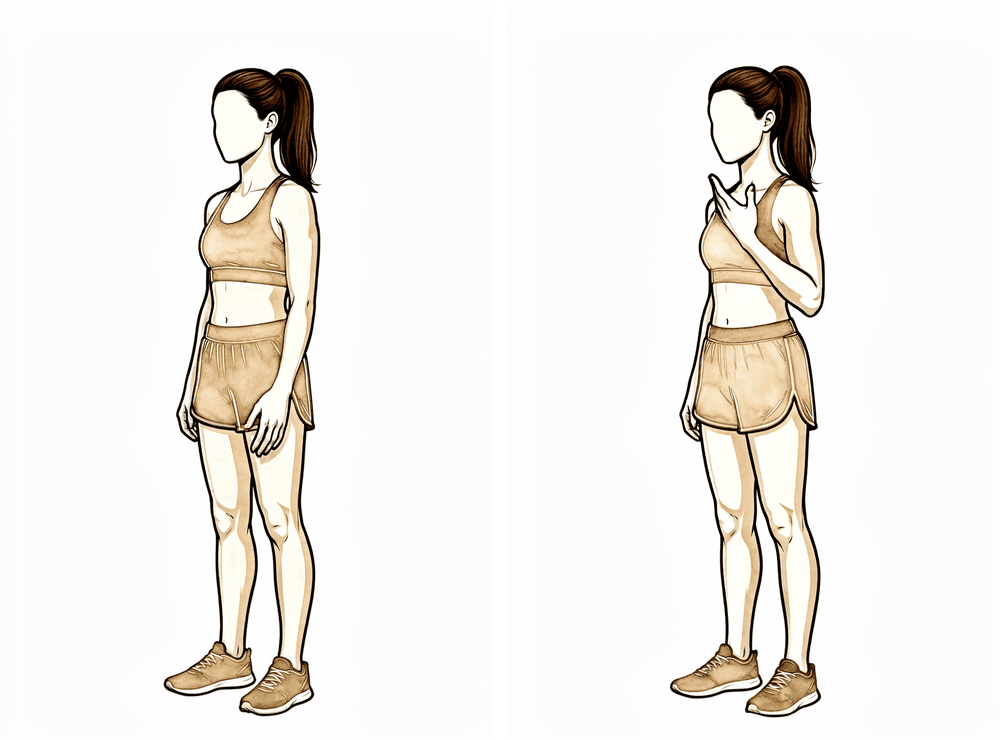
کہنی کو موڑنا اور سیدھا کرنا (آرام کی حد تک)
ہتھیلی اوپر کی طرف رکھ کر اپنی کہنی کو آہستگی سے کندھے کی طرف اتنا موڑیں جتنا آرام دہ ہو، پھر اسے آہستہ آہستہ واپس نیچے اتنا سیدھا کریں جتنا آرام دہ ہو۔ آپ کتنا حرکت دیتے ہیں اس کی کوئی حد نہیں — آرام کو اپنا رہنما بنائیں اور ہمواری سے حرکت کریں۔ بازو کا اوپری حصہ اپنے پہلو میں ٹکائے رکھیں۔
10 بار، دن میں 3 سے 4 بار
Kieran Hirpara 4.0
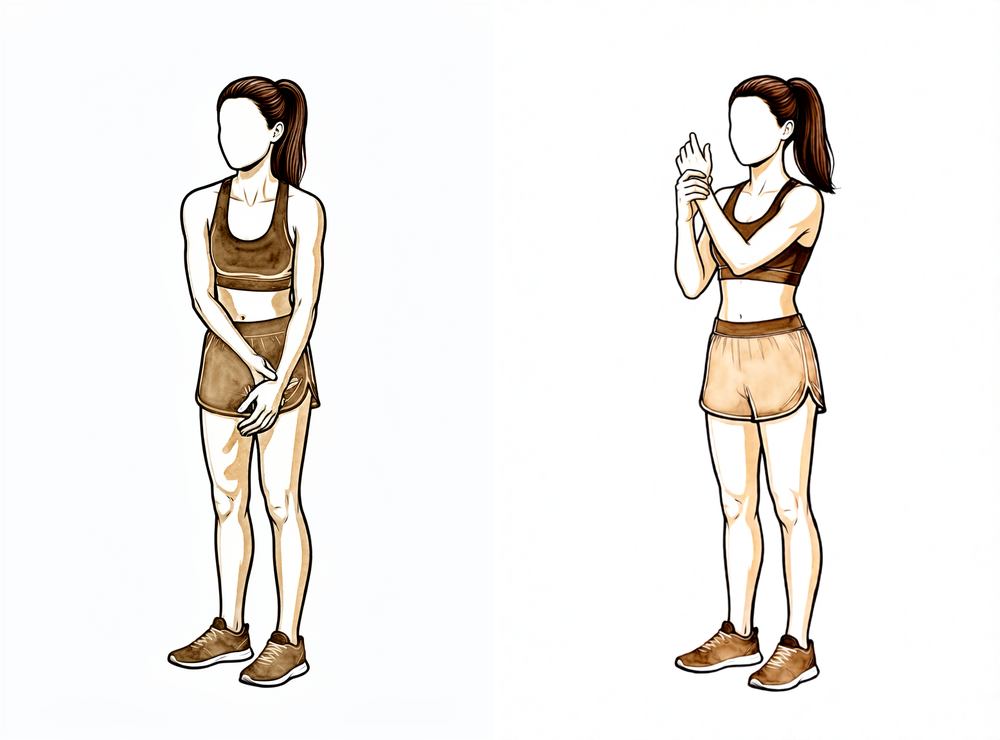
مدد کے ساتھ کہنی موڑنا
آپریشن والے بازو کو پوری طرح ڈھیلا چھوڑ دیں، پھر اپنے دوسرے ہاتھ سے کہنی کو آہستگی سے کندھے کی طرف موڑیں۔ آپ آپریشن والے بازو سے نہیں کھینچ رہے — کام دوسرا ہاتھ کرتا ہے۔ اس سے ابتدائی ہفتوں میں کہنی لچکدار رہتی ہے۔
10 بار، دن میں 3 سے 4 بار

Kieran Hirpara 4.0
کہنی سیدھی کرنا (آرام کی حد تک)
اپنی کہنی کو آہستہ آہستہ نیچے ایک آرام دہ حالت تک سیدھا کریں اور پھر واپس اوپر موڑیں۔ جتنا آرام اجازت دے، پوری طرح سیدھا کرنے کی اجازت ہے — سیدھا کرنے والی سمت کو روکنے یا محدود رکھنے کی ضرورت نہیں۔ آہستگی سے حرکت کریں اور کسی بھی اچانک یا زبردستی کی حرکت سے پرہیز کریں۔
10 بار، دن میں 3 سے 4 بار
Kieran Hirpara 4.0
بازو کے نچلے حصے کی گردش (ہتھیلی اوپر / ہتھیلی نیچے)
اپنی کہنی کو پہلو سے لگا لیں اور اسے تقریباً سیدھے زاویے (right angle) تک موڑیں۔ آہستگی سے اپنی ہتھیلی کو اوپر چھت کی طرف گھمائیں، ایک لمحہ رکیں، پھر اسے نیچے فرش کی طرف گھمائیں۔ کہنی کو پہلو سے لگائے رکھیں تاکہ حرکت بازو کے نچلے حصے سے ہو، کندھے سے نہیں۔
ہر سمت میں 10 بار، دن میں 3 سے 4 بار

Kieran Hirpara 4.0
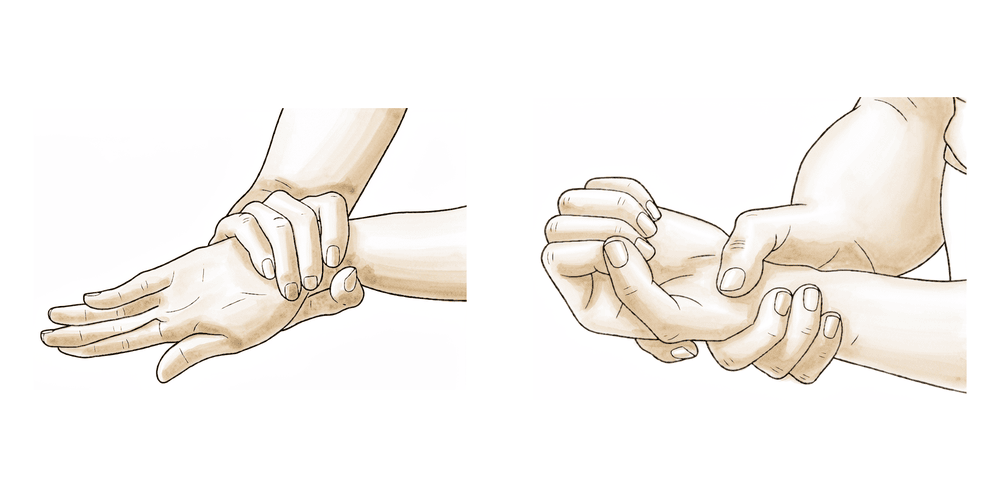
ہاتھ، کلائی اور گرفت کی حرکت
شروع سے ہی اپنے ہاتھ اور انگلیوں کو حرکت میں رکھیں۔ اپنا ہاتھ پورا کھولیں، پھر ہلکی مٹھی بنائیں اور چھوڑ دیں۔ اپنی کلائی کو بھی اوپر نیچے حرکت دیں۔ اس سے کہنی کے ٹھیک ہونے کے دوران ہاتھ لچکدار رہتا ہے اور اکڑاؤ اور سوجن سے بچاؤ ہوتا ہے۔
10 سے 15 بار، دن میں کئی بار
Kieran Hirpara 4.0
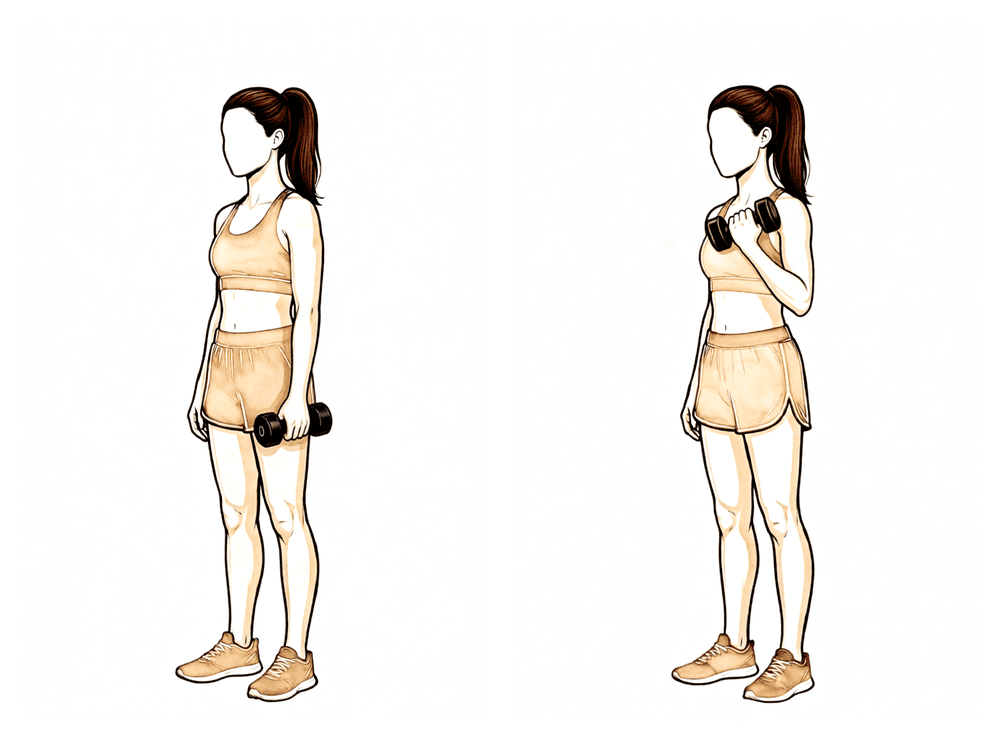
مزاحمت کے ساتھ بائسیپس کرل (تقریباً 4 ماہ سے)
یہ ورزش صرف اور صرف اس وقت شروع کریں جب ڈاکٹر ہِرپرا یا آپ کا تھراپسٹ آپ کو وزن ڈالنا شروع کرنے کی اجازت دے دے (تقریباً 4 ماہ سے)۔ ہتھیلی اوپر کی طرف رکھ کر ایک ہلکا وزن پکڑیں اور اسے آہستہ آہستہ کندھے کی طرف موڑ کر اوپر لائیں، پھر قابو کے ساتھ نیچے لائیں۔ بہت ہلکے وزن سے شروع کریں اور اگلے ہفتوں میں مزاحمت بتدریج بڑھائیں۔
10 سے 15 بار، اجازت ملنے کے بعد بتدریج بڑھاتے ہوئے
Kieran Hirpara 4.0
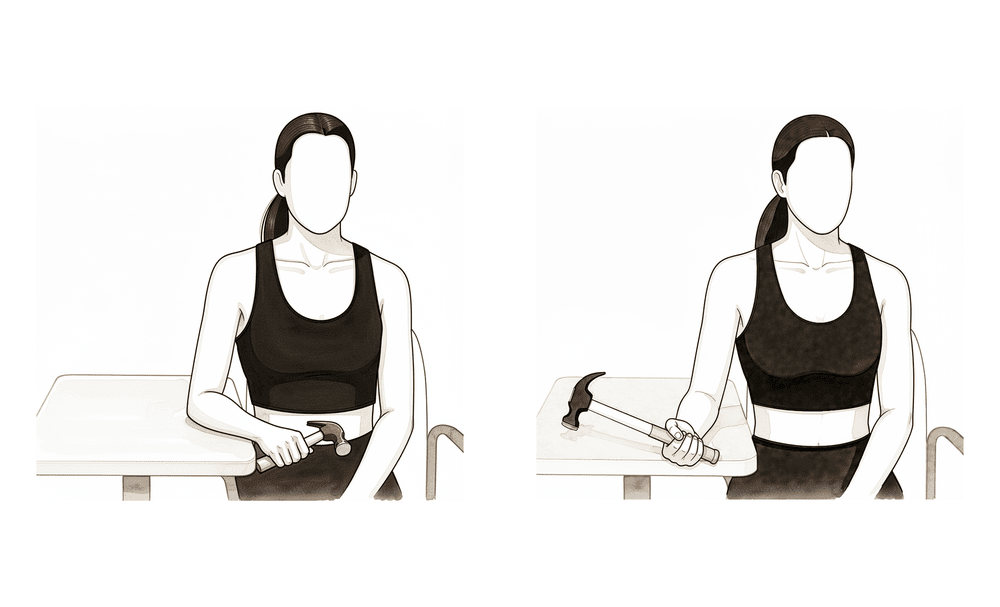
مزاحمت کے ساتھ بازو کے نچلے حصے کی گردش (تقریباً 4 ماہ سے)
یہ ورزش صرف اور صرف اس وقت شروع کریں جب آپ کو وزن ڈالنا شروع کرنے کی اجازت مل جائے (تقریباً 4 ماہ سے)۔ کہنی پہلو سے لگا کر، اپنی ہتھیلی کو کسی بینڈ کی ہلکی مزاحمت کے خلاف، یا ایک سرے سے پکڑے ہوئے ہلکے وزن کے خلاف، اوپر کی طرف گھمائیں، پھر قابو کے ساتھ واپس لائیں۔ اس سے گھمانے کی وہ طاقت (supination، یعنی ہتھیلی اوپر کی طرف گھمانا) دوبارہ بنتی ہے جو بائسیپس فراہم کرتا ہے۔ ہلکے سے شروع کریں اور بتدریج آگے بڑھیں۔
10 سے 15 بار، اجازت ملنے کے بعد بتدریج بڑھاتے ہوئے
یہ آپ کو دیے گئے ورزشوں کے پرچے کی وہ ورزشیں ہیں جو ابتدائی ہفتوں میں آپ کی کہنی، بازو کے نچلے حصے اور ہاتھ کو حرکت میں رکھنے کے لیے ہیں۔ انہیں کرنے کے لیے سلنگ اتار دیں۔ صرف اتنا حرکت دیں جتنا آرام دہ ہو، اور انہیں ڈاکٹر ہِرپرا اور اپنے تھراپسٹ کی رہنمائی کے مطابق شروع کریں۔ طاقت بڑھانے کی دو ورزشیں بعد میں شامل کی جاتی ہیں: صرف اس وقت جب تقریباً 4 ماہ پر آپ کو وزن ڈالنا شروع کرنے کی اجازت مل جائے۔
آپ کا طبی پروٹوکول
اس صفحے کا باقی حصہ کارٹیکل بٹن کے ذریعے بائسیپس کے نچلے ٹینڈن کی مرمت کے بعد بحالی کا طبی پروٹوکول ہے۔ یہ حصہ آپ کے فزیوتھراپسٹ یا ہینڈ تھراپسٹ کو دیا جانا ہے، اور نیچے ہر مرحلہ عام فہم زبان میں اس وضاحت سے شروع ہوتا ہے کہ کیا ہو رہا ہے۔
رہنما اصول ہے ابتدائی آرام دہ حرکت اور تاخیر سے وزن ڈالنا: کارٹیکل بٹن والی مرمت اتنی مضبوط ہے کہ پہلے دن سے بغیر پابندی کے حرکت کی اجازت دے سکے، اس لیے نہ قبضے والا بریس ہے اور نہ ایکسٹینشن بلاک (extension block، کہنی کو پوری طرح سیدھا ہونے سے روکنا)۔ مرمت کی مضبوطی اکڑاؤ روکنے کے لیے استعمال کی جاتی ہے، جلد وزن ڈالنے کا جواز بنانے کے لیے نہیں؛ ٹینڈن اور ہڈی کے جڑنے کی حفاظت اور دوبارہ پھٹنے کا خطرہ کم سے کم رکھنے کے لیے مزاحمت والی طاقت کی ورزشیں اور وزن اٹھانا جان بوجھ کر مؤخر کیے جاتے ہیں۔
پہلا مرحلہ — محفوظ، آرام دہ حرکت (ہفتہ 0 سے 6)
ایک سادہ سلنگ آرام کے لیے اور بازو کے زور والے استعمال سے بچنے کی یاد دہانی کے طور پر پہنی جاتی ہے؛ ورزشوں اور صفائی ستھرائی کے لیے اسے اتار دیا جاتا ہے۔ مقصد یہ ہے کہ آرام دہ، تقریباً پوری حرکت کی حد برقرار رکھی جائے اور مرمت کو ہر قسم کے وزن سے بچایا جائے۔
آپ کے فزیوتھراپسٹ کے لیے:
- حرکت روکنا (immobilisation): 6 ہفتے سادہ سلنگ، ورزشوں اور صفائی ستھرائی کے لیے اتاری جائے۔ قبضے والا بریس نہیں؛ ایکسٹینشن بلاک نہیں۔
- حرکت کی حد: پہلے دن (دن 1) سے آرام کی اجازت کے مطابق ہر حرکت: کہنی کو موڑنا (flexion)، سیدھا کرنا (extension) اور بازو کے نچلے حصے کی گردش، ایکٹو اور پیسو دونوں۔ حرکت کے دائرے پر کوئی پابندی نہیں اور کوئی ایکسٹینشن بلاک نہیں۔
- اہداف: آرام دہ پوری حرکت کی حد برقرار رکھنا؛ مرمت کو وزن سے بچانا؛ ہاتھ، کلائی اور کندھے کو حرکت پذیر رکھنا۔
- ورزشیں: آرام کی حد تک کہنی کو ایکٹو طور پر موڑنا/سیدھا کرنا؛ مدد کے ساتھ (پیسو) کہنی موڑنا؛ کہنی پہلو سے لگا کر بازو کے نچلے حصے کی ایکٹو گردش، ہتھیلی نیچے اور اوپر (pronation/supination)؛ ہاتھ، کلائی اور گرفت کی حرکت؛ کندھے کی پچھلی چپٹی ہڈی (shoulder blade) اور کندھے کی حرکت کی حد۔ بائسیپس یا ہتھیلی اوپر گھمانے (supination) پر مزاحمت والا کوئی وزن نہیں۔
- احتیاطیں: نہ وزن اٹھانا، نہ زور سے گرفت، نہ مزاحمت والی طاقت کی ورزشیں؛ وزن کے خلاف اچانک، زبردستی ایسینٹرک (eccentric) انداز میں سیدھا کرنے سے پرہیز؛ کندھے کو حد سے زیادہ پیچھے لے جانے (hyperextension) سے پرہیز۔
- اگلے مرحلے میں جانے کی شرائط: زخم بھر چکا ہو، آرام دہ اور تقریباً پوری حرکت کی حد ہو، اور 6 ہفتے پر سلنگ اتر چکی ہو۔
دوسرا مرحلہ — پوری حرکت، بغیر وزن (ہفتہ 6 سے تقریباً 4 ماہ)
سلنگ بند کر دی جاتی ہے۔ بازو کو روزمرہ کے ہلکے کاموں کے لیے آزادی سے استعمال کیا جاتا ہے، لیکن مزاحمت والے وزن اور وزن اٹھانے کے بغیر: ٹینڈن ابھی ہڈی کے ساتھ پختہ ہو رہا ہوتا ہے، اور یہی وہ مدت ہے جب وزن کے خلاف احتیاط سب سے زیادہ اہم ہوتی ہے، حالانکہ حرکت محفوظ ہے۔
آپ کے فزیوتھراپسٹ کے لیے:
- اہداف: دونوں طرف برابر، بغیر درد کی پوری حرکت کی حد؛ ہاتھ اور بازو کا معمول کا ہلکا روزمرہ استعمال۔
- حرکت کی حد / استعمال: آرام کی اجازت کے مطابق پوری حرکت؛ مزاحمت والے وزن اور وزن اٹھانے کے بغیر روزمرہ کا ہلکا استعمال۔
- ورزشیں: حرکت کی حد کی ورزشیں جاری رکھیں؛ ہاتھ، کلائی اور گرفت؛ کندھے کی پچھلی ہڈی اور کندھے کی کنڈیشننگ۔ ابھی بائسیپس یا ہتھیلی اوپر گھمانے پر مزاحمت والا کوئی وزن نہیں۔
- اگلے مرحلے میں جانے کی شرائط: بغیر درد کی پوری حرکت کی حد؛ زخم اور مرمت ٹھیک ہو چکے ہوں؛ اس کے بعد تقریباً 4 ماہ پر درجہ بدرجہ وزن ڈالنا شروع کریں۔
تیسرا مرحلہ — طاقت بڑھانا اور درجہ بدرجہ وزن ڈالنا (تقریباً 4 سے 6 ماہ)
وزن ڈالنا شروع ہوتا ہے۔ کہنی موڑنے (flexion) اور بازو کے نچلے حصے کو ہتھیلی اوپر گھمانے (supination) کے لیے ہلکی مزاحمت والی طاقت کی ورزشیں شروع کی جاتی ہیں، اور انہیں بتدریج روزمرہ کام کی ضروریات اور پھر ملازمت یا کھیل کی مخصوص ضروریات کی طرف بڑھایا جاتا ہے۔
آپ کے فزیوتھراپسٹ کے لیے:
- اہداف: موڑنے اور ہتھیلی اوپر گھمانے کی طاقت دوبارہ بنانا؛ کام اور کھیل پر واپسی۔
- ورزشیں: تقریباً 4 ماہ پر ہلکی مزاحمت والی طاقت کی ورزشیں اور وزن اٹھانا شروع کریں؛ بتدریج آگے بڑھیں (آئسوٹونک کرل (isotonic curls) اور مزاحمت کے ساتھ ہتھیلی اوپر گھمانا، پھر روزمرہ کام کی حرکات، پھر ملازمت اور کھیل کے مطابق وزن)۔
- اگلے مرحلے میں جانے کی شرائط: مزاحمت کے ساتھ موڑنا اور ہتھیلی اوپر گھمانا بغیر درد کے؛ طاقت دوسری طرف کے قریب پہنچ رہی ہو۔
کام اور سرگرمیوں پر واپسی
پہلے 6 ہفتوں میں توقع رکھیں کہ بازو صرف روزمرہ کے ہلکے، آرام دہ کاموں کے لیے استعمال ہوگا، اور حفاظت کے لیے سلنگ پہنی ہوگی۔ ہلکا دفتری کام یا ایک ہاتھ سے کیے جانے والے کام اکثر جلد ممکن ہو جاتے ہیں؛ زیادہ بھاری یا دونوں ہاتھوں سے کیا جانے والا جسمانی مشقت والا کام اس وقت تک انتظار کرتا ہے جب تک وزن ڈالنا شروع ہو کر بڑھ نہ جائے۔
اہم سنگ میل یہ ہیں:
- ابتدائی مہینوں میں نہ وزن اٹھانا اور نہ مزاحمت والا وزن ڈالنا: یہ جان بوجھ کر ہے، تاکہ ٹینڈن ہڈی کے ساتھ جڑ سکے۔
- تقریباً 4 ماہ سے ہلکا وزن اٹھانا اور طاقت کی ورزشیں، جو آہستگی سے شروع کر کے ہر ہفتے آگے بڑھائی جاتی ہیں۔
- ایسے کھیلوں میں واپسی جن میں کھلاڑی آپس میں نہیں ٹکراتے، تقریباً 4 ماہ سے؛ بغیر پابندی کے کھیل (ٹکراؤ والے کھیل، contact sport) تقریباً 6 ماہ پر، جب شرائط پوری ہوں: بغیر درد کی پوری حرکت کی حد، دوسری طرف کے کم از کم 90 سے 100 فیصد کے برابر طاقت، اور آپ کی ملازمت یا کھیل کی مخصوص ضروریات کو برداشت کرنے کی صلاحیت۔
جب تک آپ سلنگ پہنے ہوئے ہیں، آپ ہرگز گاڑی نہ چلائیں۔ گاڑی چلانا اس وقت دوبارہ شروع ہوتا ہے جب آپ سلنگ سے باہر آ جائیں اور گاڑی کو آرام سے اور محفوظ طریقے سے قابو کر سکیں، جس کی تصدیق آپ کے معائنے پر کی جاتی ہے۔ ہمیشہ ڈاکٹر ہِرپرا کے مخصوص مشورے پر عمل کریں، کیونکہ اوقات آپ کے کام اور کھیل کی ضروریات کے ساتھ مختلف ہو سکتے ہیں۔
آپ کے پروٹوکول کے بعد
یہ پروٹوکول کلینک کے صحت یابی سے متعلق عمومی مشوروں کے ساتھ مل کر کام کرتا ہے؛ آپریشن کے بعد درد پر قابو پانا اور زخم کی دیکھ بھال دیکھیں۔ اوپر دیا گیا مرحلہ وار منصوبہ بائسیپس کے نچلے ٹینڈن کی مرمت کے بعد بحالی سے متعلق شائع شدہ شواہد کے مطابق ہے، اور آپ کی آگے کی صحت یابی میں آپ کا فزیوتھراپسٹ یا ہینڈ تھراپسٹ اس بات کے مطابق انفرادی طور پر رہنمائی کرتا ہے کہ آپ کی کہنی کیسے بہتر ہو رہی ہے۔
Evidence & references
This is the clinical evidence summary written for health professionals. It is technical, and it lists the research this page was built from. You do not need to read it to understand your treatment or to make a decision about it.
Distal Biceps Tendon Repair — Post-operative Rehabilitation (Evidence)
Topic scope: Post-operative rehabilitation after surgical repair of a ruptured distal biceps tendon reattached to the radial tuberosity with cortical-button fixation. The protocol here reflects Dr Hirpara's practice — a sling-only, early-comfort-motion approach with deliberately delayed loading — set against the published spectrum of distal-biceps rehabilitation protocols.
Defining principle: Cortical-button fixation is the strongest available construct, and biomechanical and clinical evidence show it tolerates immediate motion safely. Dr Hirpara's stance is to spend that strength on early movement, not early loading: a simple sling for 6 weeks (no hinged brace, no extension block) with all motion to comfort from day 1 including extension, but with resisted strengthening and lifting held back until ~4 months to protect tendon-to-bone healing and minimise re-rupture, and unrestricted activity / return to sport at ~6 months on criterion-based clearance. This sits at the protective end of loading while matching the most current thinking on early motion for stiffness prevention.
Where this protocol sits in the evidence
Published distal-biceps protocols span a wide range, from rigid hinged-brace extension-block schemes to immediate unrestricted motion. Dr Hirpara's plan diverges from the "traditional" template in two deliberate ways:
- Immobilisation: A simple sling for comfort, not a hinged ROM brace, and no extension block. Motion is unrestricted to comfort from day 1. The mainstream BWH/MGB protocols instead use a posterior splint at 90° for 5–7 days, then a hinged brace with a 45°→30° extension block opened ~10°/week to full extension by ~6 weeks (or ~3 weeks in the accelerated variant). Dr Hirpara's approach is at the early-motion end and is justified by the strength of the cortical-button construct.
- Loading: Resisted strengthening and lifting are deferred to ~4 months. This is more conservative than the published loading timelines (accelerated resisted work at week 6; standard/MGB at weeks 8–10–12; light weights weeks 12–14). Crucially, this conservatism is a choice made despite having the construct that would permit earlier loading.
The endpoint — unrestricted activity / return to sport at ~6 months, criterion-based — is the single most commonly cited endpoint across protocols and matches the mainstream consensus.
Key evidence and controversies
-
Early/immediate motion is safe with modern fixation. (Moderate) Biomechanical work supports immediate motion: Bisson et al (AJSM 2007) found aggressive rehabilitation safe after the modified 2-incision approach, and Rose et al (KSSTA 2010) showed single-incision EndoButton/FiberWire repairs survive 2,000 immediate-motion cycles. Several series report no increased re-rupture with immediate post-operative motion. This underpins the sling-only, motion-to-comfort approach.
-
Cortical-button strength enables early motion. (Moderate) Cortical-button (± interference screw) fixation has the highest load-to-failure of the available constructs (Olsen JSES 2014; Spang JSES 2006; Lang OTSR 2018 — comparable functional outcomes across constructs but higher load-to-failure for cortical button). Spencer/Edwin (HAND 2008) argued EndoButton fixation strength may allow earlier ROM. This fixation strength is the explicit rationale for permitting immediate movement.
-
Mobilisation timing may not change outcome. (Moderate) A retrospective comparison found no clinically significant difference in failure, complications, ROM or patient-reported outcomes for early versus delayed mobilisation after primary distal biceps repair. This undercuts the urgency of accelerating loading and supports a measured progression.
-
Conservative rehab may lower re-rupture. (Consensus / survey) Rosenthal/Ting/Sher (JSES 2023), a survey of fellowship-trained elbow surgeons, suggests more conservative post-operative rehab may be associated with lower re-rupture risk — a direct counterweight to the accelerated-loading trend and the rationale for deferring loading to ~4 months. Phelps et al (JSES Int 2025, Level IV systematic review) found no consensus on the optimal return-to-sport protocol, with protocols ranging from immobilisation to immediate motion.
-
Tendon elongation in the mid window. (Moderate) Marshall et al (OJSM 2016, radiostereometric) showed the repaired tendon elongates mostly at 4–8 weeks post-op with minimal change at 8–16 weeks — a biomechanical argument for caution against aggressive loading in that mid window even when motion itself is safe.
-
Incision and complications. (Moderate) Grewal et al RCT (JHS 2010): no overall functional difference single vs double incision (flexion strength slightly greater with two-incision, more minor complications with single-incision). Amarasooriya systematic review (AJSM 2020): synostosis occurred only with double incision; fixation technique did not significantly affect re-rupture. Incision choice mainly drives complication-avoidance precautions, not the ROM timeline. Re-rupture rates overall are low (0–5.6%; Garon & Greenberg 2016).
Phased rehabilitation timeline (this protocol)
| Phase | Window | Sling / brace | ROM / use | Strengthening / loading | Criteria to progress |
|---|---|---|---|---|---|
| I — Protected comfort motion | Week 0 → 6 | Simple sling 6 wk, off for exercises/hygiene. No hinged brace, no extension block | All motion to comfort from day 1 — active + passive flexion, extension and forearm rotation. No arc restriction | None. No resisted biceps/supination loading; hand/wrist/grip and scapular/shoulder ROM maintained | Wound healed; comfortable near-full ROM; out of sling at 6 wk |
| II — Full motion, unloaded | Week 6 → ~4 mo | Sling off | Full symmetric pain-free ROM; light everyday use | None yet — light functional use without resisted loading or lifting | Full painless ROM; wound/repair settled → begin loading ~4 mo |
| III — Strengthening & graded loading | ~4 → 6 mo | — | Full ROM maintained | Start LIGHT resisted strengthening / lifting at ~4 mo; progress gradually (isotonic curls + resisted supination → functional → job/sport-specific) | Pain-free resisted flexion/supination; strength approaching the other side |
| Return to activity | ~6 mo | — | Unrestricted | Unrestricted activity / return to sport, criterion-based | Full painless ROM; strength ≥90–100% of the other side; tolerance of job/sport-specific demands |
One-line summary: simple sling 6 weeks with all motion to comfort from day 1 (no brace, no extension block) → full unloaded motion to ~4 months → light resisted loading from ~4 months → unrestricted activity / sport at ~6 months, criterion-based.
Evidence strength flags
- MODERATE (biomechanical + cohort): safety of immediate/early motion with cortical-button fixation (Bisson 2007; Rose 2010; Olsen 2014; Spang 2006; Lang 2018); no clinically significant difference early vs delayed mobilisation; low overall re-rupture rates.
- MODERATE (biomechanical): tendon elongation concentrated 4–8 weeks (Marshall 2016) — supports caution on mid-window loading.
- CONSENSUS / survey-level: more conservative rehab may lower re-rupture (Rosenthal 2023); no consensus on optimal return-to-sport protocol (Phelps 2025, Level IV). The specific phase timings of this protocol are expert/consensus-derived, not trial-derived.
Overall evidence strength: Moderate. Phased timelines rest on consistent institutional protocol consensus reinforced by biomechanical studies and retrospective cohorts; few prospective RCTs of the rehabilitation progression itself, and no consensus on the optimal return-to-sport protocol.
CITATIONS
RAG corpus (180,000+ Orthopaedic articles)
- Grewal R, Athwal GS, MacDermid JC, et al. Single vs. double incision technique for the repair of distal biceps tendon ruptures: a randomized clinical trial. J Hand Surg Am. 2010.
- Amarasooriya M, Bain GI, Roper T, et al. Complications after distal biceps tendon repair: a systematic review. Am J Sports Med. 2020.
- Keener JD. Controversies in the surgical treatment of distal biceps tendon ruptures: single versus double-incision repairs. J Shoulder Elbow Surg. 2011;20(2):S113–S125.
- Dunphy TR, Hudson J, Batech M, et al. Surgical treatment of distal biceps tendon ruptures: an analysis of complications in 784 surgical repairs. Am J Sports Med. 2017;45(13):3020–3029.
- Bisson LJ, Gurske-de Perio J, Weber AE, et al. Is it safe to perform aggressive rehabilitation after distal biceps tendon repair using the modified 2-incision approach? A biomechanical study. Am J Sports Med. 2007.
- Rose DM, Archibald JD, Sutter EG, et al. Biomechanical analysis suggests early rehabilitation is possible after single-incision EndoButton distal biceps repair with FiberWire. Knee Surg Sports Traumatol Arthrosc. 2010;19(6).
- Marshall NE, Keller RA, Okoroha K, et al. Radiostereometric evaluation of tendon elongation after distal biceps repair. Orthop J Sports Med. 2016.
- Phelps BM, Birnbrich A, Singer W, et al. Postoperative rehabilitation and return to sport criteria following distal biceps tendon rupture surgery. JSES Int. 2025. (Level IV systematic review: no consensus on optimal RTS rehabilitation.)
- Rosenthal R, Ting RS, Sher D. Management of distal biceps tendon ruptures: a survey of fellowship-trained subspecialist elbow surgeons. J Shoulder Elbow Surg. 2023;32(10).
- Olsen JR, Shields E, Williams RB, et al. A comparison of cortical button with interference screw versus suture anchor techniques for distal biceps brachii tendon repairs. J Shoulder Elbow Surg. 2014;23(11):1607–1611.
- Spang JT, Weinhold PS, Karas SG. A biomechanical comparison of EndoButton versus suture anchor repair of distal biceps tendon injuries. J Shoulder Elbow Surg. 2006.
- Lang NW, Bukaty A, Sturz GD, et al. Treatment of primary total distal biceps tendon rupture using cortical button, transosseous fixation and suture anchor: a single center experience. Orthop Traumatol Surg Res. 2018.
- Edwin ES (Spencer EE Jr), Tisdale A, Kostka K, Ivy RE. Is therapy necessary after distal biceps tendon repair? HAND. 2008;3(4).
- Rubinger L, Solow M, Johal H, et al. Return to work following a distal biceps repair: a systematic review of the literature. J Shoulder Elbow Surg. 2020;29(5):1002–1009.
- Ford SE, Andersen JS, Macknet DM, et al. Major complications after distal biceps tendon repairs: retrospective cohort analysis of 970 cases. J Shoulder Elbow Surg. 2018;27(10):1898–1906.
- Cuzzolin M, Secco D, Guerra E, et al. Operative versus nonoperative management for distal biceps brachii tendon lesions: a systematic review and meta-analysis. Orthop J Sports Med. 2021.
- Garon MT, Greenberg JA. Complications of distal biceps repair. Orthop Clin North Am. 2016. (Re-rupture 0–5.6%.)
Published rehabilitation protocols (web)
- Brigham & Women's Hospital — Distal Biceps Tendon Repair Rehabilitation Protocol (standard). https://www.brighamandwomens.org/assets/BWH/patients-and-families/pdfs/elbow---distal-biceps-repair-protocol.pdf
- Brigham & Women's Hospital — Distal Biceps Tendon Repair Accelerated Protocol. https://www.brighamandwomens.org/assets/BWH/patients-and-families/rehabilitation-services/pdfs/elbow-accelerated-distal-biceps-repair-protocol-bwh.pdf
- Mass General Brigham Sports Medicine — Rehabilitation Protocol for Distal Biceps Tendon Repair (rev. 10/2021). https://www.massgeneral.org/assets/mgh/pdf/orthopaedics/sports-medicine/physical-therapy/rehabilitation-protocol-for-distal-biceps-repair.pdf