Patients › Rehabilitation
فریکچر کے بعد کندھے کے جوڑ کی تبدیلی
Rehabilitation after hemiarthroplasty or reverse shoulder replacement for a proximal humerus fracture — slower than elective replacement while the tuberosities heal.
یہ پروٹوکول ٹوٹے ہوئے کندھے (بازو کے اوپری حصے کی ہڈی کے اوپری سرے کا فریکچر (ہڈی کا ٹوٹنا)، proximal humerus fracture) کے لیے کیے گئے کندھے کے جوڑ کی تبدیلی کے آپریشن کے بعد آپ کی صحت یابی میں رہنمائی کرتا ہے، جو ڈاکٹر کیرن ہِرپرا Mater Private Hospital Rockhampton میں کرتے ہیں۔ فریکچر کی نوعیت کے مطابق یہ تبدیلی ریورس شولڈر ریپلیسمنٹ (reverse shoulder replacement، کندھے کی الٹی تبدیلی جس میں جوڑ کے گولے اور پیالے کی جگہ بدل دی جاتی ہے) یا ہیمی آرتھروپلاسٹی (hemiarthroplasty، یعنی صرف جوڑ کے گولے کو تبدیل کرنا) ہو سکتی ہے۔ دونوں صورتوں میں بحالی کا سفر ایک جیسا ہوتا ہے، کیونکہ رفتار کا تعین امپلانٹ (جسم میں لگایا گیا مصنوعی پرزہ) کی قسم سے نہیں بلکہ ہڈی کے ٹکڑوں کے جڑنے سے ہوتا ہے۔ نیچے ہر مرحلہ آسان زبان میں اس وضاحت سے شروع ہوتا ہے کہ کیا ہو رہا ہے اور سب سے زیادہ اہم کیا ہے، اور اس کے بعد آپ کے فزیوتھراپسٹ کے لیے لکھا گیا منظم پروٹوکول دیا گیا ہے: فزیوتھراپی کی اپنی پہلی ملاقات پر یہ صفحہ یا اس کی پی ڈی ایف ساتھ لائیں تاکہ آپ کی بحالی میں سب ایک ساتھ رہیں۔ آپ کا فزیوتھراپسٹ آپ کی صحت یابی کی پیش رفت کے مطابق اس منصوبے میں تبدیلی کر سکتا ہے۔
اگر آپریشن کے بعد آپ کو اپنے زخم کے بارے میں کوئی تشویش ہو تو کلینک سے رابطہ کریں۔ اکثر یہ مددگار ہوتا ہے کہ زخم کی تصویر لے کر جائزے کے لیے ای میل کر دیں۔
فریکچر کے بعد صحت یابی سست کیوں ہوتی ہے
جب کندھے کو آرتھرائٹس (جوڑ کی خرابی اور سوزش) یا گھسے ہوئے روٹیٹر کف (rotator cuff)، یعنی ٹینڈنوں کا وہ گروپ جو کندھے کو تھامتا اور گھماتا ہے، کی وجہ سے پہلے سے طے شدہ منصوبے کے تحت (elective) تبدیل کیا جاتا ہے، تو نئے جوڑ کے اردگرد کی ہڈی سالم ہوتی ہے، اور بحالی نرم بافتوں (soft tissue) کے بھرنے کی رفتار سے آگے بڑھ سکتی ہے۔ فریکچر کے بعد صورتحال مختلف ہوتی ہے۔ بازو کی ہڈی کے اوپری سرے پر موجود ہڈی کے دو ابھار (greater اور lesser tuberosities، یعنی بڑا اور چھوٹا ابھار، جہاں روٹیٹر کف کے پٹھے جڑتے ہیں) عموماً ٹوٹ کر الگ ہو چکے ہوتے ہیں، اور آپریشن کے دوران انہیں نئے مصنوعی جوڑ (prosthesis) کے گرد ٹانکوں سے واپس اپنی جگہ پر جوڑ دیا جاتا ہے۔ اب ان ٹکڑوں کو کسی بھی دوسرے فریکچر کی طرح ہڈی اور امپلانٹ کے ساتھ جڑنا ہوتا ہے، اور اس میں عموماً کئی ہفتوں سے لے کر کئی مہینوں تک کا وقت لگتا ہے۔
فریکچر کی وجہ سے کی گئی کندھے کی تبدیلی کے لیے شائع شدہ بحالی کے پروٹوکول اس نکتے پر متفق ہیں: بعد میں کندھا کتنا اچھا کام کرے گا، اس کا بہت زیادہ انحصار اس پر ہے کہ ابھار اپنی جگہ پر جڑتے ہیں یا نہیں، اور جلد یا زور سے کی گئی حرکت (یہاں تک کہ غیر فعال حرکت (passive movement) بھی، یعنی جب بازو ڈھیلا ہو اور کوئی اور اسے ہلائے) مرمت کو کھینچ کر اس جڑنے کو خطرے میں ڈال سکتی ہے۔ اسی لیے یہ پروٹوکول اسی راستے پر چلتا ہے جس پر پہلے سے طے شدہ ریورس شولڈر ریپلیسمنٹ کا پروٹوکول چلتا ہے۔ فریکچر کے بعد یہی سفر زیادہ آہستہ طے ہوتا ہے کیونکہ پہلے ہڈی کے ٹکڑوں کا جڑنا ضروری ہے۔ آپ کی بحالی میں ہر اگلا قدم دو چیزوں پر ایک ساتھ منحصر ہے: کافی وقت گزر چکا ہو، اور ایکسرے دکھائیں کہ ہڈی جڑ رہی ہے، جس کی تصدیق ڈاکٹر ہِرپرا کے ساتھ آپ کے معائنے پر ہو۔
کیا توقع رکھیں
جب آپ ہوش میں آئیں گے تو آپ کا بازو سُن ہوگا، اور احساس عموماً 6 سے 12 گھنٹوں کے اندر واپس آ جاتا ہے۔ شاذ و نادر ہی کچھ سُن پن یا کمزوری 2 سے 3 دن تک رہ سکتی ہے۔
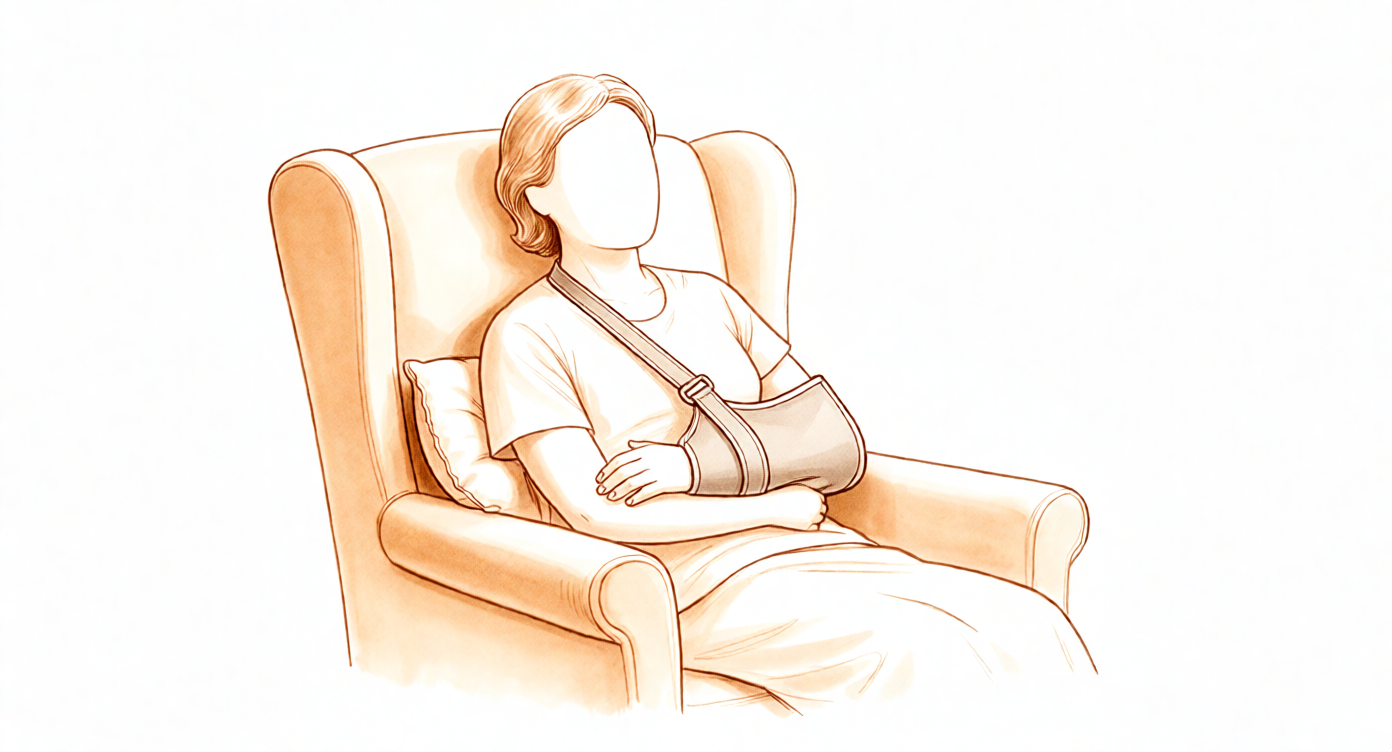
آپریشن کے بعد جب آپ جاگیں گے تو آپ کا بازو سلنگ (sling)، یعنی گلے سے لٹکی وہ پٹی جو بازو کو سہارا دیتی ہے، میں ہوگا، اور آپ کے کندھے پر ایک بڑا پیڈ ہوگا۔ یہ پیڈ ہسپتال سے چھٹی سے پہلے ہٹا دیا جائے گا۔ اس کے نیچے ایک واٹر پروف پٹی ہوگی جو سرجیکل گوند کی پٹی (زخم بند کرنے والا طبی گوند) کو ڈھانپے گی، اور اسے 2 ہفتوں تک ویسے ہی چھوڑا جا سکتا ہے۔ آپ کے ٹانکے خود گھل جانے والے ہیں اور انہیں نکالنے کی ضرورت نہیں، لیکن زخم کے دونوں سروں پر ٹانکوں کے کچھ سرے باہر رہ سکتے ہیں جنہیں 2 ہفتوں کے بعد جلد کے برابر سے کاٹا جا سکتا ہے۔ آپریشن کے 1 سے 2 ہفتے بعد زخم کے معائنے کے لیے ہماری نرس کے ساتھ آپ کی ملاقات طے کی جائے گی۔ اگر آپ پٹی کے معائنے کے لیے نہ آ سکیں تو 2 ہفتوں کے بعد آپ اپنی پٹی خود ہٹا سکتے ہیں۔
سرگرمیوں پر واپسی کے اندازاً اوقات (پہلے سے طے شدہ تبدیلی کے مقابلے میں سست، اور ہمیشہ اس بات سے مشروط کہ آپ کی ہڈی کیسے جڑ رہی ہے):
- گاڑی چلانا: کم از کم چھ ہفتے تک نہیں (یہ کندھے کے کسی بھی آپریشن پر لاگو ہوتا ہے)، اور جب تک آپ سلنگ پہنے ہوئے ہیں، تب بھی نہیں۔ زیادہ تر لوگ 6 سے 12 ہفتوں کے درمیان کسی وقت، حرکت اور کنٹرول واپس آنے پر، دوبارہ گاڑی چلانا شروع کرتے ہیں؛ اس بارے میں اپنے معائنے پر بات کریں۔
- تیراکی: بریسٹ اسٹروک تقریباً 4 ماہ سے؛ فری اسٹائل اس کے بعد، جیسا کہ آپ کے معائنے پر بتایا جائے۔
- وزن اٹھانا: تقریباً 12 ہفتوں تک کافی کے ایک کپ سے زیادہ بھاری کوئی چیز نہ اٹھائیں؛ 12 ہفتوں سے ہلکا وزن اٹھانا بتدریج بڑھتا ہے؛ 6 ماہ تک بھاری چیزیں اٹھانے سے پرہیز کریں۔
- کام: بیٹھ کر کیا جانے والا کام (دفتری کام): تقریباً 6 ہفتوں سے، جتنا آرام اجازت دے؛ جسمانی مشقت والا کام: ڈاکٹر ہِرپرا کی رہنمائی کے مطابق۔
شروع ہی سے توقعات کو حقیقت کے مطابق رکھنا بھی مفید ہے: فریکچر کی وجہ سے تبدیلی کے بعد عموماً کندھا اتنی پوری حرکت دوبارہ حاصل نہیں کرتا جتنی بغیر چوٹ والے کندھے میں ہوتی ہے۔ شائع شدہ نتائج کے مطابق عام نتیجہ یہ ہوتا ہے کہ بازو کو کمر (waist) اور کندھے کی اونچائی پر (اور اکثر سر سے اوپر بھی) آرام سے، قابو میں رہنے والے درد کے ساتھ استعمال کیا جا سکتا ہے، اور آپریشن کے بعد 12 سے 24 ماہ تک حرکت اور طاقت بہتر ہوتی رہتی ہے۔
اپنی سلنگ پہننا
آپ کی سلنگ (shoulder immobiliser، کندھے کو ساکن رکھنے والی پٹی) ہڈی کے ٹکڑوں کے جڑنے کے دوران آپ کے کندھے کو سہارا دیتی ہے۔ اصول سادہ ہیں:
- اسے 6 ہفتوں تک پہنیں، سوتے وقت بھی۔
- اسے صرف نہانے کے لیے، اپنی ورزشوں کے لیے (جب آپ کو طریقہ سکھا دیا جائے)، اور گھر پر آرام کرتے وقت اتاریں جب آپ کا بازو تکیے پر سہارا لیے ہو؛ جب بھی سلنگ اتری ہو، اپنا بازو اپنے پہلو کے ساتھ رکھیں۔
- چھ ہفتے تک گاڑی نہ چلائیں، اور جب تک آپ سلنگ پہنے ہوئے ہیں، تب بھی نہیں۔
- اگر کندھا سوجا ہوا ہو یا اس میں درد ہو، خاص طور پر ورزش کے بعد، تو برف استعمال کریں۔
شروع میں آپ کا فزیوتھراپسٹ سلنگ پہننے میں آپ کی مدد کرے گا، اور گھر جانے سے پہلے آپ کو اسے خود سنبھالنا سکھائے گا۔ اسے صحیح طریقے سے پہننا اہم ہے: ڈھیلی سلنگ آپ کو ٹھیک سے سہارا نہیں دیتی۔
- سلنگ پہنتے وقت ہمیشہ اس بات کا خیال رکھیں کہ آپ کی کہنی سلنگ کے کونے میں ہو اور اسے اچھی طرح سہارا ملا ہو۔
- صحیح طریقے سے پہنی گئی سلنگ کا سرا آرام سے آپ کی چھوٹی انگلی کے جوڑ (knuckle) پر آنا چاہیے۔ اگر آپ کا ہاتھ سلنگ سے بہت زیادہ باہر نکلا ہو تو یہ آپ کو مناسب سہارا نہیں دے گی۔
- آپ کی سلنگ میں ویلکرو کے دو پٹے ہیں: ایک گردن کے گرد اور ایک کمر کے گرد لگتا ہے۔
- اپنی کہنی اور بازو کے نچلے حصے (forearm) کو صحیح جگہ رکھنے کے بعد، جس بازو کا آپریشن نہیں ہوا اس سے اوپر والے پٹے کو گردن کے گرد گھما کر سامنے لائیں اور اسے سلنگ کے اوپر والے لوپ میں سے گزار کر لگائیں۔
- اسی طریقے سے نیچے والے پٹے کو کمر کے گرد لگائیں، اور اسے سلنگ کے نیچے والے لوپ میں سے گزار کر محفوظ کریں۔
سلنگ پہننے کے پورے عرصے میں ہر وقت اپنے بیٹھنے اور کھڑے ہونے کے انداز (posture) کا خیال رکھیں اور اپنے کندھوں کو ڈھلکنے نہ دیں۔ اچھے انداز کے لیے اپنے کان، کندھے اور کولہے ایک سیدھ میں رکھنے کی کوشش کریں۔ اچھا انداز آپ کی کمر کے لیے اہم ہے اور آپ کے کندھے کے جوڑ میں اکڑاؤ سے بچانے میں مدد دے گا۔ بیٹھتے وقت کمر کے نچلے حصے کے خم میں رکھا ہوا لپٹا ہوا تولیہ ایک اچھی یاد دہانی کا کام دے سکتا ہے۔
ہسپتال میں آپ کے پہلے دن
گھر جانے سے پہلے ہسپتال کے فزیوتھراپسٹ آپ کو ایک سادہ پروگرام شروع کروائیں گے۔ ان تین اصطلاحات کو سمجھنا مددگار ہے جو وہ استعمال کریں گے۔ فعال حرکت کی حد (active range of motion) کا مطلب ہے وہ حرکت جو آپ خود، بغیر کسی سہارے یا مدد کے کرتے ہیں۔ مدد سے فعال حرکت کی حد (active-assisted range of motion) کا مطلب ہے بازو کو حرکت دینے کے لیے اپنے دوسرے بازو (یا کسی چیز، جیسے چھڑی) کی مدد لینا۔ غیر فعال حرکت کی حد (passive range of motion) کا مطلب ہے کہ بازو پوری طرح ڈھیلا رہتا ہے جبکہ آپ کا دوسرا بازو (یا کوئی اور شخص) 100 فیصد کام کرتا ہے۔ فریکچر کی وجہ سے تبدیلی کے بعد، پہلے چھ ہفتوں تک آپریشن والے کندھے کو صرف غیر فعال طریقے سے، اور صرف ہلکی حدود کے اندر، حرکت دی جاتی ہے؛ جن جوڑوں کو آپ خود (فعال طور پر) حرکت دیتے ہیں وہ آپ کی کہنی، کلائی اور ہاتھ ہیں۔
ان پہلے دنوں کے لیے چند عملی باتیں:
- آپ کو سلنگ پہن کر سونا ہے۔
- ضرورت ہو تو درد میں آرام کے لیے برف استعمال کریں۔
- سلنگ پہنے ہوئے اپنے کندھے کو ڈھیلا چھوڑ دیں اور بازو کا وزن سلنگ کو اٹھانے دیں۔
- اپنی ورزشیں کرنے سے پہلے، اور فزیوتھراپی کی ملاقاتوں سے پہلے، اپنی درد کش دوا لیں۔
- آپ ورزشوں اور نہانے کے لیے اپنا بازو سلنگ سے نکال سکتے ہیں۔
- آپ کو 6 ہفتوں تک سلنگ پہننی ہے، خاص طور پر جب آپ گھر سے باہر ہوں۔
- آپریشن والی طرف کے ہاتھ کو ہلکے کاموں میں مصروف رکھیں: بازو سلنگ میں آرام کرتے ہوئے لکھنا، کھانا اور فون استعمال کرنا، سب کی حوصلہ افزائی کی جاتی ہے۔
- جب تک آپ نے اپنی فزیوتھراپی کا انتظام خود کرنے کا انتخاب نہ کیا ہو، آپ کے لیے ایک ملاقات طے کر دی گئی ہے جس کی تفصیل ہسپتال سے چھٹی کے وقت ملنے والے کاغذات میں موجود ہے۔
- اگر کوئی مسئلہ ہو تو کلینک کے دفتر سے رابطہ کریں یا اپنے فزیوتھراپسٹ کو بتائیں۔
مرحلہ I — ہڈی جڑنے کے دوران حفاظت (ہفتے 0 سے 6)
Kieran Hirpara 4.0
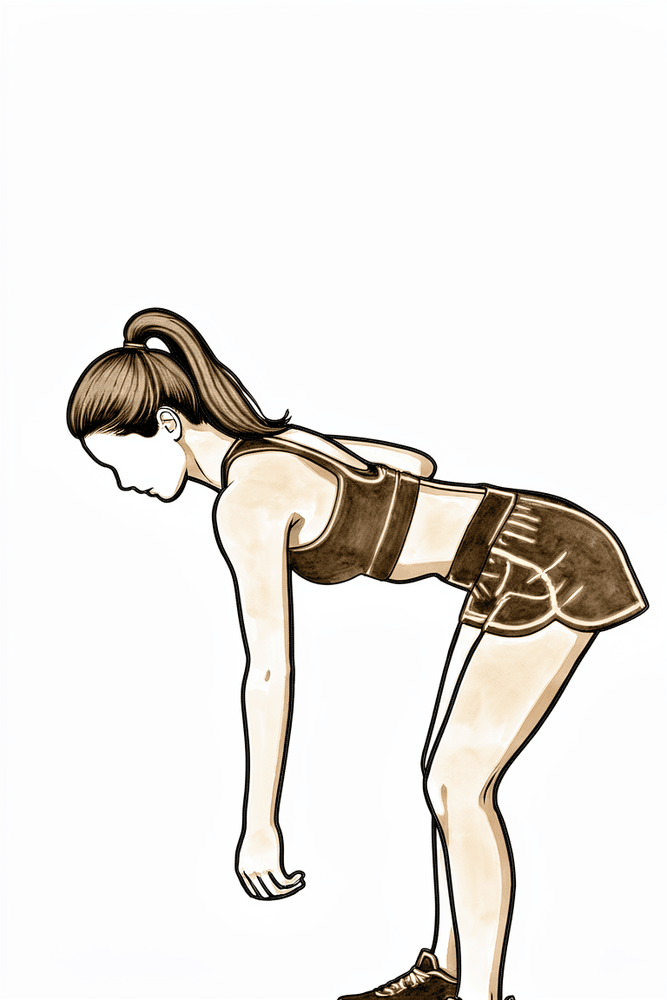
پینڈولم ورزشیں (پوری طرح ڈھیلا چھوڑ کر)
آگے کی طرف جھکیں، اپنے دوسرے ہاتھ سے میز کا سہارا لیں، اور آپریشن والے بازو کو بالکل ڈھیلا لٹکنے دیں۔ اپنے جسم کو ہلکے سے ہلا کر چھوٹے دائرے بنائیں — بازو غیر فعال طور پر جھولتا ہے اور کندھے کے پٹھے کوئی کام نہیں کرتے۔ اگر بازو ڈھیلا نہ رہ رہا ہو تو رک جائیں اور اپنے فزیوتھراپسٹ سے اپنا طریقہ چیک کروائیں۔
جیسا آپ کا فزیوتھراپسٹ بتائے
Kieran Hirpara 4.0
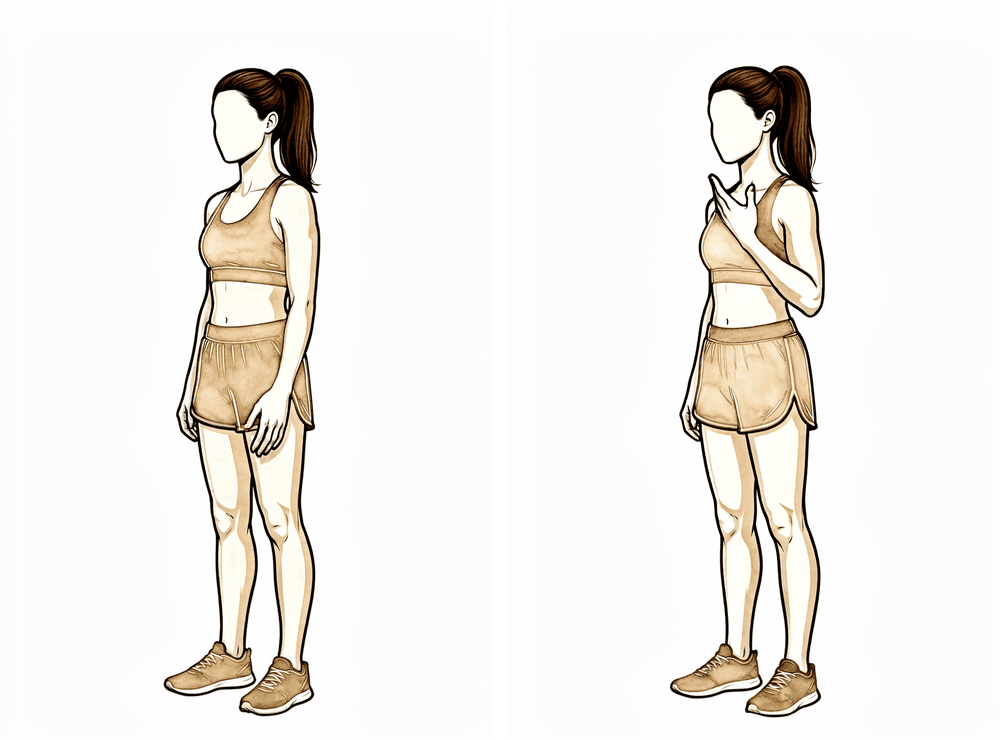
کہنی کو خود موڑنا
بازو سلنگ سے باہر ہو اور بازو کا اوپری حصہ آپ کے پہلو کے ساتھ ٹکا ہو، تو کہنی کو جتنا آرام سے ہو سکے موڑیں، پھر اسے پوری طرح سیدھا کریں۔ صرف کہنی حرکت کرے — کندھے کو ساکن اور بازو کو پہلو کے ساتھ رکھیں۔
جیسا آپ کا فزیوتھراپسٹ بتائے
Kieran Hirpara 4.0
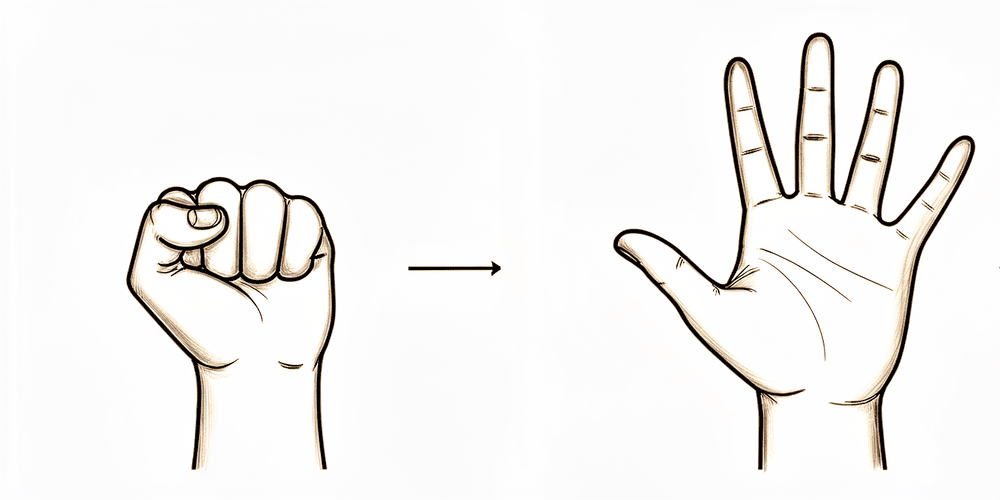
ہاتھ کھولنا اور بند کرنا
مضبوطی سے مٹھی بنائیں، پھر ہاتھ کھولیں اور انگلیوں کو پوری طرح پھیلائیں۔ دن بھر ہاتھ کو ہلکے کاموں میں مصروف رکھیں — بازو سلنگ میں آرام کرتے ہوئے لکھنا، کھانا اور فون استعمال کرنا، سب کی حوصلہ افزائی کی جاتی ہے۔
جیسا آپ کا فزیوتھراپسٹ بتائے
Kieran Hirpara 4.0
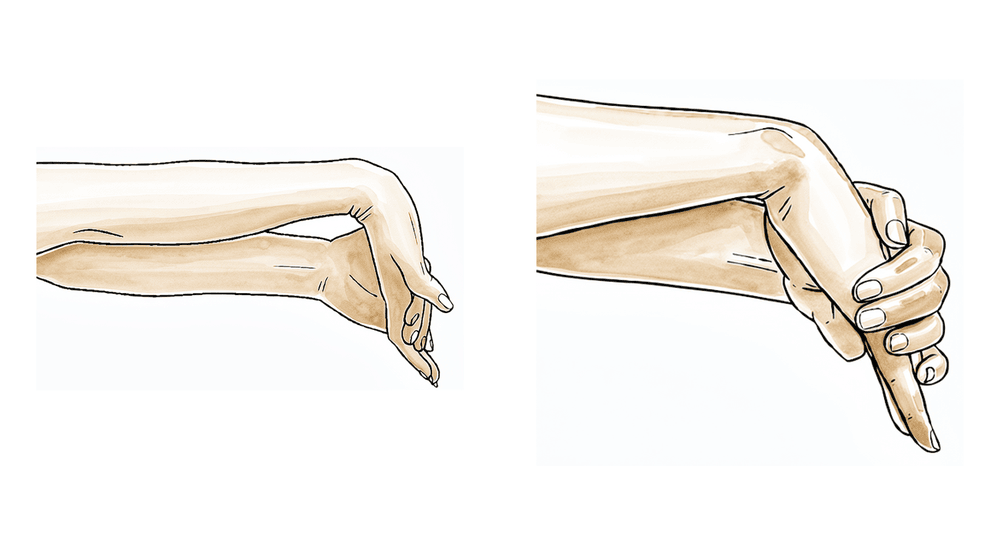
کلائی کی حرکت
بازو سلنگ سے باہر اور پہلو کے ساتھ ٹکا ہو، تو کلائی کو آگے، پیچھے اور ہلکے سے دائیں بائیں موڑ کر حرکت میں رکھیں۔ کہنی اور ہاتھ کی ورزشوں کی طرح، اس سے کندھے کی حفاظت کے دوران بازو کا نچلا حصہ لچکدار رہتا ہے۔
جیسا آپ کا فزیوتھراپسٹ بتائے
Kieran Hirpara 4.0
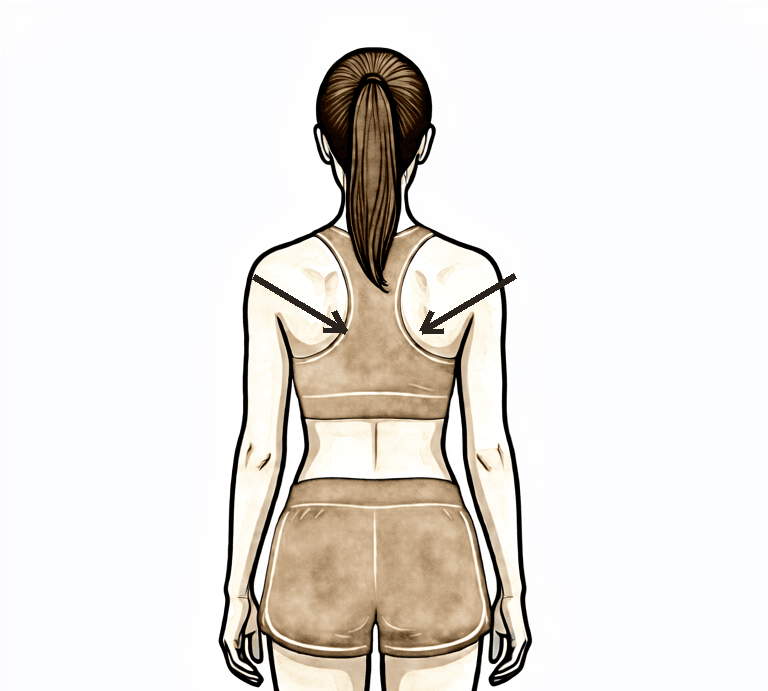
کندھے کی پچھلی ہڈی کو کسنا اور کندھے اچکانا
سیدھے بیٹھ یا کھڑے ہو کر، کمر کو خم دیے بغیر کندھے کی پچھلی ہڈیوں کو ہلکے سے نیچے اور آپس میں کسیں، چند سیکنڈ روکیں، پھر ڈھیلا چھوڑ دیں۔ ساتھ میں کندھے ہلکے سے اچکائیں — کندھوں کو کانوں کی طرف اٹھائیں اور پھر واپس ٹکنے دیں۔ دن بھر اپنے جسم کا انداز درست رکھیں: کان، کندھے اور کولہے ایک سیدھ میں۔
جیسا آپ کا فزیوتھراپسٹ بتائے
پہلے چھ ہفتے ایک ہی بات کے بارے میں ہیں: ابھار کے ٹکڑوں کو بغیر کسی خلل کے ہڈی اور مصنوعی جوڑ کے ساتھ جڑنے دینا۔ آپ دن رات سلنگ میں رہتے ہیں، اپنی کہنی، کلائی اور ہاتھ کو حرکت دیتے رہتے ہیں، اور خود کندھے کو صرف غیر فعال طریقے سے (ہلکے سے، اپنے فزیوتھراپسٹ کے ذریعے یا بازو کو بالکل ڈھیلا چھوڑ کر) نیچے دی گئی حدود کے اندر حرکت دی جاتی ہے۔ سب سے اہم اصول یہ ہیں: کندھے کو خود (فعال طور پر) حرکت نہ دیں، بازو کو حدود سے آگے باہر کی طرف نہ گھمائیں، اپنا ہاتھ کمر کے پیچھے نہ لے جائیں، کوئی بھی چیز نہ اٹھائیں، اور اپنے ہاتھوں کے زور پر خود کو اوپر نہ دھکیلیں۔ اگر آپ کی ریورس تبدیلی ہوئی ہے تو یہ اصول نرم بافتوں کے بھرنے کے دوران نئے جوڑ کو اپنی جگہ سے نکلنے (dislocation) سے بھی بچاتے ہیں۔ پیٹھ کے بل لیٹتے وقت اپنی کہنی کے نیچے ایک چھوٹا تکیہ یا لپٹا ہوا تولیہ رکھیں تاکہ کندھا پیچھے کی طرف نہ کھنچے۔
آپ کے فزیوتھراپسٹ کے لیے:
اہداف
- ابھار کی مرمت اور مصنوعی جوڑ کی حفاظت
- سوجن کم کرنا، درد کم سے کم رکھنا
- کہنی، کلائی اور ہاتھ میں فعال حرکت کی حد (ROM) برقرار رکھنا
- محفوظ حد کے اندر کندھے کی ہلکی، حفاظتی غیر فعال حرکت (PROM)
- کندھے کی پچھلی چپٹی ہڈی (shoulder blade) اور جسم کے انداز کے بارے میں آگاہی برقرار رکھنا
- مریض کی تعلیم
سلنگ
- 6 ہفتے، سوتے وقت بھی
- صرف نہانے دھونے اور ورزشوں کے لیے اتاری جائے؛ سلنگ سے باہر ہونے پر بازو پہلو کے ساتھ رہے
انتظام
- سوجن پر قابو: برف، دباؤ (compression)
- حرکت کی حد / حرکت پذیری:
- صرف غیر فعال حرکت (PROM)، محفوظ حد کے اندر: کندھے کی پچھلی ہڈی کی سطح (scapular plane) میں بازو اٹھانا زیادہ سے زیادہ 90 ڈگری تک؛ باہر کی طرف گھماؤ (external rotation, ER) پہلے 4 ہفتوں تک صرف نیوٹرل (0 ڈگری) تک، اس کے بعد زیادہ سے زیادہ 30 ڈگری تک؛ کمر کے پیچھے اندر کی طرف گھماؤ (internal rotation, IR) بالکل نہیں
- پینڈولم ورزشیں، پوری طرح ڈھیلا رکھ کر غیر فعال ورزش کے طور پر
- مدد سے فعال حرکت (AAROM): کندھے کے لیے بالکل نہیں
- فعال حرکت (AROM): کہنی، کلائی، ہاتھ اور انگلیاں؛ گردن (cervical spine)
- کندھے کی پچھلی ہڈی کو صحیح جگہ پر کسنا (scapular setting)، کندھے اچکانا اور جسم کے انداز کی درستگی
- سلنگ میں رہتے ہوئے ہاتھ کے ہلکے استعمال کی حوصلہ افزائی (لکھنا، کھانا، فون)
- ورزشوں اور فزیوتھراپی سیشنوں سے پہلے درد کش دوا
احتیاطیں
- کندھے کی نہ فعال حرکت (AROM) اور نہ مدد سے فعال حرکت (AAROM)
- اوپر دی گئی حدود سے آگے نہ غیر فعال اور نہ فعال باہر کی طرف گھماؤ (ER) (بڑے ابھار کی مرمت پر باہر کی طرف گھماؤ سے بوجھ پڑتا ہے)
- مزاحمت کے خلاف اندر کی طرف گھماؤ بالکل نہیں (چھوٹے ابھار / سب اسکیپولیرس (subscapularis) پٹھے کی مرمت پر اندر کی طرف گھماؤ سے بوجھ پڑتا ہے)
- ہاتھ کمر کے پیچھے نہ لے جائیں؛ بازو کو جسم کی طرف لانا (adduction)، اندر کی طرف گھمانا اور پیچھے لے جانا (extension) ایک ساتھ بالکل نہیں (ریورس تبدیلی میں جوڑ نکلنے کی پوزیشن)
- کوئی بھی چیز نہ اٹھائیں؛ ہاتھوں کے ذریعے جسم کا وزن نہ سہاریں (مثلاً کرسی یا بستر سے ہاتھوں کے زور پر اٹھنا)
- پیٹھ کے بل لیٹتے وقت کہنی کے نیچے چھوٹا تکیہ یا لپٹا ہوا تولیہ رکھیں، تاکہ کندھا پیچھے کی طرف (extension میں) نہ گرے
- کسی بھی حرکت کو زبردستی درد کی حد تک نہ لے جائیں
اگلے مرحلے میں جانے کی شرائط
- 6 ہفتے گزر چکے ہوں اور ساتھ ہی ایکسرے میں ابھار اپنی جگہ پر جڑتے ہوئے نظر آئیں، جس کی تصدیق ڈاکٹر ہِرپرا کے ساتھ آپ کے معائنے پر ہو
- منہ سے لی جانے والی درد کش دوا سے درد قابو میں ہو
- زخم کے بارے میں کوئی تشویش نہ ہو اور جوڑ کے ڈھیلے پن یا بار بار نکلنے (instability) کی کوئی علامت نہ ہو
مرحلہ II — حرکت کی بحالی (ہفتے 6 سے 12)
Kieran Hirpara 4.0
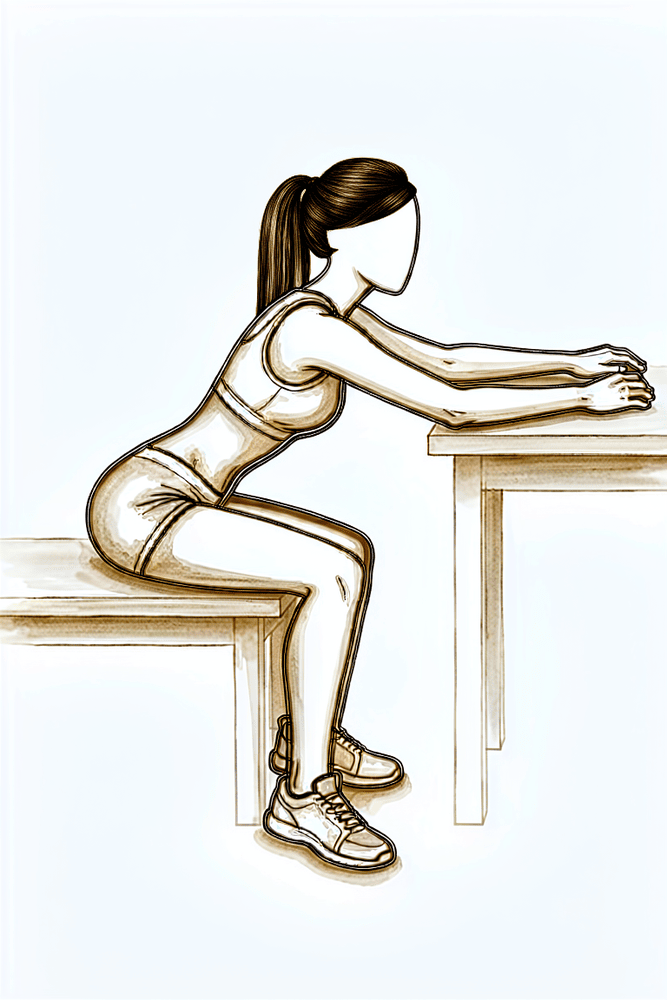
میز پر ہاتھ سرکانا
میز کے پاس بیٹھیں اور اپنے بازو کا نچلا حصہ اس پر رکھیں۔ ہلکے سے آگے جھکیں تاکہ آپ کا ہاتھ میز پر آگے سرکے اور بازو کا وزن میز اٹھائے، پھر واپس سیدھے بیٹھ جائیں۔ آرام کی حد میں آگے بڑھیں — درد تک زور نہ لگائیں۔
جیسا آپ کا فزیوتھراپسٹ بتائے
Kieran Hirpara 4.0
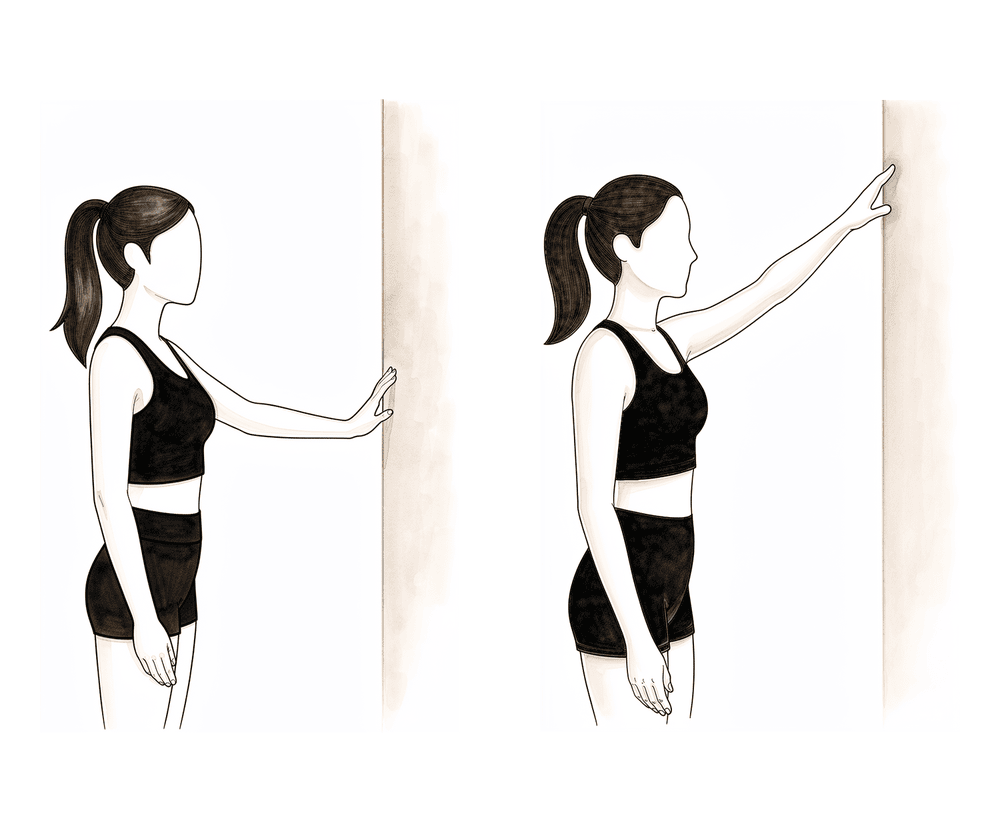
دیوار پر انگلیوں سے چڑھنا (finger walk)
دیوار کی طرف منہ کر کے کھڑے ہوں اور اپنی انگلیوں کو آہستہ آہستہ اس پر اوپر چلائیں، بازو کا وزن دیوار کو اٹھانے دیں، پھر قابو کے ساتھ انہیں واپس نیچے لائیں۔ صرف اتنا اوپر جائیں جتنا آرام سے ہو سکے، کندھا اچکائے یا کمر کو خم دیے بغیر۔
جیسا آپ کا فزیوتھراپسٹ بتائے
Kieran Hirpara 4.0
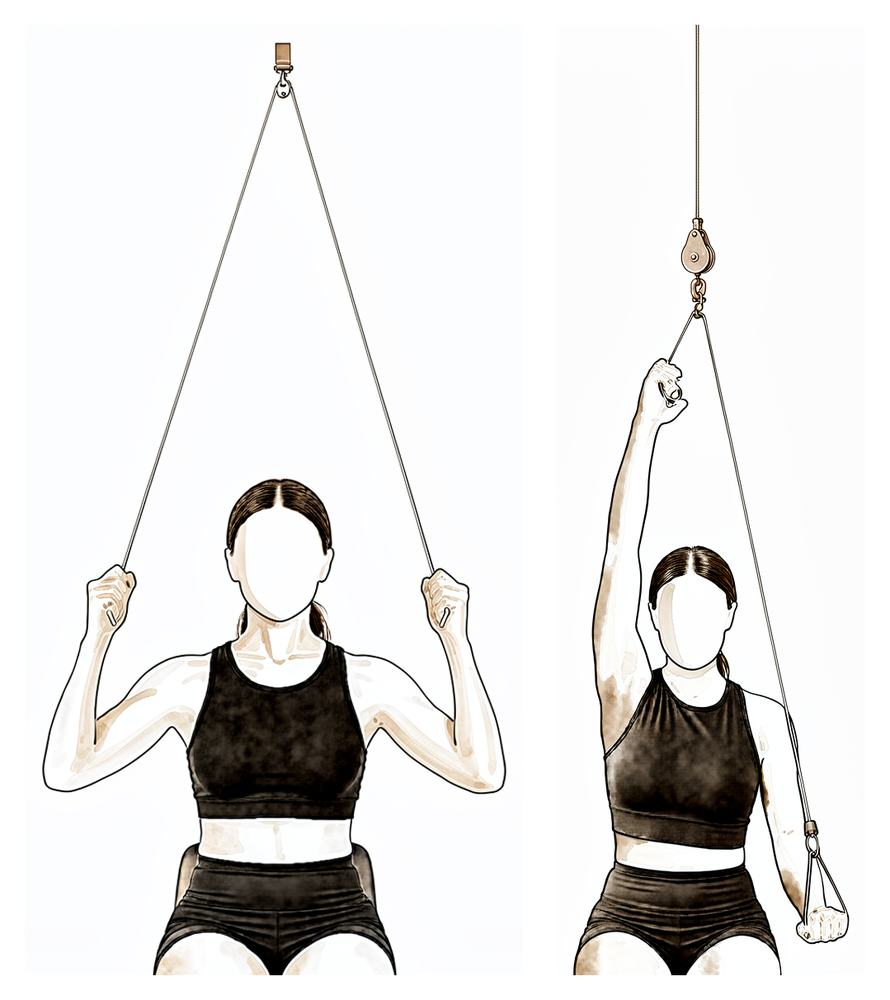
پُلی کی مدد سے بازو آگے اٹھانا
دروازے کے اوپر لگی پُلی کے نیچے بیٹھیں۔ آپریشن والے بازو کو ڈھیلا رکھتے ہوئے، دوسرے ہاتھ سے نیچے کھینچیں تاکہ رسی آپریشن والے بازو کو ہلکے سے آپ کے سامنے اوپر اٹھائے، پھر اسے آہستہ سے نیچے لائیں۔ کام اچھا بازو کرتا ہے — حرکت کی حد کو زبردستی نہ بڑھائیں۔
جیسا آپ کا فزیوتھراپسٹ بتائے
Kieran Hirpara 4.0
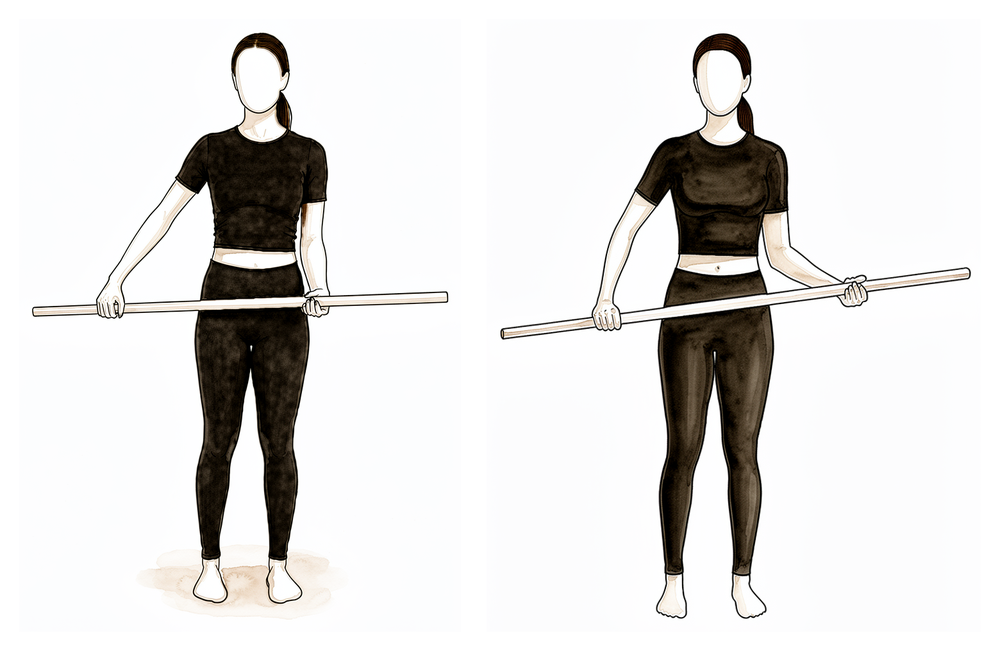
چھڑی کی مدد سے باہر کی طرف گھماؤ
پیٹھ کے بل لیٹ کر دونوں ہاتھوں میں ایک چھڑی پکڑیں، کہنیاں 90 ڈگری پر مڑی ہوئی اور پہلوؤں کے ساتھ لگی ہوں۔ اچھے بازو سے دھکیلیں تاکہ آپریشن والے بازو کا نچلا حصہ باہر کی طرف گھومے، اس حد کے اندر رہتے ہوئے جو آپ کے معائنے پر طے ہوئی ہو، پھر واپس لائیں۔ آپریشن والا بازو ڈھیلا رہے — حرکت کو کبھی زبردستی نہ کریں۔
جیسا آپ کا فزیوتھراپسٹ بتائے
Kieran Hirpara 4.0
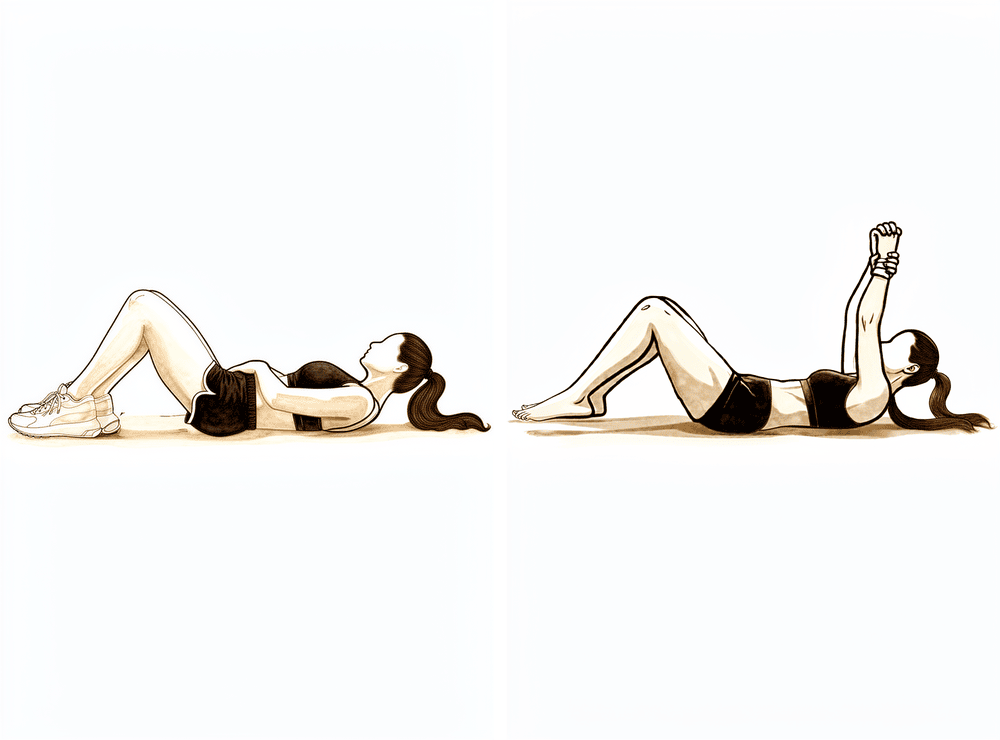
مدد سے بازو آگے اٹھانا (لیٹ کر)
پیٹھ کے بل لیٹیں اور اپنے اچھے بازو — یا دونوں ہاتھوں میں پکڑی چھڑی — کی مدد سے آپریشن والے بازو کو اپنے سامنے جتنا آرام سے ہو سکے اوپر اٹھائیں، پھر اچھے بازو کی مدد جاری رکھتے ہوئے اسے واپس نیچے لائیں۔ آپریشن والا کندھا ڈھیلا رہتا ہے اور کام اچھا بازو کرتا ہے، جس سے جڑتی ہوئی مرمت پر زور ڈالے بغیر حرکت کی حد واپس آنے میں مدد ملتی ہے۔
جیسا آپ کا فزیوتھراپسٹ بتائے
Kieran Hirpara 4.0
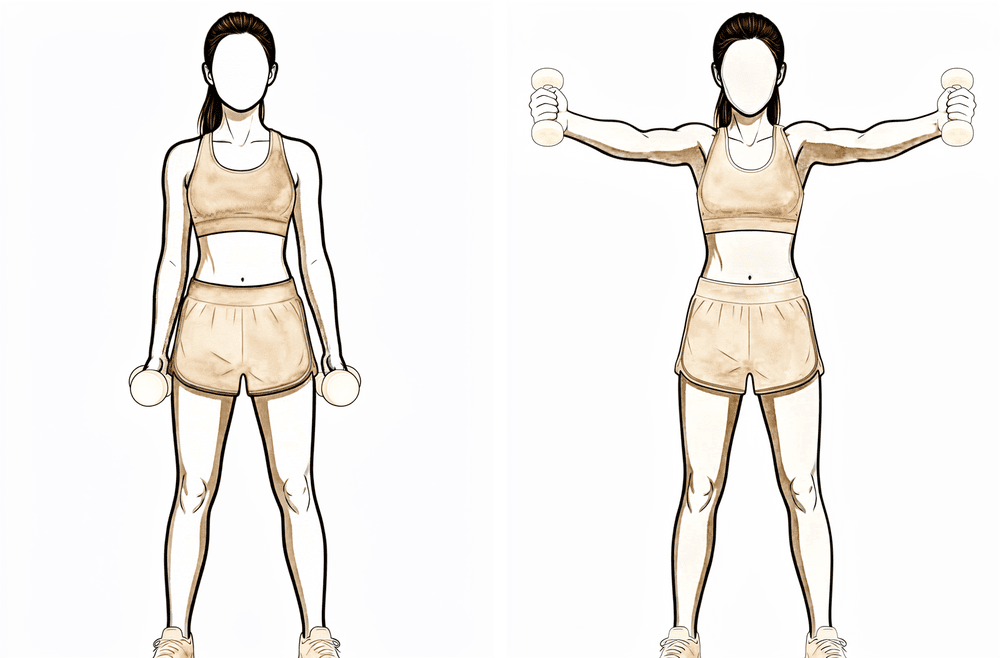
خود بازو ترچھا اٹھانا (اسکیپشن، full can)
جب آپ کا فزیوتھراپسٹ خود حرکت کی اجازت دے دے، تو بازو کو سامنے اور پہلو کے درمیان تقریباً 45 ڈگری کے زاویے پر باہر اٹھائیں، انگوٹھا اوپر کی طرف ہو جیسے آپ نے بھرا ہوا ڈبہ پکڑا ہو۔ صرف اتنا اوپر اٹھائیں جتنا آپ کا اچھا کنٹرول ہو، پھر آہستہ سے نیچے لائیں۔ اس سے ہڈی کے ابھاروں کے جڑنا شروع ہونے کے بعد خود بازو اٹھانے کا آغاز ہوتا ہے — اسے اس سے پہلے شروع نہ کریں۔
جیسا آپ کا فزیوتھراپسٹ بتائے
Kieran Hirpara 4.0
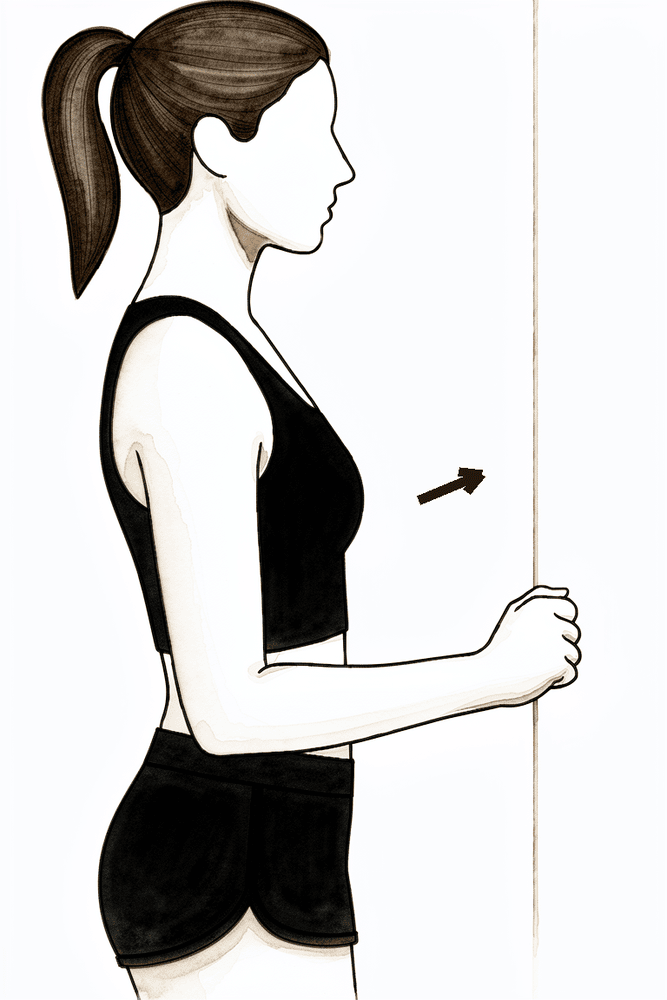
آئسومیٹرک آگے دباؤ (ڈیلٹائیڈ)
دیوار کی طرف منہ کر کے کھڑے ہوں، کہنی مڑی ہو اور آپ کی مٹھی اور دیوار کے درمیان ایک تہہ کیا ہوا تولیہ ہو۔ بازو کو حرکت دیے بغیر مٹھی کو ہلکے سے آگے دیوار میں دبائیں، چند سیکنڈ روکیں، پھر ڈھیلا چھوڑ دیں۔ اس سے ڈیلٹائیڈ پٹھا بغیر کسی حرکت کے متحرک ہوتا ہے — اسے صرف اس مرحلے کے آخر میں، ہلکے سے اور بغیر درد کے شروع کریں۔
جیسا آپ کا فزیوتھراپسٹ بتائے
Kieran Hirpara 4.0
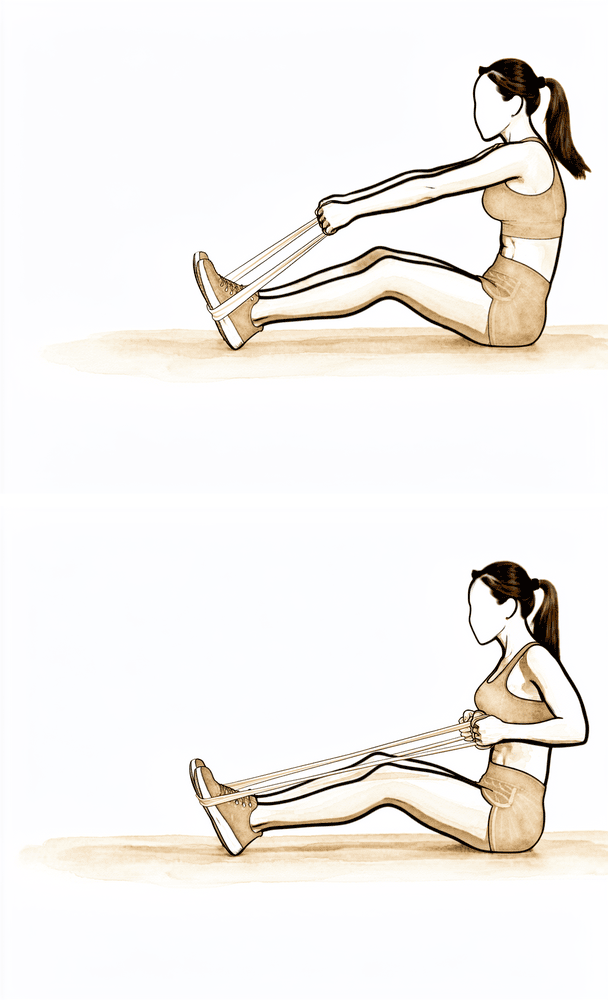
لو رو (low row)
سیدھے بیٹھ یا کھڑے ہو کر، کہنی کو پیچھے اور نیچے اپنے کولہے کی طرف کھینچیں، کندھے کی پچھلی ہڈی کو نیچے اور پیچھے کی طرف کستے ہوئے، ایک لمحہ روکیں، پھر چھوڑ دیں۔ اس سے کندھے کی پچھلی ہڈی کے وہ پٹھے درست پوزیشن میں آتے ہیں جو کندھے کو سہارا دیتے ہیں — اس مرحلے میں اسے ہلکا اور نرم رکھیں۔
جیسا آپ کا فزیوتھراپسٹ بتائے
Kieran Hirpara 4.0
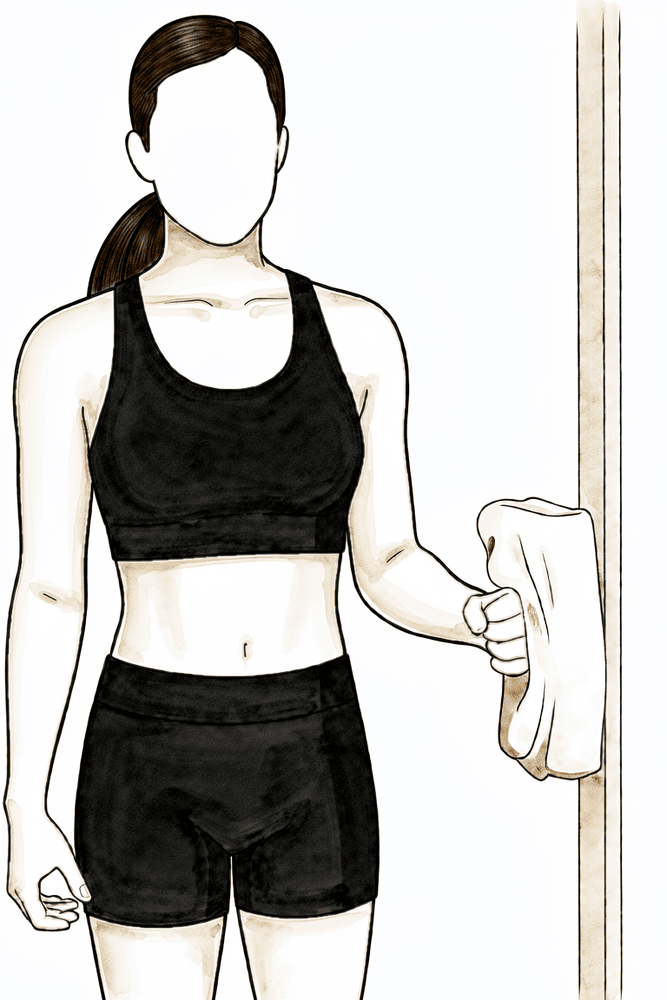
آئسومیٹرک باہر کی طرف گھماؤ
اس طرح کھڑے ہوں کہ کہنی پہلو کے ساتھ لگی اور کونے کی شکل میں (right angle) مڑی ہو، اور ہاتھ کی پشت دیوار یا دروازے کی چوکھٹ کے ساتھ ہو۔ بازو کو حرکت دیے بغیر ہلکے سے باہر کی طرف دبائیں، چند سیکنڈ روکیں، پھر ڈھیلا چھوڑ دیں۔ اسے صرف اس مرحلے کے آخر میں، ہلکے سے اور بغیر درد کے، جتنا روٹیٹر کف کی مرمت اجازت دے، شروع کریں۔
جیسا آپ کا فزیوتھراپسٹ بتائے
Kieran Hirpara 4.0
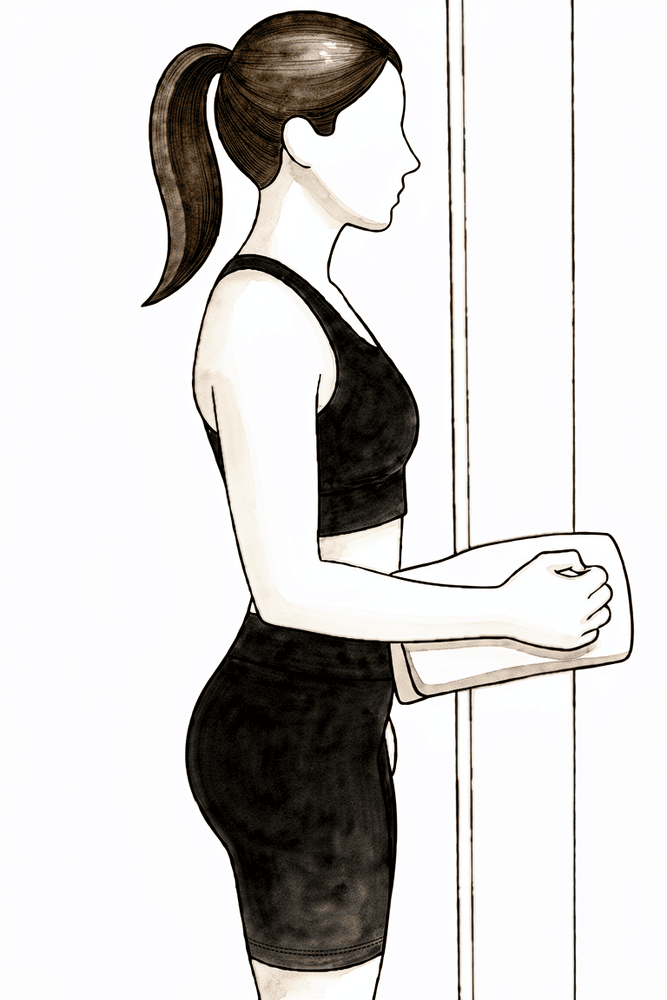
آئسومیٹرک اندر کی طرف گھماؤ
اس طرح کھڑے ہوں کہ کہنی پہلو کے ساتھ لگی اور کونے کی شکل میں (right angle) مڑی ہو، اور ہتھیلی دروازے کی چوکھٹ کے ساتھ ہو۔ بازو کو حرکت دیے بغیر ہلکے سے اندر کی طرف دبائیں، چند سیکنڈ روکیں، پھر ڈھیلا چھوڑ دیں۔ اسے صرف معائنے پر اجازت ملنے کے بعد شروع کریں — اندر کی طرف گھماؤ سے چھوٹے ابھار کی مرمت پر بوجھ پڑتا ہے، اس لیے اسے سب سے آخر میں رکھا جاتا ہے۔
جیسا آپ کا فزیوتھراپسٹ بتائے
Kieran Hirpara 4.0
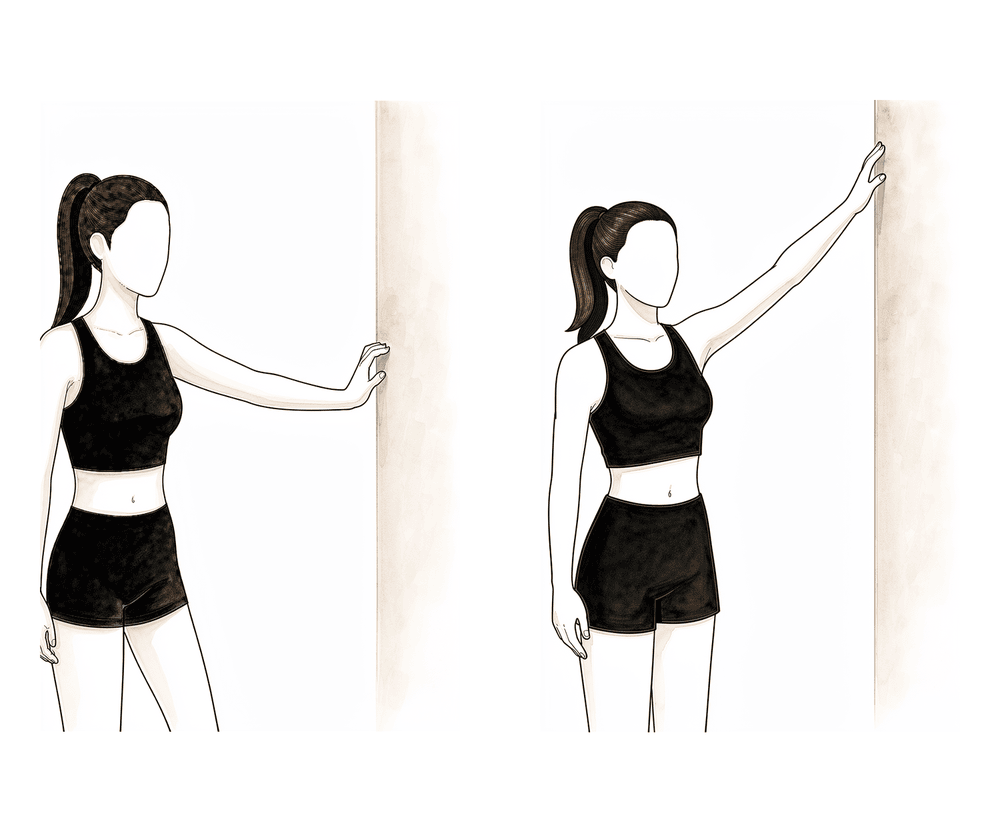
پہلو کی طرف دیوار پر انگلیوں سے چڑھنا
دیوار کی طرف پہلو کر کے کھڑے ہوں اور انگلیوں کے سرے دیوار پر ٹکائیں۔ اپنی انگلیوں کو دیوار پر پہلو کی طرف اوپر چلائیں، بازو کو جتنا آرام سے ہو سکے اٹھاتے ہوئے، پھر قابو کے ساتھ انہیں واپس نیچے لائیں۔ پہلو کی طرف حرکت دوبارہ حاصل کرتے وقت دیوار بازو کو سہارا دیتی ہے۔
جیسا آپ کا فزیوتھراپسٹ بتائے
چھ ہفتے والے معائنے پر ایکسرے سے دیکھا جاتا ہے کہ ہڈی کے ٹکڑے اپنی جگہ پر جڑ رہے ہیں یا نہیں۔ اگر ایسا ہو تو سلنگ اتر جاتی ہے اور کندھا خود حرکت کرنا شروع کرتا ہے، پہلے آپ کے دوسرے بازو، چھڑی یا پُلی (pulley، رسی اور چرخی والا آلہ) کی مدد سے، پھر خود (فعال طور پر)۔ ان ہفتوں میں غیر فعال حرکت کی حد بتدریج پوری حد کی طرف بڑھتی ہے، اور گھماؤ کی حدود نرم کر دی جاتی ہیں۔ ڈیلٹائیڈ (deltoid) اور کندھے کی پچھلی ہڈی کے اردگرد کے پٹھوں (periscapular muscles) کو ہلکے سے متحرک کرنے کا پہلا کام شروع ہوتا ہے۔ جو چیز ابھی شروع نہیں ہوتی وہ طاقت بڑھانے کی ورزشیں ہیں: مرمت ابھی پختہ ہو رہی ہے، اس لیے وزن اٹھانے کا اصول وہی رہتا ہے کہ کافی کے ایک کپ سے زیادہ بھاری کچھ نہیں، اور ہاتھوں کے زور پر خود کو اوپر دھکیلنا اب بھی منع ہے۔
آپ کے فزیوتھراپسٹ کے لیے:
اہداف
- چھ ہفتے والے معائنے کے بعد سلنگ کو بتدریج چھوڑنا
- آرام کے مطابق کندھے کی غیر فعال حرکت (PROM) کو پوری حد کی طرف بڑھانا
- کندھے کی مدد سے فعال حرکت (AAROM) شروع کرنا، اور اسے فعال حرکت (AROM) کی طرف بڑھانا
- ڈیلٹائیڈ اور کندھے کی پچھلی ہڈی کے اردگرد کے پٹھوں کو ہلکے سے متحرک کرنا شروع کرنا
- کمر اور سینے کی اونچائی پر روزمرہ کے ہلکے کاموں کے لیے بازو کا استعمال بحال کرنا
- مریض کی تعلیم
سلنگ
- چھ ہفتے والے معائنے کے بعد بند کر دیں؛ چھوڑنے کے پہلے ایک دو ہفتوں کے دوران ہجوم میں حفاظت کے لیے گھر سے باہر پہنی جا سکتی ہے
انتظام
- ضرورت کے مطابق مرحلہ I کے اقدامات جاری رکھیں
- حرکت کی حد / حرکت پذیری:
- غیر فعال حرکت (PROM): درد کا خیال رکھتے ہوئے تقریباً ہفتے 8 سے 10 تک تمام سمتوں میں پوری حد کی طرف بڑھائیں
- مدد سے فعال حرکت (AAROM): میز پر ہاتھ سرکانا (table slides)، دیوار پر انگلیوں سے چڑھنا (wall climbs)، پُلی، چھڑی کی مدد سے بازو آگے اٹھانا (flexion) اور باہر کی طرف گھمانا، پیٹھ کے بل لیٹ کر شروع کر کے بیٹھنے کی پوزیشن کی طرف
- فعال حرکت (AROM): جب مدد سے فعال حرکت آرام دہ ہو جائے اور حرکت کا معیار اچھا ہو تب شروع کریں، پیٹھ کے بل لیٹ کر بازو آگے اٹھانے سے آغاز کر کے سیدھی پوزیشن میں بازو آگے اٹھانے اور اسکیپشن (scaption، بازو کو سامنے اور پہلو کے درمیان ترچھا اٹھانا) کی طرف
- باہر کی طرف گھماؤ (ER): جڑنے کی تصدیق کے بعد، آرام کے مطابق 30 ڈگری سے آگے بڑھائیں
- اس مرحلے کے آخر میں، اجازت ملنے پر، روزمرہ کاموں کے لیے ہاتھ کمر کے پیچھے لے جانا اور بازو پیچھے لے جانا (extension) ہلکے سے شروع کیا جائے۔ ان پوزیشنوں میں اسٹریچ نہ کریں۔
- طاقت بڑھانا:
- صرف بغیر درد کی، پورے زور سے کم (sub-maximal) آئسومیٹرک ورزشیں (isometrics، یعنی جوڑ کو ہلائے بغیر پٹھے کو کسنا): کندھے کی پچھلی ہڈی کی سطح میں ڈیلٹائیڈ، کندھے کی پچھلی ہڈی کو صحیح جگہ پر کسنا، لو رو (low row)، کندھے کی پچھلی ہڈیوں کو پیچھے کھینچنا (scapular retraction)
- اس مرحلے کے آخر میں روٹیٹر کف کی ہلکی، بغیر درد کی آئسومیٹرک ورزشیں؛ مزاحمت کے خلاف اندر کی طرف گھماؤ صرف معائنے پر اجازت ملنے کے بعد شروع کریں
- حرکت پر کنٹرول (motor control): کندھے کی پچھلی ہڈی کے کنٹرول پر زور دیں اور کندھا اچکانے (hitching) یا دوسرے متبادل غلط انداز سے بچیں
احتیاطیں
- کافی کے ایک کپ سے زیادہ بھاری کوئی چیز نہ اٹھائیں
- ہاتھوں کے ذریعے جسم کا وزن نہ سہاریں
- ہلکی آئسومیٹرک ورزشوں سے آگے کوئی مزاحمت یا طاقت بڑھانے کا کام نہیں
- حرکت کی حد کو زبردستی نہ بڑھائیں: صرف واضح کھنچاؤ اور بے آرامی تک اسٹریچ کریں، تیز درد تک کبھی نہیں
اگلے مرحلے میں جانے کی شرائط
- کندھے کی اونچائی سے نیچے آرام دہ فعال حرکت، کندھے کی پچھلی ہڈی کے اچھے کنٹرول اور کم سے کم متبادل انداز کے ساتھ
- ایکسرے پر ابھاروں کا جڑنا جاری ہو، جس کی تصدیق ڈاکٹر ہِرپرا کے ساتھ آپ کے معائنے پر ہو
- درد اتنا کم ہو چکا ہو کہ مزاحمت والی ورزشیں شروع کی جا سکیں
مرحلہ III — طاقت بڑھانا (ہفتے 12 سے 24)
Kieran Hirpara 4.0
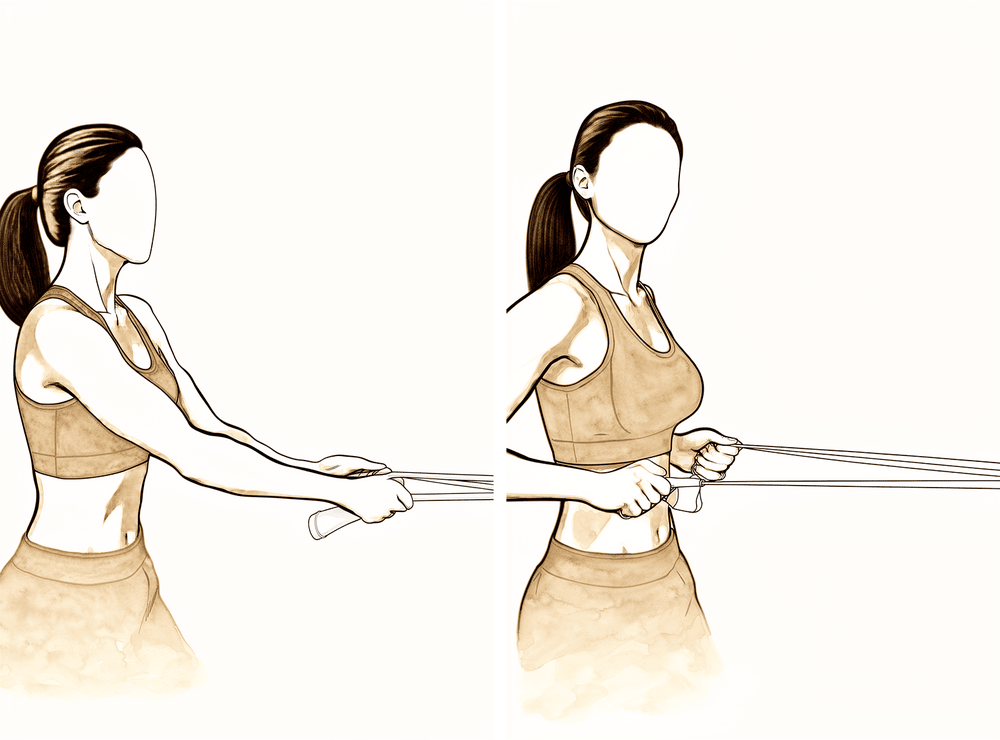
لچکدار بینڈ کے ساتھ رو (rows)
لچکدار بینڈ کو اپنے سامنے کمر کی اونچائی پر باندھ دیں۔ سیدھے کھڑے ہو کر بینڈ کو اپنی طرف کھینچیں، کندھے کی پچھلی ہڈی کو نیچے اور پیچھے لاتے ہوئے، پھر قابو کے ساتھ چھوڑیں۔ ہلکی مزاحمت سے شروع کریں — کم بوجھ اور زیادہ تکرار، بتائے گئے طریقے کے مطابق آگے بڑھتے ہوئے۔
جیسا آپ کا فزیوتھراپسٹ بتائے
Kieran Hirpara 4.0
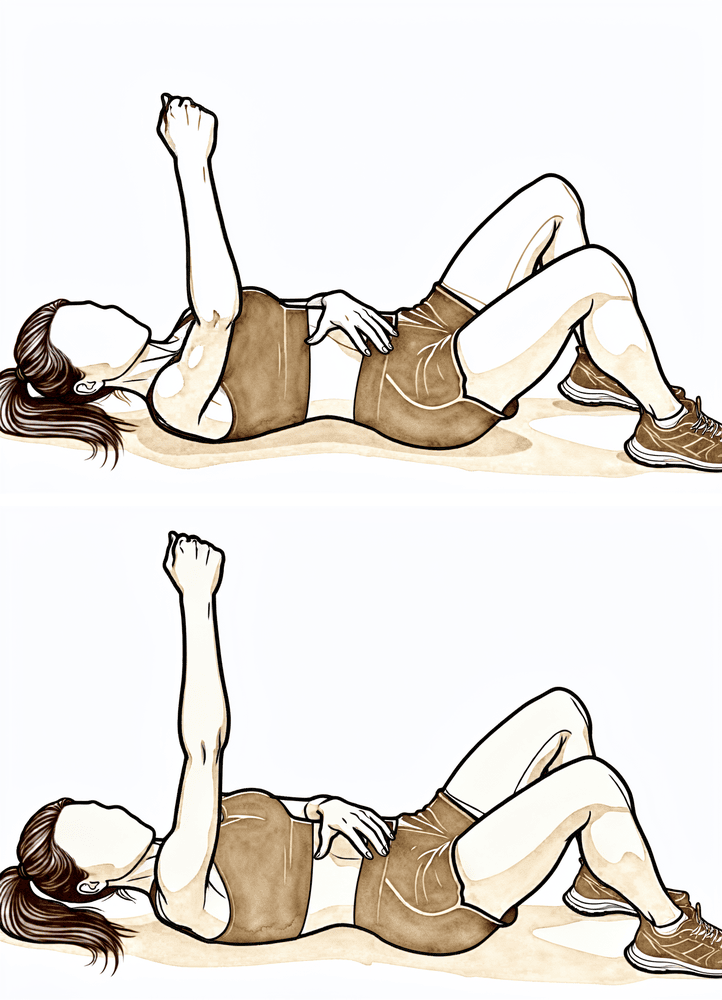
سیریٹس پنچ (serratus punch)
پیٹھ کے بل لیٹیں اور آپریشن والا بازو سیدھا چھت کی طرف اٹھائیں۔ کہنی موڑے بغیر ہاتھ کو تھوڑا اور اوپر دھکیلیں تاکہ کندھے کی پچھلی ہڈی فرش سے اٹھ جائے، پھر اسے واپس ٹکا دیں۔ اس سے وہ پٹھا طاقتور ہوتا ہے جو کندھے کی پچھلی ہڈی کو پسلیوں کے ساتھ تھامے رکھتا ہے۔
کم بوجھ، زیادہ تکرار
Kieran Hirpara 4.0
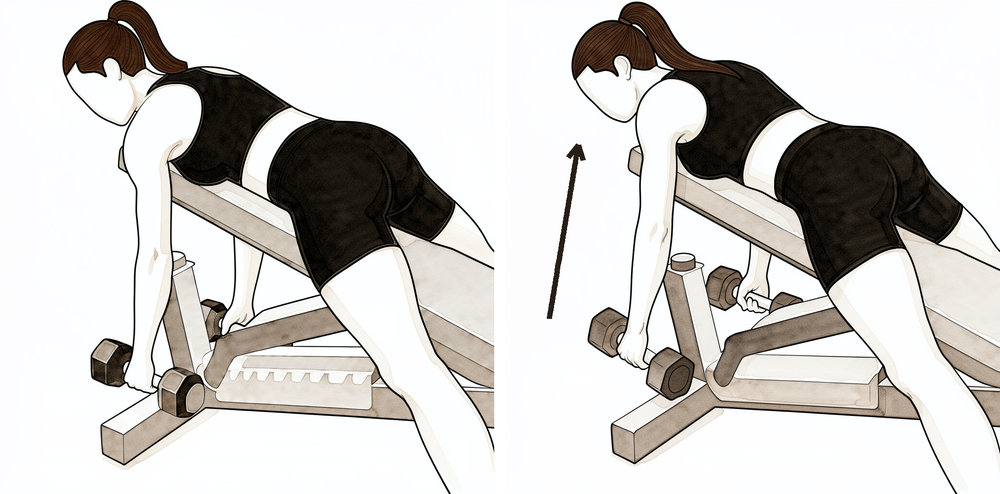
وزن کے ساتھ کندھے کی پچھلی ہڈیوں کو پیچھے کھینچنا
دونوں ہاتھوں میں ہلکا وزن لے کر کولہوں سے آگے جھکیں، کہنیوں کو پیچھے کھینچیں اور کندھے کی پچھلی ہڈیوں کو آپس میں کسیں، پھر قابو کے ساتھ نیچے لائیں۔ اس سے مزاحمت کے خلاف کندھے کی پچھلی ہڈی کے پٹھے طاقتور ہوتے ہیں — بوجھ ہلکا اور حرکت ہموار رکھیں۔
کم بوجھ، زیادہ تکرار
Kieran Hirpara 4.0
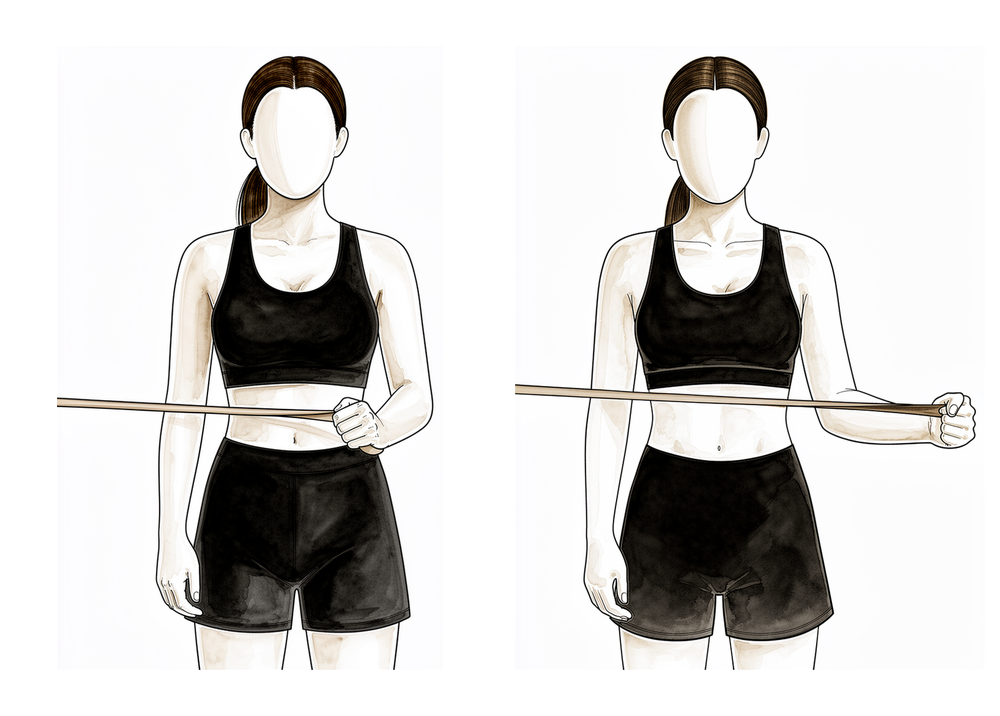
بینڈ کے ساتھ باہر کی طرف گھماؤ
کہنی کو پہلو کے ساتھ لگا کر اور کونے کی شکل میں (right angle) موڑ کر کھڑے ہوں، اور کمر کی اونچائی پر بندھا لچکدار بینڈ پکڑیں۔ کہنی کو پہلو کے ساتھ رکھتے ہوئے، بازو کے نچلے حصے کو بینڈ کے خلاف باہر کی طرف گھمائیں، پھر آہستہ سے واپس لائیں۔ روٹیٹر کف کی طاقت بتدریج بڑھائیں، جتنا جڑے ہوئے ابھار اجازت دیں۔
کم بوجھ، زیادہ تکرار
Kieran Hirpara 4.0
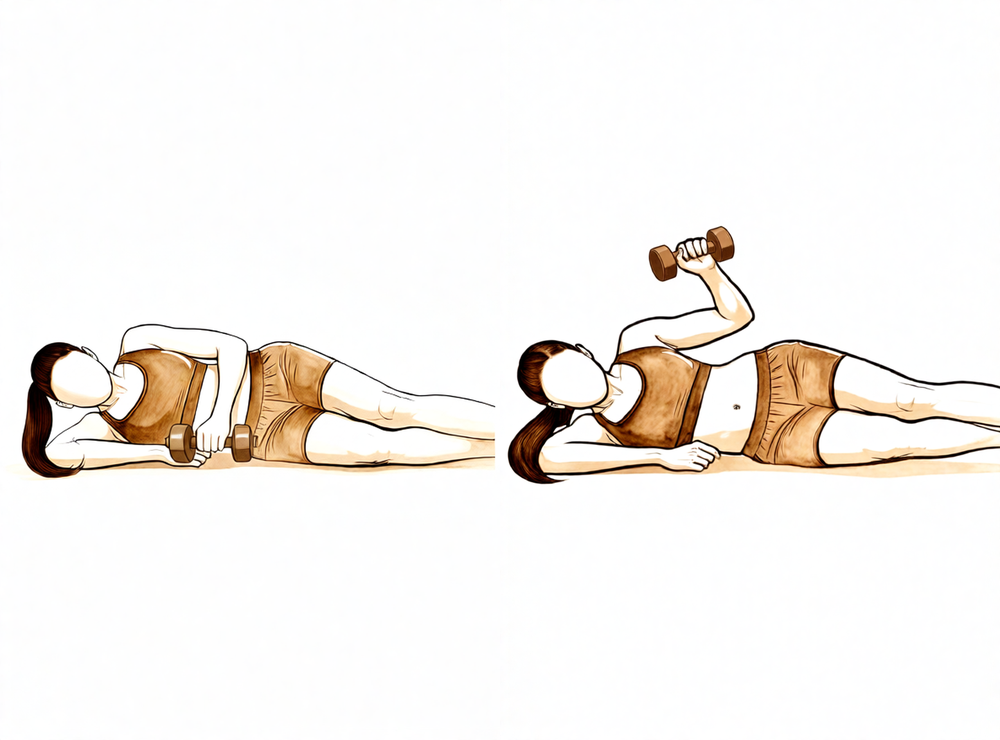
پہلو کے بل لیٹ کر وزن کے ساتھ باہر کی طرف گھماؤ
جس طرف آپریشن نہیں ہوا اس پہلو کے بل لیٹیں، آپریشن والی کہنی کونے کی شکل میں (right angle) مڑی اور جسم کے ساتھ لگی ہو۔ ہلکا وزن پکڑ کر بازو کے نچلے حصے کو چھت کی طرف اوپر گھمائیں، پھر آہستہ سے نیچے لائیں۔ یہ روٹیٹر کف کی بتدریج طاقت بڑھانے کا حصہ ہے — اس کے ساتھ حرکت پذیری کی ورزشیں بھی جاری رکھیں۔
کم بوجھ، زیادہ تکرار
Kieran Hirpara 4.0
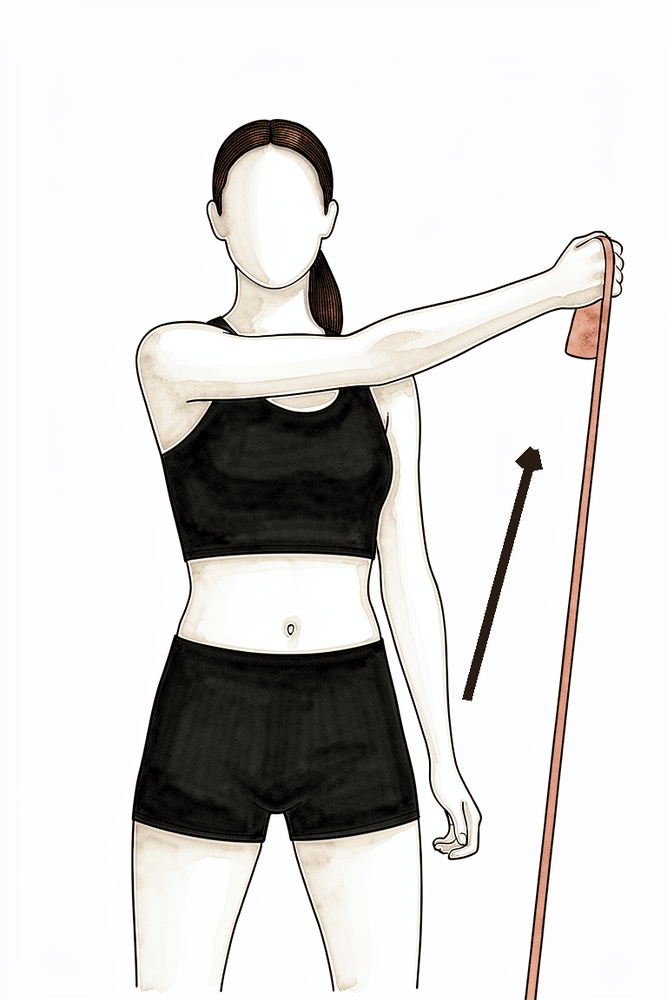
بینڈ کے ساتھ پی این ایف ترچھی حرکت (اٹھانا)
لچکدار بینڈ کو نیچے، آپریشن والے بازو کی طرف پہلو میں باندھیں۔ ہاتھ کو ترچھا اوپر اور جسم کے آر پار کھینچیں، مخالف کولہے کے قریب سے کندھے کی طرف، پھر آہستہ سے واپس لائیں۔ یہ ترچھے انداز کندھے کو ان سمتوں میں کام کرنے کی تربیت دیتے ہیں جو روزمرہ زندگی میں استعمال ہوتی ہیں۔
جیسا آپ کا فزیوتھراپسٹ بتائے
Kieran Hirpara 4.0
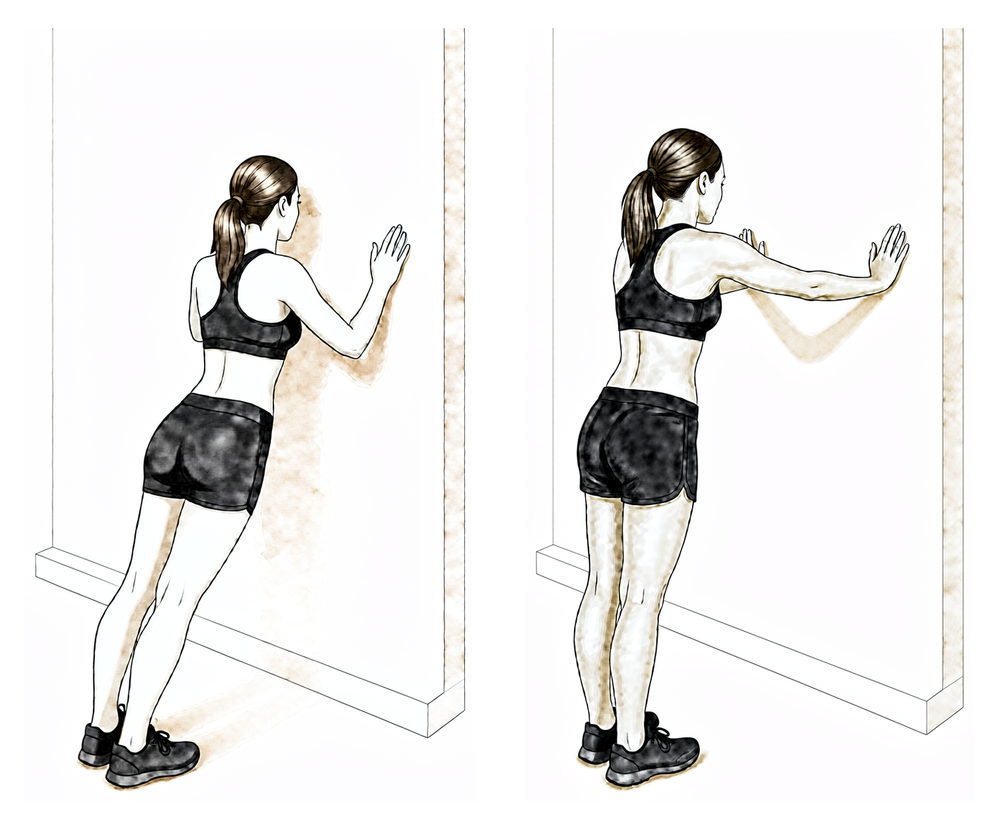
بازو کے ذریعے وزن سہارنا
اپنے ہاتھ دیوار یا مضبوط بینچ پر رکھیں اور کمر کے اوپری حصے کو ہلکے سے دور دھکیلیں تاکہ کندھے کی پچھلی ہڈیاں آگے کی طرف گول ہو جائیں، پھر واپس آئیں۔ اس سے بازو کے ذریعے وزن سہارنا دوبارہ شروع ہوتا ہے — اسے صرف اس مرحلے میں اجازت ملنے کے بعد شامل کریں، اور بتدریج بڑھائیں۔
جیسا آپ کا فزیوتھراپسٹ بتائے
Kieran Hirpara 4.0
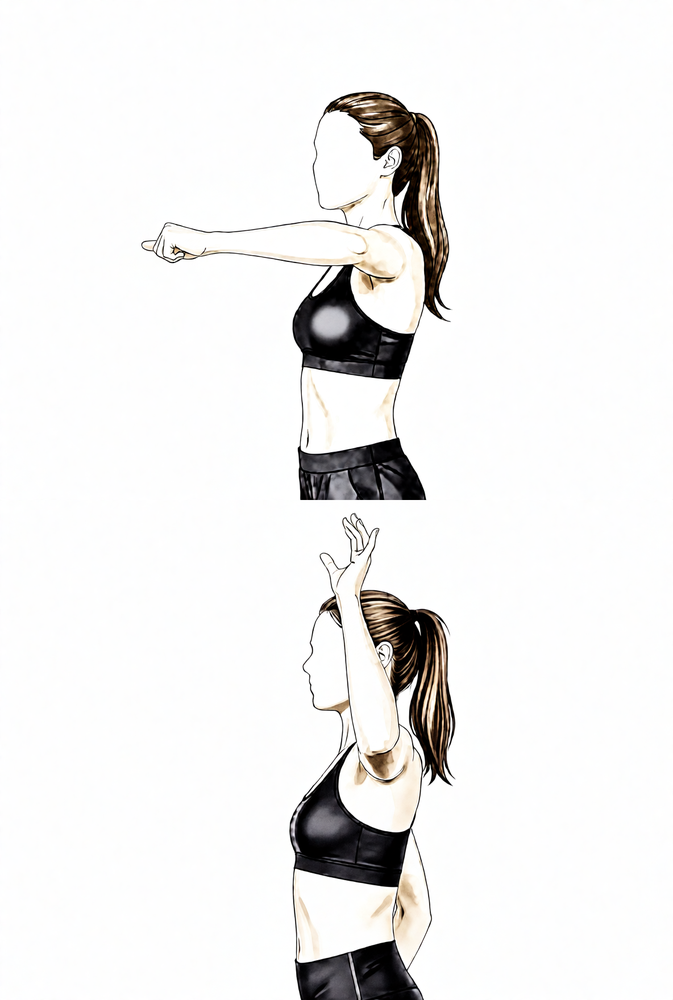
بازو اٹھا کر باہر کی طرف گھماؤ
بازو کو کندھے کی اونچائی پر پہلو کی طرف رکھ کر اور کہنی کو 90 ڈگری پر موڑ کر، بازو کے نچلے حصے کو اوپر اور پیچھے کی طرف گھمائیں، پھر قابو کے ساتھ واپس لائیں۔ حرکت ہموار اور آرام دہ حد کے اندر رکھیں۔ اس سے بازو اٹھی ہوئی پوزیشن میں باہر کی طرف گھماؤ کی تربیت ہوتی ہے۔
جیسا آپ کا فزیوتھراپسٹ بتائے — ہلکا اور قابو کے ساتھ
تقریباً بارہ ہفتوں تک ابھار عموماً جڑنے (union) کی طرف اچھی خاصی پیش رفت کر چکے ہوتے ہیں، اور ڈاکٹر ہِرپرا کے ساتھ آپ کا معائنہ تصدیق کرتا ہے کہ کندھا بوجھ کے لیے تیار ہے یا نہیں۔ پھر طاقت بڑھانے کی ورزشیں ہلکے سے شروع ہوتی ہیں، لچکدار بینڈ (elastic band) اور ہلکے وزن سے آغاز کر کے، اور ان کا زور ڈیلٹائیڈ اور کندھے کی پچھلی ہڈی کے ان پٹھوں پر ہوتا ہے جو کندھے کو چلاتے ہیں (ریورس تبدیلی کے بعد، ڈیلٹائیڈ وہ زیادہ تر کام کرتا ہے جو پہلے روٹیٹر کف کرتا تھا)۔ خود روٹیٹر کف کی طاقت اتنی بڑھائی جاتی ہے جتنی جڑے ہوئے ابھار اجازت دیں۔ اس مرحلے میں ہلکا وزن اٹھانا بتدریج بڑھتا ہے، روزمرہ کی سرگرمیاں کمر اور کندھے کی اونچائی پر تقریباً معمول کے مطابق محسوس ہونی چاہییں، اور اگر گاڑی چلانا پہلے شروع نہیں ہوا تو عموماً اسی مرحلے میں دوبارہ شروع ہو جاتا ہے۔
آپ کے فزیوتھراپسٹ کے لیے:
اہداف
- بغیر درد کی غیر فعال حرکت (PROM) برقرار رکھنا اور تمام سمتوں میں فعال حرکت (AROM) بڑھانا
- طاقت اور برداشت کی بتدریج بحالی: ڈیلٹائیڈ، کندھے کی پچھلی ہڈی کے اردگرد کے پٹھے، پھر روٹیٹر کف
- حرکت کے دوران استحکام، حرکت پر کنٹرول اور جوڑ کی پوزیشن کے احساس (proprioception) کو بہتر بنانا
- ہلکا وزن اٹھانے سمیت زیادہ تر روزمرہ سرگرمیوں پر واپسی
انتظام
- تمام سمتوں میں حرکت کی حد اور حرکت پذیری کا کام جاری رکھیں
- طاقت بڑھانا، آئسومیٹرک سے لچکدار بینڈ اور پھر ہلکے وزن کی طرف (کم بوجھ، زیادہ تکرار):
- کندھے کی پچھلی ہڈی کے اردگرد: رو (rows)، سیریٹس پنچ (serratus punches)، مزاحمت کے ساتھ کندھے کی پچھلی ہڈیوں کو پیچھے کھینچنا
- ڈیلٹائیڈ: عملی پوزیشنوں میں مزاحمت کے خلاف بازو آگے اٹھانا (flexion) اور اسکیپشن، قابو کے ساتھ آہستہ نیچے لاتے ہوئے (eccentric lowering)
- روٹیٹر کف: لچکدار مزاحمت کے ساتھ باہر اور اندر کی طرف گھماؤ (ER اور IR)، پہلو کے بل لیٹ کر باہر کی طرف گھماؤ، جتنا جڑے ہوئے ابھار اجازت دیں اتنا بڑھاتے ہوئے
- حرکت پر کنٹرول: ردھمک استحکام (rhythmic stabilisation)، پی این ایف (proprioceptive neuromuscular facilitation, PNF) کے ترچھے انداز، گیند کے ساتھ استحکام کا کام
- بتدریج وزن اٹھانا: مرحلے کے شروع میں تقریباً 2 کلوگرام سے آخر تک تقریباً 5 کلوگرام کی طرف، جتنا کنٹرول اجازت دے
- اس مرحلے کے دوران، اجازت ملنے پر، بازو کے ذریعے وزن سہارنا بتدریج دوبارہ شروع کریں (مثلاً کرسی سے ہاتھوں کے زور پر اٹھنا)
احتیاطیں
- بھاری وزن نہ اٹھائیں؛ اس مرحلے کے دوران بوجھ تقریباً 5 کلوگرام سے کم رکھیں
- حرکت کی آخری حد پر زور دار اسٹریچنگ سے بچیں، اور بوجھ کے ساتھ بازو کو پہلو کی طرف اٹھانے (abduction) اور باہر کی طرف گھمانے کو ایک ساتھ کرنے سے بچیں
- پیش رفت علامات کے مطابق رہتی ہے: اگر درد یا سوجن بڑھ جائے تو ایک درجہ پیچھے ہٹ جائیں
اگلے مرحلے میں جانے کی شرائط
- ابھاروں کے جڑ جانے (union) کی تصدیق ڈاکٹر ہِرپرا کے ساتھ معائنے پر ہو
- روزمرہ کی سرگرمیاں بغیر درد کے، اور طاقت بڑھانے کی ورزشیں درد بڑھائے بغیر برداشت ہوں
- دستیاب حد میں حرکت کا اچھا معیار
مرحلہ IV — مکمل سرگرمی پر واپسی (6 ماہ اور اس کے بعد)
آخری مرحلہ بھاری کاموں، جسمانی مشقت والے کام اور تفریحی سرگرمیوں پر بتدریج واپسی ہے، جس کی رہنمائی کیلنڈر کے بجائے آپ کی طاقت اور کنٹرول کرتے ہیں۔ گھر اور باغ کے بھاری کام بتدریج واپس آتے ہیں؛ جسمانی مشقت والے کام کی رہنمائی ڈاکٹر ہِرپرا کرتے ہیں؛ تیراکی اور گالف عموماً چار سے چھ ماہ کے آس پاس دوبارہ شروع ہوتے ہیں۔ کندھے کی تبدیلی کے بعد بہت بھاری وزن اٹھانے سے طویل مدت تک بچنا ہی بہتر ہے؛ شائع شدہ پروٹوکول تجویز کرتے ہیں کہ باقاعدگی سے اٹھایا جانے والا وزن تقریباً 10 کلوگرام سے کم رکھا جائے۔ کندھا اس مرحلے کے بعد بھی کافی عرصے تک بہتر ہوتا رہتا ہے: زیادہ تر لوگوں کی حرکت، طاقت اور اعتماد آپریشن کے بعد 12 سے 24 ماہ تک بڑھتے رہتے ہیں، اس لیے باقاعدہ فزیوتھراپی ختم ہونے کے کافی بعد تک گھر پر ورزش کا پروگرام جاری رکھنا فائدہ مند ہے۔
آپ کے فزیوتھراپسٹ کے لیے:
اہداف
- مریض کی روزمرہ ضروریات کے مطابق عملی طاقت اور برداشت کو بہترین بنانا
- کام، تفریح اور کھیل پر بتدریج واپسی
- جوڑ کی طویل مدتی حفاظت کے بارے میں تعلیم اور گھر پر خود سے کیا جانے والا ورزش کا پروگرام
انتظام
- ہلکے وزن اور زیادہ تکرار کے ساتھ بتدریج بڑھتی مزاحمت والی ورزشیں جاری رکھیں، روٹیٹر کف اور کندھے کی پچھلی ہڈی کے اردگرد کے پٹھوں کی طاقت پر زور دیتے ہوئے
- اعصاب اور پٹھوں کی ہم آہنگی اور جوڑ کی پوزیشن کے احساس کی تربیت؛ ضرورت کے مطابق عملی اور کام سے متعلق مخصوص سرگرمیاں
- تیراکی، گالف اور دیگر تفریح پر واپسی کو مرحلہ وار، چار سے چھ ماہ کے آس پاس، معائنے پر اجازت ملنے کے مطابق ترتیب دیں
- باقاعدہ فزیوتھراپی مکمل ہونے کے بعد جاری رکھنے کے لیے مریض کی ضروریات کے مطابق بنایا گیا گھریلو ورزش کا پروگرام
احتیاطیں
- آپریشن سے 6 ماہ تک بھاری وزن اٹھانے سے بچیں؛ طویل مدت تک باقاعدگی سے اٹھایا جانے والا وزن تقریباً 10 کلوگرام سے کم رکھیں
- جسمانی مشقت والا کام، اور ایسے کھیل جن میں کھلاڑی آپس میں ٹکراتے ہیں (contact sport) یا جن میں بازو پر وزن پڑتا ہے، صرف ڈاکٹر ہِرپرا کی اجازت کے مطابق
پروٹوکول مکمل کرنے کی شرائط
- ڈاکٹر ہِرپرا کے ساتھ معائنے پر اجازت، ابھاروں کے جڑ جانے کی تصدیق کے ساتھ
- قابو میں رہنے والے درد کے ساتھ ایسی عملی حرکت کی حد جو مریض کی روزمرہ ضروریات پوری کرے
- طویل مدتی گھریلو ورزش کے پروگرام پر خود سے عمل
آپ کے پروٹوکول کے بعد
اوپر دیے گئے مراحل بازو کی ہڈی کے اوپری سرے کے فریکچر کے لیے کی گئی کندھے کی تبدیلی کے شائع شدہ بحالی کے پروٹوکولز سے اخذ کیے گئے ہیں (Texas Health Orthopedic Specialists، North Tees and Hartlepool NHS Foundation Trust کے چوٹ کے بعد ہیمی آرتھروپلاسٹی اور ریورس شولڈر آرتھروپلاسٹی کے پروٹوکول، اور Robert Jones and Agnes Hunt Orthopaedic Hospital)، اور ابھاروں کے جڑنے پر زور سرجری سے متعلق طبی تحقیق سے لیا گیا ہے۔ ہفتوں کی حدیں عام اندازہ ہیں، مقرر نہیں، اور آپ کی بحالی کو آپ کا فزیوتھراپسٹ، ہماری پریکٹس کے ساتھ مل کر اور ڈاکٹر ہِرپرا کے ساتھ آپ کے معائنوں کی بنیاد پر، انفرادی طور پر آگے بڑھاتا ہے۔ یہ صفحہ پریکٹس کے آپریشن کے بعد صحت یابی سے متعلق عمومی مشوروں کے ساتھ کام کرتا ہے؛ دیکھیں آپریشن کے بعد درد پر قابو پانا اور زخم کی دیکھ بھال۔ خود آپریشن کے بارے میں فریکچر کے لیے کندھے کی تبدیلی دیکھیں؛ اس سفر کے پہلے سے طے شدہ (elective) آپریشن والے ورژن کے لیے ریورس شولڈر ریپلیسمنٹ کا پروٹوکول دیکھیں۔ اس پروٹوکول کے پیچھے موجود شواہد (ابھاروں کا جڑنا رفتار کا تعین کیوں کرتا ہے، ہیمی آرتھروپلاسٹی اور ریورس تبدیلی کا موازنہ، اور شائع شدہ بحالی کی ہدایات) کا خلاصہ شواہد کے حصے میں دیا گیا ہے، جو اس صفحے کے اوپر سے پی ڈی ایف کی صورت میں دستیاب ہے۔
Evidence & references
This is the clinical evidence summary written for health professionals. It is technical, and it lists the research this page was built from. You do not need to read it to understand your treatment or to make a decision about it.
Shoulder Replacement for Proximal Humerus Fracture — Evidence Behind the Rehabilitation Protocol
Topic scope: The evidence underpinning rehabilitation after shoulder arthroplasty performed for an acute proximal humerus fracture — covering both the implant options used in this setting: reverse total shoulder arthroplasty (rTSA) for fracture and stemmed hemiarthroplasty for fracture. The defining feature of both, and the reason this is a slow, protected pathway, is that the greater and lesser tuberosities are broken free and stitched back around the prosthesis at operation — they must heal as fractures before the shoulder can be actively moved or loaded. This contrasts with elective arthroplasty (for arthritis or cuff arthropathy), where the bone is intact and rehabilitation can move at the pace of soft-tissue healing.
Defining principle of this rehab: Replacement-for-fracture is a PROTECT pathway driven by TUBEROSITY HEALING, not by implant type. At operation the greater tuberosity (with supraspinatus/infraspinatus) and lesser tuberosity (with subscapularis) are reattached around the stem. Until those bone fragments unite — typically the first 6 weeks, confirmed on X-ray — the shoulder is moved passively only and within a restricted arc: forward elevation kept low, external rotation limited (it loads the greater-tuberosity repair), resisted/active internal rotation avoided (it loads the lesser-tuberosity/subscapularis repair), and no reaching behind the back. Active range and strengthening are deferred, not just reduced. This is the opposite of an early-motion pathway such as capsular release (where immediate aggressive motion is the treatment) or calcific excision (early movement below shoulder height from day 1). The whole pace is set by the fractured tuberosities, not the new joint surface.
The operation, and why the tuberosities matter
A displaced three- or four-part proximal humerus fracture in an older patient may be unreconstructable with plate-and-screw fixation, and arthroplasty is then offered. Two implants are used:
- Hemiarthroplasty (HA) — replaces the ball (humeral head) only. It relies on the surgeon reconstructing the head–tuberosity–shaft relationship and, critically, on the tuberosities healing back in anatomical position so the rotator cuff can pull on them. Where the tuberosities fail to heal, function is poor.
- Reverse total shoulder arthroplasty (rTSA) — reverses the ball-and-socket so the deltoid, not the rotator cuff, drives elevation. This makes rTSA less dependent on tuberosity healing than HA, which is the main reason it has largely supplanted hemiarthroplasty for fracture in the elderly. Tuberosity healing still improves the result (it adds rotation), but a workable shoulder is achievable even when the greater tuberosity does not unite.
In both operations the surgeon repairs the tuberosities, and in both the rehabilitation protects that repair. That shared dependence — not the choice of implant — is why the protocol has one shape for both.
Evidence by theme
1. Tuberosity healing drives the functional result (the rationale for protection)
This is the best-supported principle in the topic, and the reason rehabilitation protects the repair for ~6 weeks.
- A large systematic review and meta-analysis of 21 studies (1,616 reverse arthroplasties) found a pooled greater-tuberosity non-healing rate of ~32% (anatomic healing in roughly two-thirds). Healed tuberosities had significantly better active abduction, anterior elevation and external rotation, and better functional scores, without any increase in pain — confirming that attempting and protecting the repair is worthwhile [meta-analysis, 2025; Schmalzl 2020].
- In the corpus, a dedicated study asked "can a healed tuberosity improve the functional outcomes?" after reverse arthroplasty for four-part fracture and answered yes — healing was associated with better rotation and outcome scores. DOI: 10.1016/j.jse.2016.11.034.
- For hemiarthroplasty, the dependence is even stronger: reported greater-tuberosity healing rates range widely (~30–91%), and tuberosity malunion/nonunion/migration is the dominant cause of a poor result. This is precisely why HA is now reserved and rTSA preferred in older patients [web review literature].
Strength: MODERATE–STRONG for "healing predicts outcome" (large pooled cohorts/meta-analysis); the link is consistent and direction-of-effect is not in dispute. It is observational, not randomised.
2. Hemiarthroplasty vs reverse arthroplasty for fracture
- A corpus multicentre randomised controlled trial (the SHeRPA trial) found superior functional outcome with reverse arthroplasty compared with hemiarthroplasty for displaced three- and four-part fractures in patients 65 and older. DOI: 10.1016/j.jse.2024.05.016.
- An earlier corpus comparative study (JBJS) likewise compared HA and rTSA for elderly proximal humeral fractures. DOI: 10.2106/jbjs.l.01637.
- Reverse-for-fracture does carry a caveat: one corpus study asked whether rTSA for fracture does worse than rTSA for elective indications, reflecting that the fracture setting (broken tuberosities, frailer patients) is more demanding than an elective replacement — the same reason this rehab runs more slowly than the elective pathway. DOI: 10.1016/j.jse.2020.03.053.
Strength: MODERATE–STRONG (an RCT plus comparative cohorts) that rTSA generally outperforms HA for fracture in the elderly. This is a surgeon's intra-operative decision, made per patient and per fracture pattern.
3. Early vs delayed motion, and the rehabilitation protocol itself
This is where the evidence is thinnest and least standardised — honestly, the phase timings below are consensus and protocol-derived, not RCT-derived.
- A JOSPT systematic review of proposed rehabilitation guidelines after anatomic and reverse arthroplasty found substantial heterogeneity between published protocols — sling use ranged from "comfort only" to a full 6 weeks; permitted motion ranged from none to precautionary limits; early external rotation was commonly capped (e.g. to ~30° in the scapular plane) to protect the repair. There is no single agreed regimen.
- A corpus randomised single-blinded trial of early rehabilitation vs immobilisation after reverse arthroplasty exists (DOI: 10.1016/j.jse.2019.10.005), and the 2025 Neer Award SHORT trial compared surgeon-directed home therapy with formal outpatient physiotherapy after rTSA (DOI: 10.1016/j.jse.2025.10.005) — but these are largely elective rTSA populations, where the tuberosities are not broken. They do not licence early active motion in the fracture setting, where the repair must be protected first.
- A corpus network meta-analysis explicitly examined the optimal combination of arthroplasty type, fixation method and post-operative rehabilitation protocol for complex proximal humerus fractures (DOI: 10.1016/j.jse.2024.03.040), and a corpus survey found that trauma and shoulder surgeons differ in their rehabilitation preferences (DOI: 10.1016/j.jse.2021.12.045) — both confirm that the protocol is an area of genuine, unresolved variation rather than settled science.
Strength: WEAK / CONSENSUS for the specific phase structure and week ranges. The principle "protect the tuberosity repair, defer active motion and load until union" is well grounded; the exact timings are typical, not trial-proven.
Phased post-op timeline (consistent with the patient protocol)
| Phase | Window | Sling | Shoulder ROM | Strengthening | What's healing / why |
|---|---|---|---|---|---|
| I — Protection | Weeks 0–6 | Full-time, including sleep | Passive only, within a safe zone: scapular-plane elevation ≤ 90°; external rotation to neutral (0°) for ~4 weeks then ≤ 30°; no internal rotation behind the back; pendulums (fully relaxed). Active elbow/wrist/hand. | None for the shoulder | Tuberosity fragments uniting onto bone + prosthesis; ER loads the greater-tuberosity repair, resisted IR loads the lesser-tuberosity (subscapularis) repair. In rTSA this window also protects against early dislocation. |
| II — Restoring movement | Weeks 6–12 | Wean after the 6-week X-ray review | Progress passive → active-assisted → active; ease the rotation limits as healing is confirmed | Gentle sub-maximal isometrics (deltoid, periscapular) late in phase; resisted IR only once cleared | Tuberosities consolidating; lifting still limited to ~a cup of coffee; no weight-bearing through the hands |
| III — Strengthening | Weeks 12–24 | Off | Maintain/progress active range in all planes | Banded → light weights; deltoid + periscapular first, rotator cuff as the healed tuberosities allow | Tuberosity union usually well advanced and confirmed at review before loading begins |
| IV — Return to activity | 6 months onwards | Off | Functional range for daily demands | Progressive, guided by control not the calendar; lifting kept moderate long-term | Strength/movement keep improving for 12–24 months; full uninjured-shoulder range is not expected |
The pacing is gated on two things together at each step: enough time, AND X-rays showing the tuberosities healing, confirmed at review with Dr Hirpara. Approximate functional milestones (subject to healing): driving ~6–12 weeks (never in the sling); breaststroke swimming ~4 months; nothing heavier than a cup of coffee until ~12 weeks; heavy lifting avoided for 6 months.
Key controversies / evidence quality
- Implant choice (HA vs reverse). An RCT and comparative cohorts favour reverse over hemiarthroplasty for displaced fractures in older patients, chiefly because rTSA is less hostage to tuberosity healing. This is a per-patient surgical decision — and either way the rehabilitation protects the tuberosity repair. Moderate–strong.
- Does the tuberosity actually need to heal? For hemiarthroplasty, effectively yes — non-union/malunion is the main failure mode. For reverse, healing is beneficial but not essential (the deltoid drives elevation), though healed tuberosities add rotation and reduce complications. The protection strategy is justified for both because attempting healing is worthwhile and forced early motion can disrupt it. Moderate.
- Early vs delayed motion / the protocol itself. The single weakest area. Published protocols vary widely (JOSPT review), the trials that test early motion are mostly in elective reverse populations, and surgeons genuinely disagree on the optimum. The conservative, tuberosity-led timeline used here reflects the fracture-specific protocols and the healing biology rather than a defining RCT. Weak / consensus.
Evidence-strength flags (summary)
- MODERATE–STRONG: tuberosity healing predicts better range/function after reverse arthroplasty for fracture (21-study meta-analysis, 1,616 cases; ~32% non-healing); reverse > hemiarthroplasty for elderly displaced fractures (SHeRPA RCT + comparative cohorts).
- MODERATE: hemiarthroplasty outcome is strongly tuberosity-dependent (healing ~30–91%; malunion the dominant failure mode); reverse-for-fracture more demanding than elective reverse.
- WEAK / CONSENSUS: the specific phased rehabilitation protocol and its week ranges — published guidelines are heterogeneous (JOSPT review); early-motion trials are mostly elective populations; the tuberosity-protective timeline is derived from fracture-specific protocols and healing biology, not a defining rehab RCT.
Citations
RAG corpus (180,000+ Orthopaedic articles) — real DOIs, returned by search
- Reverse shoulder arthroplasty for four-part proximal humerus fracture in elderly patients: can a healed tuberosity improve the functional outcomes? J Shoulder Elbow Surg. DOI: 10.1016/j.jse.2016.11.034
- Superior functional outcome following reverse shoulder arthroplasty compared to hemiarthroplasty for displaced three- and four-part fractures in patients 65 and older — the SHeRPA randomized controlled trial. J Shoulder Elbow Surg. 2024. DOI: 10.1016/j.jse.2024.05.016
- Comparison of Hemiarthroplasty and Reverse Shoulder Arthroplasty for the Treatment of Proximal Humeral Fractures in Elderly Patients. J Bone Joint Surg Am. DOI: 10.2106/jbjs.l.01637
- Does reverse total shoulder arthroplasty for proximal humeral fracture portend poorer outcomes than for elective indications? J Shoulder Elbow Surg. DOI: 10.1016/j.jse.2020.03.053
- A randomized single-blinded trial of early rehabilitation versus immobilization after reverse total shoulder arthroplasty. J Shoulder Elbow Surg. 2019. DOI: 10.1016/j.jse.2019.10.005
- Optimal combination of arthroplasty type, fixation method, and postoperative rehabilitation protocol for complex proximal humerus fractures in the elderly: a network meta-analysis. J Shoulder Elbow Surg. 2024. DOI: 10.1016/j.jse.2024.03.040
- Understanding postoperative rehabilitation preferences in operatively managed proximal humerus fractures: do trauma and shoulder surgeons differ? J Shoulder Elbow Surg. DOI: 10.1016/j.jse.2021.12.045
- 2025 Neer Award Part 1: The SHORT trial — surgeon-directed home therapy vs. outpatient rehabilitation after reverse total shoulder arthroplasty. J Shoulder Elbow Surg. 2025. DOI: 10.1016/j.jse.2025.10.005
- Acute versus delayed reverse total shoulder arthroplasty for proximal humeral fractures in the elderly: a systematic review and meta-analysis. J Shoulder Elbow Surg. DOI: 10.1016/j.jse.2018.10.004
- Ten-year follow-up of stemmed hemiarthroplasty for acute proximal humeral fractures. Bone Joint J. DOI: 10.1302/0301-620x.103b6.bjj-2020-1753.r1
Literature (URLs)
- Anatomic healing of greater tuberosity improves range of motion and functional outcomes after reverse total shoulder arthroplasty for proximal humerus fractures: an updated systematic review and meta-analysis on 21 studies (1,616 rTSAs; ~32% GT non-healing). PubMed. https://pubmed.ncbi.nlm.nih.gov/39914739/
- Schmalzl J, et al. Tuberosity healing improves functional outcome following primary reverse shoulder arthroplasty for proximal humeral fractures with a 135° prosthesis. Eur J Orthop Surg Traumatol. 2020. https://pubmed.ncbi.nlm.nih.gov/32162048/
- Tuberosity healing after reverse shoulder arthroplasty for proximal humerus fractures: is there clinical improvement? PubMed. https://pubmed.ncbi.nlm.nih.gov/33364654/
- Prosthesis designs and tuberosity fixation techniques in reverse total shoulder arthroplasty: influence on tuberosity healing in proximal humerus fractures. PMC. https://pmc.ncbi.nlm.nih.gov/articles/PMC8468418/
- A Systematic Review of Proposed Rehabilitation Guidelines Following Anatomic and Reverse Shoulder Arthroplasty. JOSPT 2019. https://www.jospt.org/doi/10.2519/jospt.2019.8616
Published rehab protocols (patient-guidance — basis for the phase structure)
- Frantz T. Proximal Humerus Fracture Rehabilitation Protocol (reverse shoulder arthroplasty). Texas Health Orthopedic Specialists. https://www.frantzorthopedics.com/pdf/proximal-humerus-fracture-reverse-shoulder-arthroplasty-updnew.pdf
- North Tees and Hartlepool NHS Foundation Trust. Shoulder Hemi-Arthroplasty (trauma) — post-operative protocol. Reviewed April 2023. https://www.nth.nhs.uk/resources/shoulder-hemi-arthroplasty-trauma/
- North Tees and Hartlepool NHS Foundation Trust. Reverse shoulder arthroplasty — post-operative protocol. Reviewed April 2023. https://www.nth.nhs.uk/resources/reverse-shoulder-arthroplasty/
- Maddocks C, Lloyd Evans J. Rehabilitation guide following reverse total shoulder replacement. Robert Jones and Agnes Hunt Orthopaedic Hospital NHS Foundation Trust. February 2024. https://www.rjah.nhs.uk/media/qctjsd1w/reverse-shoulder-replacement-guideline-2024.pdf