Patients › Rehabilitation
سب ایکرومیئل ڈیکمپریشن
Rehabilitation after isolated arthroscopic subacromial decompression — early movement, staged strengthening and return to activity.
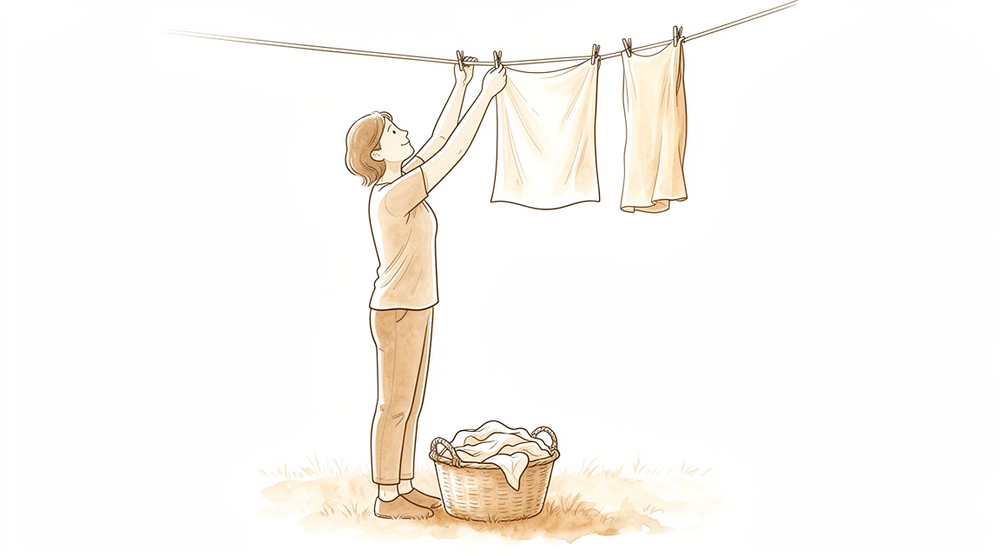
یہ پروٹوکول (protocol، یعنی بحالی کا مرحلہ وار منصوبہ) اس آپریشن کے بعد کی بحالی کے بارے میں ہے جس میں اکیلا دوربین کے ذریعے سب ایکرومیئل ڈیکمپریشن (arthroscopic subacromial decompression، یعنی کندھے کی چھت والی ہڈی کے نیچے ٹینڈنوں کے لیے جگہ بنانے کا آپریشن) کیا جاتا ہے — یعنی ایکرومیوپلاسٹی (acromioplasty، کندھے کی چھت والی ہڈی کی نچلی سطح کو ہموار کرنا)، سوزش والے برسا (سیال سے بھری چھوٹی تھیلی) کو نکالنے کے ساتھ یا اس کے بغیر — جو ڈاکٹر کیرن ہِرپرا Mater Private Hospital Rockhampton میں کرتے ہیں۔ فزیوتھراپی کی پہلی ملاقات پر یہ صفحہ یا اس کی پی ڈی ایف ساتھ لائیں تاکہ آپ کی بحالی میں سب کا آپس میں رابطہ رہے۔ آپ کا فزیوتھراپسٹ نیچے دیے گئے مرحلوں میں آپ کی بحالی کو انفرادی طور پر آگے بڑھائے گا، اس بات کو دیکھتے ہوئے کہ آپ کا کندھا کیسے بہتر ہو رہا ہے۔
اہم: سب ایکرومیئل ڈیکمپریشن اکثر روٹیٹر کف (rotator cuff، یعنی ٹینڈنوں کا وہ گروپ جو کندھے کو تھامتا اور گھماتا ہے) کی مرمت کے ساتھ ہی کیا جاتا ہے۔ یہ پروٹوکول صرف اکیلے سب ایکرومیئل ڈیکمپریشن کے لیے ہے۔ اگر آپ کے آپریشن میں روٹیٹر کف کی مرمت بھی شامل تھی تو اس کے بجائے روٹیٹر کف کی مرمت کا پروٹوکول اپنائیں؛ مرمت شدہ ٹینڈن (tendon، یعنی وہ مضبوط ڈوری جو پٹھے کو ہڈی سے جوڑتی ہے) کی وجہ سے بحالی کی رفتار زیادہ سست رکھی جاتی ہے۔
اگر سرجری کے بعد آپ کو اپنے زخم کے بارے میں کوئی تشویش ہو تو کلینک سے رابطہ کریں۔ زخم کی تصویر لے کر جائزے کے لیے ای میل کر دینا اکثر مددگار ہوتا ہے۔
کیا توقع رکھیں
سب ایکرومیئل ڈیکمپریشن میں ایکرومیئن (acromion، یعنی کندھے کی ہڈی کی چھت) کی نچلی سطح کو چھیل کر ہموار کیا جاتا ہے اور سوزش والا برسا نکال دیا جاتا ہے، تاکہ روٹیٹر کف کے ٹینڈنوں کے لیے زیادہ جگہ بن جائے۔ اس آپریشن میں کسی ایسی چیز کی مرمت نہیں کی جاتی جسے حفاظت کی ضرورت ہو، اس لیے ابتدائی بحالی آرام کے بارے میں نہیں بلکہ حرکت کے بارے میں ہے: کندھے کو پہلے دن سے ہلانا محفوظ ہے، اور جب تک یہ ٹھیک ہو رہا ہوتا ہے، اسے جلد ہلانا ہی اسے اکڑنے سے بچاتا ہے۔
آپریشن کے بعد جاگنے پر آپ کے بازو پر جو سلنگ (sling)، یعنی گلے سے لٹکی وہ پٹی جو بازو کو سہارا دیتی ہے، لگی ہوتی ہے وہ صرف آرام کے لیے ہے؛ یہ کسی چیز کی حفاظت نہیں کر رہی۔ اسے جتنا ہو سکے اتار کر رکھیں اور جلد اس کا استعمال چھوڑ دیں: زیادہ تر لوگ پہلے چند دنوں میں ہی سلنگ اتار دیتے ہیں، اور شائع شدہ پروٹوکول کے مطابق زیادہ سے زیادہ دو ہفتوں تک سلنگ کا استعمال ختم ہو جانا چاہیے۔ کندھے کے کسی بھی آپریشن کے بعد کم از کم چھ ہفتے تک گاڑی نہ چلائیں، چاہے سلنگ اتر چکی ہو؛ آپ کا سرجن آپ کو گاڑی چلانے کی اجازت دے گا، عام طور پر چھ ہفتے والے معائنے پر۔
آپ کے ورزش کے پروگرام میں تین قسم کی حرکت شامل ہے، اور آپ کا فزیوتھراپسٹ بتائے گا کہ ہر مرحلے پر ان میں سے کون سی لاگو ہوتی ہے:
- خود حرکت کی حد (active range of motion): بازو کو کسی سہارے یا مدد کے بغیر ہلانے کی اجازت ہے۔
- مدد کے ساتھ خود حرکت کی حد (active-assisted range of motion): بازو کو ہلانے میں مدد کے لیے دوسرے بازو یا کسی چیز کا استعمال۔
- غیر فعال حرکت کی حد (passive range of motion): بازو مکمل طور پر ڈھیلا رہتا ہے، اور دوسرا بازو یا کوئی بیرونی قوت 100 فیصد کام کرتی ہے۔
ایک نظر میں پورا سفر:
- مرحلہ I — ابتدائی حرکت — تقریباً پہلے دو ہفتے
- مرحلہ II — حرکت کی حد واپس لانا اور طاقت بڑھانے کا آغاز — ہفتہ 2 سے 6
- مرحلہ III — مضبوطی — ہفتہ 6 سے 12
- مرحلہ IV — مکمل سرگرمی کی طرف واپسی — ہفتہ 12 اور اس کے بعد
ابتدائی ہفتوں میں کندھا عموماً نازک نہیں ہوتا بلکہ اس میں درد رہتا ہے، اور کچھ لوگوں کو یہ چھ ہفتے تک تکلیف دہ محسوس ہوتا ہے۔ شائع شدہ رہنمائی کے مطابق زیادہ تر لوگ تقریباً تین ماہ تک درد میں واضح بہتری محسوس کرتے ہیں، اور علامات ایک سال تک بہتر ہوتی رہ سکتی ہیں۔ نیچے دیے گئے ہفتوں کے دورانیے عام اندازے ہیں، طے شدہ نہیں؛ آپ کا فزیوتھراپسٹ آپ کو کیلنڈر کی بنیاد پر نہیں بلکہ اس بنیاد پر آگے بڑھائے گا کہ آپ کا کندھا کیسے حرکت کر رہا ہے۔
مرحلہ I — ابتدائی حرکت (ہفتہ 0 سے 2)
Kieran Hirpara 4.0
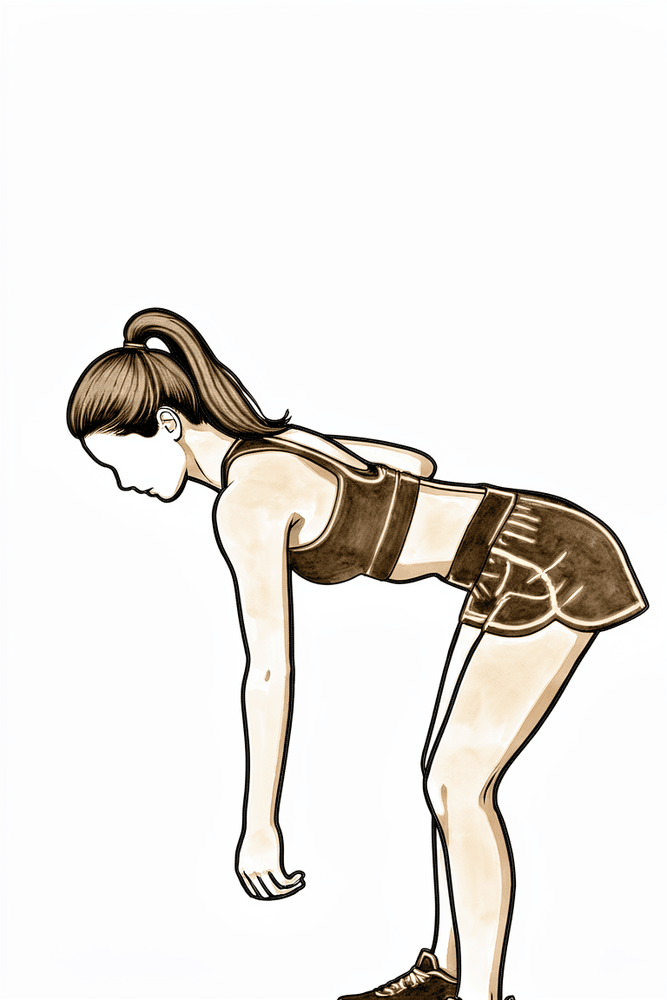
پنڈولم ورزش
کمر سے آگے جھکیں اور آپریشن والے بازو کو جسم سے دور آرام سے لٹکنے دیں۔ بازو کو چھوٹے، ڈھیلے دائروں میں جھولنے دیں — حرکت آپ کے جسم سے آتی ہے، کندھے کے پٹھوں سے نہیں۔ آرام کی حد کے اندر ورزش کریں؛ درد ہی رہنما ہے۔
جیسے آپ کا فزیوتھراپسٹ بتائے
Kieran Hirpara 4.0
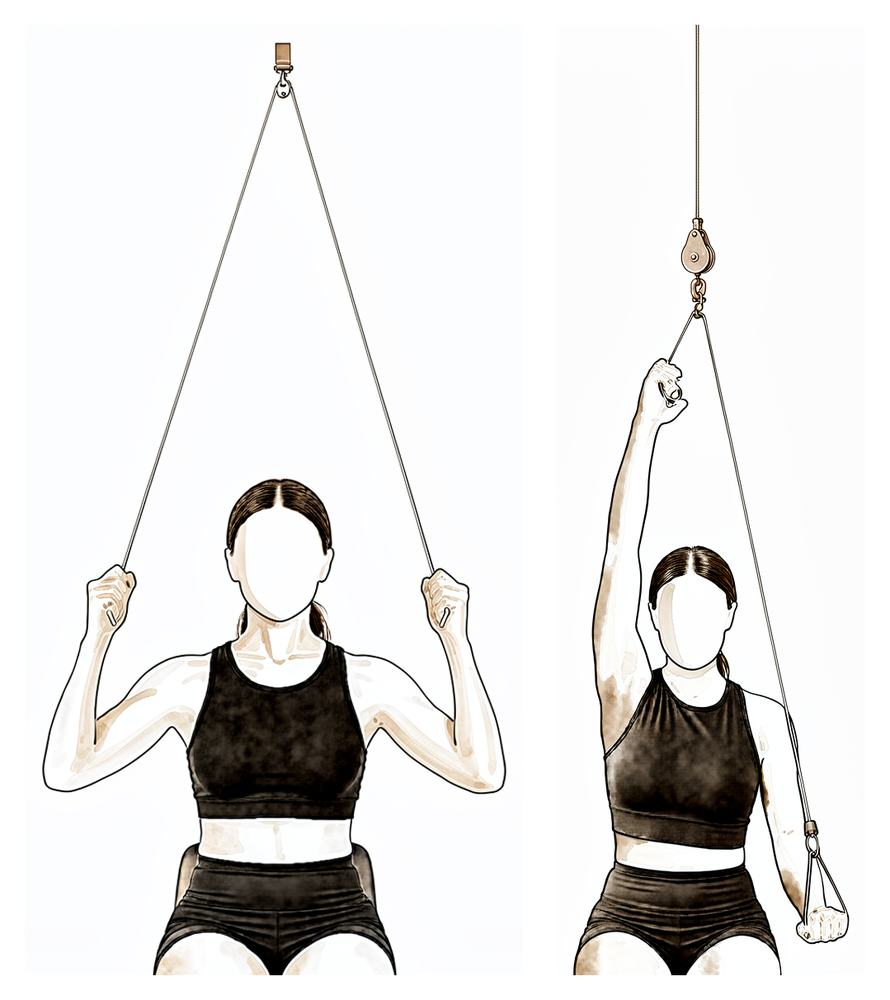
پُلی کی مدد سے بازو اٹھانا
دروازے کے اوپر لگی رسی والی پُلی کے نیچے بیٹھیں اور دونوں ہاتھوں میں ایک ایک ہینڈل پکڑیں۔ ٹھیک بازو سے نیچے کی طرف کھینچیں تاکہ آپریشن والا بازو اوپر اور جسم سے تھوڑا آگے کی طرف اٹھے، اسے ڈھیلا رہنے دیں، پھر قابو کے ساتھ نیچے لائیں۔ نہ زور لگائیں اور نہ حد سے زیادہ کھینچیں — آرام دہ حد کے اندر ورزش کریں۔
جیسے آپ کا فزیوتھراپسٹ بتائے
Kieran Hirpara 4.0
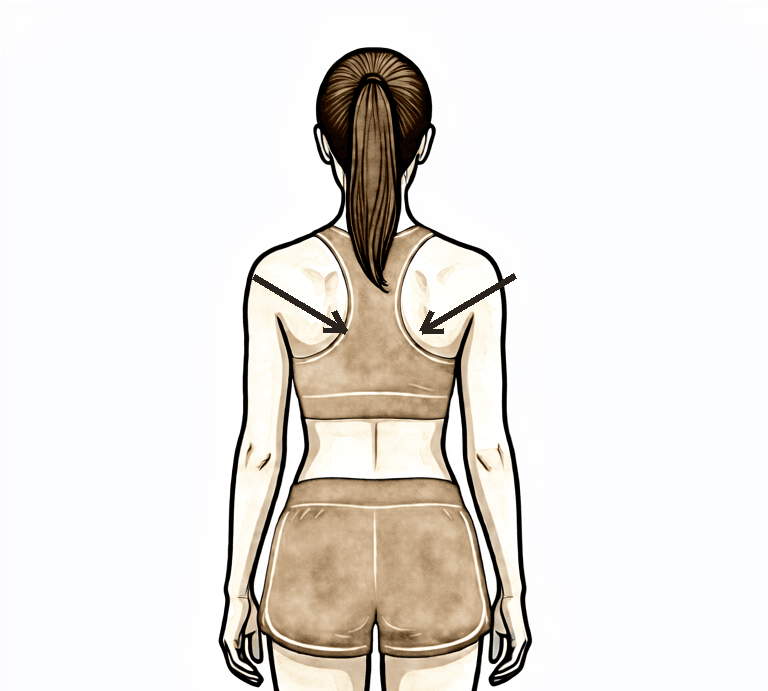
کندھے کی پچھلی ہڈیوں کو درست جگہ رکھنا (scapular setting)
سیدھے بیٹھ کر اپنی کندھے کی پچھلی چپٹی ہڈیوں (shoulder blades) کو آہستہ سے پیچھے ایک دوسرے کی طرف اور نیچے، کانوں سے دور کھینچیں۔ چند سیکنڈ روکیں، پھر ڈھیلا چھوڑ دیں۔ اس کے ساتھ دن بھر اپنے جسم کے انداز (posture) پر بھی توجہ دیں۔
جیسے آپ کا فزیوتھراپسٹ بتائے
Kieran Hirpara 4.0
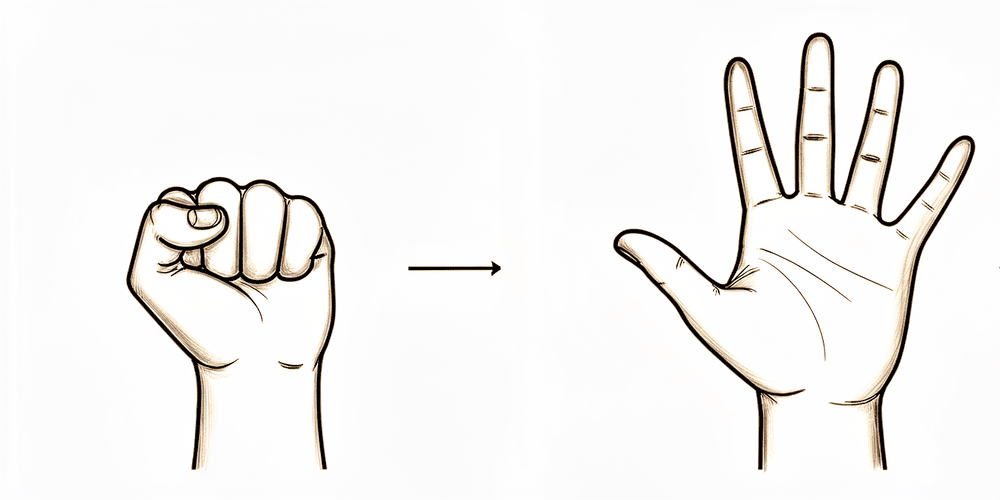
ہاتھ کھولنا اور بند کرنا
اپنے ہاتھ اور انگلیوں کو کھول بند کر کے، یا ایک نرم گیند دبا کر، حرکت میں رکھیں۔ یہ فوراً شروع کریں تاکہ کندھے کے ٹھیک ہونے کے دوران ہاتھ اور بازو کام کرتے رہیں۔
10 بار، دن میں تین بار
Kieran Hirpara 4.0
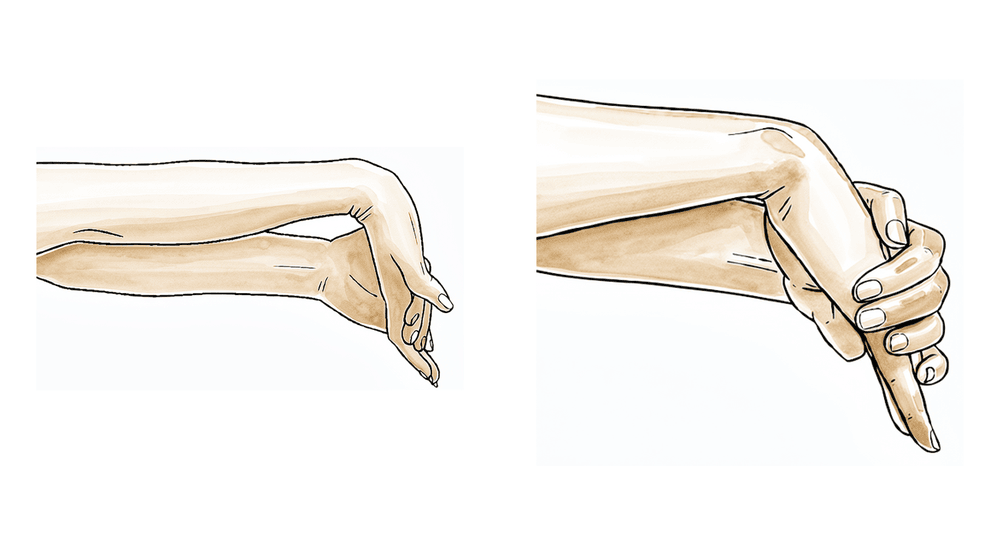
کلائی کی حرکت
اپنی کلائی کو آگے، پیچھے اور دائیں بائیں موڑ کر حرکت میں رکھیں۔ یہ پہلے دن سے کریں تاکہ کندھے کے ٹھیک ہونے کے دوران بازو کام کرتا رہے۔
10 بار، دن میں تین بار
Kieran Hirpara 4.0
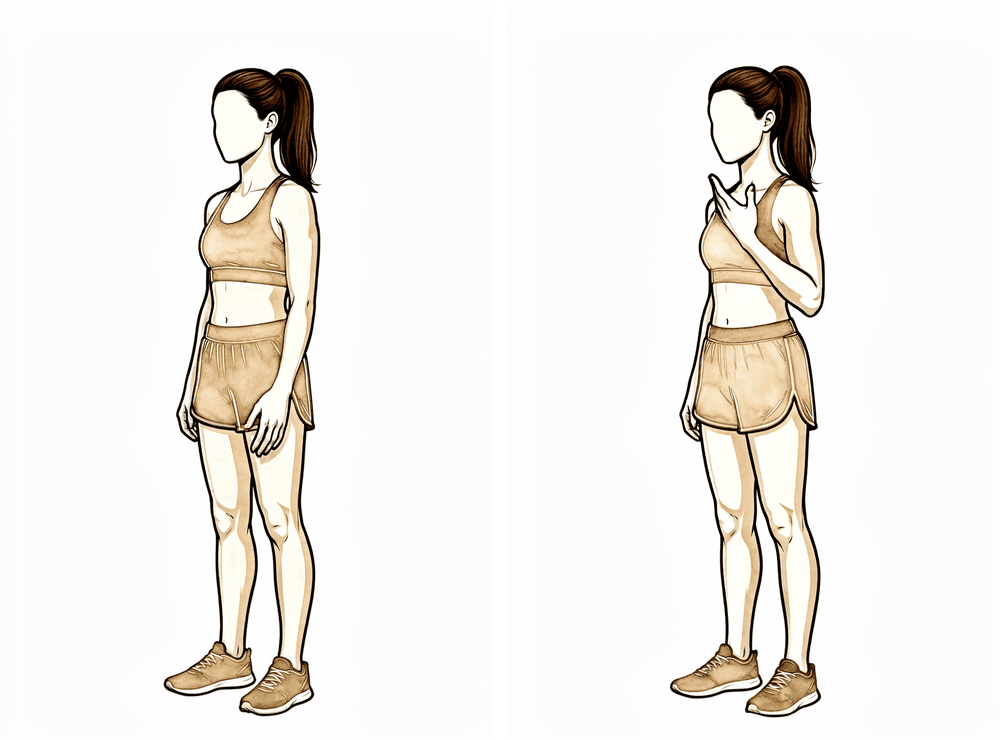
کہنی موڑنا
بازو کا اوپری حصہ پہلو کے ساتھ ٹکا کر رکھیں، کہنی کو جتنا آرام سے مڑ سکے موڑیں، پھر اسے پوری طرح سیدھا کریں۔ صرف کہنی حرکت کرے — کندھے کو ڈھیلا رکھیں۔ یہ پہلے دن سے شروع کریں۔
10 بار، دن میں تین بار
Kieran Hirpara 4.0
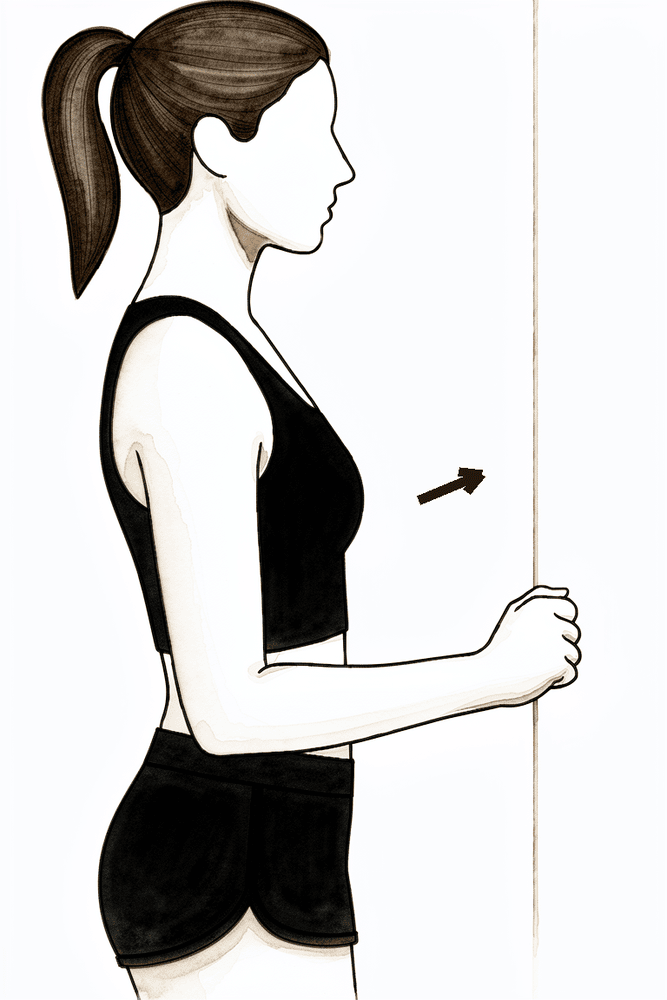
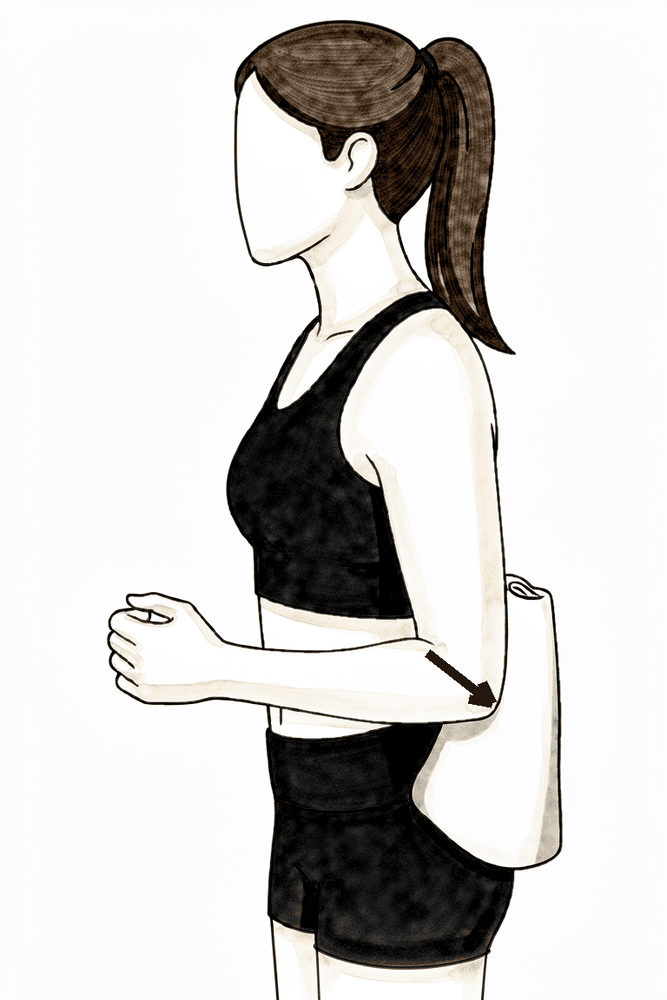
آئسومیٹرک: بازو آگے دبانا (isometric flexion)
دیوار کی طرف منہ کر کے کھڑے ہوں، کہنی مڑی ہوئی اور پہلو کے ساتھ لگی ہو، اور مٹھی کا اگلا حصہ دیوار سے ٹکا ہو۔ بازو کو ہلنے دیے بغیر آہستہ سے دیوار کی طرف آگے دبائیں، چند سیکنڈ روکیں، پھر ڈھیلا چھوڑ دیں۔ اس سے کندھے کے ٹھیک ہونے کے دوران حرکت کے بغیر پٹھے کام کرتے رہتے ہیں۔
چند سیکنڈ روکیں، کئی بار؛ جیسے آپ کا فزیوتھراپسٹ بتائے
Kieran Hirpara 4.0
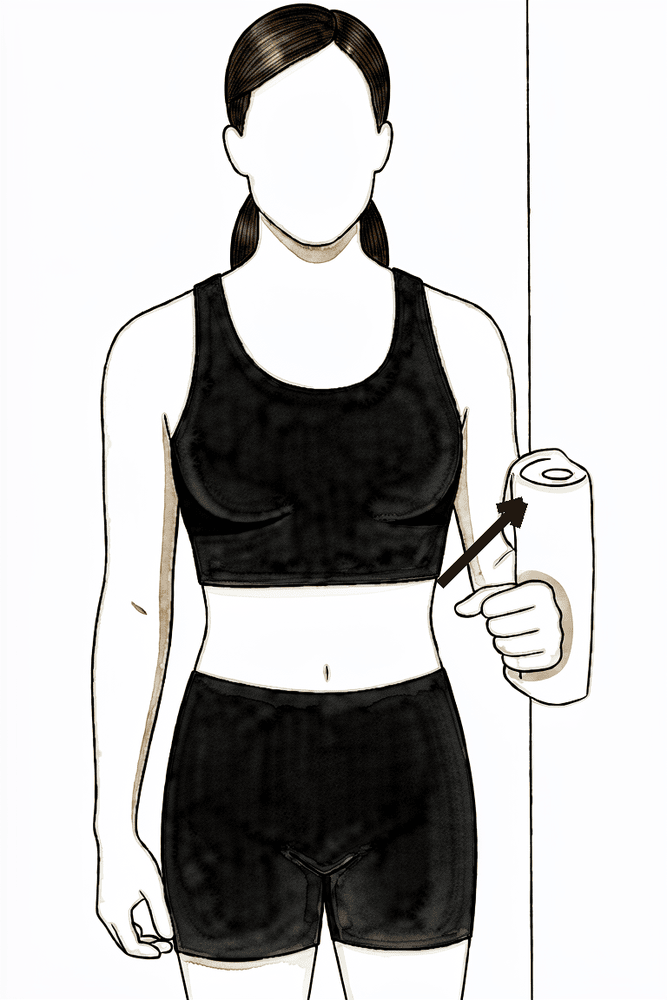
آئسومیٹرک: بازو پیچھے دبانا (isometric extension)
کہنی پہلو کے ساتھ رکھ کر اور بازو کے اوپری حصے کی پشت دیوار سے لگا کر کھڑے ہوں۔ بازو کو ہلنے دیے بغیر آہستہ سے پیچھے دیوار کی طرف دبائیں، چند سیکنڈ روکیں، پھر ڈھیلا چھوڑ دیں۔ یہ شروع کے دنوں میں حرکت کے بغیر پٹھوں کو فعال رکھنے کا طریقہ ہے۔
چند سیکنڈ روکیں، کئی بار؛ جیسے آپ کا فزیوتھراپسٹ بتائے
Kieran Hirpara 4.0
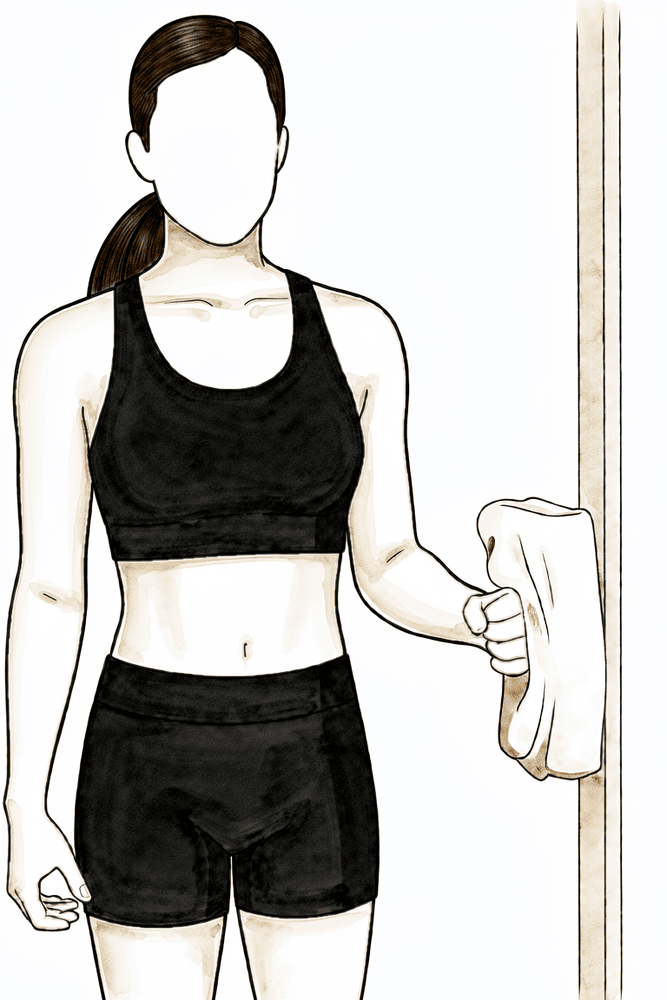
آئسومیٹرک: بازو پہلو کی طرف دبانا (isometric abduction)
دیوار کی طرف پہلو کر کے کھڑے ہوں، بازو کے اوپری حصے کا باہر والا حصہ دیوار کے قریب ہو اور کہنی پہلو کے ساتھ لگی ہو۔ بازو کو ہلنے دیے بغیر آہستہ سے باہر کی طرف دیوار پر دبائیں، چند سیکنڈ روکیں، پھر ڈھیلا چھوڑ دیں۔
چند سیکنڈ روکیں، کئی بار؛ جیسے آپ کا فزیوتھراپسٹ بتائے
Kieran Hirpara 4.0
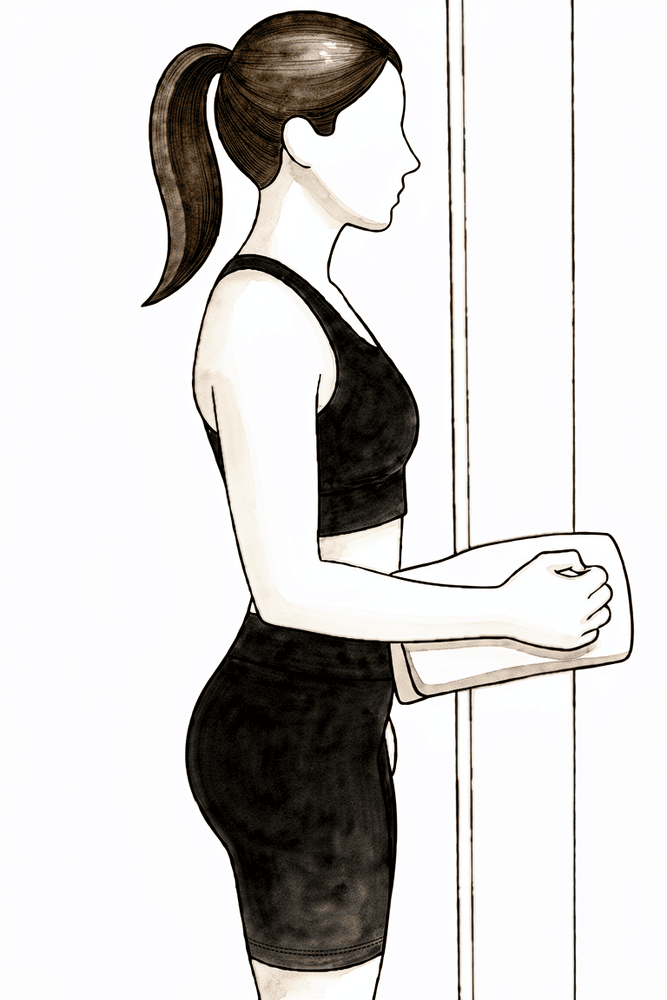
آئسومیٹرک: باہر کی طرف گھماؤ (isometric external rotation)
کہنی کو پہلو کے ساتھ لگا کر اور سیدھے زاویے (right angle) پر موڑ کر کھڑے ہوں، ہاتھ کی پشت دیوار یا دروازے کی چوکھٹ سے لگی ہو۔ بازو کو ہلنے دیے بغیر آہستہ سے باہر کی طرف اس پر دبائیں، چند سیکنڈ روکیں، پھر ڈھیلا چھوڑ دیں۔ اس سے حرکت کے بغیر روٹیٹر کف (rotator cuff، یعنی ٹینڈنوں کا وہ گروپ جو کندھے کو تھامتا اور گھماتا ہے) مضبوط ہوتا ہے۔
چند سیکنڈ روکیں، کئی بار؛ جیسے آپ کا فزیوتھراپسٹ بتائے
Kieran Hirpara 4.0
آئسومیٹرک: اندر کی طرف گھماؤ (isometric internal rotation)
کہنی کو پہلو کے ساتھ لگا کر اور سیدھے زاویے پر موڑ کر کھڑے ہوں، ہتھیلی دیوار یا دروازے کی چوکھٹ سے لگی ہو۔ بازو کو ہلنے دیے بغیر آہستہ سے اندر کی طرف اس پر دبائیں، چند سیکنڈ روکیں، پھر ڈھیلا چھوڑ دیں۔ یہ روٹیٹر کف کو فعال کرنا شروع کرنے کا ایک نرم طریقہ ہے۔
چند سیکنڈ روکیں، کئی بار؛ جیسے آپ کا فزیوتھراپسٹ بتائے
آپریشن کے دوران اکثر اعصابی بلاک (nerve block)، یعنی ایک انجکشن جو جسم کے ایک حصے کو سُن کر دیتا ہے، استعمال کیا جاتا ہے، اس لیے آپریشن کے بعد کچھ گھنٹوں تک بازو سُن محسوس ہو سکتا ہے؛ اس کا اثر ختم ہونے سے پہلے اپنی درد کش دوا شروع کر دیں۔ پہلے دو ہفتوں میں مقاصد سادہ ہیں: درد اور سوجن کو کم کرنا، اور کندھے کو آرام دہ حد کے اندر حرکت میں لانا۔ درد میں آرام کے لیے باقاعدگی سے برف استعمال کریں۔ اپنے ہاتھ، کلائی اور کہنی کو فوراً ہلانا شروع کریں، جتنا آرام اجازت دے اتنا پنڈولم ورزشیں (pendulum exercises، آگے جھک کر ڈھیلے لٹکے بازو کو چھوٹے دائروں میں جھلانا) اور مدد کے ساتھ بازو کی حرکتیں شامل کریں، اور بازو کو روزمرہ کے ہلکے کاموں جیسے نہانے دھونے، کپڑے پہننے اور کھانا کھانے کے لیے استعمال کریں۔ ورزشوں سے پہلے اور فزیوتھراپی کی ملاقاتوں سے پہلے اپنی درد کش دوا لیں۔ یہ دوربین کے ذریعے آپریشن (keyhole) ہے، جو عموماً دو یا تین چھوٹے سوراخ نما زخموں کے ذریعے کیا جاتا ہے جن پر واٹر پروف زخم کی پٹیاں لگی ہوتی ہیں؛ آپ دن 1 سے ان پٹیوں سمیت شاور لے سکتے ہیں (انہیں پانی میں نہ بھگوئیں اور نہ رگڑیں)، اور یہ پٹیاں 10 سے 14 دن پر زخم کے معائنے تک لگی رہتی ہیں۔ دفتری کام کرنے والے لوگ عموماً پہلے دو ہفتوں کے اندر کام پر واپس چلے جاتے ہیں؛ گاڑی اس وقت تک نہ چلائیں جب تک آپ کا سرجن اجازت نہ دے، جو عام طور پر چھ ہفتے والے معائنے پر ملتی ہے۔
آپ کے فزیوتھراپسٹ کے لیے:
اہداف
- درد اور سوجن کو کم کرنا
- بغیر درد کے حرکت کی حد دوبارہ قائم کرنا (مدد کے ساتھ خود حرکت سے بڑھ کر خود حرکت تک)
- پٹھوں کے سوکھنے (muscular atrophy) سے بچاؤ اور جوڑ کے متحرک استحکام (dynamic stability) کو دوبارہ قائم کرنے کا آغاز
- روزمرہ زندگی کے ہلکے کاموں میں خود مختاری
علاج
- درد اور سوجن کے لیے باقاعدگی سے ٹھنڈی سکائی (cryotherapy)؛ ورزشوں اور سیشن سے پہلے درد کش دوا (analgesia)
- دن 1 سے کہنی، کلائی، ہاتھ، گردن اور کمر کے اوپری حصے (thoracic) کی حرکت کی حد کی ورزشیں
- پنڈولم؛ رسی والی پُلی یا چھڑی (wand) کی مدد سے اسکیپولا کی سطح (scapular plane) میں بازو اٹھانا؛ باہر اور اندر کی طرف گھماؤ (external and internal rotation)، جس کا آغاز 30 سے 45 ڈگری ابڈکشن (abduction، بازو کو پہلو سے باہر کی طرف اٹھانا) پر ہو
- جتنا آرام اجازت دے، خود حرکت کی حد کی طرف بڑھیں
- بیٹھ کر اسکیپولر سیٹنگ (scapular setting، کندھے کی پچھلی چپٹی ہڈیوں کو پیچھے اور نیچے کھینچ کر درست جگہ پر رکھنا)؛ جسم کے انداز (posture) پر توجہ
- پوری طاقت سے کم زور والی آئسومیٹرک ورزشیں (submaximal isometrics، جوڑ کو ہلائے بغیر پٹھے کو کسنا) (بازو آگے اٹھانا، پیچھے لے جانا، پہلو کی طرف اٹھانا، باہر اور اندر کی طرف گھماؤ) اور ہلکی ردھمک اسٹیبلائزیشن (rhythmic stabilisation)
- ہفتہ 2 سے: اگر مفید ہو تو ورزش سے پہلے گرم سکائی؛ گھماؤ کی ورزشوں کو 90 ڈگری ابڈکشن کی طرف بڑھائیں؛ لچکدار ٹیوب (elastic tubing) کے ساتھ باہر اور اندر کی طرف گھماؤ، بازو پہلو کے ساتھ
احتیاطیں
- آرام دہ حدود کے اندر کام کریں: نہ زور لگائیں اور نہ حد سے زیادہ کھینچیں؛ درد ہی رہنما ہے
- سلنگ صرف آرام کے لیے؛ پہلے چند دنوں میں اس کا استعمال کم کریں اور دو ہفتے تک اسے مکمل چھوڑ دیں
- چھ ہفتے تک گاڑی نہ چلائیں (یہ کندھے کے کسی بھی آپریشن پر لاگو ہوتا ہے)
- نہ بھاری وزن اٹھائیں، نہ سر سے اوپر کچھ اٹھائیں، اور نہ جھٹکے والی حرکتیں کریں
- پہلے چھ ہفتوں تک آپریشن والے بازو کے زور پر کرسی یا بستر سے اٹھنے سے پرہیز کریں: ایکرومیئن کو پتلا کیا گیا ہے، اور جب تک یہ نئی شکل اختیار کر رہا ہے اس پر زور دار بوجھ ڈالنے سے بچنا چاہیے
اگلے مرحلے میں جانے کی شرائط
- سادہ درد کش دوا سے درد اچھی طرح قابو میں ہو
- سوجن کم ہو رہی ہو اور زخم بغیر کسی تشویش کے بھر چکے ہوں یا بھر رہے ہوں
- مدد کے ساتھ حرکت آرام دہ ہو، اور کندھے کی اونچائی سے نیچے خود حرکت واپس آ رہی ہو
مرحلہ II — حرکت کی حد واپس لانا اور طاقت بڑھانے کا آغاز (ہفتہ 2 سے 6)
Kieran Hirpara 4.0
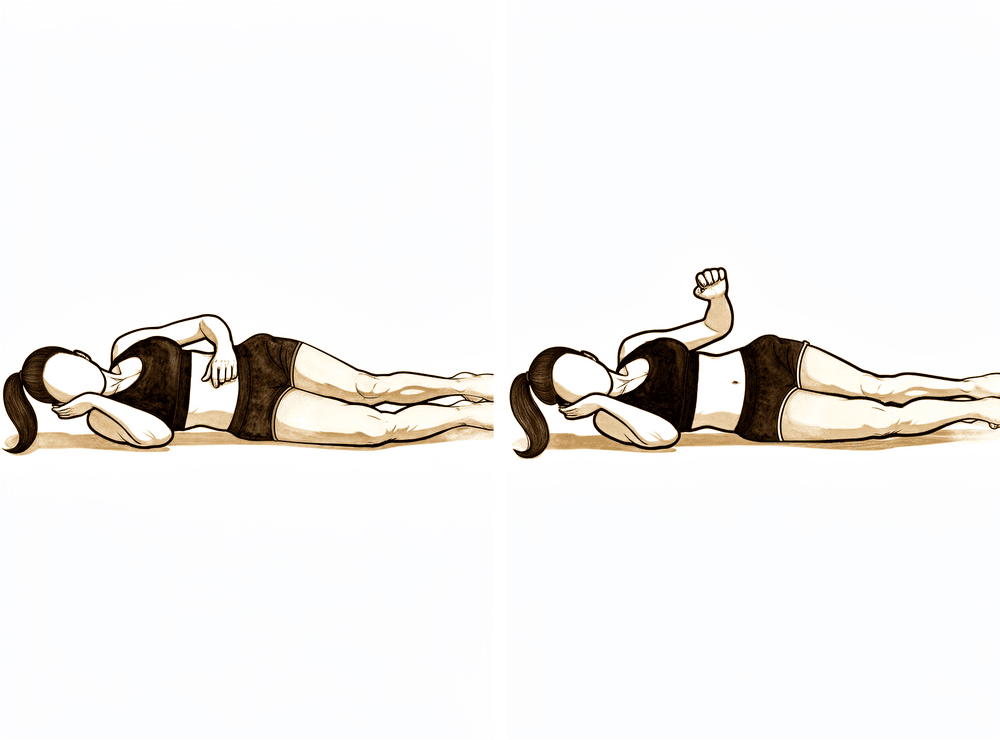
پہلو کے بل لیٹ کر باہر کی طرف گھماؤ
اس پہلو کے بل لیٹیں جس کا آپریشن نہیں ہوا، اوپر والی کہنی سیدھے زاویے پر مڑی ہو اور جسم کے ساتھ لگی ہو۔ کہنی کو پہلو کے ساتھ رکھتے ہوئے بازو کے نچلے حصے (forearm) کو چھت کی طرف اوپر گھمائیں، پھر قابو کے ساتھ نیچے لائیں۔ شروع وزن کے بغیر کریں۔
ایک ہفتہ بغیر درد اور اچھے قابو کے ساتھ تکرار کے بعد ہلکا وزن (0.5 سے 1 کلوگرام) شامل کریں
Kieran Hirpara 4.0
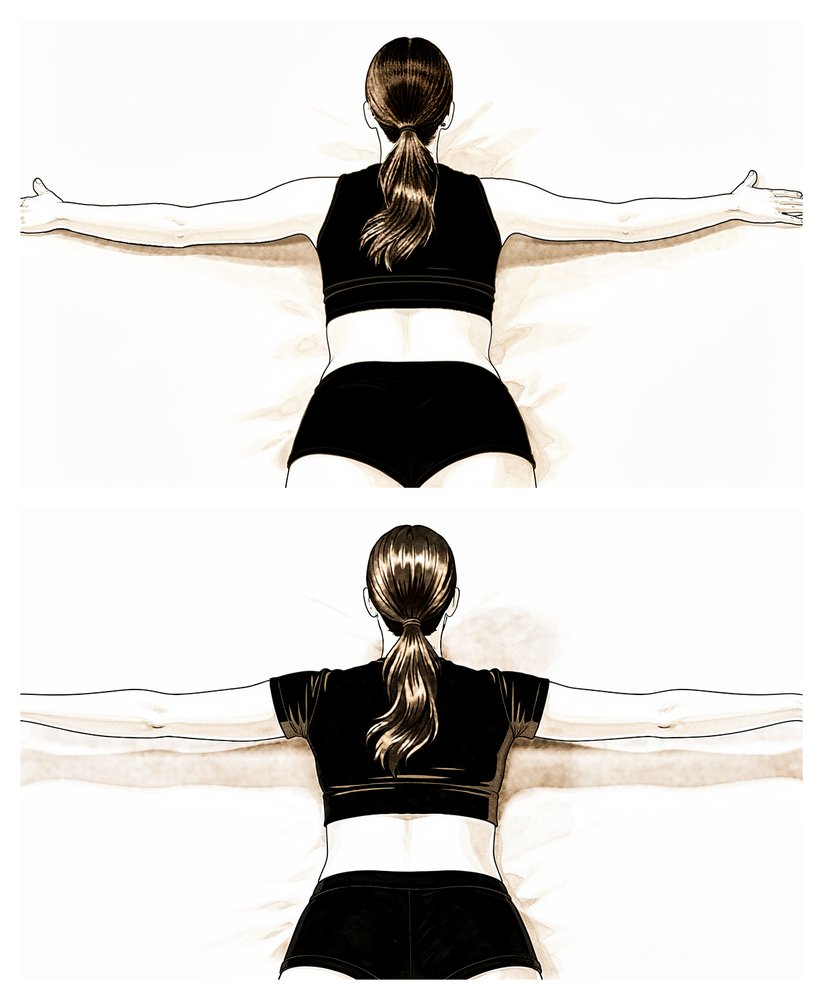
منہ کے بل لیٹ کر بازو پہلو کی طرف اٹھانا (prone 'T')
منہ کے بل لیٹیں اور بازو فرش کی طرف لٹکا ہو۔ کندھے کی پچھلی چپٹی ہڈی کو ریڑھ کی ہڈی کی طرف اندر کھینچیں اور بازو کو پہلو کی طرف کندھے کی اونچائی تک اٹھائیں، انگوٹھا آگے رہے، پھر آہستہ سے نیچے لائیں۔ شروع وزن کے بغیر کریں؛ جب تکرار بغیر درد اور اچھے قابو کے ساتھ ہونے لگے تو ہلکا وزن شامل کیا جا سکتا ہے۔
جیسے آپ کا فزیوتھراپسٹ بتائے
Kieran Hirpara 4.0
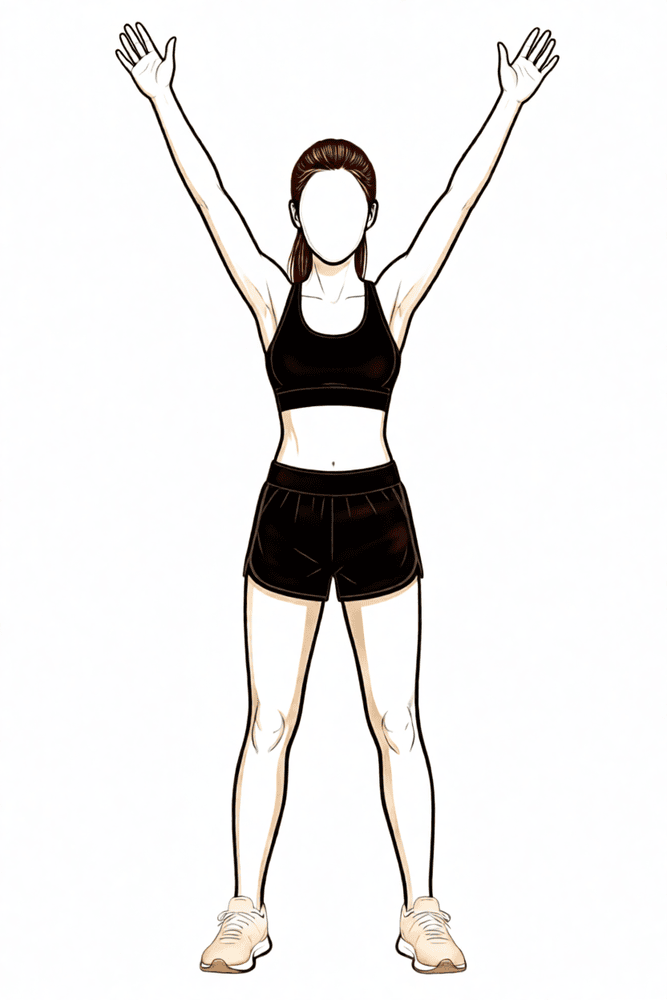
نچلے ٹریپیزیئس پٹھے کی دوبارہ تربیت (lower trapezius)
بستر یا میز پر منہ کے بل لیٹیں اور بازو کنارے سے ڈھیلا لٹکا ہو۔ کندھے کی پچھلی چپٹی ہڈی کو نیچے اور اندر ریڑھ کی ہڈی کی طرف کھینچیں، اور ہڈی کے حرکت کرنے کے ساتھ بازو کو اوپر اٹھنے دیں — زور کندھے کی پچھلی ہڈی کے نیچے سے آئے، کندھا اچکانے سے نہیں۔ آہستہ سے نیچے لائیں اور دہرائیں۔
جیسے آپ کا فزیوتھراپسٹ بتائے
Kieran Hirpara 4.0
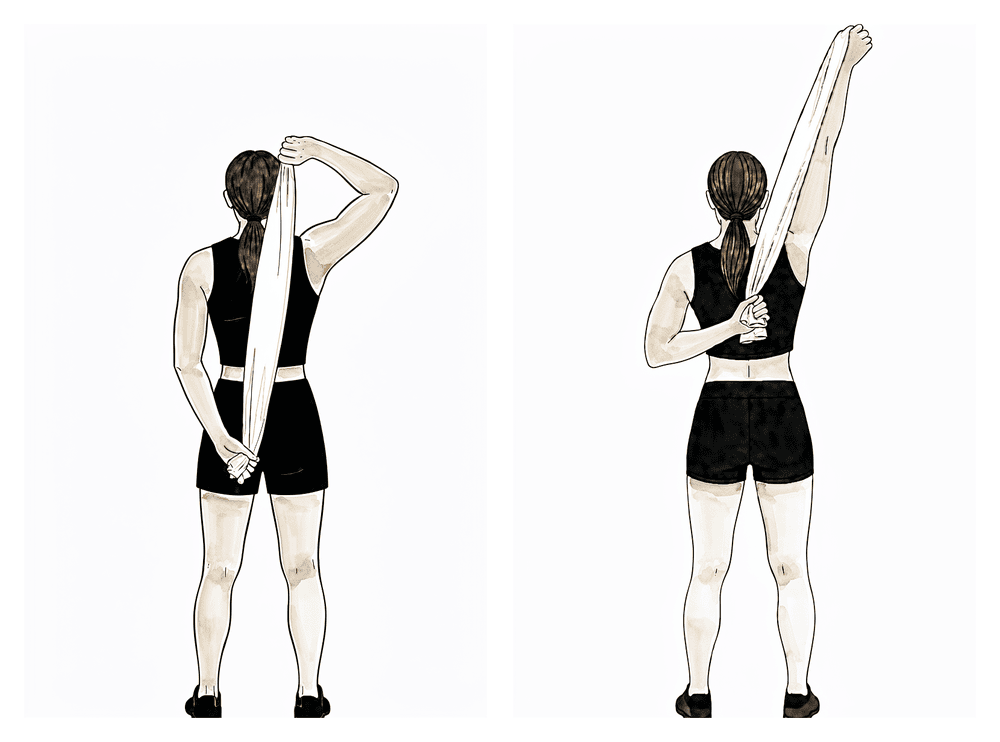
کمر کے پیچھے اسٹریچ
کمر کے پیچھے ایک تولیہ پکڑیں، آپریشن والا ہاتھ نیچے اور ٹھیک ہاتھ اوپر ہو۔ ٹھیک بازو کی مدد سے آپریشن والے ہاتھ کو آہستہ سے کمر پر اوپر کھینچیں یہاں تک کہ کھنچاؤ محسوس ہو، تھوڑی دیر روکیں، پھر نیچے لائیں۔ مقصد کندھے کے پچھلے حصے میں ہلکا کھنچاؤ ہے — اس میں زور نہ لگائیں۔
جیسے آپ کا فزیوتھراپسٹ بتائے
Kieran Hirpara 4.0
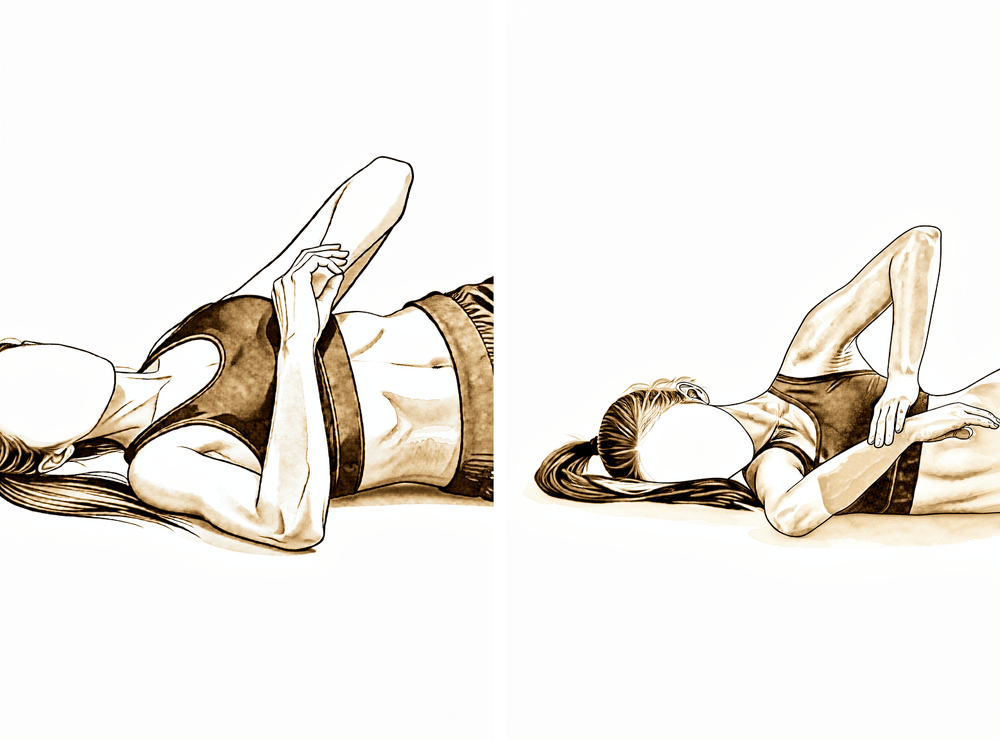
سلیپر اسٹریچ (جوڑ کی پچھلی جھلی کا اسٹریچ)
آپریشن والے پہلو کے بل لیٹیں، کندھا اور کہنی دونوں سیدھے زاویے پر مڑے ہوں۔ دوسرے ہاتھ سے بازو کے نچلے حصے کو آہستہ سے بستر کی طرف نیچے دبائیں یہاں تک کہ کندھے کے پچھلے حصے میں کھنچاؤ محسوس ہو، پھر دباؤ ڈھیلا کر دیں۔ یہ جوڑ کی پچھلی جھلی کا وہی اسٹریچ ہے جو آپ کا فزیوتھراپسٹ گھماؤ کو کھولنے کے لیے استعمال کرے گا — اسے نرمی سے کریں، تیز درد نہیں ہونا چاہیے۔
20 سے 30 سیکنڈ روکیں، چند بار؛ جیسے آپ کا فزیوتھراپسٹ بتائے
Kieran Hirpara 4.0
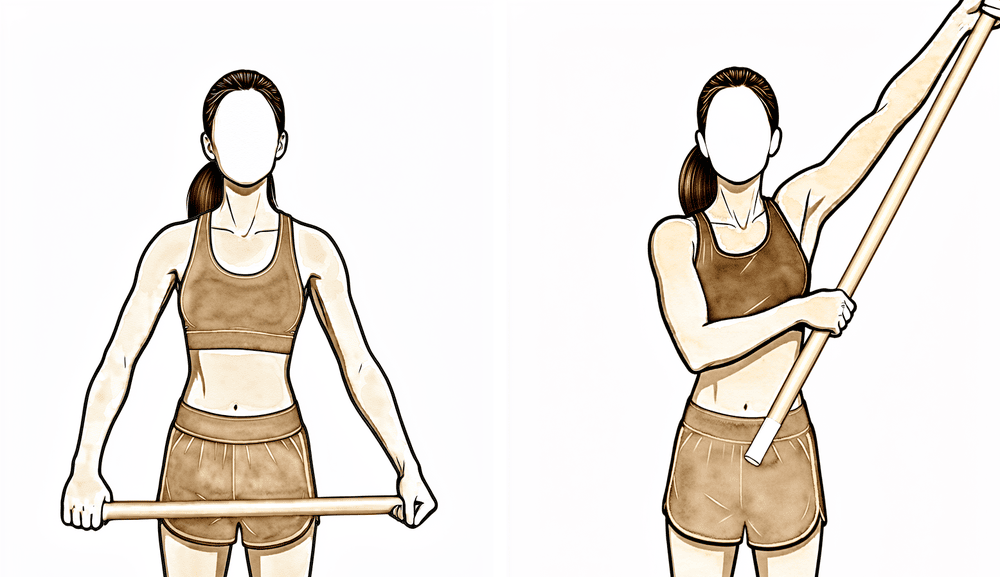
چھڑی کی مدد سے بازو پہلو کی طرف اٹھانا
کمر کے بل لیٹیں اور دونوں ہاتھوں میں ایک چھڑی پکڑیں۔ ٹھیک بازو کی مدد سے آپریشن والے بازو کو پہلو کی طرف کندھے کی اونچائی کی جانب لے جائیں، پھر قابو کے ساتھ نیچے لائیں۔ حرکت کی حد واپس آنے کے ساتھ یہ بازو کو پہلو کی طرف 90 ڈگری تک اٹھانے کی صلاحیت بحال کرنے میں مدد دیتا ہے۔
جیسے آپ کا فزیوتھراپسٹ بتائے
Kieran Hirpara 4.0
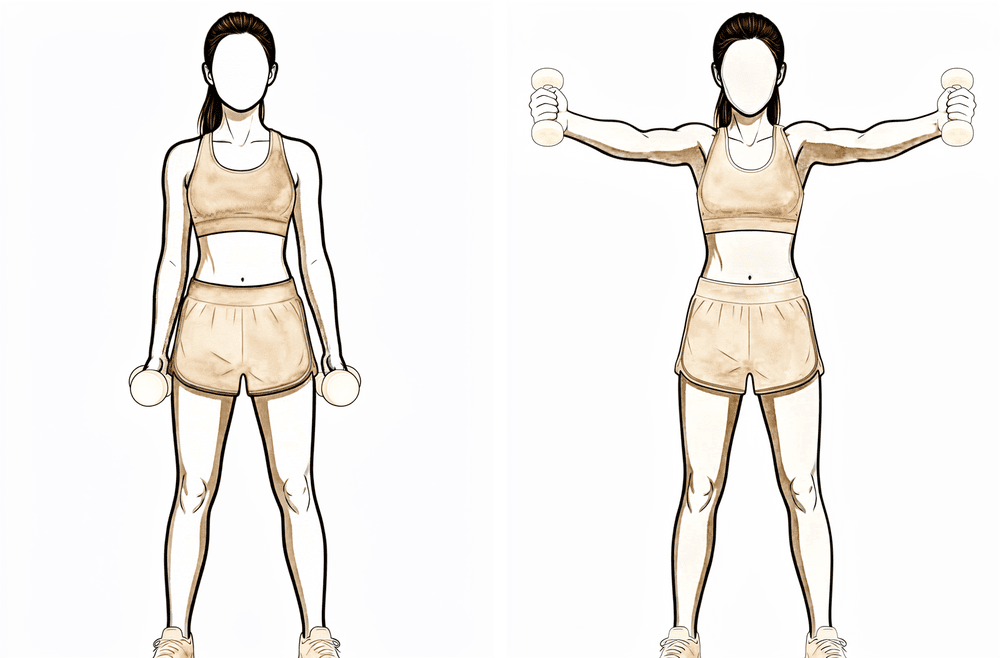
اسکیپشن (scaption، بھرا ڈبہ پکڑنے کے انداز میں بازو اٹھانا)
بازو پہلو کے ساتھ رکھ کر کھڑے ہوں، انگوٹھا اوپر کی طرف ہو۔ بازو کو آگے کی طرف ترچھے زاویے پر اٹھائیں — سیدھا سامنے اور پہلو کی طرف کے درمیان — اتنا ہی اونچا جتنا آرام دہ ہو، پھر آہستہ سے نیچے لائیں۔ شروع وزن کے بغیر کریں؛ کندھے کی پچھلی ہڈی کو ٹکا کر رکھیں اور کندھا اچکانے سے پرہیز کریں۔
وزن کے بغیر شروع کریں؛ جب تکرار بغیر درد اور اچھے قابو کے ساتھ ہونے لگے تو ہلکا وزن شامل کریں
Kieran Hirpara 4.0
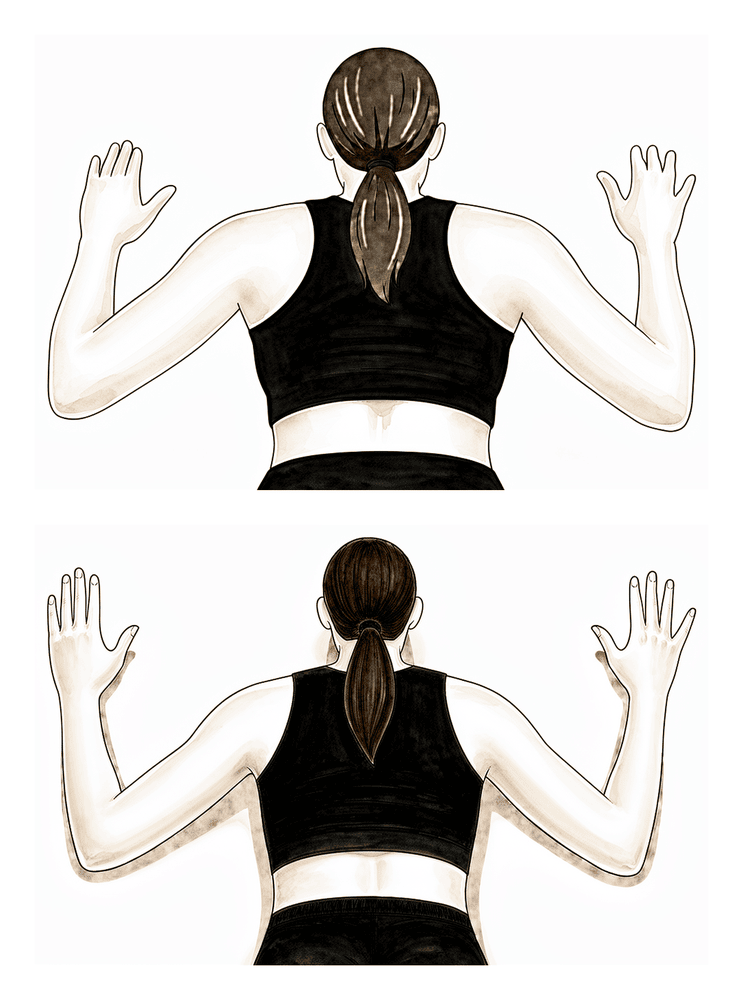
منہ کے بل لیٹ کر رو (prone row)
منہ کے بل لیٹیں اور دونوں بازو فرش کی طرف لٹکے ہوں۔ کندھے کی پچھلی ہڈیوں کو ایک دوسرے کی طرف دبائیں اور کہنیوں کو پیچھے اور نیچے کھینچیں تاکہ بازو حرف W کی شکل بنائیں، پھر آہستہ سے نیچے لائیں۔ شروع وزن کے بغیر کریں؛ جب تکرار بغیر درد اور اچھے قابو کے ساتھ ہونے لگے تو ہلکا وزن شامل کیا جا سکتا ہے۔
وزن کے بغیر شروع کریں؛ ایک ہفتہ بغیر درد تکرار کے بعد ہلکا وزن (تقریباً 0.5 سے 1 کلوگرام) شامل کریں
یہ مرحلہ باقی حرکت واپس لانے اور طاقت دوبارہ بنانا شروع کرنے کے بارے میں ہے۔ آپ کی ورزشیں مدد والی حرکتوں سے بڑھ کر بازو کو ہر سمت میں خود ہلانے تک جاتی ہیں، اور زیادہ تر شائع شدہ پروٹوکول کے مطابق تقریباً چھ سے آٹھ ہفتوں تک مکمل یا تقریباً مکمل حرکت کی حد واپس آ جاتی ہے۔ مضبوطی کی ورزشیں آہستہ شروع ہوتی ہیں: پہلے وزن کے بغیر، پھر روٹیٹر کف اور کندھے کی پچھلی چپٹی ہڈی (shoulder blade) کے پٹھوں کے لیے لچکدار بینڈ اور بہت ہلکے وزن کے ساتھ۔ بہت سے لوگوں کو ورزش سے پہلے گرم سکائی اور بعد میں برف مفید لگتی ہے۔ درمیانے درجے کا کام (کندھے کی اونچائی سے نیچے ہلکا وزن اٹھانا) عموماً اسی مرحلے میں، فزیوتھراپسٹ کی رہنمائی میں، ممکن ہو جاتا ہے۔
آپ کے فزیوتھراپسٹ کے لیے:
اہداف
- تقریباً ہفتہ 6 سے 8 تک تمام سمتوں (planes) میں مکمل یا تقریباً مکمل خود حرکت کی حد
- روٹیٹر کف اور اسکیپولا کے پٹھوں کی طاقت واپس لانا اور بہتر کرنا
- کندھے کی پچھلی ہڈی اور بازو کی ہڈی کی ہم آہنگ حرکت (scapulohumeral rhythm) اور اعصابی و عضلاتی کنٹرول (neuromuscular control) کو معمول پر لانا
- درد کو کم کرنا جاری رکھنا
علاج
- تمام سمتوں میں حرکت کی حد بڑھائیں، جس میں کمر کے پیچھے اندر کی طرف گھماؤ اور جوڑ کی پچھلی جھلی کا ہلکا اسٹریچ (posterior capsular stretching) شامل ہے
- ضرورت کے مطابق کندھے کے بال اور ساکٹ جوڑ (glenohumeral joint) کی موبلائزیشن (نیچے، پیچھے اور آگے کی طرف سرکانا)
- وزن کے بغیر شروع ہونے والا آئسوٹونک پروگرام (isotonic program) (بازو اٹھانا، منہ کے بل لیٹ کر رو (prone rowing)، منہ کے بل لیٹ کر بازو کو افقی طور پر پہلو کی طرف اٹھانا، منہ کے بل لیٹ کر بازو کو پیچھے سیدھی پوزیشن (neutral) تک لے جانا، پہلو کے بل لیٹ کر باہر کی طرف گھماؤ، 90 ڈگری تک ابڈکشن)، اور ایک ہفتہ بغیر درد اور اچھے کنٹرول کے ساتھ تکرار کے بعد ہلکا وزن (تقریباً 0.5 سے 1 کلوگرام) شامل کریں
- لچکدار ٹیوب کے ساتھ باہر اور اندر کی طرف گھماؤ؛ جتنا آرام اجازت دے، بازو کو زیادہ اونچی پوزیشنوں میں رکھ کر گھماؤ کی ورزش کی طرف بڑھیں
- اسکیپولا کا اعصابی و عضلاتی کنٹرول اور نچلے ٹریپیزیئس (lower trapezius) کے پٹھے کی ورزش؛ دھڑ، کور اور ٹانگوں کی کنڈیشننگ
- بازو اور ہاتھ (upper limb) کی برداشت (endurance) کی ورزش؛ اپنی پسند کے مطابق سیشن سے پہلے گرم سکائی اور بعد میں برف
احتیاطیں
- امپنجمنٹ (کندھے میں ٹینڈن کا رگڑ کھانا) کی تکلیف دہ حد میں بوجھ والی ورزش سے پرہیز کریں؛ ورزشیں مشکل ہو سکتی ہیں، لیکن ان سے آپریشن سے پہلے والا درد دوبارہ نہیں ہونا چاہیے
- سپرا اسپائناٹس (supraspinatus) یا درمیانی ڈیلٹائیڈ (mid-deltoid) پر بوجھ کو اس وقت تک خاص طور پر نشانہ نہ بنائیں جب تک یہ بغیر درد کے نہ ہو، اور اگر اس سے آرام کے دوران یا رات کو درد ہو تو اس سے پرہیز کریں
- چھ ہفتے تک آپریشن والے بازو کے زور پر اٹھنے سے، اور بھاری یا سر سے اوپر وزن اٹھانے سے پرہیز جاری رکھیں
اگلے مرحلے میں جانے کی شرائط
- مکمل، بغیر درد کی حرکت کی حد، اور چھونے پر بہت کم درد
- ہاتھ سے جانچ (manual testing) پر روٹیٹر کف کی طاقت تقریباً 4/5، اور اسکیپولا کا اچھا کنٹرول
مرحلہ III — مضبوطی (ہفتہ 6 سے 12)
Kieran Hirpara 4.0
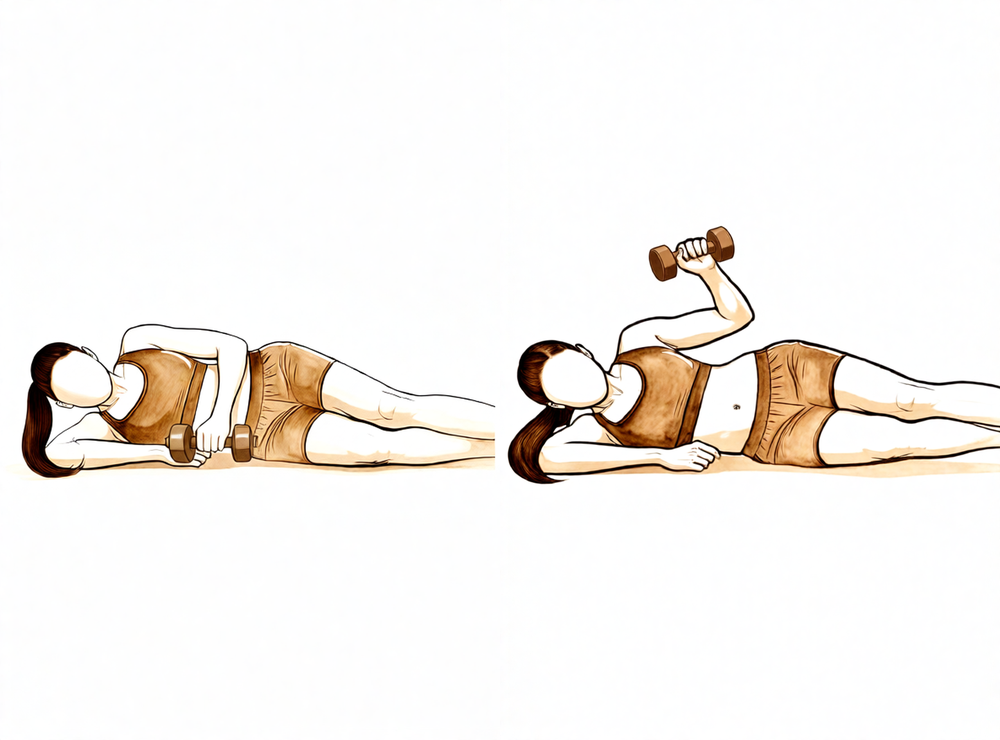
وزن کے ساتھ پہلو کے بل لیٹ کر باہر کی طرف گھماؤ
اس پہلو کے بل لیٹیں جس کا آپریشن نہیں ہوا، اوپر والی کہنی سیدھے زاویے پر مڑی ہو اور جسم کے ساتھ لگی ہو۔ ہلکا وزن پکڑ کر بازو کے نچلے حصے کو چھت کی طرف اوپر گھمائیں، پھر آہستہ سے نیچے لائیں۔ ورزش محنت والی محسوس ہونی چاہیے لیکن بنیادی طور پر بغیر درد کے رہے — جو ورزش آرام کے دوران یا رات کو درد پیدا کرے اسے کم کر دیں۔
8 سے 12 تکرار کے 2 سے 3 سیٹ
Kieran Hirpara 4.0
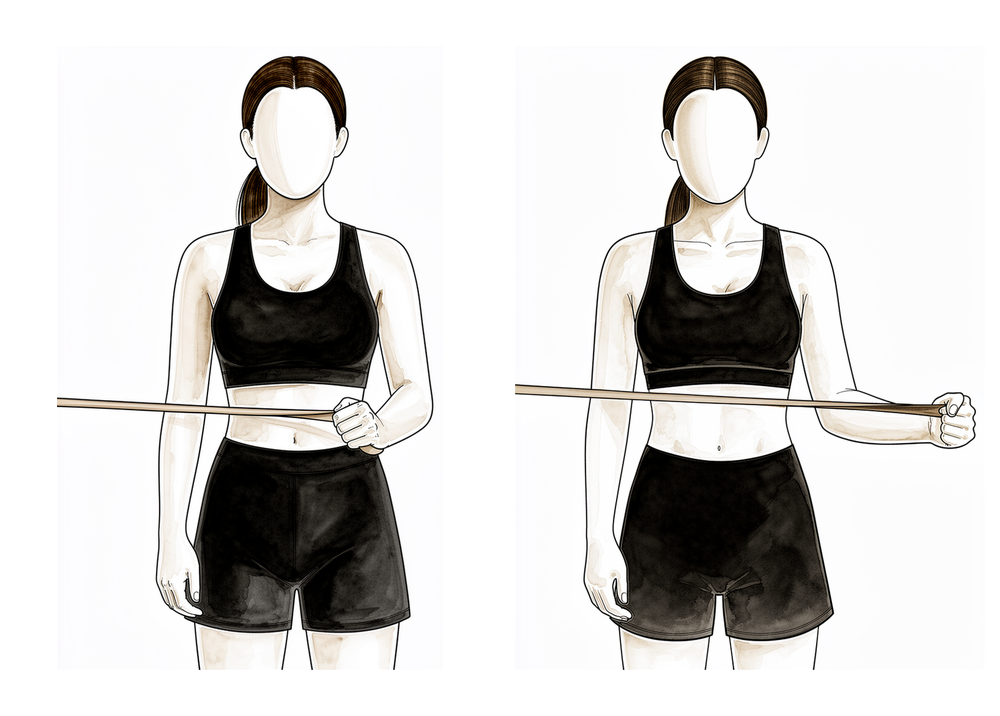
بینڈ کے ساتھ باہر کی طرف گھماؤ
کہنی کو پہلو کے ساتھ لگا کر اور سیدھے زاویے پر موڑ کر کھڑے ہوں، اور کمر کی اونچائی پر بندھا ہوا لچکدار بینڈ پکڑیں۔ کہنی کو پہلو کے ساتھ رکھتے ہوئے بازو کے نچلے حصے کو بینڈ کے خلاف باہر کی طرف گھمائیں، پھر آہستہ سے واپس لائیں۔ یہ روٹیٹر کف کی ورزش کو پہلے والی آئسومیٹرک اور بغیر وزن کی ورزشوں سے آگے بڑھاتا ہے۔
8 سے 12 تکرار کے 2 سے 3 سیٹ
Kieran Hirpara 4.0
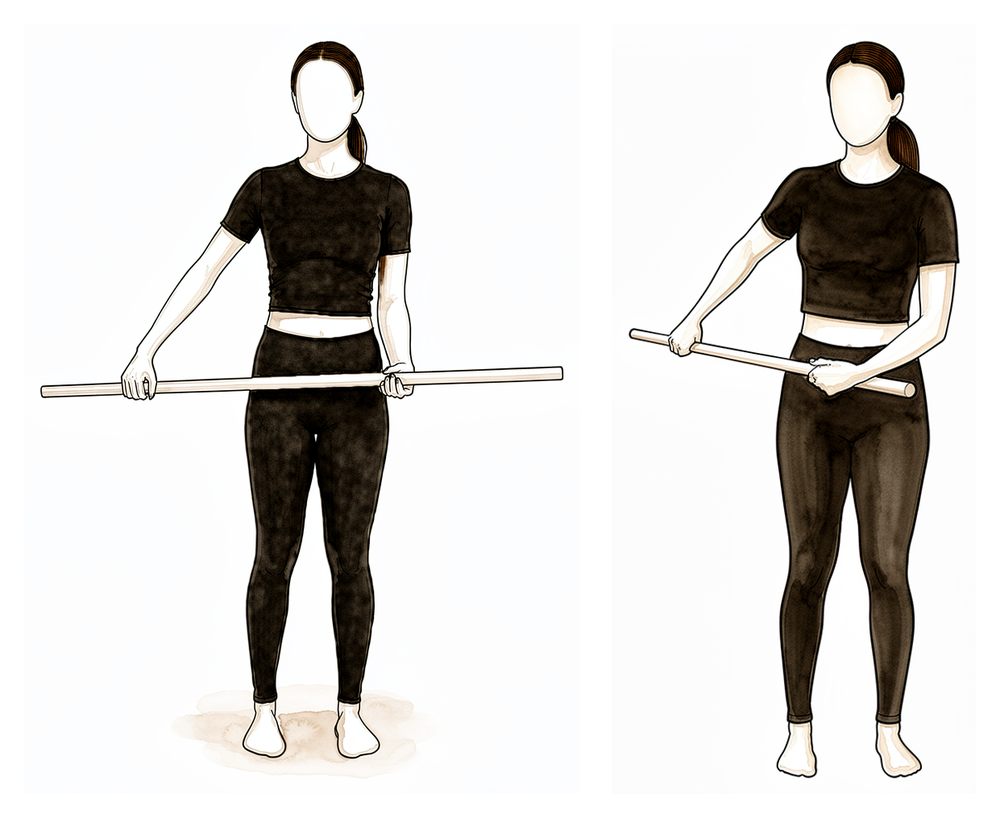
بینڈ کے ساتھ اندر کی طرف گھماؤ
کہنی کو پہلو کے ساتھ لگا کر، ایک طرف بندھا ہوا بینڈ پکڑیں اور بازو کے نچلے حصے کو بینڈ کے خلاف جسم کے سامنے سے اندر کی طرف گھمائیں، پھر آہستہ سے واپس لائیں۔ جیسے جیسے آپ کی طاقت بڑھے، مزاحمت بڑھاتے رہیں۔
8 سے 12 تکرار کے 2 سے 3 سیٹ
Kieran Hirpara 4.0
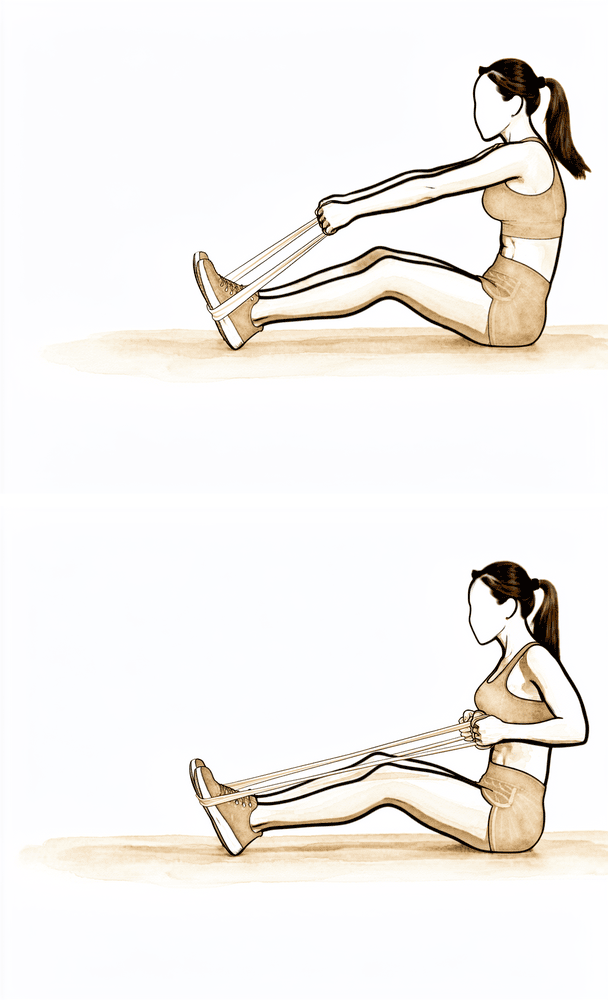
کھڑے ہو کر رو (standing row)
اپنے سامنے کمر کی اونچائی پر بندھا ہوا بینڈ پکڑیں۔ بازو کو تقریباً سیدھا رکھتے ہوئے اسے پیچھے اور نیچے کولہے کی طرف کھینچیں، کندھے کی پچھلی ہڈی کو نیچے اور پیچھے دبائیں، پھر آہستہ سے واپس لائیں۔ اس سے کندھے کی پچھلی ہڈی کے وہ پٹھے مضبوط ہوتے ہیں جو روٹیٹر کف کو سہارا دیتے ہیں۔
8 سے 12 تکرار کے 2 سے 3 سیٹ
Kieran Hirpara 4.0
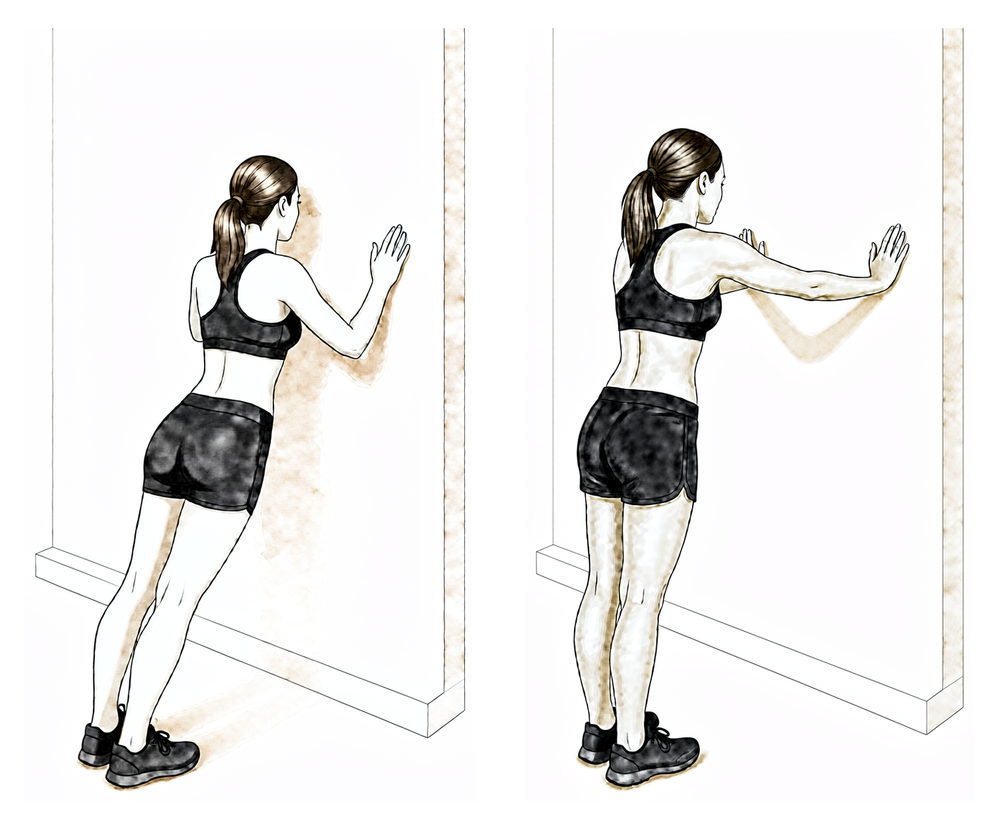
دیوار پر پُش اپ پلس (wall push-up plus)
دیوار کی طرف منہ کر کے کھڑے ہوں اور ہتھیلیاں کندھے کی اونچائی پر دیوار پر سیدھی رکھیں۔ کہنیاں موڑ کر دیوار کی طرف جھکیں، پھر واپس دھکیلیں، اور آخر میں ہاتھوں سے ہلکا سا مزید دھکیلیں تاکہ کندھے کی پچھلی ہڈیاں ایک دوسرے سے دور پھیل جائیں۔ یہ کنٹرول بڑھانے کے لیے کلوزڈ چین ورزش (closed-chain، ہاتھ کسی سطح پر ٹکا کر کی جانے والی ورزش) ہے — اسے اپنے فزیوتھراپسٹ کی رہنمائی کے مطابق شروع کریں۔
جیسے آپ کا فزیوتھراپسٹ بتائے
حرکت واپس آنے کے بعد توجہ طاقت، برداشت اور کنٹرول کی طرف جاتی ہے۔ مزاحمت والی ورزشیں بینڈ سے بڑھ کر وزن تک جاتی ہیں، اور ورزشیں زیادہ متحرک ہو جاتی ہیں، جس میں کھیلوں کی طرف واپس جانے والے لوگوں کے لیے کنٹرول کے ساتھ پلائیومیٹرک ورزشوں (plyometric، تیز اور جھٹکے دار حرکتوں والی ورزشیں) کا آغاز اور تربیت کی طرف مرحلہ وار واپسی شامل ہے۔ تیراکی عموماً تقریباً چھ ہفتوں سے دوبارہ شروع ہو جاتی ہے (پہلے بریسٹ اسٹروک، اور جب آرام دہ ہو تو فری اسٹائل)، اور درمیانے درجے کا کام (کندھے کی اونچائی سے نیچے ہلکا وزن اٹھانا) عام طور پر چھ ہفتوں سے ممکن ہوتا ہے۔ جب طاقت کی شرائط پوری ہو جائیں تو کھیل کی طرف مرحلہ وار واپسی کا پروگرام (interval return-to-sport program) عموماً ہفتہ 10 سے 12 پر شروع ہوتا ہے۔
آپ کے فزیوتھراپسٹ کے لیے:
اہداف
- کندھے کے پورے نظام کی طاقت، قوت اور برداشت بہتر کرنا
- اعصابی و عضلاتی کنٹرول، جوڑ کی پوزیشن کے احساس (proprioception) اور حرکت کے انداز کو بہترین بنانا (کندھا اچکائے بغیر)
- کھیل اور زیادہ بھاری کام کی طرف مرحلہ وار واپسی کی تیاری
علاج
- آئسوٹونک پروگرام کو آگے بڑھائیں: پہلے آئسومیٹرک، پھر لچکدار بینڈ، پھر وزن؛ روٹیٹر کف، ڈیلٹائیڈ اور اسکیپولا کو مستحکم رکھنے والے پٹھوں کے لیے 8 سے 12 تکرار کے 2 سے 3 سیٹ
- ایسینٹرک مزاحمت (eccentrically resisted، پٹھے کے لمبا ہوتے ہوئے مزاحمت) والی ورزشیں، کلوزڈ چین ورزشیں (closed-chain، ہاتھ کسی سطح پر ٹکا کر) اور ردھمک اسٹیبلائزیشن شامل کریں؛ جوڑ کی پوزیشن کے احساس کی ورزشیں، جن میں بازو پر وزن ڈالنا اور ہاتھوں اور گھٹنوں کے بل چار نکاتی پوزیشن (four-point kneeling) شامل ہیں
- پلائیومیٹرک سرگرمیاں: دونوں ہاتھوں والی مشقیں (سینے سے گیند پاس کرنا، ایک طرف سے دوسری طرف پھینکنا)، جو مرحلے کے آخر تک ایک ہاتھ والی مشقوں (دیوار پر گیند ٹپانا، پھینکنے کی مشقیں) کی طرف بڑھیں
- اگر شرائط پوری ہوں تو ہفتہ 10 سے 12 پر کھیل کا مرحلہ وار پروگرام (interval sports program) شروع کریں
- کور اور کنڈیشننگ کی ورزشیں جاری رکھیں؛ ضرورت کے مطابق ٹھنڈی سکائی
احتیاطیں
- ورزشیں مشکل ہونی چاہییں لیکن بنیادی طور پر بغیر درد کے؛ جو ورزش آرام کے دوران یا رات کو درد پیدا کرے اسے کم کر دیں
- بھاری وزن اٹھانا اور سر سے اوپر لگاتار بوجھ ڈالنا تقریباً تین ماہ تک مؤخر رکھیں
اگلے مرحلے میں جانے کی شرائط
- مکمل، بغیر درد کی خود حرکت کی حد (تقریباً دوسری طرف کے برابر)
- طاقت دوسری طرف کے قریب پہنچ رہی ہو (شائع شدہ شرائط متحرک تربیت شروع کرنے کے لیے 70 فیصد سے لے کر کھیل میں واپسی کے لیے 90 فیصد تک ہیں)
- بتدریج بڑھتے بوجھ کے ساتھ نہ درد ہو اور نہ چھونے پر درد
مرحلہ IV — مکمل سرگرمی کی طرف واپسی (ہفتہ 12 اور اس کے بعد)
آخری مرحلہ بھاری کام، سر سے اوپر کے کاموں اور کھیل کی طرف مرحلہ وار واپسی ہے۔ بھاری یا بار بار وزن اٹھانا اور کندھے کی اونچائی سے اوپر لگاتار کام عموماً تقریباً تین ماہ سے دوبارہ شروع ہوتے ہیں۔ مقابلے والے کھیل (خاص طور پر سر سے اوپر والے کھیل) میں واپسی کیلنڈر کی بنیاد پر نہیں بلکہ شرائط پوری کرنے پر ہوتی ہے: مکمل بغیر درد کی حرکت، دوسری طرف کے قریب طاقت، اور کھیل سے متعلق مشقوں میں اعتماد۔ کندھا عموماً اس مرحلے کے بہت بعد تک بہتر ہوتا رہتا ہے؛ شائع شدہ رہنمائی کے مطابق بہتری ایک سال تک جاری رہ سکتی ہے۔
آپ کے فزیوتھراپسٹ کے لیے:
اہداف
- بھاری کام، سر سے اوپر کی سرگرمی اور کھیل کی طرف مرحلہ وار واپسی
- طویل مدت تک حرکت کی حد، طاقت اور کنٹرول برقرار رکھنا
علاج
- مضبوطی کا پروگرام جاری رکھیں، اور جتنا برداشت ہو، جم اور کھیل سے متعلق ورزشوں کو آگے بڑھائیں
- کھیل کا مرحلہ وار پروگرام جاری رکھیں، اور پھینکنے اور دوسرے سر سے اوپر والے کھیلوں میں مرحلہ وار واپسی کریں
- ضرورت کے مطابق جوڑ کی جھلی کے اسٹریچ اور طاقت برقرار رکھنے والی ورزشیں خود کریں
احتیاطیں
- آگے بڑھنا علامات کی رہنمائی میں ہی رہتا ہے؛ اگر درد دوبارہ ہو تو بوجھ کم کریں، آرام دہ حرکت بحال کریں اور پھر سے طاقت بنائیں
اگلے مرحلے میں جانے کی شرائط
- مکمل، بغیر درد کی حرکت کی حد
- طاقت اور کارکردگی کے ٹیسٹ تسلی بخش ہوں (شائع شدہ کھیل میں واپسی کی شرائط میں دوسری طرف کا تقریباً 90 فیصد)
- ڈاکٹر کا تسلی بخش معائنہ
آپ کے پروٹوکول کے بعد
اوپر دیے گئے مرحلے دوربین کے ذریعے سب ایکرومیئل ڈیکمپریشن کے شائع شدہ بحالی کے پروٹوکول اور مریضوں کے لیے رہنمائی سے اخذ کیے گئے ہیں: OrthoIndy، Sports Surgery New York، Gundersen Health System Sports Medicine، Twin Cities Orthopedics، Oxford University Hospitals NHS Foundation Trust اور Royal Berkshire NHS Foundation Trust۔ ہفتوں کے دورانیے عام اندازے ہیں، طے شدہ نہیں، اور آپ کی آگے کی بحالی کی رہنمائی آپ کا فزیوتھراپسٹ کلینک کے ساتھ مل کر، آپ کے کندھے کی صحت یابی کو دیکھتے ہوئے، انفرادی طور پر کرتا ہے۔ یہ صفحہ کلینک کی عمومی صحت یابی کی ہدایات کے ساتھ مل کر کام کرتا ہے؛ دیکھیں آپریشن کے بعد درد پر قابو پانا اور زخم کی دیکھ بھال۔ خود آپریشن اور اس سے علاج ہونے والی بیماری کے بارے میں دیکھیں سب ایکرومیئل ڈیکمپریشن۔ اس پروٹوکول کے پیچھے موجود شواہد (بشمول یہ کہ یہ سب ایکرومیئل سرجری پر ہونے والے ٹرائلز کے شواہد سے کیسے مطابقت رکھتا ہے) شواہد کے حصے میں خلاصے کی صورت میں دیے گئے ہیں، جو اس صفحے کے اوپر سے پی ڈی ایف کی صورت میں دستیاب ہے۔
Evidence & references
This is the clinical evidence summary written for health professionals. It is technical, and it lists the research this page was built from. You do not need to read it to understand your treatment or to make a decision about it.
Arthroscopic Subacromial Decompression (Acromioplasty) — Post-operative Rehabilitation
Topic scope: Post-operative rehabilitation after isolated arthroscopic subacromial decompression (ASD / acromioplasty ± bursectomy). When a decompression is performed together with a rotator cuff repair, the repaired tendon sets the (slower) pace and the rotator-cuff-repair protocol takes priority — this page is for the isolated decompression.
Defining principle of this rehab: a subacromial decompression shaves bone and clears bursa — it repairs nothing that needs protecting. So (like a debridement, and unlike a cuff repair or stabilisation) the rehab is an early-movement pathway: a short sling for comfort only, weaned within days, motion and normal light use from day one, and a rapid return of range and function. The aim is to settle the post-operative flare and keep the shoulder moving while it quiets down — rehabilitation, not rest, does the work.
A. THE PROCEDURE & ITS EVIDENCE CONTEXT (important)
Arthroscopic subacromial decompression removes the subacromial bursa and shaves the under-surface of the acromion to "make room" for the rotator cuff, on the impingement model of subacromial pain.
The efficacy of the bony decompression itself is one of the most debated questions in shoulder surgery, and the rehabilitation context cannot be stated honestly without it:
- CSAW (Beard et al, Lancet 2018; n=313, 3-arm) — a placebo-controlled surgical RCT. Decompression gave no clinically important benefit over arthroscopy-only (placebo) surgery, and both surgical arms were only marginally better than no treatment — a difference below the pre-specified minimal clinically important threshold.
- FIMPACT (Paavola et al, BMJ 2018) — a second placebo-controlled RCT: no benefit of ASD over diagnostic arthroscopy, and neither was superior to a structured exercise programme at 2 years.
- Cochrane review (Karjalainen et al, 2019) — high-certainty evidence that subacromial decompression provides little or no clinically important benefit over placebo for pain, function, or quality of life.
The practical consequence is that structured exercise/physiotherapy is first-line for subacromial pain, and ASD is now a selective operation — reserved for patients who have failed an adequate non-operative programme or who have a specific mechanical lesion. This does not make a well-selected decompression valueless, but it explains why the post-operative emphasis is on early movement and rehabilitation, which is what reliably drives recovery.
B. POST-OPERATIVE PHASED TIMELINE (isolated decompression)
A nerve block is commonly used (numb arm for some hours — start analgesia before it wears off). Keyhole wounds; desk-based work commonly resumes within ~2 weeks.
| Phase | Window | Sling | ROM / use | Strengthening | Notes |
|---|---|---|---|---|---|
| I — Early movement | Week 0–2 | Comfort only, off within days (gone by ≤ 2 wk) | Hand/elbow immediately; pendulums + assisted motion as comfort allows; normal light daily use from day 1 | — | Settle pain/swelling; ice; analgesia before exercise. No driving while in sling (typically back ~1–3 wk once out of sling + safe emergency stop) |
| II — Restore range / start strength | Week 2–6 | Off | Progress to full active ROM all planes | Begin gentle cuff + scapular strengthening | Range comfortable below shoulder height; most daily activity resumed |
| III — Strengthening | Week 6–12 | Off | Full | Progressive cuff/scapular loading, band → light weight | Heavier and overhead loading built gradually |
| IV — Return to full activity | Week 12 + | Off | Full | Advanced/sport-specific | Full unrestricted activity typically ~3 months |
There is no construct-protection branch in the isolated decompression — the only branch is if a rotator cuff repair was also done, which converts recovery to the protected cuff-repair pathway.
C. KEY CONTROVERSIES / EVIDENCE QUALITY
- Does the bony decompression add anything? Two placebo-controlled RCTs (CSAW, FIMPACT) and a Cochrane review say it adds little or nothing over placebo or exercise for subacromial pain. Strong (RCT/SR). → exercise-first, selective surgery.
- Decompression added to a cuff repair — multiple RCTs show no added benefit of routine acromioplasty at the time of arthroscopic cuff repair. Moderate–strong.
- The post-operative rehab protocol itself — consensus/expert (institutional protocols), no defining rehab RCT; phase timings are typical, not trial-derived. Weak/consensus.
(Patient-facing note: the efficacy debate belongs in this clinician evidence section, not the patient protocol page — surfaced here for the surgeon's awareness.)
D. EVIDENCE STRENGTH FLAGS (summary)
- STRONG (RCT / SR): ASD provides little/no benefit over placebo surgery or exercise (CSAW Lancet 2018; FIMPACT BMJ 2018; Cochrane Karjalainen 2019); no benefit of added acromioplasty at cuff repair.
- MODERATE: early-motion rehabilitation after isolated decompression (institutional cohorts / consensus protocols, consistent ~3-month recovery).
- WEAK / CONSENSUS: the specific phase/timeline structure of the post-op protocol.
CITATIONS
RAG corpus (180,000+ Orthopaedic articles)
- Is acromioplasty justifiable? Orthop Traumatol Surg Res. 2019. DOI: 10.1016/j.otsr.2019.10.002
- Indications for Arthroscopic Subacromial Decompression: a Level V evidence clinical guideline. Arthroscopy. 2019. DOI: 10.1016/j.arthro.2019.06.012
- The role of subacromial decompression in patients undergoing arthroscopic repair of full-thickness rotator cuff tears. Arthroscopy. 2012. DOI: 10.1016/j.arthro.2011.11.022
- Arthroscopic repair of full-thickness rotator cuff tears with and without acromioplasty (RCT). Am J Sports Med. 2014. DOI: 10.1177/0363546514529091
- A comparative study of arthroscopic débridement versus repair for Ellman grade I partial cuff tears. J Shoulder Elbow Surg. 2020. DOI: 10.1016/j.jse.2020.03.006
Landmark trials / reviews (URLs)
- Beard DJ, et al. Arthroscopic subacromial decompression for subacromial shoulder pain (CSAW): placebo-controlled 3-group RCT. Lancet. 2018. https://www.thelancet.com/journals/lancet/article/PIIS0140-6736(17)32457-1/fulltext
- Paavola M, et al. (FIMPACT) Subacromial decompression versus diagnostic arthroscopy for shoulder impingement: randomised, placebo surgery controlled trial. BMJ. 2018;362:k2860. https://www.bmj.com/content/362/bmj.k2860
- Karjalainen TV, et al. Subacromial decompression surgery for rotator cuff disease. Cochrane Database Syst Rev. 2019. https://www.cochranelibrary.com/cdsr/doi/10.1002/14651858.CD005619.pub3/full
Published rehab protocols (basis for the phase structure)
- Kendall C. Arthroscopic Subacromial Decompression Physical Therapy Protocol. OrthoIndy. https://www.orthoindy.com/wp-content/uploads/Arthroscopic-Subacromial-Decompression.pdf
- Strauss EJ. Rehabilitation Protocol: Arthroscopic Subacromial Decompression / Distal Clavicle Excision. Sports Surgery New York. https://www.sportssurgerynewyork.com/pdf/arthroscopic-subacromial-decompression-distal-clavicle-excision-rehab-protocol.pdf
- Gundersen Health System Sports Medicine. Subacromial Decompression / Acromioplasty Rehabilitation Program. https://www.gundersenhealth.org/sites/default/files/2022-06/Sports-Medicine-Protocol-Subacromial-Decompression-Acromioplasty.pdf
- Meisterling RC. Arthroscopic Subacromial Decompression Rehabilitation. Twin Cities Orthopedics. https://tcomn.com/wp-content/uploads/2016/06/Arthroscopic-Subacromial-Decompression-Rehabilitation.pdf
- Scott-Dempster C, Harper J. Outpatient Post-operative Physiotherapy Guidelines: Sub-Acromial Decompression. Oxford University Hospitals NHS FT. https://www.ouh.nhs.uk/media/zidppie2/sub-acromial-decompression.pdf
- Royal Berkshire NHS FT. Arthroscopic subacromial decompression and/or ACJ excision: discharge advice. https://www.royalberkshire.nhs.uk/media/smegtn3c/arthroscopic-subacromial-decompression-and-or-acromioclavicular-joint-excision-discharge-advice_jul24.pdf