Patients › Rehabilitation
اسکیفائیڈ فکسیشن (Scaphoid Fixation)
اسکیفائیڈ فریکچر (کلائی کی ایک چھوٹی ہڈی کا ٹوٹنا) کو ہڈی کے اندر دبے ہوئے بغیر سر والے دباؤ ڈالنے والے پیچ سے سرجری کے ذریعے جوڑنے کے بعد صحت یابی کا ایک محفوظ منصوبہ: جب تک آہستہ جڑنے والی ہڈی جڑتی ہے، پیچ کی حفاظت میں کلائی کو جلد حرکت کی طرف واپس لایا جاتا ہے، پھر گرفت اور طاقت بڑھائی جاتی ہے، جبکہ بوجھ ڈالنا اور ایسے کھیل جن میں کھلاڑی آپس میں ٹکراتے ہیں اس وقت تک روکے جاتے ہیں جب تک ہڈی کے جڑنے کی تصدیق نہ ہو جائے۔

یہ پروٹوکول Mater Private Hospital Rockhampton میں ڈاکٹر کیرن ہِرپرا کے ہاتھوں اسکیفائیڈ فریکچر (scaphoid fracture، یعنی کلائی کے اندر گہرائی میں کشتی کی شکل کی چھوٹی ہڈی کا ٹوٹنا) کی سرجری کے ذریعے فکسیشن (fixation، یعنی ٹوٹی ہڈی کو جوڑ کر تھامے رکھنا) کے بعد آپ کی صحت یابی میں رہنمائی کرتا ہے، جس میں فریکچر کو ہڈی کے اندر دبے ہوئے بغیر سر والے دباؤ ڈالنے والے پیچ (headless compression screw) سے جوڑا جاتا ہے۔ اس کا آغاز آپ کے گھریلو ورزشی پروگرام سے ہوتا ہے، جس کے بعد وہ منظم کلینیکل پروٹوکول آتا ہے جو آپ کے ہینڈ تھراپسٹ (ہاتھ کی بحالی کے ماہر) کے لیے لکھا گیا ہے۔ یہ صفحہ یا اس کی پی ڈی ایف تھراپی کی اپنی پہلی ملاقات پر ساتھ لے کر جائیں تاکہ آپ کی بحالی کا علاج مربوط رہے۔ آپ کا ہینڈ تھراپسٹ آپ کے فریکچر، آپ کی فکسیشن اور آپ کی صحت یابی کی رفتار کے مطابق منصوبے میں تبدیلی کر سکتا ہے۔
اگر آپریشن کے بعد آپ کو اپنے زخم کے بارے میں کوئی تشویش ہو تو کلینک سے رابطہ کریں۔ اکثر یہ مددگار ہوتا ہے کہ زخم کی تصویر کھینچ کر جائزے کے لیے ای میل کر دیں۔
کیا توقع رکھیں
اسکیفائیڈ کلائی کی تہہ میں ایک چھوٹی ہڈی ہے جو کلائی کی ہڈیوں کی دونوں قطاروں کو آپس میں جوڑتی ہے۔ اس کی نازک خون کی فراہمی غیر معمولی ہے، کیونکہ خون اس میں الٹی سمت سے، ایک سرے سے دوسرے سرے کی طرف، پہنچتا ہے، اور اسی وجہ سے اسکیفائیڈ کا فریکچر آہستہ جڑتا ہے اور اگر اسے ویسے ہی چھوڑ دیا جائے تو بعض اوقات جڑنے میں ناکام ہو سکتا ہے (جسے نان یونین (nonunion) کہتے ہیں)۔ اسکیفائیڈ فکسیشن میں ہڈی کے دونوں ٹکڑوں کو ایک ہی بغیر سر والے دباؤ ڈالنے والے پیچ سے مضبوطی سے جوڑ کر رکھا جاتا ہے جو پوری طرح ہڈی کے اندر دبا ہوتا ہے؛ نہ باہر سے کچھ محسوس ہوتا ہے اور نہ کچھ نکالنا پڑتا ہے۔ پیچ فریکچر کے ٹکڑوں کو آپس میں دباتا ہے، جس سے ہڈی کے جڑنے میں بھی مدد ملتی ہے اور کلائی صرف پلستر میں علاج کیے گئے فریکچر کے مقابلے میں جلدی حرکت شروع کر سکتی ہے۔ اگر فریکچر پرانا تھا یا جڑا نہیں تھا تو جڑنے میں مدد کے لیے ہڈی کی گرافٹ (bone graft، یعنی ہڈی کا ایک چھوٹا ٹکڑا، جو اکثر قریب ہی بازو کے نچلے حصے کی ہڈی سے لیا جاتا ہے) بھی لگائی جا سکتی ہے؛ اس سے ابتدائی منصوبہ کچھ زیادہ محتاط ہو سکتا ہے۔
اس صحت یابی کا بنیادی خیال یہ ہے کہ جب تک ہڈی آہستہ آہستہ جڑتی ہے، تب تک تھامنے کا کام پیچ کرتا ہے۔ چونکہ اسکیفائیڈ آہستہ جڑتی ہے، اس لیے اس منصوبے کے سنگ میل ہڈی کے جڑنے کی رفتار سے طے ہوتے ہیں، صرف کیلنڈر سے نہیں۔ آپ کے سرجن عام طور پر ایکسرے، اور اکثر سی ٹی اسکین بھی، کے ذریعے تصدیق کرتے ہیں کہ فریکچر جڑ گیا ہے ("یونین" (union))، اور اس کے بعد ہی آپ کو زیادہ بوجھ ڈالنے اور کھیل کی اجازت دی جاتی ہے۔ آپ کتنی جلدی آگے بڑھتے ہیں، اس کا انحصار فریکچر کی قسم اور جگہ پر ہے (ہڈی کے آہستہ جڑنے والے اوپری سرے، یعنی "پراکسیمل پول" (proximal pole)، کے قریب کا فریکچر اور پہلے سے موجود نان یونین زیادہ احتیاط سے آگے بڑھائے جاتے ہیں) اور اس پر بھی کہ فکسیشن کتنی مستحکم ہے۔
حرکت کو محتاط مراحل میں کھولا جاتا ہے: انگلیوں اور انگوٹھے کی حرکت فوراً؛ کلائی کی ہلکی حرکت اس وقت جب آپ کا ہینڈ تھراپسٹ اجازت دے؛ پھر گرفت اور مضبوطی کی ورزشیں صرف ہڈی کے جڑ جانے کے بعد؛ اور بوجھ والے کھیلوں یا ایسے کھیلوں جن میں کھلاڑی آپس میں ٹکراتے ہیں (contact sport) میں واپسی سب سے آخر میں۔ چونکہ جوڑی گئی ہڈی مہینوں تک پختہ ہوتی رہتی ہے، اس لیے زیادہ بوجھ اور کھیل ایک دم نہیں بلکہ بتدریج بحال کیے جاتے ہیں۔
احتیاطیں اور پابندیاں
- اپنا اسپلنٹ یا پلستر ہدایت کے مطابق پہنیں اور اسے خشک رکھیں۔ ڈاکٹر ہِرپرا اور آپ کا ہینڈ تھراپسٹ آپ کو بتائیں گے کہ ورزشوں کے لیے اسے کب اتارنا ہے اور کب اسے اتار کر رکھا جا سکتا ہے۔
- جب تک آپ کو یہ نہ بتایا جائے کہ فریکچر جڑ گیا ہے، کلائی کے زور پر نہ سختی سے گرفت کریں، نہ وزن اٹھائیں، نہ کوئی چیز اٹھا کر لے جائیں اور نہ کسی چیز کو دھکیلیں؛ جب تک ہڈی ابھی جڑ رہی ہو، دبانے اور بوجھ ڈالنے سے اسکیفائیڈ اور پیچ دونوں پر زور پڑتا ہے۔
- کلائی کو زبردستی پوری طرح پیچھے کی طرف موڑنے (extension) سے پرہیز کریں، اور شروع میں حرکت کی انتہائی حدوں سے بھی بچیں؛ حرکت کی حد میں آہستہ آہستہ جائیں، اس کے آخری سرے کو زور سے نہ دھکیلیں۔
- جب تک آپ کے سرجن تصدیق نہ کر دیں کہ ہڈی جڑ گئی ہے اور آپ کو اجازت نہ دے دیں، ٹکراؤ، تصادم یا بوجھ والے کسی بھی کھیل میں (اور نہ ہی جم/وزن، پُش اپ، ریکٹ یا اسٹک والے کھیلوں میں) واپس نہ جائیں؛ اس میں عموماً ہفتے نہیں بلکہ مہینے لگتے ہیں۔
- شروع سے ہی اپنی انگلیوں، انگوٹھے، کہنی اور کندھے کو حرکت دیتے رہیں تاکہ وہ اکڑ نہ جائیں، اور ہاتھ کو روزمرہ کے ہلکے کاموں کے لیے آرام کی حد میں استعمال کریں، بشرطیکہ اس میں گرفت، وزن اٹھانا یا کلائی پر زور ڈالنا شامل نہ ہو۔
- اگر نان یونین کی وجہ سے آپ کی فکسیشن میں ہڈی کی گرافٹ بھی استعمال ہوئی ہو تو زیادہ سست اور محتاط شیڈول کی توقع رکھیں؛ آپ کے سرجن اور ہینڈ تھراپسٹ جو مخصوص منصوبہ دیں اس پر عمل کریں۔
زخم، سوجن اور زخم کے نشان کی دیکھ بھال کے لیے پریکٹس کی زخم کی دیکھ بھال سے متعلق رہنمائی دیکھیں۔
آپ کی ورزشیں
Kieran Hirpara 4.0
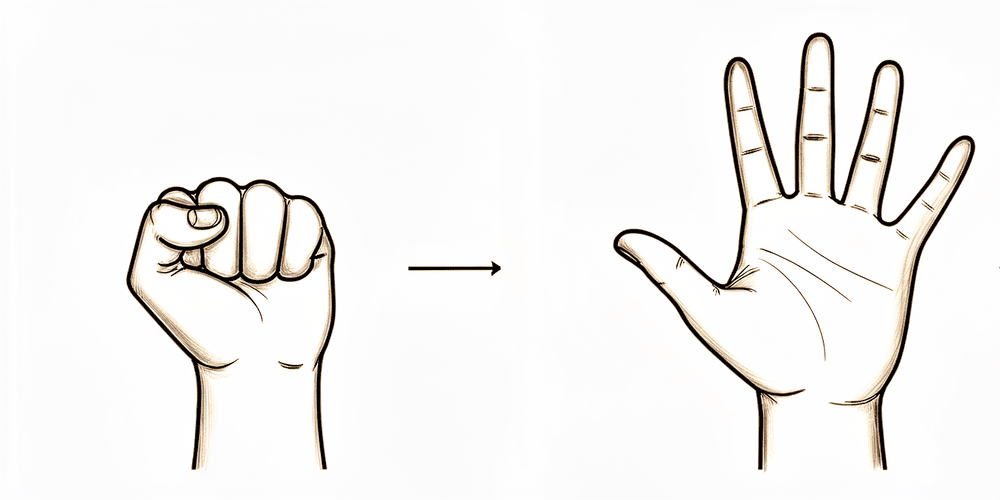
انگلیوں اور انگوٹھے کی حرکت
بالکل پہلے دنوں سے اپنی انگلیوں اور انگوٹھے کو حرکت دیتے رہیں تاکہ وہ اکڑ نہ جائیں۔ آہستہ سے پوری مٹھی بنائیں، پھر انگلیوں کو پوری طرح سیدھا کریں، اور باری باری انگوٹھے کو ہر انگلی کے سرے سے ملائیں۔ ایسا کرتے ہوئے کلائی کو اس کے اسپلنٹ یا پلستر کے اندر ساکن رکھیں۔ یہ ورزش فوراً کرنا محفوظ ہے — اس سے جڑتی ہوئی اسکیفائیڈ کو چھیڑے بغیر ہاتھ لچکدار رہتا ہے۔
ہر ایک 10 بار، دن میں کئی بار، پہلے دن سے
Kieran Hirpara 4.0
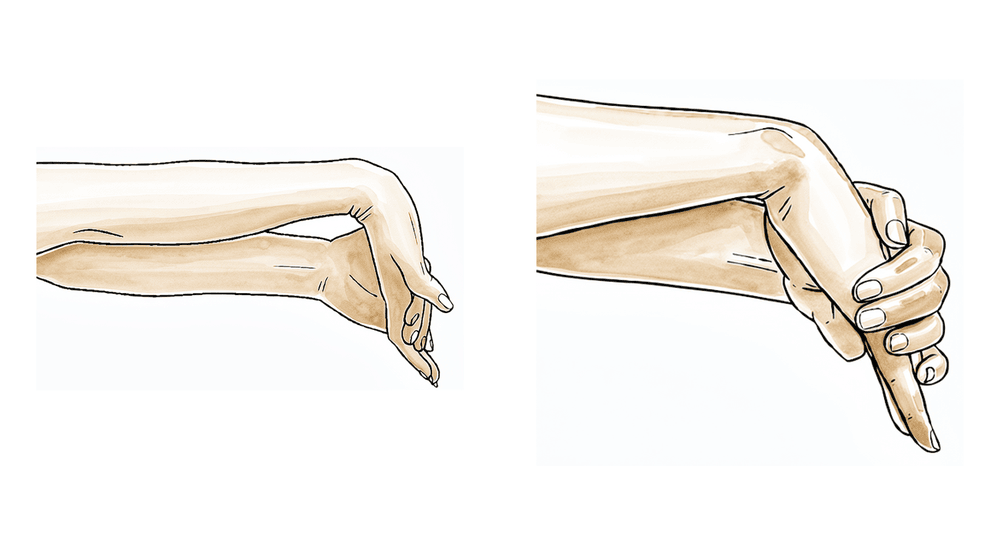
کلائی کی حرکت (اجازت ملنے پر)
جب آپ کا ہینڈ تھراپسٹ اجازت دے دے — جو اکثر آپریشن کے صرف چند ہفتے بعد ہوتا ہے، آپ کے فریکچر اور فکسیشن کے مطابق — تو کلائی کو آہستہ سے حرکت دینا شروع کریں: اسے اوپر اور نیچے موڑیں، پھر ایک طرف سے دوسری طرف جھکائیں، آہستہ آہستہ اور آرام دہ، بغیر درد کی حد کے اندر رہتے ہوئے۔ حرکت کے آخری سرے کو زبردستی نہ دھکیلیں اور شروع میں کلائی کو پوری طرح پیچھے کی طرف موڑنے (extension) کی کوشش نہ کریں۔ آپ کا تھراپسٹ آپ کو بتائے گا کہ کب شروع کرنا ہے اور کتنا آگے جانا ہے۔
ہر سمت میں 10 بار، دن میں 2 سے 3 بار، صرف اجازت ملنے کے بعد
Kieran Hirpara 4.0
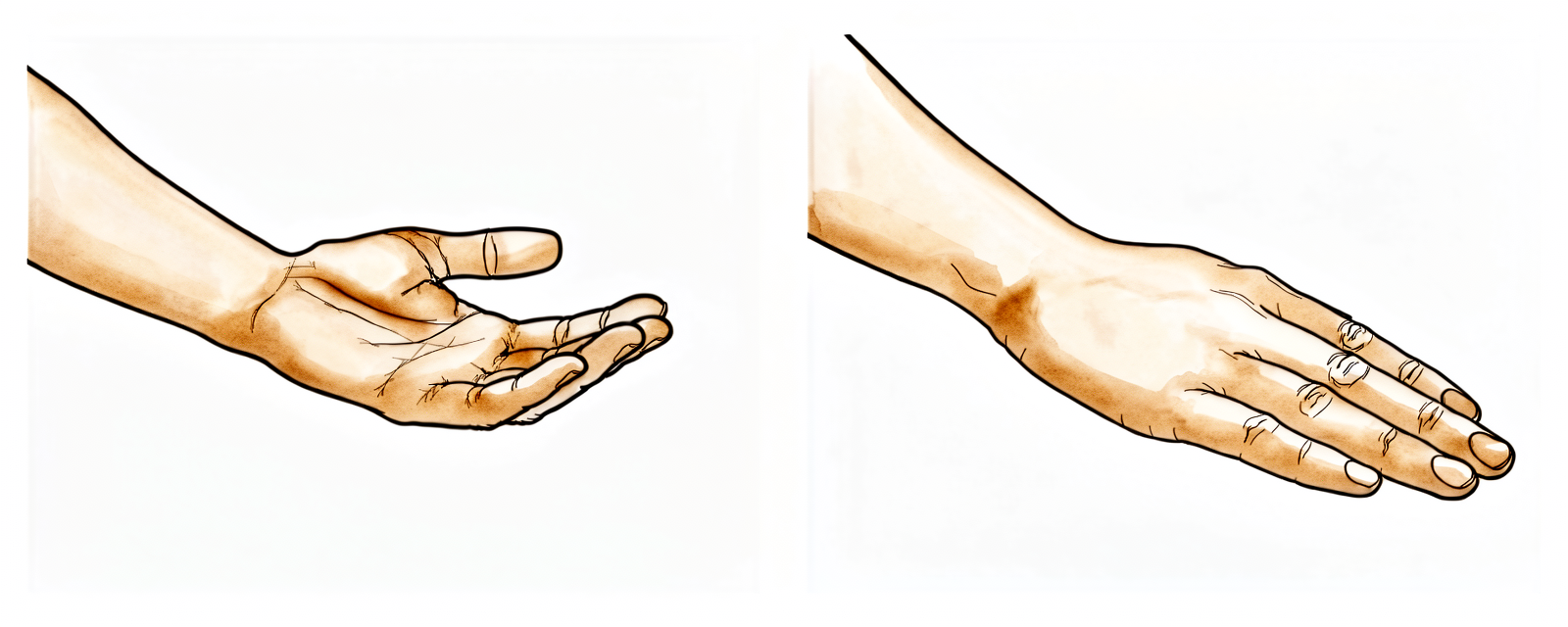
بازو کے نچلے حصے کو گھمانا (ہتھیلی اوپر / ہتھیلی نیچے)
کہنی کو پہلو سے لگا کر اور زاویۂ قائمہ (سیدھے زاویے) پر موڑ کر، ہتھیلی کو آہستہ سے اوپر چھت کی طرف گھمائیں، پھر نیچے فرش کی طرف۔ حرکت آہستہ اور آسان رکھیں۔ اس سے بازو کا نچلا حصہ لچکدار رہتا ہے اور اسکیفائیڈ پر بوجھ نہیں پڑتا، اس لیے یہ عموماً جلد شروع کی جا سکتی ہے — اپنے ہینڈ تھراپسٹ کی رہنمائی پر عمل کریں۔
ہر سمت میں 10 بار، دن میں 2 سے 3 بار

Kieran Hirpara 4.0
زخم کے نشان کی دیکھ بھال
جب زخم پوری طرح بھر جائے اور کوئی کھرنڈ باقی نہ رہے تو تھوڑی سی بغیر خوشبو والی موئسچرائزنگ کریم لگا کر، چھوٹے اور مضبوط دائروں میں، ایک دو منٹ تک نشان کی مالش کریں۔ اس سے نشان نرم اور کم حساس رہتا ہے۔ اگر آپ کا پیچ ایک چھوٹے سے چیرے کے ذریعے لگایا گیا تھا تو نشان بہت چھوٹا ہوتا ہے، لیکن یہی دیکھ بھال پھر بھی مددگار ہے۔
1 سے 2 منٹ، دن میں دو بار، زخم بھرنے کے بعد

Kieran Hirpara 4.0
گرفت مضبوط کرنا (ہڈی جڑنے کے بعد)
یہ بعد کے مرحلے کی ورزش ہے — صرف اس وقت جب آپ کا فریکچر جڑ جائے اور آپ کا ہینڈ تھراپسٹ مضبوطی کی ورزشیں شروع کرائے (عموماً تقریباً 8 سے 12 ہفتے سے پہلے نہیں، اور امیجنگ پر تصدیق کے بعد)۔ ایک نرم گیند یا تھراپی پُٹی دبائیں، تھوڑی دیر روکیں، پھر ڈھیلا چھوڑ دیں۔ بتدریج بڑھائیں۔ گرفت کی ورزش ہڈی کے مضبوط ہونے تک روکی جاتی ہے کیونکہ زور سے دبانے سے اسکیفائیڈ اور پیچ پر بوجھ پڑتا ہے، اور اسکیفائیڈ آہستہ جڑتی ہے۔
آپ کے ہینڈ تھراپسٹ کی رہنمائی کے مطابق (صرف ہڈی کے جڑنے کی تصدیق کے بعد)
یہ آپ کے ہینڈ آؤٹ میں دی گئی ورزشیں ہیں۔ انہیں صرف ڈاکٹر ہِرپرا اور آپ کے ہینڈ تھراپسٹ کی رہنمائی کے مطابق شروع کریں، اور جو بھی حد اور پابندیاں آپ کو دی گئی ہیں ان کے اندر رہیں۔ ابتدائی ورزشیں جڑتی ہوئی اسکیفائیڈ کو چھیڑے بغیر انگلیوں، انگوٹھے اور بازو کے نچلے حصے کو حرکت میں رکھتی ہیں، اور کلائی کی ہلکی حرکت صرف اس وقت شامل کی جاتی ہے جب آپ کا تھراپسٹ اجازت دے۔ گرفت مضبوط کرنے کی ورزشیں بعد کے مرحلے کا حصہ ہیں اور انہیں اس وقت تک شروع نہیں کرنا چاہیے جب تک آپ کو یہ نہ بتایا جائے کہ ہڈی جڑ گئی ہے۔ جو بھی ورزش کلائی میں تیز درد پیدا کرے اسے روک دیں اور اپنے تھراپسٹ کو بتائیں۔
آپ کا کلینیکل پروٹوکول
اس صفحے کا باقی حصہ بغیر سر والے دباؤ ڈالنے والے پیچ سے اسکیفائیڈ فکسیشن کے بعد بحالی کا مرحلہ وار کلینیکل پروٹوکول ہے۔ یہ حصہ مریض کے ہینڈ تھراپسٹ کو دیا جانا ہے، اور ہر مرحلہ سادہ زبان میں اس وضاحت سے شروع ہوتا ہے کہ اس دوران کیا ہو رہا ہے۔ اسکیفائیڈ اپنی کمزور اور الٹی سمت سے آنے والی (retrograde) خون کی فراہمی کی وجہ سے آہستہ جڑتی ہے، اس لیے آگے بڑھنا ہڈی کے جڑنے سے مشروط (union-gated) ہے اور فکسیشن اور فریکچر کی نوعیت پر منحصر ہے: درمیانی حصے (waist) کے ایک مستحکم، تازہ فریکچر کی مضبوط پیچ فکسیشن میں کلائی کی محفوظ حرکت جلد شروع کی جا سکتی ہے، جبکہ پراکسیمل پول کے فریکچر، نان یونین اور ہڈی کی گرافٹ والے کیسوں میں زیادہ محتاط طریقہ اختیار کرنا چاہیے۔
علاج سے پہلے آپریشن کی رپورٹ اور مریض کی سابقہ طبی تاریخ دیکھیں، اور علاج کرنے والے سرجن سے ان باتوں پر رابطہ رکھیں: فریکچر کی نوعیت (درمیانی حصہ یا پراکسیمل پول)، فریکچر تازہ تھا یا نان یونین، ہڈی کی گرافٹ استعمال ہوئی یا نہیں، فکسیشن کتنی مستحکم ہے، اور ہڈی کے جڑنے کی تصدیق کے لیے امیجنگ کب طے ہے۔ ہینڈ تھراپسٹ ہر فریکچر اور فکسیشن کے لیے طے شدہ منصوبے پر عمل کرتا ہے۔ نیچے دیے گئے اوقات درمیانی حصے کے ایک مستحکم، پیچ سے جوڑے گئے تازہ فریکچر کے لیے عام رہنما ہیں؛ پراکسیمل پول، نان یونین اور ہڈی کی گرافٹ والی فکسیشن میں زیادہ محتاط رفتار سے آگے بڑھا جاتا ہے۔
مرحلہ I — محفوظ ابتدائی حرکت (ہفتہ 0 سے 2)
پہلے دو ہفتوں میں زخم اور فکسیشن کی حفاظت کی جاتی ہے جبکہ ہاتھ کو حرکت میں رکھا جاتا ہے۔ کلائی اسپلنٹ یا چھوٹے پلستر میں آرام کرتی ہے؛ انگلیاں، انگوٹھا اور بازو کا نچلا حصہ پہلے دن سے آزادی سے حرکت کرتے ہیں۔ زخم کا معائنہ عموماً تقریباً دو ہفتے پر ہوتا ہے، جب باقاعدہ تھراپی شروع ہوتی ہے۔
آپ کے ہینڈ تھراپسٹ کے لیے:
آگاہی اور احتیاطیں - سرجن کی ہدایت کے مطابق کلائی کو اسپلنٹ یا چھوٹے پلستر میں ساکن رکھیں؛ خشک رکھیں؛ صرف اجازت ملنے پر اتاریں - اکڑاؤ سے بچنے کے لیے انگلیوں، انگوٹھے، کہنی اور کندھے کی مکمل، فوری فعال حرکت کی حد (ROM) - کلائی کے زور پر نہ گرفت، نہ وزن اٹھانا، نہ وزن ڈالنا اور نہ دھکیلنا - کلائی کو زبردستی یا آخری حد تک پیچھے موڑنے (extension) سے پرہیز کریں
علاج کا طریقہ - زخم: ہدایت کے مطابق سرجیکل پٹیاں؛ انفیکشن پر نظر رکھیں؛ زخم کا معائنہ تقریباً 2 ہفتے پر - سوجن (oedema): اونچا رکھنا، ہاتھ سے ہلکی پمپنگ کی ورزش، ضرورت کے مطابق برف - ورزشیں: انگلیوں/انگوٹھے کو ایک ساتھ پورا موڑنا اور سیدھا کرنا (composite flexion-extension)؛ انگوٹھے کو انگلیوں کے سروں سے ملانا (opposition)؛ بازو کے نچلے حصے کو ہلکے سے گھمانا (pronation-supination)؛ کندھے اور کہنی کی حرکت کی حد
اگلے مرحلے میں جانے کی شرائط - زخم بھر گیا ہو یا بھر رہا ہو؛ درد کم ہو رہا ہو؛ کلائی کی حرکت شروع کرنے کے لیے سرجن کی اجازت
مرحلہ II — کلائی کی محفوظ حرکت (ہفتہ 2 سے 8، ہڈی کے جڑنے سے مشروط)
تقریباً دو ہفتے سے (درمیانی حصے کے ایک مستحکم، پیچ سے جوڑے گئے تازہ فریکچر میں) پیچ کی حفاظت میں کلائی کی ہلکی فعال حرکت آرام دہ، بغیر درد کی حد میں شروع کی جاتی ہے۔ حرکت کی حد بتدریج بڑھائی جاتی ہے؛ آخری حد تک پیچھے موڑنا اور کسی بھی قسم کا بوجھ ڈالنا ابھی بھی روکا جاتا ہے۔ پراکسیمل پول، نان یونین اور ہڈی کی گرافٹ والی فکسیشن میں کلائی کو زیادہ عرصے تک حفاظتی طور پر ساکن رکھا جاتا ہے اور سرجن کی رہنمائی میں بعد میں حرکت دی جاتی ہے۔
آپ کے ہینڈ تھراپسٹ کے لیے:
جائزے - کلائی کی فعال حرکت کی حد، درد، سوجن؛ زخم/نشان کا معائنہ؛ امیجنگ اور ہڈی کے جڑنے کی صورتحال پر سرجن سے رابطہ
آگاہی اور احتیاطیں - بغیر درد کی حد میں کلائی کو ہلکے سے فعال طور پر آگے پیچھے موڑنا اور انگوٹھے اور چھوٹی انگلی کی سمت جھکانا (flexion-extension، radial-ulnar deviation) شروع کریں؛ حد بتدریج بڑھائیں - کلائی کو آخری حد تک یا زبردستی پیچھے موڑنے سے پرہیز کریں اور بوجھ ڈالنے سے بھی پرہیز کریں - جب تک ہڈی کے جڑنے کی تصدیق نہ ہو جائے: نہ گرفت مضبوط کرنے کی ورزش، نہ وزن ڈالنا، نہ مزاحمت والا کوئی کام - انگلیوں اور بازو کے نچلے حصے کی مکمل حرکت کی حد جاری رکھیں؛ زخم بھرنے کے بعد نشان کی دیکھ بھال شروع کریں
علاج کا طریقہ - ورزشیں: آرام کی حد کے اندر کلائی کی فعال اور معاون فعال (active-assisted) حرکت؛ انگلیوں/انگوٹھے/بازو کے نچلے حصے کی حرکت جاری رکھیں؛ سوجن اور نشان کی دیکھ بھال - اگر مشورہ دیا جائے تو اس مرحلے کے شروع میں ورزشوں کے درمیان اسپلنٹ پہنیں؛ ساکن رکھنے کو بتدریج ختم کرنے کا فیصلہ سرجن کرتے ہیں
اگلے مرحلے میں جانے کی شرائط - سرجن کی طرف سے ایکسرے پر (اکثر سی ٹی اسکین سے تصدیق شدہ) ہڈی کے جڑنے کی تصدیق؛ کلائی کی آرام دہ، قابو میں حرکت کی حد؛ کم سے کم درد۔ مضبوطی کی کوئی بھی ورزش شروع کرنے سے پہلے یہ تمام شرائط پوری ہونا ضروری ہیں۔
مرحلہ III — مضبوطی اور واپسی (ہڈی کے جڑنے کی تصدیق کے بعد)
جب سرجن تصدیق کر دیں کہ فریکچر جڑ گیا ہے (درمیانی حصے کے تازہ فریکچر میں عموماً تقریباً 8 سے 12 ہفتے پر، اور پراکسیمل پول کے فریکچر اور نان یونین میں اس سے بعد میں)، تو مضبوطی کی ورزشیں شروع ہوتی ہیں اور بتدریج بڑھائی جاتی ہیں: پہلے گرفت اور پُٹی (putty) کی ورزش، پھر کلائی اور بازو کے نچلے حصے کی بتدریج بڑھتی مزاحمت والی مضبوطی، اور پھر بوجھ والا اور کھیل کے مطابق کام۔ ٹکراؤ، تصادم اور بوجھ والے کھیلوں میں واپسی مقررہ شرائط پر مبنی اور ہڈی کے جڑنے سے مشروط ہے، عموماً تقریباً تین سے چار ماہ سے پہلے نہیں، اور زیادہ خطرے والے فریکچر میں اکثر اس سے بھی بعد میں۔
آپ کے ہینڈ تھراپسٹ کے لیے:
جائزے - گرفت اور چٹکی کی گرفت کی طاقت کا دوسری طرف سے موازنہ؛ کلائی کی حرکت کی حد؛ بوجھ ڈالنے پر درد/سوجن کا ردعمل؛ ضرورت کے مطابق روزمرہ کاموں اور کھیل/کام سے متعلق ٹیسٹ
آگاہی اور احتیاطیں - گرفت اور پُٹی سے مضبوطی صرف سرجن کی طرف سے ہڈی کے جڑنے کی تصدیق کے بعد شروع کریں؛ بوجھ بتدریج بڑھائیں - کلائی اور بازو کے نچلے حصے کی بتدریج بڑھتی مزاحمت والی مضبوطی شامل کریں؛ پھر درجہ بہ درجہ بوجھ والا اور کلوزڈ چین (closed-chain) کام - ٹکراؤ/تصادم/بوجھ والے کھیلوں میں واپسی ہڈی کے جڑنے سے مشروط اور شرائط پر مبنی ہے، عموماً تقریباً 3 سے 4 ماہ سے پہلے نہیں، اور پراکسیمل پول/نان یونین میں اس سے بعد میں؛ سرجن کی ہدایت پر کھلاڑیوں کی ابتدائی، نگرانی والی واپسی کے لیے حفاظتی اسپلنٹ یا پلستر استعمال کیا جا سکتا ہے
علاج کا طریقہ - ورزشیں: درجہ بہ درجہ گرفت/پُٹی، پھر کلائی اور بازو کے نچلے حصے کی مزاحمت والی مضبوطی (پہلے بینڈ، پھر ہلکے وزن)، پھر بوجھ والی اور کھیل کے مطابق مشقیں؛ حرکت کی جو کمی باقی ہو اس کی ورزشیں جاری رکھیں - جب طاقت دونوں طرف تقریباً برابر ہو جائے اور کام کرنے کی مناسب صلاحیت واپس آ جائے تو علاج ختم کرنے پر غور کریں - اگر بحالی ایک جگہ رک جائے، درد برقرار رہے، یا ہڈی کے جڑنے پر شک ہو تو مریض کو علاج کرنے والے سرجن کے پاس واپس بھیجیں (ہڈی کے دیر سے جڑنے/نان یونین یا خون نہ پہنچنے سے ہڈی کے مر جانے (AVN) کا امکان ذہن میں رکھیں)
کھیل میں واپسی کی شرائط - سرجن کی طرف سے ہڈی کے جڑنے کی تصدیق؛ بغیر درد کے مکمل حرکت کی حد؛ دونوں طرف تقریباً برابر گرفت کی طاقت؛ کھیل کے مطابق بوجھ اور کنٹرول بغیر درد کے
کام اور سرگرمیوں میں واپسی
ہاتھ کے ہلکے روزمرہ استعمال (کھانا کھانا، لکھنا، کپڑے پہننا، اپنی ہلکی دیکھ بھال) کی شروع سے ہی، آرام کی حد میں، ترغیب دی جاتی ہے، بشرطیکہ اس میں گرفت، وزن اٹھانا یا کلائی پر زور ڈالنا شامل نہ ہو۔ دفتری کام اور دوسرے ہلکے، غیر جسمانی کام اکثر جلد ممکن ہوتے ہیں، بعض اوقات پہلے ایک یا دو ہفتوں میں ہی بدلی ہوئی ذمہ داریوں کے ساتھ؛ کلائی پر بوجھ ڈالنے والا بھاری جسمانی مشقت والا کام فریکچر کے جڑنے تک مؤخر رہتا ہے اور پھر بتدریج بڑھایا جاتا ہے۔
چونکہ آپ کے لیے گاڑی کو محفوظ طریقے سے قابو میں رکھ سکنا ضروری ہے، اس لیے جب تک آپ ایسے پلستر یا اسپلنٹ میں ہوں جو اسٹیئرنگ پر محفوظ قابو میں رکاوٹ بنے، یا جب تک کلائی محفوظ طریقے سے اسٹیئرنگ گھما اور پکڑ نہ سکے، گاڑی نہ چلائیں۔ جب آپ پابندی والے پلستر سے باہر آ جائیں اور اعتماد اور حفاظت کے ساتھ گاڑی کو قابو میں رکھ سکیں، جس کی تصدیق آپ کے معائنے پر ہو، تب گاڑی چلانا دوبارہ شروع ہوتا ہے۔ ابتدائی ہفتوں میں آنے جانے کے لیے مدد کا انتظام رکھیں۔
کلائی کے زور پر بوجھ ڈالنا (سختی سے گرفت، وزن اٹھانا، دھکیلنا، دبانا اور کھینچنا) اس وقت تک مؤخر رہتا ہے جب تک آپ کے سرجن تصدیق نہ کر دیں کہ ہڈی جڑ گئی ہے، اور پھر اسے بتدریج بڑھایا جاتا ہے۔ ٹکراؤ، تصادم اور بوجھ والے کھیلوں میں واپسی ہڈی کے جڑنے سے مشروط ہے، عموماً تقریباً تین سے چار ماہ سے پہلے نہیں، اور پراکسیمل پول کے فریکچر اور نان یونین میں اکثر اس سے بھی بعد میں۔ اس کا فیصلہ صرف کیلنڈر سے نہیں بلکہ ہڈی کے جڑنے کی تصدیق، بغیر درد کی مکمل حرکت اور دونوں طرف برابر، مناسب گرفت کی طاقت دوبارہ حاصل کرنے کی بنیاد پر ڈاکٹر ہِرپرا اور آپ کا ہینڈ تھراپسٹ کرتے ہیں۔
اپنے پروٹوکول کے بعد
یہ پروٹوکول پریکٹس کے عمومی صحت یابی کے مشوروں کے ساتھ مل کر کام کرتا ہے: آپریشن کے بعد درد پر قابو، زخم کی دیکھ بھال اور زخم کے نشان کی دیکھ بھال دیکھیں۔ اوپر دیا گیا مرحلہ وار منصوبہ اسکیفائیڈ فکسیشن کے بعد بحالی سے متعلق شائع شدہ رہنمائی کی عکاسی کرتا ہے، اور آپ کی آگے کی صحت یابی میں ڈاکٹر ہِرپرا اور آپ کا ہینڈ تھراپسٹ آپ کے فریکچر، آپ کی فکسیشن اور آپ کی کلائی کے جڑنے کی رفتار کے مطابق انفرادی طور پر رہنمائی کرتے ہیں۔
Evidence & references
This is the clinical evidence summary written for health professionals. It is technical, and it lists the research this page was built from. You do not need to read it to understand your treatment or to make a decision about it.
Scaphoid Fixation — Fracture Fixation Outcomes & Post-operative Rehabilitation (Headless Compression Screw ± Bone Graft)
Topic scope: post-operative rehabilitation after internal fixation of a scaphoid fracture with a buried headless compression screw — percutaneous or open, for an acute fracture or for a nonunion (the latter usually with bone graft, e.g. distal-radius cancellous or vascularised graft). This is a fixation of a slow-healing bone, not a soft-tissue repair: rehabilitation is paced by bone union rather than by tendon/ligament healing windows, and the central tension is between the early-motion advantage that rigid screw fixation buys and the scaphoid's biological tendency to heal slowly and, when neglected, to fail to unite.
Defining principle of the rehab here: the scaphoid has a tenuous retrograde blood supply (it fills from distal to proximal), so it heals slowly and the proximal pole is at risk of delayed union, nonunion and avascular necrosis. A headless compression screw compresses and stabilises the fracture, which is what permits earlier protected wrist motion than a cast alone and earlier return to work/sport in suitable fractures. But the construct does not change the bone's biology: grip, loading and contact sport remain union-gated — held back until the surgeon confirms healing, commonly on CT. Progression is therefore fixation- and fracture-dependent: a stable, screw-fixed acute waist fracture mobilises early; a proximal-pole fracture, a nonunion, or a bone-grafted case is treated more cautiously. The hand therapist follows the plan for the specific fracture and fixation.
A. FIXATION OUTCOMES (acute fixation, and nonunion fixation with graft)
Headless compression screw fixation is a reliable operation with high union rates; the principal debates are who should be fixed acutely (vs cast) and how aggressively to mobilise, not whether the screw works.
- Headless compression screws give high union rates and earlier mobilisation. Internal fixation of scaphoid fractures with headless compression screws achieves high union in both non-displaced and displaced fractures, with the added benefits of earlier mobilisation and earlier return to work and sport compared with cast treatment [Fowler & Ilyas, Hand Clin 2010; Fowler & Hughes, Clin Sports Med 2015]. Moderate (narrative/technique reviews + cohort).
- Percutaneous screw fixation unites faster than cast for acute waist fractures. A randomised trial of 60 acute scaphoid-waist fractures found percutaneous Acutrak screw fixation reached union significantly faster than cast immobilisation (~9.2 vs ~13.9 weeks), with a trend to fewer nonunions [Bond et al., J Bone Joint Surg Br 2008]. Moderate–strong (RCT, single-centre).
- But surgery vs cast for minimally displaced waist fractures gives equivalent long-term function at the cost of more complications. The pragmatic multicentre SWIFFT RCT (bicortical, ≤2 mm displaced waist fractures) found no meaningful difference in wrist function between early surgical fixation and cast immobilisation (with fixation reserved for the cast fractures that failed to unite), while surgery carried more complications. Systematic reviews/meta-analyses concur: surgery favours union but raises complication risk, with ROM, grip and arthritis rates not significantly different [Dias et al., SWIFFT, Lancet 2020; Alshryda et al., The Surgeon 2012; Modi et al., Injury 2009; Rhemrev et al., Injury 2009]. Strong (RCT + SRs).
- Nonunion fixation with bone graft restores union in most cases but heals slower. Scaphoid nonunions treated with screw fixation and bone grafting (non-vascularised distal-radius, vascularised distal-radius, or two-screw constructs) achieve union in the large majority, with proximal-pole and avascular cases the hardest. Acute fixation unites ~100% vs chronic/nonunion ~87% in pooled experience [Garcia et al., J Hand Surg Am 2014; Ribak et al., Int Orthop 2009; Kim et al., Orthop Traumatol Surg Res 2018; Wu et al., Bone Joint J 2022; Simonian & Trumble, JAAOS 1994]. Moderate (cohort/SR).
- The elite/competitive athlete is a distinct decision. Early screw fixation is often favoured in athletes to compress the fracture, shorten immobilisation and enable earlier (often splinted) return to play, accepting the surgical risk for the time advantage [Belsky et al., Hand Clin 2012; Fowler & Hughes, Clin Sports Med 2015]. Moderate (expert/cohort).
B. REHABILITATION / THERAPY EVIDENCE
The rehab questions are (1) how soon to mobilise the wrist after rigid fixation, (2) when to permit loading/grip, and (3) when to confirm union and clear sport. The evidence supports early protected motion under the screw but keeps strengthening and sport union-gated, with proximal-pole/nonunion cases handled more conservatively.
- Rigid screw fixation permits earlier protected wrist motion than cast-alone. The mechanical rationale is that compression across the fracture confers stability, allowing the wrist to begin gentle motion while the bone unites; reported acute-fixation pathways start gentle mobilisation early with a ~2-week wound/therapy review and ~6-week radiographic check [Fowler & Ilyas, Hand Clin 2010; Fowler & Hughes, Clin Sports Med 2015]. Moderate (technique/expert).
- Union is the gate for loading — and it is slow and imaging-confirmed. Reported time to union ranges ~7–16 weeks depending on healing criteria, fracture site and population (athletes vs general), and CT is frequently used to confirm union before clearing loading and sport because plain films overestimate healing [Ecker, Hand Clin 2017 (scaphoid union); Fowler & Hughes, Clin Sports Med 2015]. Moderate.
- Proximal-pole fractures, nonunions and grafted cases progress more slowly. The proximal pole's poor vascularity means later union and a more cautious return; arthroscopic and open grafting series for nonunion report union but over longer timeframes [Wu et al., Bone Joint J 2022; Shih et al., J Orthop Surg Res 2023; Garcia et al., J Hand Surg Am 2014]. Moderate (cohort).
- Percutaneous/antegrade technique is a safe route that supports the early-motion pathway. The percutaneous antegrade approach minimises soft-tissue insult and supports the earlier-mobilisation rationale in suitable fractures [Weinberg et al., Injury 2009]. Moderate (cohort).
Recovery trajectory (expected, evidence-anchored)
| Phase | Window | Restraint | Hand use / therapy focus | Strength / load | Notes |
|---|---|---|---|---|---|
| I — Protected early motion | Week 0–2 | Wrist splint/short cast; no wrist loading | Immediate active finger/thumb/elbow/shoulder ROM; oedema control; wound review ~2 wk | None through the wrist | Hand kept supple; scaphoid undisturbed |
| II — Protected wrist mobilisation | Week 2–8 (union-gated) | No grip/loading; avoid end-range/forced extension | Gentle active wrist flexion-extension and deviation in pain-free range; gradual progression; forearm rotation; scar massage once healed | No resisted/grip work | For stable, screw-fixed acute waist fractures. Proximal-pole/nonunion/grafted: immobilise longer, mobilise later |
| III — Strengthening & return | After confirmed union (commonly ~8–12 wk acute waist; later for proximal pole/nonunion) | Restrictions lifted on union | Grip/putty → progressive resisted wrist/forearm → loaded & sport-specific | Graded to symmetrical grip | Contact/load sport union-gated, typically not before ~3–4 months, later for high-risk fractures; CT often confirms union |
(Phase windows are typical guides for a stable screw-fixed acute waist fracture, not trial-derived deadlines; proximal-pole, nonunion and bone-grafted fixations are paced more conservatively by the surgeon and hand therapist.)
C. KEY CONTROVERSIES / EVIDENCE QUALITY
- Screw fixation vs cast for the acute minimally displaced waist fracture. Fixation unites faster (Bond RCT: ~9 vs ~14 weeks) and returns athletes/workers sooner, but SWIFFT and meta-analyses show equivalent long-term wrist function with more complications from surgery for minimally displaced waist fractures. The defensible position is selective fixation (displacement, proximal pole, high-demand athlete/worker, patient preference) rather than routine surgery for every undisplaced waist fracture [Dias SWIFFT Lancet 2020; Bond JBJS Br 2008; Alshryda Surgeon 2012; Modi/Rhemrev Injury 2009]. Strong evidence of functional equivalence; moderate on the complication trade-off.
- Early motion vs continued immobilisation after fixation. Rigid compression is the rationale for earlier protected wrist motion than cast-alone, and reported pathways mobilise early — but there is no high-certainty trial defining the optimal mobilisation schedule, so timing is surgeon/ therapist protocol and fracture-dependent. Weak–moderate (mechanism strong, scheduling consensus).
- When is it united — and what confirms it. Time to union is wide (~7–16 weeks) and plain radiographs overestimate healing; CT is commonly used to confirm union before clearing loading and sport, which is the true gate for progression [Ecker Hand Clin 2017]. Moderate.
- Return-to-sport timing. Union-gated and fracture-dependent; competitive athletes may return earlier in a protective splint/cast at surgeon discretion, accepting risk, whereas proximal-pole and nonunion cases return later. Reported real-world return is typically months, not weeks [Belsky Hand Clin 2012; Fowler & Hughes Clin Sports Med 2015]. Moderate (expert/cohort).
- Nonunion and proximal-pole biology. The retrograde blood supply drives delayed union, nonunion and AVN risk; grafting (cancellous, corticocancellous, or vascularised) addresses biology but lengthens the timeline. Persistent pain or doubtful union warrants reassessment rather than more loading [Garcia JHS Am 2014; Ribak Int Orthop 2009; Kim OTSR 2018; Wu BJJ 2022; Simonian & Trumble JAAOS 1994]. Moderate.
D. EVIDENCE STRENGTH FLAGS (summary)
- STRONG (RCT / SR): equivalent long-term wrist function from surgery vs cast for minimally displaced acute waist fractures, with more complications from surgery (SWIFFT + meta-analyses); faster union with percutaneous screw fixation than cast (Bond RCT, ~9 vs ~14 weeks).
- MODERATE: high union rates and earlier mobilisation/return with headless compression screws; nonunion union rates with screw + bone graft (acute ~100% vs chronic ~87%); wide ~7–16-week union window and CT confirmation of union; athlete-specific early/splinted return.
- WEAK / CONSENSUS: the specific early protected-motion, union-gated phase schedule (mechanistically rationalised by rigid compression; exact timings are surgeon/hand-therapist protocol and fracture-dependent, not trial-derived); precise return-to-sport months.
CITATIONS
RAG corpus (180,000+ Orthopaedic articles)
- Fowler JR, Ilyas AM. Headless compression screw fixation of scaphoid fractures. Hand Clin. 2010. PMID: 20670800. DOI: 10.1016/j.hcl.2010.04.005
- Fowler JR, Hughes TB. Scaphoid fractures. Clin Sports Med. 2015. PMID: 25455395. DOI: 10.1016/j.csm.2014.09.011
- Belsky MR, Leibman MI, Ruchelsman DE. Scaphoid fracture in the elite athlete. Hand Clin. 2012. PMID: 22883862. DOI: 10.1016/j.hcl.2012.05.005
- Ecker J. Scaphoid union. Hand Clin. 2017. PMID: 28991580. DOI: 10.1016/j.hcl.2017.07.001
- Bond CD, Shin AY, McBride MT, Dao KD. Percutaneous screw fixation versus conservative treatment for fractures of the waist of the scaphoid: a prospective randomised study. J Bone Joint Surg Br. 2008. PMID: 18160502. DOI: 10.1302/0301-620X.90B1.19767
- Alshryda S, Shah A, Odak S, et al. Acute fractures of the scaphoid bone: systematic review and meta-analysis. The Surgeon. 2012. PMID: 22595773. DOI: 10.1016/j.surge.2012.03.004
- Modi CS, Nancoo T, Powers D, et al. Operative versus nonoperative treatment of acute undisplaced and minimally displaced scaphoid waist fractures — a systematic review. Injury. 2009. PMID: 19195652. DOI: 10.1016/j.injury.2008.07.030
- Rhemrev SJ, van Leerdam RH, Ootes D, et al. Non-operative treatment of non-displaced scaphoid fractures may be preferred. Injury. 2009. PMID: 19324359. DOI: 10.1016/j.injury.2008.10.028
- Weinberg AM, Pichler W, Grechenig S, et al. The percutaneous antegrade scaphoid fracture fixation — a safe method? Injury. 2009. PMID: 19380132. DOI: 10.1016/j.injury.2008.12.016
- Garcia RM, Leversedge FJ, Aldridge JM, et al. Scaphoid nonunions treated with 2 headless compression screws and bone grafting. J Hand Surg Am. 2014;39(7). PMID: 24793227. DOI: 10.1016/j.jhsa.2014.02.030
- Ribak S, Medina CEG, Mattar R, et al. Treatment of scaphoid nonunion with vascularised and nonvascularised dorsal bone grafting from the distal radius. Int Orthop. 2009. PMID: 19730861. DOI: 10.1007/s00264-009-0862-6
- Kim J, Yoon J, Baek H. Corticocancellous bone graft vs cancellous bone graft for the management of unstable scaphoid nonunion. Orthop Traumatol Surg Res. 2018. PMID: 29258960. DOI: 10.1016/j.otsr.2017.11.011
- Wu F, Zhang Y, Liu B. Arthroscopic bone graft and fixation for proximal scaphoid nonunions. Bone Joint J. 2022. PMID: 35909374. DOI: 10.1302/0301-620X.104B8.BJJ-2022-0198.R1
- Shih Y, Wu C, Shih J. Arthroscopic treatment of stable nonunion, unstable nonunion, or nonunion of the scaphoid with early degenerative radioscaphoid arthritis. J Orthop Surg Res. 2023. PMID: 36804865. DOI: 10.1186/s13018-023-03609-8
- Simonian PT, Trumble TE. Scaphoid nonunion. J Am Acad Orthop Surg. 1994. PMID: 10709008. DOI: 10.5435/00124635-199407000-00001
Scaphoid fixation / rehabilitation literature (URLs)
- Dias JJ, Brealey SD, Fairhurst C, et al. Surgery versus cast immobilisation for adults with a bicortical fracture of the scaphoid waist (SWIFFT): a pragmatic, multicentre, open-label, randomised superiority trial. Lancet. 2020. DOI: 10.1016/S0140-6736(20)30931-4. https://doi.org/10.1016/S0140-6736(20)30931-4
- SWIFFT protocol — Scaphoid Waist Internal Fixation for Fractures Trial. PMC. https://www.ncbi.nlm.nih.gov/pmc/articles/PMC4893284/
- Bond CD, Shin AY, McBride MT, Dao KD. Percutaneous screw fixation versus conservative treatment for fractures of the waist of the scaphoid. J Bone Joint Surg Br. 2008. PubMed. https://pubmed.ncbi.nlm.nih.gov/18160502/
- The headless compression screw — technical challenges in scaphoid fracture fixation. PMC. https://pmc.ncbi.nlm.nih.gov/articles/PMC4796528/
- Arthroscopic-assisted screw fixation of scaphoid waist fractures vs conservative treatment — randomised trial, minimum 4-year follow-up. PubMed. https://pubmed.ncbi.nlm.nih.gov/25913660/
- Non-operative treatment versus percutaneous fixation for minimally displaced scaphoid waist fractures in high-demand young manual workers. PMC. https://pmc.ncbi.nlm.nih.gov/articles/PMC4244556/