Patients › Rehabilitation
ٹینڈن میں کیلشیم جمنے سے سوزش (Calcific Tendinitis)
Recovery after arthroscopic excision of a calcific deposit, from early movement to full activity.
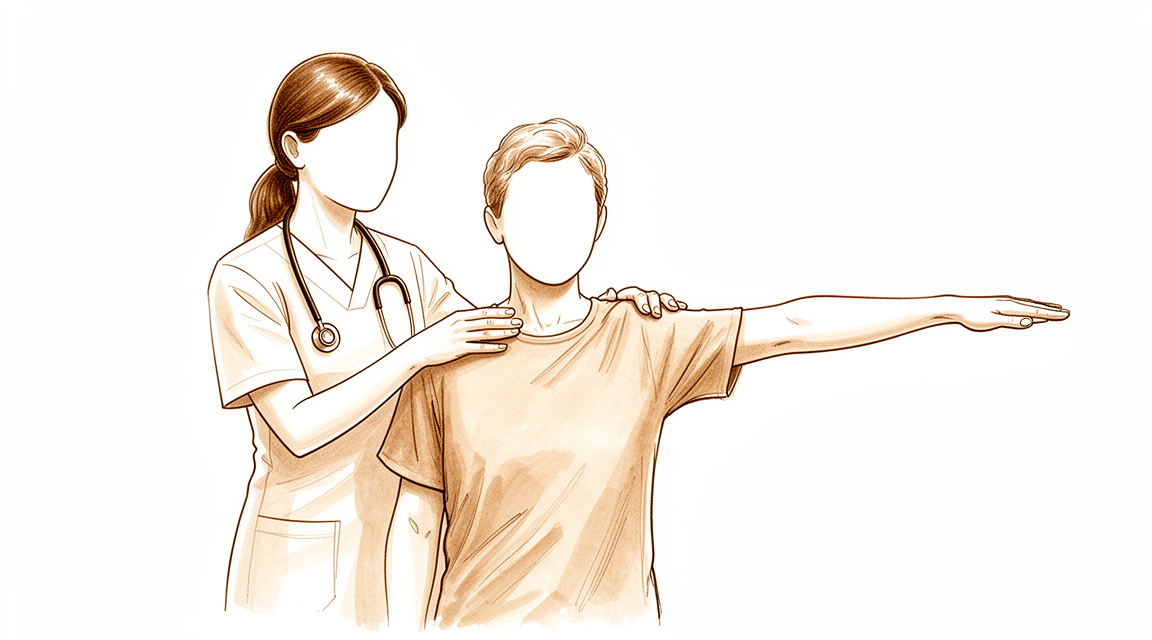
یہ پروٹوکول Mater Private Hospital Rockhampton میں ڈاکٹر کیرن ہِرپرا کے ہاتھوں دوربین کے ذریعے کیلشیم کا ذخیرہ نکالنے کے آپریشن (arthroscopic excision of a calcific deposit) کے بعد بحالی کے بارے میں ہے: یہ دوربین کے ذریعے آپریشن (keyhole) ہے جس میں روٹیٹر کف (rotator cuff، کندھے کو تھامنے اور گھمانے والے ٹینڈنوں کا گروپ) کے ٹینڈن (tendon، پٹھے کو ہڈی سے جوڑنے والی مضبوط ڈوری) سے کیلشیم کا ذخیرہ نکالا جاتا ہے، اور بعض اوقات اس کے ساتھ سب ایکرومیئل ڈی کمپریشن (subacromial decompression، کندھے کی ہڈی کے نیچے جگہ کشادہ کرنا) بھی کیا جاتا ہے تاکہ ٹینڈن کے لیے زیادہ جگہ بن سکے۔ فزیوتھراپی کے پہلے دورے پر یہ صفحہ یا اس کی پی ڈی ایف ساتھ لائیں تاکہ آپ کی بحالی میں سب کا آپس میں رابطہ رہے۔ آپ کا فزیوتھراپسٹ آپ کی بحالی کو نیچے دیے گئے مراحل میں انفرادی طور پر آگے بڑھاتا ہے، اس بات پر منحصر کہ آپ کا کندھا کیسے بہتر ہو رہا ہے۔
اگر سرجری کے بعد آپ کو اپنے زخم کے بارے میں کوئی فکر ہو تو کلینک سے رابطہ کریں۔ اکثر زخم کی تصویر لے کر جائزے کے لیے ای میل کر دینا مفید ہوتا ہے۔
اگر ٹینڈن میں پڑنے والی دراڑ کو ٹانکوں سے بند کیا گیا تھا (ذخیرہ نکالنے سے اکثر ٹینڈن میں ایک دراڑ رہ جاتی ہے، اور اسے عام طور پر چند ٹانکوں سے بند کر دیا جاتا ہے)، تو آپ کی صحت یابی صرف ذخیرہ نکالنے کے مقابلے میں تھوڑی سست ہوتی ہے، لیکن معمول کی روٹیٹر کف کی مرمت کے مقابلے میں تیز: سلنگ (sling)، یعنی گلے سے لٹکی وہ پٹی جو بازو کو سہارا دیتی ہے، تین سے چار ہفتے تک پہنی رہتی ہے، حرکت مدد والی ورزشوں سے شروع ہوتی ہے اور تقریباً چار ہفتے سے مکمل طور پر خود کی جانے لگتی ہے، مضبوطی کی ورزشیں تقریباً دس سے بارہ ہفتے پر شروع ہوتی ہیں، اور جم، کھیل اور بھاری کام پر واپسی عموماً چار سے چھ ماہ پر ہوتی ہے۔ ڈاکٹر ہِرپرا آپریشن کے بعد آپ کو بتائیں گے کہ آیا یہ آپ پر لاگو ہوتا ہے۔
کیا توقع رکھیں
دونوں راستوں میں کندھے کو جلد حرکت دینا شروع کیا جاتا ہے۔ ٹینڈن کی دراڑ ٹانکوں سے بند کی گئی ہو تب بھی یہ ایک ہلکی مرمت ہے جسے مہینوں کی حفاظت کی ضرورت نہیں؛ علاج کا مقصد درد کی وجہ کو دور کرنا ہے، اور بحالی کا مقصد علاج کے بعد بھڑکنے والے درد کو کم کرنا، کندھے کو حرکت میں رکھنا تاکہ وہ اکڑ نہ جائے، اور پھر طاقت دوبارہ بنانا ہے۔
- دوربین کے ذریعے ذخیرہ نکالنے کے بعد سلنگ صرف آرام کے لیے دی جاتی ہے۔ اسے تھوڑے عرصے کے لیے پہنا جاتا ہے، عام طور پر چند دن اور شاذ و نادر ہی دو ہفتے سے زیادہ، اور جتنا ممکن ہو اسے اتار کر رکھنا چاہیے۔ آپ کو اس میں سونے کی ضرورت نہیں۔ مکمل، بغیر پابندی کی سرگرمی تک صحت یابی میں عام طور پر تقریباً تین ماہ لگتے ہیں۔
- اگر ٹینڈن کی دراڑ ٹانکوں سے بند کی گئی تھی تو سلنگ تین سے چار ہفتے تک پہنی جاتی ہے۔ پہلے مدد والی حرکت آتی ہے، پھر تقریباً چار ہفتے سے مکمل خود حرکت، اور تقریباً دس سے بارہ ہفتے سے مضبوطی کی ورزشیں۔ مکمل سرگرمی تک صحت یابی میں عام طور پر تقریباً چار سے چھ ماہ لگتے ہیں۔
کندھے کے کسی بھی آپریشن کے بعد کم از کم چھ ہفتے تک گاڑی نہ چلائیں، چاہے سلنگ اتر چکی ہو؛ آپ کا سرجن آپ کو گاڑی چلانے کی اجازت دے گا، عام طور پر چھ ہفتے والے معائنے پر۔
دونوں میں سے کسی بھی علاج کے بعد کندھے کو پوری طرح سنبھلنے میں وقت لگ سکتا ہے۔ تکلیف اکثر ایک دم کے بجائے مرحلوں میں کم ہوتی ہے، اور سرجری کے بعد علاج سے پہلے والی علامات کو پوری طرح ختم ہونے میں کئی ماہ (کبھی کبھار نو ماہ تک) لگ سکتے ہیں۔ فوری آرام نہیں بلکہ بتدریج بہتری ہی متوقع انداز ہے۔
یہ دوربین کے ذریعے کی جانے والی ایک دن کی سرجری (day surgery) ہے جو کئی چھوٹے چیروں کے ذریعے کی جاتی ہے۔ روٹیٹر کف کے ٹینڈن کے اندر کیلشیم کے ذخیرے کی جگہ ڈھونڈ کر اسے نکال دیا جاتا ہے، اور اکثر اسی وقت سب ایکرومیئل ڈی کمپریشن بھی کیا جاتا ہے تاکہ ٹینڈن کو زیادہ جگہ مل سکے۔ زخم کی پٹیاں واٹر پروف ہوتی ہیں — آپ پہلے دن (دن 1) سے ان کے اوپر سے نہا سکتے ہیں — اور یہ اس وقت تک لگی رہتی ہیں جب تک آپریشن کے بعد کی پہلی ملاقات پر، سرجری کے تقریباً ایک ہفتے سے دس دن بعد، آپ کے زخم دیکھے نہ جائیں۔
مرحلہ I — جلد حرکت (ہفتہ 0 سے 2)
Kieran Hirpara 4.0
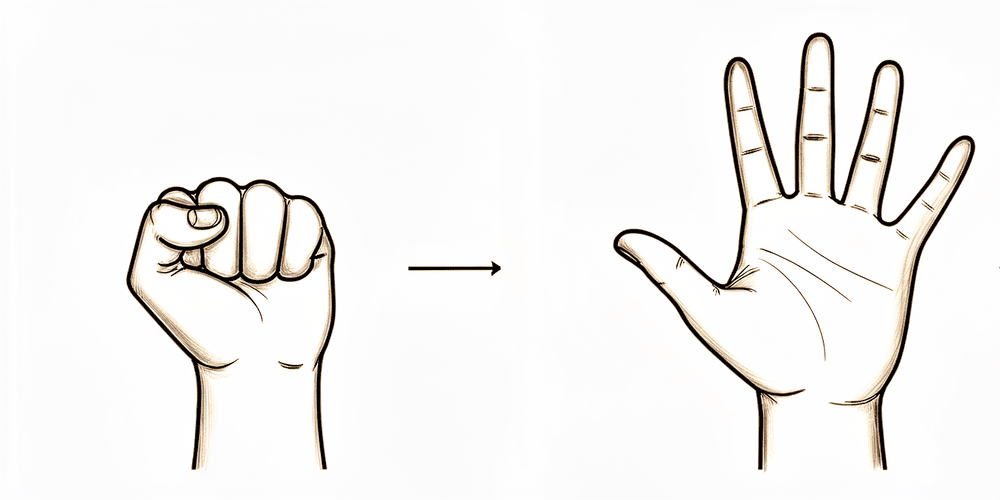
ہاتھ کھولنا اور بند کرنا
ہاتھ اور انگلیوں کو کھول اور بند کر کے، یا نرم گیند دبا کر، حرکت میں رکھیں۔ یہ فوراً شروع کریں تاکہ کندھے کے سنبھلنے کے دوران ہاتھ اور بازو کام کرتے رہیں۔
10 بار، دن میں تین بار
Kieran Hirpara 4.0
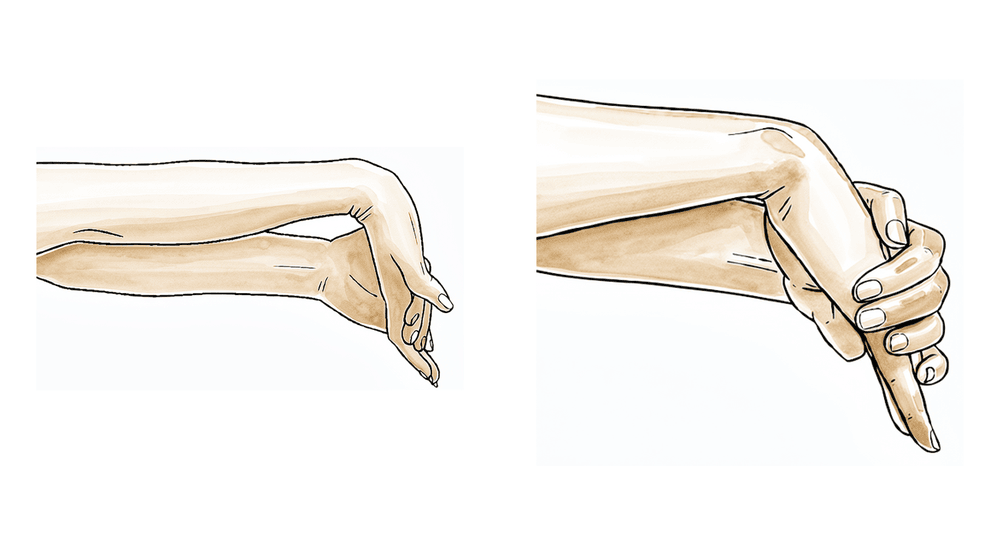
کلائی کی حرکت
کلائی کو آگے، پیچھے اور دائیں بائیں موڑ کر حرکت میں رکھیں۔ یہ بازو کو سلنگ سے باہر نکال کر کریں۔
10 بار، دن میں تین بار
Kieran Hirpara 4.0
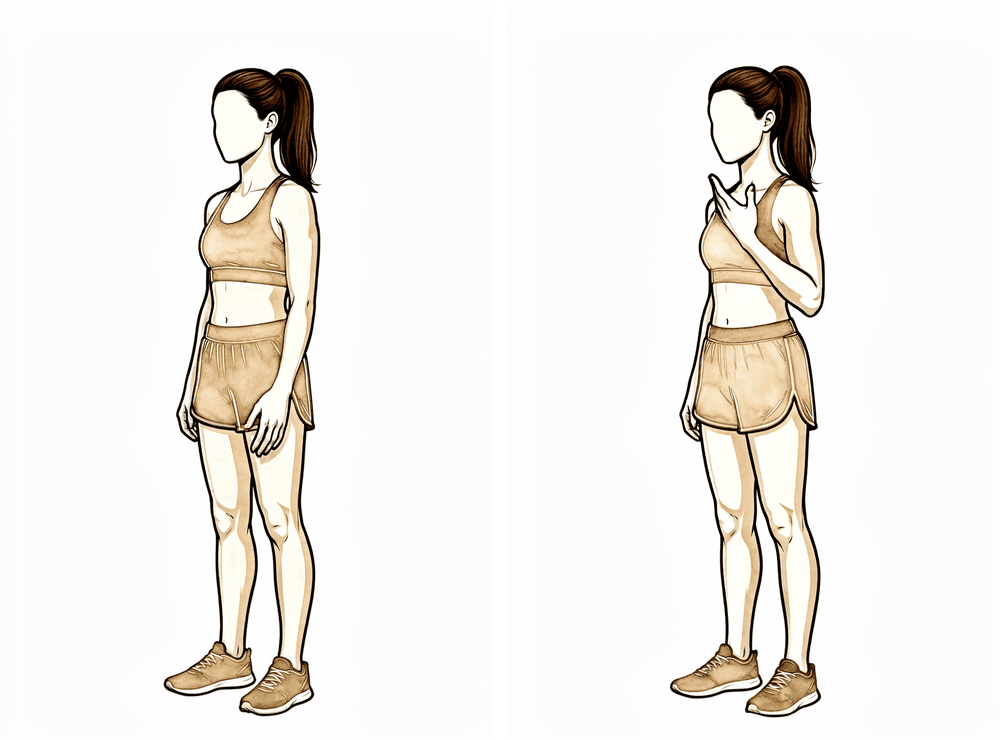
کہنی موڑنا
بازو کا اوپری حصہ پہلو کے ساتھ ٹکا کر، کہنی کو جتنا آرام سے مڑ سکے موڑیں، پھر پوری طرح سیدھا کریں۔ صرف کہنی حرکت کرتی ہے — کندھے کو ڈھیلا رکھیں۔
10 بار، دن میں تین بار
Kieran Hirpara 4.0
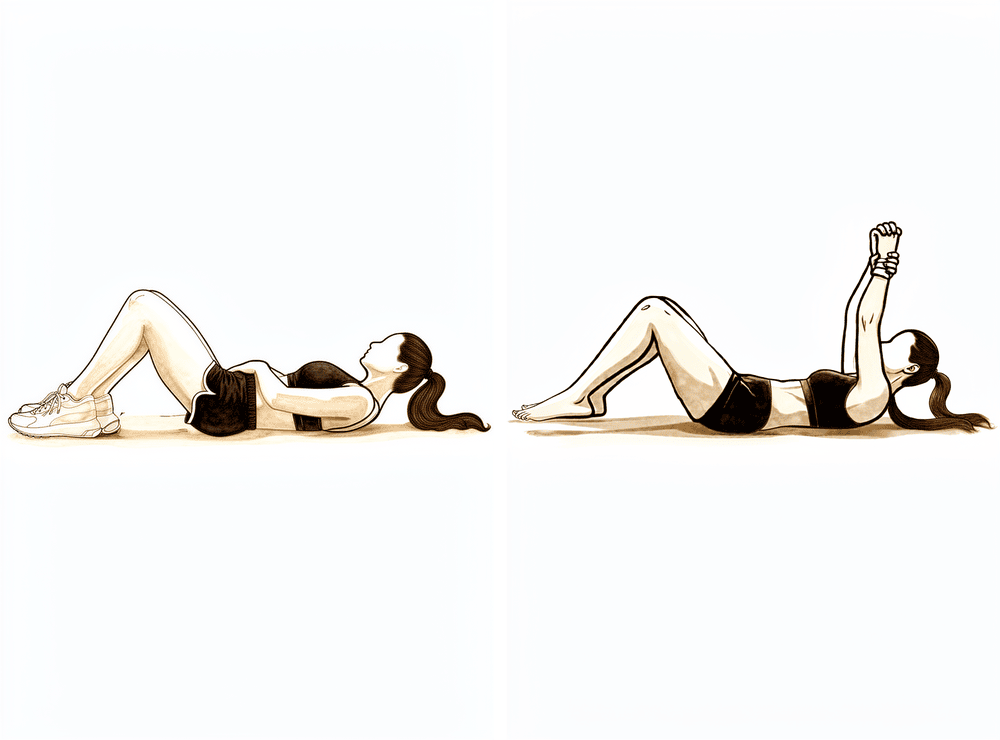
مدد کے ساتھ بازو سر کی طرف اٹھانا (لیٹ کر)
کمر کے بل لیٹ جائیں اور اپنے ٹھیک بازو کی مدد سے آپریشن والے بازو کو ہلکے اسٹریچ کے طور پر کندھے کی اونچائی سے اوپر اٹھائیں، پھر ٹھیک بازو کی مدد جاری رکھتے ہوئے اسے واپس نیچے لائیں۔ شروع میں یہ تکلیف دہ ہوگا — ایسا ہونا متوقع ہے — اور کندھے کو اکڑنے سے روکنے کے لیے یہ سب سے اہم ورزش ہے۔
10 بار، دن میں تین بار
سرجری کے بعد جب آپ جاگیں گے تو آپ کا بازو سلنگ میں ہوگا، لیکن سلنگ صرف آرام کے لیے ہے: جتنا ہو سکے اس کے بغیر رہنے کی کوشش کریں، اور زیادہ تر لوگ چند دنوں میں اسے اتار دیتے ہیں۔ آپ شروع سے ہی کندھے کی اونچائی سے نیچے بازو کو بغیر کسی پابندی کے استعمال کر سکتے ہیں۔ بازو کو کندھے کی اونچائی سے اوپر اٹھانے کی اجازت ہے اور یہ محفوظ ہے، اگرچہ شروع میں یہ تکلیف دہ ہوگا؛ دن میں کئی بار اپنے ٹھیک بازو کی مدد سے آپریشن والے بازو کو ہلکے اسٹریچ کے طور پر کندھے کی اونچائی سے اوپر اٹھائیں، تاکہ کندھا اکڑ نہ جائے۔ ان پہلے ہفتوں میں آپریشن والے بازو سے تقریباً دو کلوگرام سے زیادہ بھاری کوئی چیز اٹھا کر لے جانے سے پرہیز کریں، کیونکہ اس سے درد ہوگا۔ اپنی ورزشیں جتنی جلدی ممکن ہو شروع کریں، اور ہر ورزش دس بار، دن میں تین بار کرنے کا ہدف رکھیں۔ ورزشوں سے پہلے درد کش دوا لیں، اور آرام کے لیے برف استعمال کریں۔ گاڑی نہ چلائیں: گاڑی چلانا صرف اس وقت دوبارہ شروع ہوتا ہے جب آپ کا سرجن اجازت دے، عام طور پر چھ ہفتے والے معائنے پر۔
آپ کے فزیوتھراپسٹ کے لیے:
اہداف
- آپریشن کے بعد کے درد اور سوجن کو کم کرنا
- حرکت کی حد کی جلد بحالی: ترجیح اکڑاؤ کو روکنا ہے، جس کا کیلشیم جمنے سے ٹینڈن کی سوزش (calcific tendinitis) کے مریضوں کو زیادہ خطرہ ہوتا ہے
- کندھے کی اونچائی سے نیچے بازو کا معمول کا استعمال
علاج کا طریقہ
- سلنگ صرف آرام کے لیے؛ جتنی جلدی آرام اجازت دے اسے چھوڑ دیں، عام طور پر چند دنوں میں
- پہلے دن سے کندھے کی اونچائی سے نیچے بازو کا بغیر پابندی کے خود استعمال
- برداشت کے مطابق کندھے کی اونچائی سے اوپر بازو کو خود اٹھانا (active elevation)
- اکڑاؤ روکنے کے لیے دن میں کئی بار کندھے کی اونچائی سے اوپر بیرونی مدد سے (passive) اور مدد کے ساتھ خود (active-assisted) بازو اٹھانا (دوسرے بازو کی مدد سے)
- گھر پر ورزش کا پروگرام: ہر ورزش دس بار، دن میں تین بار
- ورزشوں سے پہلے درد کش دوا؛ ضرورت کے مطابق درد میں آرام کے لیے ٹھنڈک کا علاج (cryotherapy)
احتیاطیں
- آپریشن والے بازو سے تقریباً دو کلوگرام سے زیادہ وزن نہ اٹھا کر لے جائیں اور نہ اٹھائیں
- چھ ہفتے تک گاڑی نہیں چلانی (یہ کندھے کے ہر آپریشن پر لاگو ہوتا ہے)
اگلے مرحلے میں جانے کی شرائط
- آپریشن کے بعد کی پہلی ملاقات پر زخم کا معائنہ تسلی بخش ہو
- سلنگ اتر چکی ہو اور کندھے کی اونچائی سے نیچے بازو آرام سے استعمال ہو رہا ہو
مرحلہ II — حرکت کی حد واپس لانا (ہفتہ 2 سے 8)
Kieran Hirpara 4.0
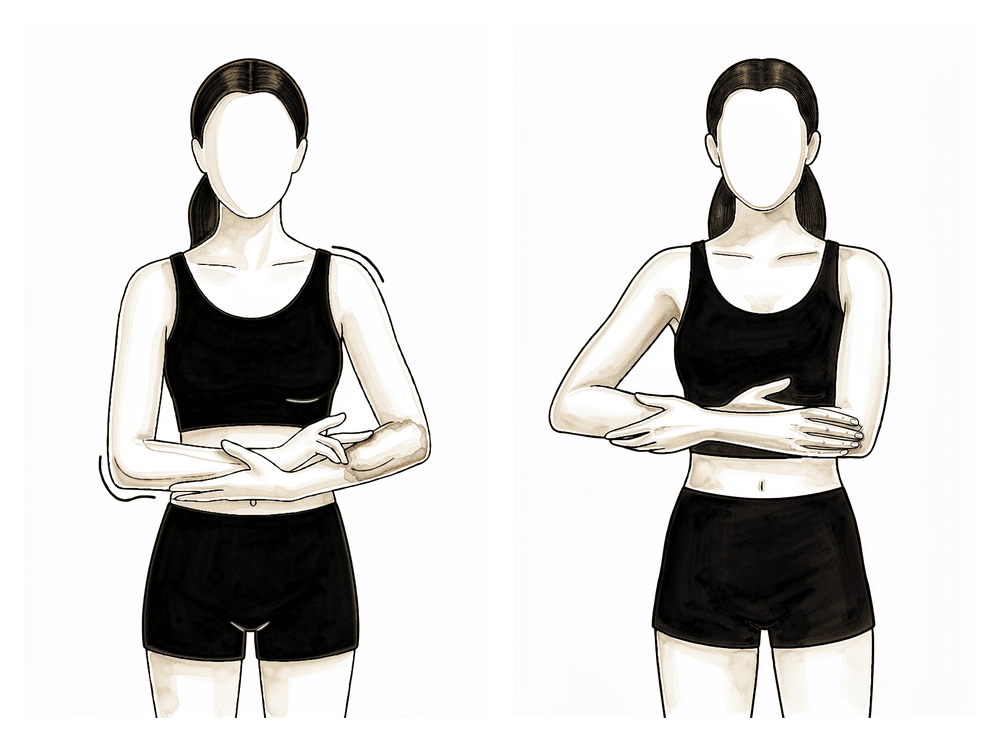
سہارے کے ساتھ بازو پہلو کی طرف اٹھانا (abduction)
آپریشن والے بازو کے نچلے حصے کو اپنے دوسرے بازو میں تھام لیں اور دونوں کو پہلو کی طرف اٹھائیں، زیادہ تر کام ٹھیک بازو کو کرنے دیں، پھر قابو کے ساتھ نیچے لائیں۔ آرام کے مطابق حرکت کی حد بڑھائیں — اس حد تک اسٹریچ کرنا ٹھیک ہے جہاں واضح تکلیف محسوس ہو؛ زبردستی، شدید درد والا اسٹریچ ٹھیک نہیں۔
جیسے آپ کا فزیوتھراپسٹ بتائے
Kieran Hirpara 4.0
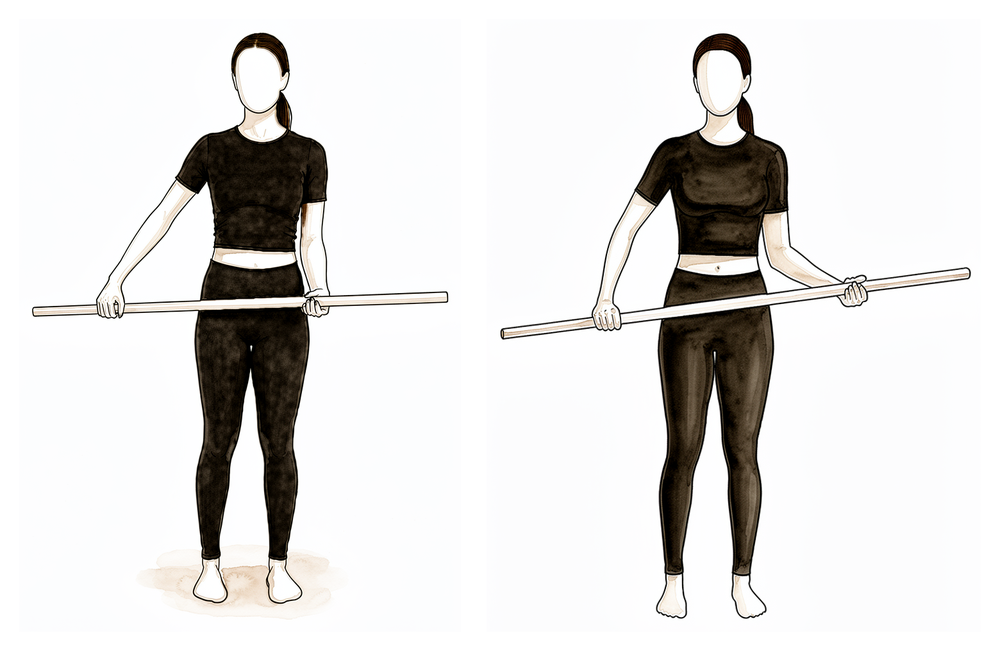
چھڑی کی مدد سے بازو کو باہر کی طرف گھمانا
کمر کے بل لیٹ جائیں، کہنی پہلو کے ساتھ لگی ہو اور سیدھے زاویے پر مڑی ہو۔ ایک چھڑی دونوں ہاتھوں میں پکڑیں اور ٹھیک بازو کی مدد سے آپریشن والے ہاتھ کو باہر کی طرف گھمائیں، جس سے کندھا گھومتا ہے۔ باہر کی طرف گھمانے کی اس حرکت کو واپس لانا اس مرحلے کے مقاصد میں سے ایک ہے، اس لیے ہر ہفتے آہستہ سے اسے تھوڑا اور آگے لے جانے پر کام کرتے رہیں۔
10 بار، دن میں تین بار
Kieran Hirpara 4.0
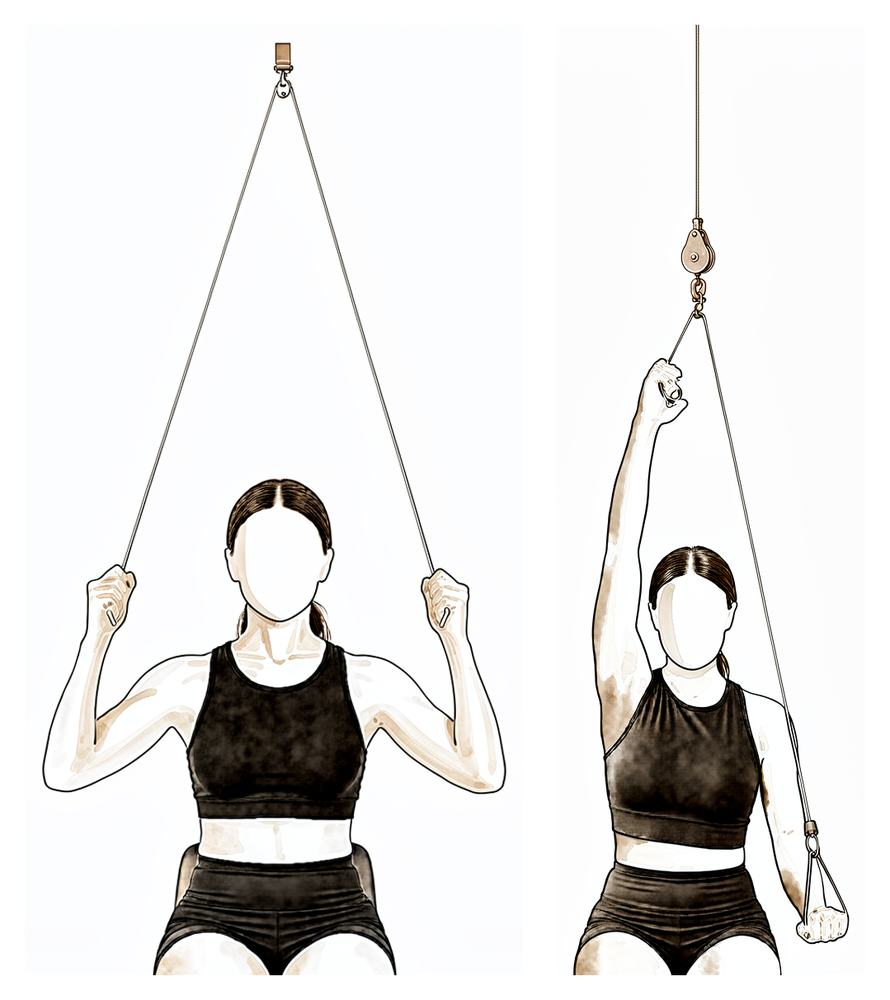
دروازے کے اوپر لگی چرخی (pulley)
دروازے کے اوپر لگی چرخی کے نیچے بیٹھ جائیں اور دونوں ہاتھوں میں ایک ایک ہینڈل پکڑیں۔ اپنے ٹھیک بازو سے نیچے کھینچیں تاکہ آپریشن والا بازو سر کے اوپر جتنا آرام سے جا سکے اٹھے، پھر آہستہ سے نیچے لائیں۔ ہلکے کھنچاؤ تک کام کریں، تیز درد تک نہیں۔
10 بار، دن میں تین سے چار بار
Kieran Hirpara 4.0
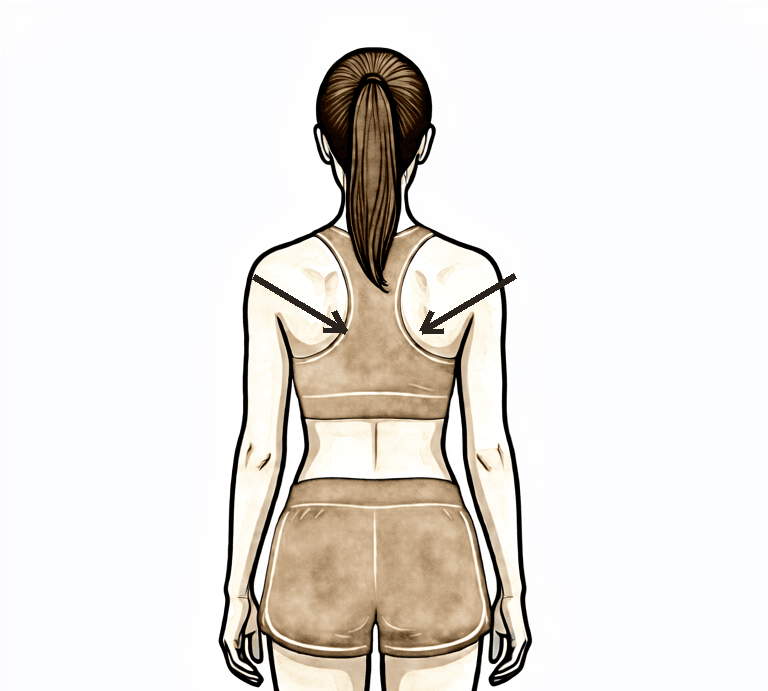
کندھے کی پچھلی ہڈی کو صحیح جگہ رکھنا (scapular setting)
سیدھے بیٹھ کر یا کھڑے ہو کر آہستہ سے اپنے کندھے کی پچھلی چپٹی ہڈیوں کو پیچھے ایک دوسرے کی طرف اور نیچے، کانوں سے دور کھینچیں۔ چند سیکنڈ روکیں، پھر ڈھیلا چھوڑ دیں۔ اپنے اسٹریچ کے ساتھ یہ جاری رکھیں تاکہ حرکت کی حد واپس آنے کے دوران کندھے کی پچھلی ہڈی اچھی طرح حرکت کرتی رہے۔
جیسے آپ کا فزیوتھراپسٹ بتائے
تقریباً دو سے تین ہفتے پر کلینک میں آپ کا معائنہ کیا جائے گا، جہاں آپ کے زخم اور بیرونی مدد سے آپ کی حرکت کی حد (passive range of motion) کو دیکھا جاتا ہے۔ اس مرحلے کا کام حرکت کی حد ہے: سامنے کی طرف بازو اٹھانے کے اسٹریچ کو آگے بڑھائیں اور پہلو کی طرف کی حرکتیں شامل کریں، اور فزیوتھراپی اس پیش رفت کی رہنمائی کرتی ہے۔ عام مقاصد یہ ہیں کہ چھ ہفتے تک بازو کو خود افقی سطح تک اٹھا سکیں، اور بیرونی مدد سے حرکت کی حد (سامنے، پہلو کی طرف اور گھماؤ میں) چھ ہفتے تک معمول پر آ جائے۔ گاڑی چلانا چھ ہفتے سے دوبارہ شروع ہوتا ہے، جب آپ کا سرجن اجازت دے دے اور آپ محفوظ طریقے سے اچانک بریک لگا کر گاڑی روک سکیں۔
آپ کے فزیوتھراپسٹ کے لیے:
اہداف
- چھ ہفتے تک سامنے کی طرف (forward flexion) اور پہلو کی طرف (abduction) بازو کو خود افقی سطح تک اٹھانا
- چھ ہفتے تک بیرونی مدد سے سامنے اٹھانا، پہلو کی طرف اٹھانا اور باہر کی طرف گھمانا معمول پر
- روزمرہ کی سرگرمیوں میں خود مختاری
علاج کا طریقہ
- بیرونی مدد سے اور مدد کے ساتھ خود سامنے کی طرف اٹھانے کو آگے بڑھانا؛ پہلو کی طرف اٹھانا شروع کرنا اور آگے بڑھانا
- آرام کے مطابق ہر سمت میں خود حرکت کی طرف بڑھنا
- کندھے کی پچھلی ہڈی کو صحیح جگہ رکھنا (scapular setting) اور جسم کی ساخت پر کام جاری رکھنا
- سیشن سے پہلے درد کش دوا جاری رکھنا، اور اسٹریچ کے آس پاس پسند کے مطابق گرمائش یا برف
احتیاطیں
- حرکت کی حد بحال ہونے تک وزن اٹھانا ہلکا رکھیں؛ آگے بڑھنا علامات کے مطابق رہتا ہے
- واضح تکلیف تک اسٹریچ کرنا ٹھیک ہے؛ زبردستی، شدید درد والا اسٹریچ ٹھیک نہیں
اگلے مرحلے میں جانے کی شرائط
- بیرونی مدد سے حرکت کی حد معمول پر یا اس کے قریب
- بازو کو خود افقی سطح تک یا اس سے اوپر اٹھانا، اور درد کم ہو رہا ہو
مرحلہ III — مضبوطی اور مکمل سرگرمی کی طرف واپسی (ہفتہ 8 سے 16)
Kieran Hirpara 4.0
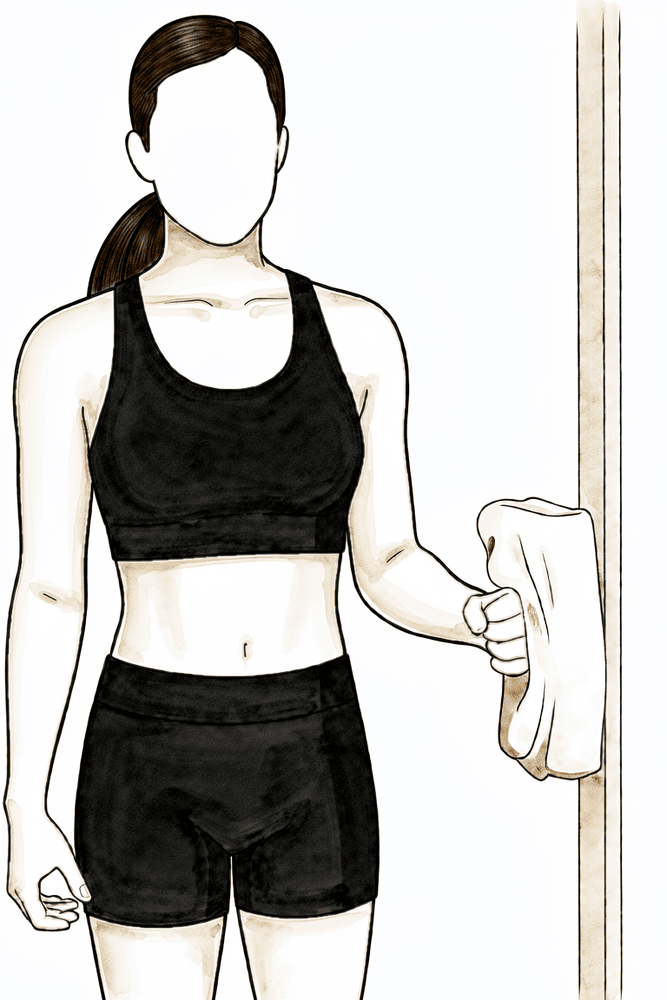
بغیر حرکت کے باہر کی طرف زور لگانا (isometric external rotation)
کہنی پہلو کے ساتھ لگا کر سیدھے زاویے پر موڑ کر کھڑے ہوں، اور ہاتھ کی پشت دیوار یا دروازے کی چوکھٹ سے لگائیں۔ بازو کو حرکت دیے بغیر آہستہ سے اس پر باہر کی طرف زور لگائیں، چند سیکنڈ روکیں، پھر ڈھیلا چھوڑ دیں۔ اس سے بغیر کسی حرکت کے روٹیٹر کف مضبوط ہوتا ہے — یہ تقریباً آٹھ ہفتے سے (اگر ٹینڈن کی دراڑ ٹانکوں سے بند کی گئی تھی تو دس سے بارہ ہفتے سے) مضبوطی کی ورزشوں کا نقطۂ آغاز ہے۔
چند سیکنڈ روکیں، کئی بار؛ جیسے آپ کا فزیوتھراپسٹ بتائے
Kieran Hirpara 4.0
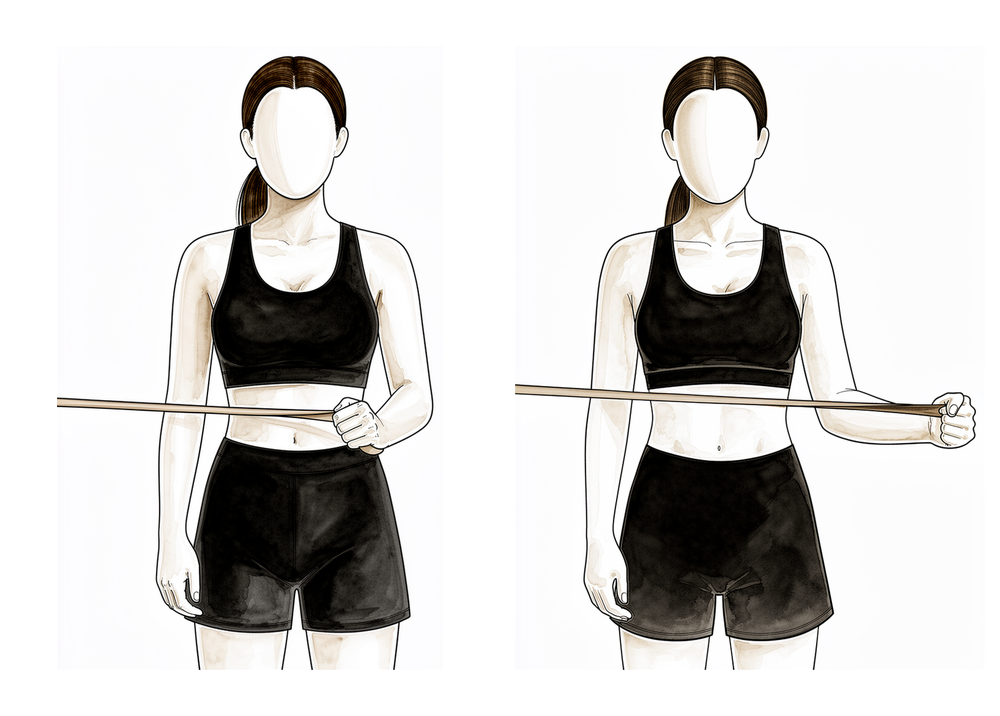
بینڈ کے ساتھ باہر کی طرف گھمانا
کہنی پہلو کے ساتھ لگا کر سیدھے زاویے پر موڑ کر کھڑے ہوں، اور کمر کی اونچائی پر بندھا لچکدار بینڈ پکڑیں۔ کہنی پہلو کے ساتھ رکھتے ہوئے بازو کے نچلے حصے کو بینڈ کے خلاف باہر کی طرف گھمائیں، پھر آہستہ سے واپس لائیں۔ طاقت بڑھنے کے ساتھ یہ بغیر حرکت والی ورزش سے اگلا قدم ہے۔
10 سے 15 بار کے 2 سے 3 سیٹ، کم مزاحمت
Kieran Hirpara 4.0
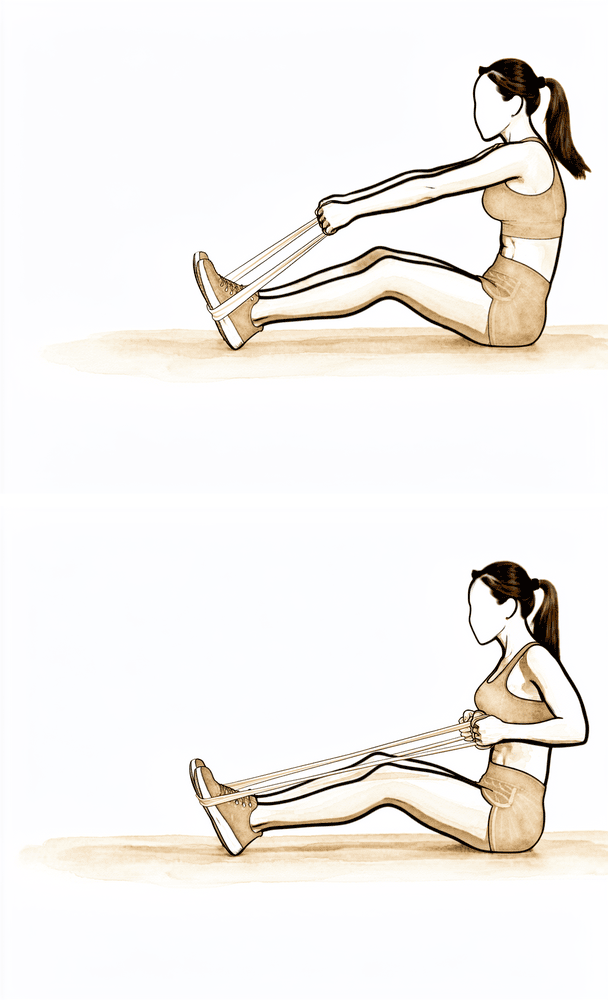
نیچی رو (low row)
اپنے سامنے کمر کی اونچائی پر بندھا بینڈ پکڑیں۔ بازو کو تقریباً سیدھا رکھتے ہوئے اسے پیچھے اور نیچے اپنے کولہے کی طرف کھینچیں، کندھے کی پچھلی ہڈی کو نیچے اور پیچھے دبائیں، پھر آہستہ سے واپس جائیں۔ اس سے کندھے کی پچھلی ہڈی کے وہ پٹھے مضبوط ہوتے ہیں جو روٹیٹر کف کو سہارا دیتے ہیں۔
10 سے 15 بار کے 2 سے 3 سیٹ
Kieran Hirpara 4.0
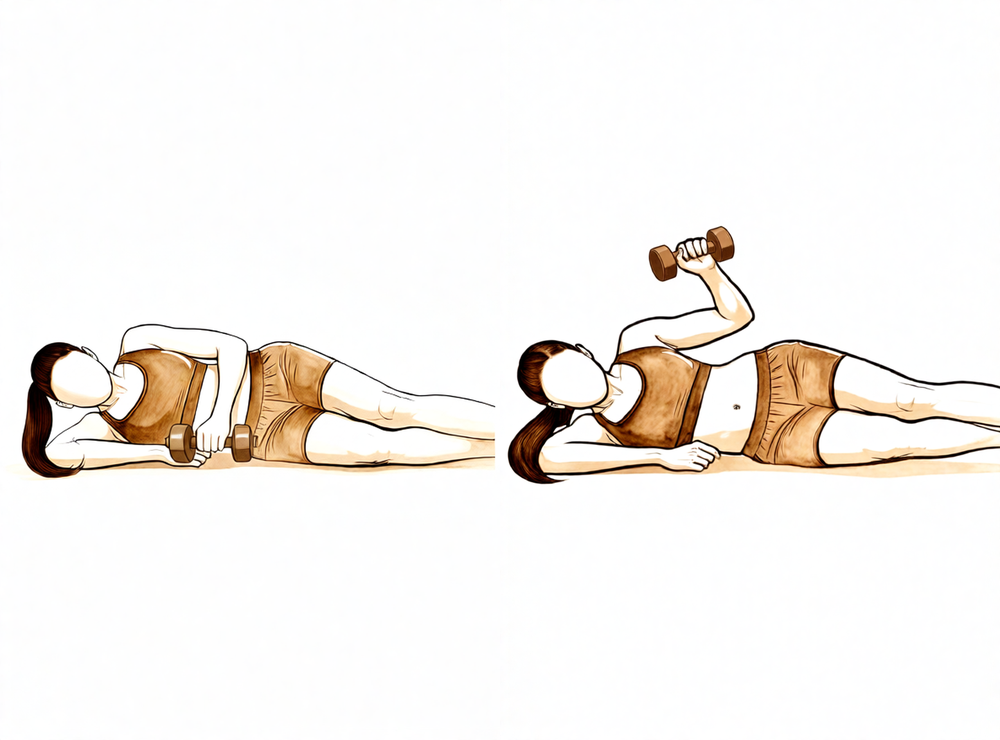
کروٹ لے کر وزن کے ساتھ باہر کی طرف گھمانا
آپریشن کے بغیر والی کروٹ پر لیٹ جائیں، اوپر والی کہنی سیدھے زاویے پر مڑی ہو اور جسم کے ساتھ لگی ہو۔ ہلکا وزن پکڑ کر بازو کے نچلے حصے کو اوپر چھت کی طرف گھمائیں، پھر آہستہ سے نیچے لائیں۔ یہ تقریباً آٹھ ہفتے سے (اگر ٹینڈن کی دراڑ ٹانکوں سے بند کی گئی تھی تو دس سے بارہ ہفتے سے) روٹیٹر کف کی مضبوطی کا حصہ ہے — اس کے ساتھ ساتھ حرکت کی ورزشیں بھی جاری رکھیں۔
کم وزن، زیادہ تعداد
عام طور پر تقریباً آٹھ ہفتے پر آپ کا دوبارہ معائنہ کیا جائے گا۔ حرکت کی حد بحال ہونے کے بعد بحالی کا رخ روٹیٹر کف کو مضبوط کرنے کی طرف ہو جاتا ہے، عام طور پر آپ کے فزیوتھراپسٹ کی نگرانی میں، اور کندھے کی اونچائی سے اوپر بازو کو آزادی سے استعمال کرنے کی طرف۔ مقصد یہ ہے کہ تقریباً بارہ ہفتے تک سامنے اور پہلو کی طرف بازو کو مکمل طور پر خود اٹھا سکیں۔ صرف ذخیرہ نکالنے کے بعد صحت یابی میں عام طور پر تقریباً تین ماہ لگتے ہیں، جس کے بعد کوئی پابندی نہیں رہتی؛ اگر روٹیٹر کف کی مرمت کی ضرورت پڑی ہو تو صحت یابی زیادہ لمبی ہوتی ہے (عام طور پر تقریباً پانچ ماہ) اور اس کے بجائے روٹیٹر کف کی مرمت کے پروٹوکول کے مطابق ہوتی ہے۔ اگر اس کے بعد بھی کچھ دکھن باقی رہے تو پریشان نہ ہوں: اس آپریشن کے بعد آپریشن سے پہلے والی علامات کو پوری طرح ختم ہونے میں نو ماہ تک لگ سکتے ہیں، جبکہ رجحان مستقل طور پر صحیح سمت میں رہتا ہے۔
آپ کے فزیوتھراپسٹ کے لیے:
اہداف
- تقریباً بارہ ہفتے تک سامنے اور پہلو کی طرف بازو کو مکمل طور پر خود اٹھانا
- روٹیٹر کف اور کندھے کی پچھلی ہڈی کی طاقت اور برداشت کی بتدریج بحالی
- تقریباً تین ماہ تک مکمل، بغیر پابندی کی سرگرمی پر واپسی
علاج کا طریقہ
- آٹھ ہفتے سے روٹیٹر کف کی بتدریج مضبوطی (اگر ٹینڈن کی دراڑ ٹانکوں سے بند کی گئی تھی تو دس سے بارہ ہفتے سے): بغیر حرکت والی ورزشوں (isometrics) سے لچکدار بینڈ اور ہلکے وزن کی طرف بڑھنا، کم بوجھ اور زیادہ تعداد
- کندھے کی اونچائی سے اوپر بازو کے خود استعمال کو آگے بڑھانا
- بارہویں سے سولہویں ہفتے کے دوران برداشت کے مطابق جم، کام اور کھیل سے متعلق مخصوص بوجھ بڑھانا
احتیاطیں
- مضبوطی کی ورزشیں حرکت کی حد کی قیمت پر نہیں ہونی چاہییں؛ پورے عرصے حرکت کی ورزشیں جاری رکھیں
- بھاری اور سر سے اوپر کا بوجھ بتدریج بڑھائیں؛ درد بھڑکنے کا مطلب ہے ایک قدم پیچھے ہٹنا
اگلے مرحلے میں جانے کی شرائط
- مکمل خود حرکت، طاقت واپس آ رہی ہو اور علامات مسلسل کم ہو رہی ہوں
- اچھی پیش رفت ہونے پر معمول کے فالو اپ سے فارغ کرنا، عام طور پر تقریباً آٹھ سے سولہ ہفتے کے آس پاس سے
پروٹوکول کے بعد
اوپر دیے گئے مراحل اس طریقۂ علاج کے لیے شائع شدہ مریضوں کی رہنمائی اور بحالی کے پروٹوکول سے اخذ کیے گئے ہیں: The London Shoulder Partnership کا calcific deposit excision rehabilitation protocol، کیلشیم جمنے سے ٹینڈن کی سوزش کی سرجری پر ShoulderDoc (UK) کی مریضوں کے لیے رہنمائی، اور دوربین کے ذریعے ذخیرہ نکالنے پر ڈاکٹر Kevin Ko کی مریضوں کے لیے گائیڈ۔ ہفتوں کی یہ حدیں عام اندازہ ہیں، طے شدہ نہیں، اور آپ کی آگے کی بحالی کی رہنمائی آپ کا فزیوتھراپسٹ کلینک کے ساتھ مل کر انفرادی طور پر کرتا ہے، اس بنیاد پر کہ آپ کا کندھا کیسے ٹھیک ہوتا ہے۔ یہ صفحہ کلینک کی صحت یابی سے متعلق عمومی ہدایات کے ساتھ کام کرتا ہے: دیکھیں آپریشن کے بعد درد پر قابو اور زخم کی دیکھ بھال۔ خود بیماری اور ان علاجوں کے کام کرنے کے طریقے کے لیے دیکھیں کیلشیم جمنے سے ٹینڈن کی سوزش۔ اس پروٹوکول کے پیچھے موجود شواہد (بیماری کا قدرتی سفر، باربوٹاج (barbotage، سوئی کے ذریعے کیلشیم کو دھو کر نکالنا)، اور سرجری کے ذریعے ذخیرہ نکالنے سے متعلق تحقیق) کا خلاصہ شواہد والے حصے میں دیا گیا ہے، جو اس صفحے کے اوپر سے پی ڈی ایف کی صورت میں دستیاب ہے۔
Evidence & references
This is the clinical evidence summary written for health professionals. It is technical, and it lists the research this page was built from. You do not need to read it to understand your treatment or to make a decision about it.
Calcific Tendinitis of the Rotator Cuff — Staged Management & Post-operative Rehabilitation (Arthroscopic Excision)
Topic scope: (A) the natural history and stepped non-operative management of rotator-cuff calcific tendinitis (rest/analgesia → barbotage ± subacromial steroid → ESWT), and (B) post-operative rehabilitation after arthroscopic excision of the calcific deposit (± subacromial decompression; the cuff-repair pathway defers to the rotator-cuff-repair protocol).
Defining principle of the surgical rehab here: arthroscopic excision removes the source of pain and does not, by itself, create a construct that needs months of protection — provided the rotator cuff is left intact. So (like a debridement/decompression, and unlike a cuff repair) the rehab is an early-movement pathway: short sling for comfort only, unrestricted use below shoulder height from day one, assisted elevation to prevent stiffness, strengthening from ~8 weeks. The single branch point is whether removing the deposit left a tendon defect that needed repair — if so, the recovery converts to the slower, protected rotator-cuff-repair pathway.
A. NATURAL HISTORY & NON-OPERATIVE MANAGEMENT
Natural history (self-limiting in most)
Rotator-cuff calcific tendinitis is self-limiting in the majority: after a variable quiescent period the deposit enters a resorptive phase (peripheral vascularisation + phagocytosis), and spontaneous resorption occurs in roughly two-thirds of cases within 1–2 years [Uhthoff & Loehr; Chianca 2018 review]. This underpins a non-operative-first approach and explains why post-operative residual calcium that "dissolves spontaneously" does not harm the outcome.
Stepped non-operative interventions
- Analgesia / activity modification / physiotherapy — first line; many settle as the deposit resorbs. Consensus.
- Ultrasound-guided barbotage (needling + lavage), usually + subacromial corticosteroid — the best-supported interventional option. A systematic review of 908 patients and subsequent meta-analyses favour barbotage for medium-term pain/function; barbotage + subacromial steroid improves Constant–Murley score and reduces deposit size vs steroid alone. Notably, clinical improvement is NOT dependent on how much calcium is aspirated — perforating the deposit to trigger resorption is the active mechanism. Moderate–strong (SR/RCT).
- Extracorporeal shock-wave therapy (ESWT) — reduces deposit size and pain; broadly comparable to barbotage in several comparisons. Moderate (RCT).
B. POST-OPERATIVE REHABILITATION (arthroscopic excision ± subacromial decompression)
Surgery is reserved for deposits recalcitrant to adequate non-operative care. The operation locates and removes the deposit from within the cuff tendon, often with a subacromial decompression for room. Key surgical-outcome facts that shape the rehab:
- Preserving cuff integrity while removing as much deposit as possible gives good-to-excellent results in ~90% and avoids iatrogenic tendon defects [arthroscopic excision series].
- Complete vs near-complete removal gives equivalent outcomes — residual calcium resorbs spontaneously afterwards; the surgeon need not chase every fleck at the cost of the tendon.
- Arthroscopic decompression WITHOUT cuff repair is a validated strategy with good outcomes where the residual defect is not repaired [Bone & Joint 2023].
- Symptom settling is gradual — significant pain relief and ROM gains are the norm, but the pre-operative symptoms can take up to ~9 months to fade fully; recovery to unrestricted activity after excision alone is ~3 months.
Phased post-op timeline (no cuff repair)
| Phase | Window | Sling | ROM / use | Strengthening | Notes |
|---|---|---|---|---|---|
| I — Early movement | Week 0–2 | Comfort only, days (rarely > 2 wk), off ASAP | Unrestricted use below shoulder height from day 1; assisted elevation above shoulder height several × daily to prevent stiffness | — | Settle post-op flare; calcific patients are stiffness-prone → motion is the priority. ≤ ~2 kg, no driving while in sling |
| II — Regaining range | Week 2–8 | Off | Progress active elevation; restore full passive + active ROM | Begin gentle as pain allows | Most regain comfortable range through this window |
| III — Strengthening / return | Week 8–16 | Off | Full active elevation goal by ~12 wk | Cuff + scapular strengthening from ~8 wk, isometric → band/light weight; advance work/sport loading wk 12–16 | Full unrestricted activity ~3 months; discharge ~8–16 wk |
Branch point — if a rotator cuff repair was required: recovery converts to the protected rotator-cuff-repair pathway (sling ~6 wk, ROM restrictions, strengthening deferred), typically ~5 months total. The surgeon confirms post-operatively which pathway applies.
C. KEY CONTROVERSIES / EVIDENCE QUALITY
- Surgery is a last resort — given high spontaneous-resorption rates and effective barbotage/ESWT, excision is reserved for genuinely recalcitrant cases. Strong rationale.
- How much to remove / whether to repair the defect. Equivalent outcomes for complete vs partial removal, and viable decompression-without-repair, mean the surgeon balances deposit clearance against tendon integrity intra-operatively — which in turn decides the rehab pathway. Moderate.
- The post-op rehab protocol itself is consensus/expert, drawn from surgeon patient-guidance protocols rather than a rehab RCT — phase timings are typical, not trial-derived.
D. EVIDENCE STRENGTH FLAGS (summary)
- MODERATE–STRONG (SR / RCT): barbotage ± steroid for non-operative calcific tendinitis (908-patient SR; barbotage + steroid > steroid alone); ESWT efficacy.
- MODERATE (cohorts): arthroscopic excision outcomes (~90% good-excellent; equivalence of complete vs partial removal; decompression without repair, Bone & Joint 2023); spontaneous resorption ~2/3 within 1–2 years.
- WEAK / CONSENSUS: the post-operative rehabilitation protocol (surgeon patient-guidance documents; no defining rehab RCT).
CITATIONS
RAG corpus (180,000+ Orthopaedic articles) — adjacent rotator-cuff evidence
- Predictors of failure of non-operative treatment of chronic symptomatic rotator-cuff disease (2013 Neer Award). J Shoulder Elbow Surg. 2016. DOI: 10.1016/j.jse.2016.04.030
- Arthroscopic rotator cuff repair: scientific rationale, surgical technique, early clinical results. J Shoulder Elbow Surg. 2010. DOI: 10.1016/j.jse.2009.12.012
- Early versus delayed rehabilitation after arthroscopic rotator cuff repair. Knee Surg Sports Traumatol Arthrosc. 2024. DOI: 10.1002/ksa.12129
- Speed of recovery after arthroscopic rotator cuff repair. J Shoulder Elbow Surg. 2017. DOI: 10.1016/j.jse.2016.11.002
- (The corpus is thin on calcific-tendinitis-specific rehab; the evidence base below is the calcific literature + published surgeon protocols.)
Calcific tendinitis literature (URLs)
- Ultrasound-guided barbotage for calcific tendonitis of the shoulder: a systematic review including 908 patients (DARE). https://www.ncbi.nlm.nih.gov/books/NBK241935/
- Determining the efficacy of barbotage for pain relief in calcific tendinitis. JSES Int / ScienceDirect. 2024. https://pmc.ncbi.nlm.nih.gov/articles/PMC11401591/
- Needling and lavage in rotator-cuff calcific tendinitis: ultrasound-guided technique. PMC. 2024. https://pmc.ncbi.nlm.nih.gov/articles/PMC10805427/
- Calcific tendinitis of the rotator cuff: a review (natural history, phases, resorption). PMC. https://pmc.ncbi.nlm.nih.gov/articles/PMC3749672/
- Recovery pattern after arthroscopic treatment for calcific tendinitis of the shoulder. Orthop Traumatol Surg Res. 2020. https://www.sciencedirect.com/science/article/pii/S1877056820301043
- Arthroscopic decompression of calcific tendinitis without cuff repair. Bone Joint J. 2023. https://boneandjoint.org.uk/Article/10.1302/0301-620X.105B6.BJJ-2022-1137.R1
- Arthroscopic treatment of calcific tendonitis (preserve cuff, ~90% good-excellent; residuals resorb). PMC. https://pmc.ncbi.nlm.nih.gov/articles/PMC4044535/
Published rehab protocols (patient-guidance — basis for the phase structure)
- The London Shoulder Partnership — Calcific Deposit Excision Rehabilitation. http://thelondonshoulderpartnership.co.uk/shoulder/shoulder-rehabilitation/calcific-deposit-excision-rehabilitation/
- Ko K. Arthroscopic Excision of Calcific Tendonitis — What Can I Expect? (OPA Orthopedics). https://www.kevinkomd.com/pdf/calcific-tendonitis.pdf
- Funk L. Surgery for Calcific Tendinitis. ShoulderDoc. https://shoulderdoc.co.uk/pages/surgery-for-calcific-tendinitis