Patients › Rehabilitation
کیوبیٹل ٹنل ریلیز (Cubital Tunnel Release)
کہنی پر النر عصب (ulnar nerve) کے دباؤ کو ختم کرنے کے آپریشن کے بعد صحت یابی، جس میں عصب کو اپنی جگہ پر (سادہ طریقے سے) آزاد کرنا اور اسے آگے منتقل کرنا (anterior transposition) دونوں شامل ہیں۔

یہ پروٹوکول (protocol، یعنی بحالی کا مرحلہ وار منصوبہ) کہنی پر النر عصب (ulnar nerve) کے دباؤ کو ختم کرنے کے آپریشن (cubital tunnel release، کیوبیٹل ٹنل ریلیز) کے بعد آپ کی صحت یابی میں رہنمائی کرتا ہے، جو ڈاکٹر کیرن ہِرپرا کے ساتھ Mater Private Hospital Rockhampton میں کیا جاتا ہے۔ یہ بتاتا ہے کہ کیا توقع رکھیں، شروع کے ہفتوں کی احتیاطی تدابیر کیا ہیں، اور وہ ورزشیں کون سی ہیں جو سب کچھ پرسکون ہونے تک عصب کو آزادی سے سرکتا ہوا رکھتی ہیں۔ یہ صفحہ یا اس کی پی ڈی ایف (PDF) اپنے فزیوتھراپسٹ یا ہینڈ تھراپسٹ (ہاتھ کی بحالی کے ماہر) کے پاس ساتھ لائیں تاکہ آپ کی بحالی کا علاج ایک ہی منصوبے کے مطابق چلے۔ آپ کا تھراپسٹ آپ کی صحت یابی کی رفتار کے مطابق اس منصوبے میں تبدیلی کر سکتا ہے۔
اگر آپریشن کے بعد آپ کو اپنے زخم کے بارے میں کوئی تشویش ہو تو کلینک سے رابطہ کریں۔ اکثر یہ مددگار ہوتا ہے کہ آپ زخم کی تصویر لے کر ای میل کر دیں تاکہ اسے دیکھا جا سکے۔
دو مختلف آپریشن، دو قدرے مختلف صحت یابیاں۔ النر عصب کو دو بڑے طریقوں سے آزاد کیا جا سکتا ہے، اور آپ کا کون سا آپریشن ہوا ہے، اس سے آپ کی شروع کی احتیاطی تدابیر بدل جاتی ہیں:
- عصب کو اپنی جگہ پر آزاد کرنا (in-situ، سادہ decompression): عصب جہاں ہے وہیں اسے ہلائے بغیر آزاد کیا جاتا ہے۔ یہ وہ معیاری آپریشن ہے جو ڈاکٹر ہِرپرا کرتے ہیں، اور اس سے صحت یابی جلد ہوتی ہے: کہنی کی ہلکی، مکمل حرکت جلد شروع ہو جاتی ہے۔ کوئی سخت بریس استعمال نہیں کیا جاتا۔
- عصب کو آگے منتقل کرنا (anterior submuscular transposition) (عصب کو اٹھا کر کہنی کے سامنے ایک زیادہ محفوظ جگہ پر نئے راستے سے گزارا جاتا ہے): یہ صرف اس کم عام صورت میں کیا جاتا ہے جب کہنی موڑنے پر عصب ہڈی کے ابھار (medial epicondyle، کہنی کی اندرونی طرف کی ہڈی کا ابھار) کے اوپر سے جزوی یا مکمل طور پر اپنی جگہ سے کھسک جاتا ہو۔ اس میں شروع کا مرحلہ زیادہ احتیاط والا ہوتا ہے، جس میں پہلے چند ہفتوں تک، جب تک عصب اور نرم بافتیں اپنی نئی جگہ پر جم نہ جائیں، کہنی کو آخری حد تک موڑنے اور سیدھا کرنے سے بچا جاتا ہے۔ صرف آرام کے لیے ایک سادہ سلنگ (sling)، یعنی گلے سے لٹکی وہ پٹی جو بازو کو سہارا دیتی ہے، پہنی جا سکتی ہے۔
نیچے دی گئی رہنمائی اس آپریشن کے مطابق اپنائیں جو آپ کا ہوا ہے: زیادہ تر صورتوں میں اپنی جگہ پر آزاد کرنا، اور جہاں آپ کا عصب غیر مستحکم تھا وہاں منتقل کرنا۔
کیا توقع رکھیں
زخم، سوجن اور زخم کے نشان کی دیکھ بھال کے لیے کلینک کی زخم کی دیکھ بھال کی رہنمائی دیکھیں۔
آپریشن کا مقصد النر عصب (وہ عصب جو آپ کی چھوٹی انگلی اور اس کے ساتھ والی انگلی (ring finger) کو احساس دیتا ہے اور ہاتھ کے بہت سے چھوٹے پٹھوں کو طاقت دیتا ہے) پر سے دباؤ ہٹانا ہے۔ دباؤ ختم ہونے کے بعد عصب ٹھیک ہونا شروع ہو جاتا ہے، لیکن اعصاب آہستہ ٹھیک ہوتے ہیں۔
آپ کی علامات کتنی جلدی بہتر ہوتی ہیں، اس کا بہت زیادہ انحصار اس بات پر ہے کہ آپریشن سے پہلے عصب کتنی دیر تک دبا رہا اور اس میں کتنی جلن (irritation) پیدا ہو چکی تھی۔ جھنجھناہٹ اور سوئیاں چبھنے جیسا احساس اکثر سب سے پہلے کم ہوتا ہے، کبھی کبھی دنوں یا ہفتوں کے اندر۔ سُن پن اور ہاتھ کی طاقت میں زیادہ وقت لگتا ہے (اکثر مہینے)، اور آخری نتیجہ آپریشن کے بعد ایک سال یا اس سے زیادہ تک بہتر ہوتا رہ سکتا ہے۔ جہاں آپریشن سے پہلے عصب میں لمبے عرصے تک بہت زیادہ جلن رہی ہو، وہاں ہو سکتا ہے کچھ سُن پن یا کمزوری پوری طرح ٹھیک نہ ہو؛ ایسی صورت میں آپریشن کا مقصد حالت کو مزید بگڑنے سے روکنا اور عصب کو ٹھیک ہونے کا بہترین موقع دینا ہوتا ہے۔
دونوں آپریشنوں کا موازنہ کرتے ہوئے، شائع شدہ ٹرائلز کے بڑے جائزوں میں یہ پایا گیا ہے کہ عصب کو سادہ طریقے سے اپنی جگہ پر آزاد کرنا اور اسے آگے منتقل کرنا مجموعی طور پر ملتے جلتے نتائج دیتے ہیں، اور سادہ طریقے میں زخم اور نرم بافتوں کی پیچیدگیاں عموماً کم ہوتی ہیں [1][2]۔ ان دونوں میں سے انتخاب آپ کا سرجن آپ کے عصب اور آپ کی کہنی کی بنیاد پر کرتا ہے۔
احتیاطیں اور پابندیاں
روزمرہ کے کاموں جیسے اپنی دیکھ بھال، کھانا کھانے، کپڑے پہننے، لکھنے اور ٹائپ کرنے کے لیے ہاتھ کا ہلکا استعمال شروع سے ہی، آرام کی حد میں، کرنے کی ترغیب دی جاتی ہے۔
شروع کی حدود اس بات پر منحصر ہیں کہ آپ کا کون سا آپریشن ہوا ہے:
- عصب کو اپنی جگہ پر (سادہ طریقے سے) آزاد کرنے کے بعد (عام آپریشن): عصب کو سرکتا ہوا رکھنے کے لیے کہنی، بازو کے نچلے حصے، کلائی اور ہاتھ کی ہلکی، مکمل حرکت جلد شروع کرنے کی ترغیب دی جاتی ہے۔ کوئی بریس استعمال نہیں کیا جاتا۔ تقریباً پہلے چھ ہفتوں تک وزن اٹھانا، گرفت کا زور اور بازو پر وزن ڈالنا ہلکا رکھیں، پھر آہستہ آہستہ بڑھائیں۔
- عصب کو آگے منتقل کرنے کے بعد (صرف اس صورت میں جب آپ کا عصب غیر مستحکم تھا): پہلے چند ہفتوں تک کہنی کو محفوظ رکھا جاتا ہے؛ جب تک عصب اپنی نئی جگہ پر جم نہ جائے، کہنی کو زبردستی پورا موڑنے یا پورا سیدھا کرنے سے بچیں، اور اسے لمبے عرصے تک مڑا ہوا رکھنے سے بھی بچیں۔ صرف آرام کے لیے ایک سادہ سلنگ پہنی جا سکتی ہے۔ عصب کو سرکانے کی ورزشیں (nerve glides) سادہ آپریشن کے مقابلے میں کچھ دیر بعد شروع ہوتی ہیں (عام طور پر تقریباً دو سے تین ہفتے پر)۔ اپنی جگہ پر آزاد کرنے کی طرح، تقریباً پہلے چھ ہفتوں تک وزن اٹھانا اور مزاحمت ہلکی رکھیں، پھر آہستہ آہستہ بڑھائیں۔
عمومی رہنمائی کے طور پر، وزن اٹھانا اور مزاحمت والی مضبوطی کی ورزشیں تقریباً چھ ہفتے تک ہلکی رکھی جاتی ہیں، پھر آہستہ آہستہ بڑھائی جاتی ہیں [3][4]۔
کہنی کے بل ٹیک لگانا (کہنی کو کسی سخت سطح پر رکھنا) عصب کے عین اوپر دباؤ ڈالتا ہے، اور جب تک عصب ٹھیک ہو رہا ہے اس سے بچنا چاہیے۔
زخم بھر جانے کے بعد زخم کے نشان کی مالش عصب کے اوپر کی جلد اور بافتوں کو نرم اور لچکدار رکھنے میں مدد دیتی ہے۔ زخم کی دیکھ بھال والے صفحے پر زخم کے نشان کی دیکھ بھال کے بارے میں مزید معلومات ہیں۔
یہ آپ کے ہینڈ آؤٹ (handout) والی ورزشیں ہیں، جو ہر کارڈ پر دی گئی ہدایت کے مطابق کی جاتی ہیں۔ انہیں ڈاکٹر ہِرپرا اور اپنے تھراپسٹ کی رہنمائی کے مطابق شروع کریں: عصب کو سرکانے کی ورزشیں کب شروع ہوں گی، اور کہنی کی حرکت کی کوئی حد، اس بات پر منحصر ہے کہ آپ کا کون سا آپریشن ہوا ہے۔
آپ کی ورزشیں

Kieran Hirpara 4.0
النر عصب کو سرکانے کی ورزش (nerve glides)
یہ ہلکی حرکتیں النر عصب کو آزادی سے سرکتا ہوا رکھتی ہیں تاکہ وہ بھرتے ہوئے ٹشو سے چپک نہ جائے۔ ہر حالت میں صرف اتنا ہی ہمواری سے جائیں جتنا آرام سے ہو سکے — ہلکا کھنچاؤ یا ہلکی جھنجھناہٹ معمول کی بات ہے، لیکن کسی بھی تیز یا شدید سوئیاں چبھنے جیسے احساس سے پہلے رک جائیں۔ اسٹریچ میں کبھی زبردستی نہ کریں۔ یہ ورزش صرف اس وقت شروع کریں جب آپ کا سرجن یا تھراپسٹ کہے (اگر آپ کا عصب آگے منتقل کیا گیا ہو تو یہ عام طور پر بعد میں ہوتا ہے — نیچے احتیاطی تدابیر دیکھیں)۔
5 بار آہستہ آہستہ، روزانہ 2 سے 3 بار
Kieran Hirpara 4.0
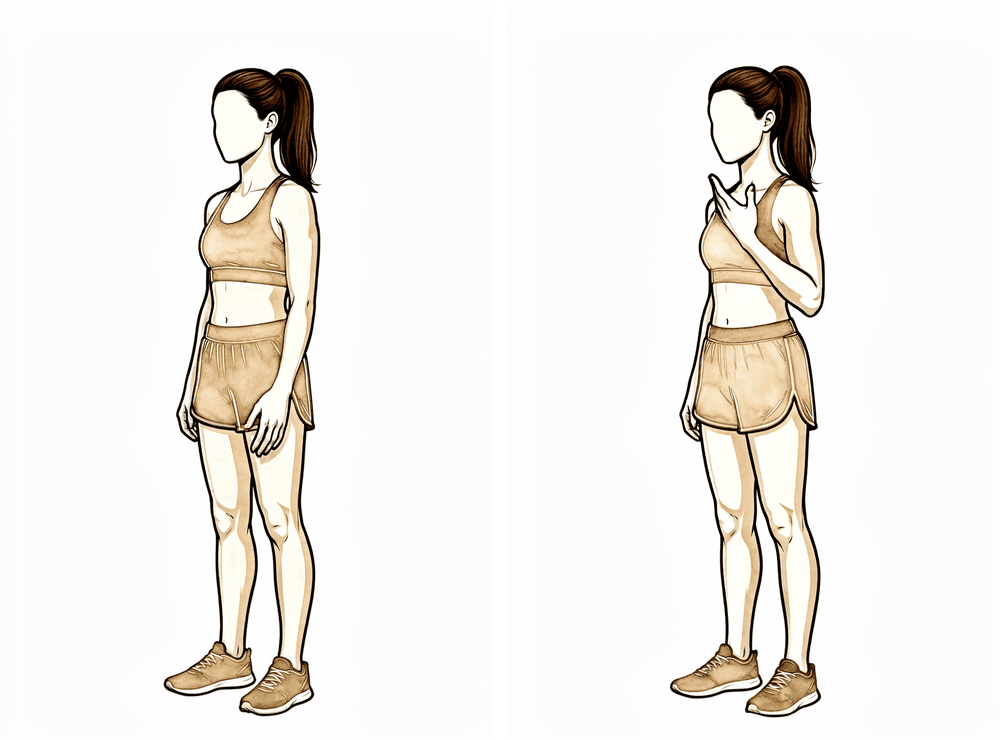
کہنی موڑنا (flexion)
بازو کے اوپری حصے کو سہارا دے کر کہنی کو ہلکے سے موڑیں تاکہ ہاتھ کندھے کی طرف آئے، پھر دوبارہ نیچے لائیں۔ آرام دہ حد کے اندر حرکت کریں۔ اگر آپ کا عصب آگے منتقل کیا گیا ہو تو ہو سکتا ہے آپ کا سرجن آپ سے کہے کہ پہلے چند ہفتوں تک کہنی کو پورا اوپر تک نہ موڑیں — جو حد آپ کو دی گئی ہے اس پر عمل کریں۔
10 بار، روزانہ 3 سے 4 بار، اپنی اجازت شدہ حد کے اندر

Kieran Hirpara 4.0
کہنی سیدھی کرنا (extension)
مڑی ہوئی حالت سے کہنی کو ہلکے سے جتنا آرام سے ہو سکے سیدھا کریں، پھر واپس لائیں۔ اگر آپ کا عصب آگے منتقل کیا گیا ہو اور آپ سے کہا گیا ہو تو شروع کے ہفتوں میں کہنی کو زبردستی پورا سیدھا نہ کریں — اسی آرام دہ حد پر رہیں جو آپ کے سرجن نے طے کی ہے۔
10 بار، روزانہ 3 سے 4 بار، اپنی اجازت شدہ حد کے اندر
Kieran Hirpara 4.0
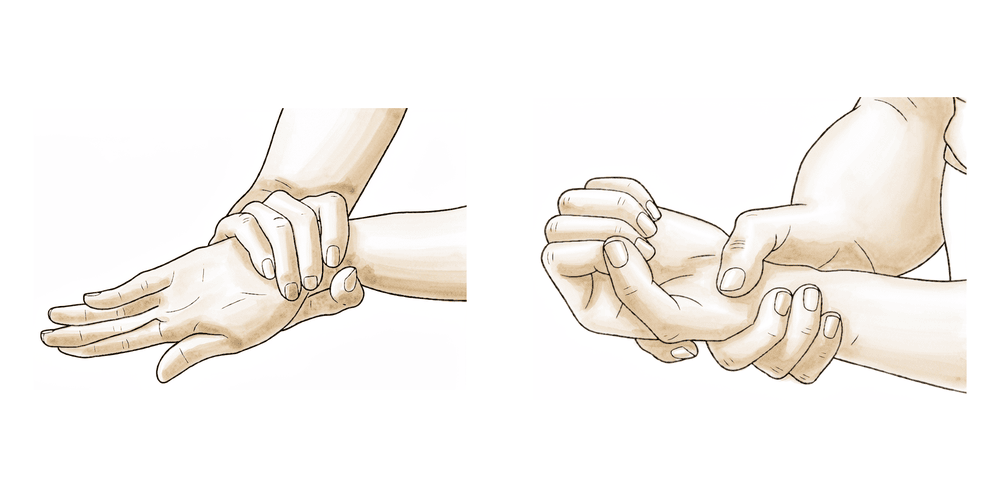
بازو کے نچلے حصے کو گھمانا
کہنی کو پہلو سے لگا کر اور زاویۂ قائمہ (right angle) پر موڑ کر، ہتھیلی کو آہستہ سے اوپر چھت کی طرف، پھر نیچے فرش کی طرف موڑیں۔ پورا وقت کہنی جسم سے لگی رکھیں۔
ہر سمت میں 10 بار، روزانہ 3 سے 4 بار
Kieran Hirpara 4.0
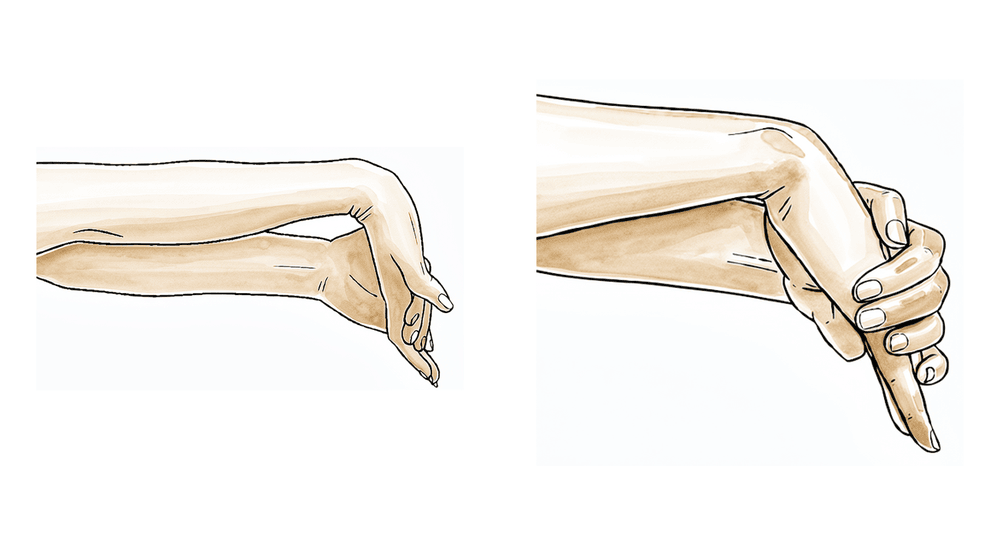
کلائی اور انگلیوں کی حرکت
کلائی کو ہلکے سے اوپر اور نیچے موڑیں، اور انگلیوں کو پوری طرح کھولیں اور بند کریں، ڈھیلی مٹھی بنا کر پھر انگلیاں پھیلا دیں۔ اس سے پورا بازو حرکت میں رہتا ہے اور کہنی کے پرسکون ہونے تک سوجن اور اکڑاؤ کم کرنے میں مدد ملتی ہے۔
ہر ایک 10 بار، دن میں کئی بار
نیچے دی گئی ورزشیں صرف ڈاکٹر ہِرپرا اور اپنے ہینڈ تھراپسٹ کی رہنمائی کے مطابق شروع کریں، اور جو بھی حد اور پابندیاں آپ کو دی گئی ہیں ان کے اندر رہیں۔ النر عصب کو سرکانے کی ورزشیں سب سے اہم ہیں — یہ عصب کو زخم بھرنے سے بننے والے سخت ریشے (scar tissue) میں جکڑے جانے کے بجائے آزادی سے سرکتا ہوا رکھتی ہیں، اور یہ جلد شروع ہوتی ہیں۔ کہنی کو موڑنا، سیدھا کرنا اور بازو کے نچلے حصے کو گھمانا کہنی کو اکڑنے سے روکتا ہے، اور کلائی اور انگلیوں کی حرکتیں باقی سب کچھ کام کرتا رکھتی ہیں۔ کہنی کو پورا مڑا ہوا رکھ کر لمبے عرصے تک آرام کرنے سے بچیں، کیونکہ یہی چیز شروع میں عصب میں جلن پیدا کرتی ہے۔ جو چیز بازو کے نچلے حصے سے نیچے چھوٹی انگلی اور اس کے ساتھ والی انگلی تک تیز یا بجلی کے جھٹکے جیسا درد پیدا کرے، اسے روک دیں۔
کام اور سرگرمیوں میں واپسی
زیادہ تر لوگ ایک سے دو ہفتوں کے اندر دفتری یا ہلکے کام پر واپس آ جاتے ہیں، جبکہ بھاری، بار بار دہرائے جانے والے یا جسمانی مشقت والے کاموں میں عام طور پر تقریباً چار سے آٹھ ہفتے لگتے ہیں۔ آپ کسی خاص کام کے لیے اس وقت تیار ہیں جب آپ کا زخم اس کام میں ہونے والے لمس اور دباؤ کو برداشت کر سکے، اور آپ اسے اوپر دی گئی احتیاطی تدابیر کے اندر رہتے ہوئے آرام سے کر سکیں۔ اگر آپ کا کام بھاری ہے، اس میں کہنی کے بل ٹیک لگانا پڑتا ہے، یا اس میں تھرتھرانے والے اوزار استعمال ہوتے ہیں، تو آپریشن کے بعد کے معائنے میں یہ بات اٹھائیں تاکہ ایک منصوبہ (بشمول کسی بھی تبدیل شدہ ذمہ داریوں کے) بنایا جا سکے۔
گاڑی چلانا عام طور پر تقریباً دو سے تین ہفتے پر دوبارہ شروع ہوتا ہے، جب آپ کسی بھی سلنگ سے باہر آ جائیں اور بغیر درد کے گاڑی کو قابو میں رکھ سکیں اور کسی ہنگامی صورت حال میں فوری ردعمل دے سکیں۔ کھیل اور سر سے اوپر کی سرگرمیوں میں واپسی عام طور پر تقریباً چھ سے بارہ ہفتے پر ہوتی ہے۔
عصب کی بحالی کی اپنی ایک سست رفتار ہوتی ہے۔ جھنجھناہٹ اکثر سب سے پہلے، دنوں سے ہفتوں کے اندر، کم ہو جاتی ہے، جبکہ سُن پن اور طاقت کئی مہینوں تک بہتر ہوتے رہتے ہیں اور تقریباً ایک سال تک بہتر ہوتے رہ سکتے ہیں۔ جہاں عصب لمبے عرصے تک بہت زیادہ دبا رہا ہو، وہاں ہو سکتا ہے کچھ سُن پن یا کمزوری پوری طرح ٹھیک نہ ہو، اور ایسی صورت میں آپریشن کا مقصد حالت کو مزید بڑھنے سے روکنا ہوتا ہے۔
اپنے پروٹوکول کے بعد
یہ پروٹوکول کلینک کے صحت یابی کے عمومی مشوروں کے ساتھ مل کر کام کرتا ہے: دیکھیں آپریشن کے بعد درد کو سنبھالنا، زخم کی دیکھ بھال اور ہینڈ تھراپی کی بنیادی باتیں۔ اوپر دیا گیا مرحلہ وار منصوبہ کہنی پر النر عصب کے دباؤ کو ختم کرنے کے بارے میں شائع شدہ شواہد کے مطابق ہے، اور آپ کی جاری صحت یابی کی رہنمائی آپ کا فزیوتھراپسٹ یا ہینڈ تھراپسٹ آپ کی حالت کے مطابق کرتا ہے، اس بات کو دیکھتے ہوئے کہ آپ کا عصب اور کہنی کیسے بہتر ہو رہے ہیں۔
حوالہ جات
[1] Said J, Van Nest D, Foltz C, et al. Ulnar nerve in situ decompression versus transposition for idiopathic cubital tunnel syndrome: an updated meta-analysis. J Hand Microsurg. 2019;11(1):18–27. https://pmc.ncbi.nlm.nih.gov/articles/PMC6431285/ [2] Macadam SA, Gandhi R, Bezuhly M, Lefaivre KA. Simple decompression versus anterior subcutaneous and submuscular transposition of the ulnar nerve for cubital tunnel syndrome: a meta-analysis. J Hand Surg Am. 2008;33(8):1314.e1–12. https://pubmed.ncbi.nlm.nih.gov/18929194/ [3] Caliandro P, La Torre G, Padua R, Giannini F, Padua L. Treatment for ulnar neuropathy at the elbow. Cochrane Database Syst Rev. 2016;11:CD006839. https://www.cochranelibrary.com/cdsr/doi/10.1002/14651858.CD006839.pub4/full [4] Andrews K, Rowland A, Pranjal A, Ebraheim N. Cubital tunnel syndrome: anatomy, clinical presentation, and management. J Orthop. 2018;15(3):832–836. https://pmc.ncbi.nlm.nih.gov/articles/PMC6082832/
Evidence & references
This is the clinical evidence summary written for health professionals. It is technical, and it lists the research this page was built from. You do not need to read it to understand your treatment or to make a decision about it.
Cubital Tunnel Release — Post-operative Rehabilitation (In-situ Decompression vs Anterior Transposition)
Topic scope: post-operative rehabilitation after surgical decompression of the ulnar nerve at the elbow. The single defining branch point is the operative technique: (A) in-situ (simple) decompression — an early-full-motion pathway; versus (B) anterior transposition (subcutaneous or submuscular) — a protected early phase that avoids end-range elbow flexion/extension for the first few weeks to protect the transposed nerve and its soft-tissue bed.
Defining principle of the rehab here: decompression relieves pressure on a nerve; it does not, by itself, create a load-bearing repair that needs months of protection. So the rehab is fundamentally an early-motion, nerve-glide pathway aimed at preventing perineural adhesion while the nerve recovers on its own (slow) biological timeline. The one variable that changes the early phase is whether the nerve was transposed — a transposed nerve sits in a new bed and end-range elbow excursion is restricted briefly to protect it, so nerve glides start later and elbow ROM is capped for a few weeks. Phase timings below are typical of published surgeon protocols and institutional consensus rather than trial-derived.
A. PROCEDURE CHOICE & OUTCOME EQUIVALENCE
- In-situ decompression and anterior transposition give equivalent clinical outcomes. Multiple meta-analyses of RCTs and comparative series find no significant difference in motor nerve conduction velocity or clinical outcome scores between simple decompression and transposition for idiopathic cubital tunnel syndrome. Strong (multiple SR/meta-analyses).
- Simple decompression carries a lower complication burden (wound, soft-tissue, devascularisation risk), and is often preferred where the nerve is stable and does not subluxate. Moderate–strong.
- Transposition is selected for nerve instability/subluxation, prior failed in-situ release, bony deformity, or a hostile cubital tunnel floor — surgeon's intra-operative judgement. Consensus.
- Endoscopic vs open in-situ decompression show comparable outcomes; choice does not change the rehab pathway (both early-motion). Moderate (SR).
B. POST-OPERATIVE REHABILITATION
Common principles (both pathways)
- Early digital, wrist and shoulder motion from day 1 to prevent stiffness and oedema.
- Ulnar nerve gliding to prevent perineural adhesion — timing differs by pathway (see below).
- No elbow leaning / direct pressure over the nerve during recovery.
- Wound: suture removal ~10–14 days; scar massage and desensitisation once healed.
- Nerve recovery is slow and graded: paraesthesia often improves first (days–weeks); numbness and intrinsic strength lag (months); final outcome continues to ~12 months. DASH, clinical findings and NCV improve postoperatively, with significant early gains by ~1 month in cohort data. Pre-operative severity/chronicity is the dominant predictor of incomplete recovery.
Phased timeline (typical of published surgeon protocols)
| Phase | In-situ (simple) decompression | Anterior transposition (SC / submuscular) |
|---|---|---|
| Week 0–2 | Soft dressing; early active full elbow ROM + digit/wrist/shoulder ROM; light ADLs | Splint/sling for comfort/protection (often elbow ~semi-flexed early); avoid end-range flexion AND extension, and avoid sustained/prolonged elbow flexion; digit/wrist/shoulder ROM |
| Week 2–6 | Progress to full unrestricted active ROM; scar massage + desensitisation once healed; nerve glides as tolerated | Suture out ~10–14d; gradually restore elbow ROM within set limits; scar/desensitisation; introduce nerve glides — typically deferred to this window |
| Week ~6+ | Strengthening / lifting built up as tolerated; return to full activity | Restrictions usually lifted ~6 wk; resistance strengthening from ~6 wk; build up gradually |
Dr Hirpara's practice parameters:
- Default operation = in-situ (simple) decompression; anterior submuscular transposition is reserved for a nerve that subluxates over the medial epicondyle. No rigid brace is used.
- Early elbow ROM: full active elbow motion from day 1 after in-situ decompression. After a transposition the elbow is protected from end-range flexion/extension for the first few weeks (a simple sling for comfort only — no rigid brace).
- Nerve glides: start early/as-tolerated after in-situ; start around 2–3 weeks after a transposition.
- Lifting: kept light (around ≤2 kg) for the first ~6 weeks, then resistance strengthening is built up gradually.
- Nerve recovery: paraesthesia settles first (days–weeks); numbness and intrinsic strength recover over months and can keep improving to ~12 months. Pre-operative severity/chronicity is the dominant predictor — long-standing severe compression may not fully recover, and surgery then aims to halt progression.
C. KEY CONTROVERSIES / EVIDENCE QUALITY
- Procedure equivalence is well supported (multiple meta-analyses); the complication-profile advantage of simple decompression drives the "in-situ first unless unstable" stance. Strong.
- The post-op rehab protocol itself is consensus/expert — drawn from surgeon patient-guidance protocols, not a rehab RCT. Phase timings are typical, not trial-derived. Weak/consensus.
- Nerve-glide evidence is stronger as a non-operative and adhesion-prevention measure than as a proven post-operative outcome-changer; biomechanical and clinical work supports gliding to reduce excursion-related symptoms. Moderate.
D. EVIDENCE STRENGTH FLAGS (summary)
- STRONG (SR / meta-analysis): clinical-outcome equivalence of in-situ decompression vs anterior transposition; lower complication rate with simple decompression.
- MODERATE (cohorts / SR): endoscopic vs open in-situ equivalence; post-op DASH/NCV improvement with early gains by ~1 month; nerve-gliding rationale.
- WEAK / CONSENSUS: the post-operative rehabilitation protocol (surgeon patient-guidance documents; no defining rehab RCT) — including the transposition early-ROM cap, nerve-glide start date, and the ~6-week lifting/strengthening threshold.
CITATIONS
RAG corpus (180,000+ Orthopaedic articles)
- Open vs retractor-endoscopic in-situ decompression of the ulnar nerve in cubital tunnel syndrome. Neurosurgery. DOI: 10.1227/neu.0b013e3182846dbd
- Randomized, prospective study comparing ulnar neurolysis in situ with submuscular transposition. Neurosurgery. DOI: 10.1227/01.neu.0000194847.04143.a1
- Open versus endoscopic in situ decompression in cubital tunnel syndrome: a systematic review. Int J Surg. 2016. DOI: 10.1016/j.ijsu.2016.09.012
- Simple decompression vs. subcutaneous anterior transposition of the ulnar nerve (2025). J Hand Surg Glob Online / XRRT. DOI: 10.1016/j.xrrt.2025.100630
- Cubital tunnel syndrome: current concepts. Curr Rev Musculoskelet Med. 2020. DOI: 10.1007/s12178-020-09650-y
- Predictors of surgical revision after in situ decompression of the ulnar nerve. J Shoulder Elbow Surg. 2015. DOI: 10.1016/j.jse.2014.12.015
- Clinical outcomes of ulnar nerve gliding exercise in the nonoperative treatment of cubital tunnel syndrome. JSES Int. 2025. DOI: 10.1016/j.jseint.2025.02.001
- Biomechanical analysis of ulnar nerve gliding and elongation. Clin Shoulder Elbow. 2024. DOI: 10.5397/cise.2024.00934
- Postoperative improvement in DASH score, clinical findings and nerve conduction velocity in cubital tunnel syndrome. Sci Rep. 2016. DOI: 10.1038/srep27497
Comparative-effectiveness literature (URLs)
- Said J, et al. Ulnar nerve in situ decompression versus transposition for idiopathic cubital tunnel syndrome: an updated meta-analysis. J Hand Microsurg. 2019. https://pmc.ncbi.nlm.nih.gov/articles/PMC6431285/
- Macadam SA, et al. Simple decompression versus anterior subcutaneous and submuscular transposition of the ulnar nerve: a meta-analysis. J Hand Surg Am. 2008. https://pubmed.ncbi.nlm.nih.gov/18929194/
- Caliandro P, et al. Treatment for ulnar neuropathy at the elbow. Cochrane Database Syst Rev. 2016;CD006839. https://www.cochranelibrary.com/cdsr/doi/10.1002/14651858.CD006839.pub4/full
- Andrews K, et al. Cubital tunnel syndrome: anatomy, clinical presentation, and management. J Orthop. 2018. https://pmc.ncbi.nlm.nih.gov/articles/PMC6082832/
Published rehab protocols (patient-guidance — basis for the phase structure)
- University of Virginia Orthopaedics — Cubital Tunnel Release, In-situ Rehabilitation Guidelines. https://med.virginia.edu/orthopaedic-surgery/wp-content/uploads/sites/242/2024/09/Cubital-tunnel-release-in-situ.pdf
- University of Virginia Orthopaedics — Cubital Tunnel Release, Anterior Subcutaneous Transposition. https://med.virginia.edu/orthopaedic-surgery/wp-content/uploads/sites/242/2024/09/Cubital-tunnel-release-anterior-subcutaneous-transposition.pdf
- AAOS OrthoInfo — Cubital Tunnel Release (patient recovery expectations). https://orthoinfo.aaos.org/en/treatment/cubital-tunnel-release/