Patients › Rehabilitation
میلٹ فنگر (انگلی کا سرا نیچے لٹک جانا)
میلٹ فنگر کے لیے اسپلنٹ پر مبنی صحت یابی کا منصوبہ، جس میں انگلی کے سرے کے جوڑ کو تقریباً چھ سے آٹھ ہفتوں تک بغیر کسی وقفے کے بالکل سیدھا رکھا جاتا ہے تاکہ ایکسٹینسر ٹینڈن (extensor tendon) بھر سکے، جبکہ انگلی کے باقی جوڑ حرکت کرتے رہتے ہیں۔

یہ پروٹوکول Mater Private Hospital Rockhampton میں ڈاکٹر کیرن ہِرپرا کی نگرانی میں میلٹ فنگر سے آپ کی صحت یابی میں رہنمائی کرتا ہے (میلٹ فنگر یعنی انگلی کا لٹکتا ہوا سرا، جو اُس ٹینڈن (tendon) کی چوٹ سے ہوتا ہے جو انگلی کے بالکل آخری جوڑ کو سیدھا کرتا ہے؛ ٹینڈن وہ مضبوط ڈوری ہے جو پٹھے کو ہڈی سے جوڑتی ہے)۔ زیادہ تر میلٹ فنگر کا علاج آپریشن کے بغیر ایک اسپلنٹ سے کیا جاتا ہے جو انگلی کے سرے کو بھرنے تک سیدھا رکھتا ہے۔ یہ آپ کے گھریلو پروگرام سے شروع ہوتا ہے، جس کے بعد آپ کے ہینڈ تھراپسٹ (ہاتھ کی بحالی کے ماہر) کے لیے لکھا گیا منظم کلینیکل پروٹوکول ہے۔ اپنی تھراپی کی پہلی ملاقات پر یہ صفحہ یا اس کی پی ڈی ایف ساتھ لائیں تاکہ آپ کی بحالی میں سب ایک ہی طریقے پر چلیں۔ آپ کا تھراپسٹ آپ کی صحت یابی کی پیش رفت کے مطابق اس منصوبے میں تبدیلی کر سکتا ہے۔
اگر آپ کو انگلی، اسپلنٹ کے نیچے کی جلد یا اپنی پیش رفت کے بارے میں کوئی تشویش ہو تو کلینک سے رابطہ کریں۔ اکثر یہ مددگار ہوتا ہے کہ آپ تصویر لیں اور جائزے کے لیے ای میل کر دیں۔
کیا توقع رکھیں
میلٹ فنگر تب ہوتی ہے جب ٹرمینل ایکسٹینسر ٹینڈن (terminal extensor tendon — وہ باریک ٹینڈن جو انگلی کے بالکل آخری جوڑ، یعنی ناخن کے سب سے قریب والے ڈی آئی پی (DIP) جوڑ، کو سیدھا کرتا ہے) ہڈی سے اکھڑ جاتا ہے۔ یہ عام طور پر سیدھے انگلی کے سرے کے زبردستی مڑ جانے سے ہوتی ہے، جیسے گیند یا کسی ٹکر سے انگلی کا سرا "دب" جانا۔ کبھی ٹینڈن اپنے ساتھ ہڈی کا ایک چھوٹا سا ٹکڑا بھی کھینچ لیتا ہے (ہڈی والی میلٹ فنگر، bony mallet)؛ کبھی صرف ٹینڈن خود پھٹ جاتا ہے (ٹینڈن والی میلٹ فنگر، tendinous mallet)۔ دونوں صورتوں میں نتیجہ ایک ہی ہوتا ہے: انگلی کا سرا لٹک جاتا ہے اور آپ اسے خود سیدھا نہیں کر سکتے، حالانکہ باقی انگلی عام طریقے سے کام کرتی ہے۔
اچھی خبر یہ ہے کہ یہ چوٹ صرف اسپلنٹ سے بہت قابلِ اعتماد طریقے سے ٹھیک ہو جاتی ہے؛ زیادہ تر لوگوں کو آپریشن کی ضرورت نہیں ہوتی۔ پورا علاج ایک سادہ اصول پر قائم ہے:
- ٹینڈن کے بھرنے تک انگلی کے سرے کا جوڑ بغیر کسی وقفے کے بالکل سیدھا رکھنا ضروری ہے۔ اسپلنٹ آخری جوڑ کو سیدھا (یا بہت ہلکا سا پیچھے کی طرف) رکھتا ہے تاکہ پھٹے ہوئے سرے آپس میں جڑ سکیں۔ یہ ہر وقت (دن اور رات) پہنا جاتا ہے، ٹینڈن والی میلٹ فنگر کے لیے تقریباً آٹھ ہفتے یا ہڈی والی میلٹ فنگر کے لیے تقریباً چھ ہفتے۔
- اس عرصے میں انگلی کے سرے کو کبھی بھی مڑنے نہیں دینا چاہیے۔ اگر سرا ذرا سی دیر کے لیے بھی لٹک جائے (مثلاً اسپلنٹ بدلتے یا دھوتے وقت) تو بھرنے کا عمل ٹوٹ جاتا ہے اور گنتی دوبارہ صفر سے شروع ہوتی ہے۔ اسی وجہ سے آپ انگلی کے سرے کو کتنی احتیاط سے سیدھا رکھتے ہیں، یہی سب سے بڑا عنصر ہے جو طے کرتا ہے کہ انگلی کتنی اچھی طرح ٹھیک ہوتی ہے۔
- انگلی کے باقی جوڑ آزاد رہتے ہیں اور حرکت کرتے رہتے ہیں۔ درمیانی جوڑ (پی آئی پی، PIP) اور انگلی کا جوڑ (knuckle، ایم سی پی، MCP) اسپلنٹ سے باہر رکھے جاتے ہیں اور شروع سے ہی انہیں آزادی سے حرکت دینی چاہیے؛ انہیں حرکت دینے سے بھرتے ہوئے سرے پر کوئی اثر نہیں پڑتا۔
ہر وقت پہننے کی مدت کے بعد اسپلنٹ آہستہ آہستہ چھڑایا جاتا ہے (پہلے صرف رات کو اور خطرے والی سرگرمیوں میں، پھر بالکل نہیں) جبکہ آپ آہستہ آہستہ انگلی کے سرے کو دوبارہ موڑنا شروع کرتے ہیں۔ تقریباً پانچ سے دس ڈگری کا ہلکا سا مستقل لٹکاؤ رہ جانا عام ہے؛ یہ متوقع ہے، عام طور پر انگلی کے کام پر اثر نہیں ڈالتا، اور زیادہ تر لوگ نتیجے سے بہت مطمئن ہوتے ہیں۔
احتیاطیں اور پابندیاں
- اسپلنٹ والے مرحلے کے دوران انگلی کے سرے کو کبھی بھی ہرگز نہ مڑنے دیں، دھوتے یا اسپلنٹ بدلتے وقت ایک سیکنڈ کے لیے بھی نہیں۔ اگر یہ لٹک جائے تو بھرنے کا عمل دوبارہ شروع ہو جاتا ہے اور اسپلنٹ کی مدت پھر سے شروع ہوتی ہے۔
- اپنے تھراپسٹ کی طے کردہ پوری مدت کے لیے اسپلنٹ ہر وقت پہنیں (دن اور رات): ٹینڈن والی میلٹ فنگر کے لیے تقریباً 8 ہفتے، ہڈی والی میلٹ فنگر کے لیے تقریباً 6 ہفتے۔
- اسپلنٹ صرف جلد کو صاف کرنے اور خشک کرنے کے لیے اتاریں، اور صرف تب جب آپ پورے وقت انگلی کے سرے کو بالکل سیدھا رکھ سکیں (اسے میز پر سیدھا رکھیں یا اپنے دوسرے ہاتھ سے سیدھا تھامے رکھیں)۔
- شروع سے ہی درمیانی جوڑ اور انگلی کے جوڑ (knuckle) کو آزادی سے حرکت دیتے رہیں؛ صرف بالکل آخری جوڑ کو ساکن رکھا جاتا ہے۔
- روزانہ جلد کا معائنہ کریں۔ اگر جوڑ کے اوپر کی جلد سفید پڑ جائے یا اس میں درد ہو تو اپنے ہینڈ تھراپسٹ کو بتائیں؛ ہو سکتا ہے اسپلنٹ سرے کو بہت زیادہ پیچھے کی طرف رکھ رہا ہو اور اسے ٹھیک کرنے کی ضرورت ہو۔
- جب تک آپ کا ہینڈ تھراپسٹ اسپلنٹ چھڑانے کا مرحلہ شروع نہ کرے، انگلی کے سرے کو موڑنا شروع نہ کریں۔
زخم، سوجن اور جلد کی دیکھ بھال کے لیے کلینک کی زخم کی دیکھ بھال سے متعلق ہدایات دیکھیں۔
آپ کی ورزشیں

Davplast / Wikimedia Commons, CC BY-SA 4.0
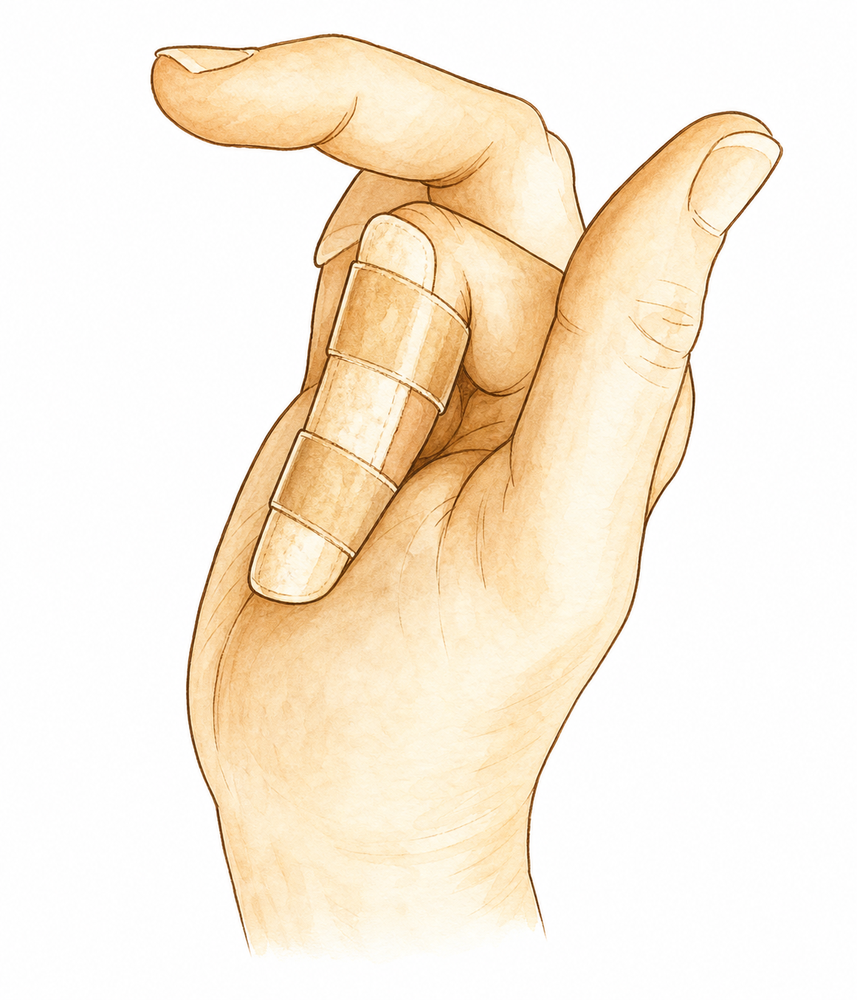
ڈی آئی پی (DIP) کو سیدھا رکھنے والا اسپلنٹ پہننا (انگلی کا سرا کبھی نہیں مڑنا چاہیے)
اپنا اسپلنٹ انگلی کے سرے کے جوڑ پر ہر وقت پہنیں — دن اور رات — تاکہ بالکل آخری جوڑ (ڈی آئی پی، یعنی ناخن کے سب سے قریب والا جوڑ) بالکل سیدھا رہے۔ یہ آپ کے علاج کا سب سے اہم حصہ ہے۔ انگلی کے سرے کو ایک لمحے کے لیے بھی ہرگز نہ مڑنے دیں: اگر یہ کسی بھی وقت لٹک جائے تو بھرنے کا عمل دوبارہ صفر سے شروع ہوتا ہے اور گنتی نئے سرے سے ہوتی ہے۔ دھوتے، سوتے اور کام کرتے وقت اسپلنٹ لگائے رکھیں، اور دیکھتے رہیں کہ اس کے اندر سرا ہمیشہ سیدھا رہے۔
مسلسل پہنا جائے — ٹینڈن والی میلٹ فنگر تقریباً 8 ہفتے، ہڈی والی میلٹ فنگر تقریباً 6 ہفتے
Kieran Hirpara 4.0
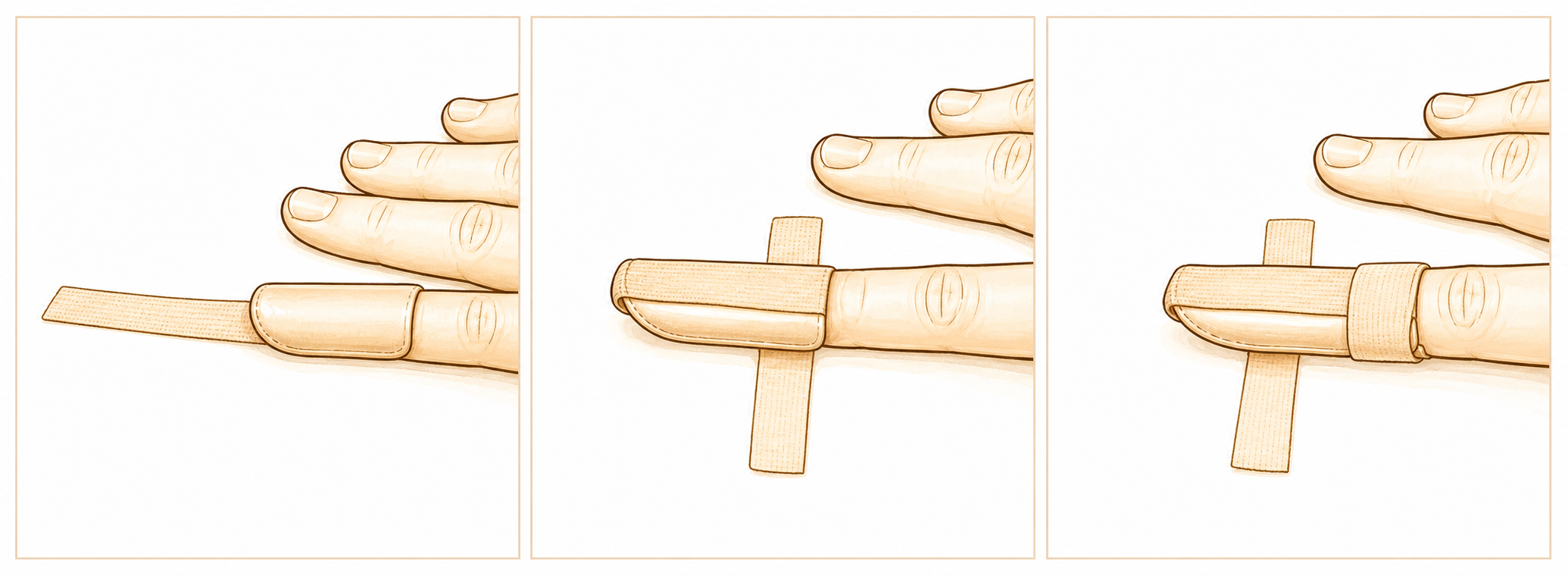
اسپلنٹ کو محفوظ طریقے سے بدلنا (انگلی کا سرا سیدھا رکھیں)
اسپلنٹ صرف جلد کو صاف اور خشک کرنے کے لیے اتارا جاتا ہے — اور صرف تب جب آپ پورے وقت انگلی کے سرے کو بالکل سیدھا رکھ سکیں۔ انگلی کو میز کے کنارے کے ساتھ سیدھا رکھیں تاکہ سرے کو سہارا ملے اور وہ نیچے نہ گر سکے، یا اپنے دوسرے ہاتھ سے اسے سیدھا تھامے رکھیں۔ پرانا اسپلنٹ سرکا کر اتاریں، صاف اور خشک کریں، پھر نیا اسپلنٹ سرکا کر چڑھائیں — یہ سب سرے کو ایک بار بھی مڑنے دیے بغیر۔ اگر آپ کو یہ کرنے کا اعتماد نہیں ہے تو یہ کام اپنے ہینڈ تھراپسٹ (ہاتھ کی بحالی کے ماہر) پر چھوڑ دیں۔
جلد کی دیکھ بھال کے لیے دن میں ایک بار، صرف انگلی کا سرا پوری طرح سیدھا رکھتے ہوئے
Kieran Hirpara 4.0
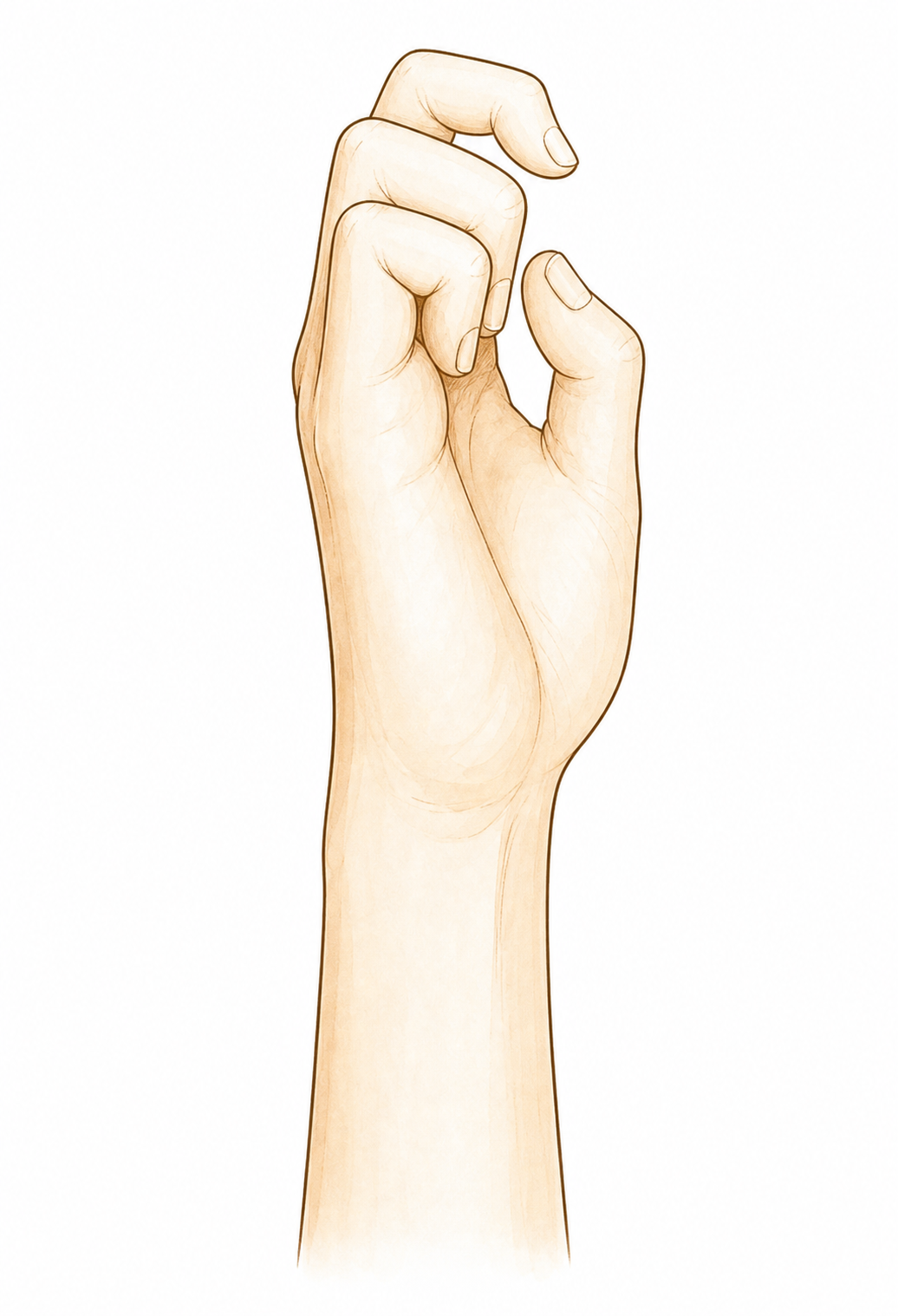
درمیانی جوڑ اور انگلی کے جوڑ (knuckle) کو حرکت دیتے رہیں (پی آئی پی اور ایم سی پی، PIP and MCP)
جب انگلی کا سرا اسپلنٹ میں سیدھا ہو، تو انگلی کے باقی جوڑوں کو حرکت دیتے رہیں تاکہ وہ اکڑ نہ جائیں۔ درمیانی جوڑ (پی آئی پی) اور انگلی کے جوڑ (ایم سی پی) کو پوری طرح اور آزادی سے موڑیں اور سیدھا کریں — ان جوڑوں کو حرکت دینا محفوظ ہے اور ان کی حرکت سرے پر بھرتے ہوئے ٹینڈن کو متاثر نہیں کرتی۔ آدھی مٹھی بنائیں اور پھر کھول دیں، اسپلنٹ والے سرے کو پورے وقت سیدھا رکھتے ہوئے۔
ہر جوڑ پر 10 بار، دن میں چند مرتبہ، اسپلنٹ لگا رہے

Kieran Hirpara 4.0
اسپلنٹ کے نیچے جلد اور سوجن کی دیکھ بھال
ہر روز، انگلی کے سرے کو سیدھا رکھتے ہوئے، جلد کو جانچیں — خاص طور پر جوڑ کے اوپر اور ناخن کے پاس۔ کچھ گلابی پن عام ہے، لیکن اگر جہاں اسپلنٹ دباتا ہے وہاں جلد سفید پڑ گئی ہو یا اس میں درد ہو، تو ہو سکتا ہے اسپلنٹ سرے کو بہت زیادہ پیچھے کی طرف رکھ رہا ہو؛ اپنے ہینڈ تھراپسٹ کو بتائیں تاکہ اسے ٹھیک کیا جا سکے۔ انگلی اور اسپلنٹ کو صاف اور خشک رکھیں، اور اگر ہاتھ سوج جائے تو اسے اونچا رکھیں (دل کی سطح سے اوپر)۔
روزانہ جانچیں؛ اگر جلد سفید پڑ جائے، اس میں درد ہو یا وہ پھٹ جائے تو بتائیں
Kieran Hirpara 4.0
انگلی کے سرے کو درجہ بدرجہ موڑنا (اسپلنٹ چھڑانے کا مرحلہ)
یہ بعد کی ورزش ہے — صرف تب جب آپ کا ہینڈ تھراپسٹ اسپلنٹ چھڑانا شروع کرے (عام طور پر تقریباً 6 سے 8 ہفتوں سے) اور سرے کا لٹکاؤ نہ ہو، یا صرف قابلِ قبول حد تک ہو۔ اسپلنٹ کے بغیر انگلی کے سرے کے جوڑ کو ہلکے سے تھوڑا سا موڑیں، پھر دوبارہ پوری طرح سیدھا کریں، آرام کی حد کے اندر اچھی طرح رہتے ہوئے۔ زور نہ لگائیں۔ اگر سرا دوبارہ لٹکنے لگے تو ہر وقت اسپلنٹ پہننے پر واپس جائیں اور اپنے تھراپسٹ کو بتائیں۔
چند ہلکے موڑ، صرف اسپلنٹ چھڑانے کے مرحلے میں ہدایت کے مطابق
یہ آپ کے ہینڈ آؤٹ کی ورزشیں ہیں۔ سب سے اہم "ورزش" بس یہ ہے کہ آپ اپنا اسپلنٹ صحیح طریقے سے پہنیں اور انگلی کے سرے کو ہر لمحہ سیدھا رکھیں؛ باقی سب کچھ اسی کے گرد بنا ہے۔ شروع میں آپ کا کام یہ ہے کہ اسپلنٹ لگائے رکھیں، جلد کو صحت مند رکھیں، اور انگلی کے باقی جوڑوں کو آزادی سے حرکت دیتے رہیں۔ انگلی کے سرے کو ہلکے سے موڑنے اور روک کر سیدھا کرنے (blocked straightening) کی ورزشیں بعد کے اسپلنٹ چھڑانے والے مرحلے کا حصہ ہیں اور جب تک آپ کا ہینڈ تھراپسٹ خاص طور پر انہیں شروع نہ کرائے، انہیں شروع نہیں کرنا چاہیے۔ جس چیز سے انگلی کا سرا لٹکنے لگے اسے بند کر دیں اور ہر وقت اسپلنٹ پہننے پر واپس جائیں۔
آپ کا کلینیکل پروٹوکول
اس صفحے کا باقی حصہ میلٹ فنگر کی اسپلنٹ پر مبنی بحالی کا مرحلہ وار کلینیکل پروٹوکول ہے۔ یہ حصہ ہینڈ تھراپسٹ کو دینے کے لیے ہے، اور ہر مرحلہ آسان زبان میں اس وضاحت سے شروع ہوتا ہے کہ کیا ہو رہا ہے۔ بھرنے کا انحصار ڈی آئی پی جوڑ کے بغیر وقفے کے سیدھا رہنے (uninterrupted DIP extension) پر ہے: ٹرمینل ٹینڈن (یا اکھڑا ہوا ہڈی کا ٹکڑا) صرف تب جڑتا ہے جب اسپلنٹ کی مدت کے دوران ڈی آئی پی کو کبھی مڑنے نہ دیا جائے، جبکہ پی آئی پی اور ایم سی پی آزاد رکھے جاتے ہیں، کیونکہ ان کی حرکت ٹرمینل ٹینڈن کے بھرنے میں خلل نہیں ڈالتی۔ نتیجے کا سب سے بڑا عنصر مریض کا ہدایات پر پوری طرح عمل کرنا ہے۔
علاج سے پہلے تصدیق کریں کہ میلٹ ٹینڈن والی ہے یا ہڈی والی اور امیجنگ کا جائزہ لیں۔ ڈی آئی پی کو سیدھا رکھنے والا آرتھوسس (DIP extension orthosis) استعمال کیا جاتا ہے: اسٹیک (Stack)، تھرموپلاسٹک، یا ہتھیلی کی طرف / پشت کی طرف (volar/dorsal) ایلومی فوم (alumifoam)؛ اسپلنٹ کی قسم سے نتیجے میں کوئی خاص فرق نہیں پڑتا، اس لیے اسے فٹنگ، جلد کی برداشت اور مریض کے عمل کرنے کو دیکھ کر چنیں۔ ڈی آئی پی کو پوری طرح سیدھا یا ہلکا سا زیادہ پیچھے (hyperextension) رکھیں، لیکن ضرورت سے زیادہ پیچھے موڑنے سے ہرگز بچیں (پشت کی جلد کے سفید پڑ جانے / زخم (ulcer) کا خطرہ)۔ ہڈی والی میلٹ فنگر میں ڈی آئی پی کو زیادہ پیچھے موڑنے کے بجائے سیدھا / نیوٹرل رکھنا بہتر ہے تاکہ آخری پور کی ہڈی (distal phalanx) ہتھیلی کی طرف نہ کھسکے (volar subluxation)۔ پی آئی پی کو ہمیشہ آزاد رکھا جاتا ہے۔
مرحلہ I — بغیر وقفے کے ہر وقت سیدھا رکھنے والا اسپلنٹ (ہفتہ 0 سے 6/8)
انگلی کے سرے کا جوڑ دن اور رات مسلسل سیدھا رکھا جاتا ہے تاکہ ٹینڈن یا ہڈی کا ٹکڑا بھر جائے۔ اسپلنٹ صرف جلد کی دیکھ بھال کے لیے اتارا جاتا ہے، اور صرف اس طرح کہ ڈی آئی پی پورے وقت سیدھا رہے؛ ڈی آئی پی کا ایک بار بھی مڑ جانا بھرنے کی گنتی دوبارہ شروع کر دیتا ہے۔ پی آئی پی اور ایم سی پی آزادی سے حرکت کرتے ہیں۔
آپ کے ہینڈ تھراپسٹ کے لیے:
ہدایات اور احتیاطیں - ڈی آئی پی کو سیدھا رکھنے والا آرتھوسس لگائیں (اسٹیک / تھرموپلاسٹک / ایلومی فوم)، ڈی آئی پی پوری طرح سیدھا یا ہلکا سا زیادہ پیچھے؛ ضرورت سے زیادہ پیچھے موڑنے سے بچیں (جلد کا سفید پڑ جانا / زخم)؛ ہڈی والی میلٹ ← سیدھا / نیوٹرل، زیادہ پیچھے مڑا ہوا نہیں (جوڑ کھسکنے کا خطرہ) - مسلسل پہننا: ٹینڈن والی تقریباً 8 ہفتے، ہڈی والی تقریباً 6 ہفتے؛ اس عرصے میں ڈی آئی پی کو کبھی بھی مڑنا نہیں چاہیے - ہموار سطح پر اسپلنٹ بدلنے کا طریقہ سکھائیں تاکہ ڈی آئی پی کو کبھی گرنے نہ دیا جائے؛ اگر مریض جوڑ کو سیدھا نہ رکھ سکے تو اسپلنٹ تھراپسٹ بدلے - پی آئی پی اور ایم سی پی آزاد رکھے جائیں اور پہلے دن سے فعال طور پر حرکت دی جائے
انتظام - جلد: ڈی آئی پی کی پشت اور ناخن کے کنارے کی روزانہ جانچ؛ اگر جلد سفید پڑے / دباؤ ہو تو آرتھوسس کو ٹھیک کریں؛ صاف اور خشک رکھیں - سوجن (oedema): ہاتھ کو اونچا رکھنا (دل کی سطح سے اوپر)؛ اوپر والے جوڑوں کی ہلکی حرکت - ورزشیں: پی آئی پی اور ایم سی پی کی مکمل فعال حرکت (ROM)؛ ڈی آئی پی کی کوئی حرکت نہیں - ہڈی والی میلٹ: اسپلنٹ کے دوران ایکسرے سے نگرانی جاری رکھیں (سیدھ / جوڑ کا کھسکنا)، کیونکہ ایکسٹینسر لیگ (سرے کے لٹکاؤ) کے لحاظ سے اسپلنٹ پن لگانے سے کم تر نہیں ہے لیکن ہڈی کے ٹکڑے کی پوزیشن کی نگرانی ضروری ہے
اگلے مرحلے میں جانے کے معیار - ہر وقت پہننے کی مدت مکمل (ٹینڈن والی تقریباً 8 ہفتے / ہڈی والی تقریباً 6 ہفتے) اور قابلِ قبول حد سے زیادہ ڈی آئی پی کا کوئی ایکسٹینسر لیگ نہیں (extensor lag)، اور جلد صحت مند
مرحلہ II — اسپلنٹ چھڑانا اور ڈی آئی پی کی قابو میں رکھی گئی حرکت شروع کرنا (ہفتہ 6/8، پھر مزید 2 سے 6)
جب ہر وقت پہننے کی مدت مکمل ہو جائے اور ایکسٹینسر لیگ نہ ہو، یا صرف قابلِ قبول حد تک ہو، تو اسپلنٹ کو رات کے وقت اور خطرے والی سرگرمیوں تک محدود کر دیا جاتا ہے جبکہ ڈی آئی پی کو ہلکے، قابو میں رکھے گئے طریقے سے موڑنا شروع کیا جاتا ہے۔ رات کا اسپلنٹ اختیاری بتایا جا سکتا ہے (ایک لیول I (Level-I) تحقیق نے اسے غیر ضروری پایا) اور عملی ضرورت کے مطابق استعمال کیا جاتا ہے۔ اگر نمایاں لیگ دوبارہ آ جائے تو مریض دوبارہ ہر وقت سیدھا رکھنے والے اسپلنٹ پر واپس جاتا ہے۔
آپ کے ہینڈ تھراپسٹ کے لیے:
جائزے - ڈی آئی پی کا فعال سیدھا ہونے میں لیگ (ڈگری میں) اور فعال طور پر مڑنا؛ جلد؛ اسپلنٹ کے بغیر سرے کے بارے میں مریض کا اعتماد
ہدایات اور احتیاطیں - مزید تقریباً 2 سے 6 ہفتوں کے لیے رات کے وقت + زیادہ خطرے والی سرگرمیوں میں اسپلنٹ تک کم کریں؛ موجودہ شواہد کے مطابق رات کو پہننا اختیاری ہے - اگر اسپلنٹ کے بعد 20 ڈگری سے زیادہ ایکسٹینسر لیگ دوبارہ آ جائے تو تقریباً 4 سے 6 ہفتوں کے لیے دوبارہ ہر وقت سیدھا رکھنے والا اسپلنٹ شروع کریں
انتظام - ورزشیں: ڈی آئی پی کو ہلکے، درجہ بدرجہ فعال طور پر موڑنا شروع کریں (پہلے چھوٹی حد) اور روک کر ڈی آئی پی کو فعال طور پر سیدھا کرنا (blocked active DIP extension — پی آئی پی کو ساکن رکھیں، ڈی آئی پی کو سیدھا کریں)؛ لیگ کی اجازت کے مطابق موڑنے کی حد بڑھائیں - جب ڈی آئی پی بغیر لیگ کے، یا قابلِ قبول لیگ (10 سے 20 ڈگری یا اس سے کم) کے ساتھ، خود سے سیدھا رہنے لگے تو دن کے وقت اسپلنٹ پہننا کم کریں - پی آئی پی / ایم سی پی کی مکمل حرکت جاری رکھیں؛ ضرورت کے مطابق زخم کے نشان / جلد کی دیکھ بھال - پرانی یا دیر سے سامنے آنے والی میلٹ فنگر بھی سیدھا رکھنے والے اسپلنٹ سے ٹھیک ہوتی ہے؛ دیر سے شروع کرنا اسپلنٹ نہ لگانے کی وجہ نہیں ہے
اگلے مرحلے میں جانے کے معیار - ڈی آئی پی قابلِ قبول لیگ کے ساتھ خود سے سیدھا رہے؛ ڈی آئی پی کا قابو میں رکھا گیا، بے درد موڑنا دوبارہ حاصل ہو؛ جلد صحیح سلامت ہو
مرحلہ III — طاقت بڑھانا اور واپسی (تقریباً ہفتہ 8 سے 12 کے دوران شروع)
جب ٹینڈن بھر جائے اور فعال حرکت دوبارہ حاصل ہو جائے تو انگلی سے اسپلنٹ پوری طرح چھڑا دیا جاتا ہے اور درجہ بدرجہ طاقت کی ورزشیں اور سرگرمیوں پر واپسی شروع ہوتی ہے۔ ایک چھوٹا مستقل ایکسٹینسر لیگ (اوسطاً تقریباً 8 ڈگری) متوقع ہے اور بہترین عملی نتیجے کے ساتھ مطابقت رکھتا ہے۔
آپ کے ہینڈ تھراپسٹ کے لیے:
جائزے - ڈی آئی پی کا فعال سیدھا ہونے میں لیگ اور موڑنے کی حد؛ گرفت؛ بوجھ اور کھیل کے لیے تیاری
ہدایات اور احتیاطیں - روزمرہ استعمال اسپلنٹ کے بغیر؛ واپسی کے دوران ایسے کھیلوں کے لیے حفاظتی اسپلنٹ جن میں کھلاڑی آپس میں ٹکراتے ہیں (contact sport) - مریض کو سمجھائیں کہ تقریباً 5 سے 10 ڈگری کا باقی رہ جانے والا ایکسٹینسر لیگ عام ہے اور اطمینان پر اثر نہیں ڈالتا
انتظام - ورزشیں: درجہ بدرجہ گرفت اور چٹکی کی گرفت کی طاقت؛ پوری انگلی کی مکمل حرکت (ROM)؛ کام اور کھیل کے مطابق پیش رفت - معیارات کی بنیاد پر تقریباً 8 سے 12 ہفتوں سے کھیل / بھاری کام پر واپسی (ٹکراؤ والے کھیل کے لیے حفاظتی اسپلنٹ) - جب طاقت اور کارکردگی کافی ہو اور لیگ مستحکم ہو تو علاج ختم کریں؛ اگر نمایاں لیگ برقرار رہے یا دوبارہ آ جائے تو واپس ریفر کریں
کام اور سرگرمیوں پر واپسی
اسپلنٹ والے ہاتھ کا ہلکا استعمال شروع سے ٹھیک ہے: اسپلنٹ لگا رہتا ہے، انگلی کا سرا سیدھا رہتا ہے، اور اس حد کے اندر آپ ہاتھ کو روزمرہ کاموں کے لیے استعمال کر سکتے ہیں۔ جب تک انگلی کے سرے کا اسپلنٹ لگا ہو، آپ کو گاڑی نہیں چلانی چاہیے: گاڑی چلانا تب تک انتظار کرتا ہے جب تک اسپلنٹ اتر نہ جائے اور آپ اسٹیئرنگ کو مضبوطی سے پکڑ کر گاڑی کو محفوظ طریقے سے قابو میں نہ رکھ سکیں، جس کی تصدیق آپ کے معائنے پر ڈاکٹر ہِرپرا کے ساتھ کی جائے۔ گرفت اور طاقت کی ورزشیں تقریباً چھ سے آٹھ ہفتوں سے بڑھتی ہیں، جیسے جیسے اسپلنٹ چھڑایا جاتا ہے۔ کھیل اور زیادہ بھاری جسمانی مشقت والے کام پر واپسی عام طور پر تقریباً آٹھ سے بارہ ہفتوں سے ہوتی ہے، جس کا فیصلہ صرف کیلنڈر کے بجائے قابو میں رکھی گئی حرکت دوبارہ حاصل ہونے پر ہوتا ہے، اور اس واپسی کے دوران ٹکراؤ والے کھیلوں کے لیے حفاظتی اسپلنٹ پہنا جاتا ہے۔ انگلی کے سرے کا تقریباً پانچ سے دس ڈگری کا ہلکا سا مستقل لٹکاؤ متوقع رکھیں؛ یہ عام ہے، ہاتھ کے کام پر اثر نہیں ڈالتا، اور زیادہ تر لوگوں کو یہ مشکل سے ہی محسوس ہوتا ہے۔
آپ کے پروٹوکول کے بعد
یہ پروٹوکول کلینک کی صحت یابی سے متعلق عمومی ہدایات کے ساتھ کام کرتا ہے؛ دیکھیں آپریشن کے بعد درد پر قابو پانا، زخم کی دیکھ بھال اور زخم کے نشان کی دیکھ بھال۔ اوپر دیا گیا مرحلہ وار منصوبہ میلٹ فنگر کے اسپلنٹ کے بارے میں شائع شدہ رہنمائی کی عکاسی کرتا ہے، اور آپ کی آگے کی صحت یابی کی رہنمائی ڈاکٹر ہِرپرا اور آپ کا ہینڈ تھراپسٹ ذاتی طور پر کرتے ہیں، اس بات کے مطابق کہ آپ کی انگلی کا سرا کیسے ترقی کر رہا ہے۔
اگر آپ کی میلٹ فنگر کو آپریشن سے ٹھیک کیا جائے تو ایک نوٹ
زیادہ تر میلٹ فنگر کو کبھی آپریشن کی ضرورت نہیں ہوتی۔ سرجری پر صرف ہڈی والی میلٹ فنگر میں غور کیا جاتا ہے جب فریکچر (ہڈی کا ٹوٹنا) جوڑ کی سطح کے بڑے حصے (تقریباً ایک تہائی سے زیادہ) کو متاثر کرے یا جب آخری جوڑ اپنی جگہ سے کھسک رہا ہو (volar subluxation)۔ جب فکسیشن کی جاتی ہے تو عام طور پر یہ ایکسٹینشن بلاک (Ishiguro) کے وائرنگ (K-wiring، باریک تاروں سے ہڈی کو جوڑنا) ہوتی ہے، کبھی ایک عارضی تار کے ساتھ جو انگلی کے سرے کے جوڑ کے آر پار ڈال کر اسے سیدھا رکھا جاتا ہے۔ یہ تار عام طور پر تقریباً چار سے چھ ہفتے لگا رہتا ہے اور تقریباً پانچ سے چھ ہفتے پر نکال دیا جاتا ہے، جس کے بعد انگلی کے سرے کی فعال حرکت شروع ہوتی ہے اور تقریباً مزید چار ہفتوں تک رات کا اسپلنٹ پہنا جا سکتا ہے۔ شواہد بتاتے ہیں کہ آخری لٹکاؤ کی مقدار کے لحاظ سے اسپلنٹ پن لگانے سے کم تر نہیں ہے، اس لیے آپریشن معمول کے طور پر نہیں بلکہ اوپر بیان کی گئی مخصوص صورتوں کے لیے رکھا جاتا ہے۔
Evidence & references
This is the clinical evidence summary written for health professionals. It is technical, and it lists the research this page was built from. You do not need to read it to understand your treatment or to make a decision about it.
Mallet Finger — Injury Outcomes & Splint-Led Rehabilitation (Terminal Extensor Tendon, DIP)
Topic scope: non-operative (and, where indicated, post-fixation) management of a mallet finger — disruption of the terminal extensor tendon at the distal interphalangeal (DIP) joint, either purely tendinous or with an avulsion bony fragment (bony mallet). This is a healing injury, not a reconstruction: the entire treatment is uninterrupted DIP extension splinting that holds the tendon (or fragment) in apposition while it unites, with the PIP and MCP left free.
Defining principle of the rehab here: the terminal extensor tendon heals only if the DIP is held in continuous extension and is never allowed to flex during the splinting period. Any single lapse into DIP flexion separates the healing ends and restarts the healing clock, which is why patient compliance is the dominant outcome driver. The PIP is deliberately kept mobile because proximal-joint motion does not disturb terminal-tendon healing. Splint type (Stack, thermoplastic, volar/dorsal alumifoam) does not materially change the outcome — fit, skin tolerance and compliance matter more than the device. The single branch point is the bony mallet with a large articular fragment or DIP volar subluxation, where surgical fixation is considered; even there, splinting is non-inferior to pinning for the final extensor lag, so operation is reserved rather than routine.
A. INJURY OUTCOMES (tendinous vs bony mallet; splinting vs fixation)
Mallet finger is one of the most reliably treated closed tendon injuries in the hand: the great majority heal well with splinting alone, and the principal debate is over the bony mallet — when, if ever, to fix it.
- Continuous extension splinting is the standard of care and works well for both tendinous and bony mallets, including chronic and delayed presentations, which still respond to splinting weeks after injury [Valdes systematic review LoE 1a; Salazar Botero review; Medscape; StatPearls]. Strong (SR + reviews).
- Splint type makes no meaningful outcome difference. A randomised comparison of splint designs found no superiority of one orthosis over another; the determinant is uninterrupted DIP extension and compliance, not the device [Pike RCT]. Strong (RCT).
- Splinting is non-inferior to extension-block pinning for the final extensor lag. A randomised trial comparing conservative extension splinting with operative extension-block K-wiring for bony mallet found no advantage to pinning in the residual lag, supporting non-operative management as the default even for many bony mallets [Thillemann RCT]. Strong (RCT).
- Surgery is reserved for the large bony fragment or subluxating DIP. Operative fixation is
considered when the fracture involves a large part of the articular surface (often cited as
~30%) or there is volar subluxation of the distal phalanx; common techniques are extension-block (Ishiguro) K-wiring with or without a trans-articular DIP pin. Single-K-wire constructs perform less well in non-compliant settings [Aksan; Salazar Botero; Medscape]. Moderate.
- Stack splints can subluxate a bony mallet. Volar-based Stack-type orthoses holding the DIP in hyperextension can displace a bony-mallet fragment / promote subluxation, which is why a straight/neutral DIP is preferred for bony mallets rather than hyperextension [Kaplan]. Moderate (mechanistic/clinical).
- The underlying mechanism is a terminal tendon avulsion at the distal phalanx. Anatomical and injury studies characterise the lesion as avulsion of the terminal extensor at its distal-phalanx insertion, and a very small amount of tendon lengthening translates into a large extensor lag — roughly 1 mm of lengthening ≈ 25° of lag — which is the biomechanical reason apposition must be maintained so strictly [Tuttle; Yeh; PMC current concepts]. Mechanistic.
B. REHABILITATION / THERAPY EVIDENCE
The central rehab questions are (1) how long and how strictly to splint, (2) whether the PIP should be included, and (3) whether night-time and post-splinting splinting are needed. The evidence supports uninterrupted full-time DIP extension splinting (~6–8 weeks) with the PIP free, followed by a weaning phase, and downgrades routine night-splinting to optional.
- Uninterrupted DIP extension is the active ingredient; the PIP must stay free. Splinting holds the DIP in full extension (or slight hyperextension) continuously; the PIP and MCP are mobilised from the outset because proximal-joint motion does not load the terminal tendon. Full-time wear is about 8 weeks for tendinous and 6 weeks for bony mallets [Valdes SR 1a; Salazar Botero; StatPearls; Physiopedia]. Strong (SR + guideline-level reviews).
- Compliance is the dominant outcome driver. Because any DIP flexion restarts healing, outcome tracks adherence to continuous extension more than any device choice; patient education and a safe flat-surface splint-change technique are central [Valdes SR; Cook BAHT survey of therapist practice]. Strong (mechanism + practice consensus).
- Avoid excessive hyperextension. Holding the DIP in marked hyperextension risks dorsal-skin blanching and pressure ulceration over the joint; slight hyperextension or neutral is sufficient, and bony mallets should be held straight/neutral to avoid fragment subluxation [Azad dorsal splinting outcomes; Kaplan]. Moderate.
- Night-time splinting after the full-time phase is non-essential (optional). A Level-I study found that continued night-splinting after the primary full-time period was not essential to the result, so the ~2–6 week post-splinting night/risky-activity phase is framed as optional and pragmatic rather than mandatory [Valdes SR 1a evidence base]. Moderate (Level I within SR).
- Recurrent lag responds to re-splinting. If an extensor lag (>~20°) recurs after the splinting period, a further ~4–6 weeks of full-time extension splinting is appropriate; chronic/delayed mallets likewise still respond [Salazar Botero; Medscape; StatPearls]. Moderate.
- A small residual extensor lag is the expected, satisfactory result. Most patients are left with a slight permanent lag (mean ~8°, typically 5–10°) that does not impair function or satisfaction; this should be counselled as normal rather than as failure [Salazar Botero; PMC current concepts; Physiopedia]. Moderate–strong (natural history).
Recovery trajectory (expected, evidence-anchored)
| Phase | Window | Restraint | Hand use / therapy focus | Strength / load | Notes |
|---|---|---|---|---|---|
| I — Continuous DIP extension splinting | Week 0–6/8 (bony ~6, tendinous ~8) | DIP held continuously extended; never flex the DIP | Full-time extension orthosis (Stack/thermoplastic/alumifoam); flat-surface splint changes only; PIP + MCP moved freely from day 1; daily dorsal-skin checks | No DIP loading; light splinted hand use | Any DIP flexion resets the clock; bony mallet held straight/neutral + radiographic surveillance |
| II — Weaning & controlled DIP motion | +2–6 weeks after full-time phase | Night / high-risk-activity splinting (night wear optional) | Begin gentle graded active DIP flexion + blocked active DIP extension; reduce day wear once lag ≤10–20° | Light functional load | Lag >20° recurring → re-splint full-time ~4–6 wk; chronic mallets still respond |
| III — Strengthening & return | From ~week 8–12 | None (protective splint for contact sport) | Splint-free use; graded grip/pinch strengthening; full ROM; sport-/work-specific progression | Grip/strength built up; driving once able to grip the wheel safely | Expect ~5–10° permanent lag (mean ~8°) — normal, satisfaction preserved |
(Phase windows mirror the precautions in the patient protocol; they are typical guides, not trial-derived deadlines.)
C. KEY CONTROVERSIES / EVIDENCE QUALITY
- Splint type. Stack vs thermoplastic vs volar/dorsal alumifoam — randomised data show no meaningful outcome difference; the determinant is uninterrupted extension and compliance, not the device [Pike RCT]. Strong evidence of equivalence.
- Splinting vs operative fixation for bony mallet. Randomised data show extension splinting is non-inferior to extension-block pinning for the residual lag; surgery is reserved for the large articular fragment (>~30%) or volar DIP subluxation, not used routinely [Thillemann RCT; Aksan; Salazar Botero]. Strong (RCT) for non-inferiority; moderate for the fixation indications.
- Hyperextension vs neutral. Slight hyperextension aids tendinous apposition but excessive hyperextension risks dorsal-skin ischaemia/ulcer, and in bony mallets can subluxate the fragment — hence straight/neutral for bony mallets [Azad; Kaplan]. Moderate.
- Is night-splinting necessary? A Level-I study found continued night-splinting after the full-time phase non-essential; the post-splinting phase is therefore optional/pragmatic rather than mandatory [Valdes SR 1a]. Moderate.
- Residual lag as expected outcome, not failure. A small permanent lag (mean ~8°) is the norm and is compatible with full function and satisfaction; mislabelling it as failure drives unnecessary intervention [Salazar Botero; PMC current concepts]. Strong natural-history data.
D. EVIDENCE STRENGTH FLAGS (summary)
- STRONG (RCT / SR): uninterrupted DIP extension splinting as standard of care (6–8 wk full-time, tendinous ~8 / bony ~6); splint-type equivalence; PIP-free mobilisation; compliance as the key outcome driver; expected ~5–10° residual lag; splinting non-inferior to pinning for bony mallet (with radiographic surveillance during splinting).
- MODERATE: exact length of the weaning/night-splinting phase (night wear non-essential per a Level-I study); strengthening and return-to-sport/work timing (~8–12 weeks, criterion-based); hyperextension-vs-neutral splint positioning and the bony-mallet subluxation caveat; surgical indications (>~30% articular fragment / volar subluxation) and fixation technique.
- WEAK / CONFIRM: driving — a fingertip splint is not usually a contraindication once the wheel can be gripped safely, but this is confirmed clinically rather than evidence-defined.
CITATIONS
RAG corpus (180,000+ Orthopaedic articles)
- A randomized controlled trial comparing splint designs for mallet finger. J Hand Surg Am. 2010. DOI: 10.1016/j.jhsa.2010.01.005
- Conservative management of mallet finger: a systematic review (Level of Evidence 1a). J Hand Ther. 2015. DOI: 10.1016/j.jht.2015.03.001
- Mallet finger: a survey of British Association of Hand Therapists practice. Hand Therapy. 2016. DOI: 10.1177/1758998316664822
- The mallet finger injury: a review (current concepts in diagnosis and management). Arch Plast Surg. 2016. DOI: 10.5999/aps.2016.43.2.134
- Outcomes of dorsal splinting for mallet finger. Hand (N Y). 2022. DOI: 10.1177/15589447221093674
- Conservative splinting versus extension-block K-wiring for bony mallet finger: a randomized controlled trial. J Hand Surg (Eur Vol). 2020. DOI: 10.1177/1753193420917567
- Tendon avulsion fractures of the distal phalanx (terminal extensor avulsion). Clin Orthop Relat Res. 2006. DOI: 10.1097/01.blo.0000205903.51727.62
- Tendon ruptures in the hand. Hand Clin. 2012. DOI: 10.1016/j.hcl.2012.05.040
- Single K-wire fixation of bony mallet finger in non-compliant patients. Arch Orthop Trauma Surg. 2021. DOI: 10.1007/s00402-021-03793-4
- Subluxation of bony mallet fractures with Stack splint immobilisation. J Hand Surg Am. 2013. DOI: 10.1016/j.jhsa.2013.08.111
Mallet-finger management literature (URLs)
- Medscape — Mallet Finger Treatment & Management. https://emedicine.medscape.com/article/1242305-treatment
- StatPearls — Mallet Finger (NCBI Bookshelf). https://www.ncbi.nlm.nih.gov/books/NBK459373/
- Current concepts in the management of mallet finger (PMC; ~1 mm terminal-tendon lengthening ≈ 25° extensor lag). https://pmc.ncbi.nlm.nih.gov/articles/PMC4022957/
- Physiopedia — Mallet Finger. https://www.physio-pedia.com/Mallet_Finger