Patients › Rehabilitation
Prótesis de hombro por fractura
Rehabilitation after hemiarthroplasty or reverse shoulder replacement for a proximal humerus fracture — slower than elective replacement while the tuberosities heal.
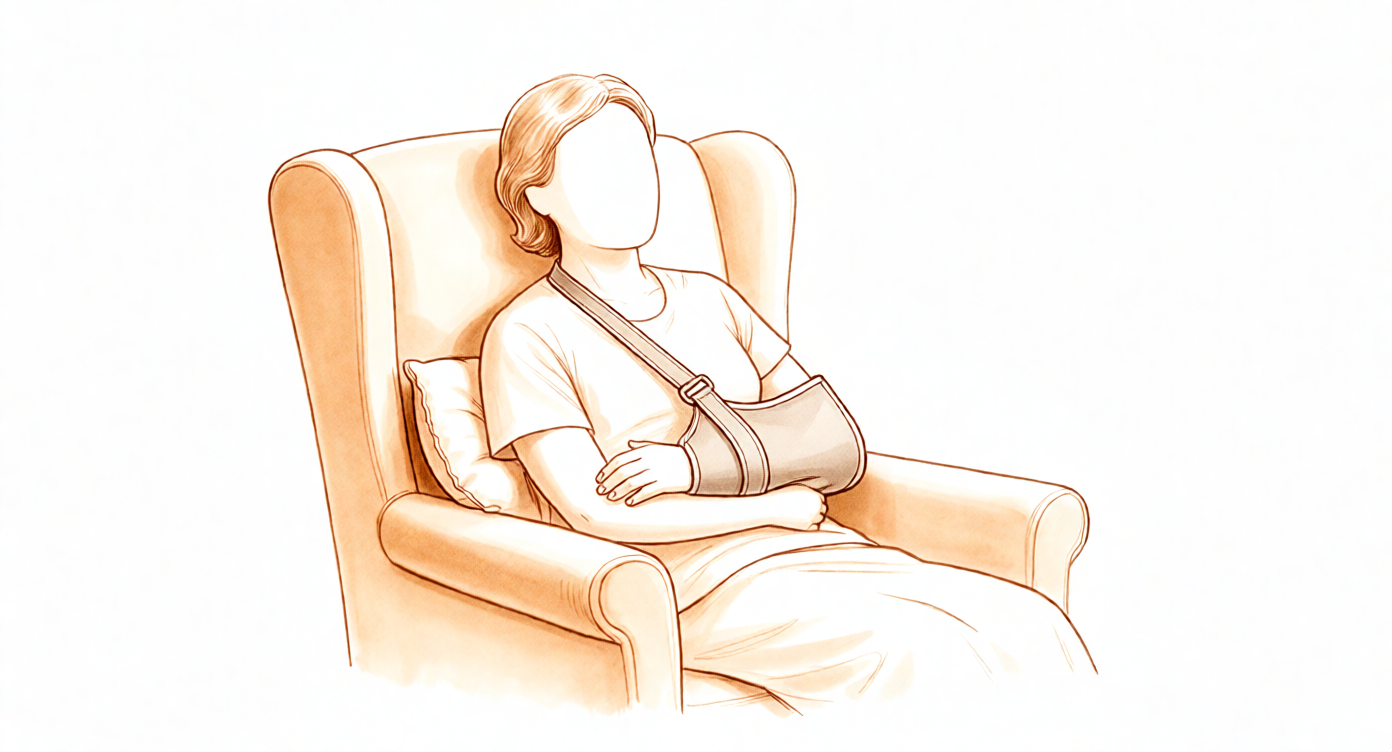
Este protocolo le servirá de guía para su recuperación tras una prótesis de hombro colocada por una fractura del hombro (fractura del húmero proximal), realizada por el Dr. Kieran Hirpara en el Mater Private Hospital Rockhampton. Según el tipo de fractura, la prótesis puede ser una artroplastia invertida de hombro o una hemiartroplastia (en la que solo se reemplaza la cabeza, la «bola» de la articulación). El proceso de rehabilitación sigue el mismo esquema en ambos casos, porque lo que marca el ritmo es la consolidación de los fragmentos óseos, no el tipo de implante. Cada fase comienza con una explicación sencilla, en lenguaje comprensible, sobre lo que ocurre y qué aspectos son más importantes; a continuación se detalla el protocolo estructurado destinado a su fisioterapeuta: lleve esta página o su versión en PDF a su primera sesión de fisioterapia para garantizar una rehabilitación coordinada. Su fisioterapeuta podrá modificar el plan según el progreso de su recuperación.
Si tiene alguna duda respecto a la herida quirúrgica, no dude en contactar con el consultorio. A menudo resulta útil tomar una fotografía de la herida y enviarla por correo electrónico para su evaluación.
Por qué la recuperación es más lenta tras una fractura
Cuando se coloca una prótesis de hombro de forma programada por artrosis o por un manguito rotador desgastado, el hueso que rodea la nueva articulación está intacto y la rehabilitación puede avanzar al ritmo de la cicatrización de los tejidos blandos. Tras una fractura, la situación es distinta. Las dos prominencias óseas de la parte superior del húmero (las tuberosidades mayor y menor, donde se insertan los músculos del manguito rotador) suelen haberse desprendido, y durante la operación se suturan de nuevo en su posición alrededor de la nueva prótesis. Ahora esos fragmentos deben consolidar sobre el hueso y el implante, igual que cualquier otra fractura, y esto suele llevar desde varias semanas hasta algunos meses.
Los protocolos de rehabilitación publicados para la prótesis de hombro por fractura coinciden en este punto: el buen funcionamiento posterior del hombro depende en gran medida de que las tuberosidades consoliden en su posición, y el movimiento precoz o forzado (incluso el movimiento pasivo) puede tirar de la reparación y poner en riesgo esa consolidación. Por eso, el protocolo sigue el mismo camino que el protocolo de artroplastia invertida de hombro programada. Tras una fractura, ese mismo recorrido avanza más despacio, porque primero deben consolidar los fragmentos óseos. Cada paso adelante en su rehabilitación depende de dos condiciones a la vez: que haya transcurrido el tiempo suficiente y que las radiografías muestren que el hueso está consolidando, según se confirme en su revisión con el Dr. Hirpara.
Qué esperar
Al despertar, sentirá el brazo entumecido; normalmente la sensibilidad vuelve entre 6 y 12 horas después. En casos muy raros, el entumecimiento o la debilidad pueden persistir durante 2 o 3 días.
Al despertar de la operación, tendrá un cabestrillo y una almohadilla grande sobre el hombro. Esta almohadilla se retirará antes de darle el alta. Debajo de ella habrá un vendaje impermeable que cubre una tira de pegamento quirúrgico; puede dejarse tal cual durante 2 semanas. Los puntos de sutura son reabsorbibles y no es necesario retirarlos; sin embargo, es posible que queden pequeños extremos de hilo en cada extremo de la herida, los cuales se pueden cortar a ras de piel después de 2 semanas. Se le programará una cita con nuestra enfermera para revisar la herida 1–2 semanas tras la cirugía. Si no puede asistir a dicha revisión, podrá retirar el vendaje usted mismo después de 2 semanas.
Tiempos aproximados para volver a realizar actividades (más lentos que tras una prótesis programada, y siempre sujetos a cómo esté consolidando el hueso):
- Conducir: no durante al menos seis semanas (esto aplica a cualquier cirugía de hombro), ni mientras lleve el cabestrillo. La mayoría de las personas vuelven a conducir entre las 6 y las 12 semanas, una vez recuperados el movimiento y el control; coméntelo en su revisión.
- Nadar: braza a partir de los 4 meses aproximadamente; estilo libre más adelante, según se le indique en su revisión.
- Levantar peso: nada más pesado que una taza de café hasta aproximadamente las 12 semanas; a partir de las 12 semanas se van introduciendo gradualmente cargas ligeras; evite levantar objetos pesados durante 6 meses.
- Trabajo: trabajo sedentario: a partir de las 6 semanas aproximadamente, según su comodidad; trabajo manual: según las indicaciones del Dr. Hirpara.
Conviene también ajustar las expectativas desde el principio: tras una prótesis por fractura, el hombro no suele recuperar todo el rango de movimiento de un hombro sano. Los resultados publicados describen como resultado habitual un uso cómodo del brazo, con el dolor controlado, a la altura de la cintura y del hombro (y a menudo por encima de la cabeza), y el movimiento y la fuerza siguen mejorando durante 12–24 meses después de la cirugía.
Cómo usar el cabestrillo
El cabestrillo (inmovilizador de hombro) sostiene el hombro mientras consolidan los fragmentos óseos. Las instrucciones son sencillas:
- Úselo durante 6 semanas, también mientras duerme.
- Quíteselo únicamente para ducharse, para realizar los ejercicios una vez que le hayan enseñado cómo hacerlos, y mientras descansa en casa con el brazo apoyado en una almohada; siempre que no lleve el cabestrillo, mantenga el brazo junto al costado.
- No conduzca durante seis semanas, ni mientras lleve el cabestrillo.
- Aplique hielo si el hombro está hinchado o le duele, especialmente después de hacer ejercicio.
Su fisioterapeuta le ayudará a colocarse el cabestrillo al principio y le enseñará a manejarlo por sí mismo antes de que se vaya a casa. Es fundamental colocarlo correctamente, pues un cabestrillo suelto no le brinda el soporte necesario.
- Al colocarlo, asegúrese siempre de que el codo quede en la esquina del cabestrillo y bien apoyado.
- El extremo del cabestrillo, una vez bien ajustado, debe quedar cómodamente en la articulación del dedo meñique. Si la mano sobresale demasiado del cabestrillo, este no le ofrecerá el soporte adecuado.
- El cabestrillo cuenta con dos correas de velcro: una se coloca alrededor del cuello y la otra alrededor de la cintura.
- Una vez que haya posicionado correctamente el codo y el antebrazo, use el brazo sano para pasar la correa superior alrededor del cuello hacia delante y engancharla en el bucle superior del cabestrillo.
- Utilice el mismo método para colocar la correa inferior alrededor de la cintura, fijándola en el bucle inferior del cabestrillo.
Mientras use el cabestrillo, preste atención a su postura en todo momento y evite que sus hombros se hundan. Para mantener una buena postura, intente alinear las orejas, los hombros y las caderas. Una buena postura es importante para su espalda y ayuda a prevenir la rigidez en la articulación del hombro. Al sentarse, colocar una toalla enrollada en la zona lumbar puede servirle como recordatorio útil.
Sus primeros días en el hospital
Antes de que regrese a casa, los fisioterapeutas del hospital le enseñarán un programa sencillo. Es útil comprender tres términos que utilizarán. El rango de movimiento activo se refiere a los movimientos que usted realiza por sí mismo, sin ayuda ni asistencia. El rango de movimiento activo asistido implica usar el otro brazo (o un objeto, como un bastón) para ayudar a mover el brazo. El rango de movimiento pasivo significa que el brazo permanece completamente relajado mientras el otro brazo (o otra persona) realiza el 100 % del trabajo. Tras una prótesis por fractura, durante las seis primeras semanas el hombro operado solo se mueve de forma pasiva, y únicamente dentro de límites suaves; las articulaciones que usted mueve de forma activa son el codo, la muñeca y la mano.
Algunos consejos prácticos para estos primeros días:
- Debe dormir con el cabestrillo puesto.
- Aplique hielo para aliviar el dolor, si es necesario.
- Cuando lleve el cabestrillo, relaje el hombro y deje que el cabestrillo soporte el peso del brazo.
- Tome los analgésicos antes de hacer los ejercicios y antes de sus sesiones de fisioterapia.
- Puede sacar el brazo del cabestrillo para realizar los ejercicios o para ducharse.
- Debe llevar el cabestrillo durante 6 semanas, especialmente cuando salga de casa.
- Mantenga la mano del lado operado suavemente ocupada: se recomienda escribir, comer y usar el teléfono mientras el brazo descansa en el cabestrillo.
- A menos que haya optado por organizar su propia fisioterapia, ya se ha programado una cita para usted; los detalles figuran en su paquete de alta médica.
- Si presenta algún problema, comuníquese con la consulta o informe a su fisioterapeuta.
Fase I — Protección mientras consolida el hueso (Semanas 0–6)
Kieran Hirpara 4.0
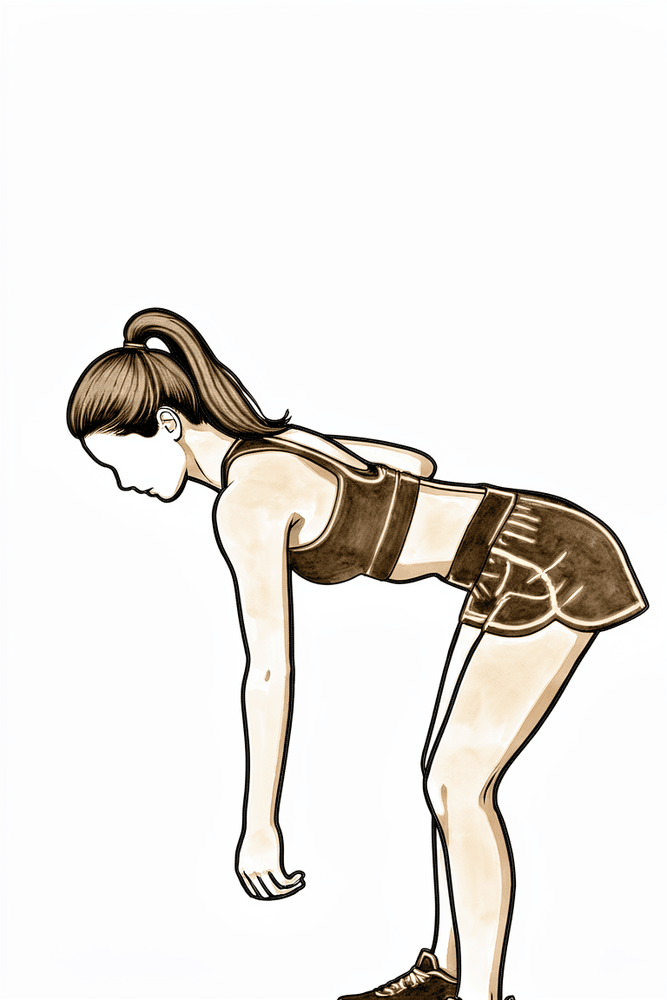
Ejercicios pendulares (completamente relajado)
Inclínese hacia delante, apoyándose en una mesa con la otra mano, y deje que el brazo operado cuelgue completamente relajado. Haga pequeños círculos balanceando suavemente el cuerpo: el brazo se mueve de forma pasiva y los músculos del hombro no realizan ningún esfuerzo. Si el brazo no se mantiene relajado, deténgase y pida a su fisioterapeuta que revise su técnica.
Según las indicaciones de su fisioterapeuta.
Kieran Hirpara 4.0
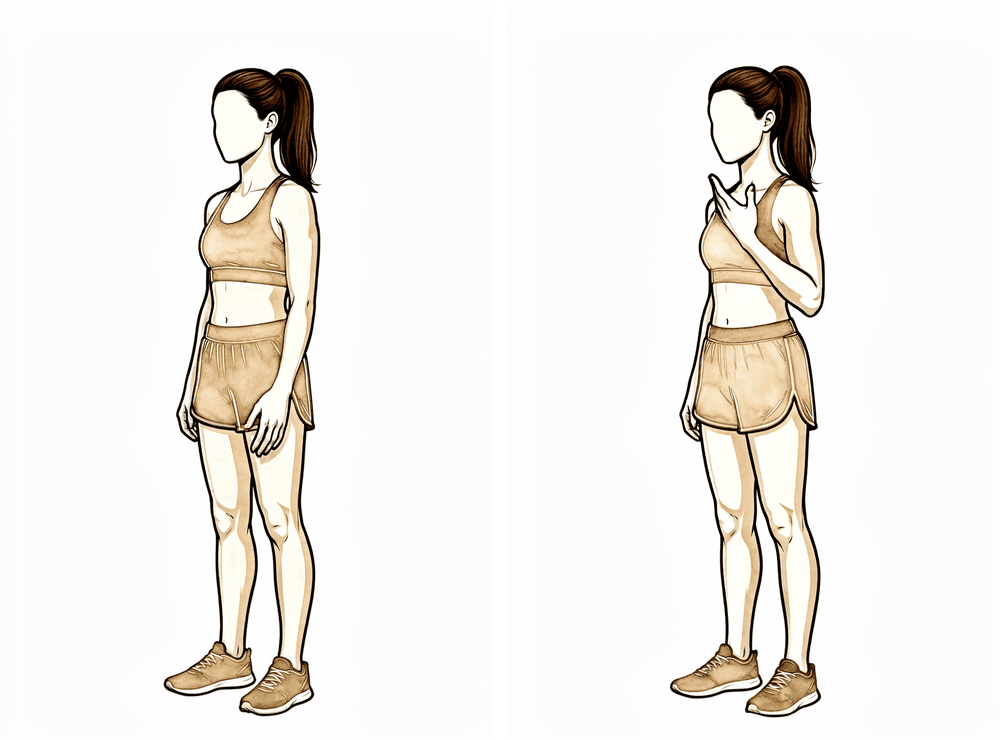
Flexión activa del codo
Con el brazo fuera del cabestrillo y la parte superior del brazo apoyada junto al costado, doble el codo tanto como le resulte cómodo y luego estírelo por completo. Solo se mueve el codo: mantenga el hombro quieto y el brazo junto al costado.
Según las indicaciones de su fisioterapeuta.
Kieran Hirpara 4.0
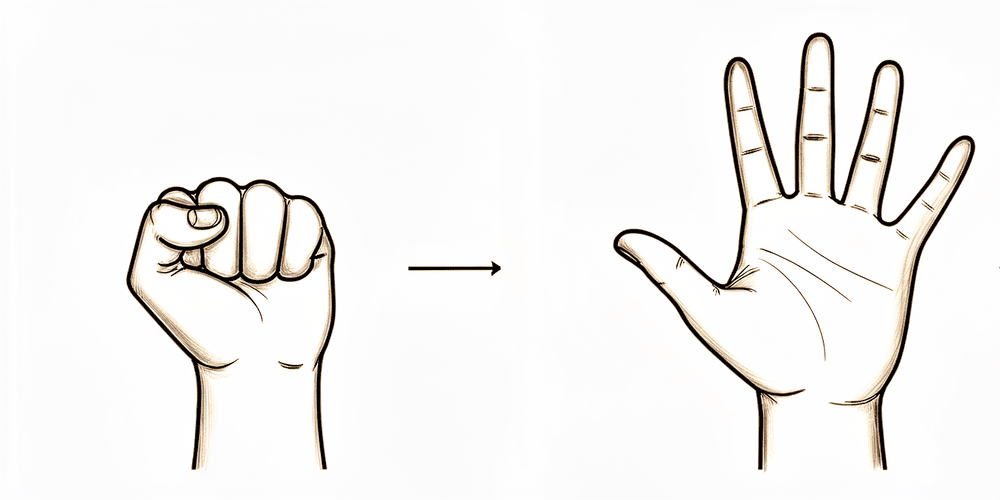
Abrir y cerrar la mano
Cierre el puño con fuerza y luego abra la mano, separando bien los dedos. Mantenga la mano suavemente ocupada durante el día: se recomienda escribir, comer y usar el teléfono mientras el brazo descansa en el cabestrillo.
Según las indicaciones de su fisioterapeuta.
Kieran Hirpara 4.0
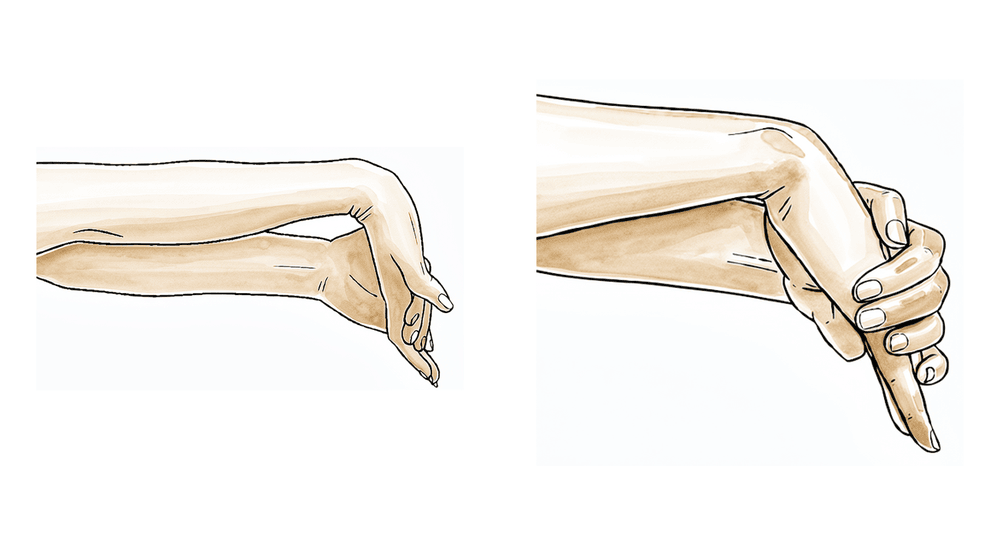
Movimiento de la muñeca
Con el brazo fuera del cabestrillo y apoyado junto al costado, mantenga la muñeca en movimiento doblándola hacia delante, hacia atrás y suavemente de lado a lado. Al igual que los ejercicios de codo y mano, esto mantiene flexible la parte inferior del brazo mientras el hombro está protegido.
Según las indicaciones de su fisioterapeuta.
Kieran Hirpara 4.0
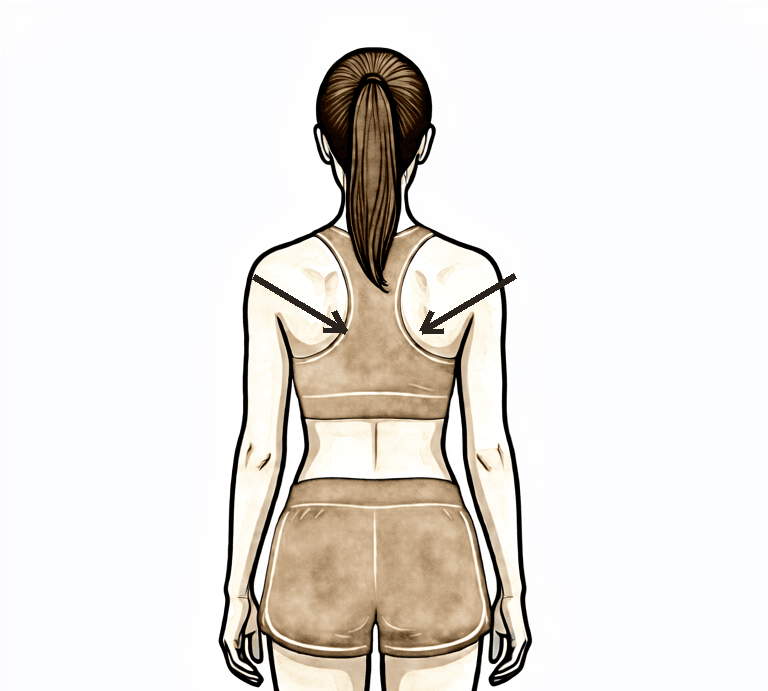
Fijación escapular y encogimientos de hombros
Sentado o de pie con la espalda recta, apriete suavemente los omóplatos hacia abajo y hacia dentro sin arquear la espalda, mantenga unos segundos y luego relaje. Añada encogimientos suaves de hombros: suba los hombros hacia las orejas y déjelos bajar. Mantenga una postura correcta durante el día: orejas, hombros y caderas alineados.
Según las indicaciones de su fisioterapeuta.
Las seis primeras semanas tienen un único objetivo: permitir que los fragmentos de las tuberosidades consoliden sobre el hueso y la prótesis sin ser alterados. Llevará el cabestrillo día y noche, mantendrá en movimiento el codo, la muñeca y la mano, y el hombro solo se moverá de forma pasiva (con suavidad, por su fisioterapeuta o con el brazo completamente relajado) dentro de los límites que se indican a continuación. Las reglas más importantes: no mueva el hombro de forma activa, no gire el brazo hacia fuera más allá de los límites, no lleve la mano detrás de la espalda, no levante nada y no se impulse apoyándose en las manos. Si le han colocado una prótesis invertida, estas reglas también protegen la nueva articulación frente a una luxación mientras cicatrizan los tejidos blandos. Al acostarse boca arriba, coloque una almohada pequeña o una toalla enrollada bajo el codo para que el hombro no se estire hacia atrás.
Para su fisioterapeuta:
Objetivos
- Proteger la reparación de las tuberosidades y la prótesis
- Reducir la hinchazón y minimizar el dolor
- Mantener el rango de movimiento (ROM) activo del codo, la muñeca y la mano
- PROM (rango de movimiento pasivo) suave y protegido del hombro dentro de la zona segura
- Mantener la conciencia escapular y postural
- Educación del paciente
Cabestrillo
- 6 semanas, también mientras duerme
- Se retira únicamente para el aseo y los ejercicios; fuera del cabestrillo, el brazo permanece junto al costado
Manejo
- Control de la hinchazón: hielo y compresión
- Rango de movimiento/movilidad:
- Solo PROM, dentro de la zona segura: elevación en el plano escapular ≤ 90 grados; rotación externa (RE) hasta la posición neutra (0 grados) durante las primeras 4 semanas y después ≤ 30 grados; sin rotación interna (RI) detrás de la espalda
- Péndulos, realizados con el brazo completamente relajado como ejercicio pasivo
- Rango de movimiento activo asistido (AAROM): ninguno para el hombro
- Rango de movimiento activo (AROM): codo, muñeca, mano y dedos; columna cervical
- Fijación escapular, encogimientos de hombros y corrección postural
- Fomentar el uso ligero de la mano con el cabestrillo puesto (escribir, comer, teléfono)
- Analgesia antes de los ejercicios y de las sesiones de fisioterapia
Precauciones
- Sin AROM ni AAROM del hombro
- Sin RE pasiva ni activa más allá de los límites anteriores (la rotación externa carga la reparación de la tuberosidad mayor)
- Sin rotación interna contra resistencia (la rotación interna carga la reparación de la tuberosidad menor/subescapular)
- No llevar la mano detrás de la espalda; evitar la combinación de aducción, rotación interna y extensión (posición de luxación de la prótesis invertida)
- No levantar objetos; no apoyar el peso corporal en las manos (por ejemplo, al impulsarse para levantarse de una silla o de la cama)
- Colocar una almohada pequeña o una toalla enrollada bajo el codo al acostarse boca arriba, para que el hombro no caiga en extensión
- No forzar ningún movimiento hasta provocar dolor
Criterios para avanzar
- Han transcurrido 6 semanas Y las radiografías muestran que las tuberosidades consolidan en su posición, según se confirme en su revisión con el Dr. Hirpara
- Dolor controlado con analgesia oral
- Sin problemas en la herida y sin signos de inestabilidad
Fase II — Recuperación del movimiento (Semanas 6–12)
Kieran Hirpara 4.0
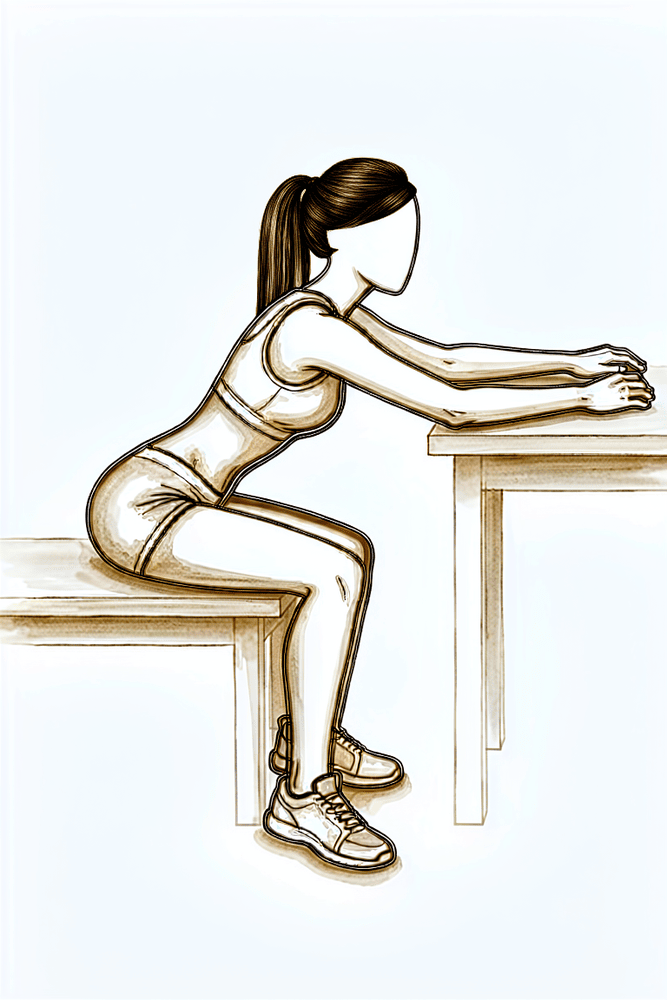
Deslizamientos en la mesa
Siéntese frente a una mesa con el antebrazo apoyado sobre ella. Inclínese suavemente hacia delante para que la mano se deslice por la mesa, dejando que esta soporte el peso del brazo, y luego vuelva a sentarse erguido. Avance dentro de lo cómodo: no fuerce hasta sentir dolor.
Según las indicaciones de su fisioterapeuta.
Kieran Hirpara 4.0
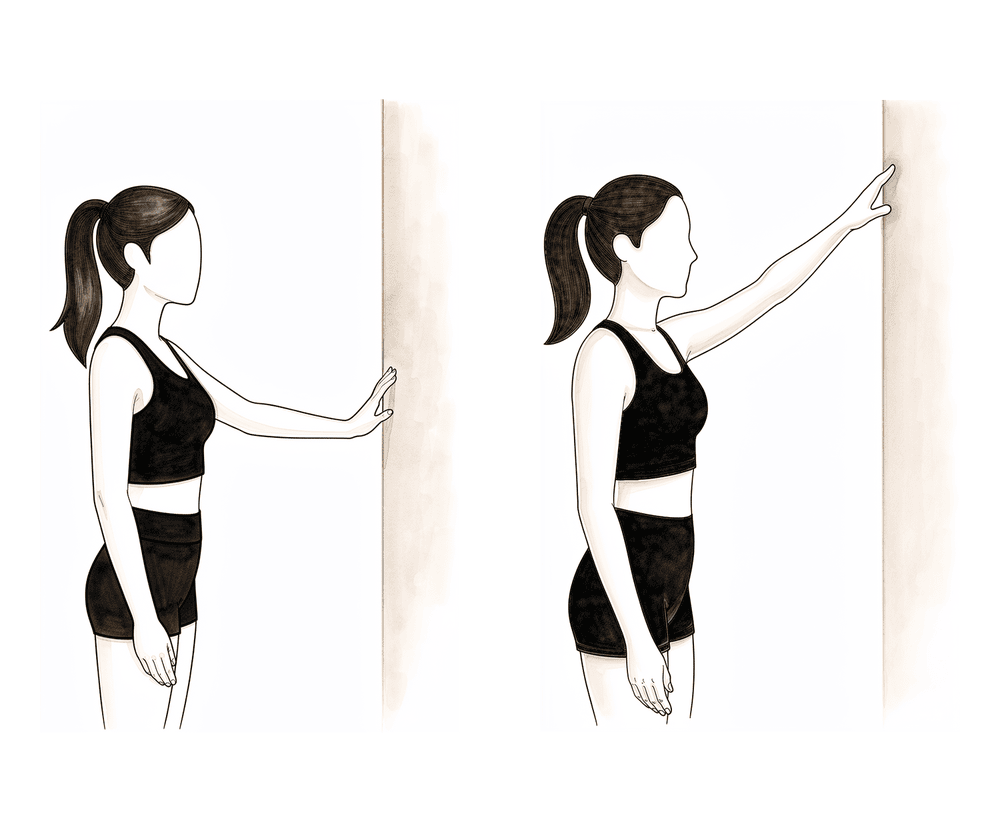
Escalada en pared (caminar con los dedos)
Colóquese de frente a una pared y suba los dedos por ella lentamente, como si caminaran, dejando que la pared soporte el peso del brazo; después bájelos de nuevo con control. Suba solo hasta donde le resulte cómodo, sin encoger el hombro ni arquear la espalda.
Según las indicaciones de su fisioterapeuta.
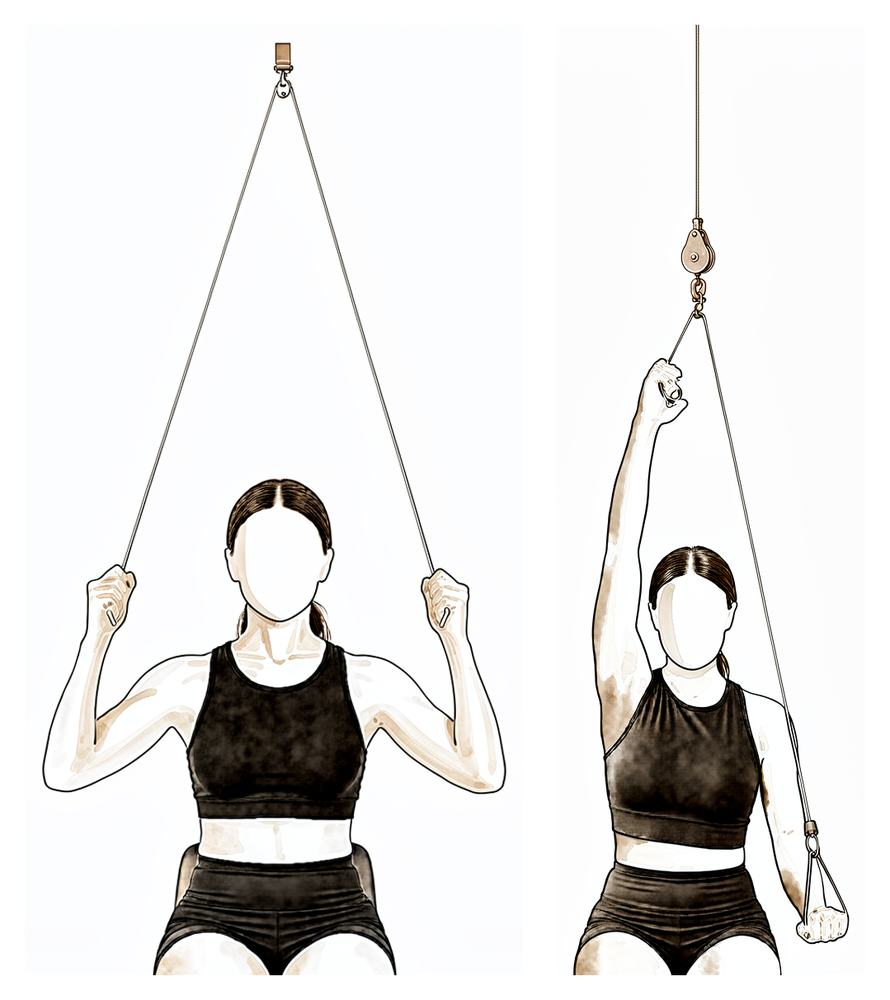
Kieran Hirpara 4.0
Flexión asistida con polea
Siéntese debajo de una polea colgada sobre la puerta. Con el brazo operado relajado, tire hacia abajo con la otra mano para que la cuerda eleve suavemente el brazo operado por delante de usted, y luego bájelo despacio. El brazo sano hace el trabajo: no fuerce el rango de movimiento.
Según las indicaciones de su fisioterapeuta.
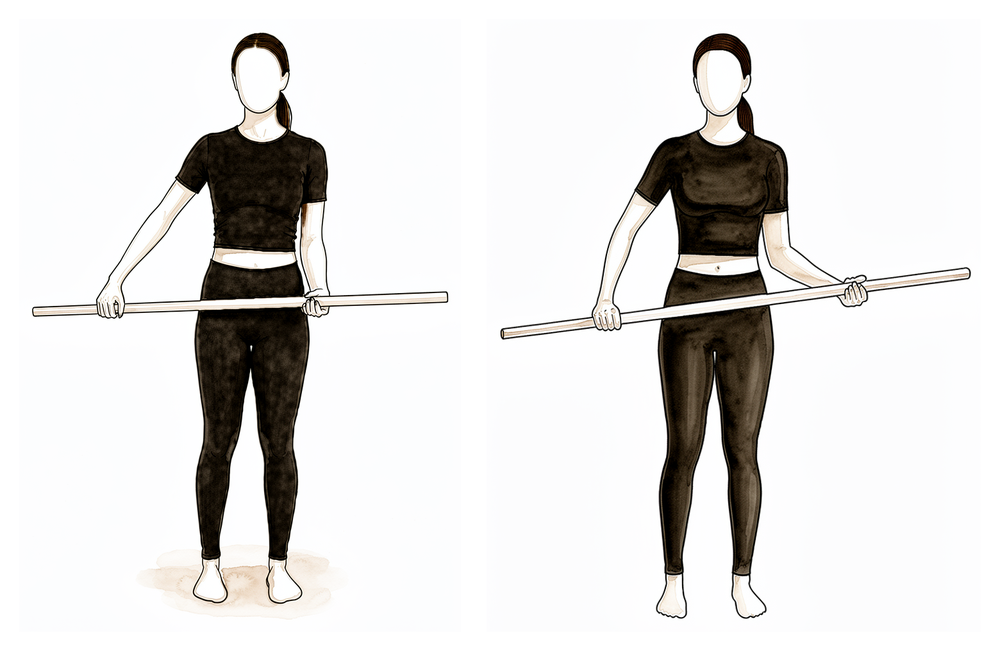
Kieran Hirpara 4.0
Rotación externa asistida con un palo
Acuéstese boca arriba sosteniendo un palo con ambas manos, con los codos doblados a 90 grados y pegados a los costados. Empuje con el brazo sano para que el antebrazo operado gire hacia fuera, sin pasar del límite acordado en su revisión, y luego vuelva. El brazo operado permanece relajado: nunca fuerce el movimiento.
Según las indicaciones de su fisioterapeuta.
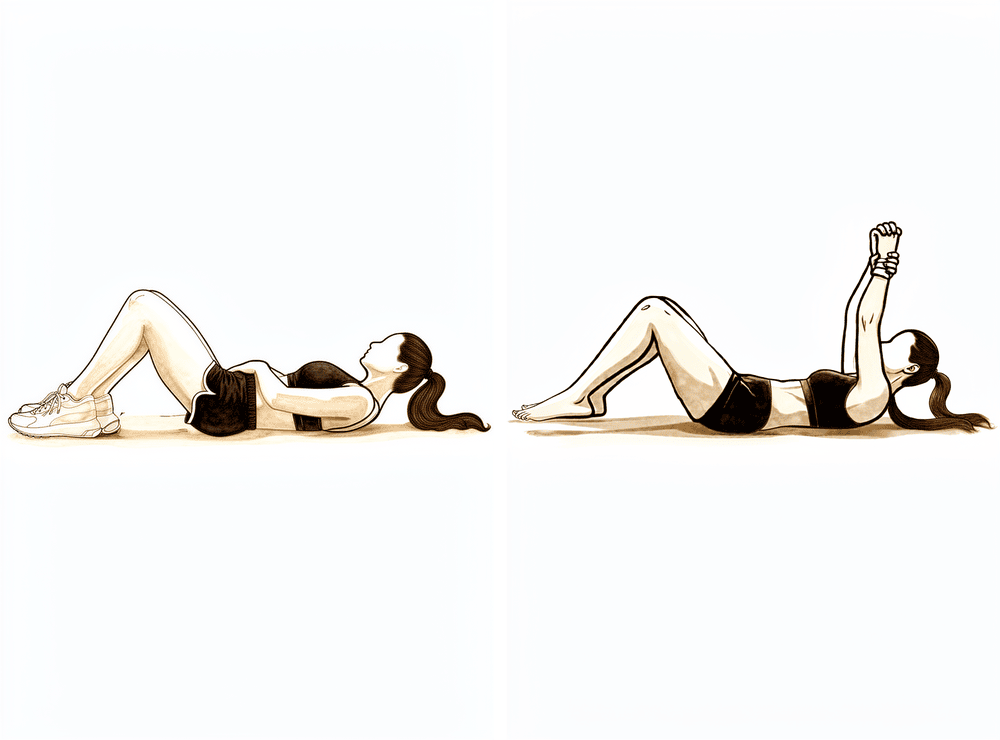
Kieran Hirpara 4.0
Flexión asistida (acostado)
Acuéstese boca arriba y use el brazo sano (o un palo sostenido con ambas manos) para ayudar a levantar el brazo operado por delante de usted, hasta donde le resulte cómodo, y luego bájelo de nuevo con la ayuda del brazo sano. El hombro operado permanece relajado y el brazo sano hace el trabajo, lo que ayuda a recuperar el rango sin forzar la reparación en proceso de consolidación.
Según las indicaciones de su fisioterapeuta.
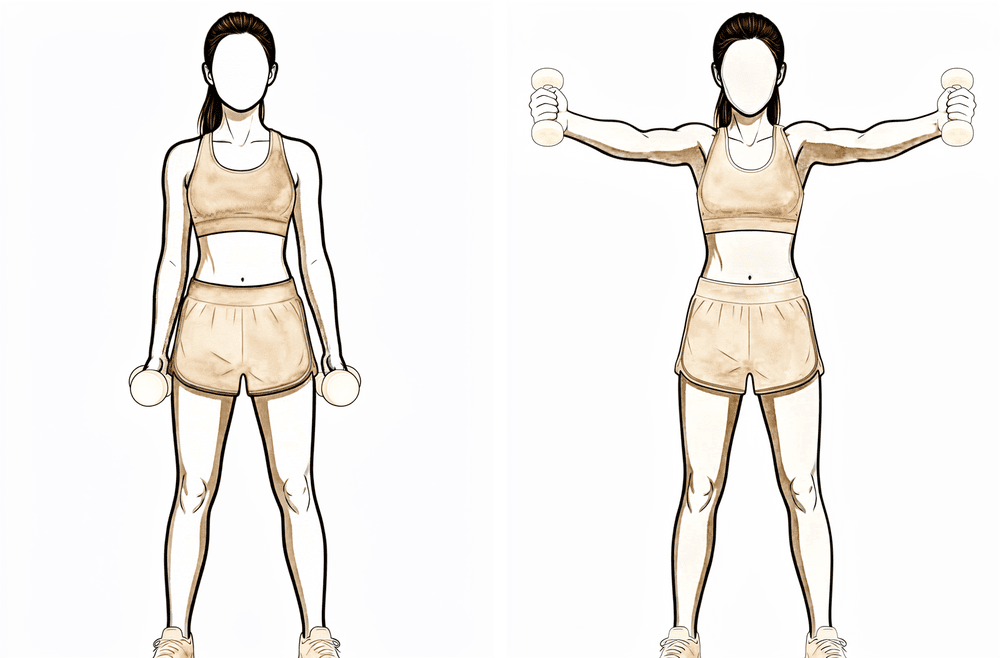
Kieran Hirpara 4.0
Elevación activa en el plano escapular (lata llena)
Una vez que su fisioterapeuta haya autorizado el movimiento activo, eleve el brazo en un ángulo de unos 45 grados entre el frente y el lateral, con el pulgar hacia arriba, como si sostuviera una lata llena. Suba solo hasta donde tenga buen control y luego baje despacio. Con este ejercicio comienza la elevación activa una vez que las tuberosidades han empezado a consolidar: no lo inicie antes.
Según las indicaciones de su fisioterapeuta.
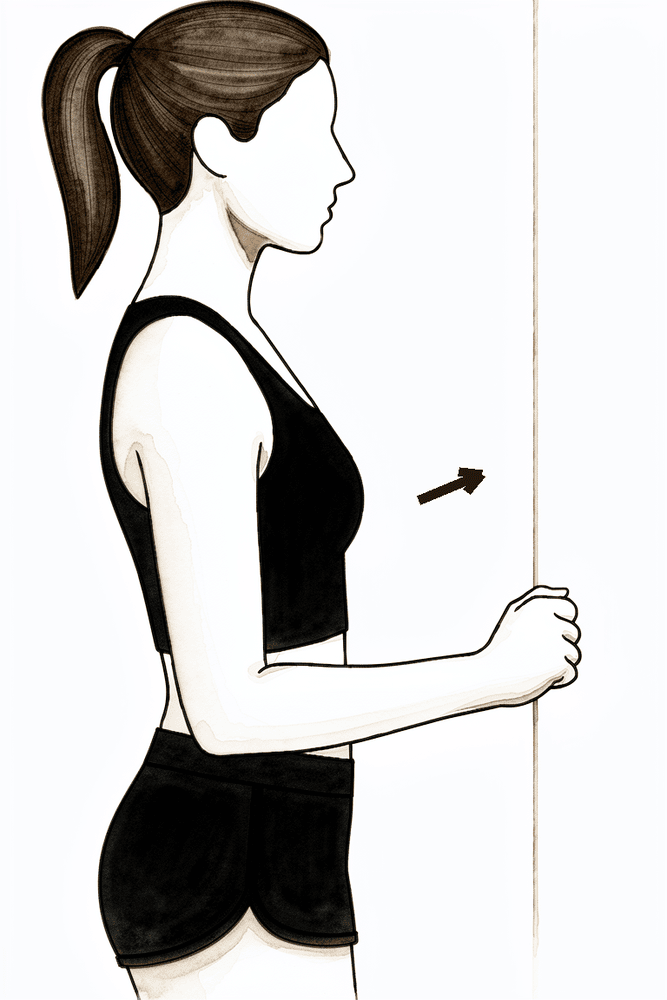
Kieran Hirpara 4.0
Presión isométrica hacia delante (deltoides)
Colóquese de frente a una pared con el codo doblado y una toalla doblada entre el puño y la pared. Presione el puño suavemente hacia delante contra la pared sin dejar que el brazo se mueva, mantenga unos segundos y luego relaje. Esto activa el deltoides sin movimiento: empiece solo al final de esta fase, con suavidad y sin dolor.
Según las indicaciones de su fisioterapeuta.
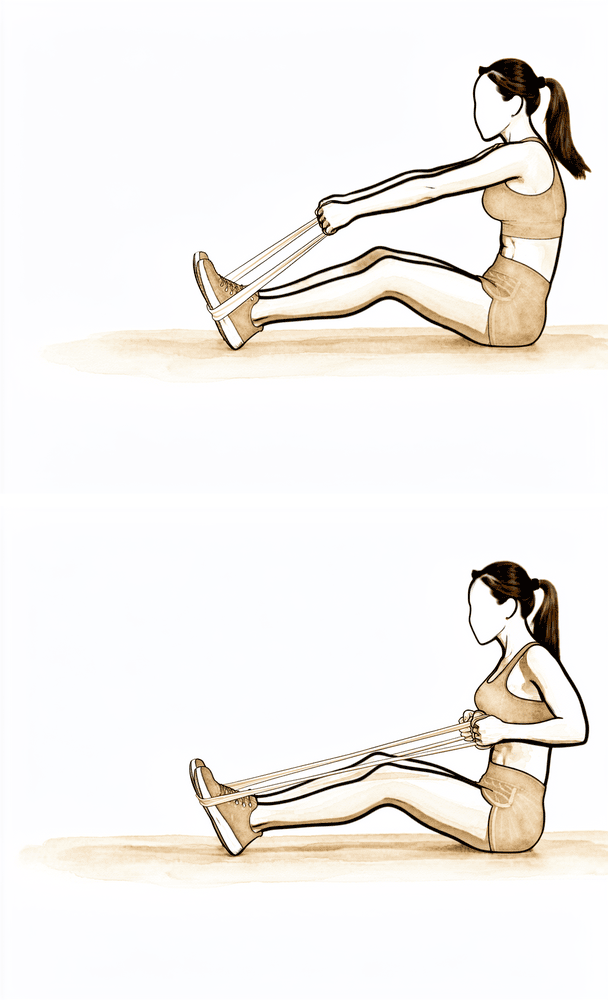
Kieran Hirpara 4.0
Remo bajo
Sentado o de pie con la espalda recta, lleve el codo hacia atrás y hacia abajo, en dirección a la cadera, apretando el omóplato hacia abajo y hacia atrás; mantenga un momento y luego suelte. Esto activa los músculos del omóplato que sostienen el hombro: hágalo de forma ligera y suave en esta fase.
Según las indicaciones de su fisioterapeuta.
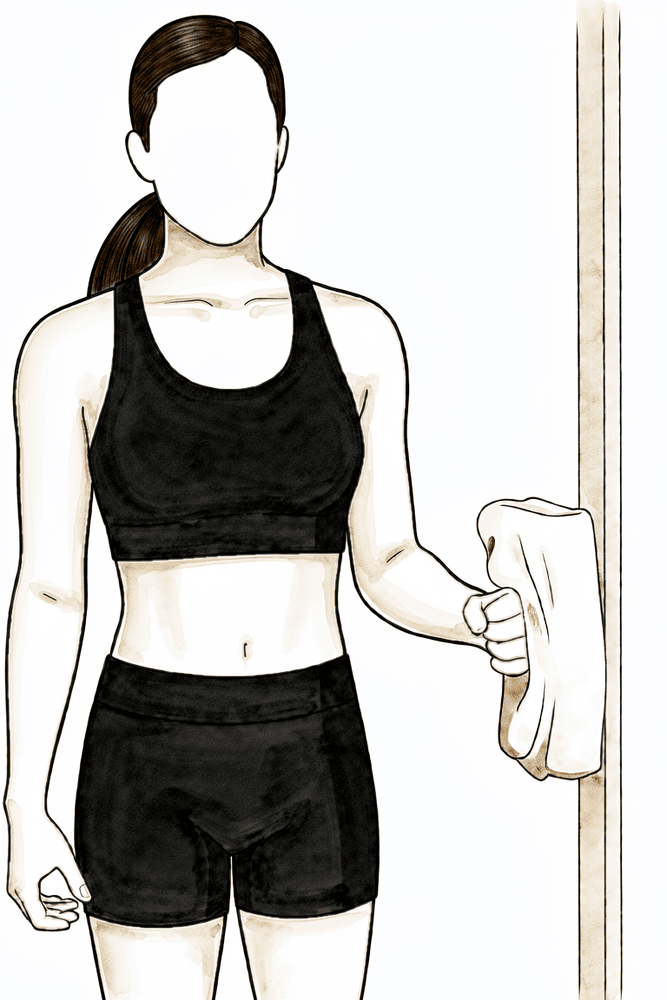
Kieran Hirpara 4.0
Rotación externa isométrica
De pie, con el codo pegado al costado y doblado en ángulo recto, apoye el dorso de la mano contra una pared o el marco de una puerta. Presione suavemente hacia fuera sin dejar que el brazo se mueva, mantenga unos segundos y luego relaje. Introdúzcalo solo al final de esta fase, con suavidad y sin dolor, según lo permita la reparación del manguito rotador.
Según las indicaciones de su fisioterapeuta.
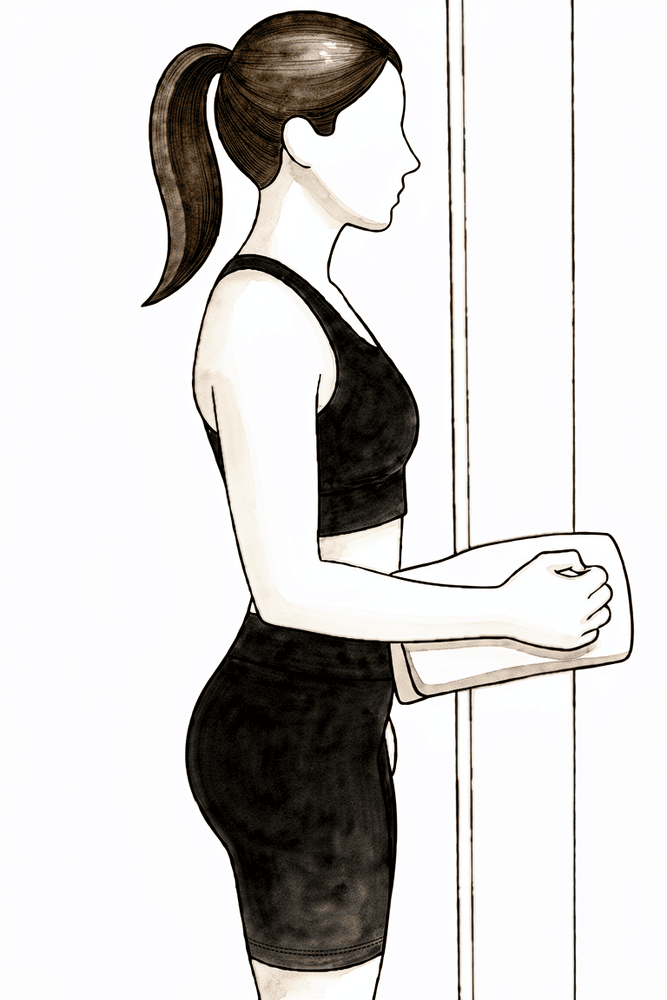
Kieran Hirpara 4.0
Rotación interna isométrica
De pie, con el codo pegado al costado y doblado en ángulo recto, apoye la palma contra el marco de una puerta. Presione suavemente hacia dentro sin dejar que el brazo se mueva, mantenga unos segundos y luego relaje. Empiece solo una vez autorizado en su revisión: la rotación interna carga la reparación de la tuberosidad menor, por eso se deja para el final.
Según las indicaciones de su fisioterapeuta.
Kieran Hirpara 4.0
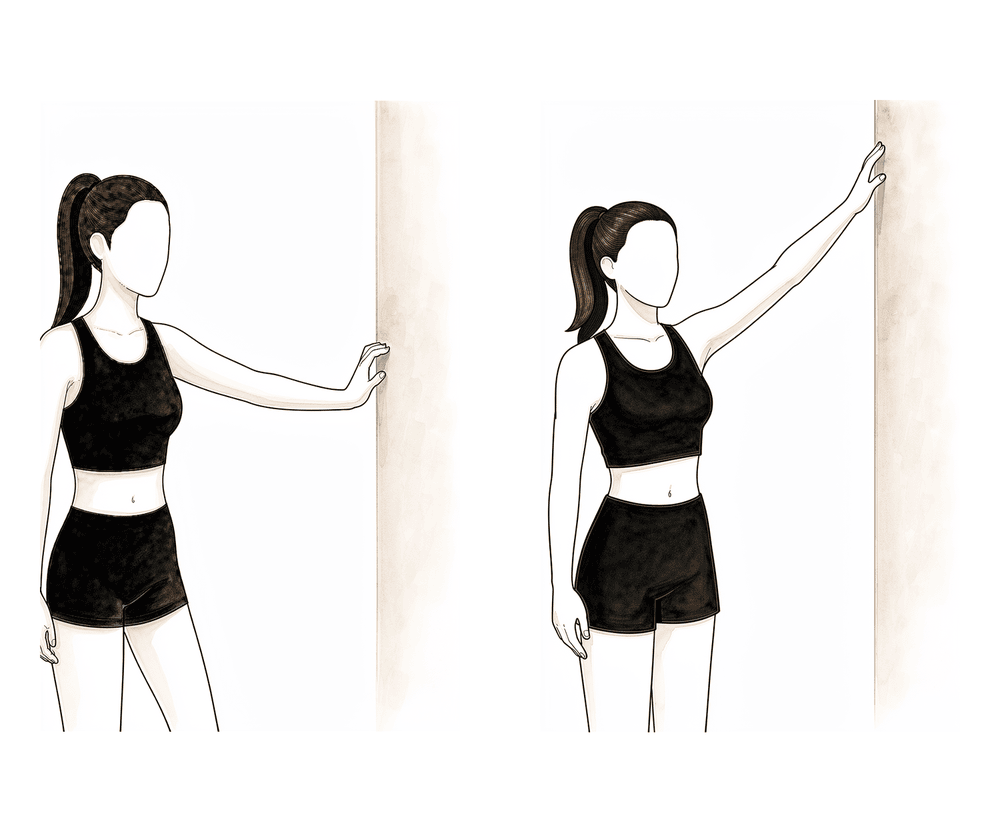
Caminar con los dedos por la pared hacia el lado
Colóquese de lado junto a una pared con las yemas de los dedos apoyadas en ella. Suba los dedos por la pared hacia el lado, elevando el brazo hasta donde le resulte cómodo, y luego bájelos con control. La pared sostiene el brazo mientras recupera el movimiento hacia el lado.
Según las indicaciones de su fisioterapeuta.
En su revisión de las seis semanas, las radiografías comprueban que los fragmentos óseos están consolidando en su posición. Si es así, se retira el cabestrillo y el hombro empieza a moverse por sí mismo: primero con ayuda del otro brazo, de un bastón o de una polea, y después de forma activa. Durante estas semanas, el rango pasivo avanza hacia el rango completo y los límites de rotación se relajan. Comienza el primer trabajo suave de activación muscular del deltoides y de los músculos del omóplato (periescapulares). Lo que todavía no comienza es el fortalecimiento: la reparación aún se está consolidando, por lo que se mantiene la regla de no levantar nada más pesado que una taza de café, y sigue sin poder impulsarse apoyándose en las manos.
Para su fisioterapeuta:
Objetivos
- Retirar progresivamente el cabestrillo tras la revisión de las seis semanas
- Progresar el PROM del hombro hacia el rango completo según la comodidad
- Iniciar el AAROM del hombro y progresar hacia el AROM
- Iniciar una activación suave del deltoides y de los músculos periescapulares
- Recuperar el uso del brazo para actividades ligeras de la vida diaria a la altura de la cintura y del pecho
- Educación del paciente
Cabestrillo
- Suspender tras la revisión de las seis semanas; puede usarse fuera de casa, como protección en lugares concurridos, durante la primera o segunda semana de retirada
Manejo
- Continuar con las intervenciones de la Fase I según sea necesario
- Rango de movimiento/movilidad:
- PROM: progresar hacia el rango completo en todos los planos hacia las semanas 8–10 aproximadamente, respetando el dolor
- AAROM: deslizamientos en mesa, escalada en pared, poleas, flexión y rotación externa asistidas con bastón, primero en decúbito supino y después sentado
- AROM: comenzar cuando el AAROM resulte cómodo y la calidad del movimiento sea buena, empezando con flexión en decúbito supino y progresando a flexión y escapción en posición erguida
- RE: progresar más allá de 30 grados según la comodidad, una vez confirmada la consolidación
- Llevar la mano detrás de la espalda de forma funcional y suave, y la extensión, se introducen al final de esta fase, según se autorice. No estirar hacia estas posiciones.
- Fortalecimiento:
- Solo isométricos submáximos sin dolor: deltoides en el plano escapular, fijación periescapular, remo bajo, retracción escapular
- Isométricos suaves y sin dolor del manguito rotador al final de esta fase; introducir la rotación interna contra resistencia solo una vez autorizada en la revisión
- Control motor: insistir en el control escapular y evitar la elevación compensatoria del hombro u otros patrones de compensación
Precauciones
- No levantar objetos más pesados que una taza de café
- No apoyar el peso corporal en las manos
- Ningún trabajo de resistencia o fortalecimiento más allá de isométricos suaves
- Evitar forzar el rango: estirar solo hasta una molestia firme, nunca hasta un dolor agudo
Criterios para avanzar
- Movimiento activo cómodo por debajo de la altura del hombro, con buen control escapular y mínima compensación
- Consolidación progresiva de las tuberosidades en las radiografías, según se confirme en su revisión con el Dr. Hirpara
- Dolor lo bastante controlado como para comenzar el trabajo de resistencia
Fase III — Fortalecimiento (Semanas 12–24)
Kieran Hirpara 4.0
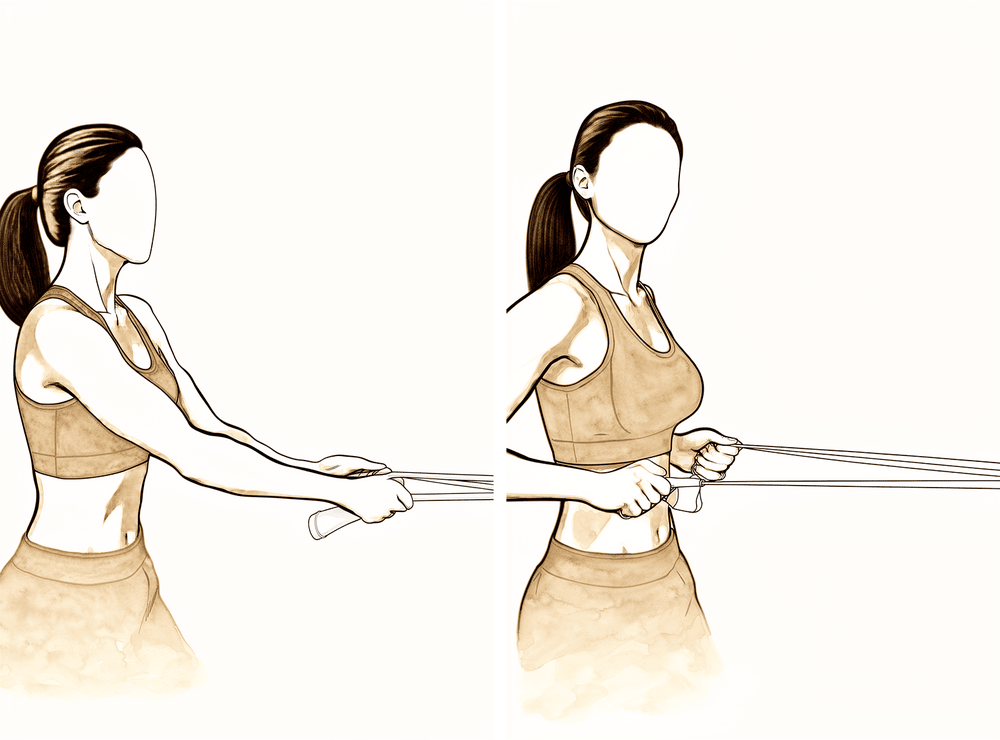
Remo con banda elástica
Fije una banda elástica delante de usted a la altura de la cintura. De pie y con la espalda recta, tire de la banda hacia usted, llevando el omóplato hacia abajo y hacia atrás, y luego suelte con control. Empiece con poca resistencia: baja carga y más repeticiones, progresando según se le indique.
Según las indicaciones de su fisioterapeuta.
Kieran Hirpara 4.0
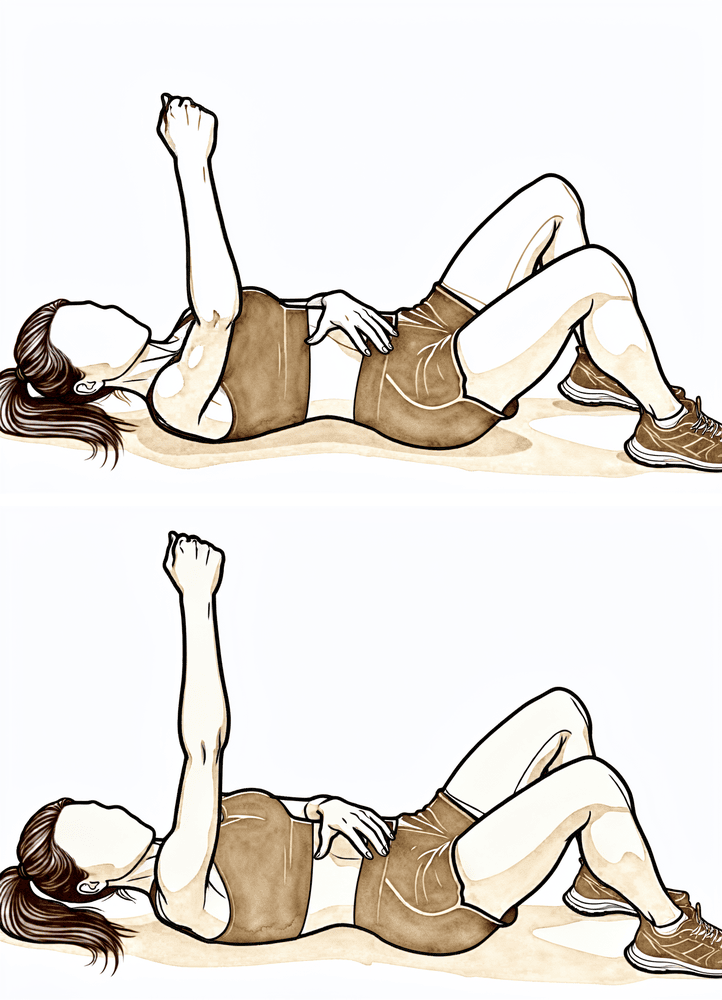
Empuje del serrato
Acuéstese boca arriba con el brazo operado estirado hacia el techo. Sin doblar el codo, empuje la mano un poco más arriba para que el omóplato se despegue del suelo, y luego vuelva a apoyarlo. Esto fortalece el músculo que fija el omóplato a las costillas.
Baja carga, más repeticiones.
Kieran Hirpara 4.0
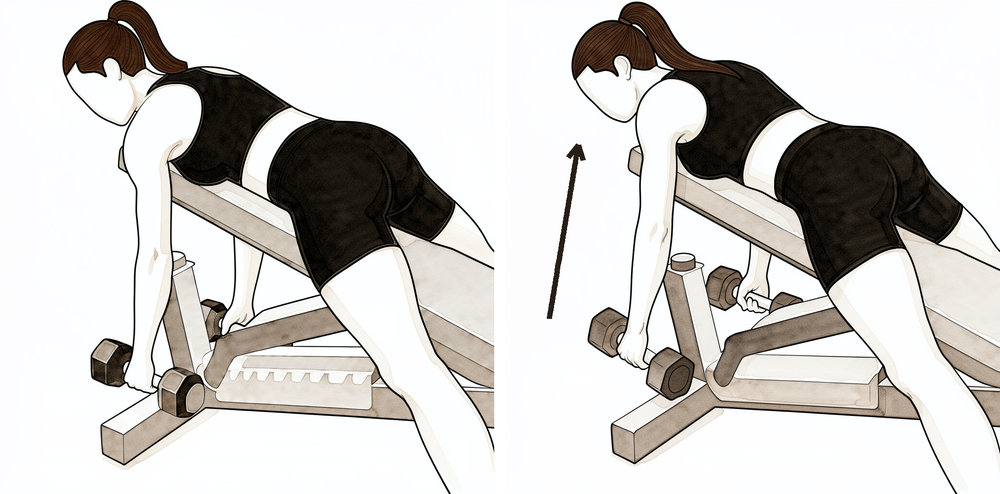
Retracción escapular con peso
Inclinado hacia delante desde las caderas, con un peso ligero en cada mano, lleve los codos hacia atrás y junte los omóplatos, y luego baje con control. Esto fortalece los músculos del omóplato contra resistencia: mantenga la carga ligera y el movimiento suave.
Baja carga, más repeticiones.
Kieran Hirpara 4.0
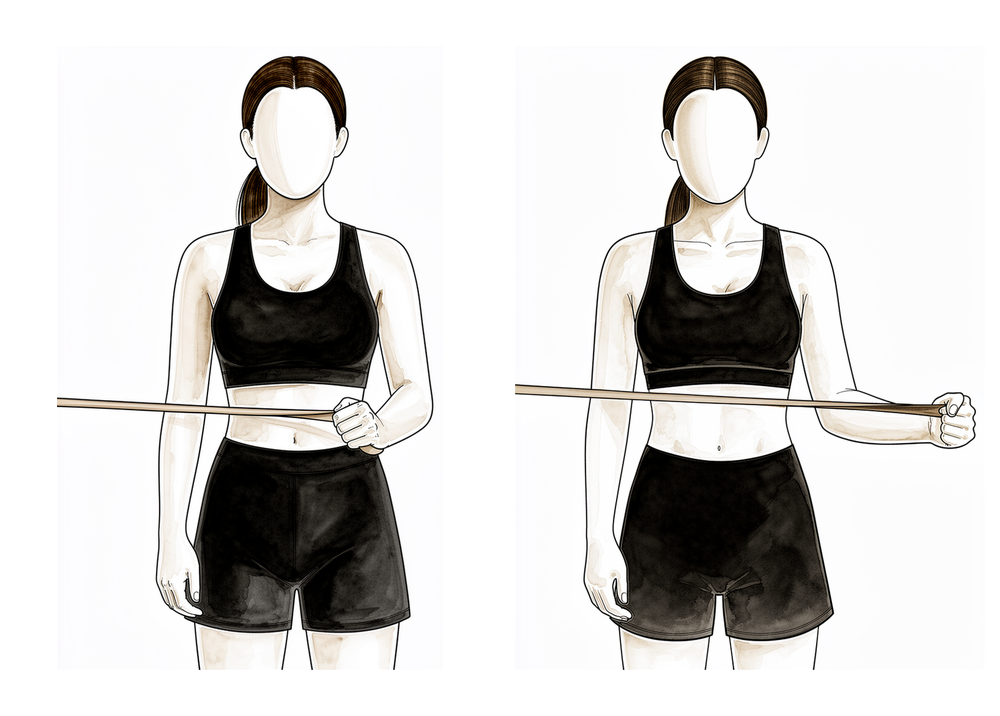
Rotación externa con banda
De pie, con el codo pegado al costado y doblado en ángulo recto, sujete una banda elástica fijada a la altura de la cintura. Manteniendo el codo junto al costado, gire el antebrazo hacia fuera contra la banda y luego vuelva despacio. Fortalezca el manguito rotador de forma progresiva, según lo permitan las tuberosidades consolidadas.
Baja carga, más repeticiones.
Kieran Hirpara 4.0
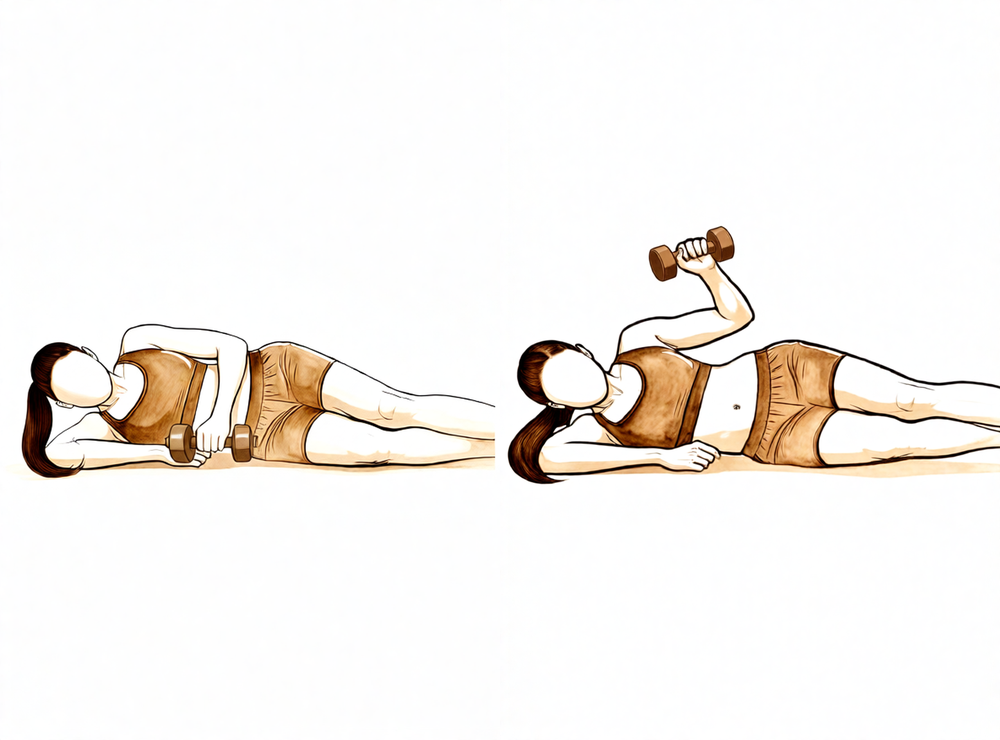
Rotación externa con peso, acostado de lado
Acuéstese sobre el lado no operado con el codo operado doblado en ángulo recto y pegado al cuerpo. Sosteniendo un peso ligero, gire el antebrazo hacia el techo y luego bájelo despacio. Forma parte del fortalecimiento gradual del manguito rotador: siga con el trabajo de movilidad al mismo tiempo.
Baja carga, más repeticiones.
Kieran Hirpara 4.0
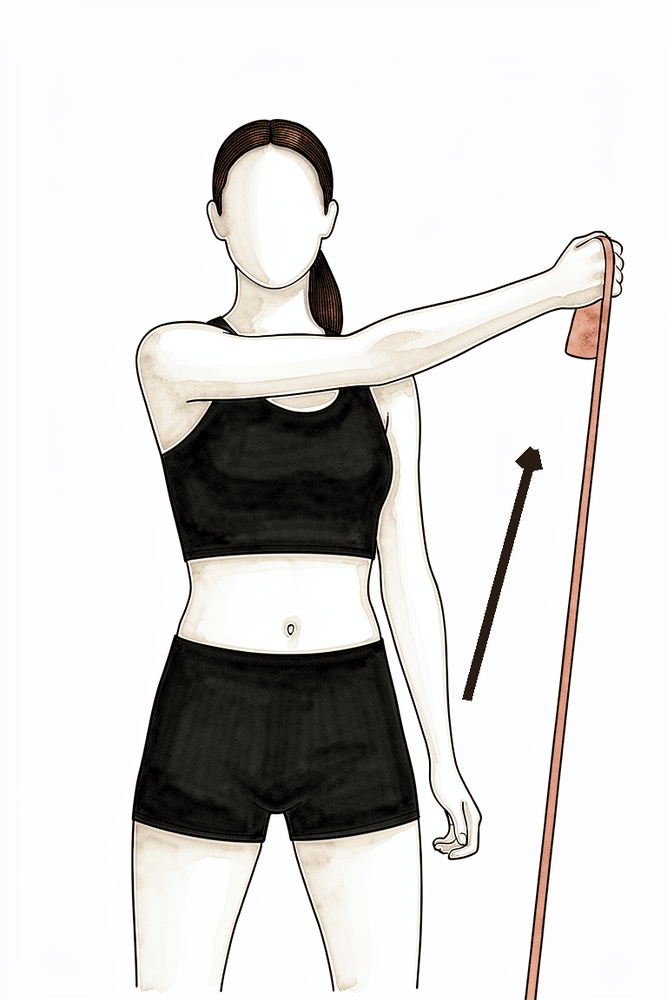
Diagonal FNP con banda (elevación)
Fije una banda elástica en un punto bajo, al lado del brazo operado. Lleve la mano en diagonal hacia arriba y a través del cuerpo, desde cerca de la cadera opuesta hacia el hombro, y luego vuelva despacio. Estos patrones diagonales entrenan al hombro para trabajar en las direcciones que se usan en la vida diaria.
Según las indicaciones de su fisioterapeuta.
Kieran Hirpara 4.0
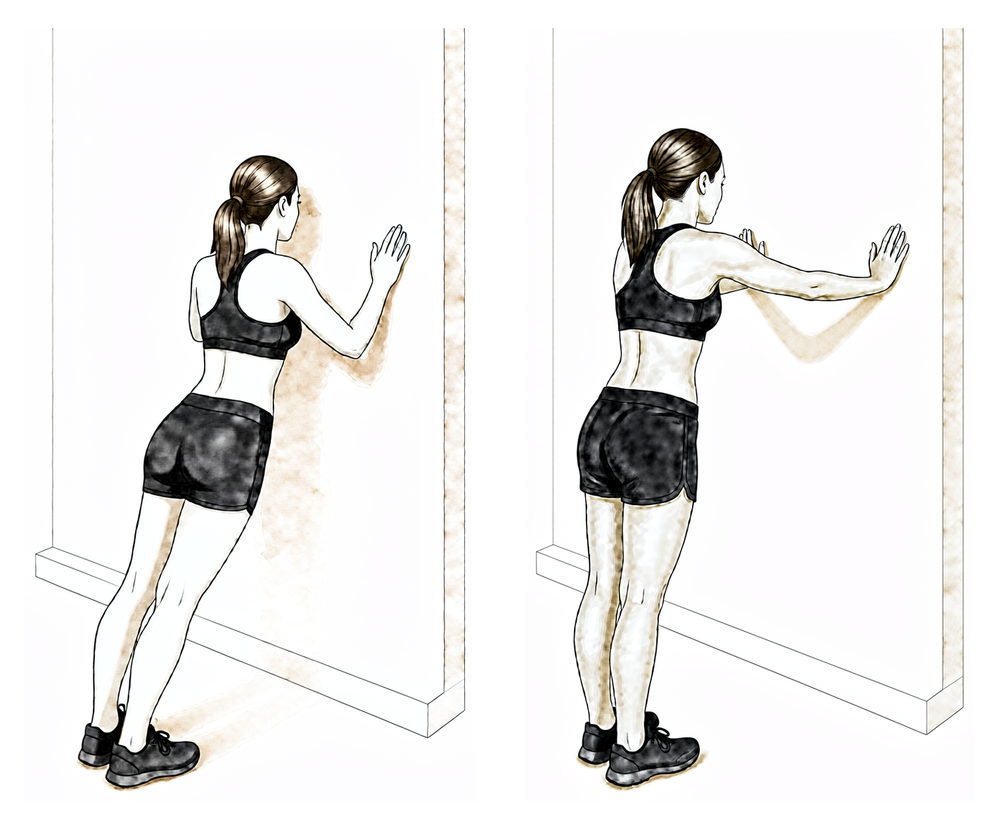
Apoyo de peso sobre el brazo
Coloque las manos sobre una pared o un banco firme y empuje suavemente la parte superior de la espalda hacia atrás para que los omóplatos se redondeen hacia delante, y luego vuelva. Esto reintroduce el apoyo de peso sobre el brazo: incorpórelo solo una vez autorizado durante esta fase, aumentando de forma gradual.
Según las indicaciones de su fisioterapeuta.
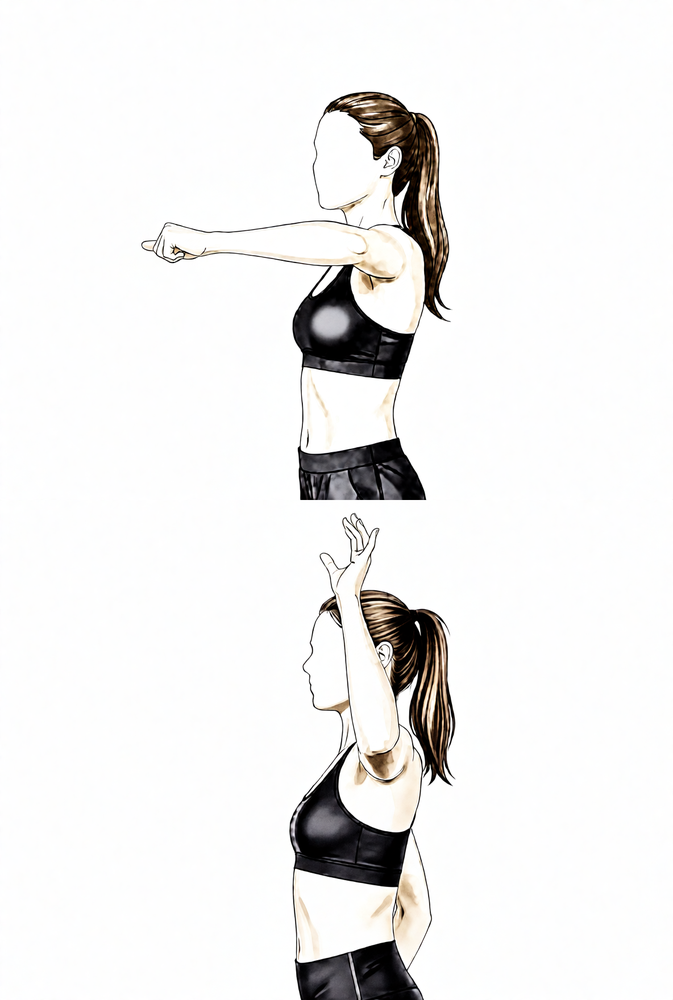
Kieran Hirpara 4.0
Rotación externa con el brazo elevado
Con el brazo separado hacia el lado a la altura del hombro y el codo doblado a 90°, gire el antebrazo hacia arriba y hacia atrás, y luego vuelva con control. Mantenga el movimiento suave y dentro de un rango cómodo. Esto entrena la rotación hacia fuera en posición elevada.
Según las indicaciones de su fisioterapeuta: de forma ligera y controlada.
Hacia las doce semanas, las tuberosidades suelen estar bien encaminadas hacia la consolidación, y su revisión con el Dr. Hirpara confirma si el hombro está preparado para soportar carga. Entonces comienza el fortalecimiento, con suavidad, empezando con bandas elásticas y pesos ligeros, y centrándose en el deltoides y en los músculos del omóplato que mueven el hombro (tras una prótesis invertida, el deltoides realiza gran parte del trabajo que antes hacía el manguito rotador). El propio manguito rotador se fortalece a medida que lo permiten las tuberosidades ya consolidadas. Durante esta fase se va aumentando gradualmente la carga ligera, las actividades diarias a la altura de la cintura y del hombro deberían sentirse casi normales, y la conducción suele retomarse en esta fase si no se ha reanudado antes.
Para su fisioterapeuta:
Objetivos
- Mantener un PROM sin dolor y progresar el AROM en todos los planos
- Recuperación gradual de la fuerza y la resistencia: deltoides, músculos periescapulares y después manguito rotador
- Mejorar la estabilidad dinámica, el control motor y la propiocepción
- Volver a la mayoría de las actividades diarias, incluido levantar cargas ligeras
Manejo
- Continuar el trabajo de rango de movimiento y movilidad en todos los planos
- Fortalecimiento, progresando de isométricos a bandas elásticas y después a pesos ligeros (baja carga, más repeticiones):
- Periescapulares: remos, empujes del serrato, retracción escapular con resistencia
- Deltoides: flexión y escapción contra resistencia en posiciones funcionales, con descenso excéntrico controlado
- Manguito rotador: RE y RI con resistencia elástica, RE en decúbito lateral, progresando a medida que lo permitan las tuberosidades consolidadas
- Control motor: estabilización rítmica, patrones diagonales de facilitación neuromuscular propioceptiva (FNP), trabajo de estabilización con pelota
- Levantamiento gradual de peso: desde unos 2 kg al principio de la fase hasta unos 5 kg al final, según lo permita el control
- Reintroducción gradual del apoyo de peso sobre el brazo (por ejemplo, impulsarse para levantarse de una silla) durante esta fase, según se autorice
Precauciones
- No levantar objetos pesados; mantener las cargas por debajo de unos 5 kg durante esta fase
- Evitar estiramientos forzados al final del rango y evitar la combinación de abducción y rotación externa con carga
- La progresión sigue guiada por los síntomas: si aumenta el dolor o la hinchazón, retroceder un nivel
Criterios para avanzar
- Consolidación de las tuberosidades confirmada en la revisión con el Dr. Hirpara
- Actividades de la vida diaria sin dolor, con un fortalecimiento tolerado sin reagudizaciones
- Buena calidad de movimiento en todo el rango disponible
Fase IV — Retorno a la actividad plena (a partir de los 6 meses)
La fase final es un retorno gradual a las tareas más exigentes, al trabajo manual y a las actividades recreativas, guiado por su fuerza y su control más que por el calendario. Las tareas domésticas y de jardín más pesadas se retoman de forma progresiva; el trabajo manual se reanuda según las indicaciones del Dr. Hirpara; la natación y el golf suelen retomarse hacia los cuatro a seis meses. Tras una prótesis de hombro, es mejor evitar a largo plazo levantar objetos muy pesados; los protocolos publicados recomiendan mantener las cargas habituales por debajo de unos 10 kg. El hombro sigue mejorando mucho después de esta fase: la mayoría de las personas continúan ganando movimiento, fuerza y confianza durante 12–24 meses tras la cirugía, por lo que vale la pena mantener su programa de ejercicios en casa mucho después de terminar la fisioterapia formal.
Para su fisioterapeuta:
Objetivos
- Optimizar la fuerza funcional y la resistencia según las exigencias diarias del paciente
- Retorno gradual al trabajo, a las actividades recreativas y al deporte
- Educación sobre la protección articular a largo plazo y un programa independiente de ejercicios en casa
Manejo
- Continuar el trabajo de resistencia progresiva con pesos ligeros y más repeticiones, insistiendo en el fortalecimiento del manguito rotador y de los músculos periescapulares
- Entrenamiento neuromuscular y propioceptivo; tareas funcionales y específicas del trabajo según sea necesario
- Escalonar el retorno a la natación, el golf y otras actividades recreativas hacia los cuatro a seis meses, según se autorice en la revisión
- Programa personalizado de ejercicios en casa para continuar una vez finalizada la fisioterapia formal
Precauciones
- Evitar levantar objetos pesados durante 6 meses desde la cirugía; mantener a largo plazo las cargas habituales por debajo de unos 10 kg
- Trabajo manual y deportes de contacto o de carga solo con la autorización del Dr. Hirpara
Criterios para completar el protocolo
- Autorización en la revisión con el Dr. Hirpara, con la consolidación de las tuberosidades confirmada
- Rango de movimiento funcional, con el dolor controlado, que cubra las exigencias diarias del paciente
- Autonomía con el programa de ejercicios en casa a largo plazo
Después de seguir este protocolo
Las fases anteriores se han adaptado de protocolos de rehabilitación publicados para la prótesis de hombro por fractura del húmero proximal (Texas Health Orthopedic Specialists, North Tees and Hartlepool NHS Foundation Trust para la hemiartroplastia por traumatismo y la artroplastia invertida de hombro, y el Robert Jones and Agnes Hunt Orthopaedic Hospital), y el énfasis en la consolidación de las tuberosidades procede de la literatura quirúrgica. Los intervalos de semanas son orientativos, no fijos; su fisioterapeuta, en colaboración con el consultorio, hará progresar su rehabilitación de forma individual, en función de sus revisiones con el Dr. Hirpara. Esta página complementa las indicaciones generales de recuperación del consultorio: consulte control del dolor postoperatorio y cuidado de la herida. Para información sobre la operación en sí, consulte prótesis de hombro por fractura; para la versión programada de este recorrido, consulte el protocolo de artroplastia invertida de hombro. La evidencia que sustenta este protocolo (por qué la consolidación de las tuberosidades marca el ritmo, la comparación entre hemiartroplastia y prótesis invertida, y las guías de rehabilitación publicadas) se resume en la sección de evidencia, disponible en formato PDF en la parte superior de esta página.
Evidence & references
This is the clinical evidence summary written for health professionals. It is technical, and it lists the research this page was built from. You do not need to read it to understand your treatment or to make a decision about it.
Shoulder Replacement for Proximal Humerus Fracture — Evidence Behind the Rehabilitation Protocol
Topic scope: The evidence underpinning rehabilitation after shoulder arthroplasty performed for an acute proximal humerus fracture — covering both the implant options used in this setting: reverse total shoulder arthroplasty (rTSA) for fracture and stemmed hemiarthroplasty for fracture. The defining feature of both, and the reason this is a slow, protected pathway, is that the greater and lesser tuberosities are broken free and stitched back around the prosthesis at operation — they must heal as fractures before the shoulder can be actively moved or loaded. This contrasts with elective arthroplasty (for arthritis or cuff arthropathy), where the bone is intact and rehabilitation can move at the pace of soft-tissue healing.
Defining principle of this rehab: Replacement-for-fracture is a PROTECT pathway driven by TUBEROSITY HEALING, not by implant type. At operation the greater tuberosity (with supraspinatus/infraspinatus) and lesser tuberosity (with subscapularis) are reattached around the stem. Until those bone fragments unite — typically the first 6 weeks, confirmed on X-ray — the shoulder is moved passively only and within a restricted arc: forward elevation kept low, external rotation limited (it loads the greater-tuberosity repair), resisted/active internal rotation avoided (it loads the lesser-tuberosity/subscapularis repair), and no reaching behind the back. Active range and strengthening are deferred, not just reduced. This is the opposite of an early-motion pathway such as capsular release (where immediate aggressive motion is the treatment) or calcific excision (early movement below shoulder height from day 1). The whole pace is set by the fractured tuberosities, not the new joint surface.
The operation, and why the tuberosities matter
A displaced three- or four-part proximal humerus fracture in an older patient may be unreconstructable with plate-and-screw fixation, and arthroplasty is then offered. Two implants are used:
- Hemiarthroplasty (HA) — replaces the ball (humeral head) only. It relies on the surgeon reconstructing the head–tuberosity–shaft relationship and, critically, on the tuberosities healing back in anatomical position so the rotator cuff can pull on them. Where the tuberosities fail to heal, function is poor.
- Reverse total shoulder arthroplasty (rTSA) — reverses the ball-and-socket so the deltoid, not the rotator cuff, drives elevation. This makes rTSA less dependent on tuberosity healing than HA, which is the main reason it has largely supplanted hemiarthroplasty for fracture in the elderly. Tuberosity healing still improves the result (it adds rotation), but a workable shoulder is achievable even when the greater tuberosity does not unite.
In both operations the surgeon repairs the tuberosities, and in both the rehabilitation protects that repair. That shared dependence — not the choice of implant — is why the protocol has one shape for both.
Evidence by theme
1. Tuberosity healing drives the functional result (the rationale for protection)
This is the best-supported principle in the topic, and the reason rehabilitation protects the repair for ~6 weeks.
- A large systematic review and meta-analysis of 21 studies (1,616 reverse arthroplasties) found a pooled greater-tuberosity non-healing rate of ~32% (anatomic healing in roughly two-thirds). Healed tuberosities had significantly better active abduction, anterior elevation and external rotation, and better functional scores, without any increase in pain — confirming that attempting and protecting the repair is worthwhile [meta-analysis, 2025; Schmalzl 2020].
- In the corpus, a dedicated study asked "can a healed tuberosity improve the functional outcomes?" after reverse arthroplasty for four-part fracture and answered yes — healing was associated with better rotation and outcome scores. DOI: 10.1016/j.jse.2016.11.034.
- For hemiarthroplasty, the dependence is even stronger: reported greater-tuberosity healing rates range widely (~30–91%), and tuberosity malunion/nonunion/migration is the dominant cause of a poor result. This is precisely why HA is now reserved and rTSA preferred in older patients [web review literature].
Strength: MODERATE–STRONG for "healing predicts outcome" (large pooled cohorts/meta-analysis); the link is consistent and direction-of-effect is not in dispute. It is observational, not randomised.
2. Hemiarthroplasty vs reverse arthroplasty for fracture
- A corpus multicentre randomised controlled trial (the SHeRPA trial) found superior functional outcome with reverse arthroplasty compared with hemiarthroplasty for displaced three- and four-part fractures in patients 65 and older. DOI: 10.1016/j.jse.2024.05.016.
- An earlier corpus comparative study (JBJS) likewise compared HA and rTSA for elderly proximal humeral fractures. DOI: 10.2106/jbjs.l.01637.
- Reverse-for-fracture does carry a caveat: one corpus study asked whether rTSA for fracture does worse than rTSA for elective indications, reflecting that the fracture setting (broken tuberosities, frailer patients) is more demanding than an elective replacement — the same reason this rehab runs more slowly than the elective pathway. DOI: 10.1016/j.jse.2020.03.053.
Strength: MODERATE–STRONG (an RCT plus comparative cohorts) that rTSA generally outperforms HA for fracture in the elderly. This is a surgeon's intra-operative decision, made per patient and per fracture pattern.
3. Early vs delayed motion, and the rehabilitation protocol itself
This is where the evidence is thinnest and least standardised — honestly, the phase timings below are consensus and protocol-derived, not RCT-derived.
- A JOSPT systematic review of proposed rehabilitation guidelines after anatomic and reverse arthroplasty found substantial heterogeneity between published protocols — sling use ranged from "comfort only" to a full 6 weeks; permitted motion ranged from none to precautionary limits; early external rotation was commonly capped (e.g. to ~30° in the scapular plane) to protect the repair. There is no single agreed regimen.
- A corpus randomised single-blinded trial of early rehabilitation vs immobilisation after reverse arthroplasty exists (DOI: 10.1016/j.jse.2019.10.005), and the 2025 Neer Award SHORT trial compared surgeon-directed home therapy with formal outpatient physiotherapy after rTSA (DOI: 10.1016/j.jse.2025.10.005) — but these are largely elective rTSA populations, where the tuberosities are not broken. They do not licence early active motion in the fracture setting, where the repair must be protected first.
- A corpus network meta-analysis explicitly examined the optimal combination of arthroplasty type, fixation method and post-operative rehabilitation protocol for complex proximal humerus fractures (DOI: 10.1016/j.jse.2024.03.040), and a corpus survey found that trauma and shoulder surgeons differ in their rehabilitation preferences (DOI: 10.1016/j.jse.2021.12.045) — both confirm that the protocol is an area of genuine, unresolved variation rather than settled science.
Strength: WEAK / CONSENSUS for the specific phase structure and week ranges. The principle "protect the tuberosity repair, defer active motion and load until union" is well grounded; the exact timings are typical, not trial-proven.
Phased post-op timeline (consistent with the patient protocol)
| Phase | Window | Sling | Shoulder ROM | Strengthening | What's healing / why |
|---|---|---|---|---|---|
| I — Protection | Weeks 0–6 | Full-time, including sleep | Passive only, within a safe zone: scapular-plane elevation ≤ 90°; external rotation to neutral (0°) for ~4 weeks then ≤ 30°; no internal rotation behind the back; pendulums (fully relaxed). Active elbow/wrist/hand. | None for the shoulder | Tuberosity fragments uniting onto bone + prosthesis; ER loads the greater-tuberosity repair, resisted IR loads the lesser-tuberosity (subscapularis) repair. In rTSA this window also protects against early dislocation. |
| II — Restoring movement | Weeks 6–12 | Wean after the 6-week X-ray review | Progress passive → active-assisted → active; ease the rotation limits as healing is confirmed | Gentle sub-maximal isometrics (deltoid, periscapular) late in phase; resisted IR only once cleared | Tuberosities consolidating; lifting still limited to ~a cup of coffee; no weight-bearing through the hands |
| III — Strengthening | Weeks 12–24 | Off | Maintain/progress active range in all planes | Banded → light weights; deltoid + periscapular first, rotator cuff as the healed tuberosities allow | Tuberosity union usually well advanced and confirmed at review before loading begins |
| IV — Return to activity | 6 months onwards | Off | Functional range for daily demands | Progressive, guided by control not the calendar; lifting kept moderate long-term | Strength/movement keep improving for 12–24 months; full uninjured-shoulder range is not expected |
The pacing is gated on two things together at each step: enough time, AND X-rays showing the tuberosities healing, confirmed at review with Dr Hirpara. Approximate functional milestones (subject to healing): driving ~6–12 weeks (never in the sling); breaststroke swimming ~4 months; nothing heavier than a cup of coffee until ~12 weeks; heavy lifting avoided for 6 months.
Key controversies / evidence quality
- Implant choice (HA vs reverse). An RCT and comparative cohorts favour reverse over hemiarthroplasty for displaced fractures in older patients, chiefly because rTSA is less hostage to tuberosity healing. This is a per-patient surgical decision — and either way the rehabilitation protects the tuberosity repair. Moderate–strong.
- Does the tuberosity actually need to heal? For hemiarthroplasty, effectively yes — non-union/malunion is the main failure mode. For reverse, healing is beneficial but not essential (the deltoid drives elevation), though healed tuberosities add rotation and reduce complications. The protection strategy is justified for both because attempting healing is worthwhile and forced early motion can disrupt it. Moderate.
- Early vs delayed motion / the protocol itself. The single weakest area. Published protocols vary widely (JOSPT review), the trials that test early motion are mostly in elective reverse populations, and surgeons genuinely disagree on the optimum. The conservative, tuberosity-led timeline used here reflects the fracture-specific protocols and the healing biology rather than a defining RCT. Weak / consensus.
Evidence-strength flags (summary)
- MODERATE–STRONG: tuberosity healing predicts better range/function after reverse arthroplasty for fracture (21-study meta-analysis, 1,616 cases; ~32% non-healing); reverse > hemiarthroplasty for elderly displaced fractures (SHeRPA RCT + comparative cohorts).
- MODERATE: hemiarthroplasty outcome is strongly tuberosity-dependent (healing ~30–91%; malunion the dominant failure mode); reverse-for-fracture more demanding than elective reverse.
- WEAK / CONSENSUS: the specific phased rehabilitation protocol and its week ranges — published guidelines are heterogeneous (JOSPT review); early-motion trials are mostly elective populations; the tuberosity-protective timeline is derived from fracture-specific protocols and healing biology, not a defining rehab RCT.
Citations
RAG corpus (180,000+ Orthopaedic articles) — real DOIs, returned by search
- Reverse shoulder arthroplasty for four-part proximal humerus fracture in elderly patients: can a healed tuberosity improve the functional outcomes? J Shoulder Elbow Surg. DOI: 10.1016/j.jse.2016.11.034
- Superior functional outcome following reverse shoulder arthroplasty compared to hemiarthroplasty for displaced three- and four-part fractures in patients 65 and older — the SHeRPA randomized controlled trial. J Shoulder Elbow Surg. 2024. DOI: 10.1016/j.jse.2024.05.016
- Comparison of Hemiarthroplasty and Reverse Shoulder Arthroplasty for the Treatment of Proximal Humeral Fractures in Elderly Patients. J Bone Joint Surg Am. DOI: 10.2106/jbjs.l.01637
- Does reverse total shoulder arthroplasty for proximal humeral fracture portend poorer outcomes than for elective indications? J Shoulder Elbow Surg. DOI: 10.1016/j.jse.2020.03.053
- A randomized single-blinded trial of early rehabilitation versus immobilization after reverse total shoulder arthroplasty. J Shoulder Elbow Surg. 2019. DOI: 10.1016/j.jse.2019.10.005
- Optimal combination of arthroplasty type, fixation method, and postoperative rehabilitation protocol for complex proximal humerus fractures in the elderly: a network meta-analysis. J Shoulder Elbow Surg. 2024. DOI: 10.1016/j.jse.2024.03.040
- Understanding postoperative rehabilitation preferences in operatively managed proximal humerus fractures: do trauma and shoulder surgeons differ? J Shoulder Elbow Surg. DOI: 10.1016/j.jse.2021.12.045
- 2025 Neer Award Part 1: The SHORT trial — surgeon-directed home therapy vs. outpatient rehabilitation after reverse total shoulder arthroplasty. J Shoulder Elbow Surg. 2025. DOI: 10.1016/j.jse.2025.10.005
- Acute versus delayed reverse total shoulder arthroplasty for proximal humeral fractures in the elderly: a systematic review and meta-analysis. J Shoulder Elbow Surg. DOI: 10.1016/j.jse.2018.10.004
- Ten-year follow-up of stemmed hemiarthroplasty for acute proximal humeral fractures. Bone Joint J. DOI: 10.1302/0301-620x.103b6.bjj-2020-1753.r1
Literature (URLs)
- Anatomic healing of greater tuberosity improves range of motion and functional outcomes after reverse total shoulder arthroplasty for proximal humerus fractures: an updated systematic review and meta-analysis on 21 studies (1,616 rTSAs; ~32% GT non-healing). PubMed. https://pubmed.ncbi.nlm.nih.gov/39914739/
- Schmalzl J, et al. Tuberosity healing improves functional outcome following primary reverse shoulder arthroplasty for proximal humeral fractures with a 135° prosthesis. Eur J Orthop Surg Traumatol. 2020. https://pubmed.ncbi.nlm.nih.gov/32162048/
- Tuberosity healing after reverse shoulder arthroplasty for proximal humerus fractures: is there clinical improvement? PubMed. https://pubmed.ncbi.nlm.nih.gov/33364654/
- Prosthesis designs and tuberosity fixation techniques in reverse total shoulder arthroplasty: influence on tuberosity healing in proximal humerus fractures. PMC. https://pmc.ncbi.nlm.nih.gov/articles/PMC8468418/
- A Systematic Review of Proposed Rehabilitation Guidelines Following Anatomic and Reverse Shoulder Arthroplasty. JOSPT 2019. https://www.jospt.org/doi/10.2519/jospt.2019.8616
Published rehab protocols (patient-guidance — basis for the phase structure)
- Frantz T. Proximal Humerus Fracture Rehabilitation Protocol (reverse shoulder arthroplasty). Texas Health Orthopedic Specialists. https://www.frantzorthopedics.com/pdf/proximal-humerus-fracture-reverse-shoulder-arthroplasty-updnew.pdf
- North Tees and Hartlepool NHS Foundation Trust. Shoulder Hemi-Arthroplasty (trauma) — post-operative protocol. Reviewed April 2023. https://www.nth.nhs.uk/resources/shoulder-hemi-arthroplasty-trauma/
- North Tees and Hartlepool NHS Foundation Trust. Reverse shoulder arthroplasty — post-operative protocol. Reviewed April 2023. https://www.nth.nhs.uk/resources/reverse-shoulder-arthroplasty/
- Maddocks C, Lloyd Evans J. Rehabilitation guide following reverse total shoulder replacement. Robert Jones and Agnes Hunt Orthopaedic Hospital NHS Foundation Trust. February 2024. https://www.rjah.nhs.uk/media/qctjsd1w/reverse-shoulder-replacement-guideline-2024.pdf