Patients › Rehabilitation
Tenodesis del bíceps
Rehabilitation after isolated biceps tenodesis, protecting the tenodesis fixation through staged return of biceps loading.
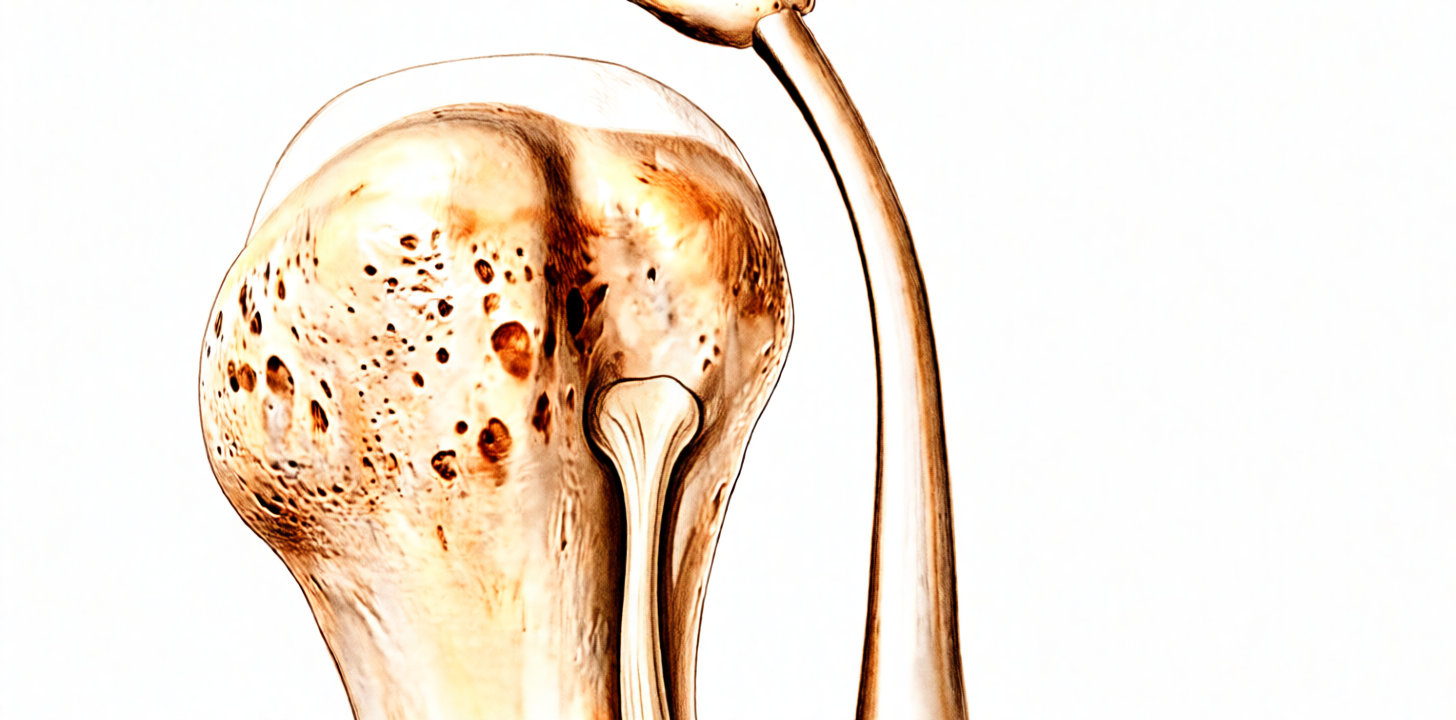
Este protocolo describe la rehabilitación posterior a una tenodesis del bíceps realizada por el Dr. Kieran Hirpara en el Mater Private Hospital Rockhampton, tanto si la intervención se realizó mediante artroscopia (técnica mínimamente invasiva) como mediante una pequeña incisión abierta cerca de la parte delantera de la axila (técnica subpectoral abierta). Lleve esta página o su versión en PDF a su primera sesión de fisioterapia para garantizar una rehabilitación coordinada. Su fisioterapeuta guiará su recuperación individualmente a través de las siguientes fases, según la evolución de su hombro y brazo.
Este protocolo es válido únicamente para una tenodesis del bíceps aislada. Si en su operación también se realizó una reparación del manguito rotador, deberá seguir el protocolo de reparación del manguito rotador; el tendón reparado ralentiza el proceso de recuperación.
Si tiene alguna duda respecto a la herida quirúrgica, no dude en contactar con el consultorio. A menudo resulta útil tomar una fotografía de la herida y enviarla por correo electrónico para su evaluación.
Qué esperar
En una tenodesis del bíceps, la cabeza larga del tendón del bíceps se separa de su punto de anclaje original dentro del hombro y se fija al hueso del brazo (húmero) mediante un anclaje o tornillo. Ese nuevo anclaje necesita tiempo para cicatrizar firmemente al hueso; por eso, las primeras semanas de rehabilitación se centran en protegerlo.
El músculo bíceps realiza dos funciones: flexiona el codo y gira la palma de la mano hacia arriba (supinación). Por esta razón —algo inusual en las cirugías de hombro—, las restricciones iniciales se refieren principalmente al codo: durante las primeras semanas, el codo se mueve de forma pasiva (la otra mano o el fisioterapeuta realizan la flexión) para evitar que el tendón en proceso de cicatrización tenga que soportar carga. Levantar o transportar objetos con el brazo operado también está prohibido al principio, por el mismo motivo. Asimismo, ciertas posiciones del hombro que generan tensión en el tendón se limitan al inicio: rotar el brazo hacia afuera más allá de unos 40 grados, y llevar el brazo detrás de la línea del cuerpo.
Deberá usar un cabestrillo durante unas tres a cuatro semanas, incluso mientras duerme; a partir de la tercera semana se irá retirando progresivamente según su comodidad lo permita. No debe conducir durante al menos seis semanas después de cualquier cirugía de hombro, incluso una vez retirado el cabestrillo; su cirujano le autorizará a conducir, normalmente en la revisión a las seis semanas.
Resumen del proceso:
- Fase I — Protección de la tenodesis (aproximadamente las primeras cuatro semanas)
- Fase II — Movilidad activa (semana 4–6)
- Fase III — Fortalecimiento (semana 6–12; ejercicios resistidos para el bíceps a partir de la semana 10)
- Fase IV — Retorno a la actividad plena (a partir de la semana 12)
Los intervalos semanales indicados son orientativos, no fijos; su fisioterapeuta ajustará el progreso en función de cómo evolucione la cicatrización y el movimiento de su brazo, no según el calendario. La fisioterapia suele iniciarse durante la primera o segunda semana tras la cirugía; los detalles de su primera sesión figuran en el paquete de alta, a menos que haya optado por contratar a un profesional por su cuenta.
Fase I — Protección de la fijación tendinosa (Semana 0–4)
Kieran Hirpara 4.0
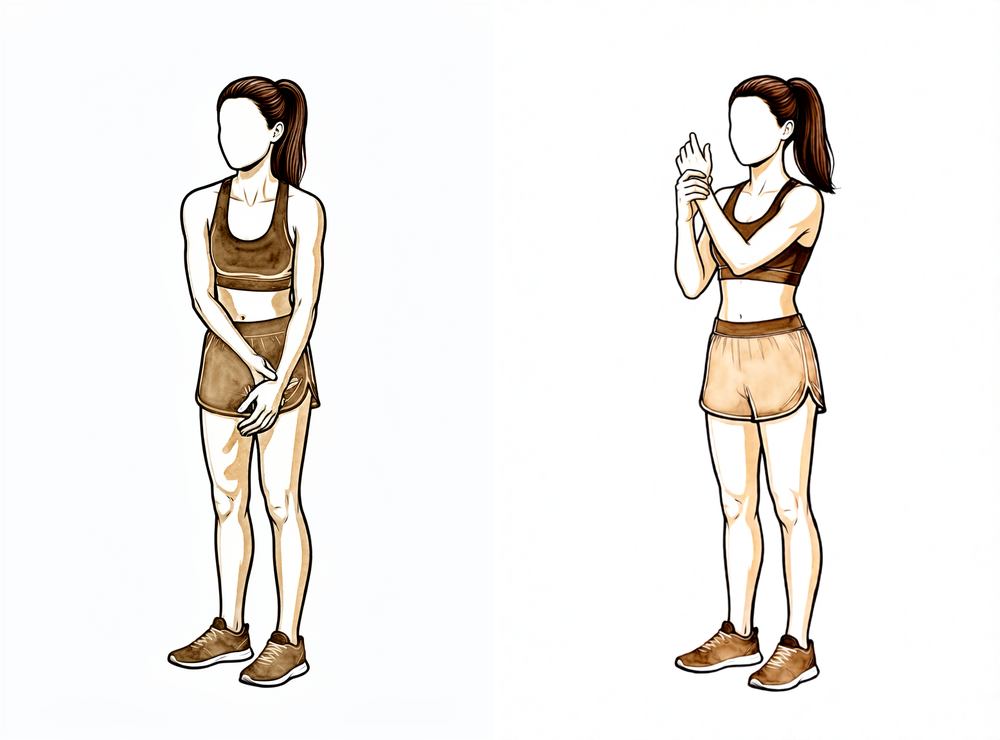
Flexión pasiva del codo
Deje que el brazo operado permanezca completamente relajado y use la otra mano para doblar el codo hacia arriba y luego dejarlo volver a la posición recta. Su otra mano realiza todo el trabajo; el bíceps debe permanecer inactivo para que el tendón en proceso de curación no tenga que soportar ninguna tensión. Repita el mismo procedimiento para girar la palma de la mano hacia arriba y hacia abajo.
Todos los días
Kieran Hirpara 4.0
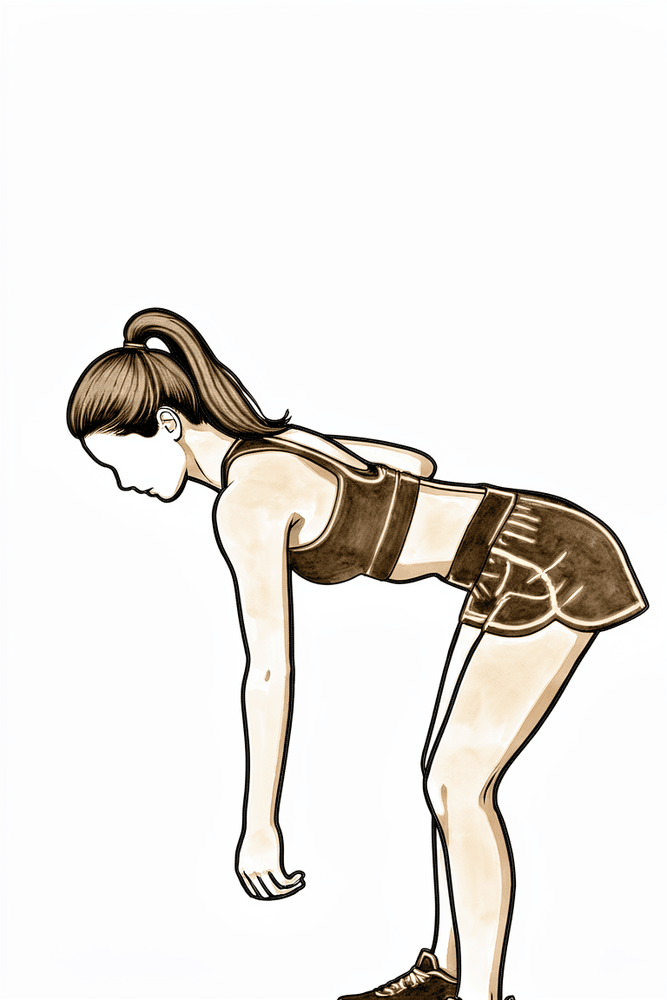
Ejercicio del péndulo
Retire el cabestrillo, inclínese hacia adelante por la cintura y deje que el brazo operado cuelgue suavemente lejos del cuerpo. Haga que el brazo describa círculos pequeños y relajados; el movimiento debe provenir del cuerpo, no de los músculos del hombro o del brazo. Manténgase dentro de los límites del confort, y luego vuelva a colocar el brazo en el cabestrillo.
Según las indicaciones de su fisioterapeuta.
Kieran Hirpara 4.0
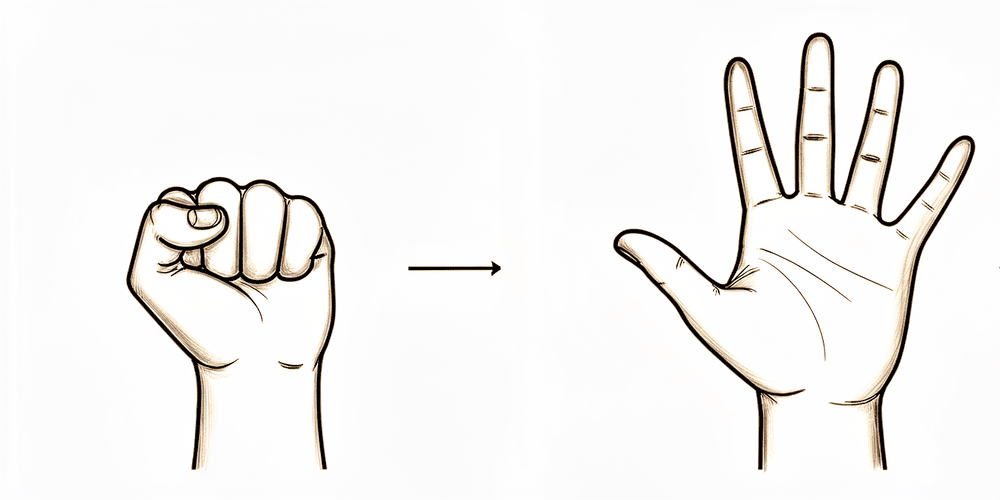
Ejercicios para la mano y la prensión
Con el brazo apoyado, haga un puño completo y luego estire los dedos rectos. Se puede utilizar una pelota blanda o un calcetín enrollado para ejercitar la prensión. La mano, la muñeca y los dedos permanecen activos desde el inicio.
Según las indicaciones de su fisioterapeuta.
Kieran Hirpara 4.0
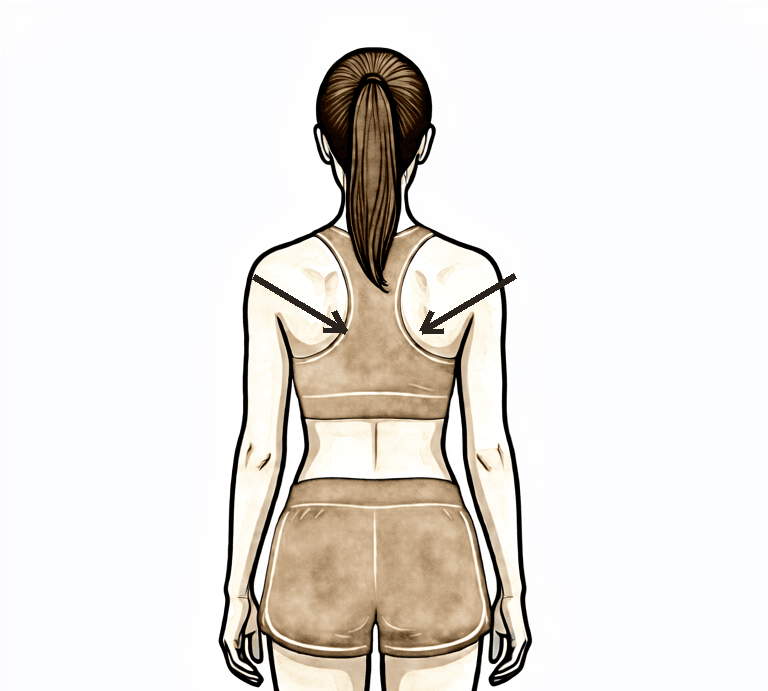
Posicionamiento escapular
Con el brazo apoyado, acerque suavemente los omóplatos el uno hacia el otro y hacia abajo, alejándolos de las orejas. Mantenga la posición unos segundos y luego relájese. De este modo se mantiene la postura y el control de los omóplatos sin ejercer carga sobre la tenodesis.
Según las indicaciones de su fisioterapeuta.
Kieran Hirpara 4.0
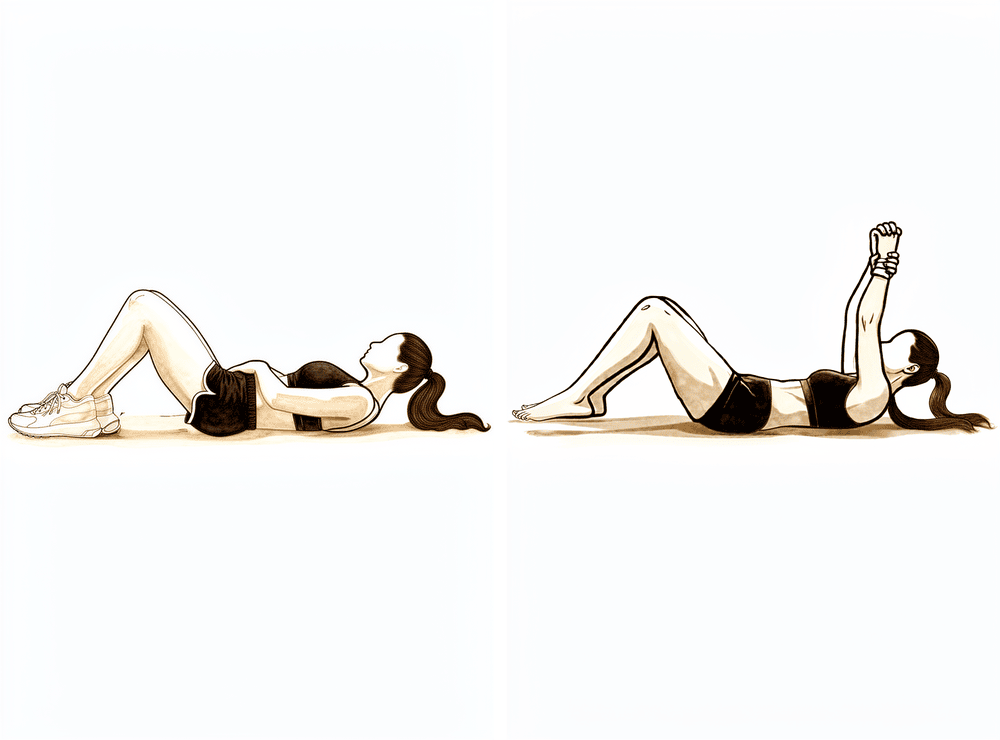
Elevación asistida por encima de la cabeza (en decúbito)
Acuéstese boca arriba y utilice el brazo sano para ayudar a levantar el brazo operado hacia adelante, hasta aproximadamente la altura del hombro; luego bájelo de nuevo, manteniendo la ayuda del brazo sano. El otro brazo realiza el movimiento, de modo que el bíceps permanezca relajado. Manténgase dentro de sus límites de comodidad: esto permite que el hombro se mueva mientras la tenodesis cicatriza.
Según las indicaciones de su fisioterapeuta.
Kieran Hirpara 4.0
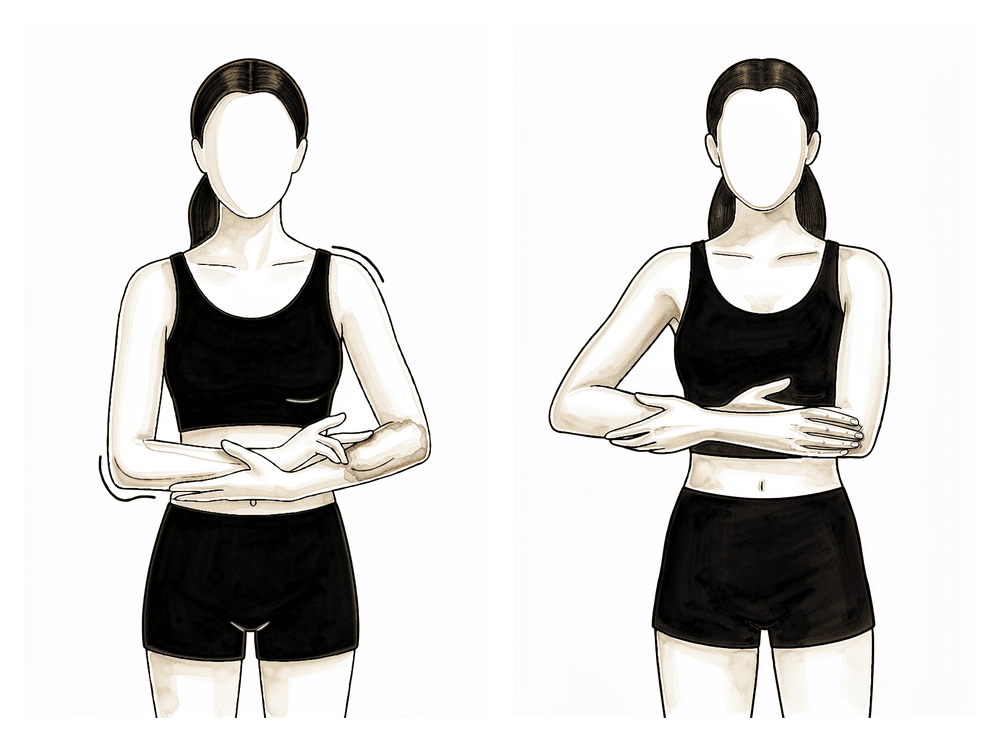
Movimiento asistido hacia el lateral
Sostenga el antebrazo operado con el otro brazo y levante suavemente ambos hacia el costado, dejando que el brazo sano realice el movimiento; luego bájelos con control. Mantenga la postura cómoda y dentro de los límites iniciales permitidos; esto permite mantener un rango de movimiento suave en el hombro sin exigir esfuerzo alguno al bíceps.
Según las indicaciones de su fisioterapeuta.
Kieran Hirpara 4.0
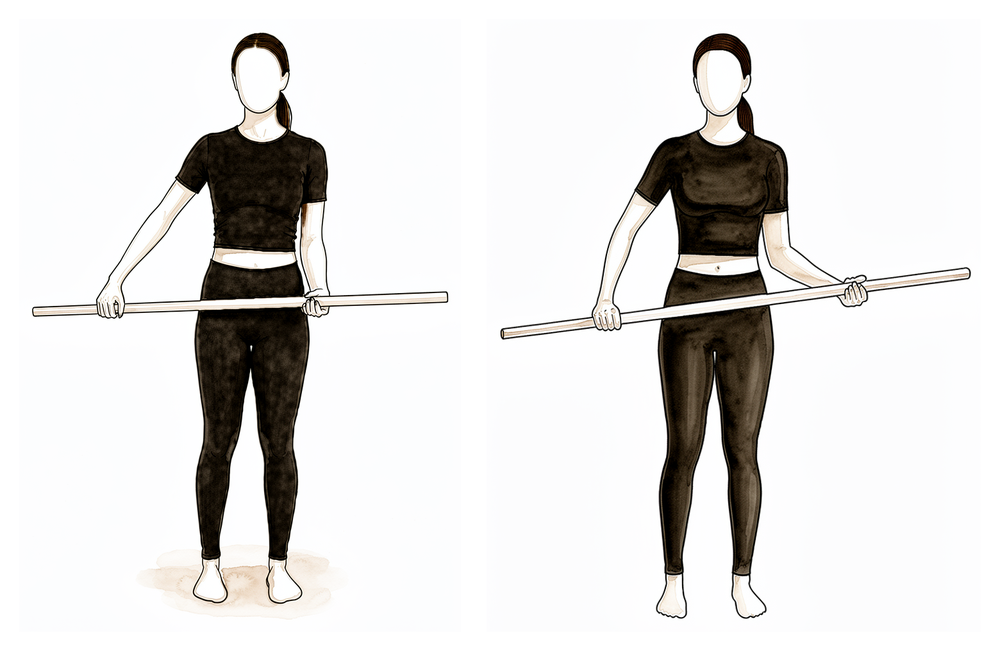
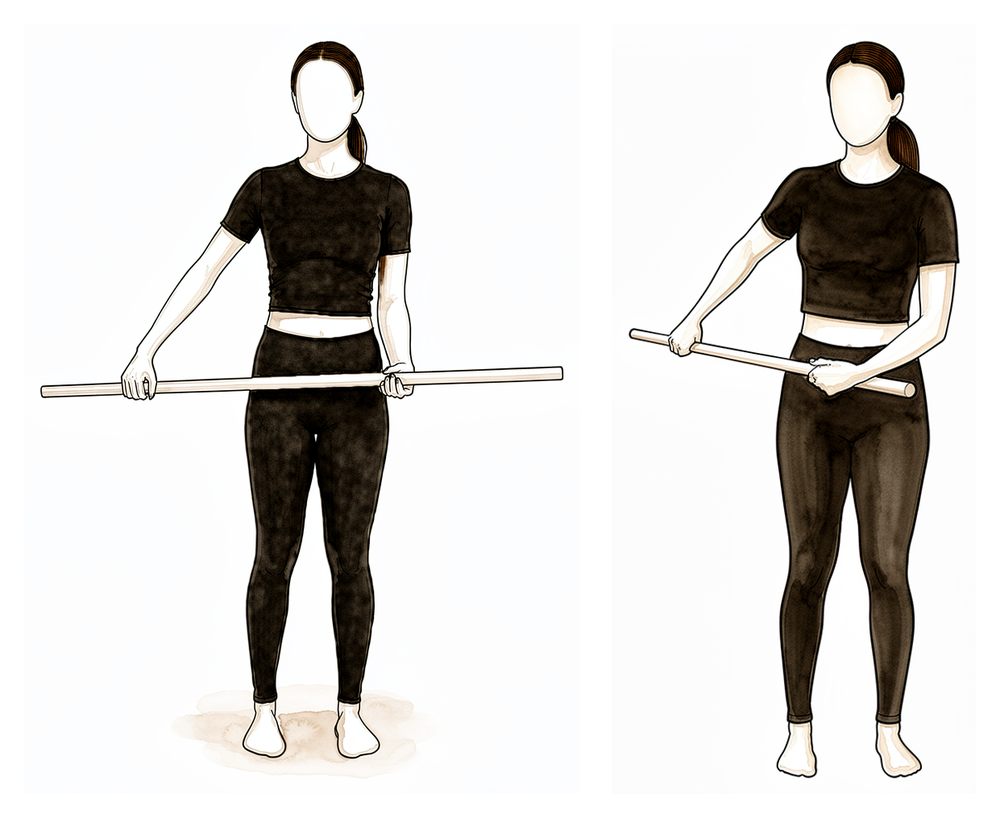
Rotación externa asistida mediante un palo
Acuéstese boca arriba, con el codo pegado al costado y doblado en ángulo recto. Sostenga un palo con ambas manos y use el brazo sano para girar hacia afuera la mano operada. Durante estas primeras semanas, no supere los 40 grados; se trata de un estiramiento limitado y controlado, no completo, para evitar tensión sobre el tendón en proceso de cicatrización.
Según las indicaciones de su fisioterapeuta, hasta unos 40 grados.
Kieran Hirpara 4.0
Rotación interna asistida mediante un palo
Utilizando el mismo palo, deje que su brazo sano guíe suavemente la mano operada hacia el interior, por delante del cuerpo, hasta unos 45 grados, y luego vuelva a la posición inicial. Mantenga el brazo operado relajado y no supere los límites iniciales; esto permite conservar la rotación interna sin ejercer carga sobre la tenodesis.
Según las indicaciones de su fisioterapeuta, hasta aproximadamente 45 grados.
Durante las primeras semanas, el objetivo es permitir que el tendón se adhiera al hueso mientras se mantiene el movimiento de las estructuras circundantes. Desde el inicio, su mano, muñeca y dedos permanecerán activos. El codo se moverá diariamente, pero de forma pasiva: utilice la otra mano para realizar la flexión y los movimientos de palma arriba/palma abajo, de modo que el bíceps permanezca relajado. El hombro se moverá suavemente dentro de los límites indicados, mediante ejercicios pendulares y movimientos asistidos. Utilice hielo para aliviar el dolor, tome analgésicos antes de los ejercicios y las sesiones de fisioterapia, y mantenga el cabestrillo puesto incluso mientras duerme. No levante ni cargue nada con el brazo operado, y no conduzca mientras sea necesario usar el cabestrillo. Las tareas ligeras con el antebrazo apoyado, como escribir o teclear, suelen ser aceptables siempre que no le causen molestias.
Para su fisioterapeuta:
Objetivos
- Proteger la fijación tendinosa mientras se integra al hueso
- Controlar el dolor, la hinchazón y la respuesta inflamatoria
- Lograr un rango de movimiento pasivo completo del codo y el antebrazo; un rango pasivo cómodo del hombro dentro de los límites indicados
- Mantener la función y postura de la escápula
Manejo
- Uso del cabestrillo durante aproximadamente 3–4 semanas, incluso por la noche; se irá retirando a partir de la semana 3
- Movilización pasiva del codo: flexión/extensión y supinación/pronación del antebrazo
- Movilización activa de la muñeca y la mano; ejercicios de apretar una pelota
- Movilización pasiva y activa asistida del hombro dentro de los límites indicados: ejercicios pendulares, flexión y abducción hasta unos 90 grados inicialmente, progresando según la tolerancia; rotación externa hasta 40 grados; rotación interna hasta unos 45 grados
- Ejercicios de retracción y fijación de la escápula (con el brazo apoyado), pasando luego a ejercicios isométricos; movilización cervical y corrección postural
- Crioterapia para el dolor y la hinchazón; analgesia previa a ejercicios y sesiones
- Coloque un rollo de toalla o una almohada pequeña bajo el codo al acostarse boca arriba, para evitar la extensión del hombro
Precauciones
- No realizar flexión activa del codo ni supinación resistida del antebrazo; el bíceps debe permanecer sin carga
- No realizar movimientos activos del hombro; no exceder los 40 grados en rotación externa; evitar extensión del hombro o abducción horizontal más allá de la posición neutra
- No levantar ni cargar nada con el brazo operado
- No aplicar masajes de fricción sobre la zona proximal del bíceps o del sitio de fijación tendinosa
- No conducir durante seis semanas (esto aplica a cualquier intervención quirúrgica en el hombro)
Criterios para avanzar
- La herida está curada y el dolor bien controlado
- Se ha logrado un rango pasivo completo de flexión/extensión del codo y rotación del antebrazo
- El rango pasivo del hombro es cómodo dentro de los límites establecidos
Fase II — Movimiento activo (Semana 4–6)
Kieran Hirpara 4.0
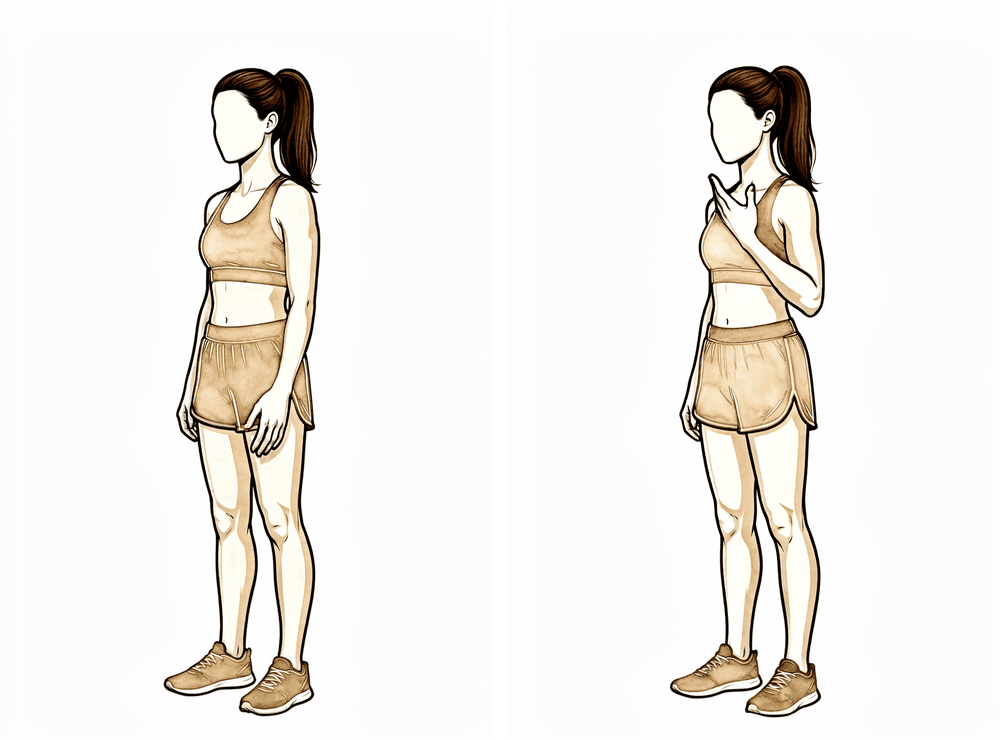
Flexión y extensión activas del codo
Flexione y extienda el codo por sus propios medios, sin sostener nada en la mano, y gire la palma de la mano hacia arriba y hacia abajo. En este momento, el bíceps se mueve, pero aún no actúa contra carga; mantenga el levantamiento al mínimo (no levante nada más pesado que una taza de té con ese brazo) hasta que su fisioterapeuta le indique avanzar.
Según las indicaciones de su fisioterapeuta.
Kieran Hirpara 4.0
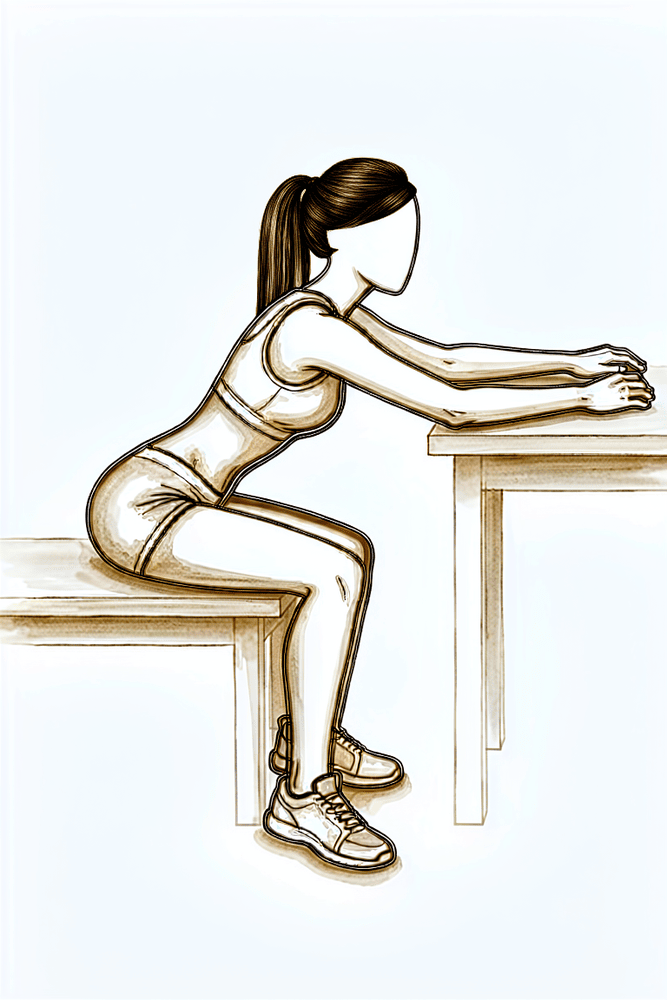
Deslizamiento sobre la mesa
Siéntese a una mesa con la mano apoyada sobre una toalla o un paño. Deslice la mano hacia adelante a lo largo de la superficie, inclinándose de modo que el brazo se eleve frente a usted; luego deslícela de nuevo hacia atrás. La mesa soporta el peso, lo que facilita el movimiento activo del hombro a medida que recupera su amplitud de movimiento.
Según las indicaciones de su fisioterapeuta.
Kieran Hirpara 4.0
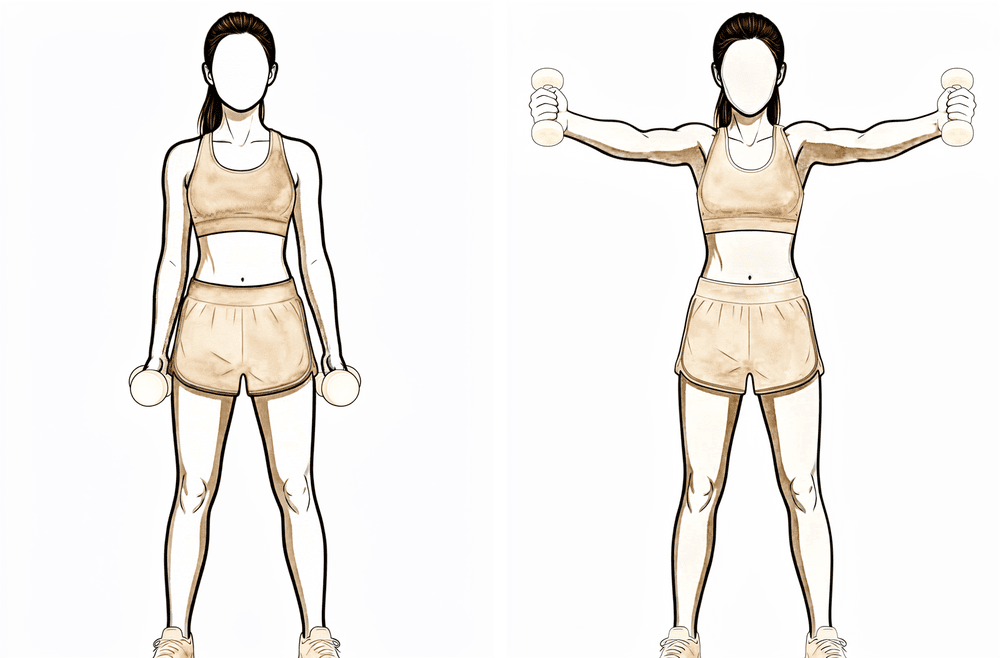
Elevación activa en el plano escapular
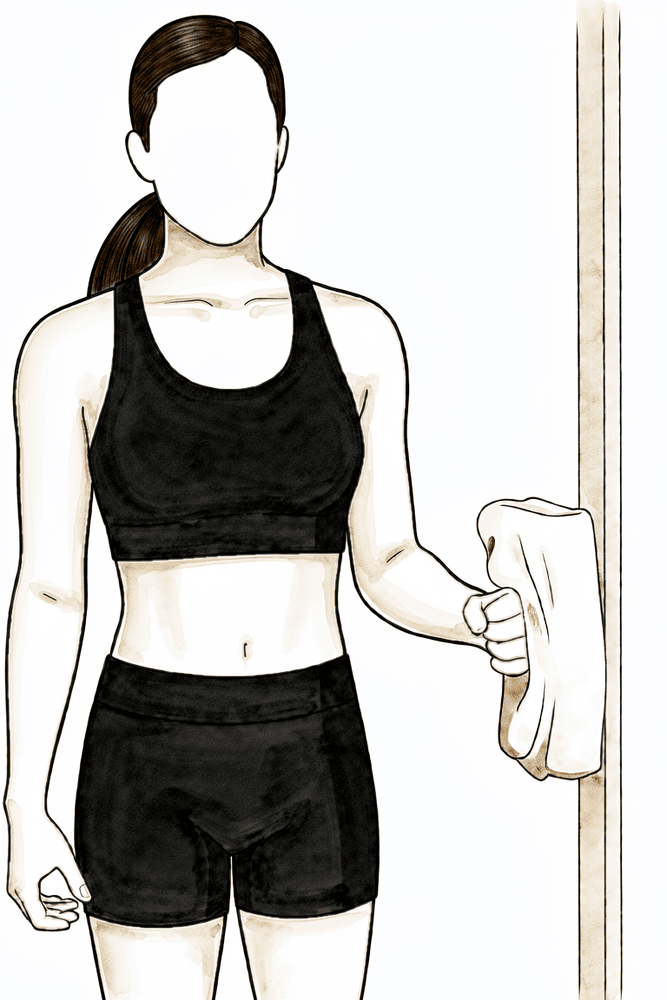
Párese y eleve el brazo operado hacia arriba y ligeramente hacia adelante — aproximadamente a mitad de camino entre mantenerlo recto hacia adelante y hacia el costado — con el pulgar apuntando hacia arriba, como si sostuviera una lata llena. Eleve el brazo por sus propios medios, hasta donde le resulte cómodo, y luego bájelo lentamente. Esto restaura el movimiento activo de elevación del hombro sin necesidad de añadir ningún peso.
Según las indicaciones de su fisioterapeuta.
Kieran Hirpara 4.0
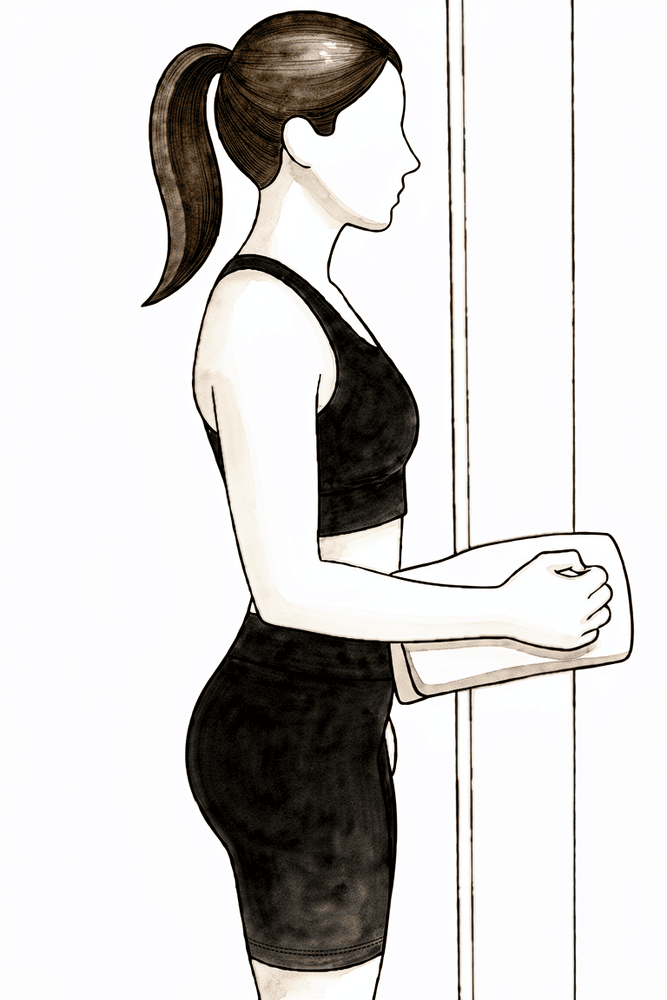
Rotación externa isométrica
Párese con el codo pegado al costado y doblado en ángulo recto, con el dorso de la mano apoyado contra una pared o marco de puerta. Presione suavemente hacia afuera sin mover el brazo, mantenga la posición unos segundos y luego relájese. Esto comienza a fortalecer el manguito rotador sin ningún movimiento ni carga sobre el bíceps.
Mantenga la posición unos segundos, varias veces; según las indicaciones de su fisioterapeuta.
Kieran Hirpara 4.0
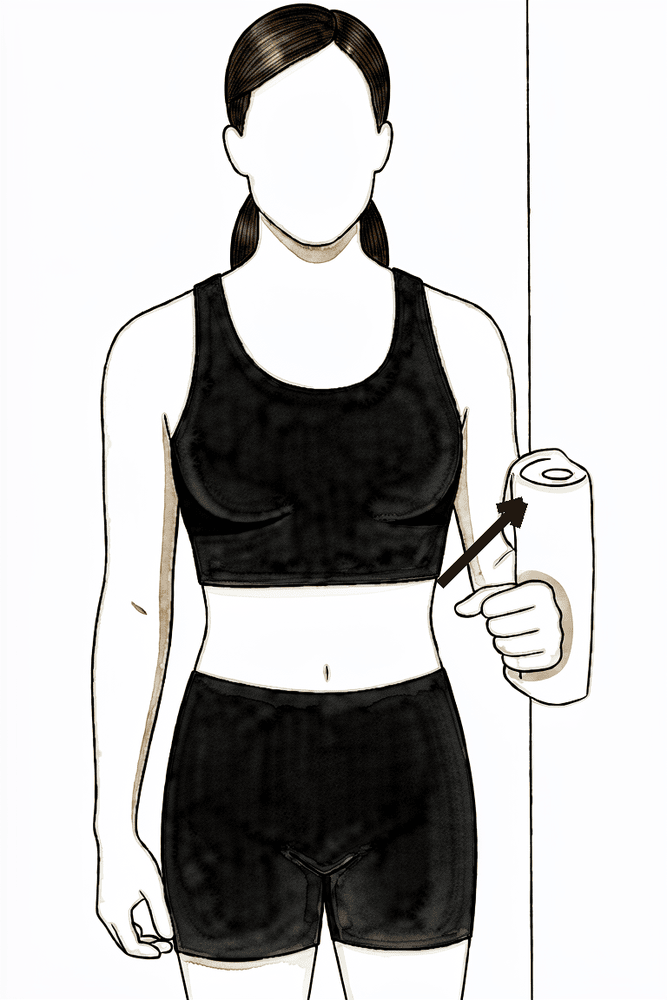
Rotación interna isométrica
Párese con el codo pegado al costado y doblado en ángulo recto; coloque la palma de la mano contra una pared o marco de puerta. Presione suavemente hacia adentro sin mover el brazo, mantenga la posición unos segundos y luego relájese. Se trata de una contracción submáxima: firme pero sin esfuerzo excesivo, nunca hasta el punto de tensión.
Mantenga la posición unos segundos, varias veces; según las indicaciones de su fisioterapeuta.
Kieran Hirpara 4.0
Abducción isométrica
Párese de lado frente a una pared, con el codo pegado al cuerpo. Presione suavemente la parte externa del brazo contra la pared, como si intentara levantarlo hacia el costado, sin permitir que se mueva; mantenga esa posición unos segundos y luego relájese. Esto fortalece los músculos del hombro de forma estática antes de iniciar cualquier carga activa.
Mantenga la posición unos segundos, varias veces; según las indicaciones de su fisioterapeuta.
Kieran Hirpara 4.0
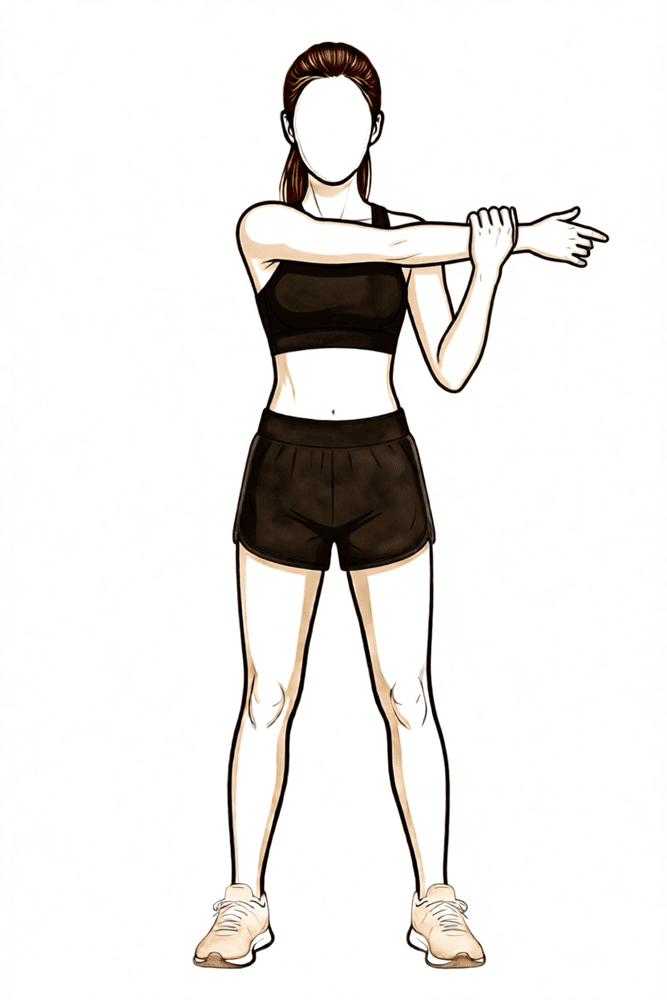
Estiramiento cruzado del cuerpo
Lleve el brazo operado cruzando el pecho y use el otro brazo para desplazarlo suavemente aún más, hasta que sienta un estiramiento cómodo en la parte posterior del hombro. Mantenga esa posición y luego relájese. Esto ayuda a aliviar la tensión en la parte posterior del hombro a medida que recupera su rango de movimiento activo.
Según las indicaciones de su fisioterapeuta.
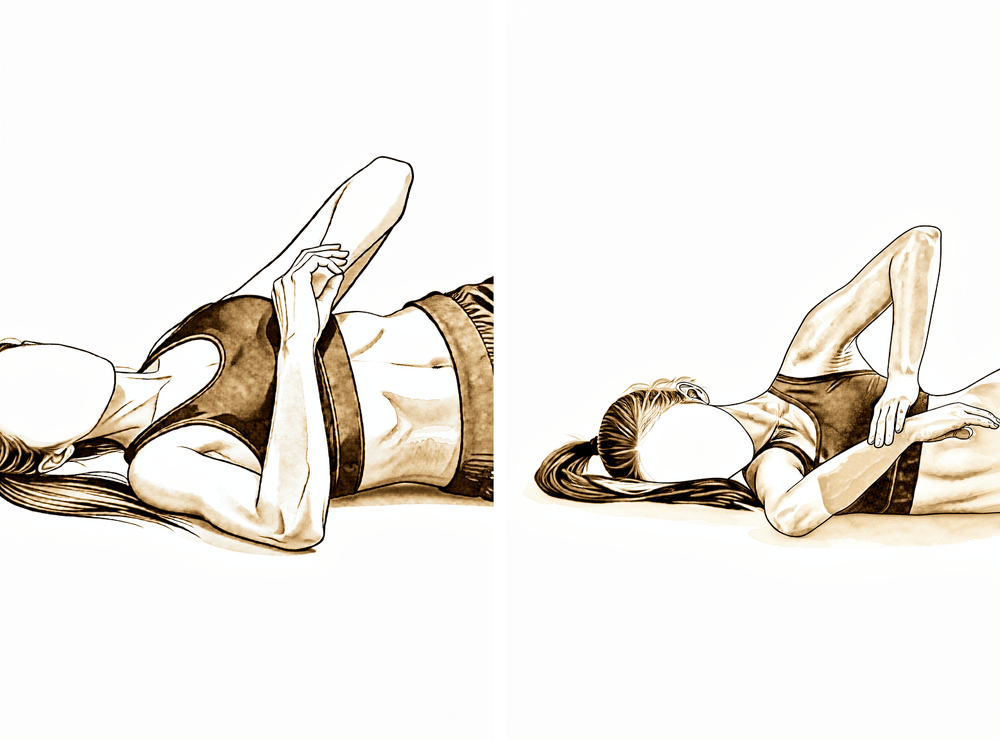
Kieran Hirpara 4.0
Estiramiento de “dormilón”
Acuéstese sobre el lado de la cirugía, con el brazo extendido hacia adelante y el codo doblado en ángulo recto. Con la otra mano, presione suavemente el antebrazo hacia la cama hasta que sienta un estiramiento en la parte posterior del hombro. Haga el movimiento con suavidad: relájese durante el estiramiento en lugar de forzarlo.
Según las indicaciones de su fisioterapeuta.
Kieran Hirpara 4.0
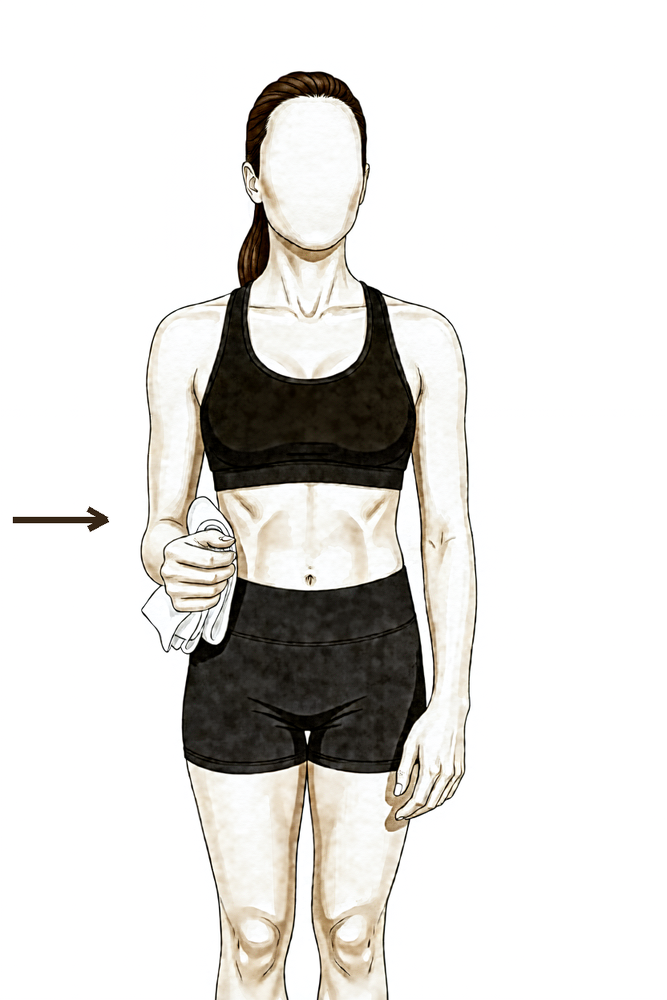
Contracción isométrica de compresión (aducción)
Párese con el codo pegado al costado y una toalla enrollada entre el brazo y el cuerpo. Apriete suavemente el brazo hacia adentro contra la toalla SIN moverlo; haga un esfuerzo leve, aproximadamente una cuarta parte de su fuerza, sin sentir dolor. Mantenga la posición y luego relájese.
Mantenga la posición durante ~5 segundos, con suavidad (~25% de esfuerzo), según las indicaciones de su fisioterapeuta.
Una vez retirado el cabestrillo, el brazo comienza a moverse por sí solo. El hombro pasa de realizar movimientos asistidos a movimientos activos en todas las direcciones; el codo ahora se flexiona y gira activamente, aunque sin carga alguna. El bíceps se mueve, pero aún no funciona plenamente: mantenga los levantamientos al mínimo (no levante nada más pesado que una taza de té con ese brazo) y deje los empujes, tirones y cargas para el otro lado. En esta fase, el trabajo ligero de oficina suele ser cómodo de realizar. La conducción se reanuda a partir de la sexta semana, una vez que su cirujano le dé autorización y usted pueda controlar el vehículo de forma cómoda y segura.
Para su fisioterapeuta:
Objetivos
- Restauración gradual de la amplitud de movimiento activa completa del hombro y el codo
- Mecánica escapular normal durante el movimiento
- Iniciar ejercicios isométricos submáximos del hombro
- Uso funcional ligero del brazo a nivel de la cintura
Manejo
- Ejercicios de movilidad activa-asistida del hombro, progresando hacia movimientos activos en todos los planos (por ejemplo, progresión en posición de tumbona, deslizamientos contra la pared o barandilla, flexión supina hasta abducción en posición de pie)
- Flexión/extensión activa del codo y supinación/pronación del antebrazo, sin resistencia
- Ejercicios isométricos submáximos del hombro: rotación interna, rotación externa, abducción y aducción
- Continuar con ejercicios de estabilización escapular y corrección postural
- Masaje de la cicatriz a medida que la herida madura; evitar fricción cruzada sobre el sitio de tenodesis
- Estiramientos de la cápsula posterior (estiramiento cruzado del cuerpo, estiramiento “sleeping arm”) según sea necesario
- Caminar o usar bicicleta estática para mantener la forma física; no cargar peso con el brazo afectado
Precauciones
- No realizar ejercicios de resistencia para el bíceps; no cargar los flexores ni supinadores del codo
- No levantar nada con el brazo operado; no correr todavía
- Evitar sobrecargar el tendón en recuperación mediante estiramientos agresivos o terapia manual
Criterios para avanzar
- Amplitud de movimiento activa completa y sin dolor del hombro, codo y antebrazo
- Mecánica escapular adecuada durante el movimiento y el uso funcional ligero
- Control adecuado del dolor
Fase III — Fortalecimiento (Semana 6–12)
Kieran Hirpara 4.0
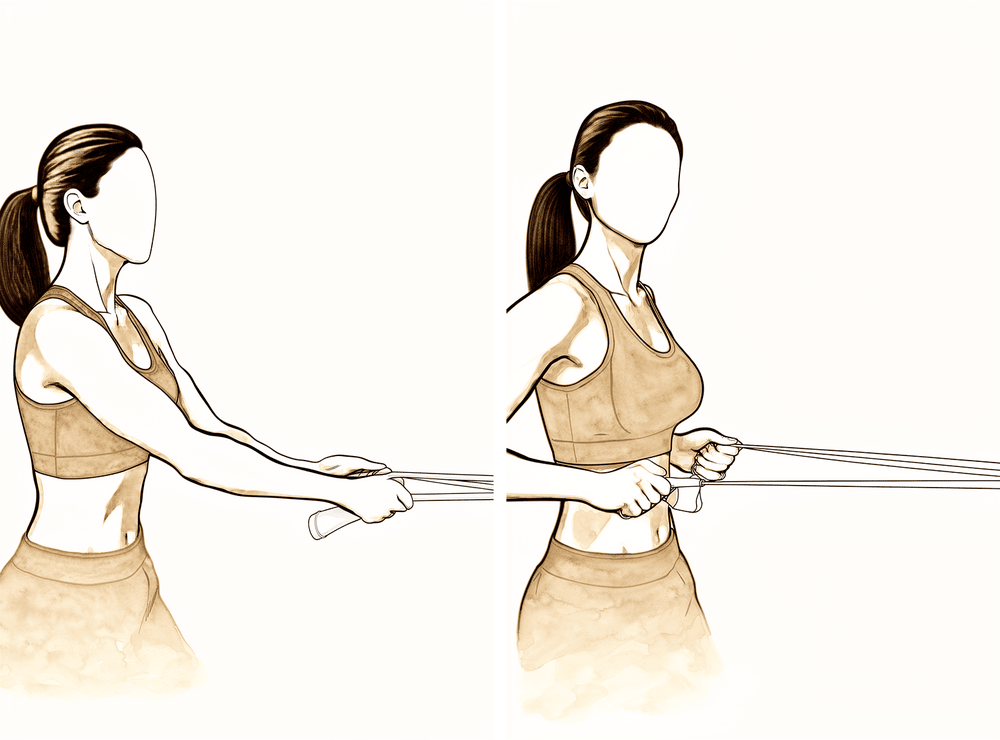
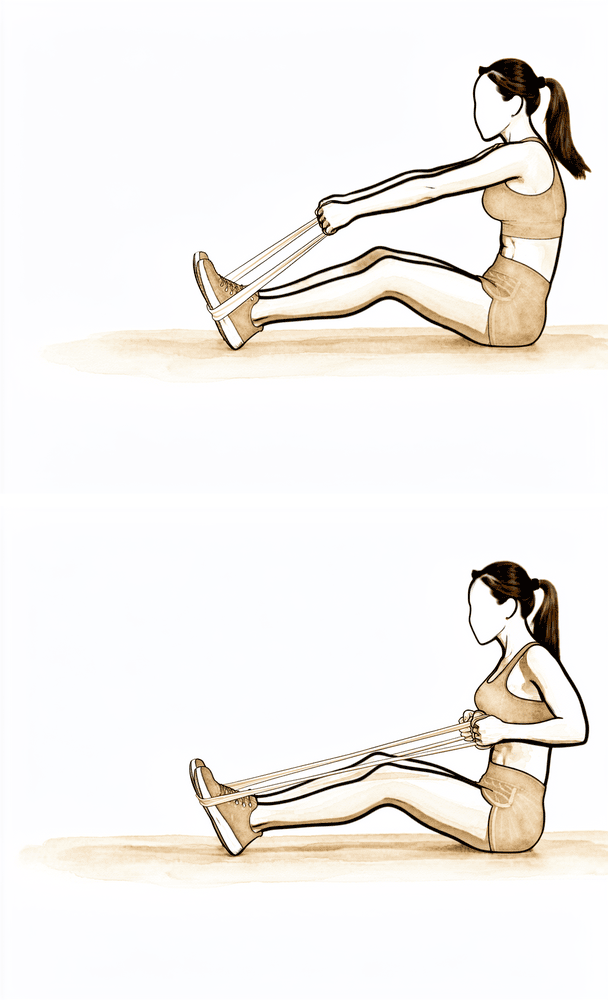
Remo con banda elástica
Fije una banda elástica de ejercicios delante de usted, a una altura aproximada de la cintura. Tire de la banda hacia usted, llevando el omóplato hacia atrás y hacia abajo mientras el codo pasa por el costado; luego regrese a la posición inicial de forma controlada. Este ejercicio forma parte del programa para los omóplatos: mantenga la carga baja y el número de repeticiones alto.
Según las indicaciones de su fisioterapeuta.
Kieran Hirpara 4.0
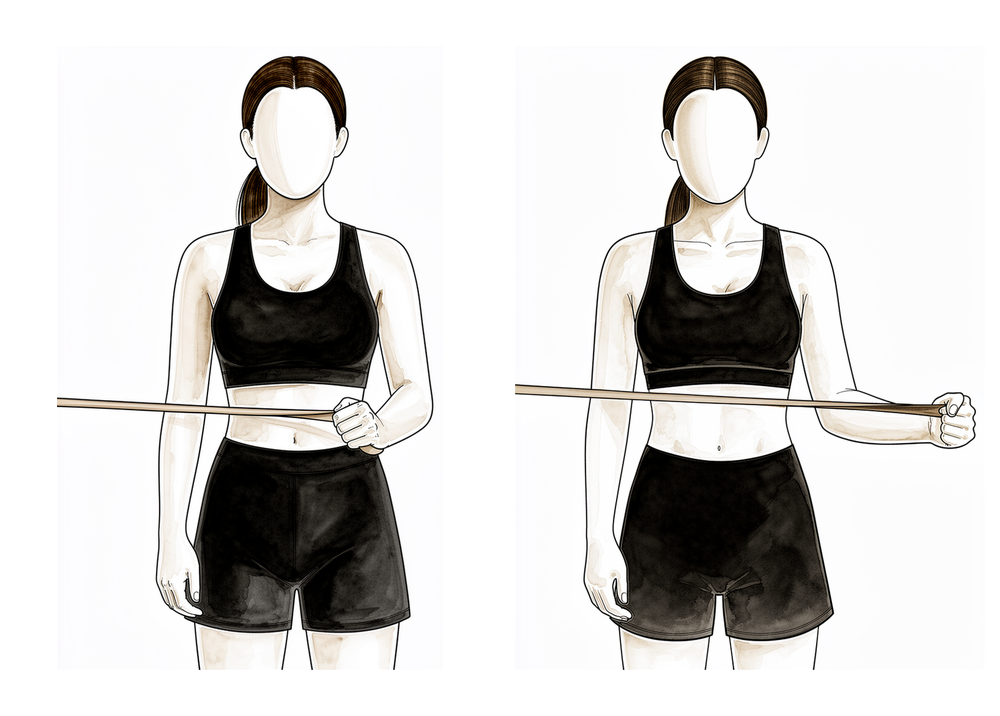
Rotación externa con banda elástica
Fije una banda elástica a la altura de la cintura. Con el codo pegado al costado y doblado en ángulo recto, tire de la banda hacia afuera, rotando el antebrazo lejos del cuerpo, y luego regrese lentamente a la posición inicial. Comience con poca resistencia y realice muchas repeticiones; esto fortalece el manguito rotador.
Siguiendo las indicaciones de su fisioterapeuta: baja carga y muchas repeticiones.
Kieran Hirpara 4.0
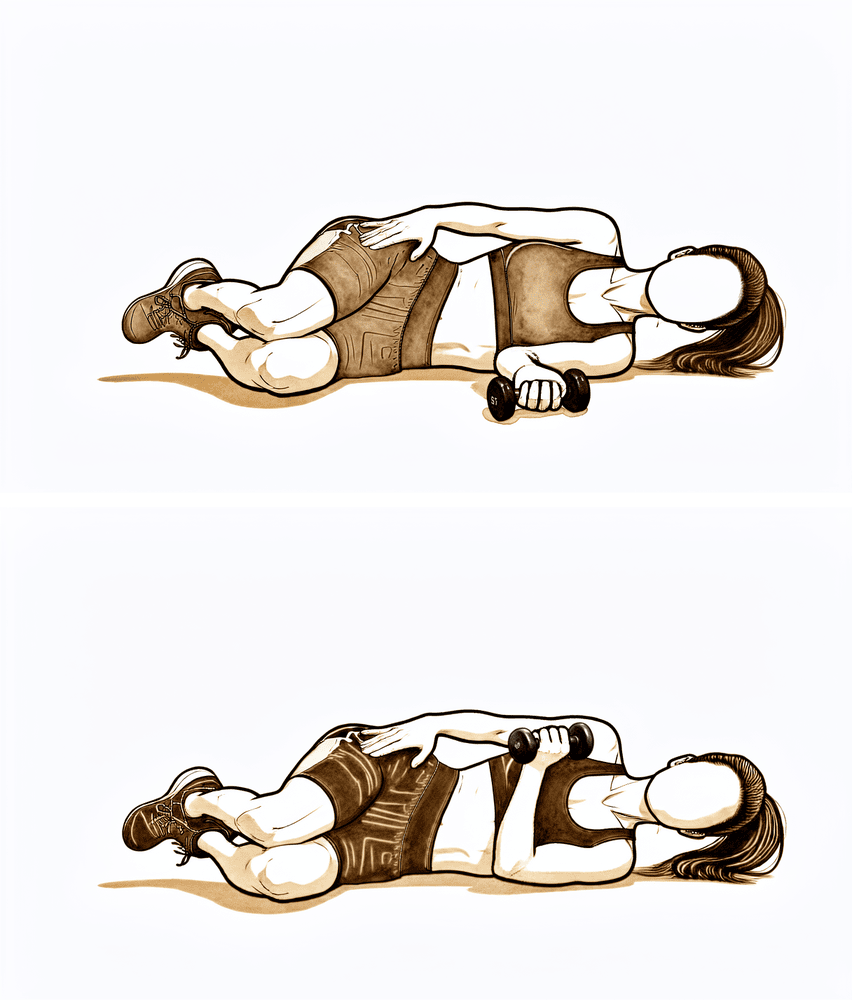
Rotación interna resistida
Acuéstese sobre el lado operado, sosteniendo un peso ligero en la mano y con el codo doblado junto al cuerpo. Levante el peso rotando el antebrazo hacia arriba, en dirección al cuerpo, y luego bájelo lentamente. Esto fortalece los rotadores internos del manguito rotador; al principio, utilice un peso ligero.
Siguiendo las indicaciones de su fisioterapeuta: carga baja y muchas repeticiones.
Kieran Hirpara 4.0
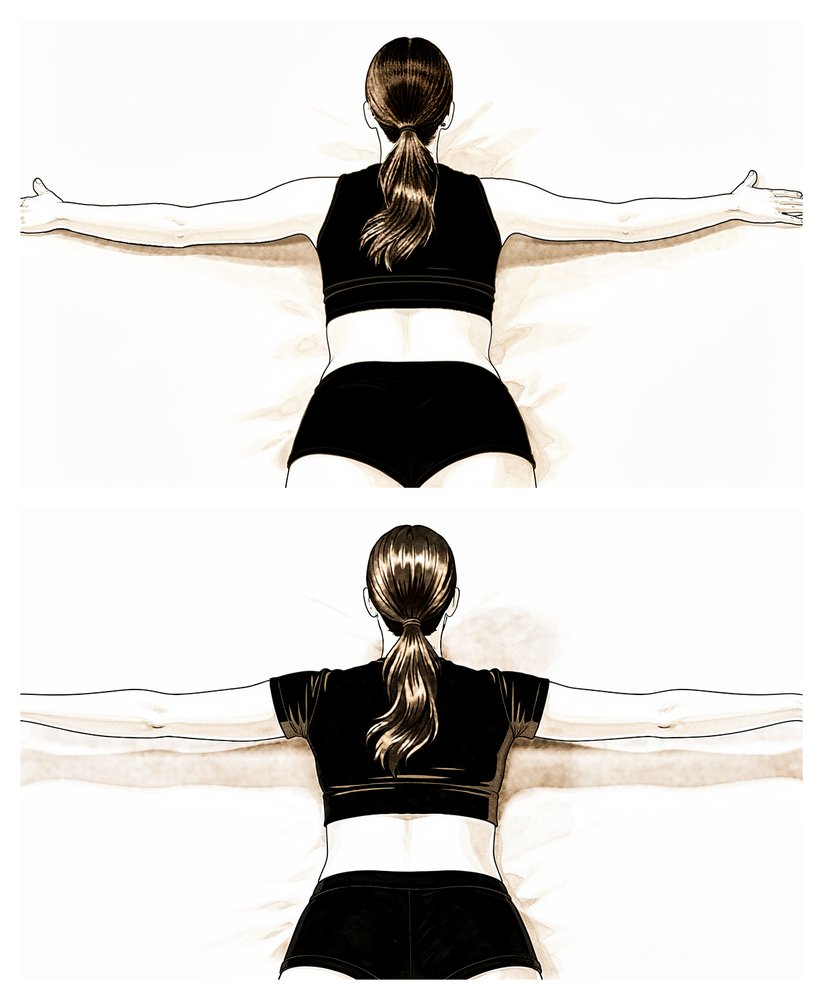
Elevación en T en posición prona
Acuéstese boca abajo con los brazos colgando por el borde de la camilla. Eleve el brazo operado hacia un lado hasta alcanzar la altura del hombro, contraiendo el omóplato de modo que los brazos formen una “T”; luego bájelo lentamente. Esta es una parte del programa de ejercicios para el omóplato: el control es más importante que el peso.
Según las indicaciones de su fisioterapeuta.
Kieran Hirpara 4.0
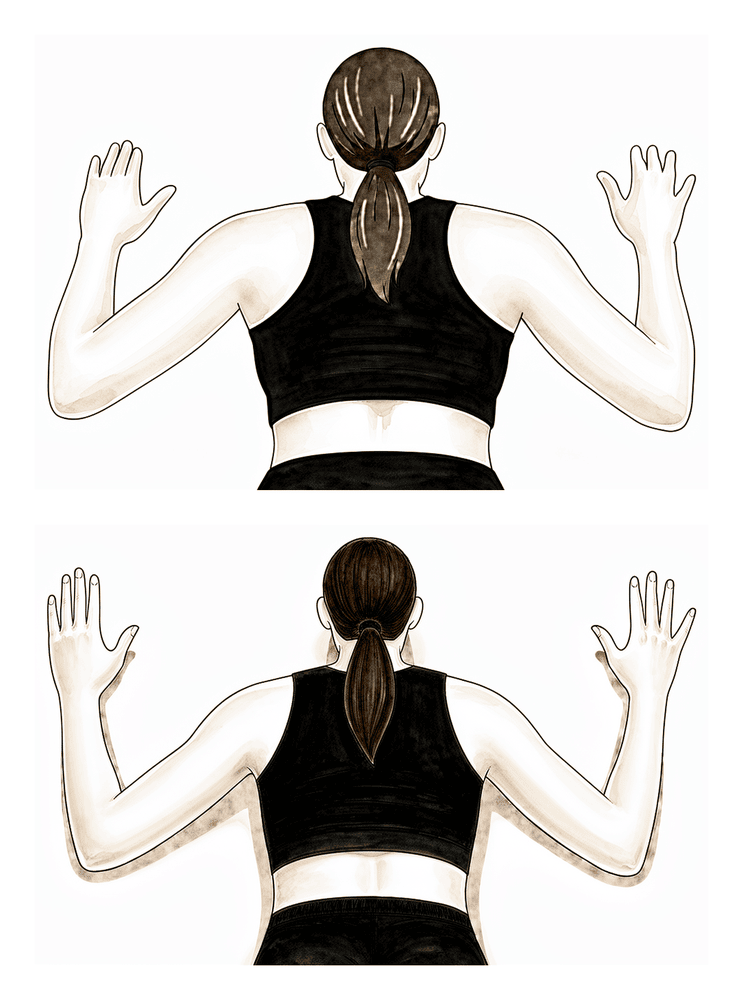
Elevación en W en posición prona
Acuéstese boca abajo y lleve los codos hacia atrás y hacia abajo, en dirección a la cintura; doble los brazos de modo que formen una “W”, junte los omóplatos y luego baje los brazos lentamente. Este ejercicio fortalece los músculos de la parte inferior de los omóplatos, que contribuyen a mantener una buena postura.
Según las indicaciones de su fisioterapeuta.
Kieran Hirpara 4.0
Remo bajo
Con el brazo a un lado del cuerpo, presione hacia abajo y hacia atrás contra una banda elástica o una superficie, acercando la escápula hacia abajo y hacia adentro; luego relájese. Esto forma parte del programa de ejercicios para la escápula, cuyo objetivo es mejorar el control muscular en la zona cercana a dicho hueso.
Según las indicaciones de su fisioterapeuta.
Kieran Hirpara 4.0
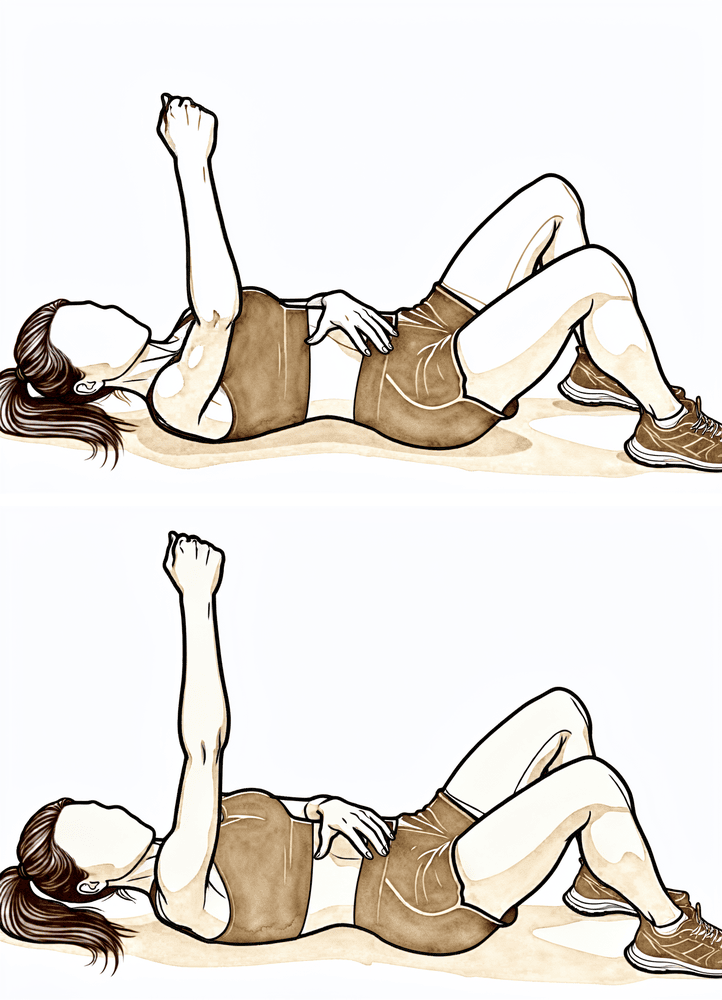
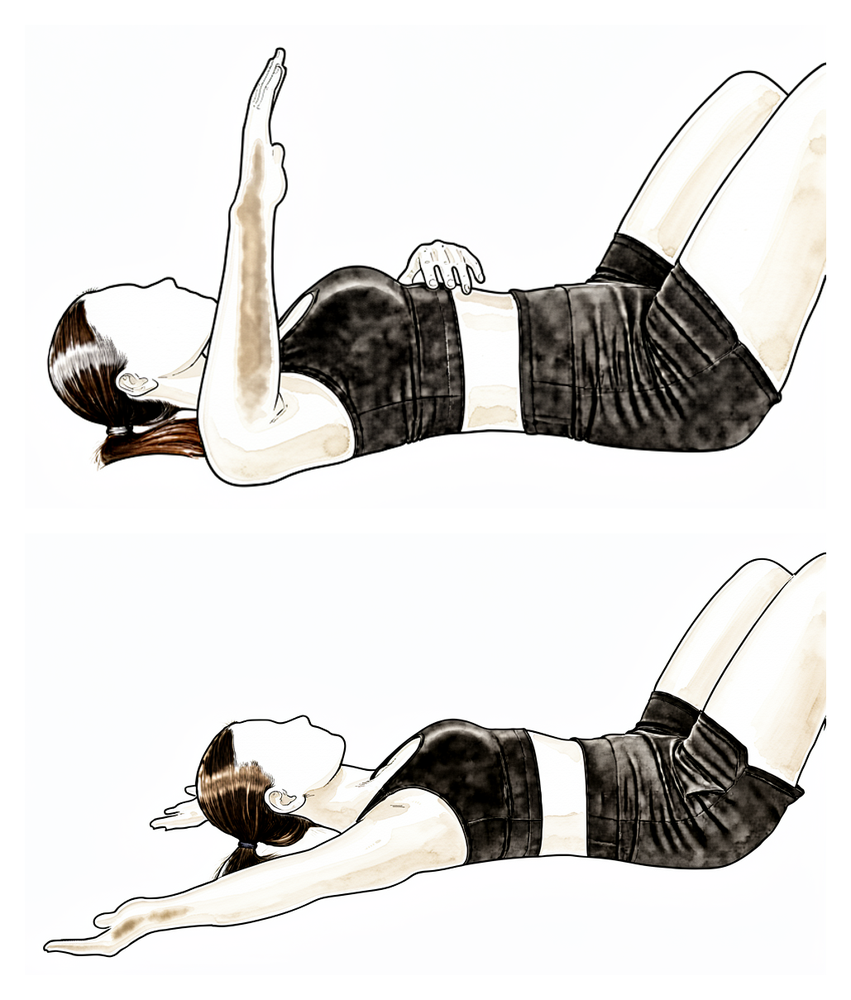
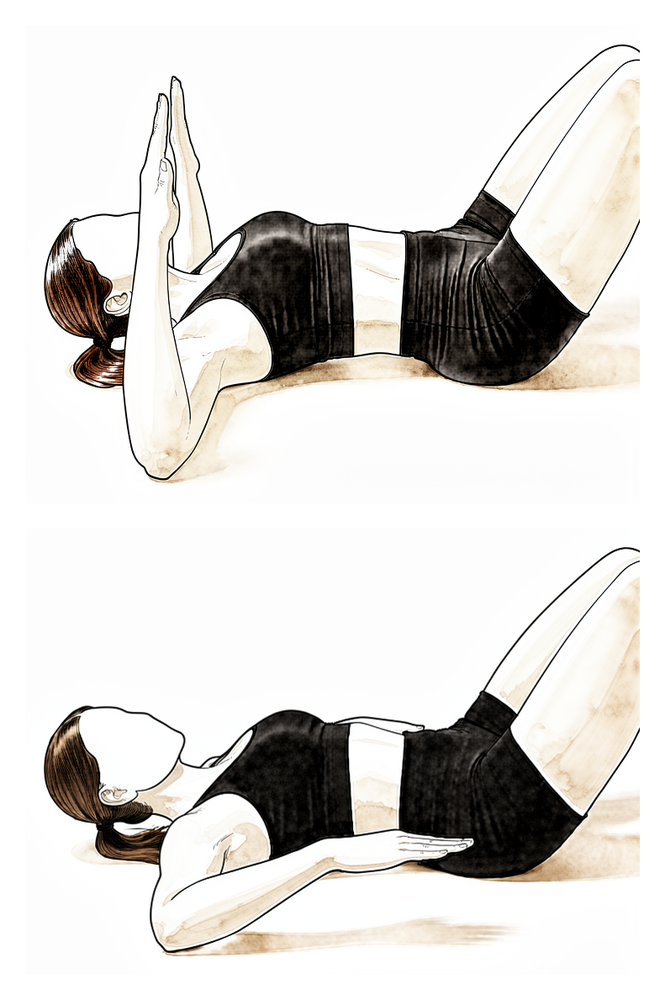
Empuje del serrato hacia el techo
Acuéstese boca arriba y estire el brazo operado hacia arriba, en dirección al techo. Después, haga un puñetazo hacia arriba un poco más para que el omóplato se levante del suelo, y luego bájelo de nuevo. Esto ejercita el músculo serrato, que mantiene el omóplato adherido a las costillas.
Según las indicaciones de su fisioterapeuta.
Kieran Hirpara 4.0
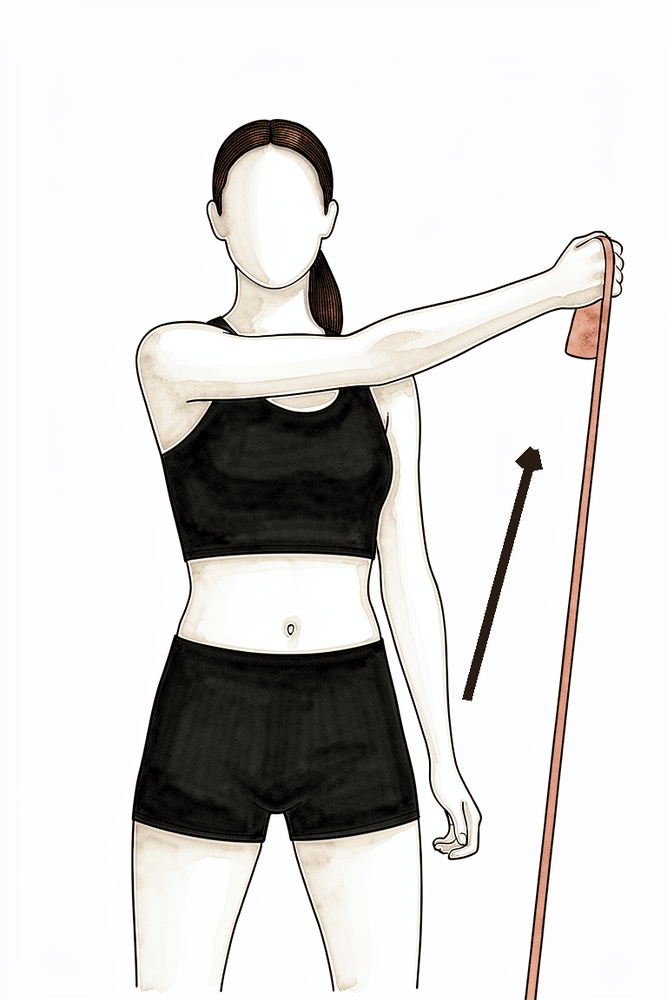
Patrón diagonal con banda (D1)
Utilizando una banda elástica, desplace el brazo en diagonal, desde el frente del cuerpo hacia arriba y hacia afuera, y luego regréselo de forma controlada. Estos movimientos diagonales ayudan a recuperar la fuerza coordinada y funcional del hombro.
Según las indicaciones de su fisioterapeuta.
Kieran Hirpara 4.0
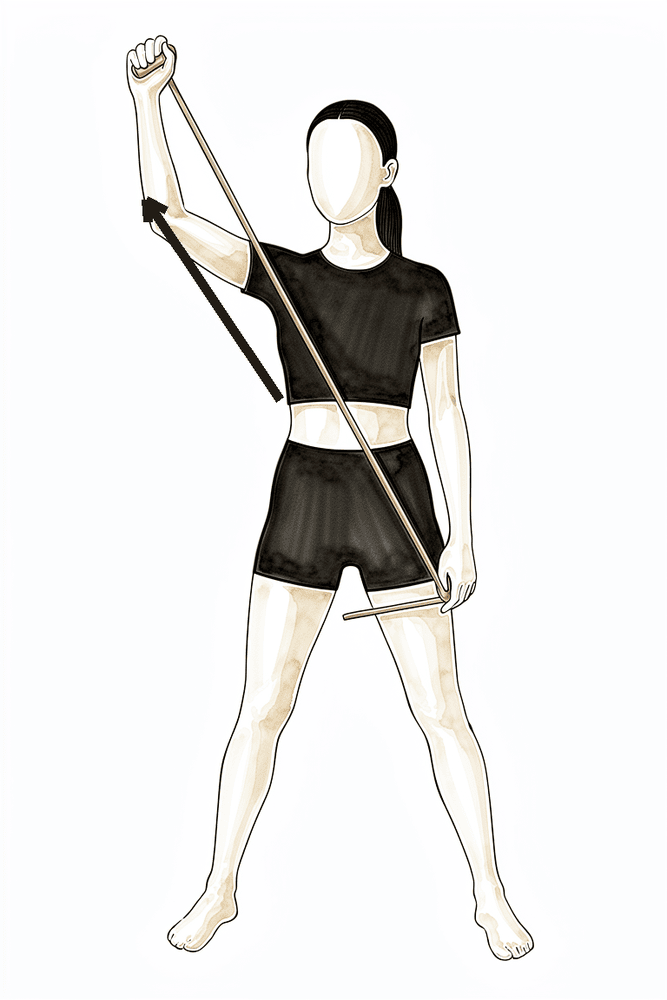
Patrón diagonal con banda (D2)
Utilizando una banda elástica, mueva el brazo en diagonal: desde una posición baja, cruzando el cuerpo hacia arriba y hacia afuera hasta por encima de la cabeza, y luego controle su descenso. Se trata de otro movimiento diagonal que fortalece los músculos mediante amplitudes de movimiento más completas, similares a las que se usan en deportes.
Según las indicaciones de su fisioterapeuta.
Kieran Hirpara 4.0
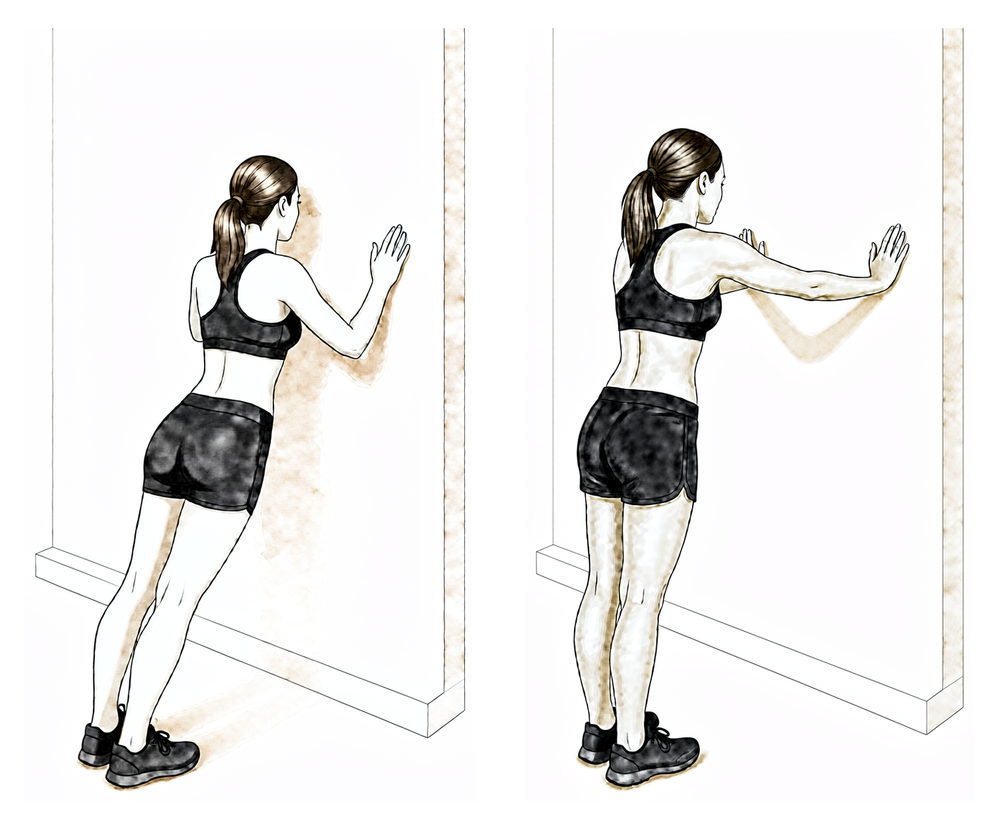
Flexión contra la pared «plus»
Párese con ambas manos apoyadas en una pared a la altura de los hombros. Manteniendo los codos rectos, empuje el pecho lejos de la pared de modo que los omóplatos se desplacen hacia adelante; luego relájese y regrese a la posición inicial. Este es el punto de partida para la progresión de las flexiones: primero contra la pared, luego contra un mostrador, después de rodillas y finalmente en el suelo, según se indique.
Según las indicaciones de su fisioterapeuta.
Kieran Hirpara 4.0
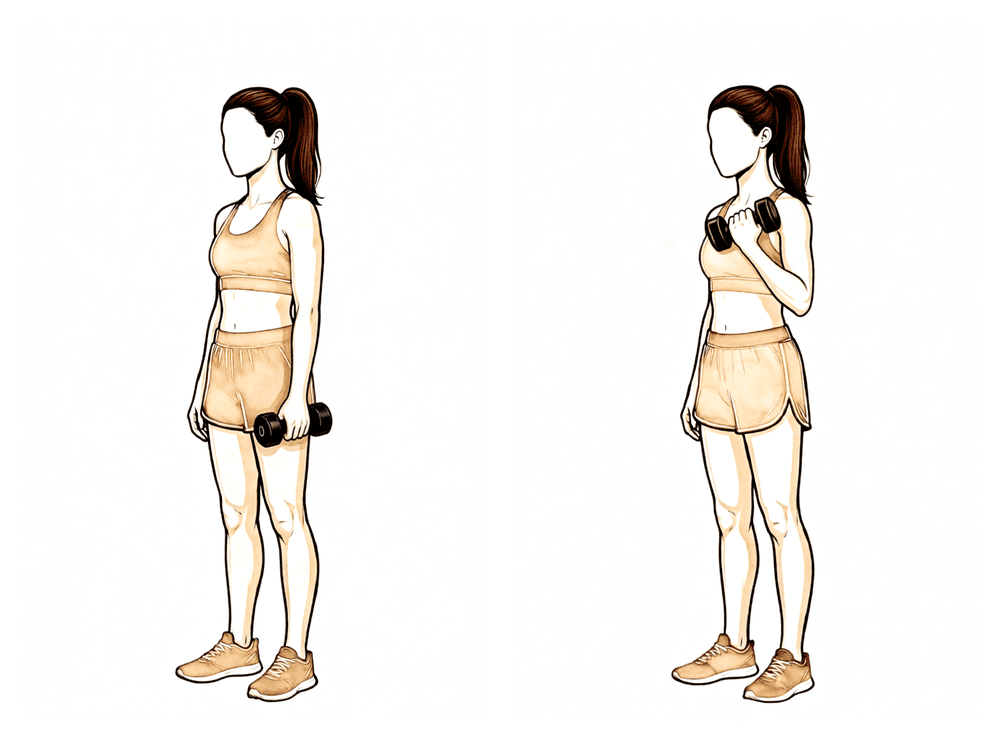
Flexión de bíceps
No antes de la semana 10. Con un peso ligero en la mano y el codo pegado al costado, doble el codo para levantar el peso y luego bájelo lentamente. De la misma manera se añade la rotación resistida con la palma hacia arriba. Comience con un peso ligero y vaya aumentándolo poco a poco; este es, deliberadamente, el último ejercicio destinado a cargar el tendón en proceso de curación.
A partir de la semana 10: carga baja, muchas repeticiones
Kieran Hirpara 4.0
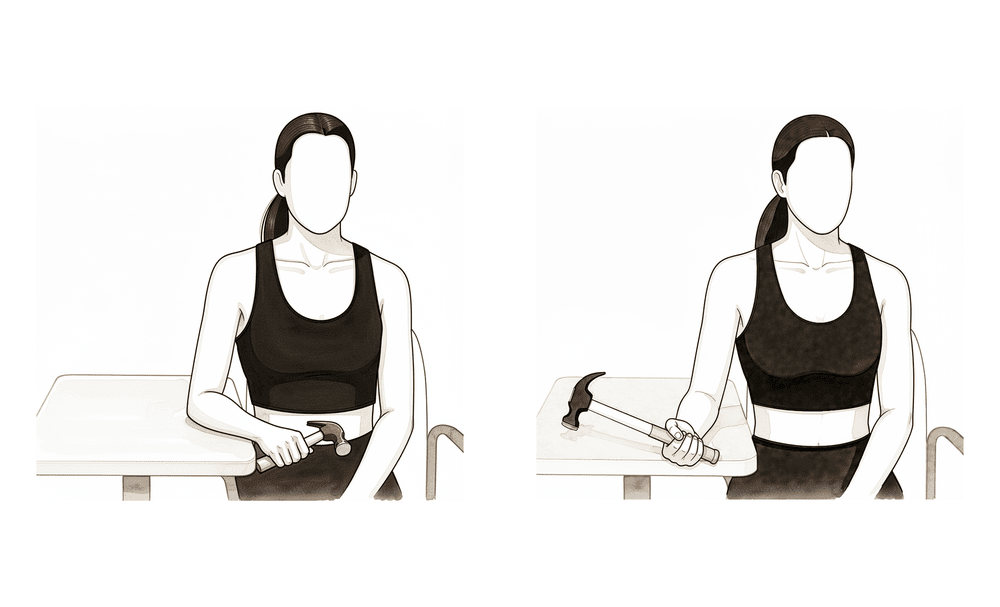
Rotación de antebrazo con resistencia
No antes de la semana 10. Apoye el antebrazo sobre una mesa con la mano por fuera del borde, sosteniendo un peso ligero. Gire lentamente la palma hacia arriba y luego hacia abajo, manteniendo el movimiento controlado. Girar la palma hacia arriba ejercita directamente al bíceps, por eso este ejercicio espera hasta la misma etapa que las flexiones de bíceps: comience con un peso ligero y vaya aumentándolo poco a poco.
A partir de la semana 10: carga baja, muchas repeticiones
Kieran Hirpara 4.0
Rotación externa en posición 90/90 (con banda elástica)
Con el brazo extendido hacia el lateral a la altura del hombro y el codo doblado en ángulo recto, gire el antebrazo hacia atrás y hacia arriba contra una banda elástica o peso ligero, y luego bájelo lentamente. Este ejercicio fortalece el manguito rotador en la posición elevada (de lanzamiento).
2 a 3 series de 10 a 15 repeticiones, con baja resistencia.
Kieran Hirpara 4.0
Rotación interna en posición 90/90 (banda)
Desde la misma posición, con el brazo extendido hacia el lateral a la altura del hombro, gire el antebrazo hacia adelante y hacia abajo, en dirección a los pies, oponiéndose a la resistencia de una banda elástica o peso ligero; luego regrese a la posición inicial de forma controlada.
2 a 3 series de 10 a 15 repeticiones, con baja resistencia.
Kieran Hirpara 4.0
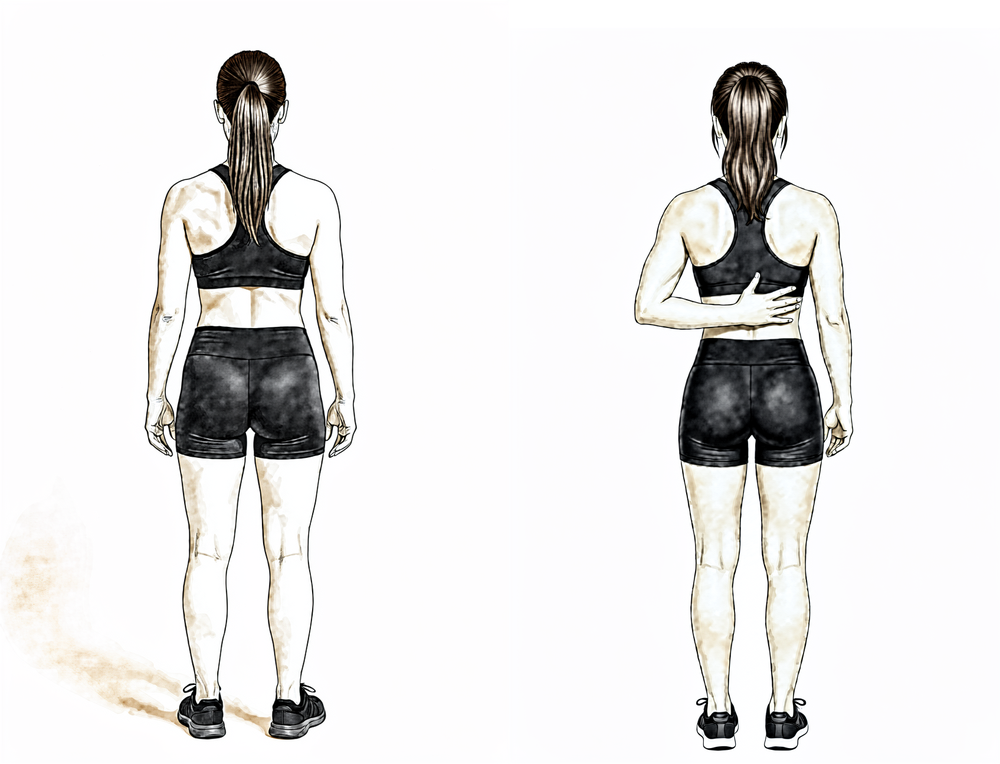
Alcance de la mano detrás de la espalda
De pie, coloque el dorso de la mano operada contra la parte baja de su espalda y deslícela suavemente hacia arriba a lo largo de la columna, hasta donde le resulte cómodo, utilizando únicamente sus propios músculos; luego bájela. Realice el movimiento únicamente dentro de un rango cómodo y nunca lo fuerce.
Según las indicaciones de su fisioterapeuta.
Kieran Hirpara 4.0
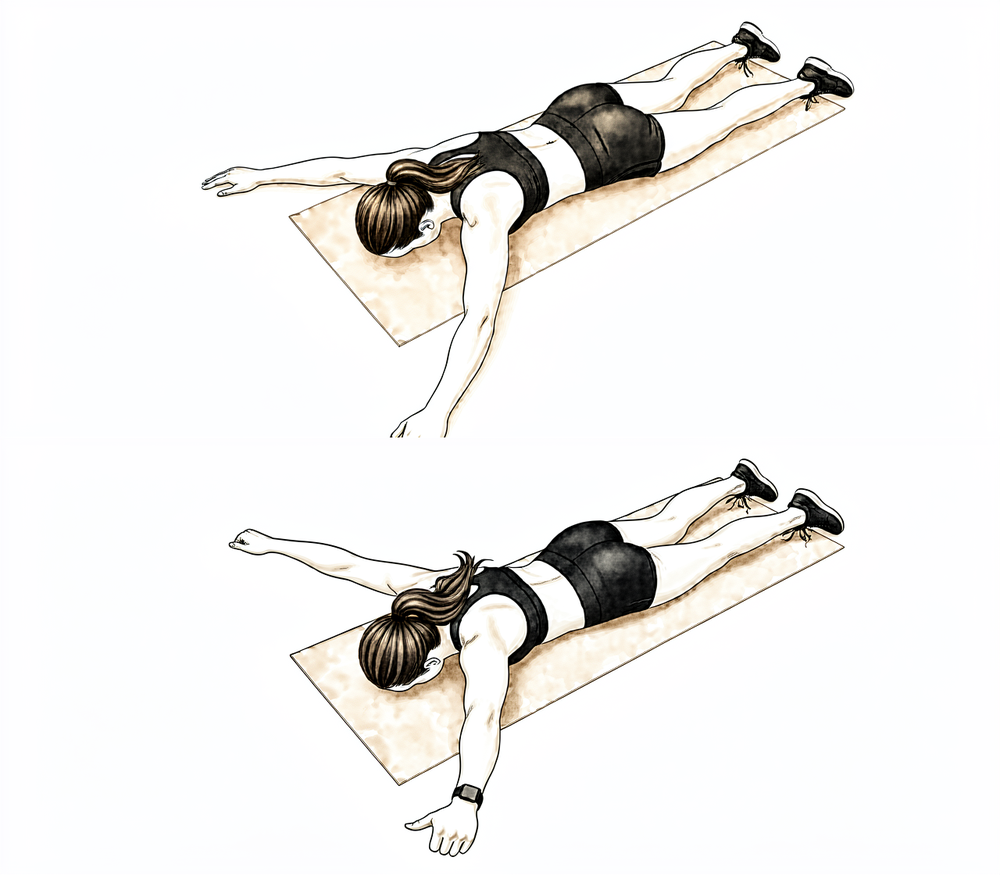
Elevación en Y en posición prona (parte inferior de la escápula)
Acuéstese boca abajo; extienda el brazo operado por encima de la cabeza y hacia afuera formando un ángulo de unos 45°, de modo que el pulgar quede apuntando hacia arriba. Levante ligeramente el brazo de la superficie, llevando la escápula hacia abajo y hacia atrás; luego bájelo despacio. El movimiento debe ser suave, pues así se trabajan los músculos inferiores de la escápula.
Según las indicaciones de su fisioterapeuta: ejercicios suaves y con muchas repeticiones.
Kieran Hirpara 4.0
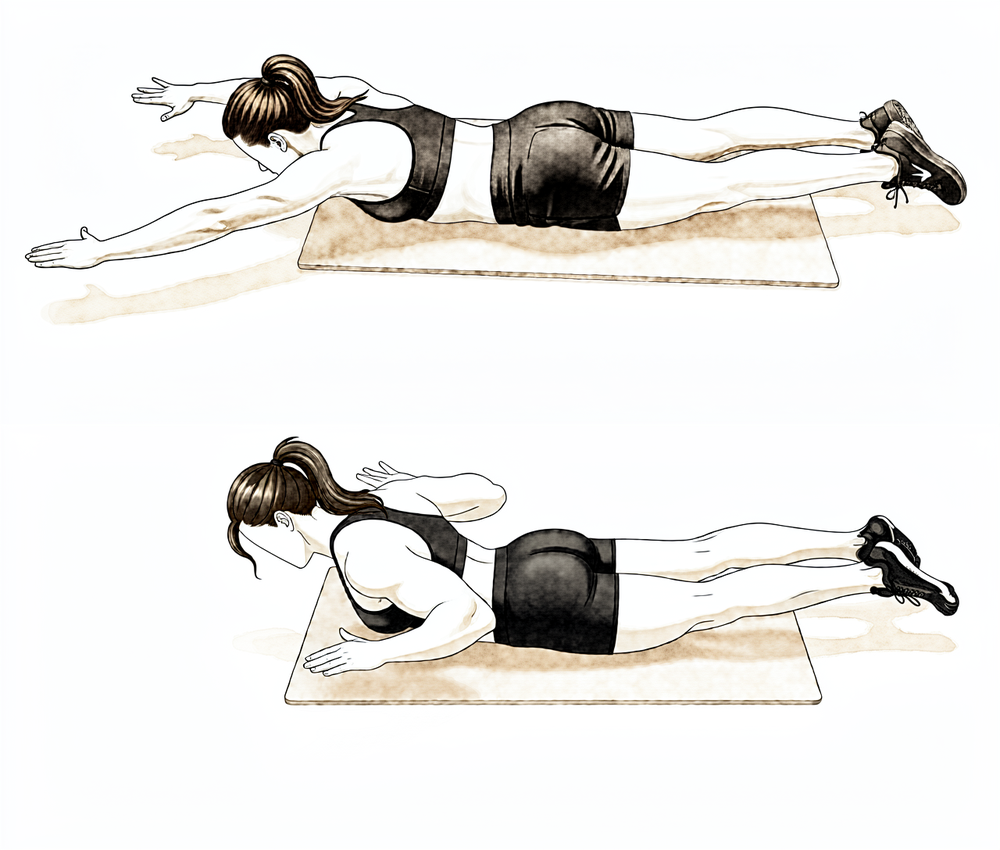
Remo en posición prona
Acuéstese boca abajo con el brazo operado colgando hacia el suelo. Levante el codo hacia el techo, acercando la escápula a la columna vertebral, y luego bájelo lentamente. Comience sin carga alguna y mantenga el movimiento bajo control.
Según las indicaciones de su fisioterapeuta.
El fortalecimiento comienza de forma suave, partiendo desde el omóplato hacia afuera: primero se trabajan los músculos del manguito rotador y los músculos escapulares, utilizando bandas elásticas y pesas ligeras a baja carga y con un alto número de repeticiones. Los ejercicios de resistencia para el bíceps (flexiones y rotaciones con resistencia con la palma hacia arriba) se inician a partir de la semana 10, comenzando de forma leve y progresando lentamente. Los protocolos publicados sugieren introducirlos entre la semana 6 y la semana 10; este protocolo sigue el límite más conservador de dicho rango para permitir que la fijación por tenodesis permanezca sin carga el mayor tiempo posible. Durante esta fase, las actividades cotidianas normales deberían volver a ser habituales; a partir de la semana 8, generalmente se puede retomar la carrera, el ciclismo y el golf, siempre bajo la guía de su fisioterapeuta.
Para su fisioterapeuta:
Objetivos
- Normalizar la fuerza, la resistencia y el control neuromuscular
- Restaurar la funcionalidad desde la altura de la cintura hasta el nivel del pecho y por encima
Manejo
- Mantener un rango de movimiento completo en hombro y codo durante todo el proceso
- Fortalecimiento isotónico del manguito rotador: rotación interna y externa con resistencia leve, partiendo de la posición neutra hasta alcanzar 90 grados de abducción
- Programa escapular: ejercicios en decúbito prono que progresan a lo largo de la fase; ejercicios de resistencia para el serrato anterior, remo ligero y flexiones progresivas (contra la pared, sobre una encimera, de rodillas o en el suelo)
- Flexiones de bíceps con resistencia, supinación y pronación a partir de la semana 10; iniciar con palancas cortas, baja carga y muchas repeticiones, progresando con cautela
- Estabilización rítmica y patrones diagonales (D1/D2); ejercicios de estabilización en cadena cerrada
- Retorno a la carrera, el ciclismo y el golf a partir de la semana 8, respetando la mecánica corporal adecuada
Precauciones
- Evitar ejercicios de flexión de codo y supinación con resistencia y palancas largas al inicio de esta fase
- No realizar levantamientos ni transporte de cargas pesadas hasta que la fuerza se haya recuperado
- No practicar natación ni lanzamientos durante esta fase
- El fortalecimiento solo se inicia cuando el rango de movimiento es casi completo y no hay dolor
Criterios para avanzar
- Rango de movimiento activo completo y sin dolor, con ritmo escapulohumeral normal
- Fuerza del manguito rotador de 5/5 a 90 grados de abducción en el plano escapular, y fuerza escapulotorácica también de 5/5
- Tolerancia al fortalecimiento sin reaparición de síntomas
Fase IV — Retorno a la actividad plena (a partir de la semana 12)
La fase final consiste en un retorno gradual a trabajos más exigentes, actividades por encima de la cabeza y deportes. La mayoría de las personas obtienen autorización para ir al gimnasio, realizar trabajos manuales y practicar deportes recreativos entre los tres y cuatro meses, aumentando progresivamente la carga; en el caso de atletas que realizan actividades por encima de la cabeza o deportes de contacto (lanzamiento, natación, deportes de raqueta), el retorno se realiza en un período más largo, a menudo de cuatro a cinco meses o más. Durante varios meses después de eso, el bíceps sigue ganando fuerza y confianza; por ello, el progreso en esta fase se evalúa según lo que el brazo pueda hacer, no por la fecha.
Para su fisioterapeuta:
Objetivos
- Alcanzar fuerza y potencia totales sin patrones de movimiento compensatorios
- Lograr estabilidad y control en movimientos de alta velocidad y específicos de cada deporte
- Retorno a las actividades deportivas y laborales habituales
Manejo
- Ejercicios de fortalecimiento multijoint y compuestos, aumentando gradualmente la carga
- Entrenamiento pliomético: iniciar por debajo de la altura del hombro con ambos brazos, para luego pasar a un solo brazo y actividades por encima de la cabeza
- Programas de retorno al deporte por intervalos, adaptados a lanzamiento, natación o deportes de raqueta según corresponda
- Fortalecimiento y control de la zona del core y cadera, para evitar que el hombro tenga que compensar
Precauciones
- Aumentar lentamente los ejercicios que ejercen presión sobre la parte anterior del hombro (por ejemplo, press de banca, remo vertical)
- El retorno al deporte solo se autoriza tras obtener el visto bueno; se requiere alcanzar aproximadamente el 90 % de la fuerza del brazo contrario y controlar sin dolor movimientos de alta velocidad específicos de cada deporte.
Después de seguir el protocolo
Las fases descritas anteriormente se han adaptado a partir de protocolos de rehabilitación publicados para la tenodesis del bíceps aislada: los del Departamento de Medicina Deportiva de Massachusetts General Brigham, el Departamento de Cirugía Ortopédica de la Universidad de Virginia, el Centro Médico Wexner de la Universidad Estatal de Ohio y UW Health (Universidad de Wisconsin). Los plazos semanales indicados son orientativos, no fijos; su rehabilitación continua será guiada individualmente por su fisioterapeuta, en colaboración con nuestra clínica, según la evolución de la recuperación de su brazo. Esta página complementa las recomendaciones generales de recuperación que ofrece nuestra clínica; consulte control del dolor postoperatorio y cuidado de la herida. Para información sobre la intervención quirúrgica en sí, consulte tenodesis del bíceps. La base científica de este protocolo (fijación y cicatrización, decisión entre tenodesis y tenotomía, tasas de complicaciones y fracasos, así como el criterio para determinar el ritmo de la rehabilitación) se resume en la sección de evidencia, disponible en formato PDF en la parte superior de esta página.
Evidence & references
This is the clinical evidence summary written for health professionals. It is technical, and it lists the research this page was built from. You do not need to read it to understand your treatment or to make a decision about it.
Biceps Tenodesis — Post-operative Rehabilitation Evidence Summary
Topic scope: the evidence behind post-operative rehabilitation after isolated biceps tenodesis (re-anchoring the long head of biceps to the humerus) — fixation methods and their healing implications, when to protect versus load the construct (active elbow flexion and resisted supination), shoulder ROM restrictions, return-to-activity timing, and the failure/complication profile (Popeye deformity, fixation failure). The combined cuff-repair pathway defers to the rotator-cuff-repair protocol and is out of scope here.
Defining principle of the surgical rehab here: a tenodesis is a healing construct that must be protected — the tendon has been detached from its native anchor and fixed into bone, and that bone–tendon interface needs weeks to heal. Because the biceps bends the elbow and turns the palm up (supination), the early restrictions are unusually centred on the elbow, not the shoulder: active elbow flexion and resisted supination are the loads that pull directly on the fresh tenodesis, so they are deferred while the construct heals. The shoulder itself is generally less restricted — only positions that tension the tendon (external rotation past ~40°, extension/horizontal abduction behind the body) are limited early. This is the inverse of a rotator-cuff or labral repair, where the shoulder is the protected structure.
A. THE PROCEDURE & WHY THE REHAB IS SHAPED THIS WAY
In a biceps tenodesis the long head of biceps is released from its origin on the superior glenoid/labrum and re-fixed into the proximal humerus, most commonly with an interference screw, a suture anchor, or a cortical/unicortical button (or combinations). The location is either suprapectoral (higher, usually all-arthroscopic, in or above the bicipital groove) or subpectoral (lower, usually open, below the pectoralis major tendon). Both achieve the same goal — remove the painful intra-articular biceps as a pain generator while preserving the muscle's length-tension relationship to avoid a Popeye deformity and cramping.
The rehab is built around the time for the tendon to incorporate into the bone tunnel/socket. The biceps' two actions — elbow flexion and forearm supination — are precisely the movements that load the tenodesis, so resisted/active use of these is staged in last. Shoulder motion is restored earlier because most shoulder positions do not pull hard on the construct.
B. EVIDENCE BY THEME
1. Tenodesis vs tenotomy — the decision upstream of rehab
Tenotomy (simply releasing the tendon) and tenodesis give broadly equivalent pain relief and function, but tenodesis trades a slightly more demanding recovery for a lower rate of Popeye deformity and cramping/fatigue, particularly relevant in younger, leaner and more active patients. A prospective double-blinded RCT and multiple reviews support this trade-off [Castricini RCT; Frost/Hackney review; Slenker review]. Moderate–strong (RCT + SR). This is why a tenodesis — and therefore a protected construct needing staged rehab — is chosen in the first place.
2. Fixation strength and what it permits
Interference screws and suture anchors both provide clinically adequate fixation; biomechanical load-to-failure figures vary between studies and clinical outcomes do not differ meaningfully by fixation type [biomechanical cadaver series; clinical comparisons]. The practical point for rehab: the construct is strong at time zero but the biological bond to bone is what is healing over the first 6–12 weeks — which is why loaded elbow flexion is deferred regardless of the hardware used. Moderate (biomechanical + clinical cohorts).
3. Does the rehab pace actually need to be slow? — the key controversy
The traditional protocol protects the elbow for ~6 weeks before active flexion and reserves resisted biceps work for ~10–12 weeks. However, Mazzocca et al. challenged this: in 105 open subpectoral tenodeses (dual-fixation button + interference screw) rehabilitated with immediate, unrestricted motion and no postoperative restrictions, the failure rate was only 2.2% (2 of 98) at minimum 2-year follow-up, with excellent ASES/DASH scores. Both failures occurred early (5 and 9 weeks). The conclusion: with a robust dual-fixation construct, early mobilisation is reasonable and may improve outcomes [Mazzocca, JSES 2018, DOI 10.1016/j.jse.2018.02.061]. A subsequent comparison of early versus delayed active ROM reached similar reassurance [PMID 34458384]. Moderate (single-arm cohort + comparative). This protocol nonetheless follows the more protective published pace — it is the safer default across mixed fixation methods and does not assume a dual-fixation construct.
4. Complications and failure rates — what rehab is protecting against
A review of 1,526 shoulders found a low overall complication rate: persistent anterior shoulder pain ~11–13%, Popeye deformity ~4.6–4.7%, with no meaningful difference by fixation type or location; reported fixation failure/re-rupture is ~0.8% [Nho/Virk review, DOI 10.1016/j.jse.2018.09.005]. The small early-failure window (the Mazzocca failures at 5 and 9 weeks) is exactly the period the protective phases cover. Moderate (large pooled review).
5. Suprapectoral vs subpectoral — does it change rehab?
A systematic review and meta-analysis of arthroscopic suprapectoral versus open subpectoral tenodesis found comparable clinical outcomes and complication profiles [DOI 10.1177/2325967120945322]. The rehabilitation pathway is therefore the same for both techniques — this protocol covers arthroscopic and open subpectoral alike. Moderate (SR-MA).
C. PHASED POST-OP TIMELINE (isolated tenodesis)
Consistent with the synthesis protocol. The hallmark is protect the elbow (no active flexion / no resisted supination) while keeping the hand, wrist, scapula and most of the shoulder moving.
| Phase | Window | Sling | ROM | Strengthening | Notes |
|---|---|---|---|---|---|
| I — Protecting the tenodesis | Week 0–4 | Yes, incl. at night; wean from ~wk 3 | Passive elbow flexion/extension + forearm rotation; active hand/wrist; gentle shoulder PROM/AAROM — flexion/scaption to ~90°, ER to 40°, IR to ~45°; pendulums | None (biceps stays unloaded) | No active elbow flexion, no resisted supination; no shoulder extension / horizontal abduction past neutral; no lifting/carrying. No driving while in the sling. |
| II — Active movement | Week 4–6 | Off | Progress shoulder AAROM → AROM all planes; active (unloaded) elbow flexion/extension + supination/pronation begins | Submaximal shoulder isometrics | Biceps moving but not working — keep lifting minimal (≤ a cup of tea). Driving once out of sling and able to control the car safely. |
| III — Strengthening | Week 6–12 | Off | Maintain full ROM | Cuff + scapular strengthening from wk 6; resisted biceps curls / resisted supination from ~week 10 | Resisted biceps deliberately last; published protocols introduce it wk 6–10, this protocol uses the protective end. Running/cycling/golf from ~wk 8. |
| IV — Return to full activity | Week 12+ | Off | Full | Progressive load, power, sport-specific | Gym/manual work/recreational sport ~3–4 months; overhead/throwing/contact staged over ~4–5 months+. |
Branch point — combined cuff repair: if a rotator cuff repair was performed at the same time, the rotator-cuff-repair protocol takes priority (sling ~6 weeks, ROM restrictions, slower strengthening, ~5 months total). The surgeon confirms post-operatively which pathway applies.
D. KEY CONTROVERSIES / EVIDENCE QUALITY
- How fast is safe? The strongest single piece of rehab-specific evidence (Mazzocca 2018) suggests immediate unrestricted motion is safe with a robust dual-fixation construct (2.2% failure). But this is a single-arm cohort with one specific construct; it does not license fast rehab across all fixation methods. The protective default remains the prudent generalisation. Moderate.
- Tenodesis vs tenotomy is well studied (RCT + SRs) and favours tenodesis for cosmesis/cramping — but this is the indication decision, not a rehab-timing trial. Moderate–strong.
- The rehab protocol timings themselves are consensus/expert, drawn from published academic physiotherapy guidelines (MGH Brigham, UVA, Ohio State, UW Health) rather than head-to-head rehab RCTs. Week ranges are typical, not trial-derived. Weak/consensus.
- Resisted-biceps start week varies (6–10) across published protocols; the choice of week 10 here is a deliberate protective bias, not a trial-supported threshold. Weak/consensus.
E. EVIDENCE-STRENGTH FLAGS (summary)
- MODERATE–STRONG (RCT / SR-MA): tenodesis vs tenotomy equivalence with lower Popeye/cramping after tenodesis; suprapectoral vs subpectoral outcome equivalence (SR-MA).
- MODERATE (cohorts / large pooled review): immediate-unrestricted-motion safety with dual fixation (Mazzocca, 2.2% failure); low overall complication profile (1,526-shoulder review — Popeye ~4.6%, fixation failure ~0.8%); fixation-type clinical equivalence.
- WEAK / CONSENSUS: the post-operative rehabilitation protocol itself (academic PT guidelines, no defining rehab RCT); the specific week-10 resisted-biceps threshold.
CITATIONS
RAG corpus (180,000+ Orthopaedic articles)
- Mazzocca AD, et al. Immediate physical therapy without postoperative restrictions following open subpectoral biceps tenodesis: low failure rates and improved outcomes at a minimum 2-year follow-up. J Shoulder Elbow Surg. 2018. DOI: 10.1016/j.jse.2018.02.061
- Complications of biceps tenodesis based on location, fixation, and indication: a review of 1526 shoulders. J Shoulder Elbow Surg. 2019. DOI: 10.1016/j.jse.2018.09.005
- Biceps tenotomy versus tenodesis: a review of clinical outcomes and biomechanical results. J Shoulder Elbow Surg. 2011. DOI: 10.1016/j.jse.2010.08.019
- Biceps Tenodesis Versus Tenotomy in the Treatment of Lesions of the Long Head of the Biceps Tendon in Patients Undergoing Arthroscopic Shoulder Surgery: A Prospective Double-Blinded Randomized Controlled Trial. Am J Sports Med. 2020. DOI: 10.1177/0363546520912212
- Outcomes and Complications After Primary Arthroscopic Suprapectoral Versus Open Subpectoral Biceps Tenodesis for SLAP Tears or Biceps Abnormalities: A Systematic Review and Meta-analysis. Orthop J Sports Med. 2020. DOI: 10.1177/2325967120945322
- Arthroscopic Proximal Biceps Tenodesis at the Articular Margin: Evaluation of Outcomes, Complications, and Revision Rate. Arthroscopy. 2014. DOI: 10.1016/j.arthro.2014.08.024
- Clinical and Biomechanical Evaluation of an All-Arthroscopic Suprapectoral Biceps Tenodesis. Orthop J Sports Med. 2014. DOI: 10.1177/2325967114553558
- All-Arthroscopic Suprapectoral Versus Open Subpectoral Tenodesis of the Long Head of the Biceps Brachii Without the Use of Interference Screws. Arthroscopy. 2016. DOI: 10.1016/j.arthro.2016.07.007
Literature (URLs)
- Early Versus Delayed Active Range of Motion After Open Subpectoral Biceps Tenodesis. PubMed. https://pubmed.ncbi.nlm.nih.gov/34458384/
- Complications of biceps tenodesis based on location, fixation, and indication: a review of 1526 shoulders. PubMed. https://pubmed.ncbi.nlm.nih.gov/30573431/
- Mazzocca — immediate PT without restrictions (minimum 2-year follow-up). PubMed. https://pubmed.ncbi.nlm.nih.gov/29804912/
- Interference Screw vs. Suture Anchor Fixation for Open Subpectoral Biceps Tenodesis: Does it Matter? PMC. https://www.ncbi.nlm.nih.gov/pmc/articles/PMC2553411/
Published rehab protocols (patient-guidance — basis for the phase structure)
- Massachusetts General Brigham Sports Medicine. Rehabilitation Guidelines for Biceps Tenodesis. https://www.massgeneral.org/assets/MGH/pdf/orthopaedics/sports-medicine/physical-therapy/rehabilitation-protocol-for-biceps-tenodesis.pdf
- UVA Department of Orthopaedic Surgery, University of Virginia. Isolated Biceps Tenodesis Post-operative Rehabilitation Protocol. https://med.virginia.edu/orthopaedic-surgery/wp-content/uploads/sites/242/2021/06/Isolated-Biceps-Tenodesis.pdf
- The Ohio State University Wexner Medical Center. Biceps Tenodesis Clinical Practice Guideline. https://medicine.osu.edu/-/media/files/medicine/departments/sports-medicine/medical-professionals/shoulder-and-elbow/bicep-tenodesis-2020.pdf
- UW Health Sports Medicine, University of Wisconsin. Rehabilitation Guidelines for Biceps Tenodesis. https://bynder.uwhealth.org/m/8a7c2438102f495f/original/Rehab-Guideline-Biceps-Tenodesis.pdf