Patients › Shoulder
स्नैपिंग स्कैपुला (कंधे की चपटी हड्डी से कट-कट की आवाज़)
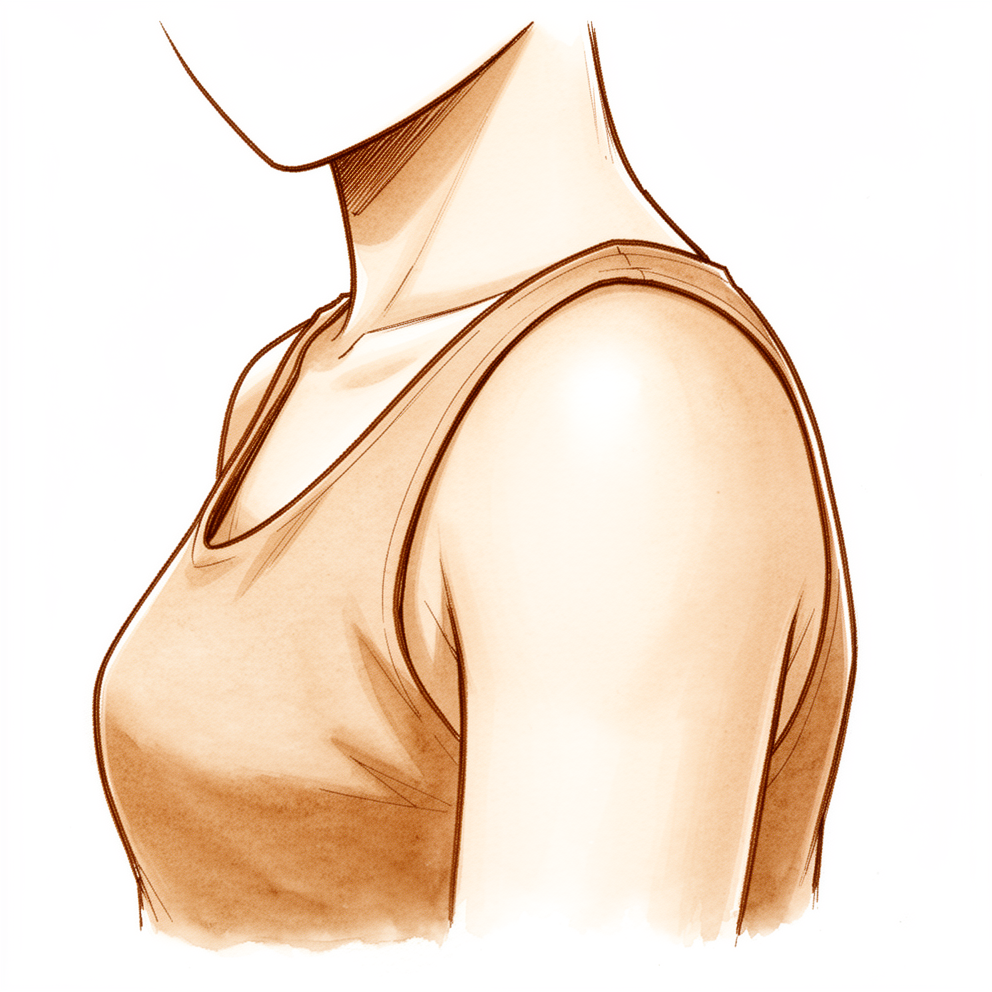
आपको क्या महसूस होता है
स्नैपिंग स्कैपुला का मतलब है कि जब आपकी कंधे की चपटी हड्डी (स्कैपुला) आपकी छाती की दीवार के ऊपर से हिलती है, तो आपको उससे किरकिराहट, कट-कट या चटकने की आवाज़ सुनाई देती है या महसूस होती है। डॉक्टर कभी-कभी इसे "वॉशबोर्ड सिंड्रोम" कहते हैं, क्योंकि यह आवाज़ ऐसी लग सकती है जैसे कोई पहिया कपड़े धोने के लहरदार तख्ते (वॉशबोर्ड) पर चल रहा हो। यह आवाज़ अपने आप में आम है। जिन लोगों को कोई भी लक्षण नहीं होता, उनमें से लगभग एक तिहाई लोगों की कंधे की चपटी हड्डी से कुछ किरकिराहट आती है। अगर दर्द न हो, तो अकेले इस आवाज़ को किसी इलाज की ज़रूरत नहीं होती।
आमतौर पर लोग दर्द की वजह से डॉक्टर के पास आते हैं। यह दर्द कंधे की चपटी हड्डी के आसपास या उसके नीचे होता है, अक्सर उसके उस भीतरी किनारे के पास जो आपकी रीढ़ के सबसे करीब है। सिर से ऊपर हाथ ले जाने वाली गतिविधियों में, यानी ऊपर की ओर या शरीर के आर-पार हाथ बढ़ाने पर, यह अक्सर बढ़ जाता है, और यह खेल में आपके प्रदर्शन के कम होने के रूप में भी सामने आ सकता है। यह दर्द सूजी हुई बर्सा से आता है, यानी वह पतली, तरल से भरी गद्दी जो कंधे की चपटी हड्डी को पसलियों के ऊपर आसानी से फिसलने देती है, या फिर हड्डी के अपने आकार से। छाती की दीवार एक साउंड बॉक्स (आवाज़ को गुंजाने वाला खोखला डिब्बा) की तरह काम करती है, इसलिए जो आवाज़ आपको सुनाई देती है, वह उस हलचल से कहीं ज़्यादा तेज़ होती है जिससे वह पैदा होती है।
दर्द की वजह से रोज़ के काम मुश्किल हो सकते हैं। किसी भारी कड़ाही को ऊंची शेल्फ़ पर रखना, रस्सी पर धुले कपड़े टांगना, या सीटबेल्ट तक हाथ बढ़ाना, इन सभी से दर्द शुरू हो सकता है। कुछ लोगों को यह गतिविधि के दौरान के बजाय गतिविधि के बाद सबसे ज़्यादा महसूस होता है। यह इतना तेज़ हो सकता है कि नींद में खलल पड़े या आप अपनी बांह का सामान्य रूप से इस्तेमाल न कर पाएं।
अगर आपके लक्षण ठीक नहीं हो रहे हैं, सप्ताहों के दौरान बढ़ते जा रहे हैं, रात में आपकी नींद तोड़ देते हैं, या आपको काम करने या अपनी बांह का इस्तेमाल करने से रोकते हैं, तो अपने जीपी (आपके फैमिली डॉक्टर) से मिलें या किसी विशेषज्ञ से जांच करवाने के लिए कहें।
असल में क्या हो रहा है
आपकी कंधे की चपटी हड्डी को फिसलने के लिए ही बनाया गया है। यह आपकी छाती की दीवार पर टिकी होती है, और दोनों के बीच चिकने, चर्बी वाले ऊतक की एक पतली परत होती है, जो दो हिलती सतहों के बीच गैस्केट की तरह काम करती है। चार जोड़ मिलकर आपके कंधे को हिलाते हैं, और इस हलचल का लगभग दो-तिहाई हिस्सा खुद बॉल-और-सॉकेट वाले जोड़ से आता है, जबकि बाकी एक तिहाई हिस्सा कंधे की चपटी हड्डी के पसलियों के ऊपर फिसलने से आता है। जब यह फिसलन सहज होती है, तो आपको इसका कभी पता नहीं चलता।
स्नैपिंग स्कैपुला में समस्या यह है कि कोई चीज़ इस फिसलन में रुकावट डालती है। कभी-कभी इसकी वजह हड्डी का आकार होता है: कंधे की चपटी हड्डी का भीतरी किनारा सामान्य से ज़्यादा पसलियों की ओर झुका या मुड़ा हुआ हो सकता है, जिससे यह छाती की दीवार के जितना पास होना चाहिए, उससे ज़्यादा पास टिकती है। कभी-कभी इस हड्डी पर अतिरिक्त हड्डी की एक छोटी गांठ होती है। अक्सर इस हड्डी के आसपास की मांसपेशियां असमान ढंग से काम करती हैं, जिससे आपके हिलने पर यह हड्डी सही रास्ते पर सहज ढंग से नहीं चलती। इनमें से कोई भी कारण इस हड्डी को फिसलने के बजाय रगड़ खाने या अटकने पर मजबूर कर सकता है।
यह रगड़ कंधे की चपटी हड्डी और पसलियों के बीच की गद्दी को परेशान (इरिटेट) करती है। यह गद्दी, जिसे बर्सा कहते हैं, तरल से भरी एक पतली थैली है जो हड्डी और नरम ऊतक के बीच शॉक एब्ज़ॉर्बर (झटका सोखने वाली चीज़) की तरह काम करती है। जब इसमें सूजन (इन्फ्लेमेशन) आ जाती है, तो यह मोटी हो जाती है और छूने पर दुखती है, और यही वह दर्द है जो आपको कंधे की चपटी हड्डी के नीचे या आसपास महसूस होता है। यह रगड़ ऊतक को भी प्रतिक्रिया में मोटा कर सकती है, जो बार-बार की रगड़ के प्रति शरीर की प्रतिक्रिया है।
इससे ऊपर बताए गए लक्षण समझ में आते हैं। आवाज़ खुरदुरी हो चुकी सतहों के एक-दूसरे पर चलने से आती है, और छाती की दीवार साउंड बॉक्स की तरह इसे बढ़ा देती है। दर्द सूजी हुई गद्दी से आता है, अपने आप में आवाज़ से नहीं। इसीलिए इन दोनों समस्याओं का इलाज अलग-अलग होता है, और इसीलिए इलाज का ध्यान सूजन को शांत करने और कंधे की चपटी हड्डी को नियंत्रित करने वाली मांसपेशियों को फिर से सही ढंग से काम करना सिखाने पर रहता है।
हम इसके लिए क्या कर सकते हैं
डॉ. कीरन हिरपरा, माटर प्राइवेट हॉस्पिटल, रॉकहैम्पटन में ऊपरी अंग के सर्जन हैं, और वे आपकी समस्या के अनुसार सबसे कम चीर-फाड़ वाले विकल्पों से शुरुआत करते हैं। मरीज़ आम तौर पर अपने जीपी के रेफ़रल से हमारे क्लिनिक आते हैं; अगर किसी फिजियोथेरेपिस्ट ने आपको हमसे मिलने की सलाह दी है, तब भी मेडिकेयर रिबेट पाने के लिए आपको अपने जीपी से रेफ़रल लेना होगा। क्लिनिक में हम आपकी पूरी जानकारी लेते हैं, आपके कंधे की जांच करते हैं और ज़रूरत हो तो स्कैन करवाते हैं, ताकि पता लगाया जा सके कि आवाज़ और दर्द किस वजह से हो रहे हैं।
ज़्यादातर लोग बिना ऑपरेशन के ठीक हो जाते हैं, इसलिए इलाज सर्जरी के बिना शुरू होता है। पहला कदम फिजियोथेरेपी का एक कार्यक्रम है, जिससे आपकी कंधे की चपटी हड्डी को नियंत्रित करने वाली मांसपेशियां मज़बूत होती हैं, और साथ में उन मांसपेशियों की स्ट्रेचिंग की जाती है जो कस गई हैं। जिन गतिविधियों से लक्षण शुरू होते हैं, उनमें बदलाव करने से भी मदद मिलती है। आगे किसी और चीज़ के बारे में सोचने से पहले इसे 3 से 6 महीने तक ठीक से आज़माएं।
अगर दर्द बना रहे, तो दवा से सूजन को शांत करने में मदद मिल सकती है। सूजन कम करने वाली गोलियां (एंटी-इन्फ्लेमेटरी), उसी तरह की जो बहुत से लोग मांसपेशियों के दर्द के लिए लेते हैं, इस चरण का हिस्सा हैं। हम आपकी कंधे की चपटी हड्डी के नीचे की बर्सा में स्कैन की मदद से (इमेज-गाइडेड) स्टेरॉयड और लोकल एनेस्थीसिया की दवा का इंजेक्शन भी दे सकते हैं। इससे दो काम होते हैं: यह सूजी हुई गद्दी को शांत करता है, और यह पुष्टि करता है कि आपका दर्द इसी जगह से आ रहा है।
सर्जरी पर तभी विचार किया जाता है जब इन इलाजों के कई महीनों के बाद भी दर्द बना रहे और इनसे आपको पर्याप्त सुधार न मिला हो। यह दूरबीन से किया जाने वाला ऑपरेशन (आर्थ्रोस्कोपी) है, जो छोटे चीरों से एक कैमरे की मदद से किया जाता है। इसमें आपकी कंधे की चपटी हड्डी और आपकी पसलियों के बीच की सूजी हुई बर्सा हटाई जाती है। आपकी कंधे की चपटी हड्डी के ऊपरी भीतरी कोने को तभी काटकर छोटा किया जाता है जब ऑपरेशन के दौरान वह उभरा हुआ पाया जाए। सर्जरी के बाद ज़्यादातर लोगों का दर्द काफ़ी कम हो जाता है, लेकिन अक्सर कुछ कट-कट की आवाज़ बनी रहती है। हम आपसे बात करेंगे कि सर्जरी का आपके लिए क्या मतलब हो सकता है, और आप और हम मिलकर तय करेंगे कि क्या यह सही कदम है।
क्या उम्मीद करें
ज़्यादातर लोग बिना ऑपरेशन के ठीक हो जाते हैं। इलाज की शुरुआत आपकी कंधे की चपटी हड्डी को नियंत्रित करने वाली मांसपेशियों को मज़बूत करने के लिए फिजियोथेरेपी, सूजन कम करने वाली दवा और उन गतिविधियों में बदलाव से होती है जिनसे लक्षण शुरू होते हैं। इसे 3 से 6 महीने तक ठीक से आज़माएं। बहुत से लोगों का दर्द इस दौरान कम हो जाता है और उन्हें कभी सर्जरी की ज़रूरत नहीं पड़ती।
अगर इन इलाजों के कई महीनों के बाद भी दर्द बना रहे, तो सर्जरी पर विचार किया जा सकता है। दूरबीन से किया जाने वाला ऑपरेशन आपकी कंधे की चपटी हड्डी और आपकी पसलियों के बीच की सूजी हुई बर्सा को हटाता है, और इस हड्डी के ऊपरी भीतरी कोने को तभी काटकर छोटा करता है जब वह उभरा हुआ पाया जाए। सर्जरी के बाद ज़्यादातर लोगों का दर्द काफ़ी कम हो जाता है। अक्सर कुछ कट-कट की आवाज़ बनी रहती है, क्योंकि जो इलाज दर्द में मदद करते हैं, वे ज़्यादातर दर्द को ठीक करते हैं, आवाज़ को नहीं। हर लक्षण से पूरी राहत मिलना आम नतीजा नहीं है।
इलाज के बिना लक्षण बने रह सकते हैं और इतने तेज़ हो सकते हैं कि नींद में खलल पड़े या आप अपनी बांह का सामान्य रूप से इस्तेमाल न कर पाएं। इस समस्या को पहचानना और इसका इलाज करना मुश्किल हो सकता है, इसलिए इसके अपने आप ठीक होने का इंतज़ार करने के बजाय जल्दी ही साफ़ निदान (डायग्नोसिस) करवा लेना फ़ायदेमंद है।
अगर आपके लक्षण ठीक नहीं हो रहे हैं, सप्ताहों के दौरान बढ़ते जा रहे हैं, रात में आपकी नींद तोड़ देते हैं, या आपको काम करने या अपनी बांह का इस्तेमाल करने से रोकते हैं, तो अपने जीपी से मिलें या किसी विशेषज्ञ से जांच करवाने के लिए कहें।
डॉक्टर को कब दिखाएं
सिर्फ़ आवाज़ चिंता की वजह नहीं है। जिन लोगों को कोई भी लक्षण नहीं होता, उनमें से लगभग एक तिहाई लोगों की कंधे की चपटी हड्डी से कुछ किरकिराहट आती है, और अकेले इस आवाज़ को किसी इलाज की ज़रूरत नहीं होती। असल मायने दर्द के हैं। अगर आपको कंधे की चपटी हड्डी के आसपास या नीचे ऐसा दर्द है जो ठीक नहीं हो रहा, सप्ताहों के दौरान बढ़ता जा रहा है, रात में आपकी नींद तोड़ देता है, या आपको काम करने या अपनी बांह का इस्तेमाल करने से रोकता है, तो अपने जीपी से मिलें या किसी विशेषज्ञ से जांच करवाने के लिए कहें। अगर दर्द इतना तेज़ हो कि नींद में खलल पड़े, अगर खेल में आपका प्रदर्शन गिर गया हो, या अगर सिर से ऊपर हाथ ले जाने वाली गतिविधि, जैसे ऊपर की ओर या शरीर के आर-पार हाथ बढ़ाना, दर्द शुरू कर देती हो, तो भी जांच करवाने के लिए कहें। स्नैपिंग स्कैपुला को पहचानना मुश्किल हो सकता है, इसलिए जल्दी ही साफ़ निदान करवा लेना फ़ायदेमंद है।
विस्तार से
Advanced reading: the deeper science (optional)
यह हिस्सा उससे आगे जाता है जितना आपको अपने इलाज के फ़ैसलों के लिए जानने की ज़रूरत है। स्नैपिंग स्कैपुला के बारे में यह अतिरिक्त जानकारी पढ़ना फ़ायदेमंद है, क्योंकि आवाज़ और दर्द दो अलग-अलग समस्याएं हैं, और जो इलाज मदद करते हैं, वे ज़्यादातर दूसरी समस्या को ठीक करते हैं, पहली को नहीं।
आवाज़ आम है; असली समस्या दर्द है
कंधे की चपटी हड्डी से आने वाली किरकिराहट अपने आप में किसी बीमारी का संकेत नहीं है। इस समस्या की एक जानी-मानी समीक्षा एक शुरुआती अध्ययन का हवाला देती है, जिसमें बिना किसी भी लक्षण वाले 100 लोगों में से 31% में स्कैपुला की किरकिराहट (स्कैपुलर क्रेपिटस) पाई गई [1]। जो चीज़ इस आवाज़ को एक समस्या बना देती है, वह दर्द है, जो आमतौर पर सूजी हुई बर्सा से आता है: ऊतक की वह पतली, तरल वाली परत जो कंधे की चपटी हड्डी को पसलियों के ऊपर फिसलने देती है।
हड्डी का आकार भी भूमिका निभाता है। स्कैन पर आधारित एक अध्ययन में, जिन लोगों का स्कैपुला अपने भीतरी किनारे के साथ आगे की ओर मुड़ा हुआ था (एक अवतल, यानी अंदर की ओर धंसा हुआ आकार, जिसमें "मीडियल स्कैपुला कॉर्पस एंगल" पॉज़िटिव होता है), उनमें स्नैपिंग स्कैपुला का 12 गुना ज़्यादा जोखिम था [2]। यह माप उतना उपयोगी नहीं निकला जितना पहले लगा था: बाद के एक अध्ययन में पाया गया कि यही कोण इस बात पर काफ़ी बदल जाता है कि उसे किस दिशा से देखा जा रहा है, इसलिए यह अकेले इस समस्या का निदान करने के लिए पर्याप्त भरोसेमंद नहीं है [3]। शव (कैडेवर) पर बने एक मॉडल में, हड्डी की सबसे महत्वपूर्ण विशेषता यह थी कि स्कैपुला का भीतरी हिस्सा पसलियों की ओर कितना आगे की तरफ़ था [4]।
ज़्यादातर लोग बिना ऑपरेशन के ठीक हो जाते हैं
28 मरीज़ों की 30 कंधे की चपटी हड्डियों की एक शृंखला (सीरीज़) में, जिनका इलाज मांसपेशियां मज़बूत करने के एक ख़ास कार्यक्रम से किया गया, 14 (50%) को सिर्फ़ एक्सरसाइज़ से अच्छा फ़ायदा हुआ और 6 (21%) को इसके साथ केवल सूजन कम करने वाली दवा की ज़रूरत पड़ी, इसलिए अध्ययन के अपने ग्रेडिंग पैमाने पर 71% लोग बिना सर्जरी के अच्छे या उससे बेहतर नतीजे तक पहुंचे [5]।
सबसे लंबा फ़ॉलो-अप फ़िनलैंड से आता है। ओपन सर्जरी (बड़े चीरे वाली सर्जरी) करवाने वाले बारह लोगों और बिना सर्जरी के इलाज करवाने वाले 9 लोगों की औसतन 22 साल बाद दोबारा जांच की गई। ज़ोर लगाने पर होने वाला दर्द दोनों समूहों में कम था: सर्जरी के बाद 10 में से 0.8 और बिना सर्जरी के 10 में से 1.5; यह अंतर इतना छोटा था कि यह पक्का नहीं कहा जा सकता कि वह असली था (p = 0.357) [6]। सर्जरी के बाद 12 में से 7 लोगों में दर्द जल्दी कम हुआ, लेकिन लंबे समय में दोनों रास्ते लगभग एक ही जगह पहुंचे।
बर्सा में लोकल एनेस्थीसिया की दवा और स्टेरॉयड का इंजेक्शन दो काम करता है: यह सूजन का इलाज करता है और यह जांचता है कि क्या दर्द सचमुच बर्सा से ही आ रहा है। यूके के इलाज के एक तय क्रम (पाथवे) में, 94 में से 74 मरीज़ फिजियोथेरेपी के बाद भी परेशान थे और उन्हें अल्ट्रासाउंड की मदद से इंजेक्शन दिया गया; 55 पर शुरुआत में अच्छा असर हुआ, जो 17 में बना रहा [7]। जिन 42 मरीज़ों का ऑपरेशन हुआ और जिनका फ़ॉलो-अप किया गया, उनमें से जिन पर इंजेक्शन का अच्छा असर हुआ था, उनमें ऑपरेशन के बाद उन लोगों की तुलना में ज़्यादा सुधार हुआ जिन पर अच्छा असर नहीं हुआ था [7]। अमेरिका की एक बड़ी शृंखला में, जिसमें लोगों का कम से कम पांच साल तक फ़ॉलो-अप किया गया, यही संबंध नहीं पाया गया [8], इसलिए इंजेक्शन का कमज़ोर असर होने का मतलब यह नहीं है कि सर्जरी का विकल्प ख़त्म हो जाता है।
सर्जरी से क्या हासिल होता है, और क्या नहीं
सबसे बड़ी लंबी अवधि वाली शृंखला में 66 लोगों का, दूरबीन से बर्सा हटाने और कंधे की चपटी हड्डी के कोने को काटकर छोटा करने के बाद, 5 से 15 साल तक फ़ॉलो-अप किया गया। कंधे का औसत स्कोर 100 में से 56.7 से बढ़कर 87.2 हो गया, दर्द 10 में से 5.2 से घटकर 1.4 हो गया, और 77.6% लोगों में इतना सुधार हुआ जिसे साफ़ महसूस किया जा सके। खेल खेलने वाले 42 लोगों में से 38 (90.5%) खेल में लौटे और 31 (73.8%) अपने पिछले स्तर पर या उसके करीब लौटे। आठ (12.1%) लोगों को एक और ऑपरेशन की ज़रूरत पड़ी [8]। 74 कंधे की चपटी हड्डियों की एक और शृंखला में दोबारा सर्जरी की दर मिलती-जुलती थी (74 में से 8), और उसमें पाया गया कि ज़्यादा उम्र के मरीज़, लंबे समय से लक्षण झेल रहे लोग, और सर्जरी से पहले मानसिक सेहत के कम स्कोर वाले लोग आमतौर पर कम अच्छा कर पाए [9]।
पूरी तरह ठीक हो जाना अपवाद है। ऑपरेशन किए गए 203 कंधों की एक व्यवस्थित समीक्षा (सिस्टमैटिक रिव्यू) में पाया गया कि 42 (20.7%) पूरी तरह ठीक हो गए, 139 (68.5%) में सुधार हुआ लेकिन कुछ लक्षण बाकी रहे, और 22 (10.8%) का नतीजा ख़राब रहा [10]। 464 मरीज़ों की 2026 की एक समीक्षा भी इसी कुल निष्कर्ष पर पहुंची: बिना ऑपरेशन वाला और सर्जरी वाला, दोनों तरह का इलाज दर्द से राहत देता है, लेकिन यांत्रिक लक्षण, यानी कट-कट की आवाज़ और किरकिराहट, अक्सर पूरी तरह ख़त्म नहीं होते [11]।
क्या हड्डी हटाना फ़ायदेमंद है?
कंधे की चपटी हड्डी के ऊपरी भीतरी कोने को काटकर छोटा करना इस ऑपरेशन का पारंपरिक हिस्सा है, इसलिए यह हैरानी की बात है कि इससे शायद ज़्यादा फ़ायदा न हो। एक केंद्र ने 24 ऐसे लोगों की, जिनकी सिर्फ़ बर्सा हटाई गई, तुलना 32 ऐसे लोगों से की जिनका कोना भी काटकर छोटा किया गया। आख़िरी दर्द स्कोर (10 में से 3.4 और 2.8, p = 0.351) और कंधे के स्कोर (75.8 और 76.5, p = 0.895) एक जैसे थे, और कट-कट की आवाज़ 58% और 59% लोगों में अब भी मौजूद थी [12]। हड्डी पर काम किए बिना ऑपरेशन कम समय में हुआ: 37.5 के मुक़ाबले 61.2 मिनट [12]। दोनों समूहों का फ़ॉलो-अप अलग-अलग समय तक किया गया था और उन्हें रैंडम तरीके से (रैंडमाइज़्ड) नहीं बांटा गया था, इसलिए यह आख़िरी फ़ैसला नहीं है, लेकिन इसी वजह से हड्डी काटने का फ़ैसला पहले से नहीं, बल्कि ऑपरेशन के दौरान किया जाता है।
संदर्भ
[1] Kuhn JE, Plancher KD, Hawkins RJ. Symptomatic Scapulothoracic Crepitus and Bursitis. J Am Acad Orthop Surg. 1998;6(5):267-73. https://doi.org/10.5435/00124635-199809000-00001 [2] Spiegl UJ, Petri M, Smith SW, Ho CP, Millett PJ. Association between scapula bony morphology and snapping scapula syndrome. J Shoulder Elbow Surg. 2015;24(8):1289-95. https://doi.org/10.1016/j.jse.2014.12.034 [3] Percin B, Featherall J, Tashjian RZ, Chalmers PN, Joyce CD, Mortensen AJ, et al. The influence of scapular orientation on the medial scapula corpus angle in snapping scapula syndrome. JSES Int. 2025;9(1):70-8. https://doi.org/10.1016/j.jseint.2024.08.179 [4] Tahal DS, Katthagen JC, Marchetti DC, Mikula JD, Montgomery SR, Brady A, et al. A Cadaveric Model Evaluating the Influence of Bony Anatomy and the Effectiveness of Partial Scapulectomy on Decompression of the Scapulothoracic Space in Snapping Scapula Syndrome. Am J Sports Med. 2017;45(6):1276-82. https://doi.org/10.1177/0363546516687755 [5] Groh G, Simoni M, Allen T, Dwyer T, Heckman M, Rockwood C. Treatment of snapping scapula with a periscapular muscle strengthening program. J Shoulder Elbow Surg. 1996;5(2):S6. https://doi.org/10.1016/s1058-2746(96)80089-9 [6] Vastamäki M, Vastamäki H. Open Surgical Treatment for Snapping Scapula Provides Durable Pain Relief, but so Does Nonsurgical Treatment. Clin Orthop Relat Res. 2016;474(3):799-805. https://doi.org/10.1007/s11999-015-4614-1 [7] Tytherleigh-Strong G, Gill J, Griffiths E, Al-Hadithy N. Prognosis After Arthroscopic Superior Medial Scapuloplasty for Snapping Scapula Syndrome Improves After a Transient Beneficial Response With an Ultrasound-Guided Subscapular Cortisone Injection. Arthroscopy. 2020;36(12):2965-72. https://doi.org/10.1016/j.arthro.2020.07.024 [8] Rupp M, Geissbuhler AR, Rutledge JC, Amendola R, Hanson JA, Doan KC, et al. Minimum 5-Year Clinical and Return-to-Sport Outcomes After Primary Arthroscopic Scapulothoracic Bursectomy and Partial Scapulectomy for Snapping Scapula Syndrome. Am J Sports Med. 2024;52(6):1449-56. https://doi.org/10.1177/03635465241243072 [9] Menge TJ, Horan MP, Tahal DS, Mitchell JJ, Katthagen JC, Millett PJ. Arthroscopic Treatment of Snapping Scapula Syndrome: Outcomes at Minimum of 2 Years. Arthroscopy. 2016;33(4):726-32. https://doi.org/10.1016/j.arthro.2016.08.029 [10] Memon M, Kay J, Simunovic N, Ayeni OR. Arthroscopic management of snapping scapula syndrome improves pain and functional outcomes, although a high rate of residual symptoms has been reported. Knee Surg Sports Traumatol Arthrosc. 2017;26(1):221-39. https://doi.org/10.1007/s00167-017-4693-5 [11] Wallace K, Mitchell JK, Lauck BJ, Reed J, Conlon S, Kamath GV. Snapping Scapula Syndrome: A Systematic Review of Treatment Options and Outcomes. J Shoulder Elbow Surg. 2026. https://doi.org/10.1016/j.jse.2026.05.023 [12] Featherall J, Christensen GV, Mortensen AJ, Wheelwright JC, Chalmers PN, Tashjian RZ. Arthroscopic scapulothoracic bursectomy with and without superomedial angle scapuloplasty: a comparison of patient-reported outcomes. J Shoulder Elbow Surg. 2023;32(9):1945-52. https://doi.org/10.1016/j.jse.2023.03.020
Evidence & references
This is the clinical evidence summary written for health professionals. It is technical, and it lists the research this page was built from. You do not need to read it to understand your treatment or to make a decision about it.
Overview
- Snapping scapula syndrome is caused by either osseous lesions or scapulothoracic bursitis [3].
- The condition is also referred to as “washboard syndrome” and is attributed to bony and soft tissue abnormalities [9].
- Snapping scapula represents the clinical expression of scapulothoracic impingement due to mechanical factors and/or muscle imbalance [7].
- Osteochondroma of the scapula is a rare entity that may present with snapping scapula syndrome when it alters scapulothoracic mechanics [6].
- Snapping scapula syndrome can be a debilitating disorder [2].
- Diagnosis and management of snapping scapula syndrome remains challenging despite recent advances [1].
- The condition can be difficult to recognize and treat [3].
- Four-dimensional computed tomography scans facilitate preoperative planning by defining pathology and improving assessment of the amount and location of scapular bone and soft tissue causing symptoms [18].
Treatment
- Treatment of patients with snapping scapula syndrome begins with nonoperative methods [5].
- When nonoperative treatment fails, several surgical options exist [5].
- Arthroscopic management of snapping scapula syndrome yields improvement in pain, crepitus, and range of motion in a majority of patients [4].
- Most patients experience residual symptoms following arthroscopic management [4].
- Arthroscopic scapulothoracic treatment provides significant pain relief and functional improvement for painful snapping scapula symptoms not responding to non-surgical treatment modalities [8].
- Arthroscopic treatment for snapping scapula syndrome resulted in significant improvement in pain and function with high patient satisfaction at a mean follow-up of 3.4 years [14].
- Arthroscopic scapuloplasty leads to significant improvement in pain and function in patients with snapping scapula syndrome refractory to conservative treatment [15].
- Arthroscopic surgery is an effective treatment for snapping scapula syndrome in both primary and revision cases, showing significant improvements in all postoperative outcome scores at a mean of 3.4 years [17].
- Arthroscopic resection of the superomedial corner of the scapula is a useful technique in patients whose pain and clicking can be clinically localized and who have failed to respond to conservative measures [19].
- Arthroscopic resection of the medial superior hook formation in combination with partial bursectomy provided good results with significant gains with respect to the WORC score in 90 % of the patients troubled by painful snapping scapula for a long time and without relief by exercise-based rehabilitation [35].
- At the end of 1 year, all patients in a case series had a constant score above 90 and were completely relieved of snapping around the scapula having full pain-free movements at the shoulder and scapulothoracic joints [11].
- A patient remained asymptomatic with full range of motion and no further complaints of pain or snapping at twenty-six months postoperatively [12].
- At 2 years 6 months after the operation, snapping and pain were completely gone and the patient was satisfied with the results [13].
Anatomy & Pathophysiology
Etiology and Mechanism
- Snapping scapula is the clinical expression of scapulothoracic impingement due to mechanical factors and/or muscle imbalance [7].
- The condition is attributed to bony and soft tissue abnormalities [9].
- Osteochondroma of the scapula may present with snapping scapula syndrome when it alters scapulothoracic mechanics [6].
- Subscapular elastofibroma is a reactive pseudotumor resulting from mechanical friction of the scapula on the chest wall [86].
Bony Anatomy and Morphology
- The scapula is separated from the chest wall by thin gliding fibro-fatty tissue, allowing its smooth excursion over the chest wall [53].
- Anterior angulation of the medial scapula in the axial plane was associated with snapping scapula syndrome [34].
- Patients with a concave-shaped scapula and a positive medial scapula corpus angle may be at risk for snapping scapula syndrome [47].
- The anterior offset of the scapula appeared to be the most important bony parameter to consider during preoperative planning and the evaluation of scapulothoracic space decompression with partial scapulectomy [46].
- The weakest area of the circumference of the biomechanical body of the scapula is the connection of the scapular spine and the medial border of the scapula, known as the spinomedial angle [53].
- The superior angle and the adjacent part of the supraspinous fossa form an appendage that serves as a surface of insertion or origin of muscles but does not transmit compressive forces from the glenoid [53].
Soft Tissue and Neurovascular Anatomy
- Neurologic structures around the scapula vary significantly between the neutral arm position and the chicken-wing position commonly used in the arthroscopic treatment of snapping scapula syndrome [85].
- The scapula is attached to the axial skeleton by the clavicle, specifically by the acromioclavicular and sternoclavicular joints [53].
- The scapula serves for attachment of a number of muscles originating from the axial skeleton that control its motion [53].
Classification
- Mauclaire classified scapulothoracic crepitus into three types: froissement (a gentle friction sound thought to be physiologic), frottement (a louder sound with grating, which is usually pathologic), and craquement (a loud snapping sound, which is always pathologic) [26].
- Frottement may suggest a soft-tissue lesion or bursitis, while craquement may suggest an osseous lesion as the source of symptomatic scapulothoracic crepitus [26].
- The snapping scapula syndrome is caused by either osseous lesions or scapulothoracic bursitis [3].
- Snapping scapula is the clinical expression of the scapulothoracic impingement due to mechanical factors and/or muscle imbalance [7].
- The snapping scapula, also called “washboard syndrome,” is a controversial condition attributed to bony and soft tissue abnormalities [9].
- Rib fractures at the posterior angle could cause snapping scapula syndrome [20].
Clinical Presentation
- Snapping scapula syndrome is an uncommon condition that is likely underdiagnosed [42].
- The condition can produce severe shoulder pain and dysfunction [24].
- Patients often present with decreased athletic performance and increased pain with overhead activities [42].
- Crepitus is a reported symptom in patients with snapping scapula syndrome [42].
- High clinical suspicion is necessary in patients presenting with medial scapular border tenderness, palpable crepitus, and audible snapping [40].
- Potential factors causing snapping scapula syndrome include bony prominence at the superomedial scapular angle, imbalance of the periscapular muscles, and scapulothoracic bursitis [42].
- Scapulothoracic crepitus is not necessarily a pathologic condition, as it was found in 31% of 100 normal asymptomatic persons [26].
- Scapulothoracic crepitus is considered pathologic if it is associated with pain, winging, or other disorders of the scapulothoracic articulation [26].
- The condition has been referred to by various names, including snapping scapula, washboard syndrome, scapulothoracic syndrome, rolling scapula, grating scapula, and scapulocostal syndrome [26].
- Mauclaire classified scapulothoracic crepitus into three types: froissement (gentle friction sound), frottement (louder sound with grating), and craquement (loud snapping sound) [26].
- Scapular noises arise from anatomic changes in the tissue interposed between the scapula and the chest wall and/or an incongruent scapulothoracic articulation [26].
- The air-filled thoracic cavity acts as a resonating chamber that amplifies scapulothoracic crepitus [26].
- A mass composed of alternating strands of fatty and fibrous tissue located at the inferior pole of the scapula is pathognomonic for elastofibroma dorsi [36].
- Scapular osteochondroma is a rarely reported cause of scapular pseudo-winging and should be considered in the differential diagnosis when winging and a mass are present [43].
- The differential diagnosis for causes of snapping scapula includes idiopathic causes, scapulothoracic bursitis, osteochondromas, and elastofibromas [42].
- Four-dimensional computed tomography scans facilitate preoperative planning by defining pathology and assessing the amount and location of scapular bone and soft tissue causing symptoms [18].
- Plain radiographs and CT scans provide detailed information about osseous abnormalities in snapping scapula syndrome [42].
- MRI characterizes bursal and other soft-tissue pathologies in snapping scapula syndrome [42].
Investigations
- Symptomatic scapulothoracic crepitus is considered pathologic when associated with pain, winging, or other disorders of the scapulothoracic articulation [26].
- Scapulothoracic crepitus is attributed to anatomic changes in the tissue interposed between the scapula and the chest wall or an incongruent scapulothoracic articulation [26].
- The air-filled thoracic cavity acts as a resonating chamber that amplifies scapulothoracic crepitus noises [26].
- Frottement (a louder sound with grating) usually suggests a soft-tissue lesion or bursitis, while craquement (a loud snapping sound) always suggests an osseous lesion [26].
- Four-dimensional computed tomography (4D CT) scans define pathology well and improve the assessment of the amount and location of scapular bone and soft tissue causing symptoms in snapping scapula syndrome [18].
- Fluoroscopy provides a real-time method for evaluating and documenting abnormal osseous mechanics of the scapulothoracic bursal region [31].
- Anterior angulation of the medial scapula in the axial plane is associated with snapping scapula syndrome [34].
- The anterior offset of the scapula is the most important bony parameter to consider during preoperative planning and evaluation of scapulothoracic space decompression with partial scapulectomy [46].
- Imaging-guided injections provide an alternative means of diagnosis in cases where direct imaging is usually not successful [48].
- Rib fractures at the posterior angle can cause snapping scapula syndrome [20].
Treatment
Non-Operative Management
- In most cases, nonoperative treatment is curative and includes physical therapy for scapular muscle strengthening and nonsteroidal anti-inflammatory medications [29].
- Nonsurgical management remains the first treatment option, with surgery recommended after 6 months of nonsurgical treatment with no improvement [42].
- Nonoperative management of snapping scapula syndrome in the form of analgesia, physiotherapy, local corticosteroid injection, and/or extracorporeal shockwave therapy should be initiated for 3 to 6 months before considering surgical management [40].
- Strengthening weak periscapular muscle groups combined with simultaneous stretching of contracted muscles and training of antagonistic muscle groups can yield good clinical results [42].
- Physical therapy, injections with local anesthetics and/or steroids, and NSAIDs can be useful in nonsurgical management [42].
- Patients treated nonsurgically achieved results that were not distinguishable from the surgically treated group in a small series with a minimum of 16 years follow-up [24].
- At a minimum of 16 years follow-up, patients treated nonsurgically reported little pain, some crepitus (usually painless), and a consistent ability to return to work [24].
Operative Management
- When nonoperative treatment fails, several surgical options exist for snapping scapula syndrome [5].
- Most patients experience residual symptoms after arthroscopic management of snapping scapula syndrome [4].
- For patients who fail conservative management, arthroscopic bursectomy and partial scapulectomy is a reasonable option [23].
- Arthroscopic bursectomy and partial scapulectomy is technically demanding and requires an in-depth understanding of the complex anatomy of the scapulothoracic region [23].
- Improvement in functional outcomes and pain relief are reliably achieved after surgical treatment of snapping scapula syndrome [28].
- Poorer outcomes can be seen in workers' compensation patients as well as those with residual symptomatic shoulder pathology following surgical treatment [28].
- Operative time is shorter without scapuloplasty when performing arthroscopic scapulothoracic bursectomy [30].
- Open surgical treatment for snapping scapula provides durable pain relief [24].
- Patients treated surgically for snapping scapula report little pain, some crepitus (usually painless), and a consistent ability to return to work at a minimum of 16 years follow-up [24].
- At the end of 1 year, all patients in a case series of arthroscopic management for recalcitrant scapulothoracic bursitis had a constant score above 90 and were completely relieved of snapping around the scapula [11].
- Patients in a case series of arthroscopic management for recalcitrant scapulothoracic bursitis had full pain-free movements at the shoulder and scapulothoracic joints at 1 year [11].
- A patient with snapping scapula syndrome remained asymptomatic with full range of motion and no further complaints of pain or snapping at twenty-six months postoperatively [12].
- Snapping and pain were completely gone and the patient was satisfied with the results at 2 years 6 months after operation for abnormal angulation of the superior angle of the scapula [13].
- Arthroscopic access to the scapulothoracic space is simple and reproducible, with bursal tissue clearance optimizing visualization [25].
- Arthroscopic treatment of snapping scapula follows 8 key steps to ensure a safe and effective procedure [10].
- A technique for arthroscopic management of snapping scapula syndrome includes scapulothoracic bursectomy and superomedial partial scapulectomy, which has been refined over nearly two decades of experience [16].
- Most authors have recommended partial scapulectomy or resection of the superomedial angle of the scapula in patients with scapular crepitus and pain caused by bony incongruity [81].
- The decision for and timing of operative management should be individualized for each patient [81].
- Operative options include partial scapulectomy and open versus arthroscopic bursectomy [81].
Complications
- Arthroscopic management of snapping scapula syndrome results in most patients experiencing residual symptoms [4].
- Snapping scapula syndrome is difficult to recognize and treat [3].
Recovery
Non-Operative
- Nonoperative treatment for snapping scapula syndrome includes physical therapy for scapular muscle strengthening and nonsteroidal anti-inflammatory medications [29].
- In most cases, nonoperative treatment is curative [29].
Operative Outcomes
- Improvement in functional outcomes and pain relief are reliably achieved after surgical treatment [28].
- Poorer outcomes can be seen in workers' compensation patients as well as those with residual symptomatic shoulder pathology [28].
- At the end of 1 year, all the patients had a constant score above 90 and were completely relieved of snapping around the scapula having full pain-free movements at the shoulder and scapulothoracic joints [11].
- The patient remained asymptomatic with full range of motion and no further complaints of pain or snapping at twenty-six months postoperatively [12].
- A year after excision, the patient has not suffered recurrent pain in the left shoulder [90].
Surgical Technique and Planning
- Operative time is shorter without scapuloplasty [30].
- The 4D CT scan images defined pathology well in patients with snapping scapula syndrome and improved assessment of the amount and location of the scapular bone and soft tissue causing symptoms [18].
Key Evidence
- [L5] Diagnosis and management of snapping scapula syndrome remains challenging despite recent advances. [1] (10.5435/jaaos-21-04-214)
- [L4] Snapping scapula syndrome can be a debilitating disorder. [2] (10.1016/j.arthro.2012.05.889)
- [L5] The snapping scapula syndrome is caused by either osseous lesions or scapulothoracic bursitis and can be difficult to recognize and treat. [3] (10.1155/2013/635628)
- [L1] Arthroscopic management of snapping scapula syndrome yields improvement in pain, crepitus, and range of motion in a majority of patients; however, most patients experience residual symptoms. [4] (10.1007/s00167-017-4693-5)
- [L5] Treatment of patients with snapping scapula syndrome begins with nonoperative methods; when nonoperative treatment fails, several surgical options exist. [5] (10.1177/0363546504268790)
- [Case_report] Osteochondroma of the scapula is a rare entity that may present with snapping scapula syndrome when it alters scapulothoracic mechanics. [6] (10.1016/j.otsr.2017.01.019)
- [L4] Snapping scapula is the clinical expression of the scapulothoracic impingement due to mechanical factors and/or muscle imbalance. [7] (10.1016/s1058-2746(96)80466-6)
- [L4] Arthroscopic scapulothoracic treatment provides significant pain relief and functional improvement for painful snapping scapula symptoms not responding to non-surgical treatment modalities. [8] (10.2174/1874325001711010785)
- [L5] The snapping scapula, also called “washboard syndrome” is a controversial condition attributed to bony and soft tissue abnormalities. [9] (10.11138/mltj/2013.3.2.080)
- [L5] Arthroscopic treatment of snapping scapula follows 8 key steps to ensure a safe and effective procedure. [10] (10.1016/j.eats.2025.103671)
- [L4] At the end of 1 year, all the patients had a constant score above 90 and were completely relieved of snapping around the scapula having full pain-free movements at the shoulder and scapulothoracic joints. [11] (10.13107/jocr.2025.v15.i02.5290)
- [Case_report] The patient remained asymptomatic with full range of motion and no further complaints of pain or snapping at twenty-six months postoperatively. [12] (10.2106/00004623-198264060-00020)
- [L5] At 2 years 6 months after the operation, snapping and pain were completely gone and the patient was satisfied with the results. [13] (10.1016/s1058-2746(03)00178-2)
- [L3] Arthroscopic treatment for snapping scapula syndrome resulted in significant improvement in pain and function with high patient satisfaction at a mean follow-up of 3.4 years. [14] (10.1177/2325967116s00097)
- [L3] Arthroscopic scapuloplasty leads to significant improvement in pain and function in patients with snapping scapula syndrome refractory to conservative treatment. [15] (10.1016/j.arthro.2020.07.024)
- [L5] This Technical Note presents a technique for arthroscopic management of snapping scapula syndrome that includes scapulothoracic bursectomy and superomedial partial scapulectomy, which has been refined over nearly two decades of experience. [16] (10.1016/j.eats.2022.02.028)
- [L5] The editorial commentary notes that the referenced study by Menge et al. concludes that arthroscopic surgery is an effective treatment for snapping scapula syndrome in both primary and revision cases, showing significant improvements in all postoperative outcome scores at a mean of 3.4 years. [17] (10.1016/j.arthro.2016.11.017)
- [L5] The 4D CT scan images defined pathology well in patients with snapping scapula syndrome and improved assessment of the amount and location of the scapular bone and soft tissue causing symptoms. [18] (10.1016/j.jse.2014.09.020)
- [L4] Arthroscopic resection of the superomedial corner of the scapula is a useful technique in patients whose pain and clicking can be clinically localized and who have failed to respond to conservative measures. [19] (10.1016/s1058-2746(99)90056-3)
- [L5] It should be noted that rib fractures at the posterior angle could cause snapping scapula syndrome. [20] (10.1016/s1058-2746(03)00055-7)
- [Paper] For those patients who fail conservative management, arthroscopic bursectomy and partial scapulectomy is a reasonable option, but is technically demanding and requires an in-depth understanding of the complex anatomy of the scapulothoracic region. [23] (10.1016/j.csm.2014.06.003)
- [L3] [24] (10.1007/s11999-015-4614-1)
- [Paper] Arthroscopic access to the scapulothoracic space is simple and reproducible, with bursal tissue clearance optimizing visualization. [25] (10.1016/j.eats.2015.07.002)
- [L4] [26] (10.5435/00124635-199809000-00001)
- [L4] Improvement in functional outcomes and pain relief are reliably achieved after surgical treatment, although poorer outcomes can be seen in workers' compensation patients as well as those with residual symptomatic shoulder pathology. [28] (10.1177/2325967113505739)
- [L5] In most cases, nonoperative treatment is curative and includes physical therapy for scapular muscle strengthening and nonsteroidal anti-inflammatory medications. [29] (10.1016/j.arthro.2008.12.022)
- [L3] Operative time is shorter without scapuloplasty. [30] (10.1016/j.jse.2023.03.020)
- [L5] Fluoroscopy provides a realtime method of evaluating and documenting abnormal osseous mechanics of the scapulothoracic bursal region. [31] (10.1007/s11420-007-9047-2)
- [L3] Anterior angulation of the medial scapula in the axial plane was associated with SSS. [34] (10.1016/j.jse.2014.12.034)
- [L4] In this study, it was found that arthroscopic resection of the medial superior hook formation in combination with partial bursectomy provided good results with significant gains with respect to the WORC score in 90 % of the patients troubled by painful snapping scapula for a long time and without relief by exercise-based rehabilitation. [35] (10.1007/s00590-012-1154-1)
- [L4] A mass composed of alternating strands of fatty and fibrous tissue is pathognomonic if it is located at the inferior pole of the scapula. [36] (10.1016/j.jbspin.2004.04.006)
- [L4] [40] (10.1177/19417381211029211)
- [Case_report] Scapular osteochondroma is a rarely reported cause of scapular pseudo-winging, and should be considered in the differential diagnosis when winging and a mass are present. [43] (10.1007/s11552-014-9659-1)
- [L5] The anterior offset of the scapula appeared to be the most important bony parameter to consider during preoperative planning and the evaluation of scapulothoracic space decompression with partial scapulectomy. [46] (10.1177/0363546516687755)
- [L3] Those patients with a concave-shaped scapula and a positive MSCA may be at risk for SSS. [47] (10.1177/2325967114s00063)
- [L4] [48] (10.2214/ajr.181.5.1811232)
- [L5] [81] (10.1177/1941738109338359)
- [L5] Neurologic structures around the scapula vary significantly between the neutral arm position and the chicken-wing position commonly used in the arthroscopic treatment of SSS. [85] (10.1016/j.jse.2022.03.029)
- [L4] Subscapular elastofibroma is a reactive pseudotumor resulting from mechanical friction of the scapula on the chest wall. [86] (10.1016/s1058-2746(05)80008-4)
- [L5] A year after excision, the patient has not suffered recurrent pain in the left shoulder. [90] (10.1016/1058-2746(93)90078-u)
References
[1] Snapping Scapula Syndrome: Diagnosis and Management. Journal of the American Academy of Orthopaedic Surgeons. 2013. DOI: 10.5435/jaaos-21-04-214
[2] Technique and Outcomes of Arthroscopic Scapulothoracic Bursectomy and Partial Scapulectomy. Arthroscopy. 2012. DOI: 10.1016/j.arthro.2012.05.889
[3] Scapulothoracic Anatomy and Snapping Scapula Syndrome. Anatomy Research International. 2013. DOI: 10.1155/2013/635628
[4] Arthroscopic management of snapping scapula syndrome improves pain and functional outcomes, although a high rate of residual symptoms has been reported. Knee Surgery, Sports Traumatology, Arthroscopy. 2017. DOI: 10.1007/s00167-017-4693-5
[5] Nonoperative and Operative Management of Snapping Scapula. The American Journal of Sports Medicine. 2004. DOI: 10.1177/0363546504268790
[6] The unusual osteochondroma: A case of snapping scapula syndrome and review of the literature. Orthopaedics & Traumatology: Surgery & Research. 2017. DOI: 10.1016/j.otsr.2017.01.019
[7] Surgical management of snapping scapula. Journal of Shoulder and Elbow Surgery. 1996. DOI: 10.1016/s1058-2746(96)80466-6
[8] Outcome of Scapulothoracic Arthroscopy for Painful Snapping Scapula. The Open Orthopaedics Journal. 2017. DOI: 10.2174/1874325001711010785
[9] Snapping scapula syndrome: current concepts review in conservative and surgical treatment. Muscles, Ligaments and Tendons Journal. 2013. DOI: 10.11138/mltj/2013.3.2.080
[10] Full‐House Arthroscopic Treatment of Snapping Scapula Syndrome: Bursectomy, Levator Scapulae Release, and Partial Scapulectomy. Arthroscopy Techniques. 2025. DOI: 10.1016/j.eats.2025.103671
[11] Arthroscopic Management of Snapping Scapular Syndrome due to Recalcitrant Scapulothoracic Bursitis – A Case Series. Journal of Orthopaedic Case Reports. 2025. DOI: 10.13107/jocr.2025.v15.i02.5290
[12] The snapping scapula syndrome. A case report.. The Journal of Bone & Joint Surgery. 1982. DOI: 10.2106/00004623-198264060-00020
[13] Snapping scapula caused by abnormal angulation of the superior angle of the scapula. Journal of Shoulder and Elbow Surgery. 2004. DOI: 10.1016/s1058-2746(03)00178-2
[14] Two-Year Outcomes following Arthroscopic Treatment for Snapping Scapula Syndrome. Orthopaedic Journal of Sports Medicine. 2016. DOI: 10.1177/2325967116s00097
[15] Prognosis After Arthroscopic Superior Medial Scapuloplasty for Snapping Scapula Syndrome Improves After a Transient Beneficial Response With an Ultrasound‐Guided Subscapular Cortisone Injection. Arthroscopy. 2020. DOI: 10.1016/j.arthro.2020.07.024
[16] Arthroscopic Treatment of Snapping Scapula Syndrome With Scapulothoracic Bursectomy and Partial Scapulectomy. Arthroscopy Techniques. 2022. DOI: 10.1016/j.eats.2022.02.028
[17] Editorial Commentary: Arthroscopy of the Scapulothoracic Joint for Treatment of Snapping Scapula Syndrome—Minimum 2‐Year Results in a Large Series, a Long‐Awaited Publication. Arthroscopy. 2017. DOI: 10.1016/j.arthro.2016.11.017
[18] Four-dimensional computed tomography scans facilitate preoperative planning in snapping scapula syndrome. Journal of Shoulder and Elbow Surgery. 2015. DOI: 10.1016/j.jse.2014.09.020
[19] Arthroscopic partial resection of the scapula for snapping scapula: A new technique. Journal of Shoulder and Elbow Surgery. 1999. DOI: 10.1016/s1058-2746(99)90056-3
[20] Snapping scapula syndrome due to malunion of rib fractures: a case report. Journal of Shoulder and Elbow Surgery. 2004. DOI: 10.1016/s1058-2746(03)00055-7
[23] Snapping Scapula Syndrome in the Military. Clinics in Sports Medicine. 2014. DOI: 10.1016/j.csm.2014.06.003
[24] Open Surgical Treatment for Snapping Scapula Provides Durable Pain Relief, but so Does Nonsurgical Treatment. Clinical Orthopaedics & Related Research. 2016. DOI: 10.1007/s11999-015-4614-1
[25] Arthroscopic Scapulothoracic Decompression for Snapping Scapula Syndrome. Arthroscopy Techniques. 2015. DOI: 10.1016/j.eats.2015.07.002
[26] Symptomatic Scapulothoracic Crepitus and Bursitis. Journal of the American Academy of Orthopaedic Surgeons. 1998. DOI: 10.5435/00124635-199809000-00001
[28] Functional Outcomes After Arthroscopic Scapulothoracic Bursectomy and Partial Superomedial Angle Scapulectomy. Orthopaedic Journal of Sports Medicine. 2013. DOI: 10.1177/2325967113505739
[29] The Snapping Scapula: Diagnosis and Treatment. Arthroscopy. 2009. DOI: 10.1016/j.arthro.2008.12.022
[30] Arthroscopic scapulothoracic bursectomy with and without superomedial angle scapuloplasty: a comparison of patient-reported outcomes. Journal of Shoulder and Elbow Surgery. 2023. DOI: 10.1016/j.jse.2023.03.020
[31] Imaging-Guided Treatment of Scapulothoracic Bursitis. HSS Journal®: The Musculoskeletal Journal of Hospital for Special Surgery. 2007. DOI: 10.1007/s11420-007-9047-2
[34] Association between scapula bony morphology and snapping scapula syndrome. Journal of Shoulder and Elbow Surgery. 2015. DOI: 10.1016/j.jse.2014.12.034
[35] Arthroscopic treatment for snapping scapula: a prospective case series. European Journal of Orthopaedic Surgery & Traumatology. 2013. DOI: 10.1007/s00590-012-1154-1
[36] Imaging study findings in elastofibroma dorsi. Joint Bone Spine. 2004. DOI: 10.1016/j.jbspin.2004.04.006
[40] Diagnosis and Treatment of Snapping Scapula Syndrome: A Scoping Review. Sports Health: A Multidisciplinary Approach. 2021. DOI: 10.1177/19417381211029211
[42] Chapter 5 Adhesive Capsulitis, Cartilage Lesions, Nerve Compression Disorders, and Snapping Scapula. 2019.
[43] Pseudo-Winging of the Scapula Caused by Scapular Osteochondroma: Review of Literature and Case Report. HAND. 2014. DOI: 10.1007/s11552-014-9659-1
[46] A Cadaveric Model Evaluating the Influence of Bony Anatomy and the Effectiveness of Partial Scapulectomy on Decompression of the Scapulothoracic Space in Snapping Scapula Syndrome. The American Journal of Sports Medicine. 2017. DOI: 10.1177/0363546516687755
[47] Significant Association Between Snapping Scapula Syndrome and Anterior Angulation of the Superomedial Scapular Angle. Orthopaedic Journal of Sports Medicine. 2014. DOI: 10.1177/2325967114s00063
[48] Fluoroscopically Guided Scapulothoracic Injections. American Journal of Roentgenology. 2003. DOI: 10.2214/ajr.181.5.1811232
[53] Rockwood And Green S Fractures In Adults. 29: Principles of Nonunion and Bone Defect Treatment > Applied Anatomy Related to Scapular Fractures.
[81] Clinical Management of Scapulothoracic Bursitis and the Snapping Scapula. Sports Health: A Multidisciplinary Approach. 2010. DOI: 10.1177/1941738109338359
[85] Anatomic safe zones for arthroscopic snapping scapula surgery: quantitative anatomy of the superomedial scapula and associated neurovascular structures and the effects of arm positioning on safety. Journal of Shoulder and Elbow Surgery. 2022. DOI: 10.1016/j.jse.2022.03.029
[86] Subscapular elastofibroma: A reactive pseudotumor. Journal of Shoulder and Elbow Surgery. 1996. DOI: 10.1016/s1058-2746(05)80008-4
[90] Snapping scapula: Formation of an erosive, subscapular bursal cyst after partial scapulectomy. Journal of Shoulder and Elbow Surgery. 1993. DOI: 10.1016/1058-2746(93)90078-u