Patients › Rehabilitation
ओलेक्रेनॉन फ्रैक्चर (ओआरआईएफ़)
ओलेक्रेनॉन (कोहनी के नुकीले सिरे) के फ्रैक्चर को सर्जरी से जोड़ने के बाद की रिकवरी, जिसमें हरकत वापस लाते हुए ट्राइसेप्स के रिपेयर को सुरक्षित रखा जाता है, एक साधारण स्लिंग के साथ, और कोहनी को खुद से सीधा करना चरणों में वापस शुरू किया जाता है।

यह प्रोटोकॉल माटर प्राइवेट हॉस्पिटल, रॉकहैम्पटन में डॉ. कीरन हिरपरा द्वारा ओलेक्रेनॉन (आपकी कोहनी का हड्डी वाला नुकीला सिरा) के फ्रैक्चर (हड्डी टूटना) को ओपन रिडक्शन एंड इंटरनल फ़िक्सेशन (ओआरआईएफ़, यानी ऑपरेशन से हड्डी को सही जगह बिठाकर अंदर प्लेट/तार से जोड़ना) द्वारा ठीक करने के बाद आपके ठीक होने में मार्गदर्शन करता है। इसकी शुरुआत घर पर किए जाने वाले आपके व्यायाम कार्यक्रम से होती है, और उसके बाद आपके फिजियोथेरेपिस्ट या हैंड थेरेपिस्ट (हाथ के विशेषज्ञ थेरेपिस्ट) के लिए लिखा गया व्यवस्थित क्लिनिकल प्रोटोकॉल है। थेरेपी की अपनी पहली मुलाकात पर यह पेज या इसकी पीडीएफ साथ ले जाएं, ताकि आपके रिहैबिलिटेशन (पुनर्वास) में सबका तालमेल बना रहे। आपकी रिकवरी कैसे आगे बढ़ती है, इसके अनुसार आपके थेरेपिस्ट योजना में बदलाव कर सकते हैं।
अगर सर्जरी के बाद आपको अपने घाव को लेकर कोई चिंता हो, तो क्लिनिक से संपर्क करें। अक्सर घाव की फ़ोटो खींचकर उसे जांच के लिए ईमेल करना मददगार होता है।
क्या उम्मीद करें
ओलेक्रेनॉन आपकी कोहनी का हड्डी वाला नुकीला सिरा है। आपकी बांह के पीछे की बड़ी ट्राइसेप्स मांसपेशी इससे जुड़ी होती है, और यह कोहनी के अंदर के कब्ज़े जैसे जोड़ का हिस्सा बनाता है। जब ओलेक्रेनॉन टूटता है, तो ट्राइसेप्स का खिंचाव टूटे हुए टुकड़े को दूर खींचने की कोशिश करता है, इसलिए फ्रैक्चर को सर्जरी से जोड़ा जाता है: या तो तार-और-पिन वाले "टेंशन बैंड" से (साफ़, सीधे टूटने पर) या प्लेट और स्क्रू (पेंच) से (ज़्यादा चूर-चूर या तिरछे टूटने पर)। फ़िक्सेशन इस तरह बनाया जाता है कि वह हड्डी को इतनी मज़बूती से जोड़े रखे कि आप कोहनी को जल्दी हिलाना शुरू कर सकें।
इस पूरे रिहैबिलिटेशन का मक़सद एक संतुलन बनाना है। जो कोहनी बहुत लंबे समय तक स्थिर रखी जाती है, वह बहुत जल्दी जकड़ जाती है, इसलिए हम उसे जल्दी हिलाना चाहते हैं। लेकिन वही ट्राइसेप्स मांसपेशी, जो फ्रैक्चर को अलग खींचती है, आपकी कोहनी को सीधा भी करती है, इसलिए पहले छह सप्ताह हम कोहनी को खुद से (मांसपेशी की ताकत से) सीधा करने से बचकर रिपेयर को सुरक्षित रखते हैं, जबकि कोहनी को मोड़ने और अग्रबाहु (कोहनी से कलाई तक का हिस्सा) को घुमाने पर खुलकर काम करते हैं। जब हड्डी को जुड़ने का समय मिल जाता है, तो सीधा करना धीरे-धीरे दोबारा शुरू किया जाता है: पहले केवल आपकी बांह के अपने वज़न से, और बहुत बाद में ही प्रतिरोध के ख़िलाफ़।
घाव, सूजन और निशान की देखभाल के लिए क्लिनिक की घाव की देखभाल वाली सलाह देखें।
शुरू से ही यह जान लेना अच्छा है कि अच्छी तरह जोड़े गए ओलेक्रेनॉन फ्रैक्चर के बाद भी, ज़्यादातर लोगों में कोहनी को पूरा सीधा करने के आख़िरी 10–15 डिग्री की हमेशा के लिए थोड़ी कमी रह जाती है। यह सामान्य है, रोज़मर्रा की ज़िंदगी में शायद ही कभी पता चलता है, और यह इस बात का संकेत नहीं है कि कुछ गलत हुआ है।
सावधानियां और सीमाएं
ये करें
- आराम और सहारे के लिए अपनी साधारण स्लिंग (बांह को सहारा देने वाली पट्टी) पहनें, और व्यायाम के लिए उसे उतार दें। आपको किसी सख़्त स्प्लिंट या ब्रेस की ज़रूरत नहीं है।
- शुरू से ही, आराम की सीमा के भीतर, कोहनी को मोड़ने और अग्रबाहु को घुमाने (हथेली ऊपर / हथेली नीचे) पर काम करें।
- अपने हाथ, कलाई और कंधे को खुलकर हिलाते रहें, और अपनी पकड़ मज़बूत रखने के लिए गेंद दबाएं।
ये न करें
- पहले 6 सप्ताह तक अपनी कोहनी को उसकी अपनी मांसपेशियों की ताकत से खुद सीधा न करें; उसे केवल गुरुत्व (अपने वज़न) से सीधा होने दें। खुद से सीधा करने पर ट्राइसेप्स खिंचती है और टूटे हुए हिस्से अलग हो सकते हैं।
- लगभग 3 महीने तक, जब तक आपके थेरेपिस्ट अनुमति न दें, प्रतिरोध या वज़न के साथ सीधा करने वाला कोई भी व्यायाम न करें।
- शुरुआती सप्ताहों में ऑपरेशन वाली बांह से न कुछ उठाएं, न धकेलें, न खींचें, और न ही उस पर शरीर का वज़न डालें।
ये आपके हैंडआउट के व्यायाम हैं, जो आपकी कोहनी और अग्रबाहु की हरकत वापस लाने के लिए हैं। व्यायाम के लिए अपनी स्लिंग उतार दें। इन्हें डॉ. हिरपरा और अपने थेरेपिस्ट के मार्गदर्शन के अनुसार शुरू करें।
आपके व्यायाम
Kieran Hirpara 4.0
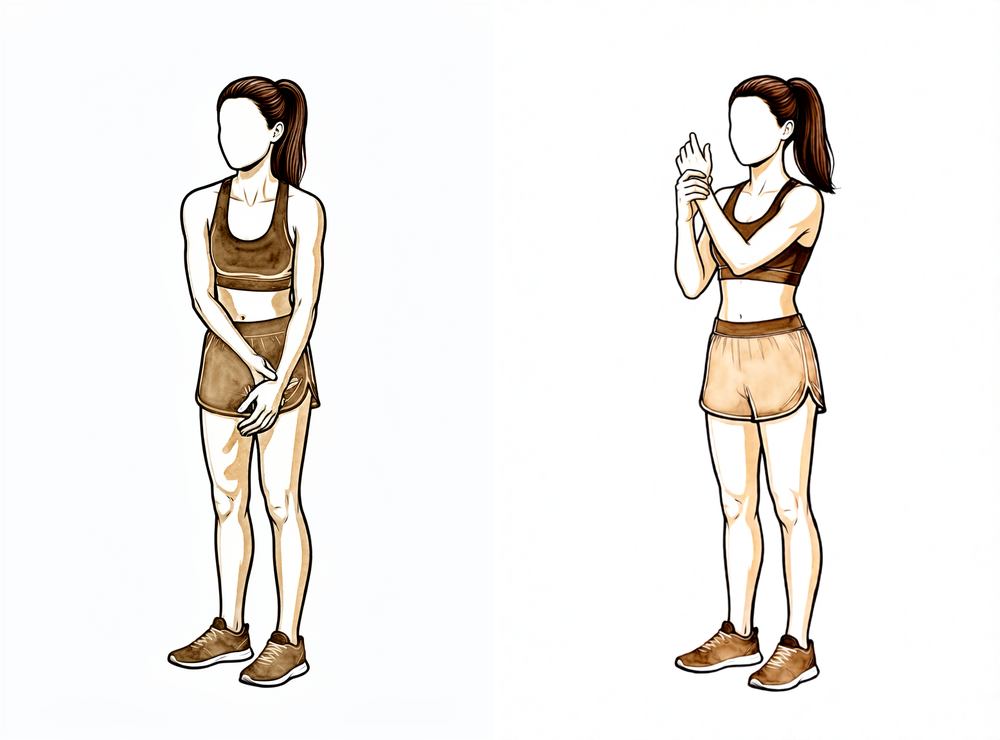
कोहनी को पैसिव तरीके से मोड़ना
ऑपरेशन वाली बांह को हथेली ऊपर की ओर करके टिकाएं। अपने दूसरे हाथ से ऑपरेशन वाली कोहनी को धीरे से जितना आराम से हो सके उतना मोड़ें, यानी ऑपरेशन वाली बांह की अपनी मांसपेशियों का इस्तेमाल करने के बजाय उसे हिलने में मदद करें। आरामदायक रेंज के आख़िर में कुछ सेकंड रोककर रखें, फिर धीरे-धीरे उसे वापस सीधा होने दें। इससे रिपेयर पर भार डाले बिना आपकी कोहनी का मुड़ना (फ्लेक्शन) बढ़ता है।
10 बार, दिन में 3–4 बार
Kieran Hirpara 4.0
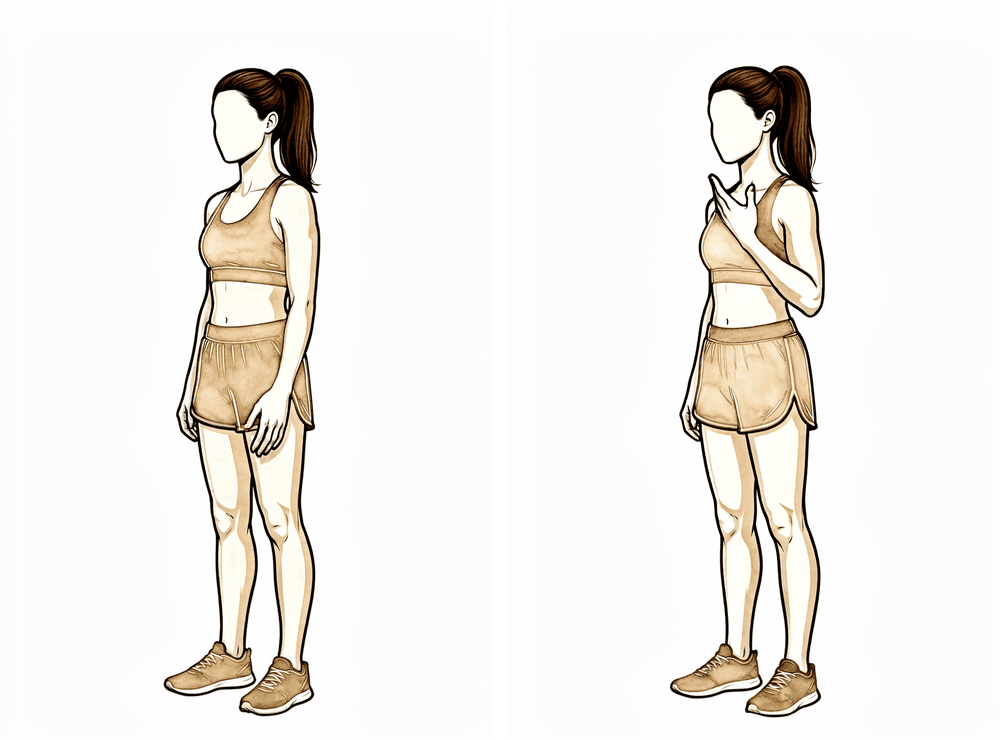
कोहनी को खुद से मोड़ना
हथेली ऊपर की ओर और बांह का ऊपरी हिस्सा बगल से सटाकर, अपनी कोहनी को धीरे से जितना हो सके मोड़ें, फिर उसे नियंत्रण के साथ वापस सीधा होने दें। पहले छह सप्ताह में कोहनी को गुरुत्व (उसके अपने वज़न) से सीधा होने दें — अपनी मांसपेशियों से उसे धकेलकर सीधा न करें।
10–15 बार, दिन में 3–4 बार
Kieran Hirpara 4.0
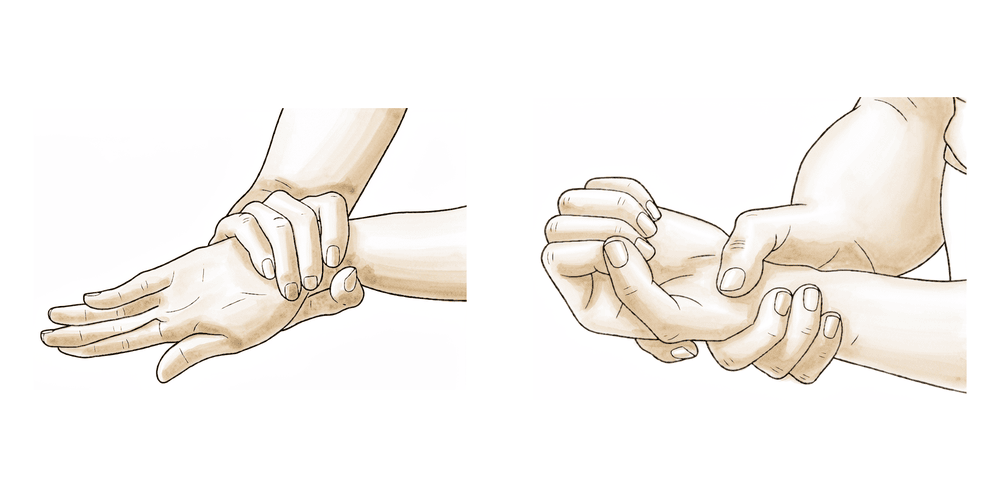
अग्रबाहु को घुमाना
अपनी कोहनी को बगल से सटाकर और लगभग समकोण पर मोड़कर रखें। हथेली को धीरे-धीरे ऊपर छत की ओर घुमाएं, 3–5 सेकंड रोकें, फिर नीचे फ़र्श की ओर घुमाएं। पूरे समय कोहनी को स्थिर और शरीर से सटाकर रखें। आप दूसरे हाथ से इस हरकत में हल्की मदद कर सकते हैं।
हर दिशा में 10 बार, दिन में 3–4 बार

Kieran Hirpara 4.0
पकड़ की ताकत बढ़ाना
एक नरम गेंद या पुट्टी का गोला हाथ में दबाएं, कुछ सेकंड रोकें, फिर छोड़ दें। इससे आपकी कोहनी सुरक्षित रहते हुए आपका हाथ और अग्रबाहु मज़बूत रहते हैं। इससे कोहनी के रिपेयर पर भार नहीं पड़ता।
10–15 बार दबाएं, दिन में 2–3 बार

Kieran Hirpara 4.0
कोहनी मोड़ने की आइसोमेट्रिक पकड़
कोहनी मोड़कर और हथेली ऊपर रखकर, अपना दूसरा हाथ अग्रबाहु के नीचे रखें। कोहनी को और मोड़ने की हल्की कोशिश करें, जबकि दूसरा हाथ उसे स्थिर रखे, ताकि मांसपेशी काम करे लेकिन बांह हिले नहीं। हल्के से रोककर रखें, फिर ढीला छोड़ दें। यह मांसपेशी को सक्रिय करने वाला (आइसोमेट्रिक) अभ्यास है — यह केवल मोड़ने वाली मांसपेशियों पर काम करता है और ट्राइसेप्स या रिपेयर पर भार नहीं डालता।
5 सेकंड रोकें, 5–10 बार, दिन में 2–3 बार

Kieran Hirpara 4.0
कोहनी को खुद से सीधा करना (गुरुत्व के ख़िलाफ़)
इसे तभी शुरू करें जब आपके सर्जन या थेरेपिस्ट अनुमति दें, आमतौर पर छह सप्ताह से। बांह के ऊपरी हिस्से को सहारा देकर, अपनी मांसपेशियों की ताकत से कोहनी को धीरे-धीरे सीधा करें, फिर नियंत्रण के साथ वापस मोड़ें। केवल गुरुत्व के ख़िलाफ़ काम करें — जब तक आपके थेरेपिस्ट आपको आगे न बढ़ाएं (आमतौर पर लगभग तीन महीने पर), कोई वज़न या प्रतिरोध न जोड़ें।
10 बार, दिन में 2–3 बार — केवल सप्ताह 6 से

Kieran Hirpara 4.0
बैंड के प्रतिरोध के साथ सीधा करना
यह बाद के चरण का व्यायाम है, जो केवल लगभग तीन महीने से शुरू होता है, जब आपके थेरेपिस्ट अनुमति दें। एक हल्के रेज़िस्टेंस बैंड को किसी चीज़ से बांधें और उसके खिंचाव के ख़िलाफ़ अपनी कोहनी सीधी करें, फिर धीरे-धीरे वापस आएं। सबसे हल्के बैंड से शुरू करें और निर्देश मिलने पर ही हल्के वज़न (लगभग 0.5–2 किलो) तक बढ़ें। प्रतिरोध के साथ सीधा करना सीधे ट्राइसेप्स और रिपेयर पर भार डालता है, इसीलिए इसे देर से शुरू किया जाता है।
10–15 बार, सप्ताह में 3 बार — केवल ~3 महीने से
नीचे दिए गए व्यायाम केवल डॉ. हिरपरा और आपके हैंड थेरेपिस्ट के मार्गदर्शन के अनुसार शुरू करें, और आपको जो भी रेंज और सीमाएं बताई गई हैं, उनके भीतर रहें। शुरुआती सप्ताहों के व्यायाम जानबूझकर सीमित रखे गए हैं। शुरुआत में कोहनी को पैसिव (दूसरे हाथ की मदद से) और एक्टिव (खुद से) मोड़ने की ज़रूरत होती है — कोहनी का मुड़ी हुई स्थिति में जकड़ जाना, उसके मुड़ने की क्षमता खोने से कहीं ज़्यादा आसानी से होता है — जबकि ट्राइसेप्स के रिपेयर को सुरक्षित रखा जाता है। शुरुआती सप्ताहों में ऑपरेशन वाली बांह से न कुछ उठाएं, न धकेलें, न खींचें, और न ही उस पर शरीर का वज़न डालें; ट्राइसेप्स का खिंचाव ठीक वही बल है जिससे फ़िक्सेशन हड्डी को बचा रहा है। व्यायाम के सत्रों के बीच अपने हाथ, कलाई और कंधे को खुलकर हिलाते रहें। जिस भी चीज़ से कोहनी के नुकीले सिरे पर तेज़ दर्द हो, उसे रोक दें।
आपका क्लिनिकल प्रोटोकॉल
इस पेज का बाकी हिस्सा ओपन रिडक्शन एंड इंटरनल फ़िक्सेशन से इलाज किए गए ओलेक्रेनॉन फ्रैक्चर का क्लिनिकल प्रोटोकॉल है। यह हिस्सा आपके फिजियोथेरेपिस्ट या हैंड थेरेपिस्ट को दिया जाना है, और नीचे हर चरण की शुरुआत सरल भाषा में इस व्याख्या से होती है कि क्या हो रहा है। इस प्रोटोकॉल को कोहनी के सामान्य फ्रैक्चर से अलग करने वाला सबसे ज़रूरी नियम ट्राइसेप्स की सुरक्षा है: एक्टिव एक्सटेंशन (खुद से सीधा करना) ~6 सप्ताह तक और प्रतिरोध वाला एक्सटेंशन ~3 महीने तक टाला जाता है, क्योंकि ट्राइसेप्स ओलेक्रेनॉन पर जुड़ती है और फ़िक्सेशन पर भार डालती है।
इलाज शुरू करने से पहले मरीज़ का एक्स-रे, ऑपरेशन रिपोर्ट और पिछला मेडिकल इतिहास देखें, और इलाज करने वाले सर्जन से फ़िक्सेशन की बनावट (टेंशन-बैंड वायरिंग बनाम प्लेट), उसकी स्थिरता और संभावित परिणाम के बारे में चर्चा करें।
सप्ताह 0–1: स्थिर रखना
पहले सप्ताह में ध्यान नरम ऊतकों को आराम देने, सूजन को शांत करने और बाकी सब कुछ हिलाते-डुलाते रखने पर होता है। कोहनी लगभग 90° पर एक साधारण स्लिंग में आराम करती है, जिसे व्यायाम के लिए उतार दिया जाता है। कोई सख़्त पीछे वाला (पोस्टीरियर) स्प्लिंट या ब्रेस नहीं होता।
आपके फिजियोथेरेपिस्ट के लिए:
- स्थिर रखना: साधारण स्लिंग, कोहनी ~90° पर, व्यायाम के लिए उतारी जाए। कोई प्लास्टर स्प्लिंट या ब्रेस इस्तेमाल नहीं किया जाता।
- लक्ष्य: नरम ऊतकों को आराम; सूजन पर नियंत्रण (हाथ ऊंचा रखना, हल्का दबाव, ठंडी सिकाई)।
- व्यायाम: हाथ, कलाई और कंधे की एक्टिव रेंज ऑफ मोशन; अगर फ़िक्सेशन स्थिर है, तो दिन 2–3 से कोहनी और अग्रबाहु की हल्की एक्टिव रेंज ऑफ मोशन शुरू की जा सकती है।
- सावधानियां: ऊपरी अंग (कंधे से हाथ तक) पर वज़न नहीं; न उठाना, न धकेलना, न खींचना; कोहनी का कोई एक्टिव एक्सटेंशन नहीं।
- अगले चरण में जाने के मानदंड: घाव और सूजन शांत हो रहे हों।
सप्ताह 1–6: सुरक्षित हरकत (एक्सटेंशन पर रोक)
यह ट्राइसेप्स की सुरक्षा का चरण है। मोड़ने को लगातार आगे बढ़ाया जाता है, जबकि सीधा करना केवल पैसिव तरीके से या गुरुत्व से किया जाता है, कभी भी कोहनी की अपनी सीधा करने वाली ताकत से नहीं। स्लिंग लगभग सप्ताह 4 से धीरे-धीरे छुड़ाई जाती है।
आपके फिजियोथेरेपिस्ट के लिए:
- आरओएम की सीमा: बिना तनाव वाली रेंज के भीतर फ्लेक्शन को लगभग हर सप्ताह 10° बढ़ाया जाए; लक्ष्य 6 सप्ताह तक पूरा पैसिव एक्सटेंशन, 120° तक बिना तनाव वाला फ्लेक्शन, और अग्रबाहु का पूरा घुमाव। केवल पैसिव एक्सटेंशन: कोई एक्टिव एक्सटेंशन नहीं।
- व्यायाम: एक्टिव और एक्टिव-असिस्टेड (सहायता के साथ) फ्लेक्शन, साथ में प्रोनेशन/सुपिनेशन (हथेली नीचे/ऊपर घुमाना); पैसिव रेंज ऑफ मोशन ~सप्ताह 4 से शुरू हो सकती है। रोटेटर कफ़, स्कैपुला के आसपास की और अग्रबाहु की मांसपेशियों के केवल आइसोमेट्रिक व्यायाम, कोहनी का एक्सटेंशन नहीं।
- ऑर्थोसिस: सप्ताह 4 पर स्लिंग धीरे-धीरे छुड़ाएं (उसके बाद आराम के लिए घर से बाहर और रात में पहनी जाए)।
- अगले चरण में जाने के मानदंड: पूरा पैसिव एक्सटेंशन, ~120° तक फ्लेक्शन, पूरा घुमाव; दर्द ≤3/10।
सप्ताह 6–12: एक्टिव एक्सटेंशन की शुरुआत
जब हड्डी को जुड़ने के लिए छह सप्ताह मिल जाते हैं, तो खुद से सीधा करना दोबारा शुरू किया जाता है, केवल गुरुत्व के ख़िलाफ़ और बिना किसी अतिरिक्त वज़न के। मोड़ने को पूरी रेंज की ओर बढ़ाया जाता है, और बांह पर वज़न डालना धीरे-धीरे आगे बढ़ाया जाता है।
आपके फिजियोथेरेपिस्ट के लिए:
- लक्ष्य: हरकत की पूरी रेंज हासिल करना; हल्का एक्टिव एक्सटेंशन शुरू करना।
- व्यायाम: सप्ताह 6 से केवल गुरुत्व के ख़िलाफ़ कोहनी का एक्टिव एक्सटेंशन; फ्लेक्शन को पूरा होने तक बढ़ाएं (लक्ष्य ~सप्ताह 9 तक बिना तनाव वाली पूरी रेंज)। सहन होने पर वज़न डालना बढ़ाएं: मेज़ → दीवार → चारों हाथ-पैरों के बल (क्वाड्रुपेड)। फ्लेक्शन/घुमाव के लिए क्रमशः बढ़ते प्रतिरोध वाले व्यायाम शुरू हो सकते हैं, लेकिन अब भी प्रतिरोध वाला एक्सटेंशन नहीं: यह 3 महीने तक रोका जाता है।
- अगले चरण में जाने के मानदंड: पूरी एक्टिव रेंज; एक्सटेंशन लैग (पूरा सीधा न हो पाना) का न बढ़ना; एक्स-रे में हड्डी का जुड़ना।
3–6 महीने: प्रतिरोध वाला एक्सटेंशन और वापसी
प्रतिरोध के साथ सीधा करना (वह कदम जो सीधे ट्राइसेप्स और रिपेयर पर भार डालता है) अब जाकर, फ्रैक्चर के जुड़ जाने के बाद ही शुरू होता है।
आपके फिजियोथेरेपिस्ट के लिए:
- प्रतिरोध के साथ कोहनी का एक्सटेंशन ~3 महीने पर शुरू होता है (बैंड से शुरू करके हल्के वज़न तक, ~0.5–2 किलो / 1–5 पाउंड, 3×/सप्ताह)।
- खेल- और काम-विशेष व्यायाम ~4.5 महीने से।
- वज़न उठाना और भारी मेहनत वाला काम तब दोबारा शुरू होता है जब पूरी ताकत आ जाए और हड्डी जुड़ जाए, आमतौर पर लगभग 6 महीने तक।
- ओलेक्रेनॉन फ़िक्सेशन के बाद इम्प्लांट (हार्डवेयर) निकालना आम है (ख़ासकर टेंशन-बैंड वाले तार, जो शरीर में सबसे ज़्यादा बार निकाले जाने वाले इम्प्लांट हैं), और यह आमतौर पर हड्डी जुड़ने के बाद, उभरे हुए या परेशान करने वाले हार्डवेयर से राहत के लिए किया जाता है, नियमित कदम के रूप में नहीं।
काम और गतिविधियों पर वापस लौटना
ऊपर दी गई सावधानियों के भीतर, अपनी देखभाल के लिए बांह का हल्का इस्तेमाल, हाथ गोद के पास रखकर, शुरू से ही ठीक है, लेकिन कोहनी पर भार डालने वाली हर चीज़ अपनी बारी का इंतज़ार करती है। मोड़ना और अग्रबाहु को घुमाना आमतौर पर लगभग छह सप्ताह तक आरामदायक लगने लगते हैं; खुद से सीधा करना छह सप्ताह से लौटता है और उसके बाद के सप्ताहों में लगातार बेहतर होता है।
भारी कामों को चरणों में शुरू किया जाता है: लगभग तीन महीने तक प्रतिरोध या वज़न के साथ सीधा करना नहीं, लगभग साढ़े चार महीने से खेल- और काम-विशेष ट्रेनिंग, और वज़न उठाने और भारी मेहनत वाले काम पर वापसी आमतौर पर लगभग छह महीने तक, जब आपकी ताकत और हड्डी का जुड़ना इसकी अनुमति दें। डेस्क वाले और हल्के काम आमतौर पर इससे काफ़ी पहले शुरू हो सकते हैं; इसका समय अपनी फॉलो-अप जांच में डॉ. हिरपरा से तय करें, क्योंकि यह आपके काम पर और इस पर निर्भर करता है कि किस बांह का ऑपरेशन हुआ था। गाड़ी चलाना तब दोबारा शुरू होता है जब आपकी स्लिंग छूट जाए और आप दोनों बांहों से गाड़ी को सुरक्षित रूप से नियंत्रित कर सकें, जिसकी पुष्टि आपकी फॉलो-अप जांच में की जाएगी।
याद रखें कि कोहनी को सीधा करने के आख़िरी 10–15 डिग्री की हमेशा के लिए थोड़ी कमी की उम्मीद रखें; यह सामान्य है और आमतौर पर रोज़ के कामकाज पर इसका कोई असर नहीं पड़ता।
आपके प्रोटोकॉल के बाद
यह प्रोटोकॉल क्लिनिक की ठीक होने से जुड़ी सामान्य सलाह के साथ काम करता है: ऑपरेशन के बाद दर्द संभालना और घाव की देखभाल देखें। चोट के बारे में जानने के लिए ओलेक्रेनॉन फ्रैक्चर देखें। ऊपर दी गई चरणबद्ध योजना ओलेक्रेनॉन ओआरआईएफ़ के बाद के प्रकाशित रिहैबिलिटेशन प्रोटोकॉल के अनुरूप है, और आगे आपकी रिकवरी का मार्गदर्शन आपके फिजियोथेरेपिस्ट या हैंड थेरेपिस्ट व्यक्तिगत रूप से इस आधार पर करते हैं कि आपकी कोहनी कैसे आगे बढ़ रही है।
Evidence & references
This is the clinical evidence summary written for health professionals. It is technical, and it lists the research this page was built from. You do not need to read it to understand your treatment or to make a decision about it.
Olecranon Fracture — Open Reduction Internal Fixation (ORIF) — Post-operative Rehabilitation
Topic scope: Post-operative rehabilitation after ORIF of a displaced olecranon fracture — tension-band wiring (TBW) for simple transverse patterns, or plate-and-screw fixation for comminuted / oblique / Monteggia-type / proximal-ulna patterns. The olecranon fracture is an intra-articular fracture of the extensor mechanism: the fixation construct must resist the triceps pull that distracts the fragment, and the rehabilitation is built around protecting that construct while preventing the stiffness to which the elbow is highly prone.
Defining principle (the inverse of an arthrolysis): unlike a stiff-elbow release, here there is a fixation construct to protect, and the deforming force is the triceps. So active and resisted elbow EXTENSION — and lifting / pushing — are restricted early, while flexion and forearm rotation are advanced relatively freely to prevent stiffness. Dr Hirpara's practice override: the operated elbow is rested in a simple sling, not a posterior splint or brace; active extension is withheld for 0–6 weeks (protecting the tension band / triceps insertion), resisted extension is delayed to ~3 months, flexion is advanced ~10°/week, and the patient is counselled to expect a permanent 10–15° loss of terminal extension.
Evidence-strength flag: MODERATE-to-STRONG. Two concordant institutional physiotherapy protocols (Brigham & Women's Hospital; The Christ Hospital / Rao) give explicit phase timelines, and the biomechanical rationale — anatomic reduction plus stable fixation to permit early motion of an intra-articular fracture — is universally agreed. Consensus is strong on early protected motion + delayed active / resisted extension and triceps loading. The evidence is weaker (equipoise-level) on TBW vs plate, and on operative vs non-operative management in the elderly.
Phased rehabilitation timeline
| Phase | Window | Sling / immobilisation | ROM / use | Strengthening | Criteria to progress |
|---|---|---|---|---|---|
| I — Immobilisation | Weeks 0–1 | Simple sling at ~90° (KH — no posterior splint/brace), off for exercises | Active hand/wrist/shoulder ROM; gentle active elbow + forearm ROM from day 2–3 if stable; NO active extension | — (oedema control) | Wound and swelling settling |
| II — Protected motion, extension restricted | Weeks 1–6 | Wean sling at week 4 (out-of-house + night thereafter) | Flexion advanced ~10°/week in a tension-free zone; passive extension only; PROM may begin ~wk 4; goal full passive extension + flexion to 120° + full rotation by 6 wk | Cuff / periscapular / forearm isometrics only | Full passive extension, flexion ~120°, full rotation; pain ≤3/10 |
| III — Active extension introduced | Weeks 6–12 | Discontinued | Active extension against gravity only from wk 6; advance flexion to full (full tension-free arc by ~wk 9); progress weight-bearing tabletop → wall → quadruped | PRE to flexion/rotation; still NO resisted extension | Full active arc; no worsening extension lag; radiographic union |
| IV — Resisted extension + return | 3–6 months | — | Return to lifting/loading staged | Resisted extension from ~3 months (bands → light weights 1–5 lb, 3×/wk); sport/job-specific ~4.5 mo | Full strength + union; lifting/heavy labour ~6 mo |
Evidence by theme
The triceps-pull rule (the rehab-defining constraint) — Consensus, strong biomechanical rationale
The triceps inserts on the olecranon; active and resisted extension distract the fracture and load the tension band. Active extension against gravity is therefore deferred to ~6 weeks and resisted extension to ~3 months. This is the single most important rule distinguishing olecranon ORIF from a generic elbow-fracture rehabilitation, and both published protocols enforce it (The Christ Hospital / Rao explicitly prohibit active extension for the first six weeks).
Early protected motion to prevent stiffness — Strong consensus
There is universal agreement that an intra-articular extensor-mechanism fracture needs early motion to prevent stiffness; how early depends on construct stability and surgeon confidence. Brigham permits active ROM from day 2–3; the more conservative Christ / Rao protocol protects the first weeks with no active extension. The tension throughout is "prevent stiffness" versus "protect the triceps repair," resolved by advancing flexion and rotation freely while restricting extension.
Construct choice — TBW vs plate — Moderate / equipoise
Both constructs aim to be stable enough for early motion. TBW is simpler and adequate for simple transverse fractures but carries the highest symptomatic-hardware / removal rate and can lose compression in comminuted or osteoporotic bone. Plate fixation better controls comminution, oblique and diaphyseal-extension patterns; Hume & Wiss's randomized study favoured plate over TBW for comminuted patterns, while Anderson et al. reported a mean ~13.5° flexion contracture after plating. Rehabilitation phases are broadly the same — a more stable construct simply allows the surgeon to liberalise motion sooner.
Operative vs non-operative in the elderly — Moderate (RCT, equipoise)
A prospective RCT of displaced olecranon fractures in elderly patients was stopped early for a high operative complication rate, with comparable patient-reported outcomes — shifting practice toward non-operative management and earlier free mobilisation in low-demand older patients. Geriatric locking plates reduce fixation failure in osteoporotic bone but still carry meaningful complication and implant-failure rates.
Expected residual deficit — Moderate (corpus, observational)
Even with stable fixation and early motion, isolated olecranon fractures lose ~10–15° of terminal extension on average. Patients should be counselled that this is the expected norm, not a complication.
Hardware removal — Moderate (observational)
Olecranon hardware — especially TBW K-wires / wires — is the most commonly removed implant in the body; prominent subcutaneous hardware drives a high secondary-removal rate (up to roughly half of TBW cases in some series). Removal is typically performed after union (often ≥4–6 months) and largely for symptom relief, not as a routine staged step. Plate fixation has fewer wire-irritation issues but a non-trivial removal rate.
Evidence strength flags (summary)
- STRONG / CONSENSUS: early protected motion to prevent stiffness; the triceps-pull rule deferring active extension to ~6 weeks and resisted extension to ~3 months (biomechanical rationale
- two concordant institutional protocols).
- MODERATE: TBW vs plate construct choice (Hume & Wiss; Anderson ~13.5° contracture after plating); operative vs non-operative in the elderly (RCT stopped early for operative complications); expected 10–15° terminal-extension loss; high TBW hardware-removal rate.
- CONSENSUS / EXPERT: the precise phase timings (drawn from surgeon patient-guidance protocols rather than a rehabilitation RCT); the simple-sling immobilisation (KH practice override).
CITATIONS
RAG corpus (180,000+ Orthopaedic articles)
- Chalidis BE, Sachinis NC, Samoladas EP, Dimitriou CG, Pournaras JD. Is tension band wiring technique the "gold standard" for the treatment of olecranon fractures? A long-term functional outcome study. J Orthop Surg Res. 2008;3:9. DOI: 10.1186/1749-799X-3-9
- Hume MC, Wiss DA. Olecranon fractures: a clinical and radiographic comparison of tension band wiring and plate fixation (randomized comparison; plate favoured for comminuted patterns). (Cited in retrieved corpus text.)
- Anderson et al. — mean ~13.5° flexion contracture after olecranon plate fixation (retrieved corpus text).
- Prospective RCT, operative vs non-operative management of displaced olecranon fractures in the elderly — stopped early for a high rate of complications in the operative group, comparable patient-reported outcomes (retrieved corpus text).
- Geriatric olecranon locking-plate case series — major/minor complication and implant-failure rates (J Shoulder Elbow Surg, retrieved corpus text).
- Retrieved corpus text: isolated olecranon fractures lose an average of ~10–15° of terminal extension despite stable fixation and early ROM; anatomic reduction and early range of motion to restore functional elbow motion and strength; high re-operation / hardware-removal rate after TBW.
Published rehabilitation protocols (URLs)
- The Christ Hospital / Rao — "Olecranon ORIF Physical Therapy Protocol." https://www.thechristhospital.com/landingpages/Documents/Rao%20PT%20Protocols/Operative/Elbow/Rao%20Olecranon%20ORIF%20r1.pdf
- Brigham & Women's Hospital, Department of Rehabilitation Services — "Elbow Fracture Post-Op (Radial Head / Olecranon ORIF) Hand Therapy Guideline" (2021). https://www.brighamandwomens.org/assets/BWH/patients-and-families/rehabilitation-services/pdfs/elbow-fracture-orif-hand-therapy-protocol.pdf
- Physiopedia — "Olecranon Fracture" (general background). https://www.physio-pedia.com/Olecranon_Fracture