Patients › Shoulder
Snapping scapula (pumipitik na shoulder blade)
Ang iyong nararamdaman
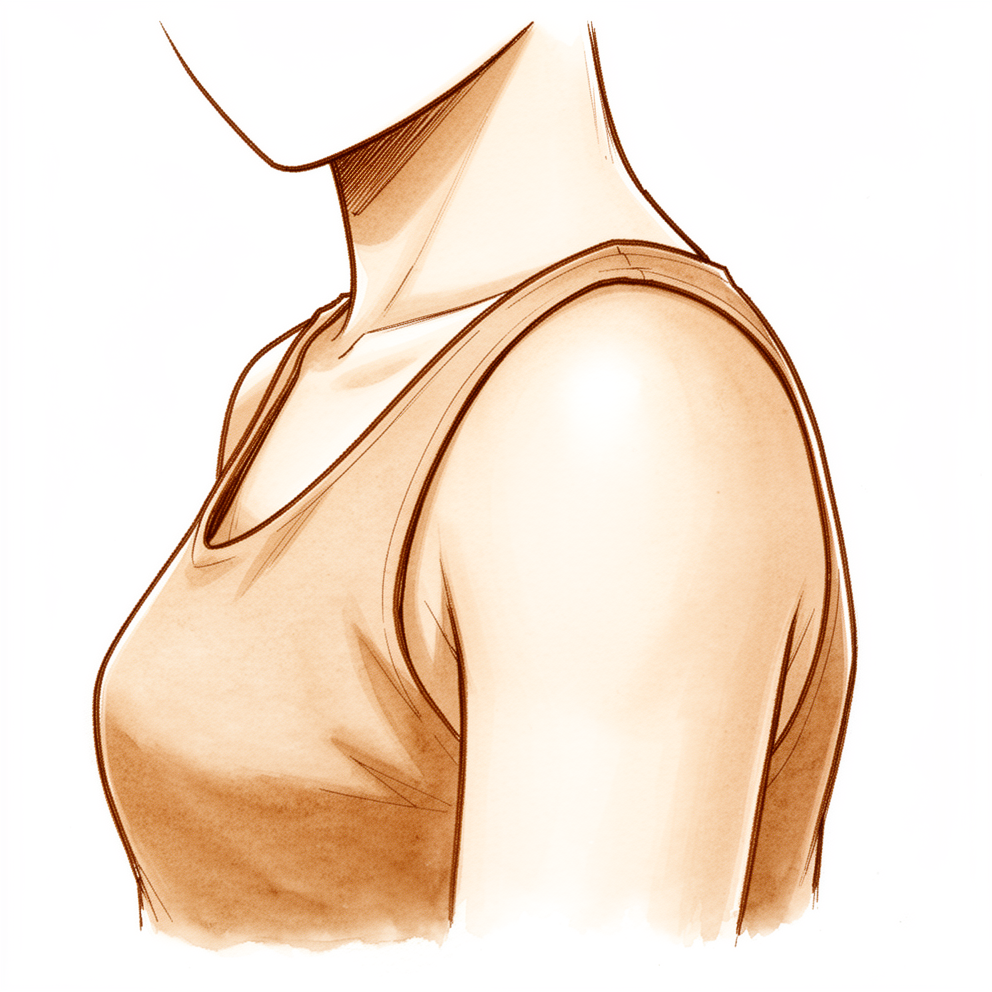
Ang snapping scapula ay nangangahulugang nakakarinig o nakakaramdam ka ng pagkiskis, pag-click o pagpitik mula sa iyong shoulder blade habang gumagalaw ito sa ibabaw ng iyong dibdib (chest wall). Tinatawag ito minsan ng mga doktor na "washboard syndrome", dahil ang tunog ay maaaring maramdaman na parang gulong na tumatakbo sa ibabaw ng isang washboard (kudkuran ng labada). Karaniwan ang ingay mismo. Humigit-kumulang isang-katlo ng mga taong walang anumang sintomas ay may kaunting pagkiskis mula sa shoulder blade. Kung ito lamang, nang walang sakit, hindi ito nangangailangan ng paggamot.
Ang karaniwang nagtutulak sa mga tao na magpatingin ay ang sakit. Nararamdaman ito sa paligid o sa ilalim ng shoulder blade, kadalasan malapit sa panloob na gilid na pinakamalapit sa iyong gulugod. Kadalasan itong lumalala sa mga aktibidad na lampas sa ulo, sa pag-abot pataas o patawid sa iyong katawan, at maaari itong lumabas bilang paghina ng iyong performance sa sport. Ang sakit ay nagmumula sa namamagang bursa, ang manipis na cushion na puno ng likido na nagpapahintulot sa shoulder blade na dumulas nang maayos sa ibabaw ng mga tadyang, o mula sa hugis mismo ng buto. Ang dibdib ay kumikilos na parang sound box (kahon ng tunog), kaya ang ingay na naririnig mo ay mas malakas kaysa sa paggalaw na nagdudulot nito.
Maaaring pahirapin ng sakit ang mga pang-araw-araw na gawain. Ang pag-angat ng mabigat na kawali sa mataas na istante, ang pagsasampay ng labada sa sampayan, o ang pag-abot sa seatbelt ay maaaring lahat magpasimula nito. Napapansin ito ng ilang tao nang higit pagkatapos ng aktibidad kaysa habang ginagawa ito. Maaari itong maging sapat na matindi upang maistorbo ang pagtulog o mapigilan kang gamitin nang normal ang iyong braso.
Kung hindi humuhupa ang iyong mga sintomas, lumalala ang mga ito sa loob ng ilang linggo, ginigising ka ng mga ito sa gabi, o pinipigilan ka nitong magtrabaho o gamitin ang iyong braso, magpatingin sa iyong GP o humingi ng pagsusuri ng isang espesyalista.
Ano ang aktwal na nangyayari
Ang iyong shoulder blade ay ginawa upang dumulas. Nakapuwesto ito sa iyong dibdib, at nakahiwalay dito sa pamamagitan ng manipis na layer ng madulas at mataba na tissue na gumagana na parang gasket sa pagitan ng dalawang gumagalaw na ibabaw. Apat na joint ang nagtutulungan upang igalaw ang iyong balikat, at humigit-kumulang dalawang-katlo ng paggalaw ay nagmumula sa ball-and-socket joint mismo, habang ang natitirang isang-katlo ay nagmumula sa pagdulas ng shoulder blade sa ibabaw ng mga tadyang. Kapag maayos ang pagdulas na iyon, hindi mo ito napapansin.
Ang problema sa snapping scapula ay may bagay na gumugulo sa pagdulas na ito. Minsan ito ay ang hugis ng buto: ang panloob na gilid ng shoulder blade ay maaaring mas nakaanggulo o nakakurba patungo sa mga tadyang kaysa karaniwan, kaya mas malapit ito sa dibdib kaysa sa nararapat. Minsan ito ay isang maliit na umbok ng sobrang buto sa shoulder blade. Kadalasan, ito ay ang mga kalamnan sa paligid ng shoulder blade na hindi pantay ang paggana, kaya hindi maayos ang pagsubaybay ng shoulder blade habang gumagalaw ka. Alinman sa mga ito ay maaaring magpakiskis o magpasabit sa shoulder blade sa halip na dumulas.
Iniirita ng pagkiskis ang cushion sa pagitan ng shoulder blade at ng mga tadyang. Ang cushion na iyon, na tinatawag na bursa, ay isang manipis na supot na puno ng likido na gumagana na parang shock absorber sa pagitan ng buto at malambot na tissue. Kapag namaga ito, kumakapal ito at nagiging masakit kapag hinawakan, at iyon ang sakit na nararamdaman mo sa ilalim o sa paligid ng shoulder blade. Ang friction ay maaari ring magdulot ng reaktibong pagkapal ng tissue mismo, ang tugon ng katawan sa paulit-ulit na pagkiskis.
Ipinapaliwanag nito ang mga sintomas na inilarawan sa itaas. Ang ingay ay nagmumula sa mga gumaspang na ibabaw na gumagalaw sa isa't isa, at pinalalakas ito ng dibdib na parang sound box. Ang sakit ay nagmumula sa namamagang cushion, hindi sa ingay mismo. Iyan ang dahilan kung bakit magkaiba ang paggamot sa dalawang problema, at kung bakit nakatuon ang paggamot sa pagpapakalma ng pamamaga at sa muling pagsasanay ng mga kalamnan na kumokontrol sa shoulder blade.
Ano ang maaari naming gawin tungkol dito
Si Dr Kieran Hirpara, isang upper-limb surgeon sa Mater Private Hospital Rockhampton, ay nagsisimula sa mga opsyon na hindi gaanong invasive na angkop sa iyong kondisyon. Ang mga pasyente ay karaniwang nirerefer sa aming klinika ng kanilang GP; kung iminungkahi ng isang physiotherapist na magpatingin sa amin, kakailanganin mo pa rin ng referral mula sa iyong GP upang maging eligible para sa Medicare rebate. Sa klinika, kumukuha kami ng history, sinusuri ang iyong balikat at nag-aayos ng imaging kung kinakailangan upang malaman kung ano ang nagdudulot ng ingay at ng sakit.
Karamihan sa mga tao ay gumagaling nang walang operasyon, kaya nagsisimula ang paggamot nang walang surgery. Ang unang hakbang ay isang physiotherapy programme upang palakasin ang mga kalamnan na kumokontrol sa iyong shoulder blade, kasama ang pag-stretch ng mga kalamnan na naging masikip. Nakakatulong din ang pagbabago sa mga aktibidad na nagpapasimula ng mga sintomas. Bigyan ito ng sapat na pagsubok na 3 hanggang 6 na buwan bago mag-isip ng anumang karagdagang hakbang.
Kung nagpapatuloy ang sakit, makakatulong ang gamot upang pahupain ang pamamaga. Ang mga anti-inflammatory na tableta, ang parehong uri na iniinom ng maraming tao para sa pananakit ng kalamnan, ay bahagi ng yugtong ito. Maaari rin kaming mag-alok ng image-guided na injection ng steroid at local anaesthetic sa bursa sa ilalim ng iyong shoulder blade. Dalawa ang ginagawa nito: pinapakalma nito ang namamagang cushion, at kinukumpirma nito na dito nagmumula ang iyong sakit.
Isinasaalang-alang lamang ang operasyon kapag nagpapatuloy ang sakit pagkatapos ng ilang buwan ng mga paggamot na ito at hindi ka nila nabigyan ng sapat na pagbuti. Ang operasyon ay keyhole surgery, na ginagawa sa pamamagitan ng maliliit na hiwa gamit ang isang camera. Tinatanggal nito ang namamagang bursa sa pagitan ng iyong shoulder blade at ng iyong mga tadyang. Kinakayod lamang ang itaas na panloob na sulok ng iyong shoulder blade kung matuklasan sa panahon ng operasyon na ito ay nakausli. Malaki ang pagbuti ng sakit ng karamihan sa mga tao pagkatapos ng operasyon, ngunit kadalasan ay may natitirang kaunting pag-click. Pag-uusapan natin kung ano ang maaaring ibig sabihin ng operasyon para sa iyo at magpapasya tayo nang magkasama kung ito ang tamang hakbang.
Ano ang dapat asahan
Karamihan sa mga tao ay gumagaling nang walang operasyon. Nagsisimula ang paggamot sa physiotherapy upang palakasin ang mga kalamnan na kumokontrol sa iyong shoulder blade, anti-inflammatory na gamot at pagbabago sa mga aktibidad na nagpapasimula ng mga sintomas. Bigyan ito ng sapat na pagsubok na 3 hanggang 6 na buwan. Maraming tao ang nakakaramdam na humuhupa ang kanilang sakit sa panahong ito at hindi na kailanman nangangailangan ng operasyon.
Kung nagpapatuloy ang sakit pagkatapos ng ilang buwan ng mga paggamot na ito, maaaring isaalang-alang ang operasyon. Tinatanggal ng keyhole surgery ang namamagang bursa sa pagitan ng iyong shoulder blade at ng iyong mga tadyang, at kinakayod lamang ang itaas na panloob na sulok ng shoulder blade kung matuklasang ito ay nakausli. Malaki ang pagbuti ng sakit ng karamihan sa mga tao pagkatapos ng operasyon. Kadalasan ay may natitirang kaunting pag-click, dahil ang mga paggamot na nakakatulong sa sakit ay kadalasang inaayos ang sakit, hindi ang ingay. Ang lubos na pagkawala ng bawat sintomas ay hindi ang karaniwang resulta.
Kung walang paggamot, maaaring magpatuloy ang mga sintomas at maaaring maging sapat na matindi upang maistorbo ang pagtulog o mapigilan kang gamitin nang normal ang iyong braso. Maaaring mahirap makilala at gamutin ang kondisyong ito, kaya sulit na makakuha ng malinaw na diagnosis nang maaga sa halip na hintaying humupa ito nang kusa.
Kung hindi humuhupa ang iyong mga sintomas, lumalala ang mga ito sa loob ng ilang linggo, ginigising ka ng mga ito sa gabi, o pinipigilan ka nitong magtrabaho o gamitin ang iyong braso, magpatingin sa iyong GP o humingi ng pagsusuri ng isang espesyalista.
Kailan dapat magpatingin
Ang ingay lamang ay hindi dahilan upang mag-alala. Humigit-kumulang isang-katlo ng mga taong walang anumang sintomas ay may kaunting pagkiskis mula sa shoulder blade, at kung ito lamang, hindi ito nangangailangan ng paggamot. Ang mahalaga ay ang sakit. Magpatingin sa iyong GP o humingi ng pagsusuri ng isang espesyalista kung mayroon kang sakit sa paligid o sa ilalim ng shoulder blade na hindi humuhupa, lumalala sa loob ng ilang linggo, ginigising ka sa gabi, o pinipigilan kang magtrabaho o gamitin ang iyong braso. Humingi rin ng pagsusuri kung ang sakit ay sapat na matindi upang maistorbo ang pagtulog, kung bumaba ang iyong performance sa sport, o kung ang mga aktibidad na lampas sa ulo, gaya ng pag-abot pataas o patawid sa iyong katawan, ay nagpapasimula ng sakit. Maaaring mahirap makilala ang snapping scapula, kaya sulit na magkaroon ng malinaw na diagnosis nang maaga.
Mas malalim na pagtalakay
Advanced reading: the deeper science (optional)
Ang seksyong ito ay higit pa sa kailangan mo para sa iyong sariling mga desisyon sa paggamot. Ang snapping scapula ay karapat-dapat sa karagdagang pagbabasa dahil ang ingay at ang sakit ay dalawang magkaibang problema, at ang mga paggamot na nakakatulong ay kadalasang inaayos ang ikalawa, hindi ang una.
Karaniwan ang ingay; ang sakit ang problema
Ang pagkiskis mula sa shoulder blade ay hindi, sa sarili nito, senyales ng sakit. Binabanggit ng isang klasikong review ng kondisyon ang isang maagang pag-aaral na nakakita ng scapular crepitus (pagkiskis ng shoulder blade) sa 31% ng 100 taong walang anumang sintomas [1]. Ang nagpapabago sa ingay upang maging isang kondisyon ay ang sakit, kadalasan mula sa namamagang bursa: ang manipis na layer ng tissue na may likido na nagpapahintulot sa shoulder blade na dumulas sa ibabaw ng mga tadyang.
May papel ang hugis. Sa isang imaging study, ang mga taong may scapula na kumukurba pasulong sa kahabaan ng panloob na gilid nito (isang malukong na hugis na may positibong "medial scapula corpus angle") ay may 12 na beses na mas mataas na panganib ng snapping scapula [2]. Lumabas na hindi gaanong kapaki-pakinabang ang sukat na iyon kaysa sa una nitong itsura: natuklasan ng isang mas huling pag-aaral na ang parehong anggulo ay malaki ang pagbabago depende sa direksyon kung saan ito tinitingnan, kaya hindi ito sapat na maaasahan upang i-diagnose ang kondisyon nang mag-isa [3]. Sa isang cadaver model, ang pinakamahalagang katangian ng buto ay kung gaano kalayo nakausli pasulong ang panloob na bahagi ng scapula patungo sa mga tadyang [4].
Karamihan sa mga tao ay gumagaling nang walang operasyon
Sa isang serye ng 30 shoulder blade sa 28 pasyente na ginamot gamit ang isang partikular na programa ng pagpapalakas ng kalamnan, 14 (50%) ang naging maayos sa mga ehersisyo lamang at 6 (21%) ang nangailangan lamang ng karagdagang anti-inflammatory na gamot, kaya 71% ang nakaabot sa magandang resulta o mas mabuti pa ayon sa sariling grading ng pag-aaral nang walang operasyon [5].
Ang pinakamahabang follow-up ay mula sa Finland. Labindalawang tao na nagkaroon ng open surgery at 9 na ginamot nang wala nito ang muling sinuri pagkalipas ng average na 22 taon. Mababa ang sakit kapag nagpapagod sa parehong grupo: 0.8 sa 10 pagkatapos ng operasyon at 1.5 sa 10 nang wala nito, isang pagkakaiba na masyadong maliit upang makatiyak na totoo ito (p = 0.357) [6]. Mabilis na bumuti ang sakit pagkatapos ng operasyon sa 7 sa 12, ngunit sa pangmatagalan, halos parehong lugar ang kinahantungan ng dalawang paraan.
Dalawa ang ginagawa ng injection ng local anaesthetic at steroid sa bursa: ginagamot nito ang pamamaga at sinusubok nito kung ang bursa nga ba talaga ang pinagmumulan ng sakit. Sa isang pathway sa UK, 74 sa 94 na pasyente ang may problema pa rin pagkatapos ng physiotherapy at nagpa-ultrasound-guided na injection; 55 ang nagkaroon ng magandang paunang tugon, na tumagal sa 17 [7]. Sa 42 na inoperahang pasyente na sinundan, ang mga nagkaroon ng magandang tugon sa injection ay mas bumuti pagkatapos ng operasyon kaysa sa mga hindi [7]. Ang isang mas malaking serye sa Amerika na sinundan nang hindi bababa sa limang taon ay hindi nakakita ng parehong ugnayan [8], kaya ang mahinang tugon sa injection ay hindi nangangahulugang hindi na maaaring operahan.
Ano ang nakakamit ng operasyon, at ano ang hindi
Ang pinakamalaking pangmatagalang serye ay sumunod sa 66 na tao sa loob ng 5 hanggang 15 taon pagkatapos ng keyhole na pagtanggal ng bursa at pagkayod ng sulok ng shoulder blade. Tumaas ang average na shoulder score mula 56.7 hanggang 87.2 sa 100, bumaba ang sakit mula 5.2 hanggang 1.4 sa 10, at 77.6% ang nakaabot sa pagbuting sapat na malaki upang mapansin. Sa 42 na naglalaro ng sport, 38 (90.5%) ang nakabalik dito at 31 (73.8%) ang nakabalik sa o malapit sa kanilang dating antas. Walo (12.1%) ang nangailangan ng karagdagang operasyon [8]. Ang isa pang serye ng 74 na shoulder blade ay may katulad na rate ng karagdagang operasyon (8 sa 74) at natuklasan na ang mga mas matandang pasyente, ang mga taong mas matagal nang may sintomas, at ang mga taong may mas mababang score para sa mental wellbeing bago ang operasyon ay kadalasang hindi gaanong naging maayos [9].
Ang lubos na paggaling ay ang eksepsiyon. Natuklasan ng isang systematic review ng 203 na inoperahang balikat na 42 (20.7%) ang lubos na gumaling, 139 (68.5%) ang bumuti ngunit may ilang sintomas pa rin, at 22 (10.8%) ang nagkaroon ng mahinang resulta [10]. Ang isang review noong 2026 ng 464 na pasyente ay umabot sa parehong pangkalahatang konklusyon: parehong napapawi ng non-operative at surgical na paggamot ang sakit, ngunit ang mga mekanikal na sintomas, ang pag-click at pagkiskis, ay kadalasang hindi lubos na nawawala [11].
Sulit bang tanggalin ang buto?
Ang pagkayod ng itaas na panloob na sulok ng shoulder blade ay ang tradisyonal na bahagi ng operasyon, kaya nakakagulat na maaaring kaunti lamang ang naidaragdag nito. Inihambing ng isang sentro ang 24 na tao na tinanggalan lamang ng bursa sa 32 na kinayod din ang sulok. Pareho ang huling pain score (3.4 at 2.8 sa 10, p = 0.351) at shoulder score (75.8 at 76.5, p = 0.895), at naroon pa rin ang pag-click sa 58% at 59% [12]. Mas maikli ang operasyon nang walang trabaho sa buto: 37.5 kumpara sa 61.2 minuto [12]. Ang mga grupo ay sinundan sa magkakaibang haba ng panahon at hindi randomised, kaya hindi ito ang huling salita, ngunit ito ang dahilan kung bakit ang desisyon na kayurin ang buto ay ginagawa sa panahon ng operasyon sa halip na bago pa ito.
Mga Sanggunian
[1] Kuhn JE, Plancher KD, Hawkins RJ. Symptomatic Scapulothoracic Crepitus and Bursitis. J Am Acad Orthop Surg. 1998;6(5):267-73. https://doi.org/10.5435/00124635-199809000-00001 [2] Spiegl UJ, Petri M, Smith SW, Ho CP, Millett PJ. Association between scapula bony morphology and snapping scapula syndrome. J Shoulder Elbow Surg. 2015;24(8):1289-95. https://doi.org/10.1016/j.jse.2014.12.034 [3] Percin B, Featherall J, Tashjian RZ, Chalmers PN, Joyce CD, Mortensen AJ, et al. The influence of scapular orientation on the medial scapula corpus angle in snapping scapula syndrome. JSES Int. 2025;9(1):70-8. https://doi.org/10.1016/j.jseint.2024.08.179 [4] Tahal DS, Katthagen JC, Marchetti DC, Mikula JD, Montgomery SR, Brady A, et al. A Cadaveric Model Evaluating the Influence of Bony Anatomy and the Effectiveness of Partial Scapulectomy on Decompression of the Scapulothoracic Space in Snapping Scapula Syndrome. Am J Sports Med. 2017;45(6):1276-82. https://doi.org/10.1177/0363546516687755 [5] Groh G, Simoni M, Allen T, Dwyer T, Heckman M, Rockwood C. Treatment of snapping scapula with a periscapular muscle strengthening program. J Shoulder Elbow Surg. 1996;5(2):S6. https://doi.org/10.1016/s1058-2746(96)80089-9 [6] Vastamäki M, Vastamäki H. Open Surgical Treatment for Snapping Scapula Provides Durable Pain Relief, but so Does Nonsurgical Treatment. Clin Orthop Relat Res. 2016;474(3):799-805. https://doi.org/10.1007/s11999-015-4614-1 [7] Tytherleigh-Strong G, Gill J, Griffiths E, Al-Hadithy N. Prognosis After Arthroscopic Superior Medial Scapuloplasty for Snapping Scapula Syndrome Improves After a Transient Beneficial Response With an Ultrasound-Guided Subscapular Cortisone Injection. Arthroscopy. 2020;36(12):2965-72. https://doi.org/10.1016/j.arthro.2020.07.024 [8] Rupp M, Geissbuhler AR, Rutledge JC, Amendola R, Hanson JA, Doan KC, et al. Minimum 5-Year Clinical and Return-to-Sport Outcomes After Primary Arthroscopic Scapulothoracic Bursectomy and Partial Scapulectomy for Snapping Scapula Syndrome. Am J Sports Med. 2024;52(6):1449-56. https://doi.org/10.1177/03635465241243072 [9] Menge TJ, Horan MP, Tahal DS, Mitchell JJ, Katthagen JC, Millett PJ. Arthroscopic Treatment of Snapping Scapula Syndrome: Outcomes at Minimum of 2 Years. Arthroscopy. 2016;33(4):726-32. https://doi.org/10.1016/j.arthro.2016.08.029 [10] Memon M, Kay J, Simunovic N, Ayeni OR. Arthroscopic management of snapping scapula syndrome improves pain and functional outcomes, although a high rate of residual symptoms has been reported. Knee Surg Sports Traumatol Arthrosc. 2017;26(1):221-39. https://doi.org/10.1007/s00167-017-4693-5 [11] Wallace K, Mitchell JK, Lauck BJ, Reed J, Conlon S, Kamath GV. Snapping Scapula Syndrome: A Systematic Review of Treatment Options and Outcomes. J Shoulder Elbow Surg. 2026. https://doi.org/10.1016/j.jse.2026.05.023 [12] Featherall J, Christensen GV, Mortensen AJ, Wheelwright JC, Chalmers PN, Tashjian RZ. Arthroscopic scapulothoracic bursectomy with and without superomedial angle scapuloplasty: a comparison of patient-reported outcomes. J Shoulder Elbow Surg. 2023;32(9):1945-52. https://doi.org/10.1016/j.jse.2023.03.020
Evidence & references
This is the clinical evidence summary written for health professionals. It is technical, and it lists the research this page was built from. You do not need to read it to understand your treatment or to make a decision about it.
Overview
- Snapping scapula syndrome is caused by either osseous lesions or scapulothoracic bursitis [3].
- The condition is also referred to as “washboard syndrome” and is attributed to bony and soft tissue abnormalities [9].
- Snapping scapula represents the clinical expression of scapulothoracic impingement due to mechanical factors and/or muscle imbalance [7].
- Osteochondroma of the scapula is a rare entity that may present with snapping scapula syndrome when it alters scapulothoracic mechanics [6].
- Snapping scapula syndrome can be a debilitating disorder [2].
- Diagnosis and management of snapping scapula syndrome remains challenging despite recent advances [1].
- The condition can be difficult to recognize and treat [3].
- Four-dimensional computed tomography scans facilitate preoperative planning by defining pathology and improving assessment of the amount and location of scapular bone and soft tissue causing symptoms [18].
Treatment
- Treatment of patients with snapping scapula syndrome begins with nonoperative methods [5].
- When nonoperative treatment fails, several surgical options exist [5].
- Arthroscopic management of snapping scapula syndrome yields improvement in pain, crepitus, and range of motion in a majority of patients [4].
- Most patients experience residual symptoms following arthroscopic management [4].
- Arthroscopic scapulothoracic treatment provides significant pain relief and functional improvement for painful snapping scapula symptoms not responding to non-surgical treatment modalities [8].
- Arthroscopic treatment for snapping scapula syndrome resulted in significant improvement in pain and function with high patient satisfaction at a mean follow-up of 3.4 years [14].
- Arthroscopic scapuloplasty leads to significant improvement in pain and function in patients with snapping scapula syndrome refractory to conservative treatment [15].
- Arthroscopic surgery is an effective treatment for snapping scapula syndrome in both primary and revision cases, showing significant improvements in all postoperative outcome scores at a mean of 3.4 years [17].
- Arthroscopic resection of the superomedial corner of the scapula is a useful technique in patients whose pain and clicking can be clinically localized and who have failed to respond to conservative measures [19].
- Arthroscopic resection of the medial superior hook formation in combination with partial bursectomy provided good results with significant gains with respect to the WORC score in 90 % of the patients troubled by painful snapping scapula for a long time and without relief by exercise-based rehabilitation [35].
- At the end of 1 year, all patients in a case series had a constant score above 90 and were completely relieved of snapping around the scapula having full pain-free movements at the shoulder and scapulothoracic joints [11].
- A patient remained asymptomatic with full range of motion and no further complaints of pain or snapping at twenty-six months postoperatively [12].
- At 2 years 6 months after the operation, snapping and pain were completely gone and the patient was satisfied with the results [13].
Anatomy & Pathophysiology
Etiology and Mechanism
- Snapping scapula is the clinical expression of scapulothoracic impingement due to mechanical factors and/or muscle imbalance [7].
- The condition is attributed to bony and soft tissue abnormalities [9].
- Osteochondroma of the scapula may present with snapping scapula syndrome when it alters scapulothoracic mechanics [6].
- Subscapular elastofibroma is a reactive pseudotumor resulting from mechanical friction of the scapula on the chest wall [86].
Bony Anatomy and Morphology
- The scapula is separated from the chest wall by thin gliding fibro-fatty tissue, allowing its smooth excursion over the chest wall [53].
- Anterior angulation of the medial scapula in the axial plane was associated with snapping scapula syndrome [34].
- Patients with a concave-shaped scapula and a positive medial scapula corpus angle may be at risk for snapping scapula syndrome [47].
- The anterior offset of the scapula appeared to be the most important bony parameter to consider during preoperative planning and the evaluation of scapulothoracic space decompression with partial scapulectomy [46].
- The weakest area of the circumference of the biomechanical body of the scapula is the connection of the scapular spine and the medial border of the scapula, known as the spinomedial angle [53].
- The superior angle and the adjacent part of the supraspinous fossa form an appendage that serves as a surface of insertion or origin of muscles but does not transmit compressive forces from the glenoid [53].
Soft Tissue and Neurovascular Anatomy
- Neurologic structures around the scapula vary significantly between the neutral arm position and the chicken-wing position commonly used in the arthroscopic treatment of snapping scapula syndrome [85].
- The scapula is attached to the axial skeleton by the clavicle, specifically by the acromioclavicular and sternoclavicular joints [53].
- The scapula serves for attachment of a number of muscles originating from the axial skeleton that control its motion [53].
Classification
- Mauclaire classified scapulothoracic crepitus into three types: froissement (a gentle friction sound thought to be physiologic), frottement (a louder sound with grating, which is usually pathologic), and craquement (a loud snapping sound, which is always pathologic) [26].
- Frottement may suggest a soft-tissue lesion or bursitis, while craquement may suggest an osseous lesion as the source of symptomatic scapulothoracic crepitus [26].
- The snapping scapula syndrome is caused by either osseous lesions or scapulothoracic bursitis [3].
- Snapping scapula is the clinical expression of the scapulothoracic impingement due to mechanical factors and/or muscle imbalance [7].
- The snapping scapula, also called “washboard syndrome,” is a controversial condition attributed to bony and soft tissue abnormalities [9].
- Rib fractures at the posterior angle could cause snapping scapula syndrome [20].
Clinical Presentation
- Snapping scapula syndrome is an uncommon condition that is likely underdiagnosed [42].
- The condition can produce severe shoulder pain and dysfunction [24].
- Patients often present with decreased athletic performance and increased pain with overhead activities [42].
- Crepitus is a reported symptom in patients with snapping scapula syndrome [42].
- High clinical suspicion is necessary in patients presenting with medial scapular border tenderness, palpable crepitus, and audible snapping [40].
- Potential factors causing snapping scapula syndrome include bony prominence at the superomedial scapular angle, imbalance of the periscapular muscles, and scapulothoracic bursitis [42].
- Scapulothoracic crepitus is not necessarily a pathologic condition, as it was found in 31% of 100 normal asymptomatic persons [26].
- Scapulothoracic crepitus is considered pathologic if it is associated with pain, winging, or other disorders of the scapulothoracic articulation [26].
- The condition has been referred to by various names, including snapping scapula, washboard syndrome, scapulothoracic syndrome, rolling scapula, grating scapula, and scapulocostal syndrome [26].
- Mauclaire classified scapulothoracic crepitus into three types: froissement (gentle friction sound), frottement (louder sound with grating), and craquement (loud snapping sound) [26].
- Scapular noises arise from anatomic changes in the tissue interposed between the scapula and the chest wall and/or an incongruent scapulothoracic articulation [26].
- The air-filled thoracic cavity acts as a resonating chamber that amplifies scapulothoracic crepitus [26].
- A mass composed of alternating strands of fatty and fibrous tissue located at the inferior pole of the scapula is pathognomonic for elastofibroma dorsi [36].
- Scapular osteochondroma is a rarely reported cause of scapular pseudo-winging and should be considered in the differential diagnosis when winging and a mass are present [43].
- The differential diagnosis for causes of snapping scapula includes idiopathic causes, scapulothoracic bursitis, osteochondromas, and elastofibromas [42].
- Four-dimensional computed tomography scans facilitate preoperative planning by defining pathology and assessing the amount and location of scapular bone and soft tissue causing symptoms [18].
- Plain radiographs and CT scans provide detailed information about osseous abnormalities in snapping scapula syndrome [42].
- MRI characterizes bursal and other soft-tissue pathologies in snapping scapula syndrome [42].
Investigations
- Symptomatic scapulothoracic crepitus is considered pathologic when associated with pain, winging, or other disorders of the scapulothoracic articulation [26].
- Scapulothoracic crepitus is attributed to anatomic changes in the tissue interposed between the scapula and the chest wall or an incongruent scapulothoracic articulation [26].
- The air-filled thoracic cavity acts as a resonating chamber that amplifies scapulothoracic crepitus noises [26].
- Frottement (a louder sound with grating) usually suggests a soft-tissue lesion or bursitis, while craquement (a loud snapping sound) always suggests an osseous lesion [26].
- Four-dimensional computed tomography (4D CT) scans define pathology well and improve the assessment of the amount and location of scapular bone and soft tissue causing symptoms in snapping scapula syndrome [18].
- Fluoroscopy provides a real-time method for evaluating and documenting abnormal osseous mechanics of the scapulothoracic bursal region [31].
- Anterior angulation of the medial scapula in the axial plane is associated with snapping scapula syndrome [34].
- The anterior offset of the scapula is the most important bony parameter to consider during preoperative planning and evaluation of scapulothoracic space decompression with partial scapulectomy [46].
- Imaging-guided injections provide an alternative means of diagnosis in cases where direct imaging is usually not successful [48].
- Rib fractures at the posterior angle can cause snapping scapula syndrome [20].
Treatment
Non-Operative Management
- In most cases, nonoperative treatment is curative and includes physical therapy for scapular muscle strengthening and nonsteroidal anti-inflammatory medications [29].
- Nonsurgical management remains the first treatment option, with surgery recommended after 6 months of nonsurgical treatment with no improvement [42].
- Nonoperative management of snapping scapula syndrome in the form of analgesia, physiotherapy, local corticosteroid injection, and/or extracorporeal shockwave therapy should be initiated for 3 to 6 months before considering surgical management [40].
- Strengthening weak periscapular muscle groups combined with simultaneous stretching of contracted muscles and training of antagonistic muscle groups can yield good clinical results [42].
- Physical therapy, injections with local anesthetics and/or steroids, and NSAIDs can be useful in nonsurgical management [42].
- Patients treated nonsurgically achieved results that were not distinguishable from the surgically treated group in a small series with a minimum of 16 years follow-up [24].
- At a minimum of 16 years follow-up, patients treated nonsurgically reported little pain, some crepitus (usually painless), and a consistent ability to return to work [24].
Operative Management
- When nonoperative treatment fails, several surgical options exist for snapping scapula syndrome [5].
- Most patients experience residual symptoms after arthroscopic management of snapping scapula syndrome [4].
- For patients who fail conservative management, arthroscopic bursectomy and partial scapulectomy is a reasonable option [23].
- Arthroscopic bursectomy and partial scapulectomy is technically demanding and requires an in-depth understanding of the complex anatomy of the scapulothoracic region [23].
- Improvement in functional outcomes and pain relief are reliably achieved after surgical treatment of snapping scapula syndrome [28].
- Poorer outcomes can be seen in workers' compensation patients as well as those with residual symptomatic shoulder pathology following surgical treatment [28].
- Operative time is shorter without scapuloplasty when performing arthroscopic scapulothoracic bursectomy [30].
- Open surgical treatment for snapping scapula provides durable pain relief [24].
- Patients treated surgically for snapping scapula report little pain, some crepitus (usually painless), and a consistent ability to return to work at a minimum of 16 years follow-up [24].
- At the end of 1 year, all patients in a case series of arthroscopic management for recalcitrant scapulothoracic bursitis had a constant score above 90 and were completely relieved of snapping around the scapula [11].
- Patients in a case series of arthroscopic management for recalcitrant scapulothoracic bursitis had full pain-free movements at the shoulder and scapulothoracic joints at 1 year [11].
- A patient with snapping scapula syndrome remained asymptomatic with full range of motion and no further complaints of pain or snapping at twenty-six months postoperatively [12].
- Snapping and pain were completely gone and the patient was satisfied with the results at 2 years 6 months after operation for abnormal angulation of the superior angle of the scapula [13].
- Arthroscopic access to the scapulothoracic space is simple and reproducible, with bursal tissue clearance optimizing visualization [25].
- Arthroscopic treatment of snapping scapula follows 8 key steps to ensure a safe and effective procedure [10].
- A technique for arthroscopic management of snapping scapula syndrome includes scapulothoracic bursectomy and superomedial partial scapulectomy, which has been refined over nearly two decades of experience [16].
- Most authors have recommended partial scapulectomy or resection of the superomedial angle of the scapula in patients with scapular crepitus and pain caused by bony incongruity [81].
- The decision for and timing of operative management should be individualized for each patient [81].
- Operative options include partial scapulectomy and open versus arthroscopic bursectomy [81].
Complications
- Arthroscopic management of snapping scapula syndrome results in most patients experiencing residual symptoms [4].
- Snapping scapula syndrome is difficult to recognize and treat [3].
Recovery
Non-Operative
- Nonoperative treatment for snapping scapula syndrome includes physical therapy for scapular muscle strengthening and nonsteroidal anti-inflammatory medications [29].
- In most cases, nonoperative treatment is curative [29].
Operative Outcomes
- Improvement in functional outcomes and pain relief are reliably achieved after surgical treatment [28].
- Poorer outcomes can be seen in workers' compensation patients as well as those with residual symptomatic shoulder pathology [28].
- At the end of 1 year, all the patients had a constant score above 90 and were completely relieved of snapping around the scapula having full pain-free movements at the shoulder and scapulothoracic joints [11].
- The patient remained asymptomatic with full range of motion and no further complaints of pain or snapping at twenty-six months postoperatively [12].
- A year after excision, the patient has not suffered recurrent pain in the left shoulder [90].
Surgical Technique and Planning
- Operative time is shorter without scapuloplasty [30].
- The 4D CT scan images defined pathology well in patients with snapping scapula syndrome and improved assessment of the amount and location of the scapular bone and soft tissue causing symptoms [18].
Key Evidence
- [L5] Diagnosis and management of snapping scapula syndrome remains challenging despite recent advances. [1] (10.5435/jaaos-21-04-214)
- [L4] Snapping scapula syndrome can be a debilitating disorder. [2] (10.1016/j.arthro.2012.05.889)
- [L5] The snapping scapula syndrome is caused by either osseous lesions or scapulothoracic bursitis and can be difficult to recognize and treat. [3] (10.1155/2013/635628)
- [L1] Arthroscopic management of snapping scapula syndrome yields improvement in pain, crepitus, and range of motion in a majority of patients; however, most patients experience residual symptoms. [4] (10.1007/s00167-017-4693-5)
- [L5] Treatment of patients with snapping scapula syndrome begins with nonoperative methods; when nonoperative treatment fails, several surgical options exist. [5] (10.1177/0363546504268790)
- [Case_report] Osteochondroma of the scapula is a rare entity that may present with snapping scapula syndrome when it alters scapulothoracic mechanics. [6] (10.1016/j.otsr.2017.01.019)
- [L4] Snapping scapula is the clinical expression of the scapulothoracic impingement due to mechanical factors and/or muscle imbalance. [7] (10.1016/s1058-2746(96)80466-6)
- [L4] Arthroscopic scapulothoracic treatment provides significant pain relief and functional improvement for painful snapping scapula symptoms not responding to non-surgical treatment modalities. [8] (10.2174/1874325001711010785)
- [L5] The snapping scapula, also called “washboard syndrome” is a controversial condition attributed to bony and soft tissue abnormalities. [9] (10.11138/mltj/2013.3.2.080)
- [L5] Arthroscopic treatment of snapping scapula follows 8 key steps to ensure a safe and effective procedure. [10] (10.1016/j.eats.2025.103671)
- [L4] At the end of 1 year, all the patients had a constant score above 90 and were completely relieved of snapping around the scapula having full pain-free movements at the shoulder and scapulothoracic joints. [11] (10.13107/jocr.2025.v15.i02.5290)
- [Case_report] The patient remained asymptomatic with full range of motion and no further complaints of pain or snapping at twenty-six months postoperatively. [12] (10.2106/00004623-198264060-00020)
- [L5] At 2 years 6 months after the operation, snapping and pain were completely gone and the patient was satisfied with the results. [13] (10.1016/s1058-2746(03)00178-2)
- [L3] Arthroscopic treatment for snapping scapula syndrome resulted in significant improvement in pain and function with high patient satisfaction at a mean follow-up of 3.4 years. [14] (10.1177/2325967116s00097)
- [L3] Arthroscopic scapuloplasty leads to significant improvement in pain and function in patients with snapping scapula syndrome refractory to conservative treatment. [15] (10.1016/j.arthro.2020.07.024)
- [L5] This Technical Note presents a technique for arthroscopic management of snapping scapula syndrome that includes scapulothoracic bursectomy and superomedial partial scapulectomy, which has been refined over nearly two decades of experience. [16] (10.1016/j.eats.2022.02.028)
- [L5] The editorial commentary notes that the referenced study by Menge et al. concludes that arthroscopic surgery is an effective treatment for snapping scapula syndrome in both primary and revision cases, showing significant improvements in all postoperative outcome scores at a mean of 3.4 years. [17] (10.1016/j.arthro.2016.11.017)
- [L5] The 4D CT scan images defined pathology well in patients with snapping scapula syndrome and improved assessment of the amount and location of the scapular bone and soft tissue causing symptoms. [18] (10.1016/j.jse.2014.09.020)
- [L4] Arthroscopic resection of the superomedial corner of the scapula is a useful technique in patients whose pain and clicking can be clinically localized and who have failed to respond to conservative measures. [19] (10.1016/s1058-2746(99)90056-3)
- [L5] It should be noted that rib fractures at the posterior angle could cause snapping scapula syndrome. [20] (10.1016/s1058-2746(03)00055-7)
- [Paper] For those patients who fail conservative management, arthroscopic bursectomy and partial scapulectomy is a reasonable option, but is technically demanding and requires an in-depth understanding of the complex anatomy of the scapulothoracic region. [23] (10.1016/j.csm.2014.06.003)
- [L3] [24] (10.1007/s11999-015-4614-1)
- [Paper] Arthroscopic access to the scapulothoracic space is simple and reproducible, with bursal tissue clearance optimizing visualization. [25] (10.1016/j.eats.2015.07.002)
- [L4] [26] (10.5435/00124635-199809000-00001)
- [L4] Improvement in functional outcomes and pain relief are reliably achieved after surgical treatment, although poorer outcomes can be seen in workers' compensation patients as well as those with residual symptomatic shoulder pathology. [28] (10.1177/2325967113505739)
- [L5] In most cases, nonoperative treatment is curative and includes physical therapy for scapular muscle strengthening and nonsteroidal anti-inflammatory medications. [29] (10.1016/j.arthro.2008.12.022)
- [L3] Operative time is shorter without scapuloplasty. [30] (10.1016/j.jse.2023.03.020)
- [L5] Fluoroscopy provides a realtime method of evaluating and documenting abnormal osseous mechanics of the scapulothoracic bursal region. [31] (10.1007/s11420-007-9047-2)
- [L3] Anterior angulation of the medial scapula in the axial plane was associated with SSS. [34] (10.1016/j.jse.2014.12.034)
- [L4] In this study, it was found that arthroscopic resection of the medial superior hook formation in combination with partial bursectomy provided good results with significant gains with respect to the WORC score in 90 % of the patients troubled by painful snapping scapula for a long time and without relief by exercise-based rehabilitation. [35] (10.1007/s00590-012-1154-1)
- [L4] A mass composed of alternating strands of fatty and fibrous tissue is pathognomonic if it is located at the inferior pole of the scapula. [36] (10.1016/j.jbspin.2004.04.006)
- [L4] [40] (10.1177/19417381211029211)
- [Case_report] Scapular osteochondroma is a rarely reported cause of scapular pseudo-winging, and should be considered in the differential diagnosis when winging and a mass are present. [43] (10.1007/s11552-014-9659-1)
- [L5] The anterior offset of the scapula appeared to be the most important bony parameter to consider during preoperative planning and the evaluation of scapulothoracic space decompression with partial scapulectomy. [46] (10.1177/0363546516687755)
- [L3] Those patients with a concave-shaped scapula and a positive MSCA may be at risk for SSS. [47] (10.1177/2325967114s00063)
- [L4] [48] (10.2214/ajr.181.5.1811232)
- [L5] [81] (10.1177/1941738109338359)
- [L5] Neurologic structures around the scapula vary significantly between the neutral arm position and the chicken-wing position commonly used in the arthroscopic treatment of SSS. [85] (10.1016/j.jse.2022.03.029)
- [L4] Subscapular elastofibroma is a reactive pseudotumor resulting from mechanical friction of the scapula on the chest wall. [86] (10.1016/s1058-2746(05)80008-4)
- [L5] A year after excision, the patient has not suffered recurrent pain in the left shoulder. [90] (10.1016/1058-2746(93)90078-u)
References
[1] Snapping Scapula Syndrome: Diagnosis and Management. Journal of the American Academy of Orthopaedic Surgeons. 2013. DOI: 10.5435/jaaos-21-04-214
[2] Technique and Outcomes of Arthroscopic Scapulothoracic Bursectomy and Partial Scapulectomy. Arthroscopy. 2012. DOI: 10.1016/j.arthro.2012.05.889
[3] Scapulothoracic Anatomy and Snapping Scapula Syndrome. Anatomy Research International. 2013. DOI: 10.1155/2013/635628
[4] Arthroscopic management of snapping scapula syndrome improves pain and functional outcomes, although a high rate of residual symptoms has been reported. Knee Surgery, Sports Traumatology, Arthroscopy. 2017. DOI: 10.1007/s00167-017-4693-5
[5] Nonoperative and Operative Management of Snapping Scapula. The American Journal of Sports Medicine. 2004. DOI: 10.1177/0363546504268790
[6] The unusual osteochondroma: A case of snapping scapula syndrome and review of the literature. Orthopaedics & Traumatology: Surgery & Research. 2017. DOI: 10.1016/j.otsr.2017.01.019
[7] Surgical management of snapping scapula. Journal of Shoulder and Elbow Surgery. 1996. DOI: 10.1016/s1058-2746(96)80466-6
[8] Outcome of Scapulothoracic Arthroscopy for Painful Snapping Scapula. The Open Orthopaedics Journal. 2017. DOI: 10.2174/1874325001711010785
[9] Snapping scapula syndrome: current concepts review in conservative and surgical treatment. Muscles, Ligaments and Tendons Journal. 2013. DOI: 10.11138/mltj/2013.3.2.080
[10] Full‐House Arthroscopic Treatment of Snapping Scapula Syndrome: Bursectomy, Levator Scapulae Release, and Partial Scapulectomy. Arthroscopy Techniques. 2025. DOI: 10.1016/j.eats.2025.103671
[11] Arthroscopic Management of Snapping Scapular Syndrome due to Recalcitrant Scapulothoracic Bursitis – A Case Series. Journal of Orthopaedic Case Reports. 2025. DOI: 10.13107/jocr.2025.v15.i02.5290
[12] The snapping scapula syndrome. A case report.. The Journal of Bone & Joint Surgery. 1982. DOI: 10.2106/00004623-198264060-00020
[13] Snapping scapula caused by abnormal angulation of the superior angle of the scapula. Journal of Shoulder and Elbow Surgery. 2004. DOI: 10.1016/s1058-2746(03)00178-2
[14] Two-Year Outcomes following Arthroscopic Treatment for Snapping Scapula Syndrome. Orthopaedic Journal of Sports Medicine. 2016. DOI: 10.1177/2325967116s00097
[15] Prognosis After Arthroscopic Superior Medial Scapuloplasty for Snapping Scapula Syndrome Improves After a Transient Beneficial Response With an Ultrasound‐Guided Subscapular Cortisone Injection. Arthroscopy. 2020. DOI: 10.1016/j.arthro.2020.07.024
[16] Arthroscopic Treatment of Snapping Scapula Syndrome With Scapulothoracic Bursectomy and Partial Scapulectomy. Arthroscopy Techniques. 2022. DOI: 10.1016/j.eats.2022.02.028
[17] Editorial Commentary: Arthroscopy of the Scapulothoracic Joint for Treatment of Snapping Scapula Syndrome—Minimum 2‐Year Results in a Large Series, a Long‐Awaited Publication. Arthroscopy. 2017. DOI: 10.1016/j.arthro.2016.11.017
[18] Four-dimensional computed tomography scans facilitate preoperative planning in snapping scapula syndrome. Journal of Shoulder and Elbow Surgery. 2015. DOI: 10.1016/j.jse.2014.09.020
[19] Arthroscopic partial resection of the scapula for snapping scapula: A new technique. Journal of Shoulder and Elbow Surgery. 1999. DOI: 10.1016/s1058-2746(99)90056-3
[20] Snapping scapula syndrome due to malunion of rib fractures: a case report. Journal of Shoulder and Elbow Surgery. 2004. DOI: 10.1016/s1058-2746(03)00055-7
[23] Snapping Scapula Syndrome in the Military. Clinics in Sports Medicine. 2014. DOI: 10.1016/j.csm.2014.06.003
[24] Open Surgical Treatment for Snapping Scapula Provides Durable Pain Relief, but so Does Nonsurgical Treatment. Clinical Orthopaedics & Related Research. 2016. DOI: 10.1007/s11999-015-4614-1
[25] Arthroscopic Scapulothoracic Decompression for Snapping Scapula Syndrome. Arthroscopy Techniques. 2015. DOI: 10.1016/j.eats.2015.07.002
[26] Symptomatic Scapulothoracic Crepitus and Bursitis. Journal of the American Academy of Orthopaedic Surgeons. 1998. DOI: 10.5435/00124635-199809000-00001
[28] Functional Outcomes After Arthroscopic Scapulothoracic Bursectomy and Partial Superomedial Angle Scapulectomy. Orthopaedic Journal of Sports Medicine. 2013. DOI: 10.1177/2325967113505739
[29] The Snapping Scapula: Diagnosis and Treatment. Arthroscopy. 2009. DOI: 10.1016/j.arthro.2008.12.022
[30] Arthroscopic scapulothoracic bursectomy with and without superomedial angle scapuloplasty: a comparison of patient-reported outcomes. Journal of Shoulder and Elbow Surgery. 2023. DOI: 10.1016/j.jse.2023.03.020
[31] Imaging-Guided Treatment of Scapulothoracic Bursitis. HSS Journal®: The Musculoskeletal Journal of Hospital for Special Surgery. 2007. DOI: 10.1007/s11420-007-9047-2
[34] Association between scapula bony morphology and snapping scapula syndrome. Journal of Shoulder and Elbow Surgery. 2015. DOI: 10.1016/j.jse.2014.12.034
[35] Arthroscopic treatment for snapping scapula: a prospective case series. European Journal of Orthopaedic Surgery & Traumatology. 2013. DOI: 10.1007/s00590-012-1154-1
[36] Imaging study findings in elastofibroma dorsi. Joint Bone Spine. 2004. DOI: 10.1016/j.jbspin.2004.04.006
[40] Diagnosis and Treatment of Snapping Scapula Syndrome: A Scoping Review. Sports Health: A Multidisciplinary Approach. 2021. DOI: 10.1177/19417381211029211
[42] Chapter 5 Adhesive Capsulitis, Cartilage Lesions, Nerve Compression Disorders, and Snapping Scapula. 2019.
[43] Pseudo-Winging of the Scapula Caused by Scapular Osteochondroma: Review of Literature and Case Report. HAND. 2014. DOI: 10.1007/s11552-014-9659-1
[46] A Cadaveric Model Evaluating the Influence of Bony Anatomy and the Effectiveness of Partial Scapulectomy on Decompression of the Scapulothoracic Space in Snapping Scapula Syndrome. The American Journal of Sports Medicine. 2017. DOI: 10.1177/0363546516687755
[47] Significant Association Between Snapping Scapula Syndrome and Anterior Angulation of the Superomedial Scapular Angle. Orthopaedic Journal of Sports Medicine. 2014. DOI: 10.1177/2325967114s00063
[48] Fluoroscopically Guided Scapulothoracic Injections. American Journal of Roentgenology. 2003. DOI: 10.2214/ajr.181.5.1811232
[53] Rockwood And Green S Fractures In Adults. 29: Principles of Nonunion and Bone Defect Treatment > Applied Anatomy Related to Scapular Fractures.
[81] Clinical Management of Scapulothoracic Bursitis and the Snapping Scapula. Sports Health: A Multidisciplinary Approach. 2010. DOI: 10.1177/1941738109338359
[85] Anatomic safe zones for arthroscopic snapping scapula surgery: quantitative anatomy of the superomedial scapula and associated neurovascular structures and the effects of arm positioning on safety. Journal of Shoulder and Elbow Surgery. 2022. DOI: 10.1016/j.jse.2022.03.029
[86] Subscapular elastofibroma: A reactive pseudotumor. Journal of Shoulder and Elbow Surgery. 1996. DOI: 10.1016/s1058-2746(05)80008-4
[90] Snapping scapula: Formation of an erosive, subscapular bursal cyst after partial scapulectomy. Journal of Shoulder and Elbow Surgery. 1993. DOI: 10.1016/1058-2746(93)90078-u