Ang iyong nararamdaman
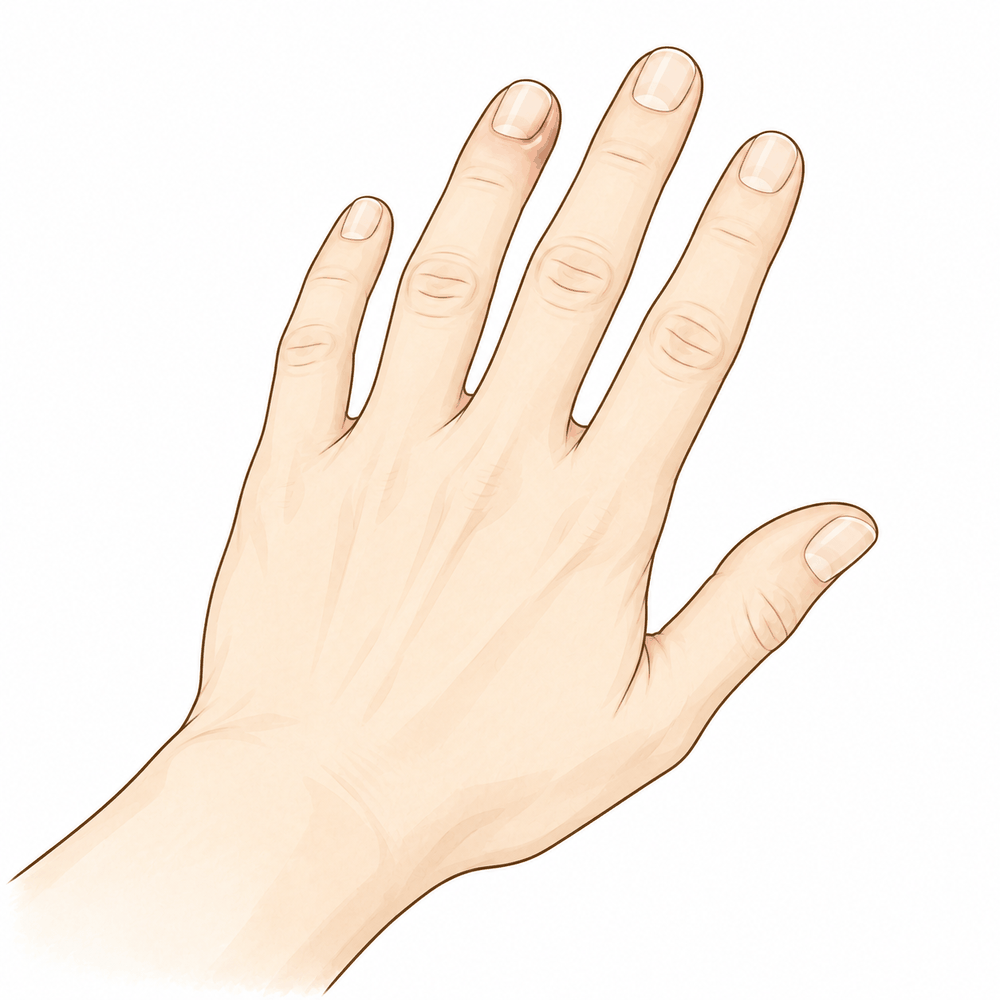
Ang paronychia ay nangangahulugang impeksyon o pamamaga sa tupi ng balat (skin fold) sa tabi ng iyong kuko. Maaari itong dumating nang mabilis o unti-unting mabuo, at magkaiba ang pakiramdam ng dalawang uring ito.
Ang mabilis na uri ay karaniwang nagsisimula pagkatapos ng hangnail, pagkagat sa kuko, o maliit na pinsala sa balat sa tabi ng kuko. Sa loob ng isa o dalawang araw, ang fold ay nagiging masakit kapag hinawakan, namamaga at mapula, at maaaring maipon ang nana sa ilalim ng fold na iyon. Ang sakit ay matalim at kumikirot, at nakapuwesto ito mismo sa gilid ng kuko sa halip na mas mataas sa daliri. Ang mga pang-araw-araw na gawain na dumidiin sa dulo ng daliri ay nagiging mahirap: pagpulot ng mga barya, pag-type, pagbubutones, o paghawak ng takure (kettle).
Ang mabagal na uri ay nabubuo sa loob ng anim na linggo o higit pa. Mas mild ang pamamaga at pamumula, ngunit nananatiling masakit at namamaga ang fold. Ang skin fold ay maaaring humiwalay mula sa kuko, at ang kuko mismo ay maaaring magkaroon ng mga ridge, groove o pagbabago ng kulay. May tendensiya itong mag-flare pagkatapos mabasa nang matagal ang iyong mga kamay, kaya ang paghuhugas ng pinggan, pagligo, o isang araw ng basang trabaho ay maaaring magpasimula nito. Ang paulit-ulit na basang trabaho, madalas na paghuhugas ng kamay, o pinsala sa cuticle mula sa pagma-manicure ay maaaring lahat magpatuloy nito. Kung hindi ito gagamutin, patuloy na bumabalik ang mga masakit na flare-up.
Kung kumakalat pataas sa iyong daliri ang pamumula, pamamaga at sakit, o kung magkaroon ka ng lagnat, pumunta sa emergency department sa mismong araw na iyon. Hindi mo kailangan ng referral.
Ano ang aktwal na nangyayari
Ang iyong kuko ay nakapuwesto sa isang masikip na bulsa ng balat. Ang tupi ng balat na nakapalibot sa kuko sa base at mga gilid nito ay gumagana na parang gasket, na nagseselyo sa kuko pababa sa daliri at pumipigil sa tubig, dumi at mga germ na makapasok sa mga layer sa ilalim nito. Ang paronychia ang nangyayari kapag nasira ang selyong iyon.
Sa mabilis na uri, nakakapasok ang bacteria sa pamamagitan ng hangnail, kagat o maliit na hiwa sa tabi ng kuko. Nagpapadala ang katawan ng fluid at mga cell na lumalaban sa impeksyon, at naiipon ang nana sa saradong bulsa. Dahil hindi gaanong nababanat ang bulsa, ang presyon ang nagbibigay sa iyo ng matalim at kumikirot na sakit na iyon mismo sa gilid ng kuko.
Iba ang mabagal na uri. Hindi ito pangunahing impeksyon. Nagsisimula ito kapag ang cuticle, ang maliit na selyo sa base ng kuko, ay nasira ng basang trabaho, madalas na paghuhugas ng kamay, pagma-manicure o isang nakakairitang substance. Kapag nawala na ang selyong iyon, ang tubig at mga irritant ay sumisipsip sa fold at namamaga ang fold. Ang namamagang fold ay hindi makadiin pabalik sa kuko, kaya nananatili itong nakaangat at nag-iipon ng moisture, at namamalagi ang mga germ sa basang puwang. Ang yeast na madalas makita roon ay mas isang pasahero kaysa sanhi. Ginagambala rin ng patuloy na iritasyon ang layer sa ilalim ng cuticle na nagpapatubo ng kuko, kaya lumilitaw ang mga ridge at groove. Bawat flare ay pumipigil sa selyo na maayos, kaya ang problema ay nagpapatuloy sa sarili nito.
Kung hahayaan ang nana, maaari itong dumaan sa ilalim ng kuko o pumalibot sa kabilang panig ng daliri.
Ano ang maaari naming gawin tungkol dito
Si Dr Kieran Hirpara, isang upper-limb surgeon sa Mater Private Hospital Rockhampton, ay nagsisimula sa mga opsyon na hindi gaanong invasive na angkop sa iyong kondisyon. Ang mga pasyente ay karaniwang nirerefer sa aming klinika ng kanilang GP; kung iminungkahi ng isang physiotherapist na magpatingin sa amin, kakailanganin mo pa rin ng referral mula sa iyong GP upang maging eligible para sa Medicare rebate. Sinusuri namin ang iyong kamay, tinitingnan ang nail fold, at nag-aayos ng imaging kung kailangan lamang ito.
Para sa mabagal na uri, inuuna ang pangangalaga sa sarili. Mas mahalaga ang pagprotekta sa mga nail fold kaysa sa anumang cream: panatilihing tuyo ang iyong mga kamay, magsuot ng guwantes para sa basang trabaho, at itigil ang pagkutkot o paggupit sa cuticle. Maaari kaming magreseta ng steroid cream o ointment na ipinapahid mo sa fold, na nagpapakalma sa pamamaga. Mas mabisa ang mga cream na ipinapahid sa fold kaysa sa mga tableta para sa uring ito. Bigyan ito ng ilang linggo, at ipagpatuloy ang gawi ng pagpapanatiling tuyo at protektado kahit kumalma na ang balat, dahil kailangan ng selyo ng panahon upang maayos.
Para sa mabilis na uri na may nana, maaari kaming magreseta ng antibiotic na tableta, kung minsan kasabay ng pagbababad sa maligamgam na tubig na may asin sa bahay. Ang init ay maaaring makatulong sa isang maliit na naipong nana na kusang lumabas. Kung naipon na ang nana sa ilalim ng fold, karaniwan itong kailangang palabasin sa halip na iasa lamang sa antibiotics. Ang maagang gamutan ay maaaring magpakalma nito sa loob ng ilang araw nang walang tinatanggal na kuko.
Kung hindi kumalma ang mabagal na uri pagkatapos ng sapat na pagsubok sa mga hakbang na ito, isinasaalang-alang ang operasyon. Tinatanggal ng operasyon ang isang hugis-gasuklay (crescent) na bahagi ng makapal at namamagang skin fold sa base ng kuko, na nagbibigay-daan sa fold na gumaling pababa sa kuko at muling magselyo. Kung ang kuko mismo ay nagkaroon na ng mga ridge o naging iregular, ang pagtanggal sa nail plate nang sabay ay nagpapabuti sa resulta. Pag-uusapan natin kung angkop ang operasyon para sa iyong daliri at magpapasya tayo nang magkasama.
Ano ang dapat asahan
Ang mabilis na uri ay karaniwang gumagaling nang maayos kapag ginamot nang maaga. Maraming tao ang gumagaling nang hindi na kinakailangang tanggalin ang anumang kuko. Kapag nailabas na ang nana at nakakagaling na ang skin fold, humuhupa ang sakit at bumabalik sa normal ang daliri sa loob ng ilang araw hanggang ilang linggo.
Mas matagal ang mabagal na uri. Ito ay isang kondisyon na dumarating at nawawala, nagfa-flare pagkatapos ng basang trabaho at kumakalma kapag protektado ang fold. Sa tuloy-tuloy na pangangalaga, kung saan mas mahalaga ang pagpapanatiling tuyo ng mga kamay at buo ang cuticle kaysa sa anumang cream, ang puwang sa pagitan ng skin fold at ng kuko ay napupuno sa loob ng 6 hanggang 8 linggo at kusang naaayos ang selyo. Ang ilang tao ay nangangailangan ng ilang buwan ng gawing ito bago tuluyang kumalma ang fold. Kung pababayaan ito, patuloy na bumabalik ang mga masakit na flare-up, at ang kuko ay maaaring kumapal at magkaroon ng pangmatagalang ridge o groove.
Tinatanggal ng operasyon para sa mabagal na uri ang makapal na fold upang ito ay gumaling pababa sa kuko. Ang mga daliring nanatiling makinis ang kuko ay karaniwang gumagaling sa operasyon sa fold lamang. Kung ang kuko ay may mga ridge na o iregular, ang pagtanggal sa nail plate nang sabay ay nagbibigay ng mas magandang pagkakataon na hindi na bumalik ang problema. Karaniwang hindi na kailangan ang antibiotics pagkatapos ng operasyon para sa kondisyong ito sa mga taong walang ibang problema sa kalusugan.
Ilang bagay ang makabubuting malaman habang nagpapatuloy ka. Ang mga impeksyon sa kamay ay maaaring humantong sa mga komplikasyong mahirap pamahalaan, kaya makabubuting huwag balewalain ang isang daliring hindi bumubuti. Kung hindi humuhupa ang iyong mga sintomas, lumalala sa loob ng ilang linggo, ginigising ka sa gabi, o pinipigilan kang magtrabaho o gamitin ang iyong kamay, magpatingin sa iyong GP o humingi ng review mula sa isang espesyalista.
Kailan dapat magpatingin
Karamihan sa mga impeksyon sa nail fold ay gumagaling sa maagang pangangalaga, ngunit may ilang palatandaan na nangangahulugang hindi ka dapat maghintay. Pumunta sa isang emergency department sa mismong araw na iyon kung ang iyong daliri ay naging mainit, mapula, namamaga at masakit, lalo na kung may lagnat, o kung kumakalat pataas sa daliri ang nana. Hindi mo kailangan ng referral. Ang mga impeksyon sa kamay ay maaaring humantong sa mga komplikasyong mahirap pamahalaan kapag lumala na ang mga ito, kaya mahalaga ang pangangalaga sa mismong araw.
Magpatingin sa iyong GP kung ang sakit at pamamaga ay tumagal na nang anim na linggo o higit pa, o kung patuloy na nagfa-flare ang fold pagkatapos ng basang trabaho kahit pinapanatili mo itong tuyo at protektado. Humingi ng review mula sa isang espesyalista kung ang skin fold ay nananatiling nakaangat at namamaga, ang kuko ay nagkakaroon ng mga ridge o groove, o ang isang problema sa kuko ay hindi tumutugon sa mga cream. Ang nail fold na hindi kumakalma pagkatapos ng wastong gamutan ay nangangailangan ng mas masusing pagsusuri, dahil ang ibang mga sanhi ay kung minsan napagkakamalang ito ang kondisyon.
Higit pang detalye
Advanced reading: the deeper science (optional)
Ang seksyong ito ay mas malalim kaysa sa kailangan mo para sa iyong sariling mga desisyon sa paggamot. Ang Paronychia ay karapat-dapat sa karagdagang pagbabasa dahil ang isang salita ay sumasaklaw sa dalawang kondisyon na magkaiba ang gawi, tumutugon sa magkasalungat na mga paggamot, at madalas na napagkakamalan, at dahil ang surgical na solusyon para sa chronic na anyo ay mas luma, mas simple, at mas suportado kaysa sa inaasahan ng karamihan.
Dalawang kondisyon, isang pangalan
Ang Acute paronychia ay isang bacterial infection ng nail fold, kadalasan ay Staphylococcus aureus, na nabubuo sa loob ng 24 hanggang 48 oras matapos masira ang seal sa pagitan ng kuko at balat [1]. Ito ay mapula, mainit, banat, at hindi proporsyonal ang sakit, at ito ay nagbubuo ng nana.
Ang Chronic paronychia, na ayon sa kumbensyon ay tumatagal nang higit sa anim na linggo, ay hindi pangunahing isang impeksyon. Ito ay isang inflammatory dermatitis ng nail fold na dulot ng paulit-ulit na pagkakalantad sa basa at mga irritant, kung saan ang pagkawala ng cuticle seal ay nagbibigay-daan sa higit pang pagpasok ng irritant, na lumilikha ng isang cycle na nagpapanatili sa sarili nito [2]. Ang Candida ay madalas na nakukuha sa culture mula sa mga fold na ito, na siyang dahilan kung bakit ang kondisyong ito ay matagal na ginamot bilang isang fungal infection, ngunit ang presensya nito ay mas nauunawaan bilang colonisation ng isang nail fold na dati nang damaged kaysa bilang sanhi nito.
Ang pagsubok na nagbigay ng bagong perspektibo sa kronikong anyo
Ang ebidensyang nagpapatunay nito ay isang randomised, double-blind, double-dummy trial na naghahambing ng isang topical steroid (methylprednisolone aceponate) laban sa dalawang systemic antifungals. Sa 48 kuko na ginamot gamit ang topical steroid, 41 ang bumuti o gumaling, kumpara sa 30 sa 57 sa terbinafine at 29 sa 64 sa itraconazole, isang statistically significant na kalamangan para sa steroid [3].
Ang parehong pagsubok ay naglalaman ng mas mapagpasyang obserbasyon. Ang presensya ng Candida ay hindi mahigpit na nauugnay sa aktibidad ng sakit, at ang pagpuksa sa Candida ay nauugnay sa clinical cure sa 2 lamang sa 18 pasyenteng mayroon nito sa baseline [3].
Mahirap itong itugma sa isang fungal aetiology at madaling itugma sa isang inflammatory na sanhi: ang yeast ay isang passenger sa isang damaged fold, hindi ang driver. Binibigyang-kahulugan nito ang kondisyon bilang isang problema sa barrier: ang cuticle ang seal, sinisira ito ng wet work, namamaga ang fold, ang namamagang fold ay hindi na muling makapag-seal, at ang mga organismo ay naninirahan sa puwang. Ang paggamot sa mga colonisers ay nag-iiwan sa mekanismo na hindi nababago.
Ang praktikal na corollary ay hindi kaakit-akit at ito ang bahaging madalas laktawan ng mga pasyente: ang pinaka- epektibong interbensyon ay ang pagpapanatiling tuyo ng mga kamay at pag-iwas sa mga irritants. Mas epektibo ang mga guwantes kaysa sa mga reseta rito.
Acute paronychia: drainage, at kung gaano dapat pakialaman
Kapag nabuo na ang nana, hindi ito mawawala sa pamamagitan lamang ng mga antibiotic, kailangang ilabas ang naipong nana [1]. Ang tradisyonal na pamamaraan ay itinataas ang nail fold mula sa nail plate upang ma-decompress ang abscess, at tinatanggal ang bahagi ng kuko kung saan kumalat ang nana sa ilalim nito.
Isang alternatibong nagpapanatili sa kuko ay ang Swiss roll technique, kung saan ang nail fold ay itinataas at ibinabaluktot pabalik sa ibabaw ng isang suture sa halip na hiwain o excise, pinapanatili ito sa loob ng ilang araw at pagkatapos ay ibinabalik sa dati [4]. Ang bentahe nito ay nailalabas nito ang naipong nana na kumalat sa fold nang hindi isinasakripisyo ang nail plate o nail fold, na mahalaga kung ang alternatibo ay isang malawak na incision.
Ang pangkalahatang prinsipyo sa dalawang pamamaraan ay dapat i-decompress ng incision ang fold sa halip na pumasok sa pulp ng daliri, dahil ang pulp ay isang hiwalay na compartment at ang pagbubukas nito ay ginagawang mas komplikadong sugat ang isang simpleng paronychia.
Eponychial marsupialisation
Para sa chronic paronychia na hindi gumaling, ang operasyon ay ang inilarawan noong 1976 at esensyal na hindi nagbago simula noon.
Ang procedure nina Keyser at Eaton ay nag-aalis ng isang crescent ng makapal na proximal nail fold, kinukuha ang namamagang tissue habang hindi inaabot ang germinal matrix, at hinahayaang bukas ang defect upang gumaling sa pamamagitan ng contraction, na humihila sa fold pabalik pababa sa nail plate at ibinabalik ang seal na sinira ng sakit [5].
Ang anatomy ang dahilan kung bakit kritikal ang margin. Sa ilalim ng cuticle ay mayroong two-to-three-millimetre cul-de-sac ng germinal matrix na gumagawa ng nail plate, at ang subcutaneous layer sa ibabaw nito ang kumokontrol sa surface ng kuko. Kapag naabala ang layer na iyon, dahil sa impeksyon, pressure o trauma, ang produksyon ng kuko ay nagiging abnormal nang proporsyonal: ang mga maikling episode ay nagbibigay ng transverse ridges, ang matagal na sakit ay nagbibigay ng longitudinal grooving at pagkapal na katangian ng chronic paronychia [5].
Kaya ang pag-iwas sa germinal matrix ang pumipigil sa permanenteng nail deformity, at ang pag-iiwan sa sugat na bukas ang gumagawa ng contraction na muling nagsasara sa fold; ang pagtahi nito ay magpapawalang-bisa sa layunin.
Ang pagpapahusay na nag-alis ng mga pag-uulit
Ang pinakamahalagang bahagi ng outcome data ay isang maliit na serye na may malinaw na internal comparison. Gaya ng iniulat, ang mga daliri na may mga iregularidad sa kuko na ginamot sa pamamagitan ng marsupialisation lamang ay nagkaroon ng pag-uulit sa maliit na bilang ng mga kaso, habang ang sumunod na grupo ng mga daliri na may mga iregularidad sa kuko na ginamot sa pamamagitan ng marsupialisation kasama ang pagtanggal ng nail plate ay hindi nagkaroon nito; ang mga daliri na walang mga iregularidad sa kuko ay gumaling sa pamamagitan ng marsupialisation lamang [6].
Ang serye ay maliit at sequential sa halip na randomised, kaya ito ay isang signal sa halip na isang patunay — at ang buong teksto ay hindi available sa amin, kaya ang mga pigura sa itaas ay gaya ng ibinuod sa secondary literature sa halip na binasa mula sa papel. Ngunit nagbibigay ito ng isang konkretong intraoperative rule: ang isang iregular o may mga ridge na kuko ay ebidensya na ang sakit ay nakakaapekto na sa matrix sa ilalim, at sa daliring iyon, dapat ding tanggalin ang nail plate. Ang kuko na mukhang normal ay maaaring iwanan.
Ito ay isang hindi pangkaraniwang actionable finding para sa isang kondisyong ganito karaniwan, at ito ang dahilan kung bakit ang estado ng nail plate, hindi lamang ang fold, ay mahalagang suriin bago magdesisyon sa operasyon.
Mga Sanggunian
[1] Ritting AW, O'Malley MP, Rodner CM. Acute paronychia. J Hand Surg Am. 2012;37(5):1068-70. https://doi.org/10.1016/j.jhsa.2011.11.021
[2] Shafritz AB, Coppage JM. Acute and chronic paronychia of the hand. J Am Acad Orthop Surg. 2014;22(3):165-74. https://doi.org/10.5435/JAAOS-22-03-165
[3] Tosti A, Piraccini BM, Ghetti E, Colombo MD. Topical steroids versus systemic antifungals in the treatment of chronic paronychia: an open, randomized double-blind and double dummy study. J Am Acad Dermatol. 2002;47(1):73-6. https://doi.org/10.1067/mjd.2002.122191
[4] Pabari A, Iyer S, Khoo CTK. Swiss roll technique for treatment of paronychia. Tech Hand Up Extrem Surg. 2011;15(2):75-7. https://doi.org/10.1097/BTH.0b013e3181ec089e
[5] Keyser JJ, Eaton RG. Surgical cure of chronic paronychia by eponychial marsupialization. Plast Reconstr Surg. 1976;58(1):66-70. https://doi.org/10.1097/00006534-197607000-00011
[6] Bednar MS, Lane LB. Eponychial marsupialization and nail removal for surgical treatment of chronic paronychia. J Hand Surg Am. 1991;16(2):314-7. https://doi.org/10.1016/S0363-5023(10)80118-2
Evidence & references
This is the clinical evidence summary written for health professionals. It is technical, and it lists the research this page was built from. You do not need to read it to understand your treatment or to make a decision about it.
Overview
- In chronic paronychia, C. albicans involvement was found in the outer epidermis with mycelium, but without involvement of the dermis [1].
- Candida albicans was recovered in approximately 15% of paronychia cases [3].
- Untreated paronychial infection can cross the eponychium to the contralateral paronychial fold, course anteriorly into the pulp tissue, and decompress into the periosteum and distal tuft, causing osteomyelitis and necrosis [5].
Anatomy & Pathophysiology
Microbiology & Histopathology
- In chronic paronychia, C. albicans involvement is present in the outer epidermis with mycelium, but there is no involvement of the dermis [1].
Surgical Anatomy & Pathology
- In recalcitrant cases of chronic paronychia, surgical treatment may include en bloc excision of the proximal nail fold or eponychial marsupialization, with or without nail plate removal [2].
Clinical Presentation
- Candida albicans was recovered in about 15% of paronychia cases [3].
- In a patient with habitual nail biting, an untreated paronychial infection crossed the eponychium to the contralateral paronychial fold, coursed anteriorly into the pulp tissue, and decompressed into the periosteum and distal tuft, causing osteomyelitis and necrosis [5].
Investigations
- In chronic paronychia, C. albicans involvement was found in the outer epidermis with mycelium, but no involvement of the dermis was observed [1].
- A careful physical examination is essential to direct care and future testing, as diagnostic tests such as imaging and serum laboratory studies can be expensive, time-consuming, and often nonspecific [27].
Treatment
Operative
- In recalcitrant cases of chronic paronychia, surgical treatment may include en bloc excision of the proximal nail fold [2].
- In recalcitrant cases of chronic paronychia, surgical treatment may include eponychial marsupialization [2].
- Surgical treatment for recalcitrant chronic paronychia may be performed with or without nail plate removal [2].
- The eponychial folding flap demonstrated statistically superior outcomes in terms of apparent nail-plate exposure compared to rectangle recession after fingertip amputation [15].
- The mean difference in apparent nail-plate exposure between the eponychial folding flap and rectangle recession was 0.61 mm (95% CI, 0.35—0.87 mm; P < .001) [15].
- The eponychial folding flap demonstrated statistically superior aesthetic satisfaction compared to rectangle recession after fingertip amputation [15].
- The eponychial folding flap demonstrated statistically superior postoperative pain outcomes compared to rectangle recession after fingertip amputation [15].
- The application of the eponychial flap allowed a nail lengthening ranging from 28.5 to 80% of the exposed nail body [9].
Non-Operative
- In chronic paronychia, C. albicans involvement is present in the outer epidermis with mycelium [1].
- In chronic paronychia, C. albicans involvement does not extend to the dermis [1].
- The nail should be retained whenever possible because it can be used as a splint and simultaneous waterproof dressing in many finger tip injuries [12].
- Retaining the nail eliminates most of the pain attributable to exposure of the nail bed in many cases [12].
Complications
- In recalcitrant cases of chronic paronychia, surgical treatment may include en bloc excision of the proximal nail fold or an eponychial marsupialization, with or without nail plate removal [2].
Recovery
- The eponychial folding flap demonstrated statistically superior outcomes in terms of apparent nail-plate exposure compared to rectangle recession, with a mean difference of 0.61 mm (95% CI, 0.35—0.87 mm; P < .001) [15].
- The eponychial folding flap demonstrated statistically superior outcomes in terms of aesthetic satisfaction compared to rectangle recession [15].
- The eponychial folding flap demonstrated statistically superior outcomes in terms of postoperative pain compared to rectangle recession [15].
Key Evidence
- [L4] Each lesion studied had C. albicans involvement with mycelium in the outer epidermis but no involvement of the dermis. [1] (10.1001/archderm.1962.01590090066015)
- [L4] In recalcitrant cases, surgical treatment may be resorted to, which includes en bloc excision of the proximal nail fold or an eponychial marsupialization, with or without nail plate removal. [2] (10.4103/0019-5154.123482)
- [L4] Candida albicans was recovered in about 15% of the cases. [3] (10.1016/0266-7681(93)90063-l)
- [L5] This patient with habitual nail biting developed a paronychial infection, which untreated, crossed the eponychium to the contralateral paronychial fold, coursed anteriorly into the pulp tissue, and finally decompressed into the periosteum and distal tuft, causing osteomyelitis and necrosis. [5] (10.1016/s0363-5023(05)80062-0)
- [L4] The application of the eponychial flap allowed a nail lengthening ranging from 28.5 to 80% of the exposed nail body. [9] (10.1016/s0363-5023(03)80451-3)
- [L5] The nail should be retained whenever possible because it can be used as a splint and simultaneous waterproof dressing in many finger tip injuries, and in many cases eliminates most of the pain attributable to exposure of the nail bed. [12] (10.1016/s0266-7681(84)80030-3)
- [L4] The eponychial folding flap demonstrated statistically superior outcomes in terms of apparent nail-plate exposure (mean difference 0.61 mm; 95% CI, 0.35—0.87 mm; P < .001), aesthetic satisfaction, and postoperative pain, without compromising scar quality or functional recovery. [15] (10.1016/j.jhsg.2026.101101)
References
[1] Chronic Paronychia. Archives of Dermatology. 1962. DOI: 10.1001/archderm.1962.01590090066015
[2] Management of chronic paronychia. Indian Journal of Dermatology. 2014. DOI: 10.4103/0019-5154.123482
[3] Paronychia: a Mixed Infection. Journal of Hand Surgery. 1993. DOI: 10.1016/0266-7681(93)90063-l
[5] Eikenella osteomyelitis in a chronic nail biter: A case report. The Journal of Hand Surgery. 1995. DOI: 10.1016/s0363-5023(05)80062-0
[9] The eponychial flap: A new technique to restore the length of a short nail. The Journal of Hand Surgery. 2003. DOI: 10.1016/s0363-5023(03)80451-3
[12] The Best Dressing for a Nail Bed is the Nail Itself. Journal of Hand Surgery. 1984. DOI: 10.1016/s0266-7681(84)80030-3
[15] Comparative Outcomes of Rectangle Recession Versus Eponychial Folding Flaps for Nail-Plate Length After Fingertip Amputation. Journal of Hand Surgery Global Online. 2026. DOI: 10.1016/j.jhsg.2026.101101
[27] Orthopaedic Knowledge Update 13 Ebook Without Multimedia. Anatomy, Evaluation, Clinical Examination, and Imaging > Evaluation and Clinical Examination: Current Concepts.